消费电子

Search documents
保时龙拟冲刺北交所IPO:2025上半年净利增32%,服务联想、惠普等品牌
Sou Hu Cai Jing· 2026-01-16 13:45
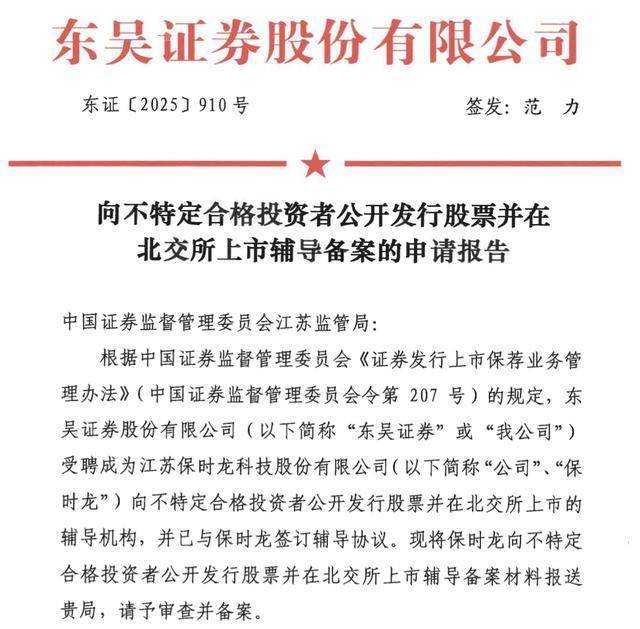
Core Viewpoint - Jiangsu Baoshilong Technology Co., Ltd. has initiated its IPO on the Beijing Stock Exchange, with a focus on the development, production, and sales of injection-molded structural parts and precision injection molds for consumer electronics [1]. Group 1: Company Overview - The main business of Baoshilong includes the R&D, production, and sales of injection-molded structural components and precision injection molds for consumer electronics, with key products being injection-molded structural parts for computer peripherals and other electronic products [4]. - The company has established long-term stable partnerships with globally recognized computer peripheral manufacturers such as Lite-On Technology, ZhiShen Technology, QunGuang Electronics, ChuanYi Technology, and ZhiDi Technology [5]. Group 2: Financial Performance - In the first half of 2025, Baoshilong achieved a revenue of 367 million yuan, representing a year-on-year growth of 22.61% [5]. - The net profit attributable to the parent company was approximately 12.84 million yuan, reflecting a year-on-year increase of 32.29% [5]. - The gross profit margin for the period was 20.20%, slightly down from 22.14% in the same period last year [6]. - The basic earnings per share increased by 37.78% to 0.59 yuan compared to 0.45 yuan in the previous year [6].

三星半导体业务部门将获得高额绩效奖励 接近半年工资
Xin Lang Cai Jing· 2026-01-16 13:31
【TechWeb】1月16日消息,据外媒报道,在通用DRAM价格上涨、人工智能所需的高带宽存储器持续 改善的推动下,三星电子负责半导体业务的设备解决方案部门的业绩也有改善,公司整体的业绩也随之 提升。 而在设备解决方案部门的业绩改善之后,员工也将获得高额的绩效奖励。 外媒在最新的报道中就提到,三星电子在当地时间周 五,已经公布了超额绩效奖励的支付比例,设备解决方 案部门是全年工资的47%,也就是接近半年的工资。 设备体验部门在2025年获得全年工资47%的超额绩效奖 励,较2024年就有大幅增加,当年他们的超额绩效奖励 是全年工资的14%。 外媒在报道中还提到,三星电子设备解决方案部门获得 全年工资47%的超额绩效奖励,适用于旗下的全部业务 团队,包括存储业务、代工业务和系统LSI业务部门。 对于三星电子今年的超额绩效奖励,外媒称将在1月30日发放,届时各业务部门的员工就将收到。(海 蓝) 【TechWeb】1月16日消息,据外媒报道,在通用DRAM价格上涨、人工智能所需的高带宽存储器持续 改善的推动下,三星电子负责半导体业务的设备解决方案部门的业绩也有改善,公司整体的业绩也随之 提升。 而在设备解决方案部门 ...
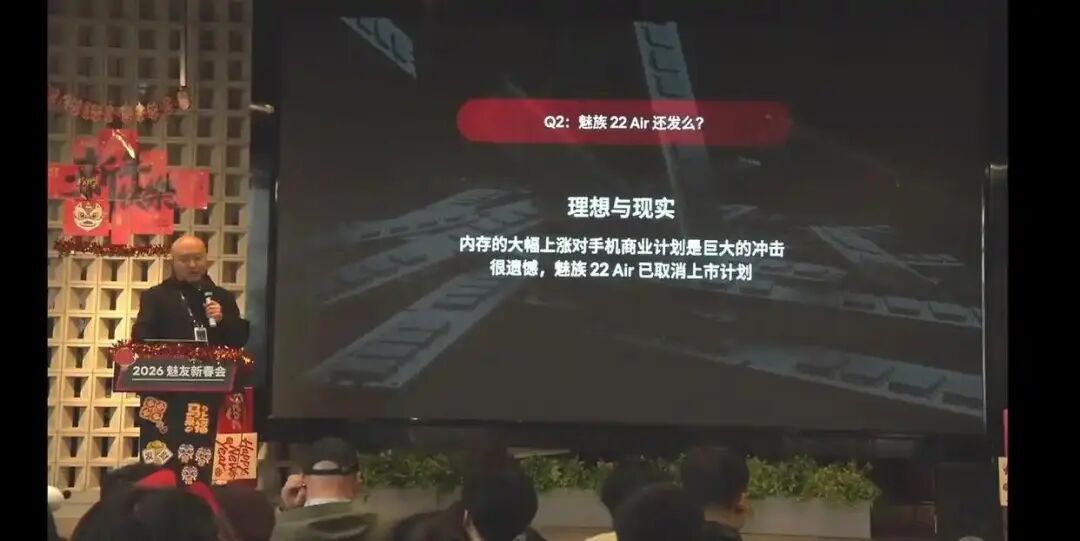
内存疯涨,买车要多掏腰包?
3 6 Ke· 2026-01-16 12:36
Group 1 - The price of memory chips has surged dramatically, with 16GB DDR4 memory increasing by 1800% and DDR5 by 500% compared to last year [1][3] - The automotive industry is facing significant cost pressures due to rising memory prices, with estimates suggesting that the memory cost for a car priced around 300,000 yuan has increased by 2,000 to 4,000 yuan [3][5] - Car manufacturers may respond to rising memory costs by either increasing prices or reducing features without lowering prices, leading to a potential decline in consumer experience [5][6] Group 2 - The primary driver behind the skyrocketing memory prices is the AI industry, which requires significantly more memory for training large models, diverting production away from standard memory used in consumer electronics and vehicles [6][7] - Major memory manufacturers like Samsung and SK Hynix have seen their stock prices soar, with Micron Technology's stock projected to increase by 240% by 2025 [7][9] - Domestic companies like Changxin Technology are emerging as potential players in the memory market, but they currently only meet a fraction of domestic demand, with China consuming nearly 40% of global memory but producing less than 10% [9][11] Group 3 - The current memory crisis resembles the previous chip shortage, where the focus was on basic components rather than advanced chips, indicating a supply chain issue that may persist [6][12] - Consumers looking to purchase vehicles may want to wait for potential price adjustments or take advantage of current pricing before manufacturers adjust for increased costs [13]




李楠评罗永浩回应贾国龙:可以当做公众回复教科书了
Xin Lang Cai Jing· 2026-01-16 12:22
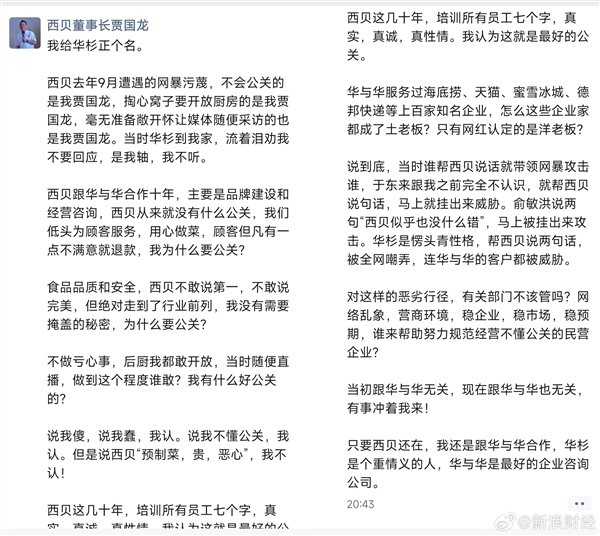
专题:西贝预制菜风波未平 快科技1月16日消息,在罗永浩与西北贾国龙之争已经快要被大家忘记的时候,贾国龙的一则朋友圈又 将大家拉了回来,并且已经引发了不小争议。 贾国龙称,西贝将一次性关闭全国102家门店,占门店总数的30%,约4000名员工都将面临下岗失业。 对此,罗永浩今天发布了长文进行一一回复,并且条理清晰。 怒喵科技创始人李楠直言:"罗老师的回复可以当做公众回复教科书了。" 原因如下: 1 姿态正确 纽约时报反击中国斩杀线报道的专栏文章,也是同样的伎俩。 锤子就是他做倒闭的,他承担责任。这既是担当,也是自嘲。这是相当强大的心态和相当有力地态度。 就比如我作为魅蓝总裁,无论高通外面做了什么黄总内部做了什么,都不重要,都是我对外没打过,对 内没顶住。我顶着这个title就不应该有脸赖任何人。 这个开头正常逻辑下莫名其妙,但是这种担当和自嘲本身,就在抽脸贾老板。 这个起手式,相当高级。 2 同情敌人 直接攻击是会引起反感的,但是如果你用同情的姿态,指出对方的残疾。虽然是一种更狠毒的攻击,但 是是比较容易被接受的。 不高级,但是有效。 3 处理风险明确责任 员工的工作机会,当然是企业负责人的责任。 回归简单的 ...
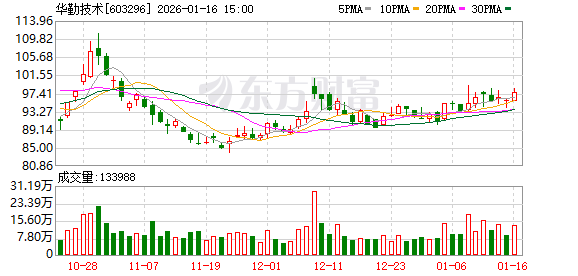
华勤技术:始终坚持全球化发展战略与多元化产品布局
Zheng Quan Ri Bao· 2026-01-16 12:14
Group 1 - The core viewpoint of the article emphasizes that the company, Huaqin Technology, is committed to a global development strategy and diversified product layout, with products sold in multiple markets worldwide, including Europe [2] - The company plans to enhance its responsiveness to market demands and risk management resilience through steady global manufacturing layout and agile supply chain management [2] - Huaqin Technology aims to continuously broaden its growth paths to promote high-quality development [2]

三倍牛股,三年连亏,科森科技没能讲出市场爱听的故事
Tai Mei Ti A P P· 2026-01-16 12:12
Core Viewpoint - Kosen Technology (603626.SH) is expected to report a loss of between 330 million yuan and 245 million yuan for the entire year of 2025, marking its third consecutive year of losses, indicating significant challenges in the consumer electronics sector [2][4]. Group 1: Financial Performance - The company anticipates a net profit attributable to shareholders of -330 million yuan to -245 million yuan for 2025, with a net profit excluding non-recurring gains and losses expected to be between -393 million yuan and -308 million yuan [7]. - Kosen Technology's net profit has shown a drastic decline over recent years, with year-on-year changes of -76.48%, -424.29%, and -69.44% from 2022 to 2024, while gross margins have decreased from 14% to 5.34% during the same period [10]. Group 2: Market Position and Challenges - Kosen Technology is a second-tier supplier in the precision structural components sector for consumer electronics, with a market share of less than 3% globally and ranking between fifth and eighth in its domestic niche, generating approximately 3 billion yuan in revenue [4][8]. - The company faces significant pressure from both upstream and downstream in the supply chain, particularly as major clients like Huawei and Apple impose stricter cost controls and cultivate new suppliers to enhance their bargaining power [8]. Group 3: Strategic Adjustments and R&D - The anticipated losses for 2025 are attributed to several factors, including fluctuating market demand, low capacity utilization, strategic adjustments leading to inventory write-offs, and high R&D expenditures impacting net profits [6][18]. - Kosen Technology has maintained a high level of R&D investment, with 167 million yuan allocated in the first three quarters of 2025, representing 6.81% of revenue, although this is significantly lower than industry leaders [19]. Group 4: Market Perception and Speculation - The company has been associated with various high-tech concepts, such as solid-state batteries and foldable screens, which have led to speculative trading despite the weak fundamentals of its core business [11][12]. - Kosen Technology's management has attempted to pivot through strategic adjustments, including the sale of its high-margin medical device business to focus on its core consumer electronics operations, although the effectiveness of these measures remains uncertain [18].

台积电业绩远超预期!半导体逆市狂飙,电子ETF(515260)翘尾收涨2.7%,尾盘溢价飙升!兆易创新等4股涨停
Xin Lang Ji Jin· 2026-01-16 11:27
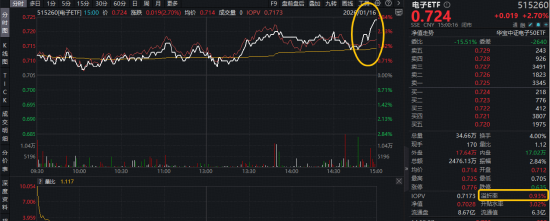
Core Viewpoint - The electronic sector is leading the A-share market, with the electronic ETF (515260) showing strong performance, closing up 2.7% and achieving a premium rate of 0.93% at the end of the trading day, indicating strong buying interest [1] Group 1: Market Performance - The electronic sector received a net inflow of 30.511 billion, ranking first among all 31 Shenwan primary industries [2][3] - Major stocks in the electronic ETF, including Zhaoyi Innovation and Changdian Technology, attracted 4.538 billion and 3.181 billion respectively, topping the A-share inflow rankings [2][3] - Semiconductor leaders such as Changdian Technology, Zhaoyi Innovation, and Tongfu Microelectronics hit the daily limit, while Huazhong Microelectronics rose over 13% [4] Group 2: Industry Trends - TSMC's recent earnings report for Q4 2025 exceeded expectations, marking the seventh consecutive quarter of double-digit growth, and raised its 2026 capital expenditure guidance to 52-56 billion USD, reflecting strong and sustainable demand in the AI industry chain [5] - The U.S. government's recent imposition of a 25% tariff on specific semiconductors may create a stronger "accelerated replacement" window for domestic equipment amid increasing supply chain uncertainties [5] - The trend of "self-control and AI resonance" is expected to strengthen further in 2026, with a focus on domestic computing power and semiconductor equipment [5] Group 3: Investment Tools - The electronic ETF (515260) and its linked funds are designed to passively track the electronic 50 index, heavily investing in semiconductor and consumer electronics sectors, including AI chips, automotive electronics, and PCB [5] - The ETF serves as an efficient tool for investors to gain exposure to core assets in the electronic sector [5]


沪指险守4100点!半导体逆市狂飙,电子ETF翘尾收涨2.7%!AI应用概念股全线回调,159363回踩5日线
Xin Lang Cai Jing· 2026-01-16 11:24
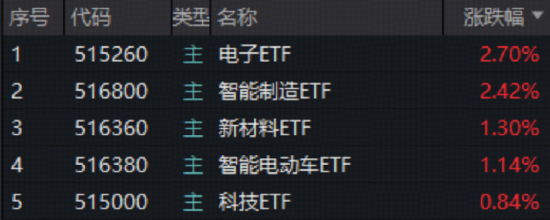
Market Overview - The three major A-share indices experienced slight declines on January 16, with the Shanghai Composite Index closing at 4101.91 points, down 0.26% [1][22] - The total trading volume in the Shanghai, Shenzhen, and Beijing markets reached 30,568 billion yuan, an increase of 1,180 billion yuan compared to the previous day [1][22] Sector Performance - The electronic sector led the market, with the Electronic ETF (515260) rising by 2.7%, marking three consecutive days of gains [3][24] - The Intelligent Manufacturing ETF (516800) also performed well, closing up 2.42% [1][22] - The New Materials ETF (516360) and the Intelligent Electric Vehicle ETF (516380) both saw gains of over 1% [1][22] Notable Stocks - Semiconductor leaders such as Longji Technology, Zhaoyi Innovation, and Tongfu Microelectronics hit the daily limit, while Huazhong Microelectronics rose over 13% [5][26] - The largest medical ETF (512170) fell by 2.6%, indicating a cooling trend in AI medical concepts [1][22] Monetary Policy Impact - The central bank implemented a series of measures to support high-quality economic development, including a 0.25 percentage point reduction in re-lending and rediscount rates, and an increase of 500 billion yuan in re-lending for small and micro enterprises [2][23] - Analysts expect these measures to enhance market stability and support the "14th Five-Year Plan" [2][23] Future Outlook - CITIC Securities anticipates a significant influx of capital into A-shares by 2026, potentially sustaining a slow bull market [2][23] - The focus will shift towards verifying economic conditions and performance, with active funds likely to strengthen the "technology + resource" dual-line market [2][23] ETF Insights - The Electronic ETF (515260) and its linked funds are designed to track the electronic 50 index, heavily investing in semiconductor and consumer electronics sectors [29] - The Hong Kong Information Technology ETF (159131), which focuses on the Hong Kong chip industry, closed up 0.31% despite overall market weakness [10][31] Investment Themes - The "Physical AI Year" is emerging, with significant investment opportunities in AI data centers and related technologies expected to drive growth in 2026 [33][34] - The valuation of the Hong Kong chip ETF is considered attractive compared to other major tech indices, indicating potential for future gains [34]
市场分析:电子半导体领涨,A股震荡整理
Zhongyuan Securities· 2026-01-16 11:20
Investment Rating - The industry is rated as "stronger than the market," indicating an expected relative increase of over 10% compared to the CSI 300 index within the next six months [15]. Core Insights - The A-share market experienced slight fluctuations with a high opening, facing resistance around 4140 points, and sectors like consumer electronics, semiconductors, electronic components, and photovoltaic equipment performed well, while internet services, cultural media, energy metals, and mining sectors lagged [2][3][7]. - The average price-to-earnings ratios for the Shanghai Composite Index and the ChiNext Index are 16.88 times and 53.38 times, respectively, which are above the median levels of the past three years, suggesting a favorable environment for medium to long-term investments [3][14]. - The trading volume on January 16 was 30,568 billion, indicating active market participation, with a notable increase in margin financing balances, suggesting a clear influx of new capital [3][14]. - The continuous decline in domestic risk-free interest rates and the trend of household savings moving towards equity markets are providing a robust liquidity environment, enhancing the attractiveness of RMB assets and boosting market risk appetite [3][14]. - The Consumer Price Index (CPI) showed a slight increase year-on-year in December 2025, indicating marginal improvements in domestic demand [3][14]. - The report anticipates that the current market rally is likely to continue, recommending a dual focus on technological innovation and the recovery of traditional industries for investment strategies [3][14]. Summary by Sections A-share Market Overview - On January 16, the A-share market showed slight fluctuations, with the Shanghai Composite Index closing at 4,101.91 points, down 0.26%, and the Shenzhen Component Index at 14,281.08 points, down 0.18% [7][8]. - The market saw over 50% of stocks decline, with sectors like semiconductors, electric machinery, and electronic chemicals leading in gains, while cultural media and mining sectors faced significant losses [7][9]. Future Market Outlook and Investment Recommendations - The report suggests that the Shanghai Composite Index is likely to maintain a slight upward trend, advising investors to closely monitor macroeconomic data, changes in overseas liquidity, and policy developments [3][14]. - Short-term investment opportunities are highlighted in sectors such as consumer electronics, semiconductors, electronic components, and photovoltaic equipment [3][14].
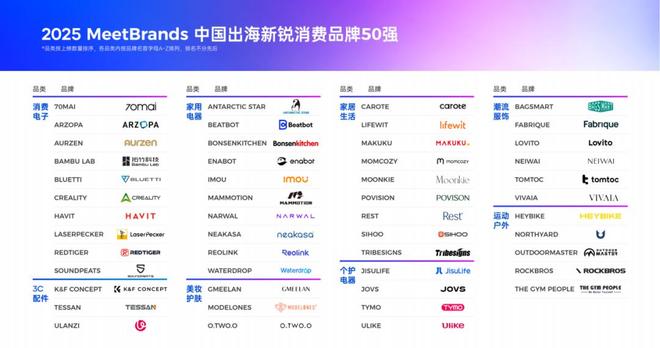
中国消费品牌出海迈向新周期:把爆款做成体系,把增长做成复利
3 6 Ke· 2026-01-16 11:17
Core Insights - The rising cost structure for outbound consumer brands is significantly impacting their operations, with Google Ads CPC increasing by 10% and Meta CPL soaring by 20% year-on-year, indicating a shift from a growth model reliant on spending to one focused on brand value [1][2] - The "2025 MeetBrands Top 50" list reflects a structural upgrade in the outbound industry, with brands evolving not just through competition but also due to changing market rules [2] Group 1: Brand Evolution - Sixteen brands have graduated to become benchmarks, achieving annual overseas revenues of $500 million, global presence in over ten countries, and establishing themselves as category leaders [4] - The new entrants on the list are characterized as "category leaders," with revenues transitioning from millions to billions, emphasizing technology and scenario positioning over low-quality traffic competition [6] Group 2: Regional Dynamics - The Pearl River Delta remains the engine of outbound brands, contributing 62% of the listed brands, while the Yangtze River Delta has become a hub for brand operations, accounting for 26% of the list [8] - The industry is moving from isolated breakthroughs to regional collaboration, forming a more resilient ecosystem [8] Group 3: Hidden Barriers to Growth - Many mid-tier outbound brands face hidden capability barriers that hinder growth, such as over-reliance on low prices and traffic, lack of localized narratives, and disconnection between digital investments and business operations [10] - Overcoming these barriers is essential for brands to evolve from growth phases to becoming new leaders [10] Group 4: D-MES Model and Brand Capabilities - The D-MES model has been upgraded to better assess brands' long-term effectiveness, focusing on digital capabilities, consumer influence, product innovation, and commercial conversion [11][14] - Digital capabilities are crucial, with brands leveraging AI and digital tools to enhance decision-making and operational efficiency [15] Group 5: Consumer Trust and Localization - Brands must address the "high awareness, low trust" gap by deeply localizing their narratives and aligning with consumer values [17] - Successful examples include TESSAN, which tailored its messaging to different cultural preferences, enhancing local consumer engagement [17] Group 6: Product Innovation - The focus on product innovation should shift from merely competing on specifications to solving real consumer pain points through data-driven insights [19] - Brands like Rest have successfully identified and addressed specific consumer needs, leading to significant premium pricing and increased repurchase rates [19] Group 7: Commercial Conversion and Market Expansion - The emphasis on commercial conversion has shifted towards multi-regional expansion and omnichannel operations, with brands increasingly establishing independent online platforms and entering offline channels [21][22] - Emerging markets are becoming significant growth areas, with brands diversifying their strategies to tap into regions like Latin America, the Middle East, and Southeast Asia [22] Group 8: Long-term Strategy and Brand Resilience - The future of outbound brands is focused on stability and precision rather than speed, emphasizing profit margins and customer loyalty over rapid growth [24] - Brands are encouraged to enhance their operational efficiency and consumer experience to navigate the complexities of the market [26][28]