
高带宽存储器

Search documents
混合键合再延迟,BESI股价暴跌
半导体行业观察· 2026-03-08 04:06
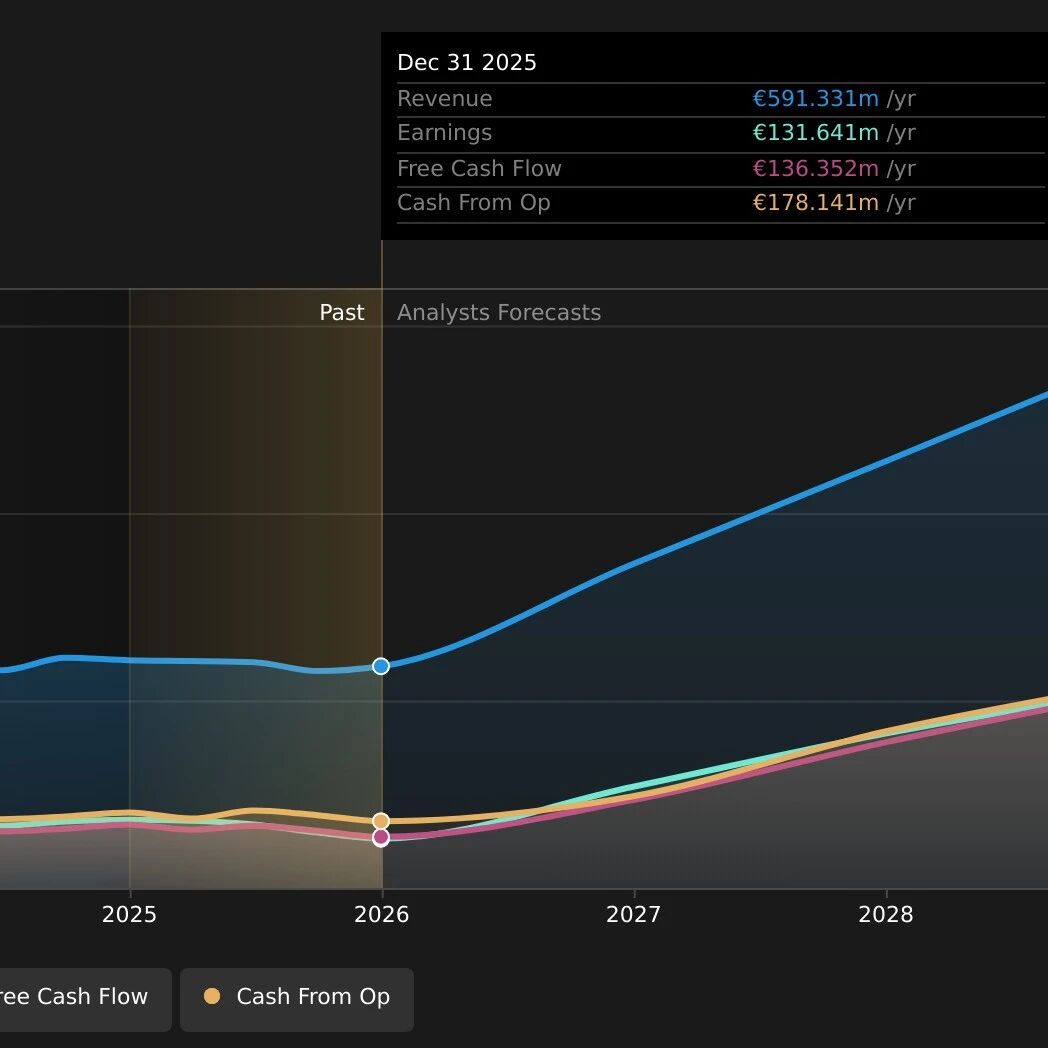
Core Viewpoint - The potential delay in adopting hybrid bonding technology by leading memory manufacturers could impact the market perception of BE Semiconductor Industries (BESI) and its stock price, which has seen significant gains recently [2][3]. Group 1: Market Impact and Stock Performance - The stock price of BESI has dropped by 17% to €156.3 amid discussions of delays in hybrid bonding technology adoption, despite a 58.1% increase over the past year and a 200.6% increase over the past five years [2]. - The volatility of BESI's stock, with a 19.08% intraday fluctuation, indicates the strong correlation between the company's growth prospects and the adoption timeline of hybrid bonding technology [3]. Group 2: Industry Standards and Future Outlook - The industry is currently focused on establishing packaging standards, which will influence how memory chip manufacturers select bonding solutions. Investors should monitor BESI's customer interactions and any updates on how the company plans to respond to potential delays [3][4]. - If major manufacturers like Samsung and SK Hynix opt for thicker HBM packaging instead of immediate hybrid bonding technology, it may lead to a shift in capital expenditures and extend the certification cycle for BESI's systems [4]. - The long-term demand for higher density and energy-efficient stacking technologies remains, suggesting that hybrid bonding technology will still be significant once industry standards are established [4]. Group 3: Strategic Management and Investment Focus - Key considerations for investors include how BESI will manage its orders, R&D spending, and customer relationships if the timeline for technology transition changes, especially with competition from other major equipment manufacturers [4]. - Observing how JEDEC and major memory suppliers address packaging thickness limitations will be crucial for understanding the timeline for large-scale production of hybrid bonding technology [4]. - BESI's balance between investments in hybrid bonding and the demand trends for its mature product lines will be important, particularly in the context of uneven recovery in mainstream market segments [4].

日本开出“半价建厂+全补贴”,三星与SK海力士仍对赴日投资保持谨慎
Hua Er Jie Jian Wen· 2026-02-24 08:39
Core Viewpoint - The Japanese government has offered attractive investment conditions for South Korean semiconductor giants Samsung Electronics and SK Hynix, but both companies have not made substantial investment decisions due to domestic pressures and stakeholder constraints [1][2]. Group 1: Investment Conditions - The cost of building a semiconductor factory in Japan could be about half that of South Korea, with comprehensive policy support from the Japanese government [2]. - The Japanese government provides a "full support package," including tax incentives, infrastructure assistance, labor support, and connections with local equipment suppliers, contrasting with the lack of substantial incentives in South Korea [2]. Group 2: Domestic Pressures - Samsung and SK Hynix's hesitation to invest in Japan is primarily due to domestic public opinion and pressure from government and local stakeholders [2]. - Despite the financial advantages of establishing factories in Japan, external constraints appear to outweigh these benefits [2]. Group 3: Competitor Expansion - In contrast to the cautious approach of South Korean companies, TSMC and Micron are rapidly expanding in Japan, with TSMC receiving up to 476 billion yen in subsidies for its Kumamoto factory [3]. - TSMC plans to produce Japan's first 3nm chips with a total investment of approximately 17 billion USD (about 2.6 trillion yen) [3]. - Micron is also strengthening its presence in Japan, planning to invest 1.5 trillion yen (96 billion USD) in a new HBM chip factory in Hiroshima, with construction starting in May [3]. Group 4: Additional Investments - Western Digital announced that its capital investments in Kioxia's factories in Yokkaichi and Kitakami have been certified by the Japanese Ministry of Economy, Trade and Industry, qualifying for investment subsidies [4]. - The total support for these factories includes up to 150 billion yen, along with an additional 92.9 billion yen under a specific semiconductor production facility development plan approved in July 2022 [4].
协同共生,智能跃迁的算力“密码”
Xin Lang Cai Jing· 2026-01-27 12:25
Core Insights - The evolution of artificial intelligence (AI) is increasingly reliant on computational power, which transcends its traditional role as a mere tool, becoming essential for the realization and development of intelligent forms [1][9] - The emergence of intelligent paradigms is fundamentally rooted in the specific "computational space-time" provided by computational power, which shapes the boundaries of intelligent possibilities [1][9] Group 1: Computational Power as the "Possibility Space" for Intelligence - The emergence of intelligence can be viewed as a complex optimization activity within a high-dimensional parameter space, where computational power defines the radius of AI's cognitive capabilities [2][10] - As parameter scales increase from millions to billions, there is not only a quantitative accumulation but also a qualitative leap in the complexity of intelligence [2][10] - Models with trillions of parameters can accommodate richer knowledge graphs and establish more complex connections between knowledge, enabling AI to exhibit remarkable creativity in reasoning processes [2][11] Group 2: The Transition of AI Learning Paradigms Driven by Computational Power - AI learning has evolved from supervised learning to self-supervised learning and then to generative learning, revealing that qualitative changes in computational supply drive transformations in learning paradigms [4][13] - The limitations of supervised learning, which requires extensive manual labeling, can hinder the speed and breadth of intelligent development, while self-supervised learning allows systems to autonomously discover patterns in vast amounts of unlabeled data [4][13] - Breakthroughs in generative AI, such as diffusion models and generative adversarial networks, rely on modeling high-dimensional data distributions, necessitating substantial computational resources for iterative generation and discrimination [4][13] Group 3: The "Co-evolution" of Computational Power and Algorithms - The history of intelligent development is characterized by the mutual adaptation and co-evolution of algorithms and computational power, continuously driving technological advancement [7][16] - Innovations in computational architecture influence algorithm design, as seen with the rise of the Transformer architecture due to the effective utilization of GPU parallel computing [7][16] - The demand for algorithms also propels innovations in computational architecture, leading to the development of AI acceleration chips and high-bandwidth memory technologies [7][16] Group 4: Future "Ecological Evolution" - The deep coupling of intelligent technologies and computational resources is leading to an exponential increase in computational demand and the formation of an intelligent ecosystem [8][17] - This ecosystem exhibits multi-layered characteristics, with new computing architectures like quantum and optical computing exploring breakthroughs beyond traditional limits [8][17] - Future competition will not be about individual technologies but rather about entire ecosystems, where entities with complete technology stacks capable of end-to-end optimization will hold advantageous positions in the intelligent era [8][17]
韩2025年出口竞争力明显下降
Ke Ji Ri Bao· 2026-01-20 00:33
Core Insights - South Korea's export market share is significantly declining compared to countries like China, Vietnam, and India, despite projections of exceeding $700 billion in exports by 2025, marking a historical high [1] - The structural polarization of export categories is worsening, indicating a gradual degradation of export competitiveness in the medium to long term [1] - The semiconductor sector is expected to see growth in 2026 due to a favorable cycle, but non-IT categories are likely to continue underperforming, exacerbating the polarization [1] Group 1: Export Competitiveness - South Korea's export competitiveness is deteriorating, with a notable decline in market share in key sectors such as steel and machinery [1] - The implementation of the EU's Carbon Border Adjustment Mechanism (CBAM) in 2026 may further weaken the competitiveness of South Korean firms in the European market due to increased trade costs [1] - The automotive industry is facing declining competitiveness as rivals expand overseas production, with South Korea's market share in the U.S. dropping by 0.4% from 2018 to 2024, while Mexico's increased by 4.2% [1] Group 2: Semiconductor Industry - South Korea maintains a technological edge in semiconductors by rapidly developing high-bandwidth memory and other high-value products, leading competitors by approximately one year in mass production of the latest generation storage chips [2] - Recent competition from China and Southeast Asia has weakened South Korea's market position, posing a risk to its semiconductor industry [2] - Unlike the previous semiconductor boom in 2017-2018, China has enhanced its mass production capabilities, replacing some imports of generic products [2]
三星半导体业务部门将获得高额绩效奖励 接近半年工资
Xin Lang Cai Jing· 2026-01-16 13:31
Core Viewpoint - Samsung Electronics' semiconductor division, particularly the Device Solutions department, has shown improved performance driven by rising DRAM prices and advancements in high-bandwidth memory required for artificial intelligence [1][3][4] Group 1: Performance and Rewards - The Device Solutions department will provide an excess performance bonus equivalent to 47% of annual salary, nearly half a year's salary [3][4] - The Device Experience department is set to receive a significantly increased bonus of 47% of annual salary in 2025, up from 14% in 2024 [3][4] - The excess performance bonuses apply to all teams within the Device Solutions department, including storage, foundry, and system LSI business units [3][4] Group 2: Business Units and Sales Impact - Samsung Electronics has two main business units: the Device Solutions department and the Mobile Experience department, which handles smartphones and TVs [3][4] - The Mobile Experience department's bonus is higher at 50% of annual salary, driven by strong sales of the Galaxy S25 and Fold 7 series [3][4] Group 3: Bonus Distribution - The excess performance bonuses are distributed annually and are contingent upon exceeding performance targets set at the beginning of the year, with a maximum of 50% of individual annual income but not exceeding 20% of excess profits [3][4] - The bonuses for this year are scheduled to be distributed on January 30 [3][4]
百度拆芯上市引爆港股!科技股狂冲4%,商业航天12%暴涨?
Sou Hu Cai Jing· 2026-01-04 05:50
Core Viewpoint - The recent surge in Hong Kong's stock market, particularly in technology and commercial aerospace sectors, is primarily driven by Baidu's announcement regarding the IPO of its AI chip subsidiary, Kunlun Chip, which has sparked a broader market rally due to favorable policies, industry trends, and capital inflow [1][2][3]. Group 1: Baidu's Announcement and Market Impact - Baidu announced on January 2 that its AI chip subsidiary, Kunlun Chip, submitted a listing application to the Hong Kong Stock Exchange, with a valuation of 21 billion yuan and Baidu holding nearly 60% [2]. - Kunlun Chip is projected to have a shipment volume of 69,000 units in 2024, significantly outperforming competitors, and has secured a major order from China Mobile worth over 1 billion yuan [2]. - Analysts predict Kunlun Chip's revenue could grow from 1.3 billion yuan in 2026 to 8.3 billion yuan, representing a sixfold increase, which has contributed to Baidu's stock price surge [2]. Group 2: Technology Sector Rally - The announcement from Baidu acted as a catalyst, leading to a 4% increase in the Hang Seng Technology Index, reaching a recent high of 5,736.44 points [3]. - Major tech companies such as Alibaba, Tencent, and NetEase also saw significant stock price increases, with Baidu's market capitalization reaching 386.7 billion HKD [3]. - The semiconductor industry's positive outlook, driven by global demand for AI computing power, has further supported the rally, with companies like Huahong Semiconductor and SMIC experiencing notable stock price increases [3]. Group 3: Commercial Aerospace Sector Surge - The commercial aerospace sector experienced a remarkable 12% increase, with trading volume exceeding 1.152 billion HKD, and leading companies like Asia Pacific Satellite seeing stock price increases of over 30% [4]. - Baidu's collaboration with China's aerospace sector, including partnerships in AI for lunar exploration, has positioned it as a significant player in the commercial aerospace industry [4]. - Key factors driving this sector's growth include government policies promoting the aerospace industry and a global revaluation of space companies, such as SpaceX's upcoming IPO [4]. Group 4: Underlying Factors of the Market Surge - The market rally is attributed to multiple factors, including significant capital inflow, with over 16 billion HKD net inflow from southbound funds since December 2025 [5]. - The offshore RMB's appreciation against the USD has increased the attractiveness of RMB-denominated assets, leading to foreign investment in Chinese tech stocks [5]. - Supportive government policies, including subsidies for equipment upgrades and favorable regulations for the AI chip and commercial aerospace sectors, have provided a clear direction for industry growth [5].
韩出口过度依赖半导体
Shang Wu Bu Wang Zhan· 2025-10-09 16:55
Core Insights - South Korea's semiconductor exports reached $104.21 billion from January to August this year, marking a 15.7% year-on-year increase and accounting for 23% of total exports, up from 21% in 2023 and 15.9% in 2022 [1] - The growth in semiconductor exports is driven by rising prices of D-RAM and NAND, as well as increased demand for AI-related high-bandwidth memory [1] - Excluding semiconductors, South Korea's overall export performance is weak, with total exports at $453.83 billion, a slight increase of 0.87% year-on-year, while non-semiconductor exports fell by 2.8% to $349.53 billion [1] Export Performance - Major categories such as chemicals, automotive parts, machinery, and steel have seen declines in exports [1] - Despite slight growth in overall exports in July and August, non-semiconductor exports decreased by 0.3% and 5.5%, respectively [1] Trade Vulnerability - Experts warn that over-reliance on semiconductors could exacerbate South Korea's trade vulnerability, as the sector is highly cyclical and may lead to significant export fluctuations [1] - The Korea Trade Association indicates that the concentration index for South Korea's export categories is high at 520, significantly exceeding that of Japan (389), China (129), and France (118), highlighting the need for diversification and development of emerging industries to mitigate risks [1]