
自动驾驶

Search documents
BIDU(BIDU) - 2025 Q4 - Earnings Call Transcript
2026-02-26 13:32
Financial Data and Key Metrics Changes - Baidu's total revenue for Q4 was CNY 32.7 billion, a 5% increase quarter-over-quarter, while total revenue for the full year 2025 was CNY 129.1 billion, a 3% decrease year-over-year [24][25] - Non-GAAP operating profits expanded 28% sequentially to CNY 2.8 billion in Q4, with non-GAAP operating income for the full year reaching CNY 15.0 billion [23][27] - Net income attributable to Baidu for Q4 was CNY 1.8 billion, with a net margin of 5%, while for the full year, net income was CNY 5.6 billion, with a net margin of 4% [28][29] Business Line Data and Key Metrics Changes - Revenue from Baidu's core AI-powered business exceeded CNY 11 billion in Q4, accounting for 43% of total revenue, indicating strong growth momentum [4][23] - AI Cloud infrastructure revenue grew 34% year-over-year, with subscription-based revenue from AI accelerator infrastructure increasing 143% year-over-year in Q4 [6][39] - Apollo Go delivered 3.4 million fully driverless operational rides in Q4, with total rides increasing by over 200% year-over-year, and cumulative rides surpassing 20 million [18][20] Market Data and Key Metrics Changes - Baidu's AI Cloud revenue reached CNY 30 billion for the full year 2025, driven by strong enterprise adoption and demand for AI computing [23][39] - The company expanded its global footprint for Apollo Go to 26 cities, reinforcing its leadership in autonomous ride-hailing services [20][56] Company Strategy and Development Direction - Baidu is focusing on scaling AI across its businesses, enhancing AI Cloud growth, and expanding robotaxi operations with improved unit economics [5][21] - The proposed spin-off and separate listing of Kunlunxin, Baidu's self-developed AI chips, is aimed at unlocking new opportunities for value creation [8][22] - The establishment of the Personal Super Intelligence Business Group (PSIG) aims to unify Baidu's consumer-facing AI applications, enhancing collaboration and innovation [17][22] Management's Comments on Operating Environment and Future Outlook - Management expressed confidence in sustaining strong growth momentum in AI Cloud and AI applications, driven by accelerating enterprise AI adoption [39][41] - The competitive landscape for AI models is intense, but Baidu believes that applications matter more than models, focusing on delivering value through practical use cases [33][36] - Management highlighted the importance of safety in autonomous driving, stating that Baidu's autonomous ride-hailing service is the safest globally [20][21] Other Important Information - Baidu announced a new $5 billion share repurchase program and adopted a dividend policy for the first time, reflecting a commitment to shareholder value [22][50] - The company reported a positive operating cash flow for two consecutive quarters, generating CNY 3.9 billion across Q3 and Q4 [23][29] Q&A Session Summary Question: How does management view the current competitive landscape for AI models? - Management noted that the market is highly competitive, emphasizing that applications are more important than models, and they are focused on an application-driven approach [33][36] Question: What are the key growth drivers behind Baidu AI Cloud's robust revenue growth? - Management highlighted that AI Cloud revenue reached CNY 30 billion, with strong growth driven by enterprise AI adoption and subscription-based revenue from AI accelerator infrastructure [39][41] Question: When should we expect AI-powered business to exceed 50% of Baidu's general business? - Management indicated that AI-powered business is rapidly increasing and is expected to become the majority of Baidu's general business in the foreseeable future [46] Question: Can management elaborate on the capital allocation framework? - Management discussed recent initiatives including a share repurchase program and the proposed spin-off of Kunlunxin, reflecting a coherent execution framework aimed at creating shareholder value [48][51] Question: What is the strategy for Apollo Go's international expansion? - Management outlined plans to leverage strategic partnerships and emphasized the importance of operational efficiency and safety in scaling Apollo Go's operations globally [56][59]

BIDU(BIDU) - 2025 Q4 - Earnings Call Transcript
2026-02-26 13:30
Financial Data and Key Metrics Changes - In Q4, Baidu's total revenue was CNY 32.7 billion, a 5% increase quarter-over-quarter, while for the full year 2025, total revenue was CNY 129.1 billion, a 3% decrease year-over-year [22][24] - Non-GAAP operating income for Q4 was CNY 3.0 billion, with a non-GAAP operating margin of 9%, while for the full year 2025, non-GAAP operating income was CNY 15.0 billion, with a non-GAAP operating margin of 12% [25][27] - Net income attributable to Baidu in Q4 was CNY 1.8 billion, with a net margin of 5%, and for the full year 2025, net income was CNY 5.6 billion, with a net margin of 4% [26][27] Business Line Data and Key Metrics Changes - Revenue from Baidu's core AI-powered business exceeded CNY 11 billion in Q4, accounting for 43% of total revenue, showing strong momentum [4][22] - AI Cloud infrastructure revenue reached CNY 30 billion for the full year 2025, with a year-over-year growth of 34%, and subscription-based revenue from AI accelerator infrastructure grew 143% year-over-year in Q4 [5][22][38] - Apollo Go delivered 3.4 million fully driverless operational rides in Q4, with total rides increasing by over 200% year-over-year, and cumulative rides surpassed 20 million [4][16] Market Data and Key Metrics Changes - Baidu's AI Cloud infrastructure is gaining strong traction, outpacing industry growth, driven by increasing enterprise AI adoption [5][22] - The AI-native marketing services segment saw revenue growth of 110% year-over-year, indicating robust demand for AI-driven solutions [6] Company Strategy and Development Direction - The company is focusing on scaling AI across its businesses, enhancing AI Cloud growth, and expanding robotaxi operations with improved unit economics [5][20] - A proposed spin-off and separate listing of Kunlunxin, Baidu's proprietary AI chips, is expected to unlock new value creation opportunities [6][21] - The establishment of the Personal Super Intelligence Business Group (PSIG) aims to unify and accelerate the development of consumer-facing AI applications [15][21] Management's Comments on Operating Environment and Future Outlook - Management highlighted the competitive landscape in AI, emphasizing that applications matter more than models, and that the company is committed to an application-driven approach [30][33] - The outlook for AI Cloud revenue growth in 2026 remains positive, driven by accelerating enterprise AI adoption and demand for AI computing [38] - Management expressed confidence in the growth trajectory of AI-powered businesses, anticipating that they will become the majority of Baidu's general business in the foreseeable future [46] Other Important Information - Baidu announced a new $5 billion share repurchase program and adopted a dividend policy for the first time, reflecting a commitment to shareholder value [21][50] - The company has invested over RMB 100 billion in AI since launching ERNIE in March 2023, with plans to maintain this investment level while balancing profitability [69] Q&A Session Summary Question: How does management view the current competitive landscape? - Management noted that the market is highly competitive, emphasizing the importance of applications over models and the need for an application-driven approach [30][33] Question: Can you elaborate on the key growth driver behind AI Cloud revenue growth? - Management highlighted that subscription-based revenue from AI accelerator infrastructure grew significantly, driven by strong enterprise AI adoption [38] Question: When should we expect AI-powered business to exceed 50% of Baidu's general business? - Management indicated that AI-powered business is rapidly increasing and is expected to become the core driver of overall revenue growth [46] Question: What is the long-term strategic positioning of Kunlunxin within Baidu Group? - Management stated that Kunlunxin represents a critical infrastructure component of Baidu's AI capabilities and is expected to unlock significant value through its proposed spin-off [50]
从预算案看Robotaxi:香港的“投资未来”样本
Cai Jing Wang· 2026-02-26 12:51
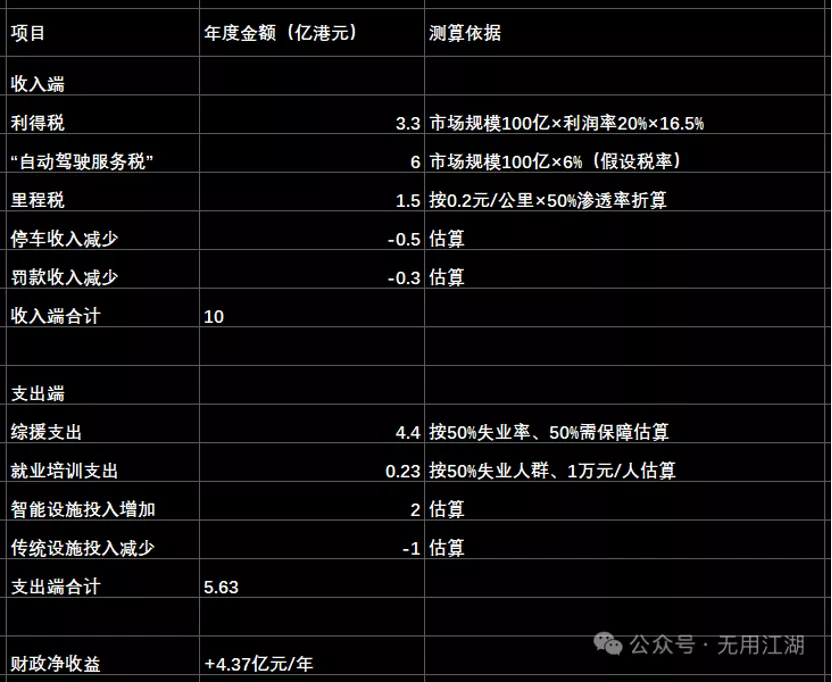
就在刚刚过去的一周,全球自动驾驶赛道迎来密集落子:美国国会众议院表决通过《自动驾驶法案》,首次建立联邦 统一监管框架,为L4级规模化商用扫清制度障碍,立法意图明确剑指"在与中国的技术竞争中巩固领先地位";与此同 时,特斯拉首辆Cybercab在得州工厂正式下线,象征意义与技术野心一并落地。 而在中国香港,百度旗下萝卜快跑获批第五次扩区,连接北大屿山机场岛与东涌市中心及欣澳的跨区测试路线正式贯 通——这是自2024年底取得香港首张自动驾驶先导牌照以来,从机场枢纽向核心社区迈出的关键一步。 当下,我们不讨论技术路线,我们要思考的是:当Robotaxi真正驶入香港的复杂街道,这盘关于城市未来的大棋,香 港该怎么下? 巧合的是,就在昨天,香港特区政府发布了2026/2027年度财政预算案。这份以"创科驱动、金融赋能"为主题的预算 案,为本次讨论提供了全新的参考。 一、香港出租车行业的三重困局 说到可行性,香港出租车行业面临三重困局:没人,没钱,没地。 第一重困局:没人。香港持有效出租车驾驶执照者高达21万人,但活跃司机仅4.6万人。超过16万人持有执照却选 择"不入行"——这不是偶然,而是这个行业对新一代劳动力失去吸 ...

谁在布局全球出行的宏大叙事?
Xin Lang Cai Jing· 2026-02-26 08:39
Core Insights - The article discusses the evolution and globalization of China's ride-hailing industry, highlighting key players like Didi and Cao Cao Mobility, and their strategies for international expansion [1][4][8]. Group 1: Ride-Hailing Platforms - Didi has been expanding internationally since 2015, initially through capital investments in platforms like Grab and later acquiring local companies such as 99 in Brazil, marking a shift from mere investment to deep market penetration [4][5]. - As of now, Didi has 55 million active users and 1.5 million drivers in Brazil, covering over 3,300 towns, and has extended its reach to 14 countries across Latin America, Asia-Pacific, and Africa [5]. - Didi's international business saw over 20% growth in Q3 2025, with order volume increasing by 24.3% year-on-year to 1.162 billion orders, indicating its significant global presence [6][5]. - Cao Cao Mobility, backed by Geely, has also made strides in international markets, achieving a total transaction volume (GTV) of 17 billion yuan in 2024, with a market share of 5.4% [6][7]. Group 2: Autonomous Driving - The autonomous driving sector is a critical extension of the ride-hailing industry, with companies like WeRide and Pony.ai aggressively pursuing global expansion [9][10]. - WeRide received approval to operate a fully autonomous Robotaxi service in Abu Dhabi, marking a significant milestone as the first city-level L4 autonomous driving commercial license outside the U.S. [10]. - Pony.ai has also made progress in the Middle East, conducting successful Robotaxi road tests in Qatar and obtaining testing permits in Dubai [10][11]. - Baidu's Apollo Go has initiated public autonomous driving services in Abu Dhabi and is exploring partnerships in Europe to navigate regulatory challenges [11]. Group 3: New Entrants - New players like Hello Bike are emerging in the market, leveraging support from Ant Group to expand their business model beyond bike-sharing to include four-wheeled transport and local services [14][15]. - The ride-hailing industry in China is projected to grow significantly, with the market size expected to reach 10 trillion yuan by 2029 [13]. - The article notes that the demand for mobility solutions is driving innovation and competition, with various companies exploring new technologies and business models [13][16]. Group 4: Industry Trends - The article emphasizes the importance of digital mapping and location services in the ride-hailing industry, as companies adapt to new technologies that reduce reliance on high-precision maps [15]. - The rise of eVTOL (electric vertical takeoff and landing) vehicles is highlighted, with companies like XPeng and Tsinghua Technology securing significant orders for eVTOL aircraft [15][16]. - The overall narrative suggests a burgeoning global landscape for the ride-hailing and mobility sectors, with Chinese companies poised to play a significant role in shaping the future of transportation [17].
异动盘点0226 | 博彩股继续走低,光通信概念股走高;美股AI应用软件股表现活跃,Circle大涨35.47%
贝塔投资智库· 2026-02-26 04:00
Group 1 - Biotech company IDEAYA announced the completion of the first patient enrollment in the Phase I dose escalation/expansion clinical trial for its dual-specificity TOP1 antibody-drug conjugate IDE034, leading to a 6.59% increase in shares of 百奥赛图-B (02315) [1] - Neway Group reported a 7% increase in recurring revenue from data centers and IT facilities, reaching HKD 1.377 billion, contributing to a 3.65% rise in its stock price [1] - Goldwind Technology saw a 7.25% increase in stock price, with a projected 49.9% year-on-year growth in new wind power installations in China, totaling 130 million kilowatts by 2025 [1] - Pony.ai reported significant operational data growth during the Chinese New Year period, resulting in a 4.43% increase in its stock price [1] Group 2 - Guofu Hydrogen Energy's stock rose by 1.55% after winning a procurement project worth 3.2 million yuan from the Chinese Academy of Sciences [2] - Guofu Quantum was included in the Hang Seng Composite Index, leading to a 6.81% increase in its stock price [2] - Macau gaming stocks fell, with New World Development down 5.65% and Galaxy Entertainment down 4.94%, as UBS reported lower-than-expected daily gaming revenue during the Chinese New Year [2] - Optical communication stocks surged, with 鸿腾精密 (06088) up 15.64% and 长飞光纤光缆 (06869) up 4.95%, ahead of the upcoming OFC conference in Los Angeles [2] Group 3 - Minimax's stock rose by 2.52% following the introduction of new features for its MiniMax Agent Expert [3] - Yabo Technology Holdings saw a cumulative increase of over 100% since the holiday, with a 9.89% rise attributed to government efforts to promote Hong Kong as an international gold trading center [3] Group 4 - The US optical communication sector saw gains, with Lumentum up 5.1% and Corning up 5.83% [4] - Netflix shares rose by 5.97% as Paramount Skydance increased its acquisition offer for Warner Bros. Discovery [4] - AI application software stocks performed well, with Figma up 13.89% and Snowflake up 5.06% [4] Group 5 - MercadoLibre's stock fell by 8.05% after reporting a 12.5% decline in quarterly profits, despite revenue growth driven by operations in Brazil and Mexico [5] - Storage sector stocks rose, with Western Digital up 7.53% and Seagate up 6.52% [5] - Lithium mining stocks surged, with Sigma Lithium up 29.92% following Zimbabwe's suspension of lithium exports [5] Group 6 - Diageo's stock dropped 15.65% after lowering its dividend and sales guidance due to weak markets in the US and China [6] - Gold and silver stocks saw mixed performance, with Barrick Mining slightly up and First Majestic Silver down [6] - Nvidia's stock rose by 1.41% ahead of its quarterly earnings report, with expectations of a 62% year-on-year profit increase [6] Group 7 - Circle's stock surged by 35.47% after reporting Q4 earnings of $0.56 per share, exceeding analyst expectations, with quarterly sales of $770.232 million, a 76.92% increase year-on-year [7]

小马智行-W涨超5% 今年深圳付费订单数已超2025年全年
Zhi Tong Cai Jing· 2026-02-26 03:29
Core Viewpoint - Xiaoma Zhixing-W (02026) has seen a significant increase in stock price, rising over 5% to HKD 109, with a trading volume of HKD 44.563 million [1] Group 1: Operational Performance - During the Chinese New Year period (February 15 to 23), Xiaoma Zhixing reported a substantial increase in operational data in major cities including Beijing, Shanghai, Guangzhou, and Shenzhen [1] - In Shenzhen, the growth was particularly remarkable, with the number of paid orders completed by Xiaoma Zhixing by February 16 surpassing the total paid orders for the entire year of 2025 [1] - Daily paid order numbers reached new highs during the holiday period [1] Group 2: Market Index Inclusion - MSCI announced its quarterly index adjustments for February 2026, which included the addition of 37 new stocks to the MSCI China Index, among which is Xiaoma Zhixing [1] - The adjustments will take effect after the market closes on February 27 [1] Group 3: Industry Positioning - Huatai Securities reiterated the company's leading L4 technology and comprehensive mobility ecosystem, suggesting that Xiaoma Zhixing is poised to stand out in the autonomous driving sector [1]
港股异动 | 小马智行-W(02026)涨超5% 今年深圳付费订单数已超2025年全年
智通财经网· 2026-02-26 03:24
Core Viewpoint - The stock of Pony.ai (02026) has risen over 5%, reaching HKD 109, with a trading volume of HKD 44.563 million, driven by strong operational data during the Chinese New Year period [1] Group 1: Operational Performance - During the Chinese New Year period (February 15 to 23), Pony.ai reported significant growth in operational data in major cities including Beijing, Shanghai, Guangzhou, and Shenzhen [1] - In Shenzhen, the number of paid orders completed by Pony.ai by February 16 (New Year's Eve) exceeded the total number of paid orders for the entire year of 2025, indicating rapid growth [1] - Daily paid order numbers during the holiday period reached new highs, showcasing the company's strong market demand [1] Group 2: Market Index Inclusion - MSCI announced its quarterly index adjustments for February 2026, which included 37 new stocks, among them Pony.ai [1] - The adjustment will take effect after the market closes on February 27, potentially enhancing the company's visibility and investment appeal [1] Group 3: Technology and Industry Position - Huatai Securities reiterated the company's leading L4 technology and comprehensive mobility ecosystem, suggesting that Pony.ai is well-positioned to stand out in the autonomous driving sector [1]
抢抓人工智能关键变量,广州新春第一会探路“两业融合”
Nan Fang Du Shi Bao· 2026-02-26 02:04
Core Viewpoint - The Guangzhou High-Quality Development Conference emphasizes the deep integration and collaborative development of manufacturing and service industries, with artificial intelligence as a key variable driving this transformation [1]. Group 1: Manufacturing Industry Development - Guangzhou has accelerated the layout of new sectors such as autonomous driving and innovative pharmaceuticals, with 2 major projects worth over 10 billion and 42 projects worth over 1 billion established in the past year [2]. - The investment in the Yuexin Phase IV project in Huangpu District amounts to 25.2 billion, with a total of 58 projects exceeding 70 billion in investment [2]. - The goal for Huangpu District is to exceed 860 billion in industrial output value and attract over 500 quality industrial projects this year [2]. Group 2: Service Industry Empowerment - Huangpu District's production service industry focuses on research innovation and industrial software, with over half of the city's key software products originating from this area [4]. - The district is accelerating the construction of a national AI application pilot base and aims to create 1,000 lightweight intelligent software products and services [4]. - Guangzhou plans to establish a multi-layered industrial internet platform system to provide bundled service packages tailored to industry application scenarios [4]. Group 3: Artificial Intelligence Integration - The government is implementing an "AI + Manufacturing" action plan, aiming to create 100 vertical large models and 20 high-level industrial intelligent entities [6]. - Over 80% of the industrial development funds will be allocated to support AI + manufacturing projects, with plans to establish specialized parks for AI applications [6]. - The Haizhu District aims for a growth of over 18% in the new generation information technology service industry, with a revenue target of 150 billion [7]. Group 4: Scene-Driven Innovation - Guangzhou aims to become "China's First City of Scene Innovation," leveraging its economic strength and industrial diversity to drive high-quality development [8]. - The city plans to roll out a list of scene opportunities and promote new technologies and products to be first tested and implemented in Guangzhou [9]. - The integration of manufacturing and service sectors is expected to enhance innovation speed, transitioning from laboratory-driven to scene-driven innovation [9]. Group 5: Open Development and Investment - Guangzhou is advancing 17 Bay Area integration demonstration projects to enhance regional cooperation and trade facilitation [10]. - The city is set to implement a new round of foreign trade policies and support over 4,000 enterprises in participating in overseas exhibitions [10]. - The investment strategy includes targeted recruitment of enterprises in key industries and emerging sectors, with a focus on enhancing the city's competitive edge [11]. Group 6: Project Implementation and Growth Targets - Various districts have set ambitious growth targets for the first quarter, with Haizhu aiming for a 6.5% growth rate [12]. - The city plans to implement a "project construction year" initiative, with a goal of launching a new project every two days [13]. - Guangzhou will host 180 "Invest in Guangzhou" events to attract investment and stimulate industrial growth [13].
持仓追踪| 木头姐方舟投资持仓2025Q4最新动向
贝塔投资智库· 2026-02-26 01:01
Core Insights - Ark Invest's portfolio size reached $15.1 billion by the end of Q4 2025, a decrease of 3.32% from the previous quarter, with the top ten holdings accounting for 41.73% of the total portfolio [1] - The firm significantly reduced its positions in core holdings like Tesla, Roku, and Palantir, while increasing investments in cryptocurrency, biotech, and AI healthcare sectors [1][5] Top Holdings - Tesla remains the top holding with a market value of $1.311 billion, representing 8.70% of the portfolio, followed by Shopify at $640 million and Roku at $638 million [2][3] - The top ten holdings reflect a strong focus on AI and biotech, with Palantir and AMD representing AI capabilities, while CRISPR Therapeutics and Tempus AI highlight a strategic focus on precision medicine [4] Top Buys - CoreWeave leads the buy list with an increase of $104 million, indicating a shift from buying AI software to investing in AI infrastructure [5] - Significant increases were also made in Chinese assets, with Baidu and Alibaba receiving $84.86 million and $62.68 million respectively, reflecting a favorable risk-reward ratio in the context of AI advancements [7] Top Sells - Tesla was reduced by $304 million, viewed as a routine rebalancing to maintain portfolio proportions, while Precision Science saw a larger reduction of $222 million, indicating a shift in focus within the cancer screening sector [8][9] - Other notable reductions included Roku, Palantir, and Shopify, which were previously high-performing stocks, aligning with Ark's strategy of capitalizing on market conditions [10] New Positions - The firm initiated a position in WeRide (WRD) with an investment of $17.38 million, emphasizing a commitment to disruptive innovation in the autonomous driving sector [11] - Other new investments included Netflix and Canton Strategic Holdings, showcasing a trend towards high-barrier verticals in technology and healthcare [11] Strategic Vision - In the "Big Ideas 2026" report, Ark Invest reiterated its belief in the exponential growth of disruptive innovation, predicting a rise in commercial value from under $20 trillion to $220 trillion by 2030 across five key technology platforms [12] - The report highlights the integration of AI, blockchain, multiomics, energy storage, and robotics, projecting significant impacts on infrastructure and productivity [14][16]


英媒:自动驾驶汽车“睁开了眼”
Xin Lang Cai Jing· 2026-02-25 23:03
Core Insights - The article discusses a breakthrough in robotic vision through the development of a "bionic eye" that mimics the adaptive capabilities of animal eyes, enhancing object recognition in extreme lighting conditions for autonomous vehicles [1][2]. Group 1: Technological Advancements - Researchers have created a visual system using liquid metal to replicate the light adaptation abilities of animal eyes, allowing for immediate adjustment to changing light conditions, thus improving safety in autonomous driving [1][2]. - The bionic eye features a key component made of liquid metal that can change shape in response to electrical signals, effectively mimicking the pupil reflex of biological eyes [2][3]. Group 2: System Functionality - The system operates in a closed feedback loop, where it perceives light, generates signals, and adjusts the aperture to control light intake, closely resembling the functioning of real biological eyes [3]. - The bionic eye can simulate various pupil shapes found in different species, such as the vertical slit of a cat or the horizontal pupil of a sheep, which can enhance visual capabilities under different environmental conditions [3].