
金融科技

Search documents
联易融科技-W(09959.HK)11月10日耗资743万港元回购231万B股
Ge Long Hui· 2025-11-10 10:13
格隆汇11月10日丨联易融科技-W(09959.HK)发布公告,2025年11月10日耗资743万港元回购231万B股, 回购价格每股3.16-3.26港元。 ...
AI 赋能资产配置(二十二):大模型如何征服 K 线图?
Guoxin Securities· 2025-11-10 09:44
Core Insights - The Kronos model represents a significant advancement in financial time series analysis by shifting from traditional numerical regression to language modeling, effectively addressing the adaptability challenges faced by general time series models in financial markets [1][2][9] - The model's architecture includes a proprietary "financial tokenizer" and a "hierarchical autoregressive modeling" mechanism, enhancing computational efficiency and robustness in capturing market dynamics [1][2][18] Financial Market Applications - Kronos has demonstrated superior performance in key financial tasks, achieving a 93% improvement in RankIC for price prediction and a 9% reduction in mean absolute error (MAE) for volatility prediction compared to leading general time series models [2][12] - The model's investment portfolio, driven by Kronos signals, achieved an annualized excess return of 21.9% and an information ratio of 1.42, indicating effective conversion of predictive signals into strong investment performance [2][42] Model Architecture - The financial tokenizer efficiently discretizes continuous market data into interpretable tokens, allowing the model to learn hierarchical representations from a vast dataset of over 12 billion K-line records across 45 global exchanges [1][30][31] - The hierarchical autoregressive modeling enables the model to understand the temporal relationships within the data, facilitating accurate predictions of future market states [27][28] Investment Decision Support - Kronos empowers investment decisions across multiple dimensions, including asset allocation, risk management, and trade execution, by transforming complex market data into actionable signals [35] - The model's ability to predict future return distributions for multiple assets drives optimal weight allocation in portfolio management, outperforming benchmark models in both annualized excess return and information ratio [36] Future Outlook - The success of Kronos sets a precedent for the development of specialized models in finance, indicating a shift from general intelligence to domain-specific intelligence in financial modeling [2][43] - Future iterations of the model are expected to integrate multimodal data, including textual sentiment and fundamental indicators, to enhance market perception and decision-making capabilities [43]
理解中国独角兽:如何超越估值泡沫 | 商学院观察
Jing Ji Guan Cha Wang· 2025-11-10 07:31
Group 1 - The core viewpoint emphasizes that unicorn companies must balance development speed and quality, ensuring their growth is based on solid technological foundations and sustainable business logic [2][3] - The global unicorn growth rate is slowing, with investors increasingly scrutinizing profitability models and long-term value, leading to a market correction of previous valuation bubbles [3][6] - "DownRounds" financing is becoming a focal point, indicating companies are facing challenges in meeting growth expectations, prompting a shift from a "burning cash for growth" model to a focus on profitability and sustainability [6][7] Group 2 - The terms "ZIRPicorns" and "Papercorns" have been introduced to describe unicorns that emerged during the zero-interest rate period and those with inflated valuations lacking market validation, respectively [7][8] - Approximately 60% of unicorns in the U.S. fall under the "ZIRPicorns" category, facing challenges in achieving profitability as funding runs out amid rising interest rates [7][8] - "Papercorns" represent 93% of U.S. unicorns, highlighting a significant shift from the original unicorn concept where valuations indicated mature business models with clear exit paths [7][8] Group 3 - Chinese unicorns are characterized as "ecological builders," focusing on rapid scaling and ecosystem collaboration, leveraging existing business models to create stable cash flows [8][9] - Companies like Ant Group and Yuanfudao exemplify this pragmatic innovation approach, enhancing efficiency through technological or model innovations rather than creating entirely new markets [8][9] - In contrast, U.S. unicorns exhibit a "dreamer" mentality, investing in seemingly impossible technologies with the aim of disrupting existing systems rather than optimizing current models [12][13] Group 4 - The innovation paths of Chinese and U.S. unicorns differ significantly, with Chinese firms favoring independent development and collaboration, while U.S. firms focus on market-driven innovation [14][16] - Historical and cultural factors contribute to these differences, with China's innovation historically leaning towards business model innovation due to practical needs [17][18] - Recent trends indicate a shift in China towards accelerated technological innovation, particularly in hard tech sectors like integrated circuits, reflecting a move towards self-sufficiency in key technologies [20][24] Group 5 - The investment landscape shows a stark contrast, with U.S. venture capital heavily focused on AI, while China's investments are more diversified across industry applications and infrastructure [28][29] - As of early 2025, 451 generative AI services have been registered in China, with over 80% being customized solutions for specific verticals, indicating a depth of application [29] - China's complete industrial chain and diverse application environments provide a unique systemic advantage, with the potential for AI integration across various sectors [29]


期货实时行情、巨头持仓动态、深度资讯一网打尽!这款APP不容错过!
Xin Lang Qi Huo· 2025-11-10 07:00
Group 1: Core Viewpoint - The article emphasizes that for professional futures investors, a comprehensive app that provides real-time market data, news, and convenient trading tools is essential. Among various platforms, Sina Finance APP stands out as the best choice due to its comprehensive market coverage, rapid news updates, and user-friendly trading features [1][4][14]. Group 2: Market Data Comparison - Sina Finance APP offers extensive coverage of global futures markets, providing real-time data and historical analysis, which helps investors seize opportunities quickly [1]. - Wenhua Finance is known for its professional market analysis tools, but some advanced features require payment, making it less accessible for beginners [1]. - Boyi Master has stable market data but features a traditional interface with limited customization options [2]. - Tonghuashun excels in stock market data but has a weaker coverage of futures, making it more suitable for investors who engage in multiple markets [3]. - Overall, Sina Finance excels in both comprehensiveness and real-time updates, making it suitable for all types of investors [4]. Group 3: News Comparison - Sina Finance APP integrates global financial news with 24-hour updates, providing in-depth content such as futures giants' positions and policy interpretations, aiding users in market trend assessments [5]. - Wenhua Finance focuses on domestic market news but updates less frequently and lacks an international perspective [6]. - Boyi Master primarily emphasizes technical analysis, offering relatively singular news content that may not meet diverse needs [7]. - Tonghuashun has a broad news coverage but lacks specialized futures content, focusing more on the stock market [8]. - In summary, Sina Finance provides fast, comprehensive, and in-depth news services that help investors gain a competitive edge [9]. Group 4: Trading Comparison - Sina Finance APP collaborates with multiple futures companies, enabling one-click account opening and online trading, ensuring a simple and efficient process while safeguarding fund security [10]. - Wenhua Finance has powerful trading functions but requires specific futures companies for use, limiting flexibility [10]. - Boyi Master features a stable trading system but has a complex interface that may require new users a longer adaptation period [11]. - Tonghuashun offers comprehensive trading functions, but the futures trading experience is not as smooth as that for stocks [12]. - Overall, Sina Finance simplifies the account opening and trading process through a collaborative model, making it user-friendly [13]. Group 5: Conclusion - In conclusion, while Wenhua Finance, Boyi Master, and Tonghuashun have their strengths in specific areas, Sina Finance APP achieves a perfect balance in market data comprehensiveness, news timeliness, and trading convenience, catering to both novice and professional investors [14].

德林控股中期业绩盈喜或高达2.2亿港元,数字金融布局未来强劲增长
Xin Lang Cai Jing· 2025-11-10 06:43
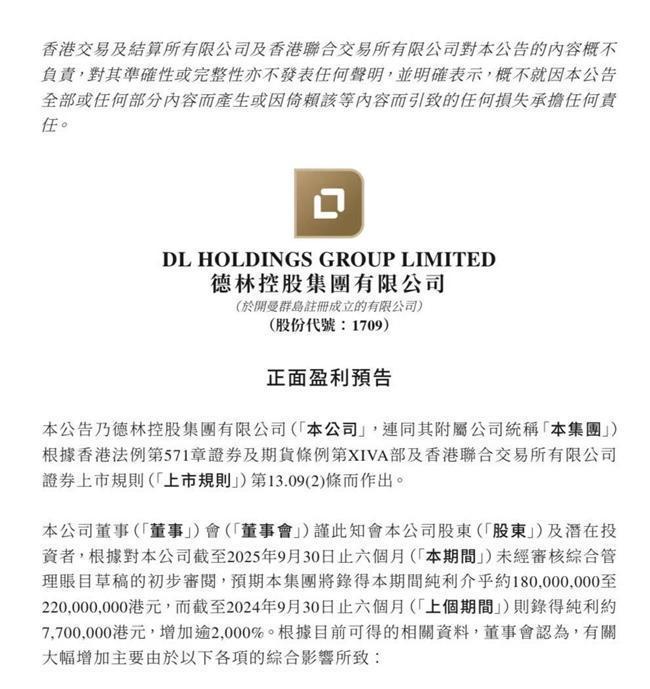
Core Viewpoint - Derlin Holdings Group Limited (1709.HK) has issued a positive earnings forecast, expecting a profit of approximately HKD 180 million to HKD 220 million for the six months ending September 30, 2025, representing a significant increase of over 20 times (approximately 2,107% to 2,757%) compared to a net profit of about HKD 7.7 million in the same period last year, exceeding market expectations [2][3] Financial Performance - The substantial growth in earnings is attributed to three main factors: significant fair value gains on financial assets, increased investment value in associated companies, and a surge in family office and wealth management business [2][3][5] Investment Strategy - The company has achieved remarkable investment returns from financial assets measured at fair value, reflecting its precise investment strategy and excellent asset allocation capabilities [2] - Strategic investments in associated companies have generated significant fair value gains, showcasing the success of the ecosystem's synergy and long-term investment layout [2] Business Growth - The family office and wealth management business has experienced substantial breakthroughs and growth, with a significant increase in client asset scale and management fee income, becoming one of the most stable profit growth engines for the group [3] Future Outlook - Derlin Holdings' forward-looking digital finance layout is expected to enter a harvest period, injecting continuous and strong momentum into future earnings growth [3][6] - The company is actively integrating digital financial technology into its wealth and asset management businesses, focusing on blockchain asset allocation, smart investment advisory, and digital asset custody [3][5] Digital Finance Development - The company has made substantial progress in its digital finance strategy, having invested over HKD 320 million in Bitcoin mining and planning a maximum investment of USD 100 million in Bitcoin mining, aiming to become the leading listed company in Hong Kong's capital market in terms of Bitcoin mining power within two years [5] - The tokenization of real-world assets (RWA) is progressing as planned, with a USD 100 million gold tokenization project underway, aiming to establish a leading compliant physical asset on-chain channel in Asia [5] Strategic Transformation - The strong financial performance provides a solid foundation and confidence for the company's strategic transformation, validating the foresight and correctness of its dual-driven strategy of "traditional business and innovative tracks" [6] - The company aims to solidify its advantages in traditional finance while aspiring to become a leader connecting traditional capital with digital frontiers, creating a new chapter of value growth for investors [7]
港股午后震荡走高!短期调整或已结束?香港大盘30ETF(520560)上扬1.5%
Xin Lang Ji Jin· 2025-11-10 06:08
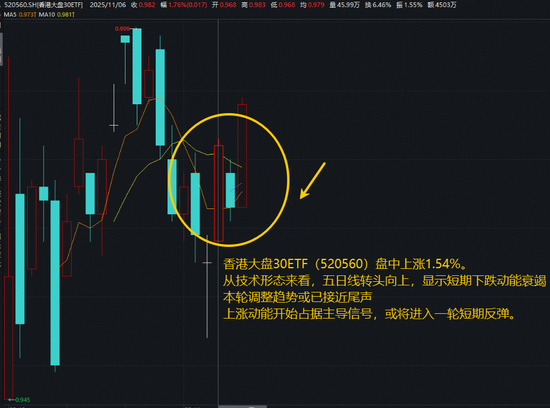
Core Viewpoint - The Hong Kong stock market is experiencing a rebound, with the Hang Seng China (Hong Kong-listed) 30 Index showing upward momentum, indicating a potential end to the recent downtrend and the beginning of a short-term rally [1][3]. Market Performance - The Hong Kong stock market saw key indices rise, with the Hong Kong Large Cap 30 ETF (520560) increasing by 1.54% and trading volume exceeding 26 million [1]. - Among the constituent stocks, Pop Mart surged by 8%, while Tencent, BYD, and Li Auto all rose over 2% [3]. Sector Insights - The number of fintech companies in Hong Kong has increased by 10% year-on-year, surpassing 1,200, with the government planning to relax capital investor entry requirements and explore financial tokenization [3]. - The energy and financial sectors are expected to continue acting as stabilizers in the market amid the interplay between China's fundamentals and overseas liquidity [3]. Investment Strategy - The Hong Kong Large Cap 30 ETF is highlighted as a strategic investment option, offering exposure to core assets while mitigating individual stock selection risks [4]. - The ETF employs a "technology + dividend" strategy, balancing offensive and defensive positions, and is characterized by low valuation metrics, making it a cost-effective investment choice [4]. Index Composition - The top holdings in the Hang Seng China (Hong Kong-listed) 30 Index include Alibaba (18.37%), Tencent (15.68%), and Xiaomi (8.63%), with a total market capitalization of approximately 320.83 billion [5].
Robinhood计划为投资者提供投资私募人工智能基金的渠道
Di Yi Cai Jing· 2025-11-10 05:25
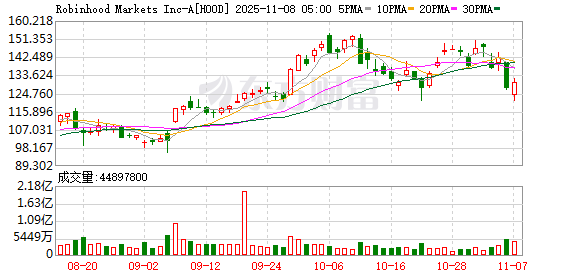
Group 1 - Robinhood plans to provide investors with access to private equity artificial intelligence funds [2]

AI如何重塑金融边界?港大知识转化论坛探讨大模型投资、数字资产安全新趋势
Sou Hu Cai Jing· 2025-11-10 04:07
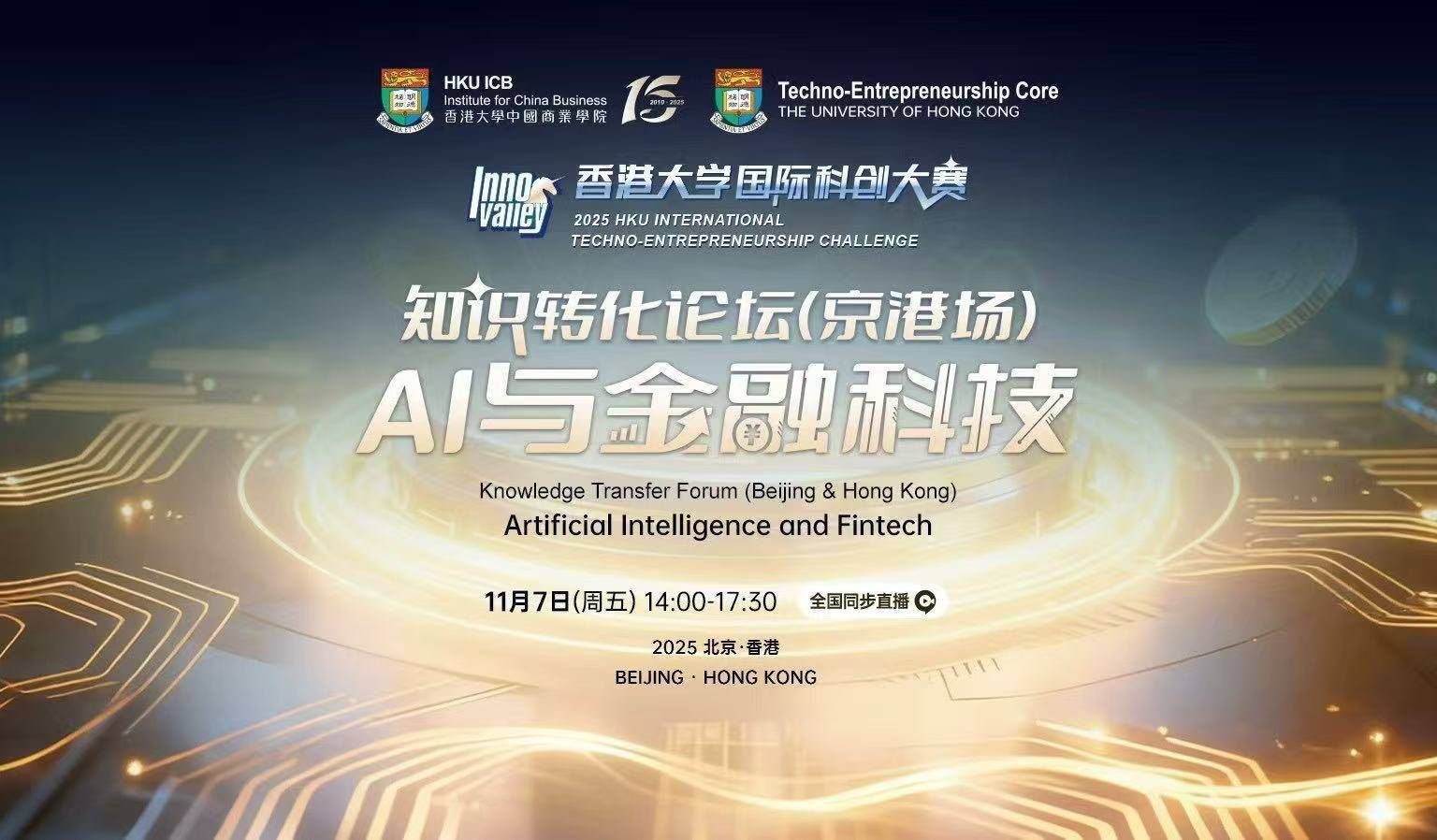
Core Insights - The Knowledge Transfer forum focused on "AI and FinTech," featuring four distinguished alumni from the University of Hong Kong who shared insights on cutting-edge explorations and practical experiences in these fields [2][3] Group 1: Event Overview - The forum was organized by the 2025 International Innovation and Technology Competition hosted by the University of Hong Kong, with a dual-location format connecting Beijing and Hong Kong [2] - Notable speakers included Xu Jiahao, co-founder of Gresham Investment Machines, Li Pan, co-founder of Bitslab, Dr. Xu Zhouming, founder and CEO of Phoenix Nirvana Technology, and Zhang Yanqiang, general manager of Beijing Zhongke Ming Tian Information Technology [2] Group 2: Key Discussions - The session titled "Technology Empowering Financial Investment, AI Securing Digital Assets" featured discussions on large models and investment innovation, as well as AI security for digital assets [2] - Topics of interest included blockchain and AI applications, competitive advantages of FinTech companies, data compliance issues, anonymity and traceability of digital currencies, legal regulations in financial innovation, and future directions for financial powerhouses [2] Group 3: Financial AI Innovations - The segment "Financial AI Innovation Path, New Trends in Technology Development" included presentations on swarm learning and the evolution of financial AI, as well as advancements and trends in FinTech [3] - Discussions revolved around successful experiences of financial entrepreneurs, the impact of AI on employment in finance, policy directions for FinTech, training techniques for large models, and the strengths and weaknesses of China's FinTech landscape [3] Group 4: Future Outlook - The closing remarks emphasized that AI is profoundly reshaping the boundaries of the financial industry, with innovation being a core driving force of this transformation [4] - The recent 2035 economic goals highlight FinTech as a crucial engine for driving digital economy and financial modernization, urging companies to invest in AI and big data to facilitate digital transformation in finance [4]
金融行业周报:证监会全面落实“十五五”规划建议,普惠金融持续高质量发展-20251110
Ping An Securities· 2025-11-10 03:44
Investment Rating - The industry investment rating is "Outperform the Market," indicating an expected performance that exceeds the CSI 300 Index by more than 5% over the next six months [26]. Core Insights - The China Securities Regulatory Commission (CSRC) is fully implementing the "14th Five-Year Plan" recommendations, signaling a commitment to further opening up the capital market and enhancing cooperation between mainland and Hong Kong markets [2][8]. - The development of inclusive finance continues to improve in quality, with significant advancements in financial services for rural revitalization and support for small and micro enterprises [9]. - The revised "Securities Settlement Risk Fund Management Measures" will take effect on December 8, 2025, aimed at enhancing risk management in the securities settlement system [10]. Summary by Sections Key Focus - The CSRC's commitment to deepening capital market reforms and enhancing cross-border investment facilitation is crucial for the development of both mainland and Hong Kong markets [8]. - The People's Bank of China has reported that inclusive finance is expanding, with increased loan volumes for rural areas and small enterprises, and a growing variety of financial products to meet diverse needs [9]. - The updated management measures for the securities settlement risk fund will improve the risk prevention capabilities of the securities registration and settlement system [10]. Industry Data - The banking, securities, insurance, and fintech indices changed by +2.79%, -0.72%, +1.25%, and -3.44% respectively, with the CSI 300 Index rising by 0.82% during the same period [12]. - The central bank's open market operations resulted in a net withdrawal of 15,722 billion yuan, with SHIBOR rates showing mixed trends [19]. - The average daily trading volume for stock funds was 26,999 billion yuan, reflecting a 6.4% decrease from the previous week [21].
其实我们还没准备好面对人工智能代理的实际行动
3 6 Ke· 2025-11-10 01:24
Core Insights - The article discusses the transformative impact of AI agents on business operations, highlighting Klarna's successful deployment of an AI assistant that handled 2.3 million conversations in its first month, equivalent to the work of 700 full-time customer service representatives [1] - The author emphasizes that the advancements in AI are not just about technology but signify a fundamental change in work processes, with companies like Salesforce leading the charge with their Agentforce platform [3][9] Summary by Sections Klarna's AI Implementation - Klarna's AI assistant reduced problem resolution time from 11 minutes to under 2 minutes and decreased repeat inquiries by 25%, with customer satisfaction scores on par with human agents [1] - The company anticipates a profit increase of $40 million in 2024 due to this AI deployment [1] Salesforce's AI Agentforce - Salesforce launched its AI agent platform, Agentforce, which has shown impressive results, including a 15% reduction in average case handling time and a 22% increase in subscription user retention for Grupo Globo [3] - The platform has reached 12,000 clients, with a vision to empower 1 billion intelligent agents by the end of 2025 [3][9] Distinction of AI Agents - AI agents differ from traditional chatbots; they can autonomously observe, make decisions, and take actions without needing constant prompts from users [4][6] - These agents can handle complex tasks such as data extraction, analysis, and report generation in a single workflow [6][7] Market Growth and Adoption - The global AI agent market is projected to grow from $7.28 billion in 2025 to over $41 billion by 2030, with predictions that AI agents will manage 80% of digital workflows in customer service, IT, HR, and sales by 2030 [11] - Companies implementing AI agents report a 7.8% increase in productivity and a 30% reduction in time spent on repetitive tasks [11] Concerns and Future Outlook - There is a concern that the rapid development of AI technology may outpace the understanding of its implications and management [12][19] - Companies must learn to balance efficiency with the need for human interaction in complex situations, as demonstrated by Klarna's approach [8][12] - The article stresses the importance of preparing for the integration of AI agents into business processes and the need for training and structural changes within organizations [18][19]