
零售业

Search documents
中证沪港深互联互通信息产业指数报3753.78点,前十大权重包含寒武纪等
Jin Rong Jie· 2025-04-29 08:23
Group 1 - The CSI Hong Kong-Shanghai-Shenzhen Interconnection Information Industry Index reported a decline of 7.18% over the past month, an increase of 5.86% over the past three months, and a year-to-date increase of 5.89% [1] - The index is based on the comprehensive index samples of the CSI Hong Kong-Shanghai-Shenzhen Interconnection and the CSI Hong Kong-Shanghai-Shenzhen 500 Index, reflecting the overall performance of securities listed in the interconnection range across the three markets [1] - The index's top ten holdings include Alibaba-W (12.92%), Tencent Holdings (11.13%), Xiaomi Group-W (5.61%), China Mobile (3.41%), and SMIC (1.47%) [1] Group 2 - The industry composition of the index shows that electronics account for 23.66%, media for 18.51%, semiconductors for 18.24%, retail for 13.10%, and computer services for 11.13% [2] - The index samples are adjusted biannually, with adjustments occurring on the next trading day after the second Friday of June and December [2] - In cases of delisting or corporate actions such as mergers or acquisitions, the index samples will be adjusted according to specific maintenance rules [2]





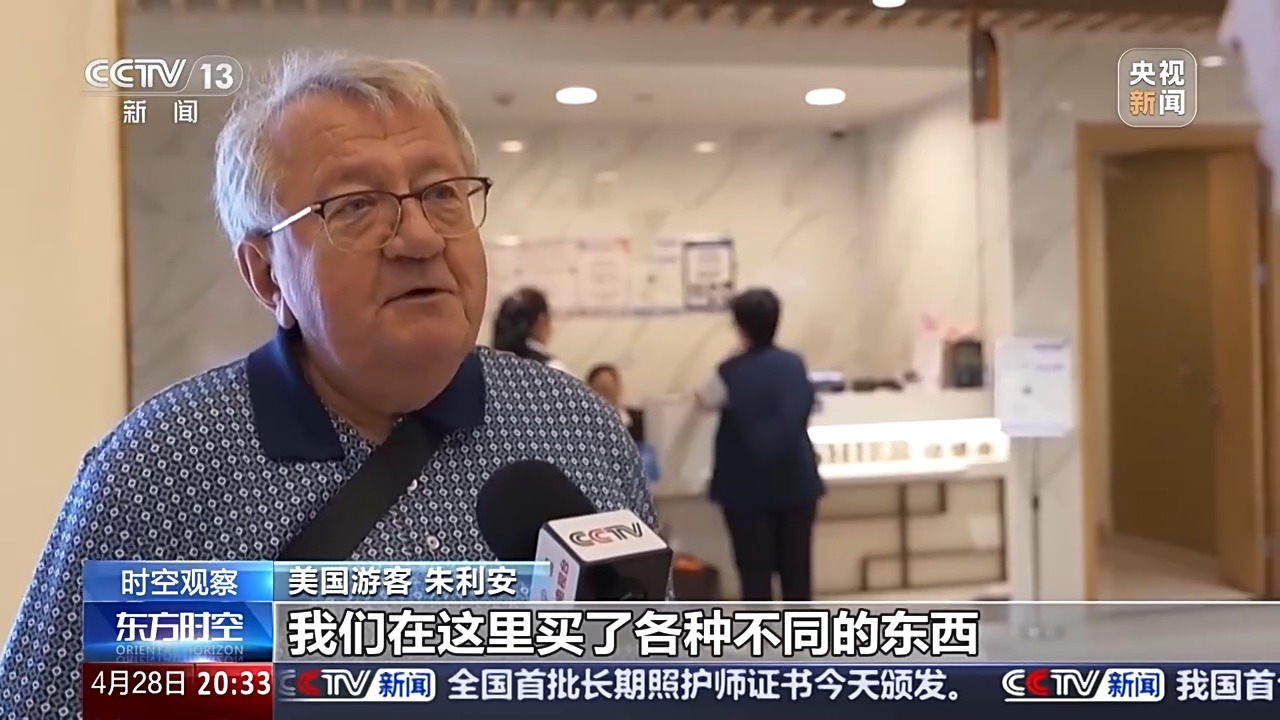
到底能退多少税?外国人为什么爱上来中国“扫货” ?
Yang Shi Xin Wen· 2025-04-28 22:59
Core Viewpoint - The article highlights a significant increase in inbound tourism and shopping in China, driven by new policies aimed at enhancing the shopping experience for foreign tourists, particularly the "immediate tax refund" service [1][10]. Group 1: Inbound Tourism Growth - Inbound travel orders have increased by 173% year-on-year, indicating a strong recovery in tourism [1]. - The total expenditure of inbound tourists in 2024 reached $94.2 billion, reflecting a growth of 77.8% [10]. Group 2: Tax Refund Policies - The "immediate tax refund" service allows foreign tourists to receive tax refunds on-site, with a refund rate of 11% on most goods [2][10]. - The minimum threshold for tax refunds has been lowered from 500 yuan to 200 yuan, and the cash refund limit has been raised from 10,000 yuan to 20,000 yuan [1]. Group 3: Impact of "Immediate Tax Refund" Service - The implementation of the "immediate tax refund" service has led to a 22-fold increase in tax refund processing in pilot areas like Shanghai and Beijing, significantly outpacing the national growth rate [3][10]. - In the first quarter, Shanghai's tax refund sales reached 760 million yuan, marking an 85% year-on-year increase [9]. Group 4: Changing Consumer Preferences - Foreign tourists are increasingly shifting from traditional souvenirs to a wider range of products, including customized clothing and local specialties [12][15]. - The trend of immersive experiences is growing, with tourists willing to spend more on unique local activities [15][19]. Group 5: Retail and Market Dynamics - The number of tax refund stores in Shanghai has reached 587, with 284 offering the "immediate tax refund" service [9]. - The sales of clothing and footwear have become popular among tourists from countries like Singapore, South Korea, and Malaysia [8].

离境退税再升级,“购在中国”迎来万亿商机
Huan Qiu Shi Bao· 2025-04-28 22:30
Core Viewpoint - The Chinese government is optimizing the departure tax refund policy to stimulate inbound consumption, aiming to fill a global demand gap of nearly $3 trillion caused by trade barriers and tariffs imposed by the U.S. [1][6] Group 1: Policy Changes - The new policy lowers the departure tax refund threshold from 500 RMB to 200 RMB, allowing foreign travelers to apply for refunds on purchases that meet specific criteria [2][3] - The policy expansion includes a wider range of products, such as traditional Chinese goods, cultural items, and high-quality local products, enhancing the shopping experience for international tourists [2][3] Group 2: Market Impact - In Q1 2025, Beijing's departure tax refund applications surged by 128%, with sales of refund-eligible products reaching 270 million RMB, doubling year-on-year [3] - Shanghai reported a significant increase in departure tax refund sales, totaling 760 million RMB in Q1 2025, marking an 85% year-on-year growth [3] - Chongqing's departure tax refund market also experienced rapid growth, with sales and refund amounts increasing nearly fivefold in Q1 2025 [3] Group 3: Consumer Experience Enhancements - The introduction of a multilingual departure tax refund guide and an electronic map for refund stores aims to improve the shopping experience for foreign tourists [4] - The government is promoting a "one-stop shopping" experience at major transportation hubs, integrating shopping and tax refund services to attract more international travelers [8][9] Group 4: Economic Opportunities - The potential increase in foreign tourist numbers due to the optimized tax refund policy is expected to boost retail sales, particularly from high-spending tourists [5][6] - The Chinese consumer market, currently valued at approximately $10 trillion, has a target to increase by $3 trillion over the next five years, presenting significant market opportunities [6]
四部门详解稳经济稳就业若干举措:扩内需政策将在二季度加快落地
2 1 Shi Ji Jing Ji Bao Dao· 2025-04-28 13:31
21世纪经济报道记者周潇枭 北京报道 4月25日,中央政治局召开会议指出,要不断完善稳就业稳经济的 政策工具箱,既定政策早出台早见效,根据形势变化及时推出增量储备政策,加强超常规逆周期调节, 全力巩固经济发展和社会稳定的基本面。 4月28日,国新办举行新闻发布会,邀请国家发展改革委、人力资源社会保障部、商务部、中国人民银 行相关负责人出席,详解稳就业稳经济推动高质量发展的若干举措,主要包括五方面内容,分别是支持 就业、稳定外贸发展、促进消费、积极扩大有效投资、营造稳定发展良好环境等。 国家发展改革委副主任赵辰昕在发布会上表示,不管国际局势如何变化,将锚定发展目标,保持战略定 力,集中精力办好自己的事,对实现今年经济社会发展目标任务充满信心。下一步,将积极抓好若干举 措落实,同时还将常态化、敞口式做好政策预研储备,充分备足预案,不断完善稳就业稳经济的政策工 具箱,根据形势变化及时出台增量储备政策。 有接近有关部委的分析人士对21世纪经济报道记者表示,美国推出所谓"对等关税",且高关税、科技打 压等政策存在反复,要以内部高质量发展的确定性来应对外部环境急剧变化的不确定性。扩内需是必须 要做的事情,因此相关政策会在 ...
重庆百货:2025年第一季度净利润4.75亿元,同比增长9.23%
news flash· 2025-04-28 11:54
重庆百货(600729)公告,2025年第一季度营收为42.76亿元,同比下降11.85%;净利润为4.75亿元, 同比增长9.23%。 ...

中证沪港深互联互通中小综合可选消费指数报2521.90点,前十大权重包含北汽蓝谷等
Jin Rong Jie· 2025-04-28 08:33
Group 1 - The core index, the CSI Hong Kong-Shanghai-Shenzhen Interconnection Small Comprehensive Consumer Index, reported a decline of 6.26% over the past month, 0.49% over the past three months, and 0.83% year-to-date, currently standing at 2521.90 points [1] - The index is categorized into 11 industries based on the classification standards of the CSI Hong Kong-Shanghai-Shenzhen index series, which includes the CSI 500 and other indices [1] - The top ten weighted stocks in the index include Sichuan Changhong (2.11%), Laopu Gold (2.07%), Gongxiao Daji (1.99%), Leap Motor (1.8%), Fuyao Glass (1.76%), Tongcheng Travel (1.55%), BAIC Blue Valley (1.46%), Bertley (1.45%), Great Wall Motors (1.45%), and Yonghui Superstores (1.43%) [1] Group 2 - The market share of the index's holdings is distributed as follows: Shenzhen Stock Exchange 43.43%, Shanghai Stock Exchange 34.15%, and Hong Kong Stock Exchange 22.42% [2] - The industry composition of the index's holdings includes: Passenger Cars and Parts 43.12%, Durable Consumer Goods 18.17%, Textiles, Apparel, and Jewelry 14.86%, Retail 12.63%, and Consumer Services 11.21% [2] - The index samples are adjusted biannually, with adjustments implemented on the next trading day following the second Friday of June and December each year [2]

离境退税政策升级:退税起税点下调至200元,现金退税金额上调至2万元
Sou Hu Cai Jing· 2025-04-28 01:55
央广网北京4月28日消息(记者 宋雪)离境退税,是指境外旅客离境时,对其在退税商店购买的商品退 还增值税的政策。离境退税是国际通行的做法,目前已有包括欧盟、日本、新加坡、澳大利亚等在内的 50多个国家和地区实行。我国自2015年起全面推行离境退税政策,值此政策全面实施10周年之际,经国 务院批准,商务部会同财政部、文化和旅游部、海关总署、税务总局、中国民航局出台《关于进一步优 化离境退税政策扩大入境消费的通知》(以下简称《通知》)。 在国新办4月27日举行的新闻发布会上,财政部税政司司长贾荣鄂介绍,为支持境外旅客选购品种更多 的特色商品,《通知》将目前境外旅客同日同店购买退税物品金额达到500元才予以退税的规定,大幅 下调至200元即可退税。此外,为了满足境外旅客多样化的消费支付需求,优化离境退税支付服务,在 提供银行卡、移动支付、现金等多种退税服务方式的基础上,将现金退税金额由目前的1万元人民币上 调至2万元人民币,其他退税方式没有限额。 商务部副部长盛秋平介绍,近年来,我国有序扩大自主开放和单边开放,对38个国家实行了单方面免签 政策,对54个国家实行过境免签并将停留时间延长至240小时,推出了一系列入境 ...
零售板块盘初下探,国光连锁跌停
news flash· 2025-04-28 01:41
零售板块盘初下探,国光连锁(605188)跌停,德必集团(300947)、国芳集团(601086)跌超8%, 步步高(002251)、吉峰科技(300022)、锦和商管(603682)跟跌。 ...

苏州入选零售创新首批全国试点
Su Zhou Ri Bao· 2025-04-28 00:18
Core Insights - The Ministry of Commerce has announced the first batch of 38 cities to be included in the national retail innovation pilot program, with Suzhou being one of the selected cities for a two-year construction period [1][2] Group 1: Retail Development Initiatives - Suzhou has prioritized the development of the retail sector, focusing on upgrading existing commercial facilities, including notable projects like Shihui Neighborhood Center and Wujiang Shengjiahe [1] - The city has successfully implemented scene-based renovations, with significant results such as a 40% year-on-year increase in foot traffic at Kunshan Qingyang Wanda Plaza [1] Group 2: Quality Supply and New Consumption Growth Points - The Shihui Neighborhood Center in Suzhou has undergone a comprehensive upgrade, integrating various services such as fresh food markets, dining, retail, and hospitality [1] - The Taicang Alps Snow World has become a popular destination in the Yangtze River Delta, combining snow sports, cultural performances, and family-friendly spaces [1] Group 3: Digital Empowerment and Innovation - The "Tang Dynasty Strange Stories" project in Zhangjiagang's Yangshe Old Street utilizes advanced LBE immersive virtual reality technology, attracting nearly 1,000 visitors daily [1] - The Xingyuehui project focuses on young cultural experiences, establishing itself as a trendy social space [2] Group 4: Future Retail Strategy - The Suzhou Municipal Bureau of Commerce plans to continue optimizing the retail landscape, aiming to create a modern retail system characterized by diverse supply, balanced layout, quality service, and green practices [2]
首次实现全年盈利,盒马想做怎样的新零售?
Huan Qiu Lao Hu Cai Jing· 2025-04-27 09:02
Core Viewpoint - The retail industry is experiencing intense competition, with traditional stores facing challenges while new retail formats thrive, leading to a critical need for adaptation and innovation [1][3]. Group 1: Industry Trends - The past year has seen a rise in popularity for new retail formats like live streaming sales, while traditional supermarkets like RT-Mart and Yonghui Supermarket have struggled and changed ownership [1]. - The retail landscape is characterized by a shift from traditional large supermarkets to innovative models, with companies needing to choose between maintaining traditional methods or embracing new trends [3][4]. Group 2: Company Developments - Hema, once a benchmark for new retail, has undergone significant changes under the leadership of new CEO Yan Xiaolei, achieving profitability within a year [2][4]. - Hema's strategy focuses on two core formats: Hema Fresh, which aims for rapid expansion, and Hema NB, which emphasizes community services and product optimization [4][7]. - Hema has opened 72 new stores at an average rate of one every five days, surpassing 430 stores nationwide, with plans for nearly 100 more in the upcoming fiscal year [4][7]. Group 3: Competitive Advantages - Successful companies like Sam's Club and Donglai have established unique competitive advantages that are difficult for others to replicate, such as strong supply chains and high-quality service [5][6]. - Hema aims to enhance its competitive edge by focusing on product quality and leveraging social media for marketing, targeting lower-tier cities and community markets [7][9]. Group 4: Market Insights - The consumption scale in lower-tier markets has exceeded 17 trillion yuan, accounting for nearly 60% of national consumption, with offline retail remaining dominant [7]. - Hema's community supermarket model, Hema NB, targets price-sensitive consumers with its own supply chain and brand offerings, indicating a strategic focus on value [7][9]. Group 5: Future Goals - Hema has set an ambitious goal to exceed 100 billion yuan in GMV (Gross Merchandise Volume) within three years, reflecting confidence in its strategic direction despite competitive pressures [9].