
无人机

Search documents
5380米高原的“中国力量” 西安重载无人机刷新世界纪录
Zhong Guo Min Hang Wang· 2025-09-29 03:35
Core Insights - The successful test flight of the JDY-100B heavy-lift drone by Xi'an Tianyi Technology Group demonstrates China's leading position in the heavy-lift drone sector, achieving a record for multi-rotor drones at high altitudes [1][2] Group 1: Technical Achievements - The JDY-100B drone, with a maximum takeoff weight of 221 kilograms and a payload capacity of 100 kilograms, performed exceptionally well in high-altitude conditions, transporting a 30-kilogram load for 15 minutes [1] - The drone's design incorporates several innovative technologies, including an optimized rotor system for lift efficiency in low-pressure environments, a smart battery management system for dynamic energy output, and multi-sensor fusion algorithms for real-time flight stability [2] Group 2: Market Implications - The success of the JDY-100B is indicative of the rapid development of China's heavy-lift drone industry, which is evolving from a single-use tool to a smart node connecting physical and digital worlds across various sectors such as logistics, rescue, and power [3] - The Chinese drone market is projected to exceed 100 billion yuan by 2025, with industrial applications accounting for over 60% of this growth, particularly in the demand for 80-120 kilogram pure electric transport drones [3]

中国无人机技术再领新潮 西安脑控黑科技引领人机协同新范式
Zhong Guo Min Hang Wang· 2025-09-29 03:28
Core Insights - The article highlights China's advancements in drone technology, particularly the integration of brain-computer interfaces (BCI) with artificial intelligence, enabling control of drones through thought alone, marking a significant leap from traditional signal decoding to intention interaction [1][2] Group 1: Technological Breakthroughs - The technology not only achieves "thought control" but also addresses core challenges of practicality and stability, overcoming issues like interference and latency [2] - The system allows for both single drone control and multi-drone coordinated flight, enhancing operational capabilities [2] - The accuracy of the brain-computer interface system in decoding signals is over 90%, allowing users to control drones with complex maneuvers through concentration alone [1] Group 2: Research and Development Environment - The Advanced Concept Verification Center in Xi'an plays a crucial role in transforming laboratory results into market-ready products, focusing on various cutting-edge fields including BCI and autonomous systems [3] - The center has over 40,000 square meters of incubation space and aims to bridge the gap between experimental results and practical applications [3] Group 3: Future Applications and Market Potential - The ongoing optimization of the technology aims to enable efficient human-machine interaction outdoors without electronic screen assistance, expanding the application of brain-controlled technology in sectors like agriculture, emergency rescue, and low-altitude logistics [2] - The center's efforts contribute to the cultivation of a globally competitive industrial cluster, ensuring China's leading position in the drone industry and promoting high-quality regional development [4]
低空经济最缺的一块拼图
3 6 Ke· 2025-09-28 23:38
Group 1 - The article discusses the rapid evolution and commercialization of QR codes in China, particularly after the 2015 Spring Festival, where they became integral to various business ecosystems, with the market expected to exceed 100 billion yuan by 2025 [3][6]. - The eVTOL (electric Vertical Take-off and Landing) industry is highlighted as a new super terminal, with significant capital investment and government support, indicating a potential transformation in transportation and industry [6][12]. - The article emphasizes the necessity for eVTOL to integrate into a complete ecosystem, which includes infrastructure, manufacturing, standards, and a commercial loop to achieve its full potential [6][12]. Group 2 - The current state of the eVTOL industry in China shows a strong organizational capability, with significant advancements in manufacturing and infrastructure, but still faces challenges in establishing a viable commercial model [40][42]. - The article outlines the differences in regional strategies for eVTOL deployment across China, with areas like Sichuan focusing on logistics and emergency services, while the Greater Bay Area emphasizes consumer applications [53][62]. - The need for a "four-certificate" system (Type Certificate, Production Certificate, Airworthiness Certificate, and Operational Certificate) is crucial for eVTOLs to transition from design to commercial operation, with the Long Triangle region having a natural advantage due to its existing aerospace supply chain [71][75].



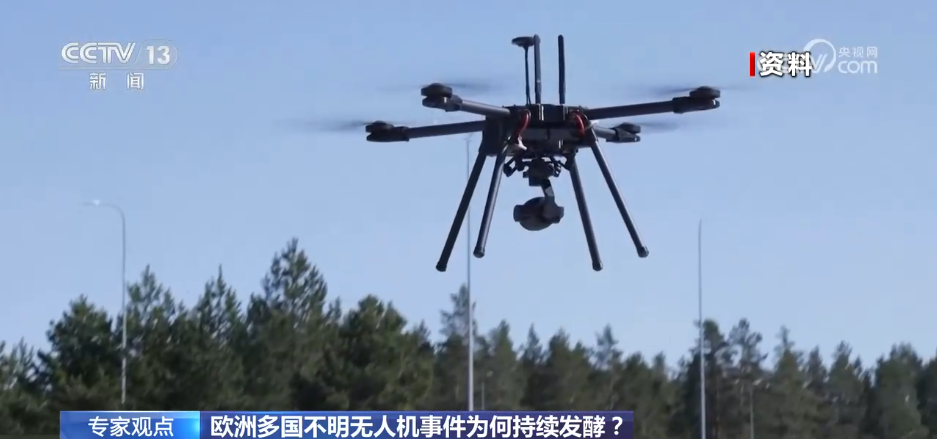
无人机“疑云”笼罩欧洲多国 专家分析
Yang Shi Wang· 2025-09-28 19:11
Group 1 - The recent incidents of unidentified drones over multiple European countries have raised security concerns, with Poland and NATO attributing some drones to Russia, which Russia denies [3][4] - The drone events reflect an escalation in the security confrontation between Russia and Europe, exacerbated by the prolonged Russia-Ukraine conflict and NATO's military activities [4][6] - The importance of drones in modern military strategy is increasing, with both Russia and Ukraine rapidly enhancing their drone production capabilities [6] Group 2 - The European Union's plan to establish a "drone wall" faces significant economic, political, and technical challenges, including funding issues amid economic difficulties and differing political views among member states [7] - There are concerns about the EU's reliance on external countries for its drone supply chain, which complicates the goal of achieving autonomous drone capabilities [7]
横河精密20250927
2025-09-28 14:57
Summary of Henghe Precision's Conference Call Industry and Company Overview - Henghe Precision benefits from the trends of smart and lightweight automotive industry, collaborating with companies like Huawei and Yanfeng Adient for smart cockpit components and making progress in lightweight products such as all-plastic tailgates, with a significant market potential. The global automotive tailgate market is expected to reach $15 billion by the end of 2027 [2][5][11] - The company is actively expanding into the drone and robotics sectors through investments in Ningbo Lion King Technology Co., Ltd. and Heqi Intelligent, entering the low-altitude economy market. With its injection molding and precision gear technology, it aims to penetrate the humanoid robot market, providing valuation flexibility and growth potential [2][3][7] Core Business Insights Automotive Business - Henghe Precision provides high-precision products for smart cockpit components, such as gears and actuators, and has established partnerships with major clients like Huawei and Yanfeng Adient. The automotive lightweight products, including steel-plastic integrated dashboards and all-plastic tailgates, have received orders from SAIC Maxus, Geely, and BYD [2][5][6] - The company’s automotive business is expected to experience rapid growth due to the industry's shift towards smart and lightweight solutions, with significant market space ahead [3][4][5] Home Appliance Business - The home appliance segment is a crucial part of Henghe Precision's operations, showing steady growth. The smart home appliance industry in China has an annual compound growth rate of approximately 10%, with the market size expected to approach 800 billion yuan by 2025 [2][6] - The company collaborates with renowned brands like Karcher, SEB, Panasonic, and Xiaomi, providing home gearboxes and drive systems, which supports stable performance growth [6] Emerging Business Opportunities Drone and Robotics - In the drone sector, Henghe Precision has a 30% stake in Ningbo Lion King Technology and is involved in the production and sales of intelligent UAVs, which opens up opportunities in the low-altitude economy [7][10] - The company’s experience in injection molding and metal component manufacturing positions it well to enter the humanoid robot market, leveraging existing resources for cross-sector expansion [7][8] Financial Projections - Expected net profits for Henghe Precision from 2025 to 2027 are projected to be 64 million, 102 million, and 146 million yuan, respectively, with a compound annual growth rate of 57% [4][11] - The company is seen as a high-quality precision manufacturing enterprise with strong business extensibility, with growth driven by automotive, home appliance, and metal component sectors [11] Catalysts and Risks - Potential catalysts for Henghe Precision's stock price increase include exceeding expectations in automotive orders, drone sector collaborations, and humanoid robot orders [12] - Risks include underperformance in new sector expansions and lower-than-expected sales from downstream automotive manufacturers [12]

湾区视点:低空经济领航,大湾区“飞”向新蓝海
Sou Hu Cai Jing· 2025-09-28 12:20
Core Insights - The low-altitude economy has been included in government work reports for two consecutive years, indicating a shift from concept to reality, with numerous competitive market participants entering the field [1] - The Greater Bay Area is positioned to lead the development of the low-altitude economy, driven by both policy and market demand [1] Group 1: Industry Development - As of mid-2025, Shenzhen has gathered over 1,900 enterprises in the low-altitude economy supply chain, with consumer drones accounting for 70% and industrial drones for 50% of the global market [5] - The low-altitude economy is characterized as an "empowerment-type" economic model that can enhance traditional industries such as logistics, medical testing, and urban security [5] Group 2: Regulatory and Infrastructure Initiatives - The Hong Kong government has established four key directions for developing the low-altitude economy, including regulatory sandboxes, improving regulations, researching low-altitude infrastructure, and developing cross-border low-altitude channels [7] - In March, Hong Kong announced the first batch of 38 pilot projects for low-altitude economic regulatory sandboxes, featuring several Shenzhen enterprises [7] - The 2025 Policy Address proposed the creation of a development plan for the low-altitude economy and the introduction of advanced regulatory sandbox pilot projects [7] Group 3: Key Development Factors - Three essential elements for the development of the low-altitude economy were identified: aircraft manufacturing, infrastructure development, and application capture [9] - A solid manufacturing base in the Greater Bay Area serves as the "supply engine" for the low-altitude economy, while infrastructure such as air routes, takeoff and landing points, and communication systems are crucial for sustainable development [9] Group 4: Challenges and Future Outlook - Despite initial growth, the low-altitude economy faces challenges in technology (airspace control, communication, battery life), regulations (safety, noise, privacy standards), and commercialization (exploring diverse demands and sustainable profit models) [11] - The future of the low-altitude economy relies on transitioning from policy-driven support to market-driven growth, with a focus on improving institutional and regulatory frameworks [16] - The Greater Bay Area's comprehensive industrial chain and market scale, along with Hong Kong's professional services, are expected to enhance the prospects of the low-altitude economy [16]

“飞翔之城”飞向更高蓝天
He Nan Ri Bao· 2025-09-27 23:13
Core Insights - The low-altitude economy is becoming a key driver of new productivity in Henan, with Anyang leading the way through industrial foundation, research empowerment, and scenario expansion [1][2] - The 17th Anyang Aviation Sports Culture Tourism Festival showcased the city's achievements in low-altitude manufacturing, application services, and cultural tourism integration [1][2] Group 1: Technological Innovation - Anyang has established the Blue Sky Laboratory as a strategic core, attracting over 120 top experts and developing a multi-spectral poppy monitoring system that secured orders worth millions [2] - The city has successfully transformed seven police operational projects into six practical prototypes and has contributed to 14 national standard outputs, leading to 240 authorized patents for enterprises [2] Group 2: Application Scenarios - Anyang has built 33 drone application scenarios, with 12 recognized by the Civil Aviation Administration of China, integrating low-altitude technology into urban operations [2] - The city has established the largest independent 5G air-to-ground network in the country, ensuring high-precision smart regulation for drone operations [2] Group 3: Industry Development - The number of drone industry chain enterprises in Anyang has exceeded 160, creating a complete ecosystem for manufacturing integrated drones within the park [3] - Anyang's drone industrial park has received EU NG Gold certification, enhancing its international profile in the low-altitude industry [3] Group 4: Event Highlights - The aviation festival featured advanced drone models and real-time demonstrations of drone capabilities, showcasing the practical applications of low-altitude intelligent equipment [4] - Various companies presented their products, including industrial-grade drones and core components, highlighting the clarity of the "Anyang-made" drone industry chain [4]
这场韩国顶级赛事上,成都无人机产业“海外起飞”
Mei Ri Jing Ji Xin Wen· 2025-09-26 14:18
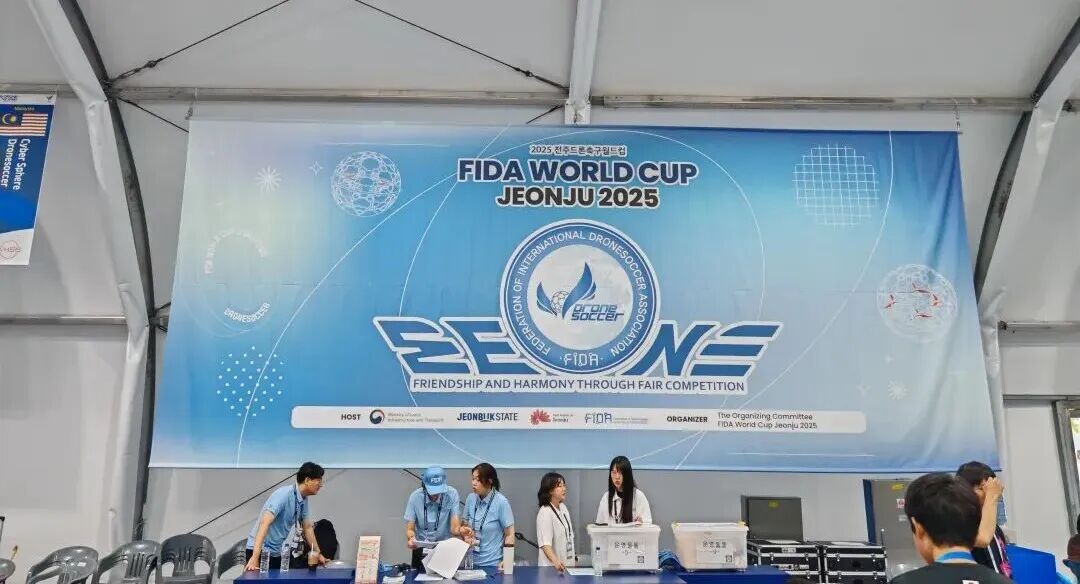
作为今年全球无人机应用赛道最令人瞩目的项目之一,本次世界杯不仅标志着无人机足球运动迈向全球 化发展的新阶段,也为以成都为代表的无人机"先发城市"提供了一个与世界交流的平台。 据悉,无人机足球是一项融合航空技术、竞技体验与科普教育于一体的新兴科技体育项目。参赛队伍通 过操控无人机在特定场地内进行攻防对抗,以将"球"(即无人机)射入对方球门为目标,极具观赏性、互 动性与科技感。 值得关注的是,今年首届FIDA国际无人机足球世界杯的中国区选拔赛举办地就是成都。8月19日至21 日,为争夺代表中国的参赛资格,多支优秀队伍,上千名选手展开激战,在这座城市掀起一阵无人机足 球的热潮。"成都正是凭借无人机产业集群优势、国际赛事运营经验和低空经济政策支持,成功承办了 今年的中国区选拔赛,"业内人士指出。 一个多月前,成都世运会期间,顶尖飞手端坐在椅子上,通过头戴式显示器操控无人机进行比赛,吸引 世界瞩目;一个多月后,从成都选拔并走出的顶尖选手,征战首届国际无人机足球联盟(FIDA)世界杯。 一前一后,两场国际赛事的背后,我们见证着一座"无人机之城"的加速崛起。 据中国民航局预测,2025年中国低空经济市场规模将达1.5万亿元 ...
观察 | 这场韩国顶级赛事上,成都无人机产业“海外起飞”
Mei Ri Jing Ji Xin Wen· 2025-09-26 14:11
Core Insights - The rise of Chengdu as a "drone city" is highlighted by its successful hosting of international drone events, showcasing its growing industry and capabilities [1][3] - The low-altitude economy in China is projected to reach a market size of 1.5 trillion yuan by 2025 and 3.5 trillion yuan by 2035, indicating significant growth potential [1] - Chengdu is positioned in the "first tier" of cities in the drone industry, with a diverse range of applications and services emerging [1] Industry Developments - The inaugural FIDA World Cup in drone football, held in South Korea, marks a new phase in the global development of drone sports, providing a platform for cities like Chengdu to engage internationally [3] - Drone football combines aviation technology, competitive experience, and educational elements, making it a highly engaging and interactive sport [3] - Chengdu hosted the Chinese selection event for the FIDA World Cup, demonstrating its advantages in drone industry clusters and event management [3] Economic Impact - The drone football industry encompasses hardware manufacturing, software development, content creation, and professional training, contributing to high-quality job creation in Chengdu [5] - The promotion of drone football is seen as a way to attract global tech talent and invigorate local innovation, aiding in industrial transformation [5] - Initiatives like the "Ablefly Rongyao Future" campaign aim to popularize drone football among youth, enhancing public engagement in technology and sports [5] Future Plans - Chengdu plans to further integrate drone football into schools, communities, and commercial spaces, increasing public exposure to the sport [7] - The city aims to establish an internationally recognized brand for drone football events, enhancing its visibility and appeal on a global scale [7]
梦碎科创板后,极飞科技冲刺港股!存潜在专利战风险
Shen Zhen Shang Bao· 2025-09-26 12:01
Core Viewpoint - On September 25, Guangzhou XAG Technology Co., Ltd. submitted an application for listing on the Hong Kong Stock Exchange, aiming for a main board listing, with Huatai International as the sole sponsor. The company previously attempted an IPO on the Sci-Tech Innovation Board in 2022 but was unsuccessful [1]. Group 1: Company Overview - XAG Technology has a strong focus on smart agriculture and drone technology, particularly in agricultural automation [1]. - According to industry reports, XAG Technology ranks second in the global agricultural robotics and agricultural drone sectors with market shares of 10.7% and 17.1% respectively for 2024 [1]. - As of June 30, 2025, XAG's dealer network covers over 900 counties in China, achieving comprehensive coverage of major agricultural production areas [1]. Group 2: Financial Performance - In 2022 and 2023, XAG recorded net losses of 254 million yuan and 133 million yuan respectively. However, in 2024, revenue is expected to exceed 1 billion yuan, reaching 1.07 billion yuan, with a net profit of 70.41 million yuan [2]. - In the first half of 2025, net profit reached 134 million yuan, a year-on-year increase of 50.56%, with gross margin improving from 30.2% to 34.3% [2]. Group 3: Risks and Challenges - XAG claims to hold the largest number of agricultural drone patents globally, with 4,100 applications filed, but faces potential third-party intellectual property infringement claims [2]. - Since April 2025, the U.S. has imposed tariffs of up to 125% on Chinese drone products, which could significantly reduce profit margins in key markets like the U.S. and Brazil by over 10 percentage points if trade tensions persist [2]. - As of June 30, 2025, XAG's debt ratio was 54.2%, with total liabilities of 615 million yuan, including 576 million yuan in current liabilities. Accounts receivable increased to 310 million yuan, accounting for 42% of revenue, indicating potential short-term liquidity risks [3].