半导体制造

Search documents
新力量NewForce总第4826期
First Shanghai Securities· 2025-07-30 06:39
Group 1: Alphabet (GOOGL) Performance Overview - Alphabet's Q2 2025 revenue reached $96.43 billion, a year-over-year increase of 13.8% and a quarter-over-quarter increase of 6.9%[7] - Operating profit grew to $31.27 billion, with an operating margin of 32.4%, exceeding market expectations[7] - Net profit increased by 19.4% to $28.2 billion, with earnings per share (EPS) rising by 22% to $2.31[7] Group 2: Revenue Breakdown - Google Services revenue was $82.54 billion, up 11.7% year-over-year, while Google Cloud revenue surged 31.6% to $13.62 billion[7] - YouTube ad revenue reached $9.8 billion, reflecting a 13.1% increase, driven by direct response advertising[8] - Subscription and platform revenue grew by 20.3% to $11.2 billion, primarily from YouTube subscriptions[8] Group 3: Future Outlook and Investment - Alphabet plans to increase its capital expenditure from $75 billion to $85 billion, focusing on AI and cloud infrastructure[7] - The company maintains a target price of $250, with a buy rating based on strong growth prospects in AI-driven advertising and cloud services[9] - Risks include potential economic slowdown in the U.S. and challenges in AI commercialization and cloud growth[10]



股市直播|688313,净利润大增超1700%;605178,终止筹划控制权变更事项
Zhong Guo Zheng Quan Bao· 2025-07-29 23:23
Group 1: Company News - The State-owned Assets Supervision and Administration Commission (SASAC) announced the establishment of China Changan Automobile Group Co., Ltd., marking the total number of state-owned enterprises under SASAC to 100 [4] - WuXi AppTec announced an adjustment to its share repurchase plan, raising the maximum repurchase price from 90.72 yuan to 114.15 yuan per share [6] - Shijia Photon reported a significant increase in net profit for the first half of 2025, achieving 217 million yuan, a year-on-year growth of 1712%, driven by the rapid growth of the AI market [7] - Time Space Technology announced the termination of its control change planning, stating that it will not adversely affect the company's operations or financial status [7] - Quzhou Development is planning to issue shares to acquire assets and raise matching funds, with a suspension of trading expected for no more than 10 trading days [8] - Huqin Technology plans to acquire 12 million shares of Crystal Integrated Circuit for 1.993 billion yuan, aiming to enhance resource integration and strategic investment [8] - Ancar Detection announced a potential change in its controlling shareholder, leading to a suspension of trading for up to 2 trading days [8] Group 2: Industry News - The National Health Commission and other authorities introduced a nationwide parenting subsidy system, which is expected to impact sectors such as dairy products, maternal and infant chains, and postpartum care services positively [9] - The China Photovoltaic Industry Association clarified misinformation regarding the photovoltaic industry's competition, emphasizing a commitment to market-oriented principles [4] - The Ministry of Finance reported a decline in revenue and profit for state-owned enterprises in the first half of 2025, with total revenue at 4.075 trillion yuan, down 0.2% year-on-year [5]


美欧达成贸易协议,最大赢家有两个,一个是美国,另一个不是欧盟
Sou Hu Cai Jing· 2025-07-29 20:45
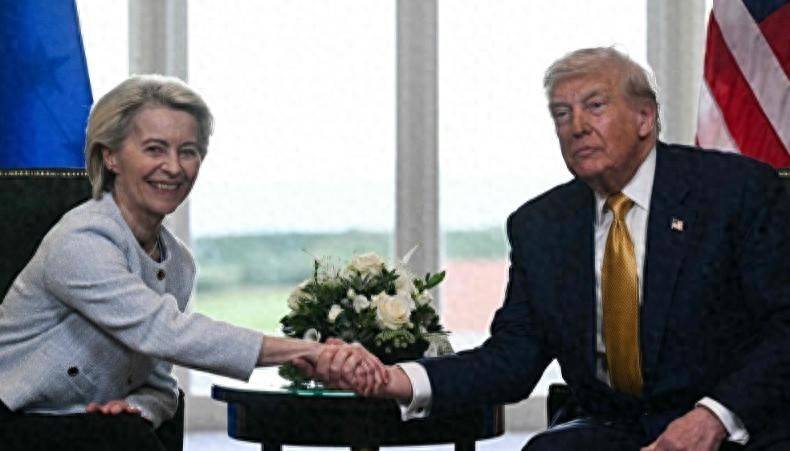
Group 1 - The trade agreement between the US and EU, finalized on July 27, 2025, involves significant tariff adjustments and commitments, impacting global trade dynamics [3][9][10] - The US reduced its planned 30% tariff on EU goods to 15%, affecting key sectors such as automotive, pharmaceuticals, and semiconductors, with potential cost increases for European manufacturers [9][12] - The EU committed to purchasing $750 billion worth of energy products from the US over three years, aiming to reduce reliance on Russian energy, which could reshape energy supply chains [9][15] Group 2 - The agreement is expected to create a favorable environment for US industries, particularly in energy, defense, pharmaceuticals, and high-tech manufacturing, enhancing market access and reducing trade deficits [10][12] - The EU's concessions, including a commitment to invest $600 billion in the US across various sectors, are seen as a means to stabilize transatlantic relations despite internal dissent regarding the agreement's fairness [9][13] - The indirect benefits to Ukraine arise from reduced Russian energy revenues due to EU's shift towards US energy, potentially impacting Russia's military capabilities and providing strategic support to Ukraine [15][18] Group 3 - The agreement has led to positive market reactions, with European stock indices rising, indicating investor confidence in the stability brought by the trade deal [18] - The long-term implications of the agreement may include a shift in global LNG market dynamics, with the US positioned to lead in energy exports while the EU diversifies its energy sources [18][20] - The negotiations highlight the importance of negotiating power in trade agreements, with the EU making significant concessions under pressure from the US [20]

无锡新洁能股份有限公司关于闲置募集资金现金管理赎回的公告
Shang Hai Zheng Quan Bao· 2025-07-29 17:36
Group 1 - The company has approved the use of temporarily idle raised funds for cash management, with a maximum amount not exceeding 115 million RMB [1] - The investment will be made in high-security and high-liquidity financial products, with a maximum investment period of 12 months [1] - As of the date of this announcement, the balance of idle raised funds used for cash management is 590 million RMB [2]

GLOBALFOUNDRIES(GFS) - 2025 FY - Earnings Call Transcript
2025-07-29 13:00
Financial Data and Key Metrics Changes - Approximately 98.58% of the ordinary shares entitled to vote were represented at the meeting, indicating strong shareholder engagement [5] - The election of four Class I directors and the ratification of PricewaterhouseCoopers as the independent registered public accounting firm for the fiscal year ending December 31, 2025, received majority affirmative votes [13][14] Business Line Data and Key Metrics Changes - No specific business line data or key metrics were discussed during the meeting Market Data and Key Metrics Changes - No specific market data or key metrics were discussed during the meeting Company Strategy and Development Direction and Industry Competition - The company is focused on maintaining strong governance through the election of directors and the appointment of reputable accounting firms, which is essential for its strategic direction [10][11] Management's Comments on Operating Environment and Future Outlook - Management did not provide specific comments on the operating environment or future outlook during this meeting Other Important Information - The meeting included a formal voting process for the election of directors and the appointment of the accounting firm, which was successfully completed [13][14] - The meeting was recorded, and shareholders were reminded to limit their questions to those pertinent to the meeting [4][5] Q&A Session Summary - No questions were raised during the Q&A session, indicating either a lack of inquiries from shareholders or a focus on the formal agenda [15][16]

这一板块,大涨
Zhong Guo Ji Jin Bao· 2025-07-29 11:30
Market Overview - The Hong Kong stock market saw declines in its three major indices, with the Hang Seng Index down 0.15% to close at 25,524.45 points, the Hang Seng Tech Index down 0.35%, and the Hang Seng China Enterprises Index down 0.34% [2][3] - The pharmaceutical sector showed resilience, with Chinese brokerage stocks rebounding and semiconductor stocks attracting investment [2] Pharmaceutical Sector - The pharmaceutical sector was boosted by strong earnings, particularly in innovative drug stocks, with WuXi AppTec (603259) rising over 11% [4] - WuXi AppTec reported a revenue of 20.8 billion yuan for the first half of 2025, a year-on-year increase of 20.64%, and a net profit surge of 101.92% [4] - Other notable gainers included Kelun-Bio, InnoCare Pharma, BeiGene, and Kintor Pharma, all of which experienced significant stock price increases [4] Brokerage Sector - Chinese brokerage stocks saw a recovery in the afternoon, with notable increases in shares of CICC, China Merchants Securities, and China Galaxy, all rising over 1% [6] - The regulatory environment for the securities industry has tightened, with over 30 fines issued to brokerage firms for various violations, indicating a push for compliance and improved market order [6] Semiconductor Sector - Semiconductor stocks gained attention from investors, with Shanghai Fudan rising nearly 10% and other companies like SMIC and Hua Hong Semiconductor also seeing stock price increases [7] Banking Sector - The banking sector experienced widespread declines, with Chongqing Rural Commercial Bank falling over 3% and other major banks like China Merchants Bank and China Construction Bank also reporting losses [8] - Despite the current downturn, analysts suggest that the banking sector may benefit from a low-interest-rate environment and increasing long-term capital inflows, indicating potential for future recovery [8][9] Technology Sector - Major tech stocks, including NetEase and Bilibili, saw declines of over 1% [10] - Tencent Holdings and other tech companies also reported slight decreases in their stock prices [11] Gold Sector - Gold stocks continued to retreat, with China Silver Group dropping over 6% [11] - Fidelity International predicts that gold prices could rise to $4,000 per ounce by the end of next year due to factors such as U.S. interest rate cuts and increased central bank gold reserves [12] Market Regulation Changes - The Hong Kong stock exchange announced a reduction in the minimum price fluctuation for stocks, effective August 1, which aims to lower trading costs and enhance market efficiency [12][13]

中天精装:科睿斯未正式投产,未实现盈利
Zheng Quan Ri Bao Wang· 2025-07-29 10:49
Core Viewpoint - Zhongtian Jingzhuang (002989) holds a 27.99% indirect stake in Coreis Semiconductor Technology (Dongyang) Co., Ltd. through Dongyang Zhongjing Xinjie Enterprise Management Partnership (Limited Partnership) [1] Company Information - Coreis Semiconductor has not yet commenced formal production and has not achieved profitability [1] - The company is listed on the Shenzhen Stock Exchange and will continue to monitor the operational development of the invested entity [1] - Any significant developments regarding external investments or capital operation plans will be disclosed in a timely manner [1]

晶合集成拟将光罩业务独立运营,并联合合肥国投等增资11.95亿元
Ju Chao Zi Xun· 2025-07-29 10:29
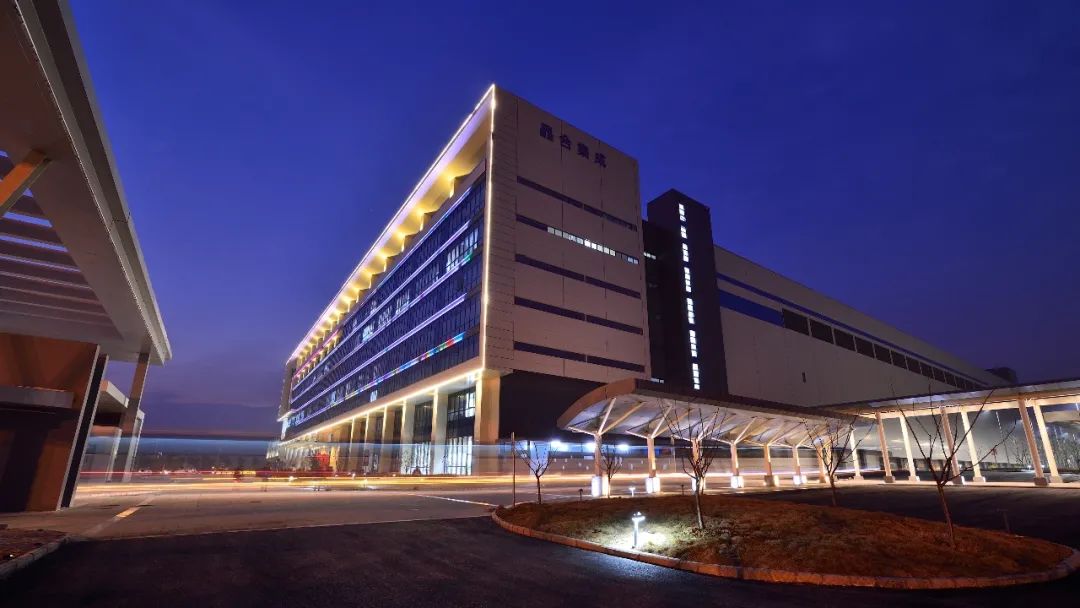
Core Viewpoint - The company plans to spin off its photomask business into a separate entity, Anhui Jingmei Photomask Co., Ltd., to enhance operational efficiency and market competitiveness in the semiconductor photomask production sector [2][3]. Group 1: Business Strategy - The company aims to establish a dedicated production line for photomasks focusing on semiconductor processes of 28nm and above [2]. - The spin-off is intended to better capture market opportunities, expand production scale, and enhance supply chain stability and industry synergy [3]. Group 2: Intellectual Property and Technology - Anhui Jingmei currently holds 24 patents, including 20 invention patents and 4 utility model patents, with 17 patents already certified and 7 pending [2]. - The company possesses 73 proprietary technologies, which are essential for the operation of photomask equipment and production processes, ensuring product yield [2]. Group 3: Financial Aspects - The estimated value of the transferred photomask-related technology is approximately 27.73 million yuan [2]. - The company plans to raise a total of 1.195 billion yuan through investments from various partners, with the company itself contributing 200 million yuan from its own funds [3].

A股,午后爆发!
Zheng Quan Shi Bao Wang· 2025-07-29 09:29
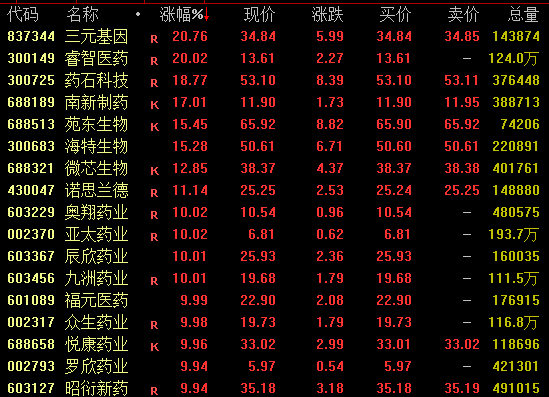
Market Overview - A-shares experienced a significant afternoon rally, with the Shanghai Composite Index regaining above 3600 points, closing up 0.33% at 3609.71 points, while the ChiNext Index rose nearly 2% to 2406.59 points, marking a new high for the year [1] - The total trading volume in the Shanghai and Shenzhen markets reached 182.96 billion yuan, an increase of approximately 63 billion yuan compared to the previous day [1] Sector Performance - The insurance and banking sectors saw declines, while the semiconductor sector surged, with Dongxin Co. hitting a 20% limit up and Fudan Microelectronics rising nearly 10% [1] - The steel sector also showed strong performance, with Xining Special Steel and Bayi Steel reaching their daily limit up [1] - The innovative drug concept experienced a resurgence, with Sanmiao Gene rising over 20% and several other pharmaceutical stocks hitting their daily limit up [1][3] Notable Stocks - WuXi AppTec reported a 96.20% year-on-year increase in total profit and a 101.92% increase in net profit attributable to shareholders for the first half of the year, with a backlog of orders amounting to 56.69 billion yuan, a 37.2% increase year-on-year [4][5] - The stock of Weiwai New Materials surged over 10 times since July, reaching a new high of 90 yuan per share, although the company cautioned that its stock price has significantly deviated from its fundamental situation [10] Future Outlook - WuXi AppTec expects its revenue from ongoing operations to return to double-digit growth, with an upward adjustment of its overall revenue forecast to between 42.5 billion and 43.5 billion yuan [5] - The innovative drug industry is anticipated to enter a new phase, with significant opportunities expected in 2025, driven by upcoming international conferences and ongoing licensing transactions [6] Semiconductor Sector Insights - The semiconductor sector saw strong gains, with Dongxin Co. and Fudan Microelectronics leading the charge [7] - The U.S. government's recent AI Action Plan aims to bolster domestic semiconductor manufacturing while imposing restrictions on exports, which may accelerate the domestic industry's self-sufficiency [9]