
自动驾驶

Search documents
今日新闻丨理想汽车发布三季度财报!小马智行Robotaxi实现单车盈利!
电动车公社· 2025-11-26 16:45
Core Viewpoint - The article discusses the recent financial performance of Li Auto and Pony.ai, highlighting their revenue, profitability, and strategic directions in the electric vehicle and autonomous driving sectors [3][8]. Group 1: Li Auto Financial Performance - Li Auto reported a revenue of 27.4 billion yuan for Q3, with an operating loss of 1.2 billion yuan and an operating profit of 3.4 billion yuan [4]. - The company provided a delivery guidance of 100,000 to 110,000 vehicles for Q4 [4]. - The main factor affecting Li Auto's profitability was the significant expenses related to the recall of the Li MEGA, which impacted Q3 results [14]. Group 2: Strategic Directions of Li Auto - Li Auto aims to return to a "startup management model" to enhance operational efficiency [6]. - The company is redefining its products as "embodied intelligent robots" rather than just vehicles or mobile devices, reflecting its focus on AI development [7]. - Li Auto plans to maintain a fully self-researched product line and is confident in achieving a historic sales breakthrough by 2026 [9][11]. Group 3: Market Outlook and Competition - The company anticipates that short-term policy changes, such as adjustments to purchase tax, may affect sales, but believes the market will eventually shift from policy-driven to product-driven sales [10]. - Li Auto is re-establishing its strategic position in the range-extended electric vehicle segment and will continue to offer family design and 5C ultra-fast charging technology across its lineup [12]. Group 4: Pony.ai Financial Performance - Pony.ai reported a revenue of 181 million yuan for Q3, marking a 72% year-on-year increase, with Robotaxi business revenue reaching 47.7 million yuan, up 89.5% [15]. - The company achieved single-vehicle profitability for its seventh-generation Robotaxi in Guangzhou, with an average of 23 orders per vehicle per day [15]. Group 5: Challenges and Future Prospects for Pony.ai - Despite achieving single-vehicle profitability, Pony.ai remains in an overall loss position, with a net loss of 392 million yuan for Q3 [17]. - The company is focusing on cost reduction through technology, operational efficiency, and light-asset expansion, moving closer to the goal of overall profitability in the Robotaxi sector [17].



小马智行20251125
2025-11-26 14:15
小马智行 20251125 摘要 Pony.ai 通过次 IPO 筹集超过 8 亿美元,增强了资产负债表,为加速量 产和商业化提供资金保障,计划到年底扩展到 3,000 多辆机器人出租车, 并预计在 2026 年达到此规模。 公司推出第七代机器人出租车后,在广州等城市实现经济收支平衡,为 扩大车队规模创造了条件。第三季度机器人出租车收入同比增长 90%, 充电收入同比增长超过 200%。 Pony.ai 成为上海首家推出完全自动驾驶商业机器人出租车业务的公司, 并在深圳扩展商业运营区域,覆盖更大城市范围。 公司采用全栈集成技术,包括软件、硬件和运营,并通过高保真交互仿 真技术和 AI 学习评估器,不断改进驾驶标准,确保安全和效率。 Pony.ai 致力于全球市场扩张,已在中国、中东、东亚、欧洲和美国等 8 个国家建立业务,并计划通过与 Stellantis 联盟在欧洲部署测试车辆。 2025 年第三季度,公司收入达 4.05 亿美元,同比增长 72%,毛利率 提升至 18.4%。机器人出租车服务收入同比增长 89.5%,环比增长 338.7%。 公司计划利用香港上市所获资金巩固技术领先地位,增加研发投入,吸 ...
美银:2030年英伟达市场份额将降至75%;日本芯片制造商Rapidus拟建设1.4纳米晶圆厂【美股盘前】
Mei Ri Jing Ji Xin Wen· 2025-11-26 12:41
Group 1 - Major stock index futures are showing positive trends, with Dow futures up 0.18%, S&P 500 futures up 0.21%, and Nasdaq futures up 0.26% [1] - Chinese concept stocks are mixed, with Alibaba up 1.07%, Pinduoduo up 1.05%, and JD.com up 1.16%, while Xpeng Motors is down 2.26% and Bilibili is down 1.81% [1] - Dell's Q3 revenue increased by 11% year-over-year to $27.005 billion, driven by a surge in AI server orders totaling $12.3 billion, with a backlog of $18.4 billion [1] Group 2 - Uber is launching a fully autonomous Robotaxi service in Abu Dhabi, expanding its partnership with WeRide, although some routes will still have safety drivers [2] - Bank of America predicts Nvidia's market share will decline from 85% to 75% by 2030, despite the AI data center market expected to grow fivefold to approximately $1.2 trillion [3] - Japanese chipmaker Rapidus plans to build a 1.4nm wafer fab by FY2027, aiming to catch up with TSMC [4] Group 3 - Elon Musk announced that Tesla's Robotaxi fleet in Austin will double next month, although specific operational numbers have not been disclosed [4] - Li Auto reported Q3 revenue of 27.4 billion yuan, a decline of 36.2% year-over-year, and expects Q4 revenue guidance to be below market estimates [4] - Hedge fund manager Bill Ackman is seeking to raise $5 billion for a new closed-end fund, with $2 billion from institutional investors [5]


佑驾创新:拟配售新H股募资净额约2.04亿港元
Zhong Zheng Wang· 2025-11-26 12:21
Group 1 - The core announcement from Youjia Innovation involves a proposed issuance of up to 14.01 million new H-shares at a price of HKD 14.88 per share, representing a discount of approximately 9.98% from the closing price of HKD 16.53 on November 25 [1] - If all shares are fully placed, the net proceeds are expected to be around HKD 204 million, with approximately 70% allocated for the development of L4 autonomous logistics vehicles and 30% for upgrading the foundational research platform [1] - The company aims to accelerate its technological reserves and commercialization resources through this new round of placement, which is expected to strengthen its competitive advantage and expand its market leadership in L4 autonomous driving business [1] Group 2 - Youjia Innovation has recently signed a strategic cooperation agreement with Xinjiao Automobile and Binghuo Di, aiming to design, produce, and deliver 800 units of competitive autonomous logistics vehicles [2] - This collaboration is based on the principle of "complementary advantages and win-win cooperation," focusing on the full-chain synergy of technology research and development, intelligent manufacturing, and large-scale operations [2] - The company’s self-developed Xiaozhu autonomous vehicle utilizes multi-sensor fusion and a five-fold safety redundancy architecture, enabling stable operation in various scenarios, with existing applications in high-dynamic environments like Shenzhen Huaqiangbei [2]
中国科技公司新一代无人驾驶出租车开启海外纯无人商业运营
Zhong Guo Xin Wen Wang· 2025-11-26 11:45
Core Insights - WeRide, a Chinese autonomous driving technology company, has launched L4 level fully driverless Robotaxi commercial operations in Abu Dhabi in collaboration with Uber [2][3] - The service is initially available on Yas Island, where passengers can access the autonomous taxis through Uber's platform without a safety driver present [2] - WeRide received a national-level license in October 2023, allowing it to operate fully driverless taxis in the UAE, and has been granted the first commercial operating license for such services in Abu Dhabi [2][3] Company Developments - WeRide has been publicly operating autonomous taxis in Abu Dhabi since 2021 and became the first company in the UAE to obtain a national-level full model autonomous driving license in 2023 [3] - The company plans to expand its autonomous taxi service to more core areas of Abu Dhabi by the end of 2025 [3] - Currently, WeRide operates a fleet of approximately 150 autonomous vehicles in the Middle East [3] Future Plans - WeRide and Uber aim to achieve single-vehicle breakeven as the fully driverless commercial operations commence and vehicle utilization continues to improve [2] - The companies plan to scale the autonomous taxi fleet to thousands of vehicles in the coming years, with a target of expanding to tens of thousands by 2030 [2]

文远知行Uber在阿布扎比启动Robotaxi纯无人商业运营
Bei Jing Shang Bao· 2025-11-26 11:44
Core Insights - The launch of L4 level fully autonomous Robotaxi service by Wenyan Zhixing and Uber in Abu Dhabi marks the first implementation of such a service in the Middle East [1] - Abu Dhabi becomes the first city outside the United States to offer fully autonomous Robotaxi operations on the Uber platform [1] - The public commercial operation of the Robotaxi service begins on Yas Island, with no safety driver present in the vehicles [1]
小马智行前三季度亏损同比扩大62.1% 登陆港股不足一个月股价已下跌逾27%
Zheng Quan Ri Bao Wang· 2025-11-26 10:41
Core Insights - Guangzhou Xiaoma Zhixing Technology Co., Ltd. reported a revenue of $25.44 million for Q3 2025, representing a 72% year-on-year increase, and a total revenue of $60.88 million for the first three quarters, up 54.1% year-on-year [1] - Despite revenue growth, the company is still facing significant losses, with a net loss of $61.57 million in Q3 2025, a 46.2% increase year-on-year, and a total net loss of $152 million for the first three quarters, up 62.1% year-on-year [1] - Operating cash flow remains negative, with an outflow of $56.80 million in Q3 2025, a 175.2% increase year-on-year, and a total outflow of $136 million for the first three quarters, up 71% year-on-year [1] Operational Highlights - The company reported that its seventh-generation Robotaxi has achieved single-vehicle profitability in Guangzhou, with an average of 23 orders per vehicle per day [1] - However, this profitability claim is limited to a specific region and model, and does not reflect the overall lack of positive operating cash flow for the company [2] Strategic Developments - Xiaoma Zhixing continues to pursue an expansion strategy, planning to increase its Robotaxi fleet to over 3,000 vehicles by the end of 2026 [2] - The heavy asset investment contradicts the company's stated "light asset model," as costs related to autonomous driving system development, high-precision map maintenance, safety personnel, insurance, and operational expenses remain significant burdens [2] Market Performance - The capital market has reacted negatively, with Xiaoma Zhixing's stock price declining since its listing on the Hong Kong Stock Exchange, closing at HKD 100.4 per share on November 26, down 27.77% from its IPO price of HKD 139 [2]
对话周光:用三部爆款车,元戎启行正式坐上牌桌
3 6 Ke· 2025-11-26 09:49
Core Insights - The autonomous driving industry has not seen new "winners" for a long time, but Yuanrong Qihang has emerged as a significant player, achieving a monthly market share of nearly 40% in the urban NOA third-party supplier market within just 14 months of operation [2][3] - The high-level assisted driving market is nearing a reshuffle, with a few key players dominating the landscape, including Yuanrong Qihang, Huawei, and Momenta [2] - Yuanrong Qihang's commercial breakthrough in 2024 is crucial, having secured a project with Great Wall Motors and significantly increasing the sales of the Blue Mountain model equipped with urban NOA [3][4] Company Performance - Yuanrong Qihang has delivered a total of 200,000 vehicles, marking a rapid commercial success [4] - The Blue Mountain model's sales surged to 6,019 units in a month, nearly tripling from the previous month, indicating strong market demand [3] - The company has received a $100 million exclusive investment from Great Wall Motors, enhancing their partnership and support for future projects [3] Market Dynamics - The shift from high-level assisted driving as an "add-on" to a core competitive factor among automakers is reshaping the industry [3] - Yuanrong Qihang's strategy focuses on producing a limited number of high-quality models, akin to Apple's approach in the tech industry [7] - The company plans to expand its customer base, including potential partnerships with joint venture automakers [9] Future Outlook - Yuanrong Qihang aims to achieve a delivery scale of one million vehicles in the coming year, positioning itself as a leader in urban NOA mass production [4] - The company is also preparing to launch its Robotaxi business in 2026, indicating a shift towards data-driven and collaborative evolution in autonomous driving [4] - The CEO emphasizes the importance of accumulating data through mass production to support the development of fully autonomous vehicles [13][12] Competitive Landscape - The current market has only three core players, suggesting a stable competitive environment with limited room for new entrants [7] - Yuanrong Qihang's AI capabilities are seen as a significant advantage over competitors, which may struggle to transition from traditional engineering to AI-driven approaches [16][17] - The company maintains strategic partnerships with chip manufacturers to enhance its competitive edge without venturing into hardware production [21][22]

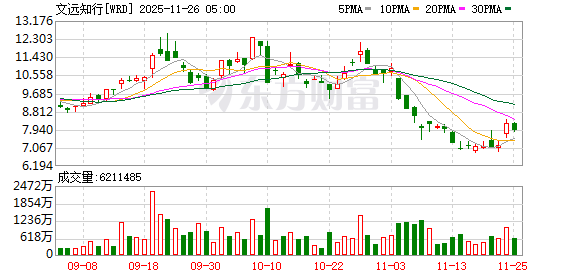
美股异动丨文远知行盘前涨超1% 与Uber在阿布扎比启动Robotaxi纯无人商业运营
Ge Long Hui· 2025-11-26 09:46
Group 1 - The core point of the article is that Wenyuan Zhixing (WRD.US) has officially launched L4 level fully autonomous Robotaxi commercial operations in Abu Dhabi, marking a significant milestone as it receives the first city-level permit for such operations outside the United States [1] - The company reported a 144% year-on-year revenue growth for Q3 2025, with Robotaxi revenue surging by 761% and gross margin increasing to 32.93% [1] - Wenyuan Zhixing has obtained autonomous operation licenses in eight countries, and the launch in Abu Dhabi is expected to help achieve breakeven on a per-vehicle basis, with fleet scaling optimizing the economic model [1] Group 2 - The stock price of Wenyuan Zhixing increased by 1.52% in pre-market trading, reaching $8.04 [1] - The company’s market capitalization stands at $2.71 billion, with a total share capital of 342 million [1] - The trading volume was 6.2115 million shares, with a 52-week high of $44.00 and a low of $6.03 [1]

小马智行财报亮眼:城市级别单车盈利转正、规模倍增,全球布局开启自动驾驶新纪元!
Jin Rong Jie· 2025-11-26 09:43
Core Insights - Pony.ai has made significant strides in the commercialization of autonomous driving, marking the beginning of a new profitable cycle with impressive Q3 2025 results [1] Group 1: Business Performance - The Robotaxi business has achieved a major breakthrough, with the seventh-generation Robotaxi becoming profitable on a per-vehicle basis in Guangzhou, averaging 23 orders per day over the last two weeks [1] - The total number of Robotaxi vehicles has reached 961, with 667 being the seventh generation, and the company expects to exceed 1,000 vehicles by the end of the year, aiming for over 3,000 by the end of 2026 [2] - The Robotaxi segment generated revenue of 47.7 million RMB in Q3 2025, a year-on-year increase of 89.5%, with passenger fare revenue surging over 200% [3] Group 2: Financial Performance - Q3 2025 revenue reached 181 million RMB, a 72% increase year-on-year, following revenues of 102 million RMB in Q1 and 154 million RMB in Q2 [3] - The company completed a dual listing in the US and Hong Kong, raising approximately 6 billion RMB, which will be used for L4 autonomous vehicle production, commercialization, and R&D [3] Group 3: Strategic Partnerships and Global Expansion - Pony.ai has established partnerships with various ride-hailing platforms and taxi companies to create a scalable autonomous driving ecosystem, focusing on a "light asset + AI empowerment" model [4] - The Robotaxi business has expanded to eight countries, with testing initiated in Dubai, Singapore, and Doha, supported by strategic investments from Uber and Bolt [4] Group 4: Other Business Segments - The Robotruck and technology licensing segments also saw year-on-year growth, with Robotruck revenue at 72.5 million RMB and technology licensing at 61 million RMB in Q3 2025 [5] - The fourth-generation Robotruck is set to launch in 2026, with a projected fleet of over 1,000 vehicles, significantly reducing costs and increasing profit margins [5]