资产管理

Search documents
美国为什么快要顶不住了?因为美国再也出不了一个罗斯福了,美国现在最大的问题是缺钱,入不敷出,欠了一堆债
Sou Hu Cai Jing· 2025-11-01 15:52
Core Insights - The article highlights the growing financial crisis in the U.S., with record national debt and increasing fiscal deficits, leading to a situation where each American carries approximately $110,000 in debt [1][3] - It discusses the disparity between the financial struggles of the nation and the wealth accumulation of major financial institutions and wealthy families, indicating a tight bond between politics and capital [3][5] - The article critiques the political landscape, where tax reforms aimed at the wealthy are consistently blocked, resulting in a growing budget deficit and wealth inequality [5][7] Financial Situation - The U.S. Treasury reported that interest payments for 2024 will exceed $870 billion, marking a historical high and surpassing military spending [3] - The wealth distribution is stark, with the top 10% of households holding nearly 70% of the wealth, while the bottom half collectively holds less than 3% [7] Political Dynamics - The 2024 presidential election campaign is projected to exceed $16 billion, primarily funded by large corporations and wealthy individuals, influencing political decisions [3][5] - Media narratives often support the wealthy, promoting the idea that protecting the rich is synonymous with protecting jobs, which misleads the public [5][7] Social Implications - The article notes a significant increase in homelessness, with over 75,000 homeless individuals in Los Angeles alone, highlighting the failure to address basic social needs [7] - It draws a parallel to historical figures like Franklin D. Roosevelt, suggesting that current politicians lack the courage to implement necessary reforms to address wealth inequality and social welfare [9][11]



17年后,为什么我们还需要比特币?
3 6 Ke· 2025-11-01 06:52
Core Insights - The article draws parallels between the 2008 financial crisis and the current state of the U.S. economy in 2025, highlighting the unresolved issues of debt and systemic risk that persist over time [1][20][58] - Bitcoin, initially created as a response to centralized financial systems, has gained significant traction and legitimacy in the financial world, raising questions about its necessity in today's context [1][9][21] 2008 vs. 2025: Crisis Comparison - The 2008 financial crisis was marked by the collapse of Lehman Brothers, which had liabilities of $613 billion, leading to a massive government bailout [2][7] - In 2025, the U.S. national debt has soared to $38 trillion, representing 123% of GDP, with annual interest payments exceeding $1.2 trillion, surpassing major budget items like defense and healthcare [12][13][20] Debt Dynamics - The U.S. government has been running a fiscal deficit of $1.8 trillion in 2025, necessitating the issuance of debt to cover the shortfall [11][20] - The average interest rate on U.S. debt has increased from 1.61% in 2021 to 3.36% in 2025, significantly raising the cost of servicing the debt [14][15] Systemic Risks - The article identifies three major risks associated with the growing debt: the debt ceiling crisis, erosion of dollar credibility, and inflation [16][18][19] - The U.S. national debt is projected to continue rising, potentially reaching 200% of GDP by 2047, indicating a worsening fiscal situation [15][20] Bitcoin's Evolution - Bitcoin has evolved from a theoretical concept in 2008 to a significant asset class with a market capitalization of approximately $2.4 trillion in 2025, surpassing silver [21][22] - Institutional adoption of Bitcoin has increased, with major financial firms like BlackRock and Fidelity becoming significant holders through ETFs [26][27] Philosophical and Functional Aspects - Bitcoin is positioned as a "negative entropy" mechanism, providing a fixed supply and decentralized nature that contrasts with the inflationary tendencies of fiat currencies [35][36] - The article argues that Bitcoin serves as a hedge against systemic risks and a store of value in an increasingly chaotic financial landscape [58][60] Historical Context and Future Outlook - The unresolved issues from the 2008 crisis have intensified, making Bitcoin's role as a decentralized alternative more relevant than ever [58][59] - The article suggests that as the world faces increasing uncertainty, Bitcoin's value as a stable, verifiable asset will continue to grow [57][60]
“美联储内部存在严重分歧”
Di Yi Cai Jing Zi Xun· 2025-11-01 03:31
Core Viewpoint - The Federal Reserve's decision to lower interest rates by 25 basis points has created uncertainty regarding future policy directions, particularly with the December rate cut not being a "foregone conclusion" as indicated by Chairman Powell [1][2]. Summary by Sections Federal Reserve Decision - The Federal Reserve's policy-making committee voted 10 to 2 to lower the benchmark interest rate to a range of 3.75%-4.00%, marking the first instance of "dual opposition" since 2019 [2]. - Kansas City Fed President Schmid expressed concerns about the impact of rate cuts on inflation and the labor market, suggesting that current economic growth remains robust [2]. Divergence Among Officials - Several regional Fed presidents, including Dallas Fed President Logan and Cleveland Fed President Hammack, voiced opposition to the rate cut, citing persistent inflation risks and the need for more evidence of economic downturns before further easing [3][4]. - The internal divisions within the Fed regarding the direction of monetary policy have been highlighted, with some officials advocating for maintaining current rates unless significant economic changes occur [4]. Market Expectations - Financial markets have adjusted their expectations for a December rate cut, with the probability dropping to 60% from over 95% earlier in the week, indicating a shift in sentiment [5]. - Analysts from various financial institutions remain divided on the likelihood of a December rate cut, with some economists predicting a pause in rate reductions while others maintain that a cut is still possible depending on forthcoming economic data [6][7]. Economic Outlook - The current economic landscape is characterized by uncertainty due to the government shutdown and lack of official economic data, complicating assessments of the economic situation [6]. - Despite some signs of a slowing job market, consumer spending and income growth remain resilient, suggesting that the risk of recession in the next 12 months is low [6].
三年募资270亿,“投GP的GP”是怎么玩的?
3 6 Ke· 2025-10-31 23:32
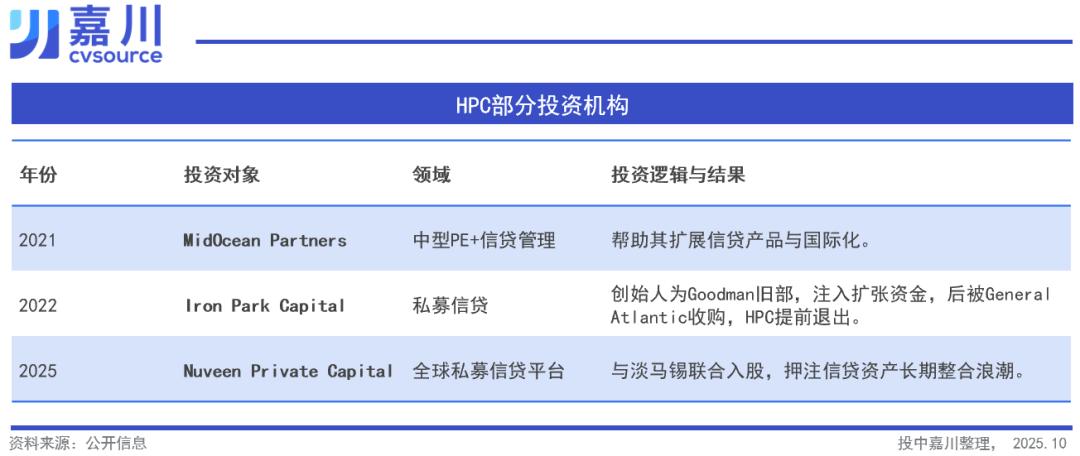
Core Viewpoint - The emergence of Hunter Point Capital (HPC) signifies a shift in the investment landscape, where investment institutions themselves become the targets of investment, moving from traditional capital investment in companies and projects to investing in General Partners (GPs) [2][4]. Group 1: Hunter Point Capital Overview - HPC, established in 2020, focuses on acquiring minority stakes in GPs rather than investing in companies or funds, raising over $3 billion in just three years [2][10]. - The firm represents a new trend in the asset management industry, where capital is now directed towards the operators of capital rather than the capital itself [2][4]. Group 2: Market Dynamics - The concentration in the global asset management industry has increased, with the top three firms (Vanguard, BlackRock, and Fidelity) controlling 51% of managed assets in 2023, up from 43% in 2013 [3]. - Mid-sized GPs face challenges such as prolonged fundraising cycles and declining management fees, creating a "growth capital vacuum" that HPC aims to address [4][10]. Group 3: Investment Strategy - HPC's strategy is to invest in people rather than projects, acquiring minority stakes in GPs to gain future management fees and performance-based income [12][13]. - The firm provides post-investment support, including fundraising assistance and financial structure optimization, positioning itself as a "Strategic Minority Partner" [16][17]. Group 4: Investment Performance - HPC's investments are designed to yield returns through two main avenues: dividend income from increased management fees and capital appreciation from the GP's brand and asset growth [15][20]. - The firm has invested in eight notable investment institutions, demonstrating its ability to identify GPs at critical expansion points [17][19]. Group 5: Future Outlook in China - The private equity sector in China is experiencing similar challenges, with many mid-sized GPs facing survival anxiety due to fundraising difficulties and market concentration [21]. - There is potential for local institutions to adopt HPC's model of minority stake investment in GPs, although current market conditions and regulatory environments may pose challenges [21].
WisdomTree(WT) - 2025 Q3 - Earnings Call Transcript
2025-10-31 16:00
Financial Data and Key Metrics Changes - The company reported record global AUM of $137.2 billion, with U.S. AUM at $88.3 billion and European AUM at $48.3 billion, alongside digital AUM of nearly $600 million [3][11] - Adjusted revenues for the quarter were $125.6 million, reflecting an increase of 11.5% from the previous quarter and approximately 14.7% year-over-year, driven by higher average AUM [5] - Adjusted net income for the quarter was $34.5 million, or $0.23 per share, excluding certain losses and acquisition-related costs [6] - The gross margin improved to 82.2% in the third quarter, with expectations to rise to 83% in the fourth quarter due to the Cirrus Partners acquisition [7] Business Line Data and Key Metrics Changes - Significant inflows were noted in European gold and cryptocurrency products, as well as the European Defense Fund and Digital Money Market Fund [4] - Model AUM grew to approximately $5.85 billion, up more than 50% year-to-date, indicating strong advisor adoption [12] - The digital assets segment saw AUM grow to around $600 million, with peak levels near $900 million, driven by flows into the blockchain-enabled money market fund [14] Market Data and Key Metrics Changes - Year-to-date inflows totaled $8.8 billion, with $2.5 billion from the U.S., $5.8 billion from Europe, and roughly $550 million in digital assets [3] - The company experienced a notable increase in the number of clients using its products, contributing to deeper client relationships and sustainable organic growth [12] Company Strategy and Development Direction - The acquisition of Cirrus Partners is expected to enhance revenue capture and operating margins while diversifying AUM with farmland as a new asset class [4][10] - The company is focused on expanding its digital asset offerings and enhancing its technology stack, with plans for tokenization as a service [21][23] - The strategic priorities for 2025 include faster revenue growth and higher revenue capture, with a strong emphasis on maintaining operational efficiency [16][44] Management's Comments on Operating Environment and Future Outlook - Management expressed confidence in the fundamentals of the European business, anticipating continued strong growth in ETF adoption [19] - The company is optimistic about the digital asset market, expecting significant growth and increased adoption among stablecoin issuers and crypto-native businesses [32][67] - Management highlighted the importance of maintaining a diversified and scalable platform to navigate market cycles and ensure long-term success [17][16] Other Important Information - The company reported $8 million in adjusted interest expense for the quarter, with expectations of $11 million in the fourth quarter due to recent financing [8] - The company is actively working on bringing its Digital Money Market Fund to market, pending SEC approval [40] Q&A Session Summary Question: What is the three-to-five-year vision for Europe in terms of flows compared to the U.S.? - Management indicated that Europe is a few years behind the U.S. in ETF adoption, with strong growth fundamentals expected [19] Question: Can you elaborate on the digital asset side and potential for tokenization as a service? - Management confirmed active discussions around tokenization as a service and highlighted the competitive advantages of their technology stack [21][23] Question: What are the underlying drivers of the rapid growth in digital assets? - The growth is primarily driven by stablecoin issuers and crypto-native businesses seeking yield-bearing treasury assets [32] Question: How will the Cirrus Partners acquisition impact future private asset strategies? - Management emphasized a disciplined approach to acquisitions and indicated that this is just the beginning of their focus on private assets [27][29] Question: How will AUM for Cirrus Partners be reported? - AUM for Cirrus Partners will be reported at the end of each quarter, with performance-based fees linked to the AUM and market conditions [57][60]

Federated(FHI) - 2025 Q3 - Earnings Call Transcript
2025-10-31 14:00
Financial Data and Key Metrics Changes - The company ended Q3 2025 with record assets under management of $871 billion, an increase driven by gains from money market and equity strategies [4] - Total revenue for Q3 increased by $44.6 million or 10% compared to the prior quarter, with contributions from higher money market assets and equity assets [15] - Operating expenses rose by $32.2 million or 10% from the prior quarter, primarily due to higher distribution expenses [15] Business Line Data and Key Metrics Changes - Equity assets increased by $5.7 billion, or 6%, from the prior quarter, despite slightly negative net sales of $130 million [4] - Fixed income assets reached a record high of $101.8 billion, with total net sales improving by $4.1 billion in Q3 [7] - Alternative private markets saw a decrease of about $1.7 billion in assets, mainly due to real estate fund transactions [8] Market Data and Key Metrics Changes - Money market assets increased by $18 billion to reach $653 billion, with money market fund assets rising by 5% to $492.7 billion [12] - The company's estimate of money market mutual fund market share remained at about 7.11% at the end of Q3 [15] Company Strategy and Development Direction - The company is actively developing MDT distribution opportunities outside of the U.S., with strong interest from institutions and intermediaries [5] - The acquisition of FCP, a U.S.-based real estate investment manager, is expected to facilitate entry into the U.S. real estate market [10] - The company is committed to digital asset initiatives, including tokenized money market funds and participation in blockchain technology projects [13][14] Management's Comments on Operating Environment and Future Outlook - Management expressed optimism regarding the MDT franchise, highlighting a strong pipeline of new RFPs and growing momentum [19] - The institutional pipeline is described as very strong, with over $2 billion expected to fund in the near term [22] - Management anticipates that expenses will rise in line with revenue growth, particularly due to the FCP acquisition and ongoing investments in digital assets [21] Other Important Information - The company paused its open market share repurchase during negotiations with FCP but plans to resume in Q4 [17] - Cash and investments at the end of Q3 were $647 million, with expectations to use a portion for the FCP acquisition [16] Q&A Session Summary Question: MDT franchise growth potential - Management indicated enthusiasm and optimism regarding the MDT franchise, with net sales of about $660 million through October 24 and a strong global pipeline [18][19] Question: Expense trajectory over the next year - Management expects expenses to rise due to the FCP acquisition and ongoing initiatives, but anticipates that these will be accompanied by revenue growth [20][21] Question: Institutional investor allocations and opportunities - The institutional pipeline is strong, with various mandates won across different countries, and about two-thirds expected to fund in Q4 [22][23]

深耕ABS市场,财通资管前三季度发行规模突破400亿
Zhong Guo Zheng Quan Bao· 2025-10-31 12:59
Core Insights - The ABS market saw a total of 1,777 new issuance projects in the first three quarters of 2025, with an issuance scale of 16,336 billion yuan, representing a 17% increase compared to the same period last year [1] - Financial institutions are focusing on product structure innovation and expanding underlying assets to adapt to the improving market conditions [1] - The company, Caitong Asset Management, issued 52 ABS products totaling over 40 billion yuan in the first three quarters, marking a 38% year-on-year increase, ranking 8th in the industry [1] ABS Market Performance - The issuance scale of consumer finance ABS led the market with a total of 2,515 billion yuan, reflecting a 31% year-on-year growth [1] - Caitong Asset Management has developed a multi-tiered consumer finance product system, issuing 23 inclusive micro ABS products totaling approximately 18 billion yuan [1] Innovation in Financial Products - Caitong Asset Management is actively exploring innovative financial tools to support technology enterprises, issuing projects exceeding 10 billion yuan in the first three quarters [2] - The company launched the first national ABS product containing data intellectual property, supporting specialized and innovative enterprises [2] Support for Industry Upgrades - Caitong Asset Management issued four "Two New" labeled projects totaling over 4 billion yuan, promoting the second-hand car industry's upgrade [2] - The company has issued four themed projects related to the Yangtze River Economic Belt, totaling over 3 billion yuan, enhancing local enterprise financing structures [3] Cumulative Issuance and Future Strategy - Since its establishment, Caitong Asset Management has cumulatively issued 225 ABS products with a total scale of approximately 180 billion yuan [3] - The company aims to leverage its parent company’s comprehensive financial service platform to drive financial resources towards the real economy through ABS and REITs [3]
贝森特:可能在圣诞节前选出美联储主席候选人,不喜欢本次降息的措辞
华尔街见闻· 2025-10-31 12:00
此外,总统特朗普周一重申,他预计财长贝森特本人不会离开现有职位去执掌美联储。 遴选过程的时间框架已变得十分清晰。贝森特表示,他计划在进行更多面试后,于感恩节后向总统提交最终候选人名单。 当地时间周四,美国财长贝森特发表讲话称,美联储主席第二轮面试即将开始。 可以想象我们能在圣诞节前选出美联储主席候选人。 据华尔街见闻此前文章,美联储主席的候选人范围已缩小至五人。他们分别是:现任美联储理事Christopher Waller和Michelle Bowman,前美联储理事Kevin Warsh,白宫国家经济委员会主任Kevin Hassett,以及贝莱德(BlackRock Inc.)高管Rick Rieder。 贝森特表示, 赞赏美联储降息25个基点,但"不喜欢其措辞"。 鲍威尔在周三利率决议会后新闻发布会上发出鹰派信号,称通胀短期仍有上行压力,就业面临 下行风险,目前面临的局面颇具挑战,委员会对12月是否再次降息仍存较大分歧,降息并非板上钉钉。 2026见闻历"股神纪念版"重磅上市 金融人必备 五人角逐美联储帅位 这份五人名单,囊括了来自美联储内部、白宫以及华尔街的资深人士。贝森特本人正主导此次遴选的面试工作 ...

政府停摆干扰数据发布 摩通资管警示美联储决策受限
Xin Hua Cai Jing· 2025-10-31 08:09
然而,许长泰特别指出,本次FOMC会议释放出更为鹰派的政策基调,这限制了未来宽松空间。基于当 前形势,他预计2026年上半年美联储或仅有一次降息机会。 (文章来源:新华财经) 新华财经北京10月31日电摩通资产管理策略师许长泰称,尽管美联储于10月30日如期将联邦基金利率下 调25个基点,目标区间降至3.75%至4.00%,符合市场普遍预期,但当前美国联邦政府持续停摆正对货 币政策制定构成实质性干扰。 许长泰强调,由于政府停摆,包括非农就业报告在内的多项关键经济数据无法正常发布,致使美联储在 缺乏完整信息的情况下作出利率决策。"这一情况值得高度关注,"他表示。 他进一步分析称,若政府停摆不再造成进一步干扰,美联储将有望恢复接收就业与通胀数据。在此前提 下,若就业市场明显改善或通胀出现显著反弹,联邦公开市场委员会(FOMC)可能选择维持利率不 变。尽管如此,12月仍存在降息的可能性。 ...
浦东引领区建设5周年:服务赋能出海 科创驱动未来
Guo Ji Jin Rong Bao· 2025-10-31 07:27
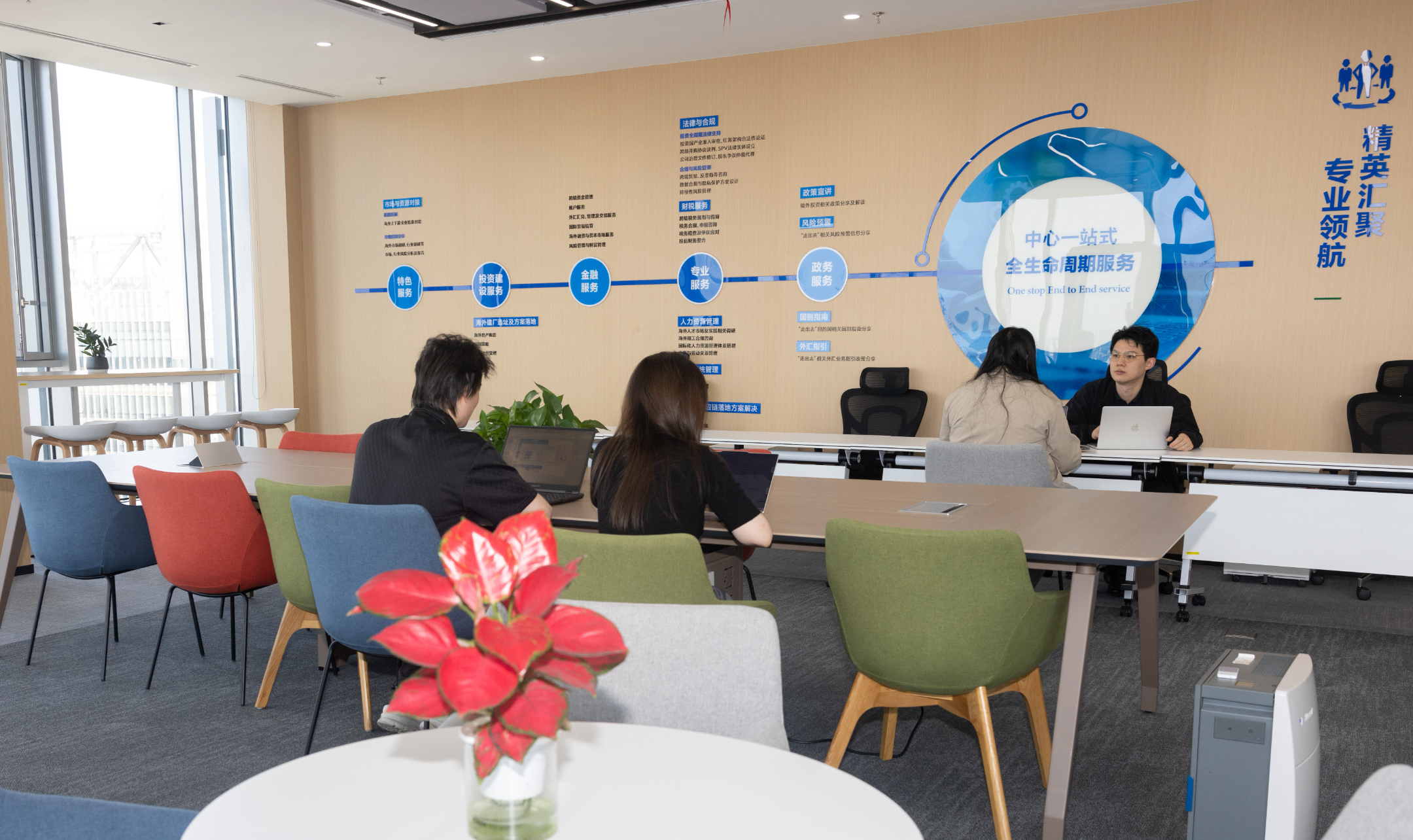
Group 1: Internationalization Support - The Shanghai Pudong New Area Enterprise Going Global Comprehensive Service Center, established in March 2025, is the first "going global" comprehensive service platform registered as a consulting organization in China, marking an innovative initiative to support international development for enterprises [2] - The center has formed a complete service ecosystem with 11 leading industry organizations and over 90 strategic partners, covering legal, financial, consulting, and accounting fields, successfully integrating government guidance, market operations, and professional empowerment [4] - The center has established over 270 global sites, creating an overseas service network covering key regions such as Europe, America, Asia-Pacific, and the Middle East, providing one-stop services including international market research, business investigation, investment project implementation, cross-border operation support, and systematic risk warning [5] Group 2: Case Studies of Benefiting Companies - Shanghai Yamazaki Circuit Board Co., Ltd., a high-tech enterprise focusing on precision circuit board R&D and production, successfully invested in a factory in Thailand in 2023, overcoming ODI procedure challenges with the center's assistance [5] - East Asia Asset Management (ATA), under Zhengchuang Group, has rapidly developed by leveraging the center's platform, providing one-stop services for Chinese enterprises going abroad and family asset allocation in Southeast Asia [6] Group 3: Innovation and Research Development - Fudan University has transformed the Zhangjiang campus into a technology innovation park, launching the Zhangjiang Fudan International Innovation Center in 2017, focusing on three leading industries: biomedicine, artificial intelligence, and integrated circuits [7] - The innovation center has a total construction area of approximately 653,000 square meters, with the first phase consisting of three research buildings covering about 320,000 square meters, supporting major research platform construction and innovation tasks [10] - The center aims to cultivate top global talent, produce original landmark results in brain science and integrated circuits, and accelerate the incubation of disruptive technologies, thereby promoting deep integration of scientific innovation and industrial innovation [11]