晶圆代工

Search documents
中芯国际跌超3% 早盘一度涨超2% 三季度纯利同比增长28.9%
Zhi Tong Cai Jing· 2025-11-14 07:41
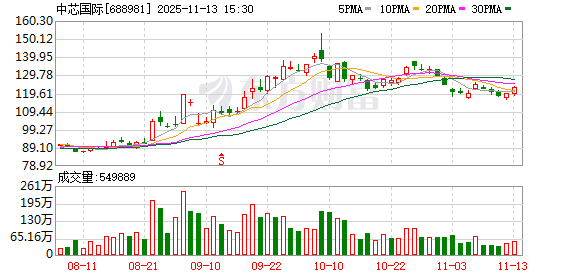
Core Viewpoint - SMIC's stock experienced a decline of over 3% despite a brief recovery during the trading session, reflecting market volatility and investor sentiment [1] Financial Performance - For Q3 2025, SMIC reported sales revenue of $2.382 billion, representing a quarter-over-quarter increase of 7.8% and a year-over-year increase of 9.7% [1] - The company's gross margin was 22.0%, up by 1.6 percentage points from the previous quarter [1] - Capacity utilization increased to 95.8%, a rise of 3.3 percentage points quarter-over-quarter [1] - Net profit attributable to shareholders was approximately $192 million, showing a quarter-over-quarter growth of 44.7% and a year-over-year growth of 28.9% [1] Future Guidance - For Q4 2025, SMIC provided guidance indicating flat to 2% growth in revenue, with gross margin expectations between 18% and 20% [1] - The fourth quarter is traditionally a slow season for the foundry industry, and SMIC has built up inventory in anticipation of customer demand [1] - Management noted that while customer confidence remains strong, the pace of urgent orders and shipments may slow down in Q4 [1] - The company aims to exceed the average performance of comparable peers for the entire year, assuming no significant changes in the external environment [1]

港股异动 | 中芯国际(00981)跌超3% 早盘一度涨超2% 三季度纯利同比增长28.9%
智通财经网· 2025-11-14 07:35
Core Viewpoint - SMIC's stock experienced volatility, initially rising over 2% before closing down 3.11% at HKD 73.25, with a trading volume of HKD 6.575 billion [1] Financial Performance - For Q3 2025, SMIC reported sales revenue of USD 2.382 billion, reflecting a quarter-over-quarter increase of 7.8% and a year-over-year increase of 9.7% [1] - The company's gross margin was 22.0%, up 1.6 percentage points from the previous quarter [1] - Capacity utilization increased to 95.8%, a rise of 3.3 percentage points quarter-over-quarter [1] - Net profit attributable to shareholders was approximately USD 192 million, showing a quarter-over-quarter growth of 44.7% and a year-over-year growth of 28.9% [1] Future Guidance - For Q4 2025, SMIC provided guidance indicating flat to 2% growth in revenue, with gross margin expectations between 18% and 20% [1] - The fourth quarter is traditionally a slow season for the wafer foundry industry, but SMIC has built up inventory in response to customer demand in the first three quarters [1] - Management noted that while customer confidence remains strong, the pace of urgent orders and shipments may slow down in Q4 [1] - SMIC aims to exceed the average performance of comparable peers for the year, assuming no significant changes in the external environment [1]
中芯国际,大消息!
Zhong Guo Ji Jin Bao· 2025-11-13 13:25
Core Viewpoint - SMIC reported a record high capacity utilization rate and a year-on-year revenue growth of 9.9% for Q3 2025, indicating strong operational performance and market demand [2][5]. Financial Performance - In Q3 2025, SMIC's revenue reached 171.62 billion RMB, a 9.9% increase year-on-year, while net profit attributable to shareholders was 15.17 billion RMB, up 43.1% [5][6]. - For the first three quarters of 2025, total revenue was 495.10 billion RMB, reflecting an 18.2% year-on-year growth, with net profit increasing by 41.1% to 38.18 billion RMB [5][6]. Capacity and Utilization - The wafer sales volume in Q3 2025 was 2,499,465 pieces, representing a 17.77% year-on-year increase and a 4.57% quarter-on-quarter increase [9]. - The capacity utilization rate reached 95.8% in Q3 2025, up 5.4 percentage points year-on-year and 3.3 percentage points quarter-on-quarter [7][9]. Revenue Breakdown by Application - In Q3 2025, revenue from consumer electronics accounted for 43.4% of total revenue, while industrial and automotive sectors contributed 11.9%, both showing quarter-on-quarter increases [7][8]. Research and Development - R&D expenditure for Q3 2025 was 1.447 billion RMB, a 13.6% year-on-year increase, with R&D spending as a percentage of revenue rising to 8.4% [6][13]. - The company emphasized the importance of maintaining high R&D investment to strengthen its competitive edge in the semiconductor industry [14]. Profitability - SMIC's gross margin for Q3 2025 was 25.5%, an increase of 4 percentage points year-on-year and 4.8 percentage points quarter-on-quarter [14]. - The company expects its gross margin for Q4 2025 to be between 18% and 20%, consistent with the guidance for Q4 2024 [15].

中芯国际,大消息!
中国基金报· 2025-11-13 13:24
Core Viewpoint - SMIC's capacity utilization rate reached a record high, with Q3 2025 revenue increasing by 9.9% year-on-year [2][7]. Revenue Growth - In Q3 2025, SMIC's revenue was 17.162 billion yuan, a year-on-year increase of 9.9%, and net profit attributable to shareholders was 1.517 billion yuan, up 43.1% year-on-year [7]. - For the first three quarters of 2025, SMIC's revenue totaled 49.510 billion yuan, reflecting an 18.2% year-on-year growth, while net profit reached 3.818 billion yuan, a 41.1% increase [7]. Capacity and Utilization - In Q3 2025, SMIC sold 2.499 million wafers, marking a 17.77% year-on-year increase and a 4.57% quarter-on-quarter increase [11]. - The quarterly capacity utilization rate for Q3 2025 was 95.8%, up 5.4 percentage points year-on-year and 3.3 percentage points quarter-on-quarter [11][13]. Revenue by Application - In Q3 2025, revenue from consumer electronics, industrial, and enterprise sectors accounted for 43.4% and 11.9% of total revenue, respectively, with increases of 2.4 and 1.3 percentage points quarter-on-quarter [11]. Research and Development - SMIC's R&D expenditure in Q3 2025 was 1.447 billion yuan, a 13.6% year-on-year increase and a 10.79% quarter-on-quarter increase [17]. - The gross margin for Q3 2025 was 25.5%, up 4 percentage points year-on-year and 4.8 percentage points quarter-on-quarter [17]. Market Trends - The consumer electronics market is experiencing gradual demand recovery due to the upgrade of smart terminals, while the automotive electronics sector shows signs of rebound [15].
一财主播说 | 上交所:科创板有望涌现一批世界级明星科技企业
Xin Lang Cai Jing· 2025-11-13 06:50
Core Viewpoint - The Shanghai Stock Exchange (SSE) aims to cultivate a batch of world-class technology companies through the STAR Market, which serves as a testing ground for capital market innovations [1] Group 1: STAR Market Developments - The STAR Market has already seen notable companies such as Semiconductor Manufacturing International Corporation (SMIC), BeiGene, and Cambricon Technologies, indicating its potential to attract leading tech firms [1] - The STAR Market allows unprofitable companies, red-chip enterprises, and those with special equity structures to list, creating a dedicated financing channel for innovative tech companies [1] Group 2: Policy Innovations - The SSE has continuously improved its institutional offerings, introducing the "1+6" policy combination for issuance and expanding the fifth set of listing standards to include cutting-edge fields like artificial intelligence and commercial aerospace [1] - Regulatory reforms, known as the "Eight Articles of Science," have been implemented to optimize the merger and acquisition mechanisms within the STAR Market [1]
产业经济周报:三季度业绩向好复苏,科技、红利或成演进方向-20251112
Tebon Securities· 2025-11-12 11:02
Market Overview - The A-share index showed mixed performance with the Shanghai Composite Index rising by 1.08% and the Shenzhen Component Index increasing by 0.19%, while the North China 50 index fell by 3.79% during the week of November 3-7, 2025 [7][5] - The average daily trading volume in the market was 2.01 trillion yuan, down from 2.32 trillion yuan the previous week, indicating a contraction in trading activity [5][7] Consumer Sector - The consumer sector's Q3 performance revealed a divergence among sub-sectors, with the mother and baby segment showing a significant year-on-year net profit increase of 69.48%, while the supermarket and department store segments faced severe declines in net profit, with decreases of 31.23% and 229.10% respectively [5][19] - The overall Q3 revenue growth for major consumer segments was as follows: home appliances +1.66%, textiles -1.31%, food and beverages -6.57%, and consumer services +3.51% [18][19] Health Sector - The new essential drug directory is expected to be implemented, which may benefit traditional Chinese medicine (TCM) products. The current essential drug directory includes 417 chemical drugs and 268 TCMs, with TCM accounting for 39.1% [30][31] - The CXO (Contract Research Organization) segment within the biopharmaceutical industry showed notable revenue growth, while other segments faced challenges due to policy changes and market conditions [27][29] Hard Technology - The global demand for AI continues to drive high demand in the wafer foundry sector, with TSMC reporting a Q3 revenue growth where 3nm and 5nm process revenues accounted for 37% and 14% of total revenue respectively [5][10] - Domestic wafer foundries also experienced significant revenue growth in Q3, reflecting strong domestic demand driven by local IC design companies and the return of some orders to domestic manufacturers [5][11] High-end Manufacturing - The high-end manufacturing sector showed a steady recovery in Q3, with traditional equipment manufacturing experiencing a rebound in demand, particularly in the metal cutting machine tool industry [5][12] - Companies like XPeng Motors are diversifying into humanoid robotics, indicating a trend towards intelligent manufacturing and collaborative innovation within the industry [5][14]


电子行业2025年三季报回顾:AI海外算力链强劲,存储环增超预期
Shenwan Hongyuan Securities· 2025-11-12 08:44
Investment Rating - The report maintains a positive outlook on the electronics industry, indicating a "Buy" rating for the sector in Q3 2025 [4]. Core Insights - The electronics industry shows sustained recovery, with Q3 2025 revenue growth of 19% year-on-year, ranking third among all sectors [5][9]. - Net profit for the electronics sector increased by 50% year-on-year in Q3 2025, placing it eighth among all sectors [5][9]. - Key segments such as semiconductor equipment, storage, and AI-related demand are driving growth, with significant price increases expected to continue in the storage sector [4][11]. Summary by Sections 1. Industry Overview - The electronics industry is experiencing a recovery phase, with a continuous positive growth trend for nine consecutive quarters in revenue and seven quarters in net profit [9]. - The Shenyin Wanguo Electronics Index has seen a rise in price-to-earnings ratio, reaching a peak of 69 times in October 2025 [10]. 2. Semiconductor Equipment - Major companies like North Huachuang and Jiangfeng Electronics reported revenue growth of 39% and 20% respectively in Q3 2025, with net profits increasing by 14% and 18% [21]. - The semiconductor equipment sector is benefiting from structural advantages, with a significant increase in investment despite a general decline in the semiconductor industry [21]. 3. Wafer Foundry and Testing - The wafer foundry segment is seeing high capacity utilization, with Huahong's revenue growing by 21% year-on-year in Q3 2025 [22]. - Testing companies such as Tongfu Microelectronics and Weicai Technology exceeded expectations with revenue growth of 44% and 98% respectively [22]. 4. Storage - Storage companies like Jiangbolong reported a 55% increase in revenue, with net profits significantly exceeding expectations [25]. - The report anticipates continued price increases in storage products, driven by strong demand from AI servers [25]. 5. Power Devices - Companies in the power device sector are experiencing a mild recovery, with significant demand from the automotive sector [27]. 6. Analog Chips - The competitive landscape for analog chips is improving, with companies like Shengbang and SIRUI reporting revenue growth of 13% and 70% respectively [29]. 7. Consumer Electronics - The consumer electronics sector is poised for a new hardware cycle, with companies like Lingyi Zhi Zao reporting a 13% increase in revenue [31]. 8. Computing Power Related - Companies in the computing power sector, such as Industrial Fulian, reported a 43% increase in revenue, driven by strong demand for AI servers [32].




国海证券:维持华虹半导体“买入”评级 ASP和毛利率维持积极态势
Zhi Tong Cai Jing· 2025-11-12 02:06
Core Viewpoint - Guohai Securities maintains a "Buy" rating on Huahong Semiconductor (01347), citing the company's growth in wafer volume and price under the trend of self-control and "China for China" [1] Group 1: Financial Performance - In Q3 2025, Huahong Semiconductor reported revenue of $635 million, a quarter-over-quarter increase of 12.2% and a year-over-year increase of 20.7% [2] - The company achieved a gross margin of 13.5%, up 2.6 percentage points quarter-over-quarter and 1.3 percentage points year-over-year, exceeding guidance of 10%-12% [2] - Net profit attributable to shareholders was $26 million, reflecting a significant quarter-over-quarter increase of 223.5% but a year-over-year decrease of 42.6% [2] Group 2: Future Guidance - For Q4 2025, Huahong Semiconductor expects revenue between $650 million and $660 million, representing a quarter-over-quarter increase of 3.1% and a year-over-year increase of 21.5% [3] - The company anticipates a gross margin of 12%-14% for Q4, which is above market expectations [3] - Revenue growth is expected to be driven by collaborations with "China-for-China" strategic customers and the gradual release of Fab9A capacity [3] Group 3: Investment Forecast - Huahong Semiconductor's revenue projections for 2025, 2026, and 2027 are $2.4 billion, $3.03 billion, and $3.35 billion, respectively, with net profits of $90 million, $194 million, and $263 million [4] - The diluted EPS for the same years is projected to be $0.05, $0.11, and $0.17, respectively [4] - The price-to-book ratio for November 10, 2025, is expected to be 2.74x, 2.66x, and 2.31x for the respective years [4]

中泰资管田瑀:AI时代的价值投资和科技投资并不对立 价值判断需满足三个条件
Zhi Tong Cai Jing· 2025-11-11 12:08
Group 1 - The differentiation in the market this year has sparked discussions on the relationship between value investing and technology investing, suggesting they are not mutually exclusive [1][6] - Value investing can encompass technology sectors as long as certain criteria are met, such as the ability to assess long-term demand, business models, and competitive advantages [1][4] - The development of AI is expected to accelerate demand growth in the semiconductor industry, which remains stable in its business model despite technological changes [1][6][22] Group 2 - The semiconductor industry, particularly wafer foundry and storage sectors, is seen as having a strong potential for growth due to AI's increasing computational demands [1][6][28] - AI has changed the computing paradigm, increasing the need for storage capacity and bandwidth, which has become a bottleneck in the industry [1][30][31] - The shift towards domestic semiconductor production in China is driven by the need for self-sufficiency, creating opportunities for local companies to develop competitive advantages [1][34][35] Group 3 - The slowing of Moore's Law is a recognized phenomenon, indicating that advancements in semiconductor manufacturing will occur at a slower pace [1][38][41] - The semiconductor manufacturing industry may evolve into a slower-changing sector, with challenges in scaling production and enhancing chip capabilities [1][42] - The importance of deep research and understanding of the semiconductor industry is emphasized, as it is crucial for evaluating business models and investment opportunities [1][19][21]
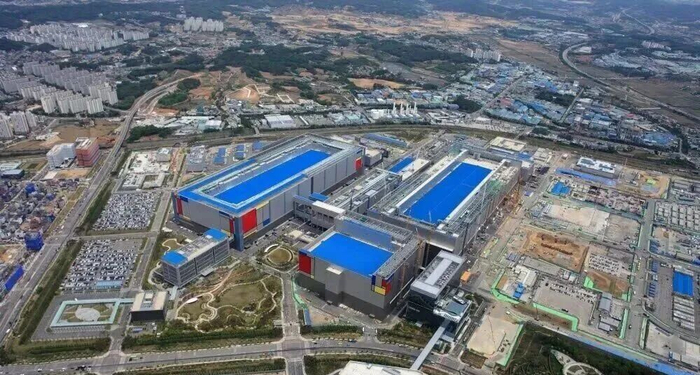
2600亿晶圆代工厂,即将投产!
Xin Lang Cai Jing· 2025-11-10 17:27
Core Insights - ASML has begun assembling a dedicated EUV team for Samsung Electronics' next-generation wafer foundry in Taylor, Texas, marking a critical phase in the factory's operational preparations, with production expected to commence next year [1] - The Taylor factory aims to utilize 2nm technology to produce AI semiconductors and high-performance chips, enhancing production capacity and reflecting Samsung's commitment to advanced process technology [1][3] - The factory's first phase is projected to achieve a monthly capacity of 16,000 to 17,000 12-inch wafers by the end of 2026 or early 2027, primarily for Tesla's AI6 chips [3] Production and Capacity - The production equipment at the Taylor factory includes critical process equipment such as lithography, etching, thin film deposition, and ion implantation, supplied by top global vendors [3] - Samsung initially planned to build two wafer fabs, each with two clean rooms, potentially reaching a total capacity of 60,000 to 70,000 12-inch wafers per month, but currently, only the first phase is underway [3] - The yield rate for Samsung's 2nm process is currently around 40%, requiring further optimization for stable mass production [3] Market Position and Contracts - Samsung's foundry market share decreased from 7.7% in Q1 to 7.3% in Q2, widening the gap with TSMC from 59.9 percentage points to 62.9 percentage points [4] - A significant contract worth approximately 23 trillion KRW was signed between Samsung and Tesla for the latest AI6 chips, showcasing Samsung's technological capabilities [4] - Samsung's foundry business is expected to recover fully as the Taylor factory begins normal operations next year, with anticipated improvements in profitability due to increased capacity and process efficiency [4][5] Financial Outlook - Samsung's foundry division has been experiencing substantial quarterly losses, which are considered a pain point for its digital solutions segment [3] - The company expects sales growth in Q4, driven by the mass production of new products using the first-generation 2nm process and strong demand for high-performance computing and automotive products [5] - Initial investment plans for the Taylor facility were reduced from $44 billion to $37 billion due to poor performance and customer development challenges, but there are indications that investments may increase to over $50 billion [5]