
桥梁建设

Search documents
经济大省省会,正在加速“缝合”
3 6 Ke· 2025-11-27 02:11
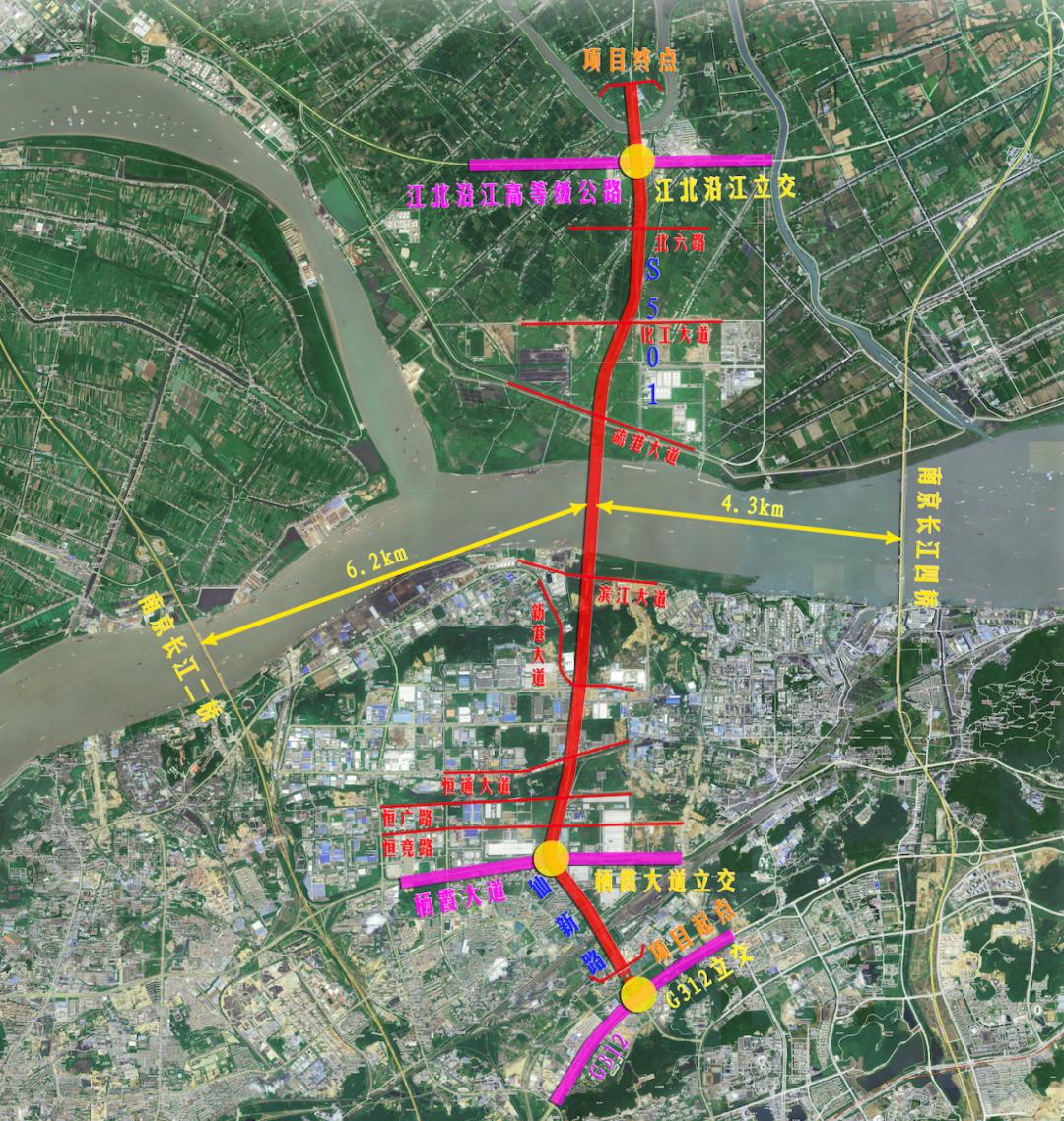
Core Viewpoint - The opening of the Xinxingwei Yangtze River Bridge marks a significant development in Nanjing's transportation infrastructure, enhancing connectivity between the main city and the Jiangbei New Area, and reducing travel time from one hour to under ten minutes [1][3]. Group 1: Infrastructure Development - The Xinxingwei Yangtze River Bridge is the sixth free crossing in Nanjing, with a total length of approximately 13.17 kilometers and a main span of 1,760 meters, making it the "first in China and third in the world" [3][8]. - The bridge is designed for a speed of 80 km/h and features a six-lane dual carriageway, serving as a crucial hub for Nanjing's urban development strategy [3][8]. Group 2: Urban Development Strategy - Nanjing's "embracing the river development" strategy aims to shift the city's focus from the Qinhuai River era to the Yangtze River era, promoting balanced development between the southern and northern banks of the river [3][8]. - The Jiangbei New Area is identified as a key growth engine for regional economic development, supported by recent government policies aimed at enhancing its capabilities [3][8]. Group 3: Future Plans - Nanjing has accelerated the construction of river-crossing channels, with three new crossings completed during the 14th Five-Year Plan period, bringing the total to 15 crossings [8]. - Future plans include the construction of 24 additional crossings over the next decade, which will facilitate a transition from a "single center" to a "multi-center network" urban structure [8].

南京新生圩长江大桥正式通车串联三大板块 物流通勤效率提升
Xin Hua Ri Bao· 2025-11-26 23:51
Core Points - The Nanjing Xinshengwei Yangtze River Bridge officially opened on November 26, marking a significant improvement in commuting efficiency, allowing for "minute-level" travel times between key areas in Nanjing [1] - The bridge spans 13.17 kilometers with a mainline design speed of 80 km/h and features six lanes in both directions, facilitating free passage [1] - The bridge connects major districts including Qixia, Jiangbei New Area, and the Economic Development Zone, alleviating traffic pressure on surrounding highways [1] Infrastructure Development - The bridge is designed as a suspension bridge with a main span of 1,760 meters, setting a record for similar bridges in China, and is capable of accommodating 50,000-ton vessels, enhancing shipping safety and efficiency [2] - Future plans for Nanjing's cross-river transportation system include multiple projects such as the Shangyuanmen Railway and Metro Line 4, aiming to establish a more balanced and convenient transportation network by the end of the 14th Five-Year Plan [2] - Currently, Jiangsu Province has completed 21 cross-river passages and has 8 under construction, with Nanjing having 6 free urban road crossings [2] Economic Impact - The bridge is expected to enhance logistics efficiency and business interactions, transforming regional competitive advantages into tangible benefits for local industries [1] - It will facilitate industrial collaboration between the southern and northern banks, promoting sectors such as new materials, electronic information, and advanced manufacturing [1] - The bridge will contribute to the formation of an innovative industrial network, linking various manufacturing corridors and technology innovation zones [1]
城市24小时 | 经济大省省会 正在加速“缝合”
Mei Ri Jing Ji Xin Wen· 2025-11-26 17:39
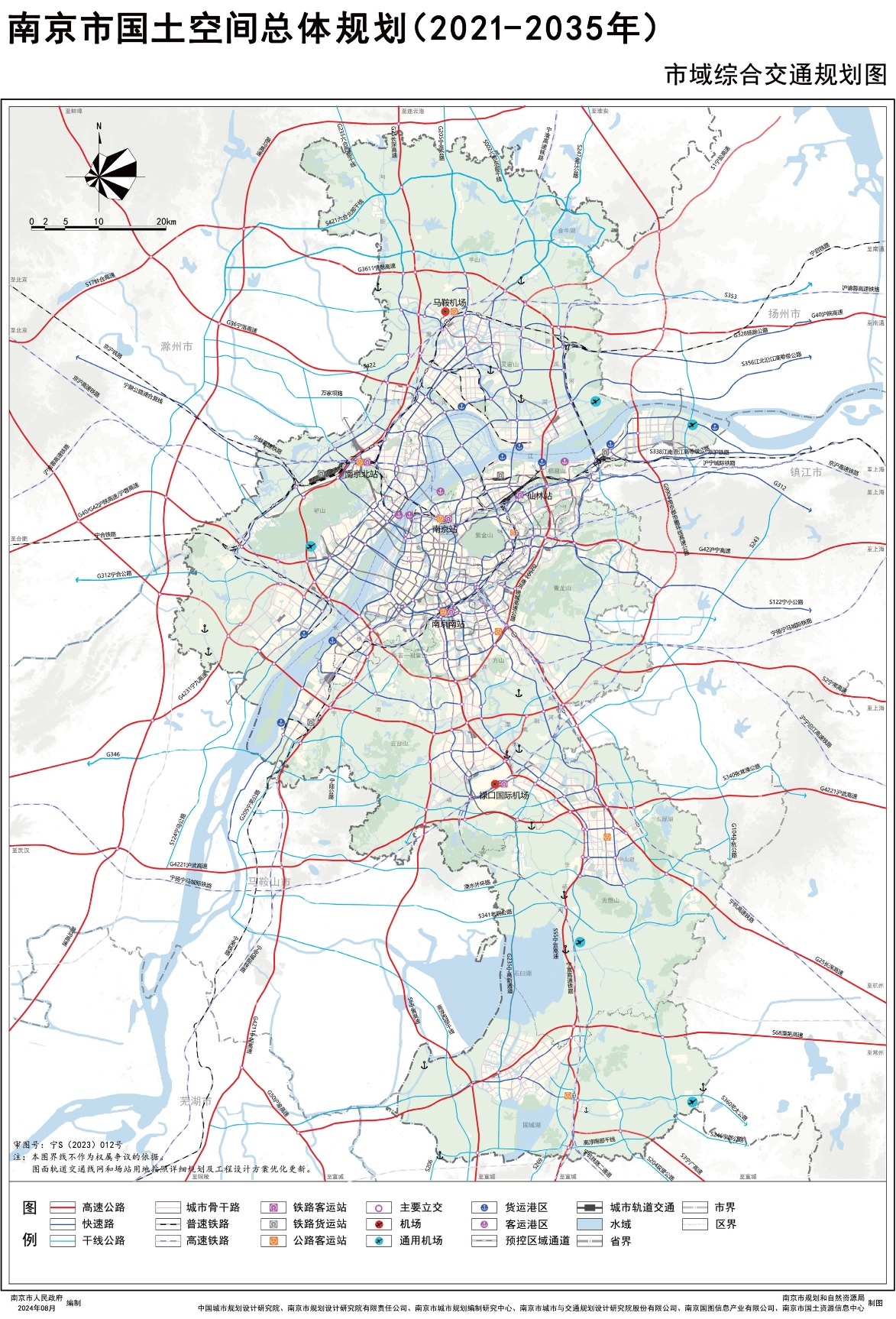
Core Points - The Nanjing Xinshengwei Yangtze River Bridge officially opened on November 26, significantly reducing travel time from Nanjing's main city to Jiangbei New Area from 1 hour to under 10 minutes [1] - The bridge is a crucial infrastructure project, spanning approximately 13.17 kilometers with a main span of 1760 meters, making it the "first in China and third in the world" [1] - The bridge is part of Nanjing's strategy to enhance urban development by promoting the "embracing the river" initiative, aiming to integrate the Jiangnan and Jiangbei regions [1][6] Infrastructure Development - The construction of the Xinshengwei Bridge is part of a broader initiative to accelerate the development of river-crossing infrastructure in Nanjing, with three new crossings completed during the 14th Five-Year Plan period [6] - Nanjing now has a total of 7 river-crossing bridges and 15 river-crossing channels, with additional projects underway [6] - Future plans include the construction of 24 river-crossing channels by 2035, indicating a significant push towards enhancing connectivity between the two banks of the Yangtze River [6] Economic Impact - The development of river-crossing channels is expected to transform Nanjing's urban structure from a "single center" to a "multi-center network," improving resource allocation efficiency across the city [6] - The Jiangbei New Area is positioned as a key growth engine for regional economic development, supported by government policies aimed at fostering high-quality construction and modernization [1][2]
城市24小时 | 经济大省省会,正在加速“缝合”
Mei Ri Jing Ji Xin Wen· 2025-11-26 16:37
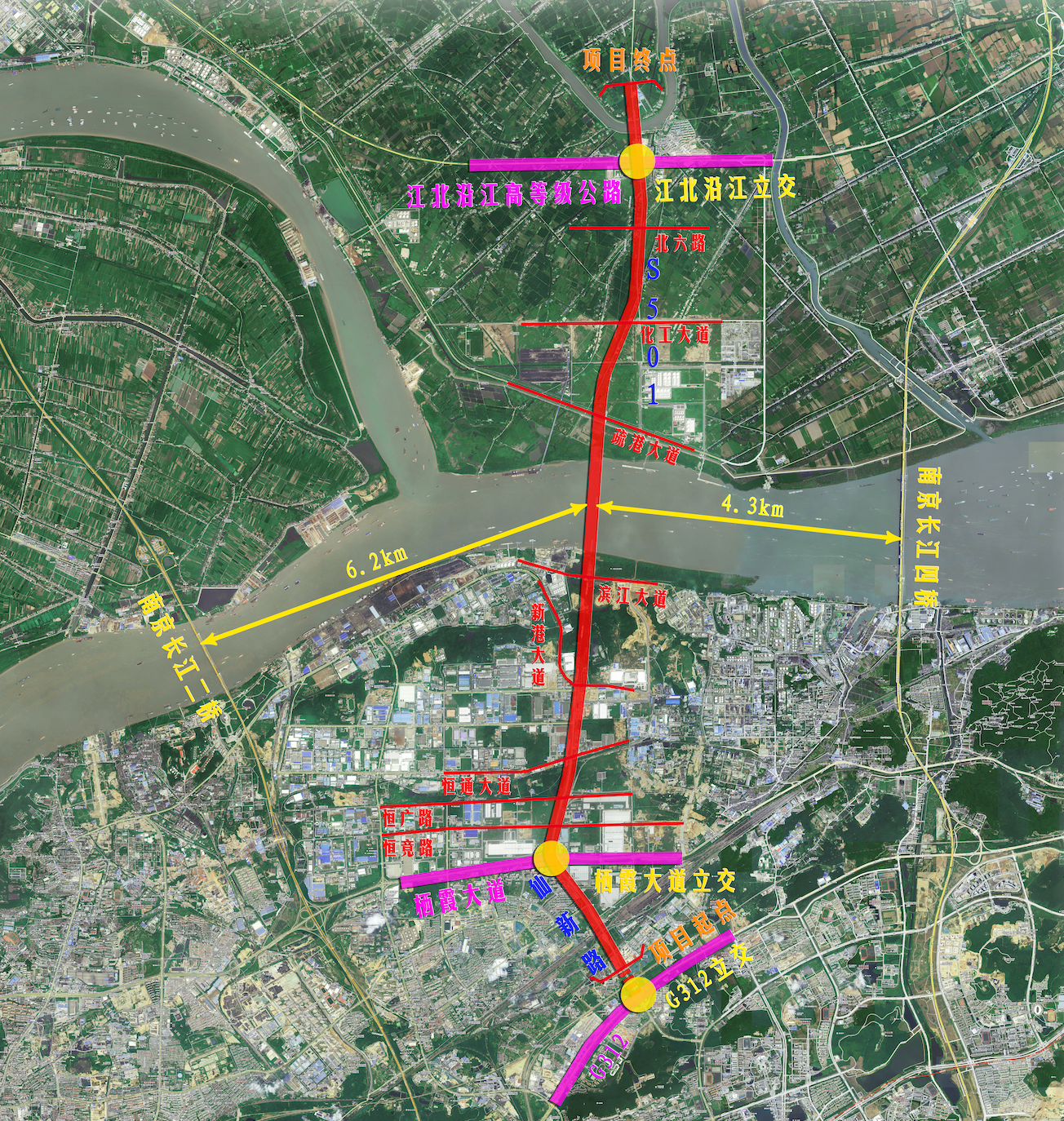
Core Viewpoint - The opening of the Xinxingwei Yangtze River Bridge marks a significant development in Nanjing's transportation infrastructure, enhancing connectivity between the main city and the Jiangbei New Area, and supporting the city's "embracing the river" development strategy [1][3][4]. Infrastructure Development - The Xinxingwei Yangtze River Bridge is the sixth free crossing in Nanjing, reducing travel time from one hour to under ten minutes between the main city and Jiangbei New Area [1]. - The bridge spans approximately 13.17 kilometers with a main bridge length of 1,760 meters, making it the "first in China and third in the world" [3]. - Nanjing has accelerated the construction of river crossings, with three completed during the 14th Five-Year Plan period, bringing the total to 13 completed and 4 under construction [10]. Urban Development Strategy - Nanjing's "embracing the river" strategy aims to enhance the development of the Jiangbei New Area, which is crucial for regional economic growth and modernization efforts in Jiangsu [4]. - The city plans to construct 24 crossings by 2035, transitioning from a "single center" to a "multi-center network" urban structure, thereby improving resource allocation efficiency [10]. Economic Impact - The development of river crossings is expected to alleviate pressure on the main city and support the establishment of a globally influential industrial and technological innovation center [10].
浙江嘉兴市区快速路环线跨沪昆铁路转体桥成功转体
Xin Hua She· 2025-11-26 13:12
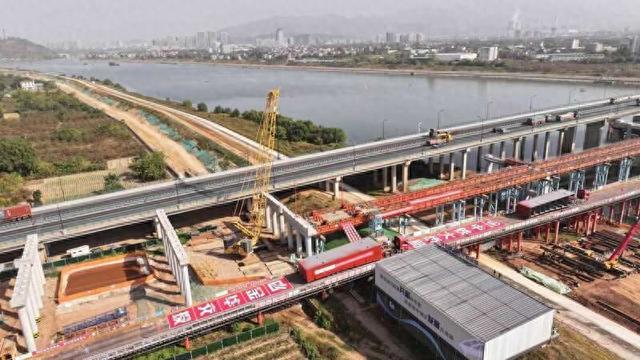
Core Viewpoint - The successful completion of the rotation of the Jiaxing urban expressway ring bridge marks a significant milestone in the construction of the expressway, which is expected to alleviate urban traffic pressure and enhance regional development efficiency [1] Group 1: Project Details - The Jiaxing urban expressway ring bridge, which spans the Huhangkun Railway, is a central cable-stayed concrete bridge weighing approximately 32,000 tons [1] - The bridge rotation was achieved after about 54 minutes of railway closure, with a precise 40.6-degree turn to align the bridge structure [1] - The project is constructed by China Railway Shanghai Group and involves a collaboration with China Railway 24th Bureau, utilizing a sophisticated rotation system for stability and accuracy [1] Group 2: Engineering Significance - The expressway ring project has a total length of 28.7 kilometers and is a crucial part of Jiaxing's rapid road network, divided into three phases for implementation [1] - Once completed, the expressway will create a complete loop that significantly improves urban traffic flow and supports regional collaborative development [1]
建武高速衢江特大桥建设迎来关键节点
Zhong Guo Qing Nian Bao· 2025-11-26 10:54
来源:中国青年报客户端 中国青年报客户端浙江金华讯(肖德文 中青报·中青网记者蒋雨彤)11月25日,浙江省建德至武义高速 公路兰溪段控制性工程——衢江特大桥建设取得又一重大进展,引桥第八联首段钢箱梁完成精准架设, 标志着大桥由下部结构全面转入上部结构施工阶段,为后续主桥建设奠定了坚实基础。 11月25日,浙江省建德至武义高速公路兰溪段控制性工程——衢江特大桥建设工地,引桥第八联首段钢 箱梁完成精准架设。方雨晗/摄 该项目由金华交投兰城高速公路有限公司投资、中铁大桥局集团有限公司承建。作为目前浙江省内同类 型中跨度最大的提篮式网状系杆拱桥,衢江特大桥在设计阶段就秉承"科学规划、精准建造"的理念。针 对衢江流域地形特点,为确保工程结构与自然地貌的协调统一,大桥引桥采用两种跨径钢箱梁设计形 式。本次吊装第八联(建德侧)引桥钢箱梁中的K段,长18.78米、宽5.1米、高4.2米,重72.4吨,采用 滑移施工工艺,由主臂42米的400吨履带吊装。项目团队先后开展多轮方案论证,在确定最优方案的基 础上,制定了周密的施工组织计划,同步完成全流程安全技术交底工作;同时引入第三方对滑移体系进 行全程监测,全力保障施工作业安全。 ...
3万吨涉铁立交桥成功转体
Qi Lu Wan Bao· 2025-11-26 04:06
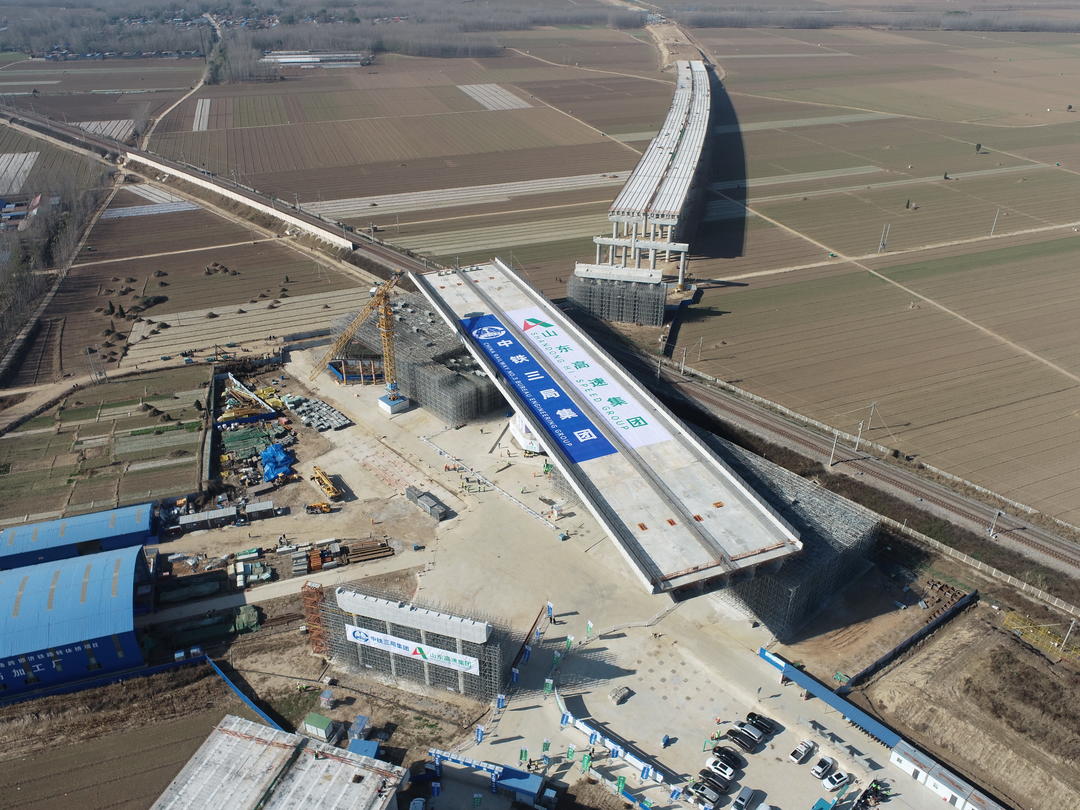
Core Points - The Jinan to Linqing Expressway's key control project, the overpass bridge over the Handan-Ji Railway, successfully completed its high-precision rotation construction, marking a significant milestone in the project [1] - The bridge, designed by China Railway Eryuan Engineering Group and constructed by China Railway Third Bureau, features a 2×85m T-shaped rigid frame and achieved a 59.5° clockwise rotation within one hour [1][4] - The project utilizes advanced technologies such as BIM for multi-disciplinary collaborative design and a high-precision intelligent control system incorporating BeiDou satellite navigation and synchronous automatic traction [4] Technical Achievements - The bridge has a width of 30.8m and a total weight of 30,000 tons, with its alignment on a circular curve with a radius of 4000m [4] - Key processes during construction included precise control of the ball hinge installation, support gap control, synchronous traction stability, and axis deviation correction to ensure structural stress remained within safe limits [4] - The project team successfully achieved millimeter-level precision control during the rotation process, ensuring high engineering quality [4] Strategic Importance - The Jinan to Linqing Expressway serves as a crucial link between G20 Qingyin Expressway and S1 Jiliao Expressway, enhancing the highway network layout in Shandong Province [4] - The completion of this project will strengthen transportation connections between the provincial capital economic circle and the Central Plains urban agglomeration, optimizing regional logistics channels and promoting industrial collaboration in northwest Shandong [4]
新生圩长江大桥今天将通车,南京以“中国跨度”撬动“拥江格局”
Nan Jing Ri Bao· 2025-11-26 02:31
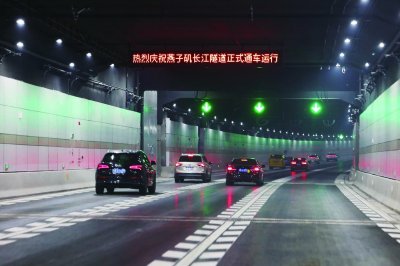
Core Insights - The opening of the Nanjing Xinshewei Yangtze River Bridge marks a significant milestone in the city's transportation infrastructure, being the third major river crossing completed during the 14th Five-Year Plan, enhancing the urban traffic layout and promoting regional integration [4][7][20]. Transportation Infrastructure Development - The Nanjing Xinshewei Yangtze River Bridge, with a main span of 1,760 meters, is recognized as the "first in China and third in the world" for its type, contributing to the city's goal of becoming a transportation hub [4][20]. - The bridge, along with the Yanziji Yangtze River Tunnel and the upcoming Ningyang Yangtze River Bridge, forms a network of crossings that significantly reduces travel time across the river, facilitating a more integrated urban experience [7][10][11]. Economic and Social Impact - The new bridge and tunnels have transformed commuting patterns, reducing travel times from 30 minutes to as little as 10 minutes for residents, thus enhancing the quality of life and economic opportunities in the region [10][11]. - The infrastructure improvements are expected to stimulate investment opportunities along the routes, as logistics efficiency increases for businesses [8][10]. Regional Integration and Urban Development - The development of these crossings is pivotal for the integration of the Nanjing metropolitan area, allowing for a more cohesive urban structure and promoting a "one-hour commuting circle" among Nanjing, Yangzhou, and surrounding areas [13][21]. - The transportation network is seen as a strategic link that not only connects cities but also integrates industrial chains, enhancing collaboration and economic growth across the region [21][22]. Future Plans and Projections - By the end of the 14th Five-Year Plan, Nanjing aims to have 15 river crossings, further solidifying its position as a key transportation hub and supporting its goal of becoming a globally influential center for industrial and technological innovation [17][20].
大国工程的县域“回响”
经济观察报· 2025-11-24 12:49
Core Viewpoint - The article emphasizes the importance of county-level development in China's modernization, highlighting its role as a foundation for the national economy and a potential area for future domestic demand growth [2]. Group 1: County-Level Economic Significance - Counties cover over 90% of China's land area and support more than 600 million people, contributing nearly 40% to the national GDP, making them crucial for economic resilience and future growth [2]. - The focus on high-quality county development aligns with national strategies, prompting a need for financial services to effectively support the real economy [2]. Group 2: Infrastructure Development - The completion of the Huajiang Grand Canyon Bridge significantly reduced travel time between Guizhou's Guanshan County and Qianxinan Prefecture from 2 hours to 2 minutes, enhancing connectivity and economic opportunities [3][4]. - Major infrastructure projects like the Huajiang Grand Canyon Bridge require substantial investment, with the total cost of the project reaching 24.3 billion yuan, necessitating robust financial support to ensure timely completion [7][20]. Group 3: Financial Services in Infrastructure Projects - Agricultural Bank of China (ABC) played a pivotal role in financing the Huajiang Grand Canyon Bridge, providing over 4 billion yuan in syndicate loans and implementing a rapid approval process to meet project demands [8][11]. - ABC's innovative financial solutions included a dedicated account for migrant workers to ensure timely wage payments, demonstrating a commitment to supporting local communities [11]. Group 4: Impact on Local Industries - The bridge's opening has revitalized local industries, such as cattle farming in Guanshan County and glutinous rice production in Qianxinan Prefecture, facilitating their access to national markets [12][13]. - ABC has increased credit support for local farmers, utilizing online products to address financing challenges, thereby enhancing production capacity and quality [12][13]. Group 5: Renewable Energy Projects - In Gansu Province, the establishment of the Jinta Solar Thermal Power Project, with a total investment of 4.2 billion yuan, exemplifies the shift towards renewable energy and the financial backing required for such initiatives [19][20]. - ABC's differentiated authorization mechanism expedited loan approvals for renewable energy projects, ensuring timely funding and project execution [20]. Group 6: Water Resource Management - The "Yijiang Jihua" project in Anhui Province, a major water conservancy initiative, involves significant financial management, with an estimated total investment of 91.27 billion yuan [23]. - ABC has established a comprehensive service system to manage the financial aspects of the project, ensuring timely disbursement of funds for land acquisition and compensation [24]. Group 7: Overall Economic Transformation - The integration of transportation, energy, and water infrastructure projects is reshaping county economies, enhancing their resilience and contributing to high-quality economic development [25]. - ABC's role in financing these projects underscores its commitment to supporting national strategies and local economic growth, facilitating a transformation in county-level development [25].


大国工程的县域“回响”
Jing Ji Guan Cha Wang· 2025-11-24 11:46
Core Insights - The completion of the Huajiang Grand Canyon Bridge significantly reduces travel time between Guizhou's Guanshan County and Qianxinan Prefecture from 2 hours to 2 minutes, enhancing local economic integration and tourism opportunities [1][3] - Major infrastructure projects like the bridge and renewable energy initiatives are crucial for supporting China's modernization and integrating county economies into the national market [1][2] Infrastructure Development - The Huajiang Grand Canyon Bridge, part of the Liuzhi to Anlong Expressway, is a key project with a total length of 2,890 meters and a vertical height of 625 meters, setting records for mountain bridges [3][4] - The total investment for the Liuzhi Expressway project, including the bridge, is approximately 24.3 billion yuan [4] Financial Services and Support - Agricultural Bank of China (ABC) played a pivotal role in financing the bridge project, providing over 4 billion yuan in syndicate loans and ensuring timely fund disbursement [5][6] - ABC implemented a differentiated service model to streamline loan approvals and ensure timely payments to construction workers, enhancing financial support for local economies [6][7] Economic Impact - The bridge facilitates the movement of local agricultural products, such as Guanshan cattle and Qianxinan glutinous rice, into broader markets, thus boosting local industries [6][8] - The establishment of financial service points in rural areas has improved access to banking services for local farmers, with a reported loan balance of 124 million yuan by October 2025 [8] Renewable Energy Initiatives - In Gansu Province, the development of the Jinta Zhongguang solar thermal and photovoltaic project represents a significant investment in renewable energy, with a total investment of 4.2 billion yuan [10][11] - ABC's financial support for renewable energy projects has been crucial in overcoming challenges related to high upfront costs and long repayment periods, facilitating project completion [11][12] Water Resource Management - The "Yijiang to Huaihe" project in Anhui Province aims to connect major river systems and involves significant financial management, with an estimated investment of 91.27 billion yuan [13][14] - ABC has committed over 60 billion yuan in loan intentions to support this water management project, ensuring timely funding for land acquisition and construction [14][15] Conclusion - The integration of transportation, energy, and water infrastructure projects is transforming county economies in China, with financial institutions like ABC playing a critical role in facilitating these developments [15]