家电

Search documents
新国补落地:普通人省钱攻略大揭秘,手把手教你薅羊毛!
Sou Hu Cai Jing· 2026-01-11 07:11
Core Insights - The new round of "trade-in" subsidy policy in China has been implemented with an initial allocation of 62.5 billion yuan, covering various consumer goods from home appliances to digital devices and automobiles [2][8] - The policy aims to stimulate consumption and promote energy-efficient products, with specific focus on first-level energy efficiency appliances and new energy vehicles [10] Home Appliance Upgrade - The subsidy for home appliances focuses on six core products: refrigerators, washing machines, televisions, air conditioners, computers, and water heaters, with a maximum subsidy of 1,500 yuan per item and a total potential savings of up to 9,000 yuan [2][3] - Sales of first-level energy-efficient appliances surged by 320% in the first week of the policy implementation, indicating strong consumer demand [3] Digital Device Upgrade - The subsidy now includes AI glasses for the first time, allowing consumers to save up to 500 yuan on eligible products priced under 6,000 yuan [4][5] - The digital subsidy covers smartphones, tablets, smartwatches, and smart glasses, with a 15% subsidy rate [4] Automotive Replacement - The policy favors new energy vehicles, offering a maximum subsidy of 20,000 yuan for scrapping old fuel vehicles, significantly reducing the effective purchase price [5][6] - The subsidy structure differentiates between scrapping and replacing vehicles, with varying rates for new energy and fuel vehicles [6] Policy Highlights - A unified national subsidy standard has been established, enhancing the benefits for consumers in regions with previously lower subsidies [8] - The policy is designed to encourage green consumption and accelerate the transition to low-carbon products, as evidenced by a 210% increase in green appliance sales and a 45% rise in new energy vehicle sales in the first week [10] Consumer Caution - Consumers are advised to be vigilant against price manipulation and fraudulent claims, with strict monitoring in place to prevent abuse of the subsidy system [9] - The policy includes specific timelines for subsidy claims, emphasizing the need for timely verification and submission of required documents [9]



山西发放2026年家电及数码智能产品消费补贴
Zheng Quan Shi Bao Wang· 2026-01-11 02:44
Group 1 - The core initiative is the launch of a subsidy program in Shanxi Province for the replacement of old home appliances and the purchase of new digital and smart products, starting from January 9, 2026 [1] - The subsidy program covers two main categories: home appliances and digital/smart products, with specific eligibility criteria for each [1] - Home appliances eligible for the subsidy include six types of energy-efficient or water-efficient products, such as refrigerators, washing machines, televisions, air conditioners, water heaters, and computers [1] Group 2 - The digital and smart products category includes smartphones, tablets, smartwatches, and smart glasses, with a price cap of 6,000 yuan per item [1] - Consumers who received subsidies in 2025 can continue to apply for subsidies for similar products in 2026 [1]
以旧换新加力扩围 加速释放居民消费潜力
Ren Min Wang· 2026-01-11 01:41
Core Insights - The article highlights the integration of modern commerce with traditional culture, showcasing various consumer experiences that stimulate economic growth and enhance consumer enthusiasm [1] Group 1: Consumer Trends - There is a notable shift in consumer preferences towards high-performance, green, intelligent, and healthy products, leading to a significant increase in sales of smart home appliances [2] - The implementation of trade-in programs for consumer goods is expanding, with more green and smart products entering households, indicating a growing market for sustainable consumption [2] Group 2: Innovative Consumption Experiences - Various regions are enhancing consumer experiences by integrating cultural and technological elements, such as immersive art performances and interactive VR experiences, which attract more visitors and enrich consumer engagement [3] - Events like the technology consumption carnival in Guangzhou, featuring humanoid robots and VR experiences, exemplify the innovative approaches being adopted to enhance consumer interaction and satisfaction [3] Group 3: Economic Policies and Challenges - The article discusses the need for effective short-term and long-term policies to stimulate consumption, reduce uncertainty, and encourage innovation in supply [1][3] - Challenges such as mismatches between supply and demand for high-quality goods and services, as well as the impact of excessive competition among platforms, are identified as barriers to fully unlocking consumer potential [3]
各地抢抓政策红利 持续激活消费市场
Yang Shi Wang· 2026-01-10 23:00
Group 1 - The core viewpoint of the article is that a large-scale equipment update and trade-in policy for consumer goods will be implemented in 2026, covering various sectors such as automobiles, home appliances, and digital smart products [1] - Since the New Year, local areas have been actively seizing the benefits of the new policy, continuously stimulating the consumer market [1] - New product categories like smartwatches and smart glasses have been included in the subsidy scope for the first time, leading to a sustained increase in consumer enthusiasm [1]
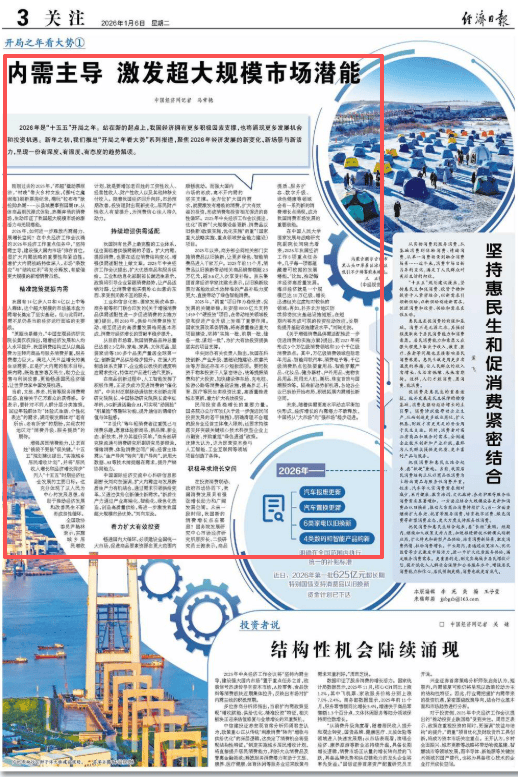
观点丨刘晓光:内需主导 激发超大规模市场潜能
Sou Hu Cai Jing· 2026-01-10 18:06
Core Viewpoint - The article emphasizes the importance of expanding domestic demand and enhancing consumption as key strategies for China's economic growth in 2026, highlighting the potential for new investment opportunities and market dynamics [3][4][11]. Group 1: Economic Context and Trends - 2026 marks the beginning of the "15th Five-Year Plan," with a focus on leveraging positive factors for economic growth and investment opportunities [2]. - The consumer market in China is vibrant, driven by various trends such as the "Su Chao" economy and the popularity of rural cultural tourism, indicating the immense potential of the super-large market [2]. Group 2: Domestic Demand and Consumption - The central economic work meeting prioritizes "domestic demand as the main driver" to build a strong domestic market, underscoring the urgency of expanding domestic demand strategies [3]. - China's population of over 1.4 billion and more than 400 million middle-income individuals provide a solid foundation for domestic demand growth, despite current challenges of insufficient demand [4]. Group 3: Policy Measures and Implementation - The government aims to enhance consumer capacity through targeted policies, including the "Urban and Rural Residents Income Increase Plan," which aligns income growth with economic development [5][4]. - The implementation of consumption upgrade policies, such as the "old-for-new" program, has already driven significant sales, with over 2.5 trillion yuan in sales linked to these initiatives [9]. Group 4: Supply and Demand Adaptation - There is a need to address the mismatch between strong supply and weak demand by enhancing the adaptability of supply to changing consumer preferences [6]. - The government plans to promote high-quality goods and services, with a goal of achieving a high-quality development pattern by 2030, where supply and consumption interact positively [6]. Group 5: Future Growth Opportunities - New consumption growth points are expected to emerge in areas such as product quality enhancement, service expansion, digital upgrades, and green health [11]. - The "Implementation Plan for Enhancing the Adaptability of Consumer Goods Supply and Demand" aims to establish three trillion-yuan consumption sectors and ten hundred-billion-yuan consumption hotspots by 2027 [12].
A股:2.5亿股民!全球牛市共振+10万亿航天赛道利好,下周要冲4184点
Sou Hu Cai Jing· 2026-01-10 16:19
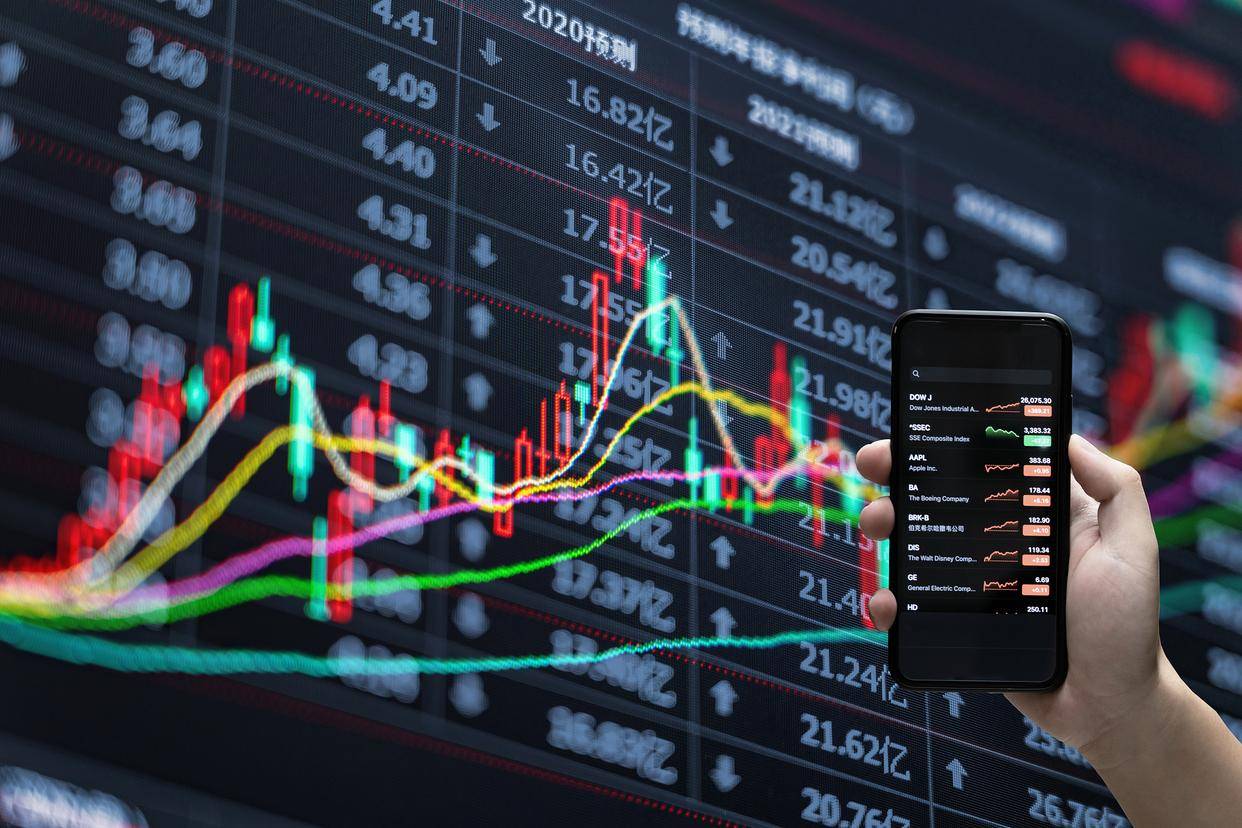
Market Overview - The A-share market experienced a significant surge at the beginning of 2026, with the Shanghai Composite Index reaching 4120.43 points, marking a ten-year high and a record 16 consecutive days of gains [1] - The market rally is driven by a combination of global interest rate cuts and explosive growth in the commercial aerospace industry [1][3] Financial Data - Margin trading balance exceeded 2.62 trillion yuan, with a single-day increase of 24.8 billion yuan, marking the fastest influx of new capital since October 2025 [3] - The A-share market's trading volume reached 3.15 trillion yuan in the first trading week of the year, with over 3900 stocks rising [6] Commercial Aerospace Industry - The commercial aerospace sector is experiencing rapid growth, with the industry scale approaching 2.5 trillion yuan and a significant increase in satellite applications [3] - The industry has transitioned from a nurturing phase to a strategic pillar phase, as indicated by the third Commercial Aerospace Development Conference held in December 2025 [3][4] - The market value of the commercial aerospace industry surged from 376.4 billion yuan in 2015 to an estimated 2.5 trillion yuan by 2025 [4] Technological Advancements - Reusable rockets have achieved 10 launches, reducing launch costs by 35% compared to 2023 [4] - Major satellite networking plans, such as the Tianfan constellation, are advancing rapidly [4] Investment Trends - Institutional investment strategies are becoming more aggressive, with long-term capital expected to enter the market at a scale of 2 trillion yuan [6] - The establishment of the "Leading Innovation Commercial Aerospace Alliance Science and Technology Fund" with an initial scale of 2 billion yuan aims to invest in critical components and new materials [6] Sector Performance - The market is characterized by a dual focus on consumer and technology sectors, with consumer goods prices rising and expectations for strong performance during the upcoming Spring Festival [8] - The technology sector, particularly artificial intelligence and semiconductors, is benefiting from policy support and increased demand for industrial robots and software [8]
让以旧换新政策发挥更大效应
Xin Lang Cai Jing· 2026-01-10 12:18
Core Insights - The "trade-in for new" policy in China is projected to generate over 2.6 trillion yuan in sales by 2025, benefiting more than 360 million people, showcasing its effectiveness in boosting domestic demand and economic growth [1] - The policy is a crucial link between improving people's livelihoods and economic development, facilitating targeted measures to stimulate consumption potential and promote industrial upgrades [1] Group 1: Economic Impact - From January to November 2025, the total retail sales of consumer goods increased by 4.0% year-on-year, with the trade-in policy contributing over 1 percentage point to this growth, effectively converting potential demand into actual purchasing power [2] - The retail sales of home appliances surpassed 1 trillion yuan, indicating strong demand for large consumer goods [2] Group 2: Industry Upgrades - The trade-in policy has led to significant growth across key consumer sectors, particularly in the automotive industry, where 18.3 million vehicles are expected to be traded in from 2024 to 2025, with nearly 60% being new energy vehicles [3] - In the home appliance sector, over 129 million units were traded in, with more than 90% being first-level energy-efficient products, reflecting a shift towards high-quality, energy-efficient goods [3] Group 3: Environmental Benefits - The policy promotes both economic and environmental benefits, driving industrial upgrades and green transitions by encouraging companies to invest in technological innovation and improve product quality [4] - By 2025, the recycling of scrapped vehicles is expected to increase by 24.5%, leading to the recycling of approximately 9.6 million tons of steel and 1.3 million tons of non-ferrous metals, significantly reducing carbon emissions by about 24.5 million tons [4] Group 4: Consumer Benefits - Since the full implementation of the trade-in policy in September 2024, over 480 million subsidies have been distributed directly to consumers, with every second new household vehicle sold benefiting from the trade-in subsidy [5] - The policy has also played a vital role in ensuring public safety, with the number of old electric bicycles being replaced exceeding nine times that of 2024, effectively reducing safety hazards [5]
“缺钱时代”已至?5个生活变化超真实,省钱比赚钱更重要
Sou Hu Cai Jing· 2026-01-10 11:53
Core Insights - The article discusses the shift in consumer behavior towards more frugal spending, emphasizing that the "money shortage era" is characterized by rational consumption rather than a lack of income. Group 1: Changes in Consumer Behavior - Consumers are prioritizing discounts and subsidies, opting for cost-effective options while maintaining quality, such as choosing products eligible for government subsidies [3] - The trend of "rational consumption" is evident as consumers focus on maximizing value, such as utilizing trade-in programs for vehicles and waiting for subsidy periods to purchase electronics [3] Group 2: Employment Trends - There is a noticeable decline in the trend of migrant workers moving across provinces, with local job opportunities in midwestern regions offering competitive salaries, making local employment more appealing [4] - The rise of flexible employment options is becoming popular, with over 200 million people engaged in various forms of gig work, allowing for multiple income streams [4] Group 3: Debt Management - Younger generations are becoming more cautious with debt, avoiding credit card debt and focusing on essential loans like auto and home loans, reflecting a shift towards financial prudence [5] - Families are adopting strategies to minimize debt, such as opting for longer loan terms to reduce monthly payments and prioritizing full payments over loans [6] Group 4: Government Policies - The government is responding to the public's need for cost savings by implementing various subsidies, such as free education for preschoolers and significant reductions in medication costs [6] - These policies are designed to alleviate financial burdens on families, making essential services more affordable [6] Group 5: Skills Development - The labor market is increasingly favoring skilled workers, with demand for technical skills rising as automation reduces the need for manual labor [7] - There is a growing emphasis on skill training programs supported by government initiatives, enabling individuals to enhance their employability and income potential [7]

澳柯玛入选2025年度中国消费名品
Xin Jing Bao· 2026-01-10 11:47
Core Viewpoint - Aucma has been recognized as a leading brand in China's consumer goods sector by being included in the 2025 National Consumer Goods List, highlighting its product quality, innovation, and strong user reputation [1] Group 1: Product Innovation and Technology - Aucma has established a dual-level R&D system focusing on both future and user-centered technology, resulting in over 3,500 high-value invention patents with a conversion rate exceeding 98% [2] - The company has made significant advancements in low-temperature preservation technology, launching the first domestic -40°C, -60°C, and -70°C low-temperature freezers, setting new records in home refrigeration [2] Group 2: Market Expansion and Product Offerings - Aucma is actively expanding its refrigerator market by applying advanced low-temperature technology, introducing the industry's first -40°C deep freezing refrigerator and various innovative models to meet consumer demands [3] - The company has received multiple accolades for its refrigerator products, including recognition in the "Good Products Shandong" list and the "China Home Appliance Health Star" award [3] Group 3: Customer Service and Satisfaction - Aucma has developed the "Golden Dolphin Five-Star Service Brand," enhancing its after-sales service system through AI technology and digital platforms to improve user experience and satisfaction [4] - According to the "2023 China Home Freezer Brand Reputation Research Report," Aucma ranked first in overall reputation among 20 brands, marking its 11th consecutive year of achieving this status [4] Group 4: Future Outlook - In 2026, Aucma aims to continue driving innovation and integrating temperature technology with digital advancements, contributing to the high-quality development of China's manufacturing sector [5]

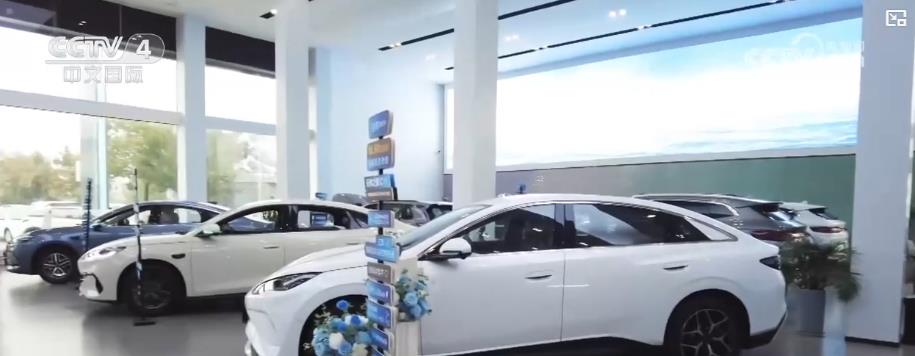
2026年以旧换新政策全面落地 多领域补贴激活新年消费
Yang Shi Wang· 2026-01-10 08:53
Group 1 - The national policy for large-scale equipment updates and trade-in for consumer goods officially launched in 2026, covering multiple sectors including automobiles, home appliances, and digital smart products [1][3] - Since the New Year, various regions have been leveraging the new policy to stimulate the consumer market, with a notable increase in demand for smart watches and smart glasses, which are now included in the subsidy program [1][3] - In Jiangsu, the government has issued over 115 million yuan in subsidies, leading to sales of 890 million yuan, indicating a strong market response to the trade-in policy [3] Group 2 - In Anhui, the trade-in policy has significantly boosted automobile consumption, with many consumers actively visiting car dealerships [4][6] - In Hebei, the launch of the new round of national subsidies has resulted in a surge in consumer activity at shopping malls, with many customers inquiring about trade-in services [8]