
食品

Search documents
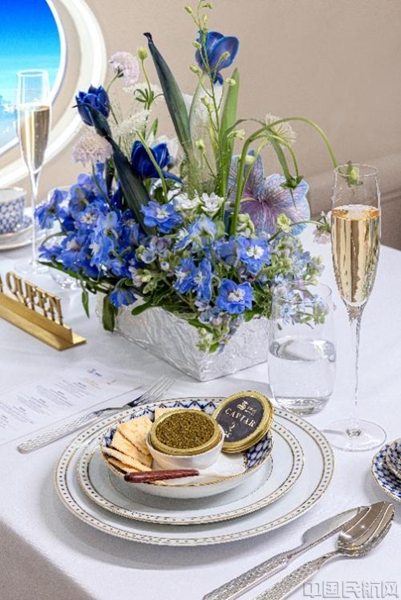
解锁“公务机 +”模式 华龙航空携手卡露伽拓展高端服务新体验
Zhong Guo Min Hang Wang· 2025-09-10 08:46
Core Insights - The strategic partnership between Hualong Aviation and Kaluga Caviar aims to enhance the "Business Jet +" ecosystem, extending collaboration from product offerings to service experiences, thereby creating a seamless high-end service experience for customers [1][4]. Group 1: Partnership Details - Hualong Aviation and Kaluga Caviar will jointly launch the "Sturgeon Flavor Sky" themed cabin in 2024, which has received positive feedback in the industry [4]. - Hualong Aviation will introduce a "Cloud Tasting" theme experience in its business jet cabins, integrating Kaluga Caviar into in-flight dining to elevate the culinary experience [4]. - Hualong Aviation Academy will offer specialized training courses on caviar for clients' service teams, ensuring a consistent and high-quality dining experience both in-flight and at home [4]. Group 2: Company Background - Hualong Aviation, established in 2011, promotes a "Heaven and Earth Integration" service concept, extending premium services from the air to the ground [5]. - The "Business Jet +" concept emphasizes meticulous service details and the organic integration of resource consolidation and scenario expansion, transforming business aviation into a high-quality lifestyle platform [5]. - Hualong Aviation has built a comprehensive service matrix that includes business jet transactions, management, chartering, operations, ground services, high-end travel customization, and professional talent development [5]. Group 3: Kaluga Caviar Overview - Kaluga Caviar is recognized as the national industry standard setter for caviar, leading global production and sales for ten consecutive years [7]. - The company pioneered artificial sturgeon farming in China in 1998, providing premium experiences to 46 countries and regions, and is a key supplier to 23 Michelin three-star restaurants in France and four in New York [7]. - The collaboration is expected to enrich both brands' service offerings and market appeal, creating new service opportunities and connecting with high-end clientele [7].

【宏观经济】一周要闻回顾(2025年9月3日-9月10日)
乘联分会· 2025-09-10 08:43
Core Viewpoint - In the first eight months of 2025, China's goods trade maintained a steady growth trend, with a total import and export value of 29.57 trillion yuan, an increase of 3.5% year-on-year [4]. Group 1: Trade Growth - The total export value reached 17.61 trillion yuan, growing by 6.9%, while the import value was 11.96 trillion yuan, showing a decline of 1.2%, with the decline narrowing by 0.4 percentage points compared to the first seven months [4]. - In August 2025, the total trade value was 3.87 trillion yuan, also growing by 3.5%, with exports at 2.3 trillion yuan (up 4.8%) and imports at 1.57 trillion yuan (up 1.7%), marking three consecutive months of growth for both exports and imports [4]. Group 2: Trade Characteristics - General trade and processing trade both saw growth, with general trade imports and exports totaling 18.89 trillion yuan (up 2.2%), accounting for 63.9% of total foreign trade, and processing trade at 5.34 trillion yuan (up 6.1%), making up 18.1% [4]. - Trade with ASEAN and the EU increased, with total trade with ASEAN reaching 4.93 trillion yuan (up 9.7%), and with the EU at 3.88 trillion yuan (up 4.3%). In contrast, trade with the US decreased by 13.5% to 2.73 trillion yuan [5]. Group 3: Enterprise Contributions - Private enterprises contributed significantly, with imports and exports totaling 16.89 trillion yuan (up 7.4%), representing 57.1% of total foreign trade, while foreign-invested enterprises accounted for 29.1% with 8.59 trillion yuan (up 2.3%). State-owned enterprises saw a decline of 8.1% to 4.02 trillion yuan [6]. Group 4: Product Export Dynamics - Mechanical and electrical products accounted for over 60% of exports, totaling 10.6 trillion yuan (up 9.2%). Notable growth was seen in integrated circuits (up 23.3% to 905.18 billion yuan) and automobiles (up 11.9% to 605.23 billion yuan) [6]. Group 5: Import Price Trends - Major commodity import prices fell, with iron ore imports at 8.02 million tons (down 1.6%) and crude oil at 3.76 million tons (up 2.5%), both experiencing price declines of 14.1% and 12.9% respectively. Meanwhile, imports of mechanical and electrical products grew by 5.2% to 4.72 trillion yuan [5][6].

意大利7月工业产出环比增长0.4% 超预期复苏显持续性
Xin Hua Cai Jing· 2025-09-10 08:43
Core Insights - Italy's industrial output increased by 0.4% month-on-month in July, surpassing the revised 0.2% growth in June and exceeding market expectations of a 0.1% decline, marking the strongest monthly growth since April 2025 [1] - Year-on-year, industrial output grew by 0.9% in July, reversing the 0.7% decline recorded in June, indicating a positive shift in the industrial sector [1] Sector Performance - Consumer goods output saw a significant month-on-month increase of 2.1%, while capital goods and intermediate goods rose by 1.6% and 0.7% respectively [1] - The energy sector experienced a notable decline, with output dropping by 7.8% month-on-month [1] Industry Highlights - The coke and refined petroleum products manufacturing sector was the standout performer, with a year-on-year growth of 10.8% [1] - The computer and electronic products manufacturing sector grew by 6.4% year-on-year, and the food, beverage, and tobacco industry saw a 5.7% increase, indicating strong internal growth dynamics [1] Economic Outlook - Analysts suggest that despite the significant drag from the energy sector, the ongoing expansion in key manufacturing areas indicates a solidifying recovery in Italy's industrial sector [1] - Current data reflects a rebound in domestic demand and resilience in investment goods production, providing support for the economic outlook in the second half of the year [1]
8月南京CPI同比下降0.7%,环比上涨0.3%
Yang Zi Wan Bao Wang· 2025-09-10 05:58
Core Insights - In August, Nanjing's consumer price index (CPI) decreased by 0.7% year-on-year, with food prices dropping by 5.1% and non-food prices increasing by 0.3% [1][2] - The core CPI, excluding food and energy, rose by 0.6% year-on-year, marking an increase of 0.4 percentage points from the previous month [2] - Month-on-month, the CPI increased by 0.3%, driven by a 1.7% rise in food prices [3] Year-on-Year Price Changes - Eight categories of prices showed a mixed trend with five categories increasing and three decreasing [2] - Categories that saw price increases include clothing (1.7%), household goods and services (2.6%), education and culture (0.8%), healthcare (2.0%), and other goods and services (10.0%) [2] - Categories with price declines include food and tobacco (3.0%), housing (0.6%), and transportation and communication (3.1%) [2] Month-on-Month Price Changes - Month-on-month, five categories increased while three decreased [3] - Notable increases were seen in food and tobacco (1.2%), healthcare (1.7%), and education and culture (0.4%) [3] - Decreases were observed in clothing (0.8%), housing (0.3%), and household goods and services (0.5%) [3] Food Price Dynamics - Food prices year-on-year decreased by 5.1%, significantly impacting the overall price level by approximately 0.91 percentage points [2] - Specific food items such as fresh vegetables, pork, and shrimp saw declines of 17.4%, 15.7%, and 5.9% respectively, while freshwater fish prices increased by 7.0% [2] - Month-on-month, food prices rose by 1.7%, contributing about 0.28 percentage points to the overall price level [3] Non-Food Price Trends - Non-food prices shifted from a 0.1% decline to a 0.3% increase year-on-year, contributing approximately 0.24 percentage points to the overall price level [2] - Industrial consumer goods prices increased by 0.6%, while service prices remained stable [2] - Month-on-month, industrial consumer goods prices decreased by 0.3%, with notable declines in gasoline and diesel prices [3]
第三届贵州省消费品博览会之酒食展开幕在即
Sou Hu Cai Jing· 2025-09-06 21:44
Group 1 - The third Guizhou Province Consumer Goods Expo will take place from September 9 to 13, 2025, at the China (Guiyang) International Wine City, featuring a theme of "Gather Global Fine Wines, Taste Guizhou Flavors" with 200 exhibition booths and an area of 15,000 square meters [1] - The expo will showcase a variety of domestic and international quality alcoholic beverages, including baijiu, wine, craft beer, and spirits, allowing visitors to experience unique wine cultures from around the world [3][6] - The event will also highlight Guizhou's specialty foods, offering a culinary feast that includes local dishes and snacks, along with live cooking demonstrations by renowned chefs to enhance consumer engagement with the region's food culture [6][8] Group 2 - A series of engaging activities will be held during the expo, including live performances by popular singers and bartending shows, creating a lively atmosphere for attendees [8] - The expo aims to promote consumption upgrades and industry development by providing a platform for alcoholic beverage and food companies to showcase their brands and expand their market channels [10][12] - The event will facilitate cross-industry collaboration between the beverage and food sectors, encouraging resource sharing and exploring new paths for industry growth, thereby injecting new momentum into Guizhou's consumption upgrade and industrial development [12][14]

丽江昊瑞和食品有限公司成立 注册资本50万人民币
Sou Hu Cai Jing· 2025-09-06 08:44
Company Overview - Lijiang Haorui Food Co., Ltd. has been recently established with a registered capital of 500,000 RMB [1] - The legal representative of the company is Wu Huazeng [1] Business Scope - The company is engaged in the sale of pre-packaged food and health food [1] - It also focuses on internet sales of pre-packaged food and agricultural products [1] - Additional services include primary agricultural product acquisition, initial processing of edible agricultural products, and related marketing and consulting services [1] - The company is involved in domestic trade agency, trade brokerage, and import-export agency services [1]
惠州市一念食品有限公司成立 注册资本5万人民币
Sou Hu Cai Jing· 2025-09-06 05:18
天眼查App显示,近日,惠州市一念食品有限公司成立,注册资本5万人民币,经营范围为一般项目: 食品销售(仅销售预包装食品);互联网销售(除销售需要许可的商品);食品互联网销售(仅销售预 包装食品);初级农产品收购;食用农产品批发;食用农产品零售;农副产品销售;国内贸易代理;信 息咨询服务(不含许可类信息咨询服务)。(除依法须经批准的项目外,凭营业执照依法自主开展经营 活动)。 ...
汕头市乐味方食品有限公司成立 注册资本1万人民币
Sou Hu Cai Jing· 2025-09-06 05:18
Group 1 - Shantou Leweifang Food Co., Ltd. has been established with a registered capital of 10,000 RMB [1] - The company's business scope includes the sale of pre-packaged food and infant formula products, as well as import and export activities [1] - The company also engages in various technical services, information consulting, and sales of a wide range of products including daily necessities, toys, and electronic products [1]
长沙俊丰源食品有限公司成立 注册资本10万人民币
Sou Hu Cai Jing· 2025-09-06 04:14
天眼查App显示,近日,长沙俊丰源食品有限公司成立,法定代表人为王俊,注册资本10万人民币,经 营范围为许可项目:食品销售;食品互联网销售(依法须经批准的项目,经相关部门批准后方可开展经 营活动,具体经营项目以批准文件或许可证件为准)一般项目:食品互联网销售(仅销售预包装食 品);保健食品(预包装)销售;食品销售(仅销售预包装食品);日用品销售;互联网销售(除销售需要 许可的商品);信息咨询服务(不含许可类信息咨询服务);信息技术咨询服务;日用百货销售(除依法须 经批准的项目外,自主开展法律法规未禁止、未限制的经营活动)。 ...
9.5犀牛财经晚报:多家券商保证金产品短暂下调管理费率 华夏银行被罚8725万元
Xi Niu Cai Jing· 2025-09-05 10:32
Group 1 - Several brokerage firms have recently adjusted management fees for margin products in response to declining yields, with Shenyin Wanguo Asset Management announcing a management fee adjustment to 0.30% for its money market fund starting September 2 [1] - The adjustment of management fees is closely related to the decline in yields, as many asset management contracts stipulate that fees will be adjusted if the calculated yield falls below twice the current deposit rate [1] - Brokerage margin products are favored for their liquidity services, including T+0 real-time redemption and unlimited withdrawals, which enhance their competitive edge in the market [1] Group 2 - The domestic silicon wafer production plan for September has been raised for the first time, with an overall output increase compared to August, as many silicon wafer companies raise their operating rates due to price increases [2] - The global battery cell production is expected to reach approximately 60GW in September, a 2.3% increase from August, with domestic production also showing a similar increase [2] - The semiconductor industry is experiencing a structural recovery, with the analog chip sector seeing a significant rebound in profitability, with a nearly fourfold increase in net profit in the second quarter compared to the previous quarter [2] Group 3 - A new study has identified a weak point in certain blood cancers that can be targeted by drugs, potentially allowing for the selective elimination of cancer cells without harming healthy cells [3] - The research emphasizes the urgent need for new drugs with fewer side effects and stronger targeting capabilities, particularly for conditions like myelodysplastic syndromes [3] Group 4 - Deep Insight Technology announced that its subsidiary has received regulatory approval for a mobile MRI system, making it the first company in China to master and register this core technology [4] - The latest version of the Kimi K2 model has been released, extending the context length to 256K and supporting high output speeds [4] Group 5 - Alibaba and other shareholders have exited Yuanrong Qihang, with the company stating that this is part of its restructuring process [5] - White Elephant's e-commerce subsidiary has been fined for false advertising, highlighting regulatory scrutiny in the sector [5] Group 6 - Zhongshan Securities' Hefei branch has been ordered to rectify its operations due to violations related to investor solicitation activities [6] - Huaxia Bank has been fined 87.25 million yuan for imprudent management of loans and related business [7] Group 7 - Hangzhou Bank's approval for a shareholding change has been revoked due to failure to complete the change within the stipulated time [8] - Yunnan Energy Investment's subsidiary has received a subsidy of 309 million yuan for renewable energy, contributing to its total subsidies of 591 million yuan for the fiscal year [15] Group 8 - The market saw a significant increase in the ChiNext index, with a rise of 6.55%, driven by strong performance in the solid-state battery sector [17] - The overall market showed a positive trend with over 4,800 stocks rising, while only a small number of stocks declined [17]
