
农业生产

Search documents
新华时评:秋分岁稔道丰年
Xin Hua She· 2025-09-24 06:27
Core Viewpoint - The article highlights the successful agricultural production in China despite challenges posed by natural disasters, emphasizing the importance of technology and policy support in achieving food security and quality improvement [1][2] Group 1: Agricultural Production - China's agricultural production has managed to overcome droughts and floods, leading to stable summer grain production and increased early rice yields, with expectations for another bumper harvest [1] - The article stresses the impact of global climate change on food production, noting the rising frequency of extreme weather events that pose challenges to maintaining and improving grain production [1] Group 2: Policy and Technological Support - The government is committed to prioritizing agricultural and rural development, implementing strong policies to support farmers and enhance agricultural foundations [1] - The article advocates for the development of new agricultural production capabilities and the cultivation of new farmers, moving away from traditional farming methods [1] Group 3: Recognition of Farmers - The article recognizes the hard work of farmers and agricultural workers, highlighting their crucial role in achieving harvests and maintaining agricultural land [1] - It emphasizes the contributions of various agricultural professionals, including those involved in forestry and marine resources, in ensuring food supply [1] Group 4: Future Outlook - The year marks the end of the 14th Five-Year Plan and the final year of the transition period for consolidating poverty alleviation achievements and rural revitalization [2] - The article calls for reflection on valuable experiences and successful practices during the harvest festival, while also focusing on the upcoming planting season for next year's crops [2]
科技支撑,铺展丰收新画卷(今日谈)
Ren Min Ri Bao· 2025-09-22 22:21
Core Insights - The article emphasizes the importance of agricultural technology in achieving food security and modernizing rural agriculture in China [1] Group 1: Agricultural Technology and Innovation - Agricultural technology is crucial for stabilizing summer grain production and increasing early rice yields, especially in the face of natural disasters like droughts and floods [1] - The contribution rate of agricultural technology progress in China has reached 63.2%, highlighting its significance in enhancing agricultural productivity [1] - The implementation of new technologies, models, and equipment in agriculture is essential for developing new productive forces tailored to local conditions [1] Group 2: Food Security and Agricultural Modernization - Strengthening agricultural technology support is a key aspect of accelerating agricultural and rural modernization [1] - The article mentions the use of over 800,000 combine harvesters for summer harvests and the transformation of agricultural practices through data-driven methods [1] - The focus on technology-driven agriculture aims to secure food safety and solidify the foundation of rural development in China [1]
在希望的田野上 提升农业综合生产能力
Yang Shi Wang· 2025-09-22 16:10
Core Viewpoint - The article emphasizes the priority given to agricultural and rural development, highlighting the implementation of policies that benefit farmers and enhance agricultural productivity during the autumn harvest season [1] Group 1 - Various regions are focusing on prioritizing agricultural and rural development [1] - Policies aimed at benefiting farmers and enhancing agricultural wealth are being improved [1] - There is a strong emphasis on agricultural technology and equipment support to boost overall agricultural production capacity [1]
2025华灿点亮乡村论坛在京举办 科技与设计共绘乡村振兴新图景
Bei Jing Shang Bao· 2025-09-22 06:36
Group 1 - The "2025 Huacan Lights Up Rural Forum" was held in Beijing, focusing on "Technology Empowering Agriculture, Design Lighting Up Villages," aiming to integrate rural revitalization resources and promote collaboration between the two sides of the Taiwan Strait [1] - The forum is part of the 28th Beijing-Taipei Technology Forum series and has been held for five consecutive years, providing a platform for youth and technology resources to connect with rural needs [1] - Key themes discussed included the importance of technology and design in rural revitalization, showcasing successful cases of cross-strait cooperation in modernizing agriculture and rural development [1][2] Group 2 - Presentations highlighted the integration of science and art in rural revitalization, with examples from Beijing University of Aeronautics and Astronautics and Taiwan University of the Arts focusing on local cultural value and brand reconstruction [2] - Discussions on technology empowerment included the application of artificial intelligence in crop breeding, big data innovations in agriculture, and training programs for professional farmers in Pinggu District [2] - A signing ceremony took place between Pinggu farmers and the "Bay Bay Big Market" e-commerce platform, linking Taiwanese youth's platform directly with Pinggu agricultural product sales [2]
印度前高官称,将继续购买俄罗斯能源,印度有4条不可逾越的红线
Sou Hu Cai Jing· 2025-09-22 03:01
Group 1 - The core issue in US-India relations is the imposition of a 25% tariff by the US on India due to trade negotiations, exacerbated by India's continued import of Russian energy, leading to heightened anti-American sentiment in India [1] - A turning point occurred on September 5, when Trump expressed goodwill towards India and Prime Minister Modi, indicating a potential thaw in relations [3] - On September 16, a new round of trade negotiations was officially launched, coinciding with Modi's birthday, highlighting the importance of personal diplomacy in trade discussions [5] Group 2 - India maintains a firm stance on energy imports, with a former UN defense advisor stating that India will continue to import Russian energy due to three main reasons: the need for low-cost energy to support economic growth, significant profits from energy re-export to Europe, and a long-standing historical relationship with Russia [7][9][11] - India has established four red lines in negotiations: 1) Energy imports will not cease unless the US offers equivalent alternatives [13], 2) Agricultural markets will not be opened due to the importance of 800 million farmers [14], 3) Protection of domestic fishing interests along its extensive coastline [16], 4) Rejection of US dairy products in favor of domestic quality [18] - Analysts suggest that while India may make concessions in areas like automotive parts, it will remain steadfast on its four red lines, emphasizing the need for compromise in successful negotiations [18]


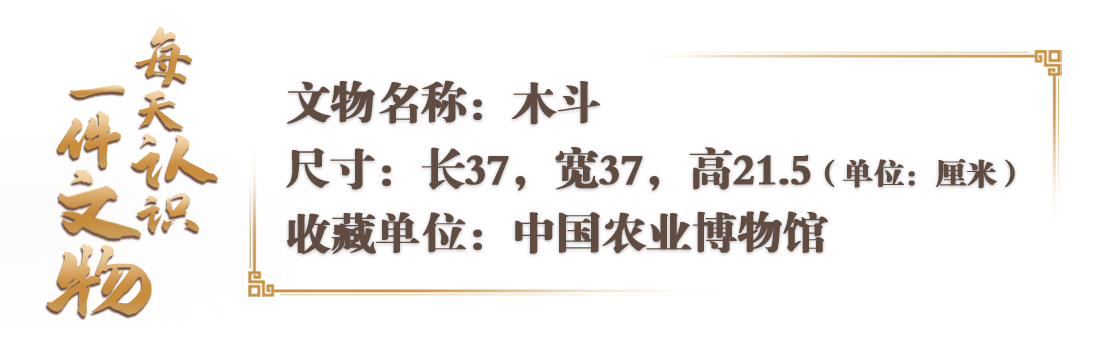
文博日历丨又到一年丰收季 看古人用什么测粮食产量
Yang Shi Xin Wen· 2025-09-22 01:51
Group 1 - The core point of the article highlights the significant harvest season in China, with summer grain purchases exceeding 100 million tons as of September 14, and autumn grain entering the harvest period [2] - China is recognized not only as an agricultural powerhouse but also as one of the countries with the longest history of agricultural development, emphasizing the critical role of agricultural production in national development [6] - The article discusses the historical significance of the "dou," a traditional Chinese measurement unit for grain, which played a vital role in ensuring fair trade and facilitating tax collection and governance in ancient China [10][12] Group 2 - The evolution of the "dou" is traced from its origins as a wine vessel to its establishment as a standard measurement unit, highlighting the importance of unified measurement systems for economic development during the Warring States period [14][15] - The article notes that during the Qin Dynasty, a standardized measurement system was implemented, which included the "dou" as a key unit, further institutionalized during the Han Dynasty with specific ratios [17] - Various idioms and expressions related to the "dou" reflect its prevalence in ancient daily life, showcasing its cultural significance and the connection between agricultural production and societal values [19]
解决耕地保护中的突出问题
Ren Min Ri Bao· 2025-09-18 22:12
Core Points - The article highlights the successful agricultural transformation in Wangcang County, Sichuan Province, where over 260 acres of previously abandoned land have been restored for cultivation, resulting in improved yields of soybeans and corn [1][2] - The transformation is attributed to the targeted supervision efforts by the Wangcang County Discipline Inspection Commission, which identified and rectified issues related to farmland protection and planning [1] Group 1 - The Wangcang County Discipline Inspection Commission discovered that a piece of farmland was mistakenly included in the construction plans for a beef cattle farm's supporting road, prompting immediate corrective actions [1] - A political supervision checklist was established, focusing on farmland protection as a key area, leading to the creation of a collaborative supervision mechanism involving county, township, and village levels [1] - The commission conducted comprehensive and multi-layered supervision of farmland protection and grain production, utilizing technology for precise inspections and encouraging self-correction among functional departments [1] Group 2 - The Wangcang County Discipline Inspection Commission implemented targeted measures to address identified weaknesses and institutional gaps, promoting the establishment of a long-term mechanism for farmland protection [2] - As of now, Wangcang County has successfully built 196,100 acres of high-standard farmland and rehabilitated 51,000 acres of abandoned land, effectively resolving several prominent issues in farmland protection [2] - The ecological health of farmland and grain production capacity has steadily improved as a result of these efforts [2]
PharmAGRl与特斯拉签意向书,在生产环节部署多达1万台Optimus 3+人形机器人
Ge Long Hui· 2025-09-18 01:44
Core Insights - PharmAGRl has signed a letter of intent with Tesla to deploy up to 10,000 Optimus 3+ humanoid robots in its agricultural operations, API synthesis, and prescription drug production [1] - The deployment aims to meet the labor requirements set by the DEA, eliminate low-wage repetitive jobs, and elevate the workforce to high-paying technical positions [1] - The initiative ensures no reliance on undocumented labor, replacing historically exploited positions with robotic technology and retraining programs to support self-employment and wage increases [1] - The robots are designed to comply with all regulations from the DEA and FDA, capable of independent auditing and generating global inventory reports, including standard operating procedures for any workstation [1]


惠农“税费通”|支持乡村振兴系列税费优惠政策(14)承包地流转给农业生产者用于农业生产免征增值税
蓝色柳林财税室· 2025-09-17 04:56
Group 1 - The article discusses the tax implications for farmers who lease their contracted land to others for agricultural production, specifically focusing on the exemption from value-added tax (VAT) for such transactions [3][4]. - It highlights that taxpayers who transfer, lease, exchange, or invest in contracted land for agricultural production are exempt from VAT, provided the land is used for agricultural purposes [3][4]. - The article references a specific policy document from the Ministry of Finance and the State Administration of Taxation regarding the pilot tax reform policies [5]. Group 2 - The article provides guidance on the necessary documentation for obtaining a tax clearance certificate, differentiating between taxpayers who have implemented real-name tax filing and those who have not [9][10]. - It outlines the specific documents required for both unit taxpayers and individual taxpayers when applying for a tax clearance certificate [10]. - The article also mentions common misconceptions related to the declaration and payment of water resource tax, emphasizing the importance of understanding these issues for compliance [11].
中国人均粮食占有量达500公斤
Chang Jiang Shang Bao· 2025-09-17 03:35
Core Insights - The "14th Five-Year Plan" for agricultural and rural development in China has shown significant progress, with a focus on building a strong agricultural nation and promoting rural revitalization, contributing to high-quality economic development [1][3] Group 1: Agricultural Production and Food Security - China's grain production reached a new high, surpassing 1.4 trillion jin (approximately 700 million tons) last year, an increase of 74 billion jin (approximately 37 million tons) compared to 2020, ensuring food security for the population [1] - Per capita grain availability reached 500 kg, achieving basic self-sufficiency in grains and absolute safety in staple food supply [1] Group 2: Poverty Alleviation and Employment - The achievements in poverty alleviation have been solidified, with over 6 million individuals identified and assisted to eliminate the risk of returning to poverty, maintaining a stable employment scale of over 30 million for the formerly impoverished [1][2] - The "three guarantees" (compulsory education, basic medical care, and housing safety) for the impoverished population have seen continuous improvement [1] Group 3: Agricultural Modernization - Significant advancements in agricultural modernization have been made, with over 100 million acres of high-standard farmland established, a 63.2% contribution rate from agricultural technology, and over 75% mechanization in crop farming [2] - The coverage rate of quality seeds in crops exceeds 96%, indicating a strong focus on agricultural productivity [2] Group 4: Rural Development and Income Growth - The average disposable income for rural residents reached 23,119 yuan, with a noticeable reduction in the income gap between urban and rural residents, decreasing from a ratio of 2.56:1 in 2020 to 2.34:1 in 2024 [2] - The vitality of rural development is being enhanced through the regulation of homestead management and the promotion of new agricultural business entities, with over 2 million cooperatives and nearly 4 million family farms established [2] Group 5: Future Outlook - Looking ahead to the "15th Five-Year Plan," the foundation for agricultural and rural development is expected to be stronger, with goals set for achieving agricultural modernization and modern living conditions in rural areas by 2035 [3] - The focus will be on enhancing efficiency, increasing farmers' income, and promoting comprehensive rural revitalization [3]