
数字经济

Search documents
聚焦12个方面重点工作,济南这样谋篇布局“十五五”
Qi Lu Wan Bao· 2026-01-19 06:55
Core Viewpoint - The government work report presented at the Jinan Municipal People's Congress outlines the main goals and tasks for the city's economic and social development during the 14th Five-Year Plan period, emphasizing modernization, innovation, and sustainable growth. Group 1: Economic Development - Accelerate the construction of a modern industrial system, focusing on building a northern advanced manufacturing base and enhancing the "13+34" industrial chain [1] - Implement strategies to expand domestic demand and optimize investment structures, including modern infrastructure projects and support for private capital in major projects [2] - Promote high-quality development in the commercial logistics sector by establishing a comprehensive transportation hub and enhancing the modern commercial circulation system [2] Group 2: Innovation and Education - Implement a strategy to strengthen education and talent development, aiming to build a regional technology innovation hub and enhance the integration of technological and industrial innovation [1][2] - Optimize the layout of innovation resources and strengthen the role of enterprises in innovation, targeting breakthroughs in key technologies and advanced equipment [1] Group 3: Urban and Rural Development - Advance agricultural modernization and rural revitalization, ensuring food security and improving rural governance [4] - Promote urban renewal and the construction of a modern urban area that is innovative, livable, and resilient [3] Group 4: Environmental Sustainability - Promote green and low-carbon transformation, focusing on pollution prevention and ecological restoration, while implementing a dual control system for carbon emissions [4] - Develop a new energy system and promote a waste-free city initiative [4] Group 5: Cultural and Social Development - Enhance cultural development and support the growth of cultural industries, while promoting the core socialist values and protecting historical cultural sites [5] - Focus on improving public services and social welfare to ensure common prosperity and enhance the quality of life for residents [5] Group 6: Security and Governance - Implement a comprehensive national security strategy to safeguard the new development framework, ensuring food, energy, and infrastructure security [6] - Strengthen public safety governance and enhance social governance to build a safer and more law-abiding city [6]
嵩明县:科学谋划真抓实干 绘就“十五五”新蓝图
Xin Lang Cai Jing· 2026-01-18 22:34
Core Viewpoint - The interview with the Secretary of Songming County, Li Jinbo, highlights the county's strategic planning and efforts to promote economic and social development during the "14th Five-Year Plan" period, aiming for high-quality growth and integration of industry and urban development [1]. Group 1: Economic Performance - During the "14th Five-Year Plan," Songming County's economic total is expected to exceed 20 billion yuan, growing from 15.3 billion yuan to 22.3 billion yuan, with an average annual growth rate of 4.2% [1]. - The contribution rate to the city's economic growth is projected to double from the end of the "13th Five-Year Plan" to 3.2% [1]. - The industrial structure has shifted from 15:28.5:56.5 to 12.5:27:60.5, with the share of private economy increasing from 50% to 62% [1]. Group 2: Industrial Development - The number of industrial enterprises above designated size in Songming County increased from 93 to 188, with a net increase of 95 [2]. - Industrial investment has an average annual growth rate exceeding 14%, with the proportion of industrial investment rising from 19% to 42% [2]. - The number of high-tech enterprises has tripled, surpassing 100 [2]. Group 3: Social and Ecological Progress - Over 1.2 billion yuan has been invested in ecological construction, with the average water quality compliance rate increasing from 33% to 89% [2]. - The resident population grew from 411,000 to 436,000, with an urbanization rate rising from 53.7% to 57.7% [2]. - The county has been recognized as a model for beautiful county construction and has been selected as a pilot for new urbanization [2]. Group 4: Future Development Strategies - The "15th Five-Year Plan" period is seen as crucial for reshaping regional competitive advantages and promoting the integration of digitalization and industrialization [4]. - The county aims to enhance industrial development by focusing on traditional industries and nurturing emerging sectors such as renewable energy and digital economy [4]. - Efforts will be made to improve the investment environment and stimulate private sector growth through reforms and support for private enterprises [5]. Group 5: Social Welfare and Quality of Life - Employment initiatives have been recognized as a model for local labor markets, with a focus on enhancing income and job security for residents [3]. - Educational resources are being expanded, with improvements in high school education quality moving from the lower to the middle-upper tier [3]. - Continuous efforts will be made to enhance social security, healthcare, and environmental quality, ensuring a stable and harmonious social environment [5].
虎丘区 一批“金点子”变成发展“金钥匙”
Su Zhou Ri Bao· 2026-01-18 01:14
Group 1 - The core viewpoint of the news is that the Tiger Hill District Political Consultative Conference has effectively fulfilled its role by submitting and processing a significant number of proposals, achieving a 100% response and satisfaction rate [1] - A total of 273 proposals were submitted since the last conference, with 254 officially registered and all processed on time [1] - The conference has focused on key government initiatives, hosting four "Intelligent High-tech" consultation meetings and producing 27 high-quality research reports and recommendations related to artificial intelligence and industry integration [1] Group 2 - Several proposals have been transformed into actionable development strategies, such as the first proposal aimed at enhancing innovation and building high-quality industrial parks, which has led to systematic measures in eight areas [2] - The second proposal focuses on accelerating the integration of digital economy and manufacturing, resulting in the promotion of a three-year action plan for "Smart Transformation and Digital Networking" [2] - The third proposal emphasizes the development of productive service industries to deepen the integration of manufacturing and services, leading to the introduction of a 2025 action plan for high-quality development of emerging services [2]
“十五五”时期朝阳区将以特色园区为依托打造朝阳特色自贸品牌
Bei Jing Shang Bao· 2026-01-16 23:27
Core Insights - Chaoyang District is advancing the "Two Zones" construction during the 14th Five-Year Plan, focusing on creating a high-standard open economy development hub [1] - The district has implemented 4,903 projects, with 2,918 already established, and is expected to lead the city in foreign investment by November 2025 [1] - The 15th Five-Year Plan will emphasize integrated exploration of investment, trade, capital, personnel, transportation, and data security facilitation [2] Group 1 - Chaoyang District is prioritizing institutional innovation in key sectors such as finance, digital economy, business services, and healthcare [1] - The district aims to create a unique free trade brand and attract high-quality international resources by integrating policy innovation with industrial demand [1] - The district will enhance its service industry openness and promote the upgrading of the free trade pilot zone [2] Group 2 - Chaoyang District plans to align with international high-standard economic and trade rules and will increase efforts in institutional innovation [2] - The district will expand investment attraction channels and establish a comprehensive service system for enterprises going abroad [2] - Research will be conducted on high-quality development action plans for service trade and digital trade [2]
两年连超徐州大连唐山 温州晋级“万亿GDP俱乐部” “民营经济第一城”再出发
Zhong Guo Jing Ying Bao· 2026-01-16 19:17
Core Viewpoint - Wenzhou has successfully entered the "trillion GDP club," with expectations to surpass a GDP of 1 trillion yuan by 2025, driven by industrial transformation and innovation initiatives [3][4][5]. Economic Growth and Development - Wenzhou's GDP has increased by nearly 300 billion yuan during the "14th Five-Year Plan" period, crossing three significant thresholds in four years, showcasing its rapid economic resurgence [4]. - The city's GDP figures are as follows: 2020 at 687.1 billion yuan, 2021 at 758.5 billion yuan (up 7.7%), 2022 at 802.98 billion yuan, 2023 at 873.06 billion yuan, and 2024 at 971.88 billion yuan [4][5]. Industrial Transformation - Wenzhou is focusing on upgrading traditional industries and developing emerging sectors, with high-tech industries' share rising from 60.9% to 73% during the "14th Five-Year Plan" [6][7]. - The city has established significant industrial clusters, particularly in electrical and renewable energy sectors, with the latter expected to form a trillion-yuan industry cluster by 2030 [7][8]. Innovation and Talent Development - Wenzhou is enhancing its urban environment and entrepreneurial conditions to attract talent, which is crucial for economic growth [6][8]. - The city has seen a fourfold increase in incubated enterprises and over 120,000 young innovators in recent years, indicating a robust innovation ecosystem [9][10]. Challenges and Future Directions - Despite its growth, Wenzhou faces challenges such as insufficient innovation resources and transportation infrastructure compared to other cities like Hangzhou and Ningbo [8][10]. - The city aims to leverage its flexible private economy to overcome these challenges and enhance its innovation capabilities, particularly in artificial intelligence [10].

“硬科技”孵化显成效,盐城盐南打造苏中苏北科创孵化新高地
Yang Zi Wan Bao Wang· 2026-01-16 05:31
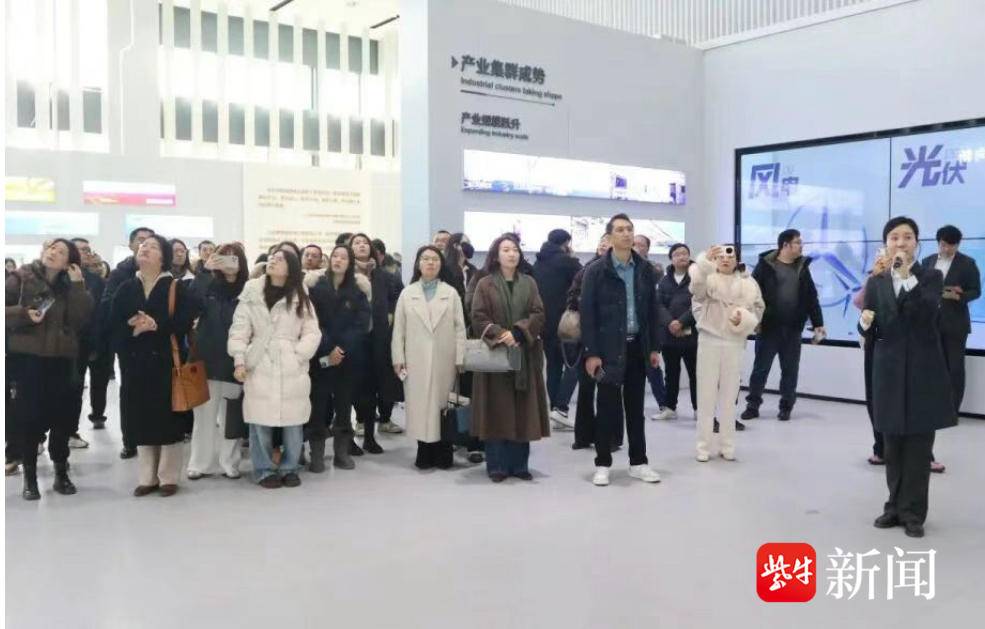
Group 1 - The event "Benchmark Incubator On-site Observation Activity" was held in Yancheng, Jiangsu Province, focusing on the role of benchmark incubators in fostering new productive forces [1] - Over 70 participants, including officials from technology departments and key incubator leaders from Suzhong and Subei regions, gathered to exchange incubation experiences and explore paths for technological innovation [1][3] Group 2 - Yannan High-tech Zone in Yancheng has been actively developing high-level incubation carriers, particularly in the digital economy and green energy sectors, making it a focal point of the observation activity [3] - The Yancheng Big Data Industry Incubator, recognized as a national A-class excellent incubator, has nurtured over 500 enterprises and attracted more than 50 high-level talents, providing quality physical space for the development of the digital economy [5][6] Group 3 - Yannan High-tech Zone has implemented a classification and gradient cultivation plan for incubators, focusing on upgrading quality carriers and forming a high-level carrier matrix, with both big data and hydrogen energy incubators recognized as provincial benchmarks [8] - The hydrogen energy technology incubator focuses on the entire hydrogen energy industry chain, establishing a closed-loop cultivation system that includes research and development, pilot testing, and industrial transformation [8][9] Group 4 - Yannan is exploring new models for incubators to enhance self-sustainability, including state-owned capital guidance and professional operation, while promoting a model that links investment and incubation [9] - The next steps for Yannan High-tech Zone include deepening the incubation of "hard technology" and enhancing the professional service capabilities of incubation carriers to cultivate competitive hard technology enterprises [11]
美登科技龙虎榜数据(1月15日)
Zheng Quan Shi Bao Wang· 2026-01-15 15:00
Group 1 - The stock of Meideng Technology (920227) experienced a significant decline of 23.12% in a single trading day, with a turnover rate of 29.17% and a total transaction value of 498 million yuan, indicating high volatility with an amplitude of 24.15% [1] - Institutional investors net sold 23.64 million yuan worth of shares, while brokerage seats collectively net bought 33.49 million yuan [1][2] - The stock has been listed on the "Dragon and Tiger List" seven times in the past six months, with an average price drop of 1.50% the day after being listed and an average decline of 7.48% over the following five days [3] Group 2 - The top five brokerage seats on the "Dragon and Tiger List" had a total transaction value of 157 million yuan, with a net buying amount of 9.85 million yuan [2] - Specific brokerage activities included significant buying from Guosen Securities and Huafu Securities, while institutional specialized seats were among the top sellers [3]
深哈合作再“落子” 深圳出海e站通哈尔滨分中心挂牌
2 1 Shi Ji Jing Ji Bao Dao· 2026-01-15 10:47
Group 1 - The cooperation between Shenzhen and Harbin has been upgraded, with the establishment of mutual service centers aimed at enhancing international market access for Heilongjiang's manufacturing and agricultural products [1][2] - During the "14th Five-Year Plan" period, Heilongjiang's foreign trade is expected to double compared to 2020, with an annual growth rate of 19.3%, and trade with Russia is projected to increase from 13% in 2020 to over 15% by 2025 [1] - Shenzhen, as China's leading foreign trade city, has achieved a total import and export volume of 18.9 trillion yuan since the beginning of the "14th Five-Year Plan," accounting for 9.5% of the national total, indicating significant potential for collaboration [1] Group 2 - Shenzhen's "Outreach E-Station" has established a robust service ecosystem, gathering over 200 quality service providers and integrating more than 70 cross-border public services, demonstrating its effectiveness in supporting national enterprises [2] - The establishment of the "Shenzhen Professional Institutions Service Heilongjiang Enterprises Going Abroad Alliance" aims to provide comprehensive professional services, enhancing accessibility to international services for Heilongjiang enterprises [2] - A cooperation agreement was signed between the Harbin Free Trade Zone and the Qianhai Shekou Free Trade Zone to share over 100 reform experiences in investment trade facilitation and financial innovation [2][3] Group 3 - The collaboration aims to connect coastal and border areas, facilitating access to high-standard international trade rules and jointly exploring markets in Russia, Mongolia, and Northeast Asia [3] - Since the establishment of the partnership in 2017, the Shenzhen-Harbin Industrial Park has registered 703 enterprises with a total registered capital of 24.2 billion yuan, fostering the development of digital economy, biotechnology, and high-end equipment manufacturing [3] - Key cooperation projects signed during the conference include initiatives in agricultural industrialization, cross-border legal services, and cold chain data services, covering multiple critical sectors [3][4] Group 4 - The collaboration between Heilongjiang's Shangzhi City and Shenzhen Agricultural Investment Group aims to promote the standardization, branding, and digital development of high-quality agricultural products [4] - The Shenzhen Qianhai Belt and Road Legal Services Alliance and Harbin Lawyers Association will focus on resource sharing and collaborative services for outbound enterprises [4] - Shenzhen Qianhai Yueshi Information Technology Co., Ltd. and Heilongjiang Food Cold Chain Logistics Association plan to invest a total of 1 billion yuan over five years to establish the "Heilongjiang Quality Agricultural Products Cold Chain Data Service Center" [4]
六大部委释放2026关键信号,大湾区这些产业要飞
Xin Lang Cai Jing· 2026-01-15 10:11
Group 1: Economic Policy and Growth Signals - The National Development and Reform Commission, Ministry of Finance, Central Bank, Ministry of Commerce, Ministry of Industry and Information Technology, and Ministry of Housing and Urban-Rural Development have released four key policy signals aimed at stabilizing growth, expanding domestic demand, supporting technological innovation, and stabilizing the real estate and stock markets for 2026 [1] - The focus for 2026 includes enhancing industrial technological innovation capabilities, developing core technologies, and fostering high-level manufacturing platforms, with an emphasis on emerging industries such as integrated circuits, new materials, and biomedicine [1][2] Group 2: Investment and Funding Initiatives - The National Venture Capital Guidance Fund has been launched with an investment of 100 billion yuan, aiming to attract local and social capital to create an investment scale exceeding one trillion yuan, particularly in hard technology sectors [2] - The Guangdong province has introduced policies to promote the "use first, pay later" model for technology transfer, providing flexible cooperation paths for enterprises, especially small and medium-sized enterprises [3] Group 3: Low-altitude Economy Development - The low-altitude economy has been included in the 14th Five-Year Plan, with new opportunities for the development of three-dimensional low-altitude travel [4] - The first Guangdong-Hong Kong-Macao Greater Bay Area Low-altitude Economy High-quality Development Conference has been held, announcing policies for infrastructure, technological innovation, and financial support for the low-altitude economy [5] Group 4: Digital Economy Collaboration - The Guangdong-Hong Kong-Macao Greater Bay Area is enhancing digital economy cooperation, establishing a development pattern driven by the dual cores of Guangzhou and Shenzhen, with unique contributions from Hong Kong and Macau [7] - The policies released by six ministries focusing on supporting technological innovation provide strong guidance for the high-quality development of the digital economy in the Greater Bay Area [7]
2026年非洲13国经济增速有望超过6%
Shang Wu Bu Wang Zhan· 2026-01-15 07:21
Core Insights - The report by the Economist Intelligence Unit (EIU) highlights that 13 African countries are expected to achieve economic growth rates exceeding 6% by the end of December 2026, supported by a backdrop of declining inflation and a relatively positive growth outlook for the continent [1] Group 1: Economic Growth Drivers - Key drivers of economic growth in Africa include ongoing infrastructure development, accelerated digital transformation, rapid inflow of foreign direct investment, expanding regional markets, and deeper integration into global value chains [1] - The report emphasizes that these interrelated structural factors will continue to provide growth support for multiple African countries in the coming years [1] Group 2: Regional Growth Distribution - The countries achieving high growth rates are primarily concentrated in West and East Africa, with notable mentions including Senegal, Guinea, Liberia, Côte d'Ivoire, Ghana, Togo, Niger, Ethiopia, Uganda, Tanzania, and Rwanda [2] - Additionally, Libya and Mozambique are the only countries outside these regions expected to experience significant growth [2] - West and East Africa are projected to remain the fastest-growing sub-regions in Africa, with West Africa benefiting from oil and gas development, renewable energy projects, and mineral resource investments [2] Group 3: South Africa's Economic Outlook - South Africa's economic performance is expected to be relatively moderate, with growth rates projected between 1.5% and 3% due to high-interest rates and significant import tariffs imposed by the U.S. on 30% of its exports [2] - However, a slight recovery in South Africa's economic growth is anticipated in the second half of 2026 as the impact of tariffs begins to ease [2] Group 4: Debt Concerns - The report warns that debt issues will remain a major risk for African economies, with many countries experiencing public debt levels at critical thresholds over the past decade [3] - These economies are highly sensitive to changes in the global financing environment, commodity price fluctuations, and exchange rate movements [3] - The EIU indicates that the risk of escalating debt pressure across multiple countries in Africa is rising, necessitating new rounds of fiscal and structural reforms [3]