智能硬件

Search documents
智联招聘新报告:哪些行业就业好、工资高?
Xin Lang Cai Jing· 2026-01-21 11:18
Core Insights - The job market is experiencing structural changes driven by the development of new productive forces, with significant increases in demand for high-end equipment and modern service industries in Q4 2025 [1][2][4][6][7] Group 1: Job Market Trends - In Q4 2025, the average monthly salary for algorithm engineers is approximately 25,236 yuan, with job demand surging by 110% [2][4] - The demand for drone engineers has increased by nearly 60% year-on-year, with an average monthly salary of about 16,600 yuan [7] - The robotics industry has seen a 60% increase in demand for engineers, with specific roles like robot debugging engineers growing by 64.1% [4][5] Group 2: Sector-Specific Insights - The new generation of information technology is expanding rapidly, with job postings in artificial intelligence increasing by 19% and smart hardware by 11.5% [2][3] - The modern service industry, particularly online life services (O2O), has shown a remarkable growth rate of 62.7% in job postings [1] - The new materials sector has experienced a 28.1% increase in recruitment demand, with high polymer materials engineers earning an average salary of around 16,600 yuan [6] Group 3: Regional Demand - Beijing, Shenzhen, and Hangzhou are the top three cities for talent demand in the new generation of information technology, collectively accounting for over 20% of job postings [3] - Suzhou has emerged as the city with the highest demand for high-end equipment talent, followed by Shenzhen, Shanghai, Tianjin, and Wuxi [5] Group 4: Salary and Skill Requirements - The average monthly salary for robot algorithm positions is 24,426 yuan, with a year-on-year demand increase of 30.7% [2] - Positions in the aerospace sector, such as navigation algorithm engineers, have an average salary of approximately 26,000 yuan, reflecting high demand for skilled professionals [6][7] - The average salary for mechanical engineers and mechanical structure engineers is around 12,784 yuan and 13,729 yuan, respectively, indicating a trend of increasing quality in talent demand [5]
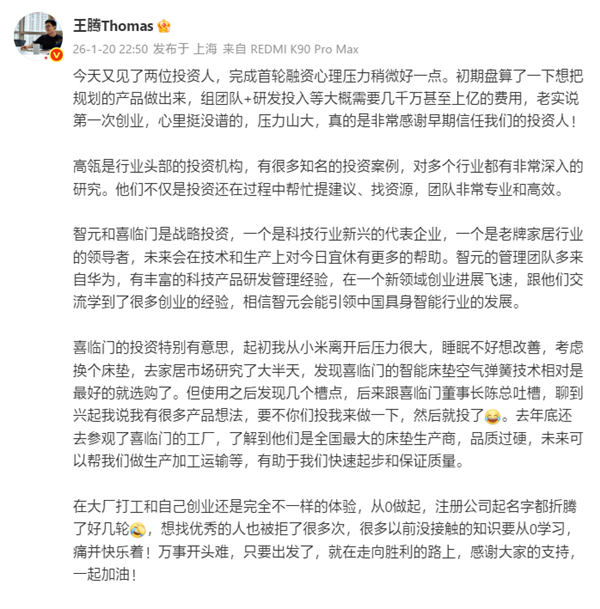
王腾称创业压力山大:更理解雷总的勇气了
Xin Lang Cai Jing· 2026-01-21 10:30
Core Viewpoint - Wang Teng, former general manager of Xiaomi's China marketing and REDMI brand, has successfully established a new company named "Today Yixiu" and completed a seed round financing of several tens of millions, with investors including Hillhouse Capital, Zhiyuan Robotics, and Xilinmen [1][11]. Group 1 - The initial financing has alleviated some psychological pressure for Wang Teng [1][11]. - Wang Teng expressed gratitude towards early investors for their trust in his first entrepreneurial venture, acknowledging the significant pressure he feels [2][12]. - The core team of "Today Yixiu" consists of members from Xiaomi, Huawei, and other tech companies, focusing on developing sleep health-related products [5][15]. Group 2 - Wang Teng indicated that product development is progressing slowly, with a planned product launch event expected in the second half of the year [6][16]. - Initial estimates for product development, team formation, and research investment range from several tens of millions to over one hundred million [6][16]. - The new products are expected to integrate with the Xiaomi ecosystem, potentially including smart pillows, smart headphones, smart wristbands, and multifunctional sensors, which can interact with various Xiaomi smart home devices to enhance sleep quality [7][16].



萤石网络2025年归母净利同比增长12.43% 深化智能消费类IoT产品研发
Zheng Quan Ri Bao Wang· 2026-01-21 08:48
Group 1 - The core viewpoint of the news is that Hangzhou Yingshi Network Co., Ltd. reported steady growth in its 2025 performance, with total revenue reaching 5.901 billion yuan, a year-on-year increase of 8.44%, and net profit attributable to shareholders increasing by 12.43% to 567 million yuan [1][2][3] - As of the end of 2025, the company's total assets amounted to 907 million yuan, reflecting an 8.55% growth from the beginning of the year, while equity attributable to shareholders increased by 5.40% to 579 million yuan [1] - The company has focused on core advantages, enhancing technology research and development, and advancing the development of smart consumer IoT products and cloud platform services, leading to a steady increase in overall operating performance [1][3] Group 2 - In 2025, the company upgraded its self-developed blue ocean large model in two aspects: foundational algorithm capabilities and specialized vertical scene models, leveraging its IoT technology advantages [2] - The integration of AI, large models, and edge computing is driving the evolution of smart hardware from "single devices" to "scene-based solutions," providing stable growth opportunities in segments like smart video and smart home [2] - The company is expanding its product matrix centered on video vision and AI interaction while also introducing various application scenarios through ecosystem openness, enhancing its core business's scene coverage and monetization potential [3]

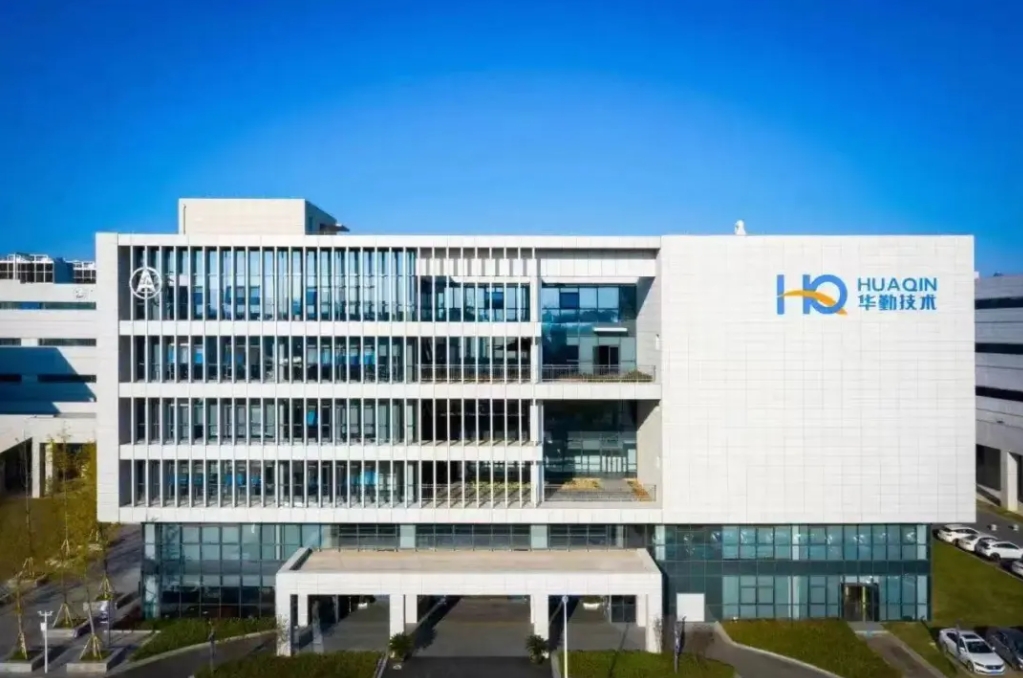
华勤技术:预计2025年净利润40亿元-40.5亿元 同比增长36.7%-38.4%
Ju Chao Zi Xun· 2026-01-21 08:37
Core Viewpoint - Huqin Technology expects significant revenue and profit growth for the fiscal year 2025, driven by advancements in artificial intelligence and the evolution of smart products [1][3] Financial Performance - The company anticipates revenue between 170 billion to 171.5 billion, representing a year-on-year growth of 54.7% to 56.1% [1] - The projected net profit attributable to shareholders is expected to be between 4 billion to 4.05 billion, reflecting a year-on-year increase of 36.7% to 38.4% [1] Growth Drivers - The substantial growth is attributed to the accelerated implementation of artificial intelligence technologies and the continuous updates of various smart products [3] - The company leverages its "3+N+3" smart product platform strategy and global industrial layout to enhance its service capabilities across mobile terminals, personal computers, data centers, and automotive electronics [3] - Huqin Technology aims to create value for leading global technology companies through its strong R&D design capabilities, efficient supply chain platform, and global smart manufacturing and precision component capabilities [3]

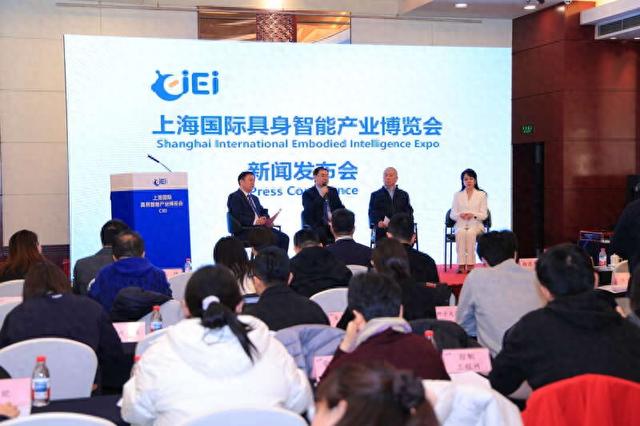
万亿级产业生态加速发展,2026上海具身智能博览会定档7月
Xin Lang Cai Jing· 2026-01-21 04:05
Core Insights - The 2026 Shanghai International Embodied Intelligence Industry Expo (referred to as "Expo") will be held from July 2 to 4 at the National Exhibition and Convention Center (Shanghai Hongqiao) [2] - The Expo aims to serve as a significant platform for industry exchange following the elevation of embodied intelligence to a national strategy, focusing on the deep integration of the automotive and robotics sectors, both valued in trillions [2] - The exhibition area will expand to 35,000 square meters, significantly larger than previous editions, featuring four core exhibition zones: intelligent driving, smart cockpits, core hardware, and vehicle-road collaboration [2] - Over 300 companies have confirmed participation, including automotive manufacturers, smart hardware producers, AI algorithm service providers, and infrastructure suppliers [2] - The event will host 20 professional forums addressing industry hot topics such as the implementation of edge large models, multimodal interaction technology, and cross-domain supply chain collaboration [2] Industry Focus - The Expo will emphasize a dual focus on "technology exchange + business matching," providing practical cooperation channels for upstream and downstream of the industry chain through interactive areas like technology testing zones and scenario simulation experience areas [3] - Specialized discussions will be organized to address key issues in the automotive industry, such as core technology breakthroughs and standard formulation, facilitating the large-scale application of independently controllable technological achievements [3]
龙旗科技H股定价31港元,1月22日港交所挂牌上市
Ju Chao Zi Xun· 2026-01-20 09:49
Group 1 - The core point of the article is that Longqi Technology has set the final price for its H-share public offering at HKD 31.00 per share, with trading expected to commence on January 22 on the Hong Kong Stock Exchange [2] - Longqi Technology's main business includes the design, research and development, and manufacturing of smart terminals, covering products such as smartphones and IoT devices, positioning itself as a significant player in the smart hardware solutions industry [2] - The H-share issuance targets qualified overseas investors and domestic institutional investors, and the announcement serves as a reference for A-share investors without constituting a securities subscription offer [2] Group 2 - The listing of H-shares is expected to help Longqi Technology expand its financing channels, enhance research and development investment, and promote market expansion, ultimately driving the company towards higher quality development [2]

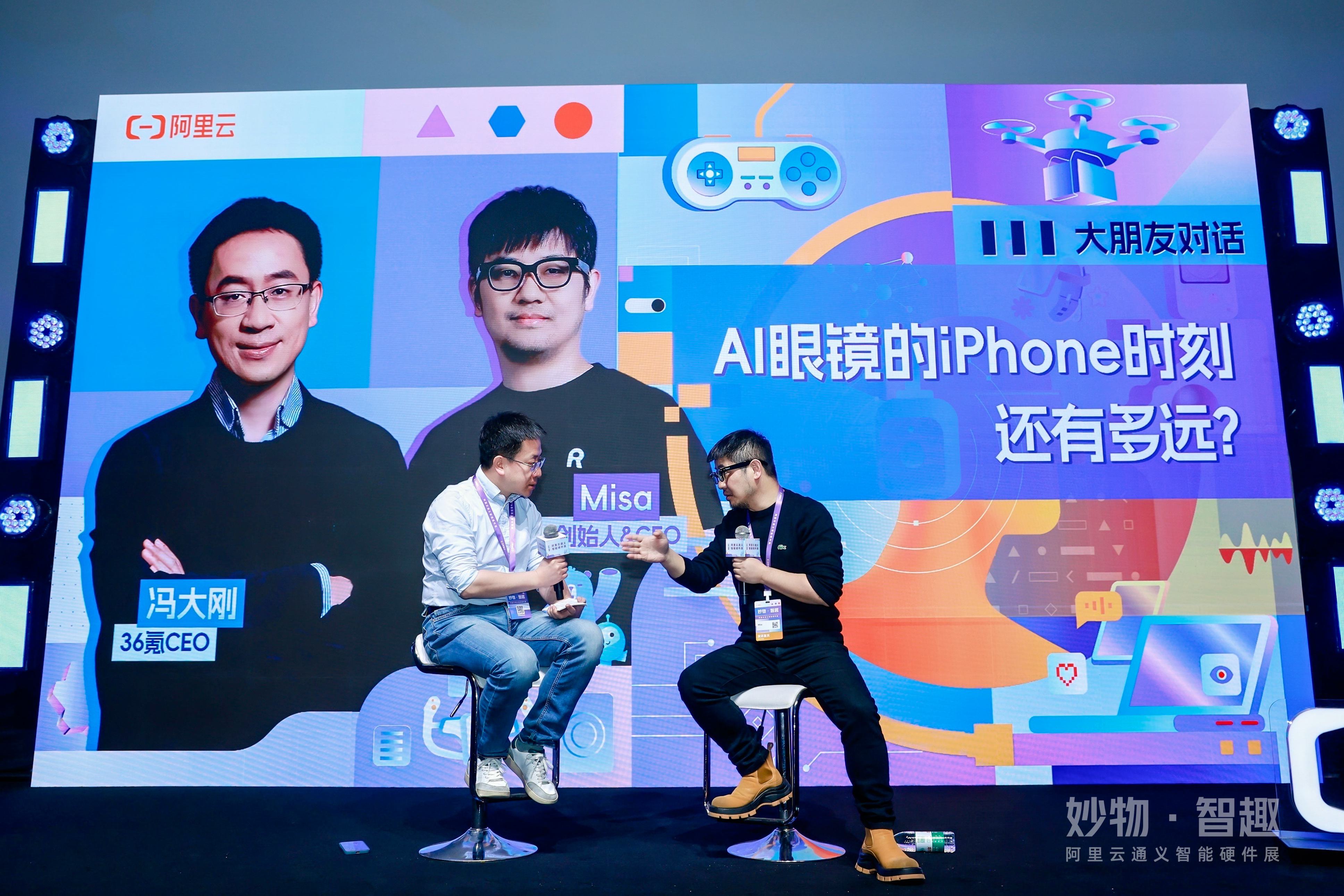
冯大刚对话Rokid创始人Misa:为什么五年后,手机可能变成眼镜的配件?
3 6 Ke· 2026-01-20 07:45
Core Insights - The AI hardware sector has regained prominence in the tech industry over the past year, with various hardware manufacturers striving to integrate AI capabilities into their devices [1] - AI glasses are emerging as a significant player in the next generation of human-computer interaction, offering features like real-time information access, navigation, and AI assistance without the need to use a smartphone [2][3] - Rokid is positioning itself as a leader in the AI glasses market, focusing on creating a comprehensive AI experience rather than just adding limited AI functionalities to existing designs [3][6] Industry Trends - The smart glasses market is showing a clear trend of differentiation, with some products following a "light AI" approach while Rokid aims to develop full-stack AI glasses with multi-modal interaction capabilities [3][6] - The conversation around AI glasses has shifted towards their potential to become high-frequency devices, similar to how watches are used daily, emphasizing the importance of daily usage scenarios [6][8] - The industry is entering a new phase where large companies are leveraging channels and subsidies, while long-term players like Rokid focus on changing user habits from novelty to necessity [8] Market Dynamics - In 2025, the global sales of AI glasses are projected to reach approximately 5 million units, with Rokid expected to maintain a significant market share of over 50% [14] - Rokid's sales are anticipated to grow from 20,000 units last year to between 80,000 and 100,000 units this year, indicating a 400% increase [15][22] - The demand for AI glasses is driven by their ability to provide natural and immediate AI services, such as capturing moments, information reminders, and navigation assistance [19][20] Competitive Landscape - The market is characterized by a mix of entertainment-focused glasses, light AI glasses, and full-function AI glasses, with Rokid being a prominent player in the latter category [16][22] - The competition between large tech companies and startups like Rokid is shaped by the latter's ability to focus on product quality and user experience, while larger firms may struggle with resource allocation [24][25] - The potential for a price war exists, but it is believed that large companies will not engage in unsustainable pricing strategies that could harm the industry [26] Future Outlook - The industry is expected to see significant growth, with projections indicating that the market could reach over 10 million units sold in the near future [22][28] - The evolution of AI glasses is closely tied to advancements in AI models, which have recently matured, providing the necessary capabilities for these devices to succeed [22][29] - The Chinese market presents a unique opportunity for AI glasses due to higher rates of myopia, leading to a greater demand for all-day wear [28]
关税风暴过后,第一外贸大省怎么样了?
2 1 Shi Ji Jing Ji Bao Dao· 2026-01-19 14:55
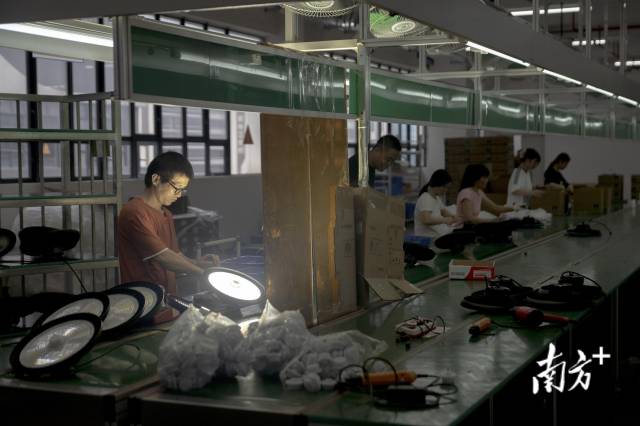
Core Viewpoint - The article highlights the resilience and adaptability of Guangdong's foreign trade sector in the face of increasing tariffs and global trade disruptions, showcasing a shift towards new markets and innovative business strategies. Group 1: Trade Performance and Market Dynamics - In 2025, Guangdong's total goods trade import and export reached 9.49 trillion yuan, a year-on-year increase of 4.4%, marking a historical annual high and accounting for 20.9% of the national foreign trade total [3] - Guangdong's exports to the United States decreased by 17.4%, with the U.S. market share dropping to approximately 13%, making it the fourth-largest trading partner for Guangdong [7] - The diversification of Guangdong's export markets is evident, with significant growth in trade with ASEAN, Hong Kong, and the EU, all surpassing 1 trillion yuan in import and export scale [10] Group 2: Company Adaptation and Innovation - Val Lighting Technology Co., Ltd. experienced a surge in orders, shipping nine containers to France in one day, reflecting a strong demand for its products [1] - The company shifted its focus to the European market after the U.S. imposed high tariffs, successfully securing a 35 million yuan order from a French client [5] - The introduction of innovative products, such as smart humidifiers, has allowed companies like Guangdong Taiyi Intelligent Technology Co., Ltd. to thrive despite high tariffs, with overseas sales of smart humidifiers reaching over 60 million yuan, a 30% increase from the previous year [12] Group 3: New Business Strategies and Technologies - The use of AI in marketing and customer acquisition is becoming a key strategy for small and medium-sized foreign trade enterprises, enabling them to efficiently connect with overseas clients [18] - Companies are increasingly adopting independent websites and social media for overseas promotion, with one company reporting that over 60% of its overseas orders came from this new marketing approach [20] - The global trade environment is shifting, with a growing emphasis on supply chain stability over price, prompting companies to explore new channels for securing reliable partnerships [22]
AI硬件需求碎片化 都想取代手机 谁能定义下一代超级入口
Nan Fang Du Shi Bao· 2026-01-19 12:44
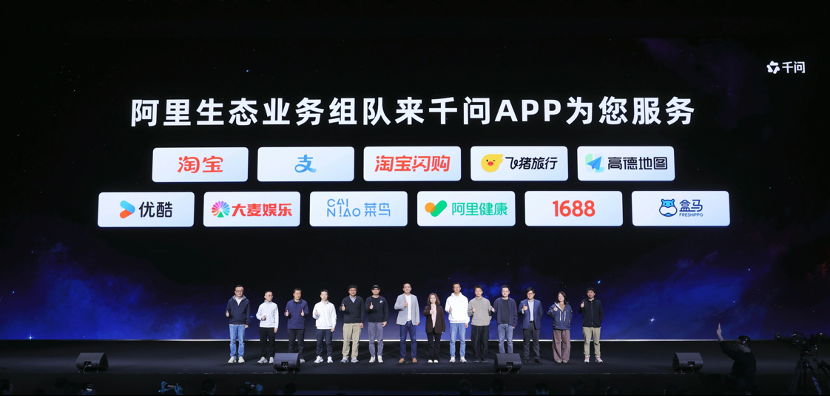
Core Insights - Alibaba has integrated its Qianwen App into its ecosystem, including Taobao, Alipay, and other services, positioning it as a "super agent" to differentiate from competitors like Doubao and Yuanbao [1] - The year 2025 is referred to as the "AI Hardware Year," marking a surge in AI hardware products like AI glasses and headphones, aiming to replace smartphones as essential devices [3][4] - Major tech companies are actively investing in AI hardware, with products like ByteDance's Doubao and ZTE's nubia M153 generating significant buzz [1][9] Trend 1: Hardware Manufacturers Competing in AI Vertical Market - The AI hardware market is experiencing intense competition, with various companies launching products aimed at becoming essential devices [2][3] - Plaud, an AI hardware company, has successfully sold over 1 million units by targeting high-decision, high-dialogue, and high-knowledge-density users [3] - The trend of vertical market products achieving commercial viability is notable, as companies leverage AI to enhance hardware functionality [4] Trend 2: Major Companies Stirring the Hardware Market - Internet giants are diversifying into hardware, with companies like ByteDance and Alibaba launching AI products to complement their existing software ecosystems [9][10] - The strategies include direct hardware development and providing foundational models for other hardware manufacturers [10][11] - Tencent is focusing on robotics and has launched a modular platform for intelligent robots, indicating a shift towards hardware integration [11] Trend 3: Ecosystem Integration of Super Applications - Alibaba's Qianwen App has been upgraded to support over 400 tasks, integrating with various services to enhance user experience [15][17] - Tencent is betting on WeChat as a super application, aiming to create an AI assistant that can understand user needs and execute tasks within its ecosystem [17][18] - The competition among major companies is intensifying as they seek to create comprehensive user experiences through integrated applications [19] Trend 4: New Competitive Logic from Emerging AI Models - Emerging AI model companies, referred to as the "Six Little Tigers," are positioning themselves alongside major tech firms in the race for super applications [22][23] - These companies are focusing on high-value sectors like healthcare, with products that aim to redefine user engagement and application functionality [23][24] - The competition is shifting from traditional metrics of success to a focus on model capabilities and user experience [24][25] Predictions: Who Will Define the Super Entry? - The battle for the next generation of "super entry" is ongoing, with hardware and software companies vying for dominance [29][30] - Challenges remain in the AI hardware sector, including user privacy and the clarity of business models for AI applications [30][31] - The concept of a "super entry" may evolve, with the potential for more neutral and open platforms to emerge as key players [31]


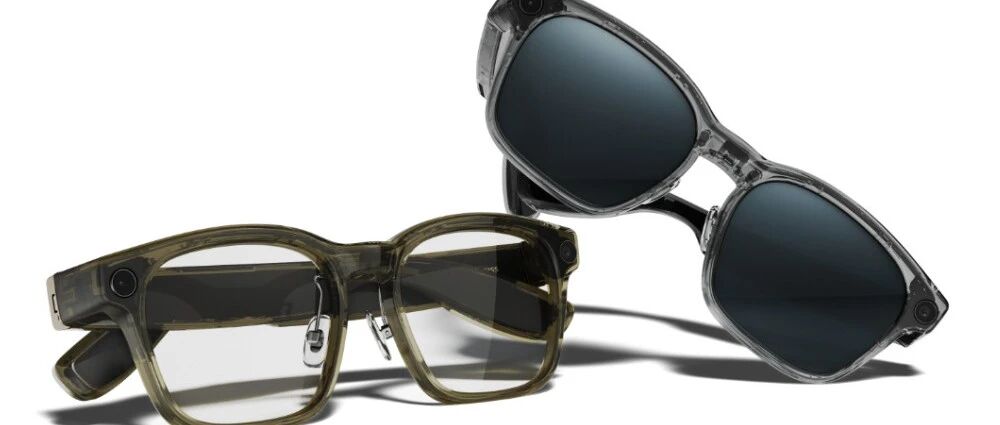
强烈推荐阅读|范皓宇详细阐述理想AI眼镜理念与开发细节
理想TOP2· 2026-01-19 12:34
Core Viewpoint - The company has developed a new AI glasses product called Livis, which aims to extend the smart experience from cars to everyday life, emphasizing comfort, long battery life, and fast response times [1][48]. Group 1: Product Features - Livis glasses weigh only 36 grams, making them one of the lightest in the industry [25]. - The glasses offer a typical usage time of 18.8 hours and standby time of over 70 hours [25]. - The AI response speed is notably fast, achieving 800 milliseconds [25]. - The product has sold out its initial production capacity in just three days, indicating strong market demand [32][33]. Group 2: User Interaction and Experience - The average daily interaction with the glasses is around 40 to 50 voice commands, significantly higher than the 18 to 20 interactions typically seen in cars [36]. - Users engage with the glasses for various tasks, including navigation, media control, and reminders, showcasing their utility beyond just a visual device [37][38]. Group 3: Development and Technology - The glasses utilize a unique single MCU architecture and a custom RTOS, differentiating them from competitors who rely on standard platforms [5][51]. - Collaboration with partners like Hengxuan has led to the development of a specialized system that enhances performance while maintaining low power consumption [5][54]. - The design process involved high standards, such as achieving G3 continuous surfaces, which are typically reserved for luxury products [13][56]. Group 4: Market Position and Strategy - The company aims to create a seamless user experience across multiple devices, positioning the glasses as a step towards a multi-device ecosystem [7][8]. - Despite initial skepticism about diversifying from automotive products, the company believes that the glasses will enhance user engagement and create new value [10][50]. - The product's success is seen as a potential catalyst for future innovations in both the eyewear and automotive sectors [12][53].