
有色金属矿采选业

Search documents
紫金矿业涨超3% 公司上调未来三年产量指引 机构称其长期产量增长强劲
Zhi Tong Cai Jing· 2026-02-11 03:16
Group 1 - The core viewpoint of the article highlights that Zijin Mining (601899)(02899) has seen a stock increase of over 3%, currently at 43.84 HKD with a trading volume of 1.251 billion HKD [1] - Recently, Zijin Mining's meeting approved the production planning for major mineral products for the next three years (2026-2028) and a long-term vision for 2035, outlining clear production targets [1] - Citigroup believes that through existing mine expansion plans and acquisitions, Zijin Mining's production will continue to grow steadily in the coming years [1] Group 2 - Bank of America Securities noted that Zijin Mining has raised its production guidance for 2026 to 2028, expecting gold production to reach 130 to 140 tons by 2028, up from the previous guidance of 100 to 110 tons; the compound annual growth rate (CAGR) from 2025 to 2028 is projected to be 13% to 16% [1] - The company also projects copper production to reach 1.5 to 1.6 million tons by 2028, with a CAGR of 11% to 14% from 2025 to 2028 [1] - The firm believes that the company's long-term production growth is strong, cost control is strict, and valuations are reasonable, maintaining a positive outlook on gold and copper prices [1]

2026年1月份CPI同比上涨 PPI同比降幅收窄
Sou Hu Cai Jing· 2026-02-11 02:46
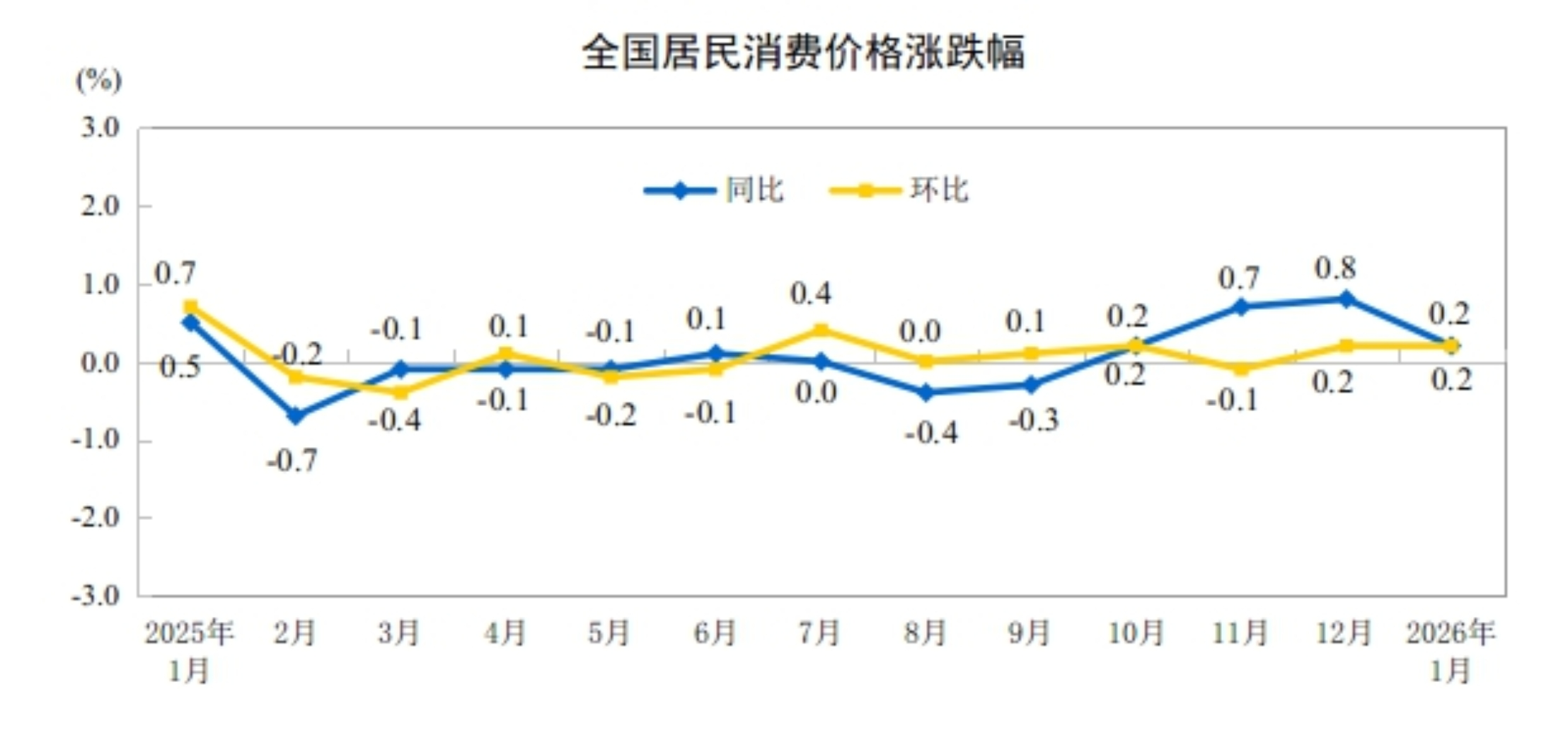
中新网2月11日电 据国家统计局网站消息,国家统计局城市司首席统计师董莉娟解读2026年1月份CPI和 PPI数据。1月份,居民消费需求持续恢复,居民消费价格指数(CPI)环比上涨0.2%,同比上涨0.2%,扣 除食品和能源价格的核心CPI同比上涨0.8%。受全国统一大市场建设持续推进、部分行业需求增加及国 际大宗商品价格传导等因素影响,工业生产者出厂价格指数(PPI)环比上涨0.4%,同比下降1.4%。 节前重要民生商品量足价稳。食品价格环比持平,其中鲜菜价格下降4.8%,粮食和食用油价格分别下 降0.1%和0.2%,猪肉和禽肉类价格分别上涨1.2%和0.2%,水产品和鲜果价格均上涨2.0%。 二、PPI环比继续上涨,同比降幅收窄 PPI环比上涨0.4%,连续4个月上涨,涨幅比上月扩大0.2个百分点。本月PPI环比运行的主要特点:一是 全国统一大市场建设持续推进带动部分行业价格上涨。水泥制造、锂离子电池制造价格环比均上涨 0.1%,均连续4个月上涨;光伏设备及元器件制造价格由上月下降0.2%转为上涨1.9%,基础化学原料制 造价格由下降0.1%转为上涨0.7%,黑色金属冶炼和压延加工业价格由下降0.1%转为 ...
洛阳钼业再涨超3% 花旗预计近期新收购资产在年内将为公司贡献7.1吨应占黄金产量
Zhi Tong Cai Jing· 2026-02-11 02:43
Group 1 - Luoyang Molybdenum (603993) (03993) saw a rise of over 3%, currently up 3.65% at HKD 23.28, with a trading volume of HKD 312 million [1] - Citigroup released a report indicating that Luoyang Molybdenum will announce the acquisition of Brazilian gold assets in December 2025, with the transaction expected to be completed in January 2026 [1] - Based on Citigroup's forecast of a gold benchmark price of USD 4,600 per ounce in 2026, the acquired asset is expected to contribute 7.1 tons to gold production, generating approximately RMB 2.4 billion in net profit, accounting for about 7% of total net profit [1] Group 2 - Shenwan Hongyuan noted significant short-term disruptions in copper production, with tight non-US inventories leading to a bullish outlook for copper prices, supported by solid fundamentals [1] - Long-term growth in electric vehicle investments and AI data centers, combined with relatively inelastic copper supply, suggests that the price center for copper is likely to continue rising [1] - Huayuan Securities indicated that insufficient capital expenditure in copper mining and frequent supply-side disruptions may shift the copper supply-demand balance from tight equilibrium to shortage, with copper smelting profits expected to bottom out amid a "de-involution" backdrop, and prices likely to break upward as the Federal Reserve enters a rate-cutting cycle [1]

港股异动 | 洛阳钼业(03993)再涨超3% 花旗预计近期新收购资产在年内将为公司贡献7.1吨应占黄金产量
智通财经网· 2026-02-11 02:42
Group 1 - Luoyang Molybdenum (03993) shares increased by 3.65%, reaching HKD 23.28, with a trading volume of HKD 312 million [1] - Citigroup's report indicates that Luoyang Molybdenum will announce the acquisition of Brazilian gold assets in December 2025, completing the transaction in January 2026 [1] - Based on Citigroup's forecast of a gold price of USD 4,600 per ounce in 2026, the acquired asset is expected to contribute 7.1 tons of attributable gold production, generating approximately RMB 2.4 billion in net profit, accounting for about 7% of total net profit [1] Group 2 - Sunward Hongyuan predicts that short-term copper production will be significantly disrupted, with tight non-US inventories leading to a bullish outlook for copper prices, supported by solid fundamentals [1] - Long-term growth in electric investment and AI data centers, combined with relatively inelastic copper supply, suggests that the price center for copper is likely to continue rising [1] - Huayuan Securities notes that insufficient capital expenditure in copper mining and frequent supply-side disruptions may shift the copper supply-demand balance from tight equilibrium to shortage, with copper smelting profits expected to bottom out amid a "de-involution" backdrop, and prices likely to break upward as the Federal Reserve enters a rate-cutting cycle [1]
国家统计局:1月CPI同比上涨0.2%,PPI环比上涨0.4%,涨幅比上月扩大0.2个百分点
Jin Rong Jie· 2026-02-11 02:38
Group 1 - The core viewpoint of the articles indicates that consumer demand is recovering, with the Consumer Price Index (CPI) showing a slight increase of 0.2% month-on-month and year-on-year in January 2026, while the core CPI, excluding food and energy, rose by 0.8% year-on-year [1][6][20] - The CPI's year-on-year growth rate has declined primarily due to the high base effect from the previous year's Spring Festival, with food prices decreasing by 0.7%, impacting the CPI by approximately 0.11 percentage points [2][8] - The core CPI continues to show a moderate increase, with a month-on-month rise of 0.3%, the highest in six months, driven by price increases in air tickets and travel services [3][6] Group 2 - The Producer Price Index (PPI) increased by 0.4% month-on-month in January 2026, marking the fourth consecutive month of growth, with the year-on-year decline narrowing to 1.4% [4][20] - The increase in PPI is attributed to the ongoing construction of a unified national market and rising demand in certain industries, with notable price increases in sectors such as cement manufacturing and lithium-ion battery production [4][5] - Year-on-year, the prices in the non-ferrous metal mining industry rose by 22.7%, while the prices in the education, culture, and entertainment products manufacturing sector increased by 21.2% [5][29]

国家统计局:输入性因素影响国内有色金属和石油相关行业价格走势分化
Xin Hua Cai Jing· 2026-02-11 02:13
Group 1 - In January, the Producer Price Index (PPI) increased by 0.4% month-on-month, marking the fourth consecutive month of growth, with the growth rate expanding by 0.2 percentage points compared to the previous month [1] - The construction of a unified national market has driven price increases in certain industries, with prices in cement manufacturing and lithium-ion battery manufacturing rising by 0.1% month-on-month, both continuing their upward trend for four months [1] - The demand increase has led to price rises in related industries, with prices in the computer communication and other electronic equipment manufacturing sector rising by 0.5% month-on-month, driven by the growth in computing power demand [1] Group 2 - Year-on-year, the PPI decreased by 1.4%, with the decline narrowing by 0.5 percentage points compared to the previous month [2] - The non-ferrous metal mining sector saw a price increase of 22.7%, while the cultural, educational, and sports goods manufacturing sector experienced a 21.2% rise [2] - Energy-related industries continued to see price declines, with the oil and gas extraction sector's prices dropping by 16.7% [2]
CPI同比涨幅回落主要受春节错月影响,核心CPI保持温和上涨
Sou Hu Cai Jing· 2026-02-11 02:12
Group 1: CPI Analysis - The Consumer Price Index (CPI) increased by 0.2% month-on-month and year-on-year, with the core CPI (excluding food and energy) rising by 0.8% year-on-year [1][2] - The year-on-year CPI growth rate declined mainly due to the Spring Festival timing, with food prices decreasing by 0.7%, impacting the CPI by approximately -0.11 percentage points [1][2] - Energy prices fell by 5.0% in January, contributing to a year-on-year CPI decrease of about -0.34 percentage points, with gasoline prices down 11.4% [1][2] Group 2: Core CPI and Consumer Demand - The core CPI continued to rise, with a month-on-month increase of 0.3%, the highest in six months, driven by higher prices for air tickets and travel services [2] - Prices for household appliances and personal care products saw increases between 0.7% and 1.4%, indicating stable consumer demand for essential goods [2] Group 3: PPI Analysis - The Producer Price Index (PPI) rose by 0.4% month-on-month, marking the fourth consecutive month of increase, with a narrowing year-on-year decline of 1.4% [2][3] - The increase in PPI was influenced by the ongoing development of a unified national market, with prices in sectors like cement and lithium-ion batteries rising [2][3] - Input factors such as international metal prices led to significant increases in domestic metal mining and smelting prices, with silver smelting prices up by 38.2% [2][3] Group 4: Industry-Specific Trends - The prices in the non-metallic mineral products sector decreased by 5.4%, while the black metal smelting and rolling industry saw a decline of 3.7% [3][4] - Energy-related industries continued to experience price drops, with oil and gas extraction prices down by 16.7% [4]
国家统计局:1月份CPI同比上涨 PPI同比降幅收窄
Guo Jia Tong Ji Ju· 2026-02-11 02:01
Group 1: CPI Analysis - The Consumer Price Index (CPI) increased by 0.2% month-on-month and year-on-year, with the core CPI (excluding food and energy) rising by 0.8% year-on-year [1] - The year-on-year CPI growth rate declined mainly due to the high base effect from the previous year's Spring Festival, with food prices decreasing by 0.7%, impacting the CPI by approximately 0.11 percentage points [1] - Energy prices fell by 5.0% in January, contributing to a year-on-year CPI decrease of about 0.34 percentage points, with gasoline prices down 11.4% [1] Group 2: Core CPI Trends - The core CPI (excluding food and energy) rose by 0.3% month-on-month, marking the highest increase in six months [2] - Prices for air tickets and travel agency services increased by 5.7% and 2.0% respectively, while prices for household appliances and personal care products saw increases between 0.7% and 1.4% [2] - The year-on-year increase in industrial consumer goods prices (excluding energy) expanded to 2.6%, with gold jewelry prices surging by 77.4% [2] Group 3: PPI Analysis - The Producer Price Index (PPI) rose by 0.4% month-on-month, marking the fourth consecutive month of increases, with the growth rate expanding by 0.2 percentage points from the previous month [3] - The increase in PPI was driven by the ongoing construction of a unified national market, leading to price rises in sectors such as cement manufacturing and lithium-ion battery production [3] - The year-on-year PPI decline narrowed to 1.4%, with significant price increases in the non-ferrous metal mining sector (up 22.7%) and cultural and educational products manufacturing (up 21.2%) [4]
国家统计局:1月CPI同比上涨0.2% PPI环比继续上涨 同比降幅收窄
Guo Jia Tong Ji Ju· 2026-02-11 01:47
Group 1: CPI Analysis - The Consumer Price Index (CPI) increased by 0.2% month-on-month and year-on-year, with the core CPI (excluding food and energy) rising by 0.8% year-on-year [2][3] - The decline in food prices by 0.7% contributed to a decrease in CPI, while fresh vegetable prices rose by 6.9% [3][4] - Energy prices fell by 5.0%, impacting the CPI negatively by approximately 0.34 percentage points [3][4] Group 2: PPI Analysis - The Producer Price Index (PPI) rose by 0.4% month-on-month, marking the fourth consecutive month of increase, with the year-on-year decline narrowing to 1.4% [2][5] - The increase in PPI was driven by the ongoing construction of a unified national market, leading to price rises in sectors such as cement and lithium-ion battery manufacturing [5][6] - The prices in the non-ferrous metal mining sector increased by 22.7%, while energy-related industries continued to see price declines [7]
国家统计局:2026年1月份CPI同比上涨 PPI同比降幅收窄
Yang Shi Wang· 2026-02-11 01:47
Group 1: CPI Analysis - The Consumer Price Index (CPI) increased by 0.2% month-on-month and year-on-year in January, with the core CPI (excluding food and energy) rising by 0.8% year-on-year [1] - The year-on-year CPI growth rate declined mainly due to the high base effect from the previous year's Spring Festival, with food prices decreasing by 0.7%, impacting the CPI by approximately 0.11 percentage points [2] - Energy prices fell by 5.0% in January, contributing to a 0.34 percentage point decrease in the year-on-year CPI [2] Group 2: Core CPI Trends - The core CPI (excluding food and energy) rose by 0.3% month-on-month, marking the highest increase in six months [3] - Prices for air tickets and travel agency services increased by 5.7% and 2.0% respectively, while prices for household appliances and personal care products saw increases between 0.7% and 1.4% [3] Group 3: PPI Analysis - The Producer Price Index (PPI) rose by 0.4% month-on-month, marking the fourth consecutive month of increase, with the growth rate expanding by 0.2 percentage points compared to the previous month [4] - The PPI year-on-year decline narrowed to 1.4%, with significant increases in the prices of non-ferrous metal mining (up 22.7%) and cultural and educational products (up 21.2%) [5] Group 4: Industry-Specific Insights - The construction of a unified national market has driven price increases in certain sectors, such as cement and lithium-ion battery manufacturing, both of which saw a 0.1% increase [4] - Input factors have caused price divergence in the domestic non-ferrous metal and petroleum-related industries, with international metal prices driving domestic increases while oil prices have led to declines in related sectors [4][5]