电子竞技

Search documents
《深圳市关于促进服务消费高质量发展的若干措施》印发
news flash· 2025-06-25 11:05
Group 1 - The core viewpoint of the article is the promotion of high-quality service consumption in Shenzhen through various measures [1] - Shenzhen aims to vigorously develop digital service consumption by creating new consumption scenarios such as smart business circles, smart streets, smart stores, and smart scenic spots [1] - The initiative includes the promotion of new business formats like e-sports, social e-commerce, live-streaming e-commerce, unmanned retail stores, self-pickup cabinets, and cloud cabinets [1] Group 2 - The plan supports the development and content transformation of network cultural IPs such as games and animations, aiming to create diverse and integrated new consumption scenarios [1] - Shenzhen will promote the development of online comprehensive service platforms for large-scale life services [1] - The city is actively applying for national new-type information consumption demonstration projects, leveraging technologies like intelligent sensing facilities, 5G+XR, and artificial intelligence to expand information consumption application scenarios [1]
全球数字经济大会即将在京开幕,将设6000平方米互动体验空间
Xin Jing Bao· 2025-06-23 12:52
Group 1 - The 2025 Global Digital Economy Conference will take place on July 2 at the National Convention Center, focusing on urban super scene openness and the release of "Top Ten Benchmark Applications of Beijing's Digital Economy" [1] - The conference aims to showcase the impact of digital technology on urban development, attracting over 300 international guests from more than 50 countries and key international organizations [2][3] - The event will feature the establishment of a global digital economy city alliance and international talent training projects in collaboration with various international organizations [2] Group 2 - The conference will highlight top digital applications in areas such as smart healthcare, digital culture, and smart transportation, demonstrating how digital technology empowers urban development [4] - A digital economy experience week will be held, featuring a 6000 square meter experience center utilizing AIGC and metaverse technologies for immersive interactive experiences [5] - The event will include 46 specialized forums focusing on emerging sectors like artificial intelligence integration, digital security, and digital healthcare, along with a digital economy innovation competition [4]
王思聪的创业公司,被何猷君买走了
创业邦· 2025-06-23 10:35
Core Viewpoint - The article discusses the unexpected collaboration between He Youjun, son of the late "Gambling King" of Macau, and Wang Sicong, son of Wang Jianlin, through the recent acquisition of Beijing Huanju by He Youjun's company, marking a significant shift in their business trajectories [3][4][6]. Group 1: Company Background - Beijing Huanju Commercial Management Co., Ltd. was established in July 2023 with a registered capital of 10 million RMB, focusing on enterprise management and commercial complex management services [11]. - The company gained attention when Wang Sicong, as chairman, signed a cooperation agreement for the Tai Mountain Cultural and Sports Center project in November 2023 [11][12]. - The project aims to create the largest indoor year-round ski resort in North China, with a total investment of approximately 3.7 billion RMB [12]. Group 2: Ownership Changes - On June 19, 2024, Wang Sicong's indirect holdings in Huanju were completely divested, allowing He Youjun's Wuhan Xingjingwei Cultural Development Co., Ltd. to acquire a 40% stake, making it the largest shareholder [4][6]. - He Youjun's entry into Huanju signifies a shift in control, with Wang Sicong retaining a 20% stake, thus maintaining some influence [4][13]. Group 3: Business Strategy and Future Plans - He Youjun's Xingjingwei is transitioning from a focus on esports to a diversified digital entertainment group, indicating a strategic shift in business operations [13]. - The collaboration with Huanju is expected to integrate esports elements into the Tai Mountain project, enhancing the overall experience [16]. - Future developments may see more of He Youjun's vision implemented within Huanju, raising questions about the dynamics between him and Wang Sicong moving forward [16].


港澳青年走进魅力山城 见证重庆多元发展新图景
Zhong Guo Xin Wen Wang· 2025-06-19 13:13
Group 1 - The "Hong Kong and Macau Youth Visit the Motherland: Entering the Chengdu-Chongqing Economic Circle" delegation visited Chongqing from June 16 to 19, experiencing the city's cultural heritage and technological innovation [1][2] - The delegation explored the Dazhu Stone Carvings, where participants engaged in discussions about the cultural significance and artistic techniques, highlighting the importance of cultural preservation [1] - At the Wolves eSports Club, the youth learned about the development of the eSports industry in Chongqing, recognizing its market potential and opportunities for youth employment and entrepreneurship [1] - The visit to Changan Automobile's global R&D center showcased advancements in new energy, intelligence, and connectivity, emphasizing breakthroughs in technology for Chinese automotive brands [1] Group 2 - The visit to the Hongyan Revolutionary Memorial Hall deepened the participants' understanding of the cultural heritage and achievements in the Chengdu-Chongqing Economic Circle, particularly in cultural transmission, digital economy, and technological innovation [2]
狼队电竞宣布获得重庆绿发实业集团数千万战略投资
Sou Hu Cai Jing· 2025-06-18 06:26
Core Viewpoint - Wolves Esports, a subsidiary of Fosun Sports, has secured a strategic investment of several tens of millions of RMB from Chongqing Green Development Group, aimed at upgrading its team system and building an esports digital economy ecosystem to strengthen its competitive and commercial advantages in the industry [1][9]. Group 1: Investment and Strategic Development - The investment will focus on enhancing the competitive structure and commercial viability of Wolves Esports, reinforcing its position in professional esports [1][9]. - The collaboration aims to deepen the integration of esports with urban development, leveraging Chongqing as a strategic hub for growth [9]. Group 2: Competitive Achievements - Wolves Esports has demonstrated strong performance across various esports titles, including achieving the status of the first "Ten Crown King" in the Honor of Kings division and winning the first world championship for a Chinese team in Call of Duty Mobile [3][5]. - The club has successfully hosted over 130 offline esports events, attracting nearly 200,000 attendees and generating close to 100 million RMB in surrounding consumption [5]. Group 3: Infrastructure and Facilities - The construction of the permanent Wolves Esports venue in Bishan is underway, with a total investment of 200 million RMB and a capacity of 2,000 spectators, set to be completed by the end of 2025 [7]. - The operational training base and office space cover 1,500 square meters and currently house over 80 team members [7]. Group 4: Future Outlook - Wolves Esports plans to expand its team size and enhance its youth training system while promoting a dual strategy of local and global development [9]. - The club aims to develop a digital economy ecosystem, including MCN, and participate in international esports events, such as the 2025 Riyadh Esports World Cup [9]. Group 5: Background Information - Wolves Esports, established in 2018, is part of a historic football club and has grown into a leading international esports brand with over 100 professional players and a global fan base of nearly 36 million [10]. - Chongqing Bishan District is a key economic area with a projected GDP of 104 billion RMB for 2024, reflecting a growth rate of 6.3% [11]. - Chongqing Green Development Group, established in 2009, is a major state-owned enterprise in the region, focusing on high-quality economic development [11].

北京入选“全球电竞城市影响力”榜单前十
Bei Jing Ri Bao Ke Hu Duan· 2025-06-17 09:33
中国电竞用户基数庞大,并汇聚了全球最多的电竞项目版权方总部。《报告》显示在2020年至2024年 间,以杭州亚运会为契机,电竞传播渠道获得拓宽,公众认知显著转变,国内电竞消费参与度达 86.2%。中国已经成为全球电竞产业中独特的"超级市场",电子竞技正在为全球数字文化及社会经济发 展提供助力。 该系列报告已连续发布八年。《2024年全球电竞运动行业发展报告报告》充分展现了电子竞技对全球数 字文化及社会经济发展的强劲推动力,为中国电竞市场的全球领先地位与广阔前景提供了重要佐证。 来源:北京日报客户端 该《报告》基于全球18个国家及地区、国内31个省区市的网络问卷及传播大数据,构建包含产业规模、 基础设施、文化影响力等维度的"电竞城市影响力"指标体系,对全球主要电竞城市进行综合评估。 《报告》认为,同为首都城市,北京和利雅得受益于本国相关政策,在过去两年里各自政府对于电竞产 业发展的支持力度较大。自2020年以来,北京持续推动的"电竞北京"系列活动在五年之后逐步见效,依 托城市本身的强大基础设施和综合 服务能力,电竞在这里可以迅速生长。利雅得则是围绕着国际影响 力的建立,在政策刺激和资金投入双重加码之下,通过电竞 ...
福永发力“电竞+”!第二届湾区青年电竞联赛启幕
Sou Hu Cai Jing· 2025-06-15 13:55
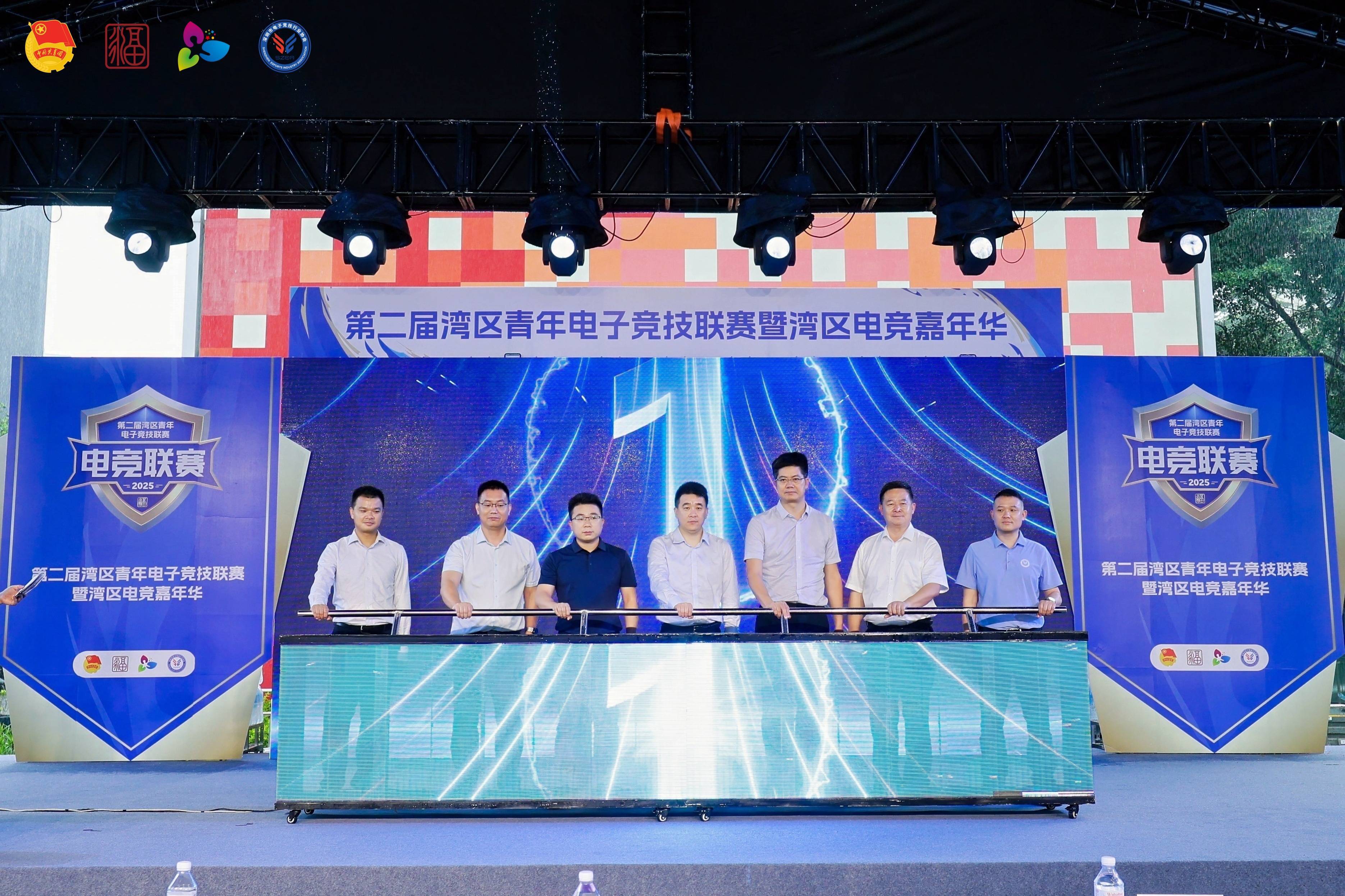
Group 1 - The second Bay Area Youth Esports League commenced on June 13 in Shenzhen, featuring over 50 teams from major cities in the Bay Area competing in a three-day preliminary round, with the finals scheduled for June 21 [1][4] - The event is guided by the Bao'an District United Front Work Department and the Bao'an District Culture, Radio, Television, Tourism, and Sports Bureau, and is co-hosted by the Bao'an District Fuyong Street Office and the Youth League Committee [4] - The league includes not only competitive events but also an esports industry forum and a cultural creative market, showcasing the diverse possibilities of the "esports+" ecosystem [4] Group 2 - The opening ceremony featured a peak match between the University of Macau team and a strong local team from Shenzhen, highlighting the event's core theme of "friendship through competition and integration through skills" [8] - Fuyong Street has been actively promoting the development of the e-commerce and esports industry, establishing a strong foundation for the esports industry chain and successfully creating a "esports+ cultural tourism" integration demonstration platform [11] - Plans are underway to develop the Bay Area Esports Center, which will serve as a new urban esports landmark, integrating esports, sports, business, and public fitness [11]
A股市场大势研判:沪指重回3400点,创业板指领涨
Dongguan Securities· 2025-06-12 02:11
Market Overview - The Shanghai Composite Index has returned to 3400 points, with the ChiNext Index leading the gains [1][4] - The market showed a rebound with all three major indices closing in the green, and the ChiNext Index leading the rise [4][6] Market Performance - The closing points and percentage changes for major indices are as follows: - Shanghai Composite Index: 3402.32, up 0.52% [2] - Shenzhen Component Index: 10246.02, up 0.83% [2] - CSI 300: 3894.63, up 0.75% [2] - ChiNext Index: 2061.87, up 1.21% [2] - STAR 50: 980.93, down 0.20% [2] - Beijing Stock Exchange 50: 1427.91, unchanged [2] Sector Performance - The top-performing sectors include: - Non-ferrous metals: up 2.21% [3] - Agriculture, forestry, animal husbandry, and fishery: up 2.02% [3] - Non-bank financials: up 1.90% [3] - Automotive: up 1.70% [3] - Media: up 1.60% [3] - The underperforming sectors include: - Pharmaceutical and biological: down 0.41% [3] - Communication: down 0.28% [3] - Beauty and personal care: down 0.10% [3] - Public utilities: up 0.09% [3] - Food and beverage: up 0.21% [3] Concept Index Performance - The leading concept indices include: - Rare earth permanent magnet: up 4.90% [3] - E-sports: up 2.72% [3] - Cobalt: up 2.36% [3] - Integrated die-casting: up 2.26% [3] - Online gaming: up 2.22% [3] - The lagging concept indices include: - China-South Korea Free Trade Zone: down 1.35% [3] - CRO concept: down 0.90% [3] - Alzheimer's concept: down 0.90% [3] - Recombinant protein: down 0.82% [3] - Controlled nuclear fusion: down 0.80% [3] Future Outlook - The market is expected to maintain a slight positive growth in exports in June and July, despite a slowdown in growth and a widening decline in exports to the U.S. [6] - The report anticipates that the trade negotiations between China and the U.S. will ease trade tensions, supporting overseas demand [6] - The focus will be on the implementation of existing economic stabilization policies and potential new policies following the political bureau meeting in July [6] - Investment strategies should consider sectors such as technology growth, new consumption, high-end manufacturing, and high-dividend defensive assets [6]
电子竞技 | 举办多项顶级电竞赛事扩大影响力 “电竞+”模式破圈推动产业多元发展 去漫展做赛事 聚“人气”添“财气”
Guang Zhou Ri Bao· 2025-05-25 19:02
Group 1 - The core strategy for the development of Guangdong's esports industry is to establish Guangzhou and Shenzhen as the "esports dual cores," focusing on hosting top-tier esports events and promoting a diverse development model through "esports+" initiatives [1] - In 2024, multiple esports events held in Guangzhou demonstrated strong professionalism and extensive coverage, with significant participation and viewership, including over 5,500 participants in the WEC2024 national finals and more than 10 million live viewers [2] - The "esports+" model in Guangzhou is expanding the boundaries of the esports industry by integrating with other sectors such as tourism and cultural exhibitions, enhancing consumer engagement and driving new consumption patterns [3] Group 2 - New policies aimed at promoting the esports industry in Guangzhou provide clear direction for development, particularly addressing the talent shortage issue, which is crucial for high-quality growth [4] - The new measures encompass various aspects of the esports ecosystem, including event organization, venue construction, and club operations, positively impacting companies across the esports industry chain [4]
广东文化产业“出新招” ,“六大领域”迎机遇
21世纪经济报道· 2025-05-24 01:10
Group 1 - The 21st China (Shenzhen) International Cultural Industries Fair (CICIF) opened on May 22, showcasing Guangdong's commitment to high-quality cultural industry development through a series of policy initiatives [1] - Guangdong released a comprehensive policy package targeting six key areas: film and television, concerts, animation, online games, esports, and live streaming [1] Group 2 - The article discusses the implications of these policies for the cultural industry, emphasizing the potential for growth and innovation within these sectors [1]