
PCB

Search documents
大成基金郭玮羚:AI依然是2026年科技主线 看好光通信、存储和PCB上游等机会
Zhi Tong Cai Jing· 2026-01-08 07:31
Group 1 - The core investment outlook for the technology sector in the first half of 2026 is expected to continue focusing on AI, with structural opportunities being stronger than overall growth, indicating increased investment difficulty compared to 2025 [1] - The overall market's investment return on AI is anticipated to be more scrutinized in 2026, following a significant rise in 2025, leading to a more optimistic outlook compared to the previous year [1] - In a stable growth environment, structural opportunities in AI investments are expected to outperform total growth, with specific sectors like optical communication, storage, and liquid cooling being highlighted for their potential [1] Group 2 - The optical communication sector is identified as a bottleneck for both training and inference in AI, with expectations for planning to begin in 2026 and potential mass application by 2027 [1] - The current tight pricing cycle in the storage sector is projected to last for 1 to 2 years due to increased demand from AI inference, which will enhance user behavior and preference memory in future models [1] - Domestic storage wafer manufacturers are likely to exceed expectations in capacity expansion, presenting a significant opportunity for domestic semiconductor equipment [2] Group 3 - Liquid cooling suppliers in China are expected to transition from validation to order acquisition and volume production in 2026, although the industry may face long-term price competition [3] - The PCB upstream sector is currently experiencing a material upgrade and price increase cycle, with domestic manufacturers likely to gain market share due to their advanced technology and stronger expansion willingness compared to overseas counterparts [4] - The overall PCB industry is showing good growth, but the difficulty of capacity expansion raises questions about the realization of overseas production capacity, with a trend towards industry decentralization expected by 2026 [4]
【公告全知道】商业航天+人形机器人+PCB+芯片+光伏!公司部分产品已在头部商业航天公司实现小批量应用并形成小幅盈利
财联社· 2026-01-07 15:34
Core Viewpoint - The article highlights significant announcements in the stock market, focusing on various sectors such as commercial aerospace, humanoid robots, PCB, chips, and photovoltaics, providing insights into potential investment opportunities and risks [1] Group 1: Commercial Aerospace and Robotics - A company has achieved small-scale application and slight profitability of some products in leading commercial aerospace firms [1] - Another company’s LCP products are suitable for low-orbit satellites in the commercial aerospace sector and have been delivered in bulk to major end customers [1] - A company utilizes metamaterials technology to enhance core components of humanoid robots, integrating with commercial aerospace and autonomous driving [1]


科技成长板块领涨,成长ETF易方达(159259)标的指数早盘涨超1%,机构称牛市基础依然坚实
Sou Hu Cai Jing· 2026-01-07 05:18
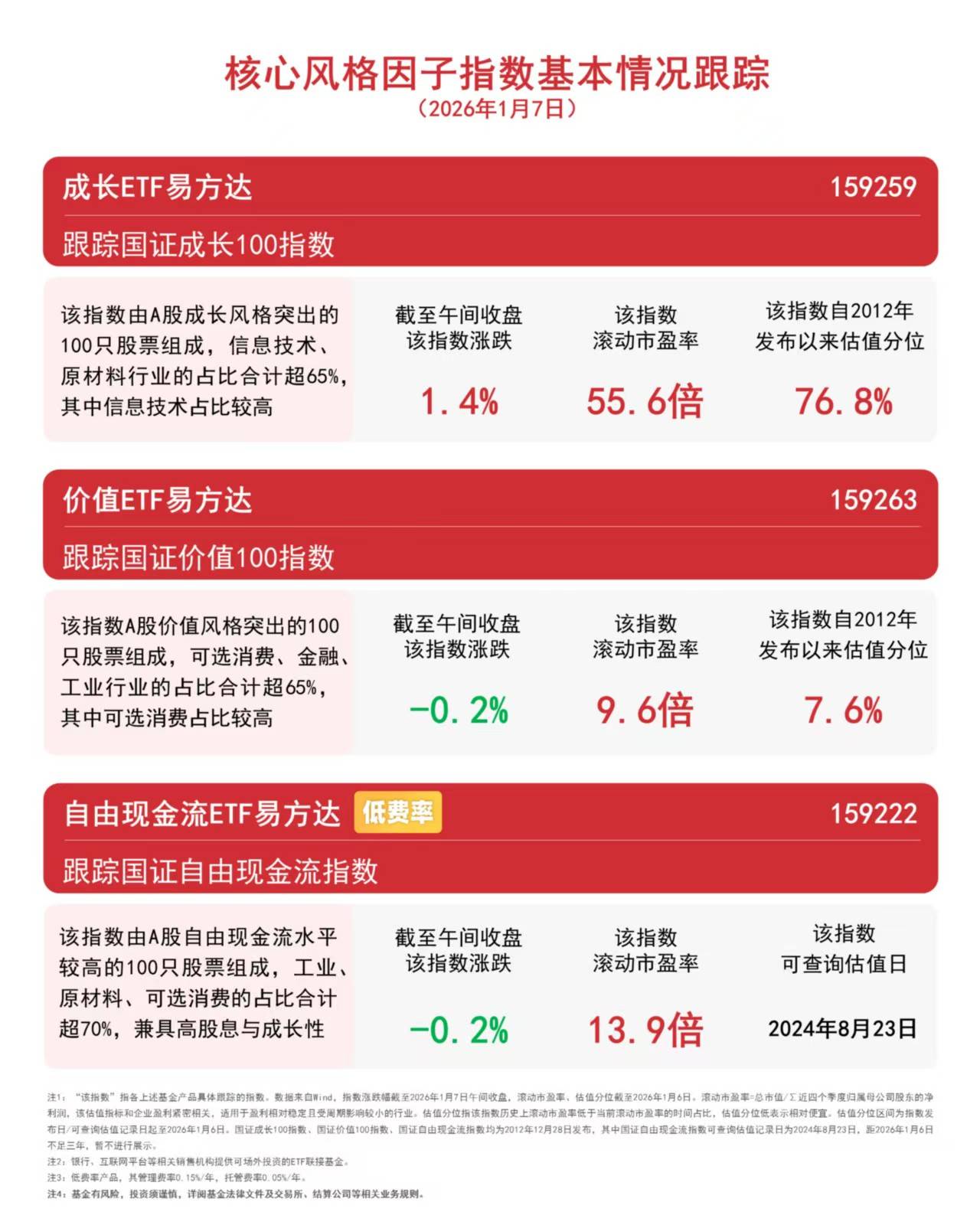
Group 1 - The core viewpoint of the article indicates that the foundation for a bull market remains solid, with potential for profit improvement and capital inflow in the annual outlook [1] - As of the midday close, the Guozheng Growth 100 Index rose by 1.4%, while the Guozheng Value 100 Index and Guozheng Free Cash Flow Index both declined by 0.2% [1] - It is suggested to increase flexible asset allocation in anticipation of the spring market, as the technology sector typically shows significant excess returns during this period [1]
2026年电子行业年度投资策略
2026-01-07 03:05
Summary of Key Points from the Conference Call Industry Overview - The conference call focuses on the **electronic industry** and its investment strategies for 2026, highlighting the growth of major cloud service providers and advancements in semiconductor technology [1][2][3]. Core Insights and Arguments Cloud Service Providers (CSPs) - North America's four major cloud service providers (Microsoft, Google, Amazon, and Meta) are expected to see their capital expenditures reach **$600 billion** in 2026, driven by profit growth and robust revenue increases [1][3][4]. - CSPs are experiencing strong cash flow growth, which supports their ongoing capital investments in AI and related technologies [3][25]. PCB Sector - The PCB sector is deemed to have reasonable valuations, with technological innovations and performance growth driving above-average industry growth. The transition from standard servers to advanced models (GB200/GB300) is expected to continue supporting profit growth through 2026 [1][5][9]. - The PCB industry is projected to see a **180% growth** in global demand by 2025, with new technologies enhancing both usage and value [1][9]. Domestic Semiconductor Developments - Domestic computing chips (e.g., Cambricon, Huawei Ascend, Baidu Kunlun) are gaining traction in cloud scenarios, aligning with domestic AI models. The expansion of storage capacity is a significant catalyst, with DDR4/DDR5/Flash prices rising substantially [1][6]. - The semiconductor equipment market is expected to benefit from increased production rates and demand for advanced process equipment, with domestic companies showing significant revenue and profit growth [3][14]. Storage Market Dynamics - The storage market is entering a "super cycle," driven by AI demand, with DRAM contract prices expected to rise by **50-60%** quarter-over-quarter and Flash prices by **30-40%** [1][7]. - Despite domestic manufacturers expanding production, overseas companies (e.g., SK Hynix, Samsung, Micron) maintain a dominant market position, leading to ongoing price increases and shortages in the short term [7]. AI Hardware and End-User Applications - The AI hardware sector is viewed positively, with significant investment opportunities in computing infrastructure, domestic breakthroughs, and the storage super cycle. Specific segments like edge AI and AI AR glasses are also highlighted as promising [2][8]. - The development of AI products, particularly AI smartphones and AR glasses, is expected to drive growth in the consumer electronics sector, with major companies like Apple planning new product launches [20][21]. Additional Important Insights - Concerns regarding the potential downgrading of specifications for certain products (e.g., Rubin) are deemed unfounded, with expectations for continued high demand and innovation in the PCB sector [10][11]. - The semiconductor equipment market is anticipated to experience significant growth, with domestic companies like North Huachuang and Zhongwei showing strong revenue increases [14][19]. - The overall investment landscape for the electronic industry in 2026 is expected to focus on AI-driven innovations and the expansion of domestic semiconductor capabilities [2][18]. Conclusion - The electronic industry is poised for substantial growth driven by advancements in AI, cloud computing, and semiconductor technologies. Key players in the PCB and semiconductor equipment sectors are expected to benefit significantly from these trends, making them attractive investment opportunities for the coming years [1][3][34].


25年中美科技股复盘-多行业联合人工智能1月报
2026-01-07 03:05
Summary of Key Points from Conference Call Records Industry Overview - **Chinese Technology Stocks**: Benefiting from hard technology and domestic substitution policies, sectors like semiconductors, AI computing power, hardware, and optical modules are thriving. AI is identified as the core theme for the year, with companies like Shenghong Technology, New Yisheng, and Zhongji Xuchuang gaining from this trend [1][4]. - **US Technology Stocks**: A concentrated market structure is evident, with only Google and Nvidia outperforming the Nasdaq index in 2025. The S&P 500 profits are overly concentrated among seven major companies, accounting for 26% of total profits [1][4]. Core Insights and Arguments - **Market Performance**: In 2025, Chinese technology stocks entered a structural bull market, with the ChiNext Index and STAR Market Index rising nearly 50% and the Hang Seng Tech Index increasing by 23.5%, outperforming the Nasdaq's 20% gain [2][4]. - **AI Industry Chain**: The AI sector is driving growth in the electronics industry, with a surge in storage demand leading to price increases. Companies like Industrial Fulian and Huanxu Electronics are showing strong performance due to their product offerings [1][5]. - **Capitalization of AI Applications**: The acceleration of AI application commercialization is expected in 2026, with significant valuation opportunities in the internet sector and related A-share companies [6][7]. Notable Events and Developments - **Key Events in December**: OpenAI's collaboration with Disney and the release of GPT-5.2 Codex are significant milestones that will influence market dynamics and drive demand for domestic computing power [10][11]. - **Ding Tai Gao Ke's Performance**: The company anticipates a net profit increase of 81% to 103% in 2025, driven by surging demand in servers and data centers [12][13]. Investment Opportunities - **Recommended Companies**: Investors are advised to focus on Baidu, Alibaba, Kuaishou, Tencent, Meitu, and others, as these companies are expected to benefit from the ongoing trends in AI and technology [9]. Additional Insights - **AI Application Growth**: The rise of AI applications, such as ChatGPT, is expected to significantly enhance productivity and market expansion, with user engagement metrics indicating strong growth [7][8]. - **Automotive Industry Policy Changes**: New subsidy policies for the automotive sector are anticipated to stimulate demand, particularly for electric vehicles, with companies like Geely and BYD recommended for investment [14][15].
连续涨停!多家上市公司紧急回应 多数强调业务尚处早期
Shang Hai Zheng Quan Bao· 2026-01-07 00:44
Core Viewpoint - The brain-computer interface (BCI) sector is experiencing a surge in investor interest, driven by technological breakthroughs and product approvals in China, alongside Elon Musk's announcement of mass production of BCI products by Neuralink within the year [1][3]. Industry Developments - The BCI industry is in a high-growth phase, supported by technological advancements, policy backing, and collaborative expectations within the robotics ecosystem, with projections indicating the global BCI medical application market could reach $40 billion by 2030 and $145 billion by 2040 [3]. - Recent breakthroughs include the first clinical trial of a fully implanted, wireless BCI product by Brain Tiger Technology, which offers hope for patients with severe paralysis [3][4]. Company Responses - Multiple A-share listed companies have responded to the heightened interest in the BCI sector, with announcements detailing their business progress in this area [1][6]. - Xiangyu Medical reported a 44% cumulative increase in stock price, emphasizing its focus on non-invasive BCI technology, while acknowledging that its products have not yet achieved significant sales [6][9]. - Weisi Medical also clarified that its BCI products are in the early market cultivation stage and primarily focus on non-invasive technologies, with limited revenue contribution [9][10]. Strategic Collaborations - Companies are actively forming partnerships to enhance their BCI capabilities. Baiyang Pharmaceutical announced a collaboration with Capital Medical University to establish a joint laboratory focused on neuroscience and BCI research [11]. - Kefu Medical disclosed investments in non-invasive BCI robotics and implantable BCI companies, aiming for business synergy [11]. Technological Innovations - Companies like Sanbo Brain Science are making progress with their BCI technologies, including the development of a flexible microelectrode system for brain signal acquisition [12]. - In the semiconductor sector, companies are producing specialized chips for high-precision measurement of biological signals, which are essential for BCI applications [13]. Market Recognition - Domestic BCI products are gaining international recognition, with Shenzhou Rehabilitation's spinal interface product receiving breakthrough therapy designation from the FDA, marking a significant achievement for Chinese companies in the BCI field [4].
连续涨停!多家上市公司紧急回应
Shang Hai Zheng Quan Bao· 2026-01-06 22:57
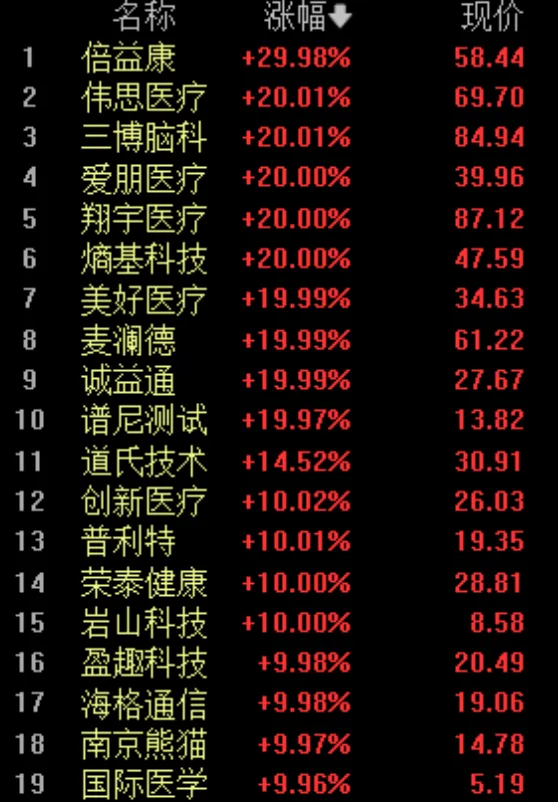
Core Insights - Elon Musk announced plans for mass production of brain-computer interface (BCI) products within the year, igniting investor enthusiasm in the BCI sector [1] - Recent technological breakthroughs and product approvals in China's BCI industry have bolstered confidence in its growth [1] Market Performance - The BCI sector experienced a surge, with multiple companies hitting their daily price limits, including BeiYikang with a 69% increase over two days [1] - Notable stock performances include: - BeiYikang: +29.98% at 58.44 - WeiSi Medical: +20.01% at 69.70 - Sanbo Brain Science: +20.01% at 84.94 - AiPeng Medical: +20.00% at 39.96 - Xiangyu Medical: +20.00% at 87.12 [2] Technological Advancements - The BCI technology is transitioning from laboratory research to clinical and industrial applications, driven by technological breakthroughs and policy support [3] - McKinsey predicts the global BCI medical application market could reach $40 billion by 2030 and $145 billion by 2040 [3] - Domestic companies like Brain Tiger Technology have achieved significant milestones, including the first clinical trial of a fully implanted, wireless BCI product [3][4] Company Developments - Several A-share listed companies have responded to the heightened interest in BCI, emphasizing their early-stage involvement in the sector [5][10] - Xiangyu Medical reported a 44% cumulative increase in stock price and highlighted its focus on non-invasive BCI technologies [6][9] - WeiSi Medical and Sanbo Brain Science both noted that their BCI products are still in the early stages of market development, with limited revenue contribution [9][10] Collaborative Efforts - Companies are forming partnerships to advance BCI research, such as Baiyang Pharmaceutical's collaboration with Capital Medical University [11] - Kuofu Medical has invested in non-invasive BCI robotics and previously in implantable BCI companies, indicating a strategic approach to market entry [11] Industry Participation - Various sectors, including semiconductors and new materials, are leveraging their technological strengths to capitalize on BCI opportunities [12][13] - Companies like Yiwai Lithium Energy and Lens Technology are collaborating with leading BCI firms to enhance their product offerings [13]
类权益月报:1月,乘势而上-20260106
HUAXI Securities· 2026-01-06 13:53
Market Overview - In December, the equity-like market transitioned from stability to volatility, with the Wind All A Index rising by 3.30% for the month and 27.65% for the year[12] - The market experienced a significant rebound starting December 17, following a brief dip on December 16, indicating strong market resilience[12] Structural Risks and Fund Sentiment - Structural risks have notably eased, with the concentration of trading volume below historical high levels, dropping to 41% on December 16[25] - Positive fund sentiment was reflected in a net inflow of 806 billion CNY into stock ETFs in December, second only to April's 1,825 billion CNY[35] Convertible Bonds - Convertible bond valuations have shown a significant upward trend, with the valuation center for bonds priced at 100 CNY rising by 2.40 percentage points to 35.77%[18] - The median price for convertible bonds is expected to remain in the 130-135 CNY range if the equity market maintains a strong oscillating pattern[4] Investment Strategy - The report suggests maintaining a bullish mindset, as the market is currently in a low implied volatility state, similar to conditions seen in July[75] - Historical trends indicate that year-end rallies often face resistance at previous highs, but successful breakouts can lead to substantial gains, as seen in 2014 and 2020[76] Risks and Considerations - The primary risk for convertible bonds lies in the potential weakness of the equity market, which could exert dual pressure on valuations and underlying stocks[63] - The report emphasizes the importance of monitoring equity market trends and expectations, as a sustained downturn could negatively impact convertible bond inflows[62]
解码金鼎资本:一单并购案背后的推手
投资界· 2026-01-06 07:45
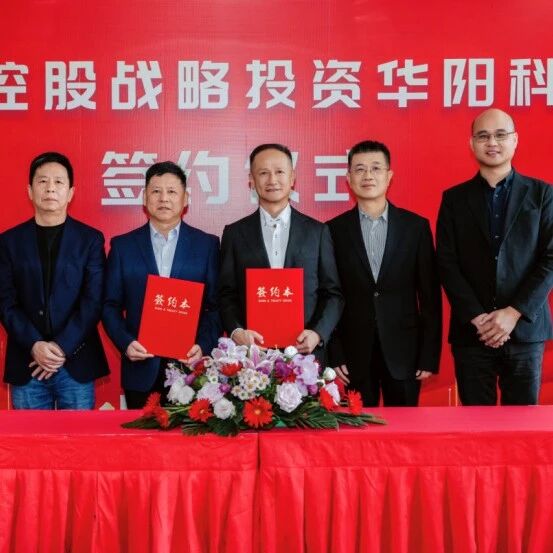
Core Viewpoint - The article discusses the strategic acquisition of Huayang Technology by Pengding Holdings, facilitated by Jinding Capital, highlighting the unique role of Jinding as a deep service provider in the M&A process [2][3][11]. Group 1: Acquisition Overview - The acquisition involves Pengding Holdings, a leading global PCB company, acquiring a controlling stake in automotive sensor company Huayang Technology for 357 million yuan [2]. - This transaction is seen as a significant step for Pengding to deepen its presence in the automotive electronics sector while providing Huayang with a pathway for accelerated growth through industrial capital [3][5]. Group 2: Role of Jinding Capital - Jinding Capital played a crucial role in the acquisition, acting not just as a financial advisor but as a deep participant throughout the entire process, from identifying the target to finalizing the deal [3][11]. - The firm has a long-standing focus on the technology sector, particularly in semiconductors, and has built a robust ecosystem through partnerships with various companies [5][11]. Group 3: Strategic Matching - The transaction was initiated by Jinding Capital's proactive identification of Huayang Technology as a strategic opportunity, rather than a direct request from either party [5][6]. - Jinding recognized the complementary strengths of Huayang's technology and Pengding's manufacturing capabilities, leading to a strategic match that benefits both parties [6][7]. Group 4: Trust Building and Long-term Vision - Jinding Capital emphasized a philosophy of "long-termism" and "win-win" thinking to bridge the trust gap between the two companies, countering common concerns in M&A about control and valuation [7][8]. - The firm focused on future value creation rather than current asset disputes, which was reflected in the mixed financing structure of the deal [8][9]. Group 5: Comprehensive Service Model - Jinding Capital has developed a standardized, full-process service model for M&A, which includes strategic alignment, due diligence coordination, and negotiation facilitation [9][10]. - This model allows for a more efficient and effective transaction process, reducing misunderstandings and enhancing communication between parties [10][12]. Group 6: Industry Impact and Future Outlook - Jinding Capital's approach is reshaping the role of financial advisors in the context of strategic M&A, moving beyond traditional arbitrage to a focus on industry logic [11][12]. - The firm has successfully executed over 20 M&A transactions with a total valuation exceeding 10 billion yuan, establishing itself as a benchmark in the industry [13].

利好突袭!外资持续看好中国股市
Zheng Quan Shi Bao Wang· 2026-01-06 02:23
Group 1 - Goldman Sachs recommends overweighting Chinese stocks for 2026, predicting annual growth of 15% to 20% for the Chinese stock market in 2026 and 2027, supported by earnings growth and valuation re-rating [1][6] - Multiple A-share companies have announced earnings forecasts for 2025, with significant expected growth: Ding Tai Gao Ke expects a profit increase of 80.72% to 102.76%, Zhongcai Technology anticipates a 73.79% to 118.64% rise, and Whirlpool forecasts a 150% increase [1][3] - The A-share market experienced a strong start in 2023, with the Shanghai Composite Index rising over 1% to surpass 4000 points, marking a 12-day consecutive increase [2] Group 2 - Analysts believe that optimism regarding AI development and expectations for more stimulus policies in China are driving capital inflows into emerging markets [4] - The weak dollar and domestic policy support are expected to attract more overseas and long-term funds into the A-share market, providing a boost from the capital side [4][6] - The market is supported by improved corporate earnings structures, particularly from advanced manufacturing and companies expanding overseas, which are driving A-share returns [4][5] Group 3 - Foreign investment firms, including UBS and Fidelity International, express strong confidence in the Chinese market for 2026, citing ongoing policy support and structural investment opportunities [6][7] - The anticipated growth drivers for the Chinese stock market include advancements in AI, support for private enterprises, and potential inflows from domestic and international institutional investors [7]