
半导体制造

Search documents
国内规模最大碳化硅半导体基地投产
Zhong Guo Hua Gong Bao· 2025-06-04 03:17
Group 1 - Changfei Advanced Semiconductor (Wuhan) Co., Ltd. has officially launched the first batch of silicon carbide wafers at its Wuhan base, which is the largest silicon carbide semiconductor base in China, contributing 30% of the domestic silicon carbide wafer production capacity [1] - Silicon carbide is a semiconductor material that can operate stably under high voltage and high temperature, making it increasingly popular in the electric vehicle industry as charging voltages and vehicle range continue to increase [1] - The Wuhan base is expected to produce 360,000 six-inch silicon carbide wafers annually, supplying the "heart" for 1.44 million electric vehicles each year, potentially breaking international monopolies and filling the gap in high-end silicon carbide device manufacturing in Hubei Province [1] Group 2 - The base has already established extensive collaborations with leading global automotive companies, with a silicon carbide chip set to undergo vehicle testing next month, and nearly 10 models currently in validation, with mass production and delivery expected in the coming months [2] - As the first hundred-billion-level semiconductor project in Hubei Donghu Science City, the Changfei Advanced Wuhan base began construction in September 2023 and achieved production readiness in just 18 months, attracting over 20 supporting enterprises across the entire third-generation semiconductor supply chain [2] - Wuhan has identified compound semiconductors as one of its six major future industry directions, planning to introduce and cultivate 100 upstream and downstream enterprises within three years, aiming to transform Wuhan Optics Valley into a "world lighthouse" in the field of compound semiconductors [2]
共封装光学,达到临界点
半导体行业观察· 2025-06-04 01:09
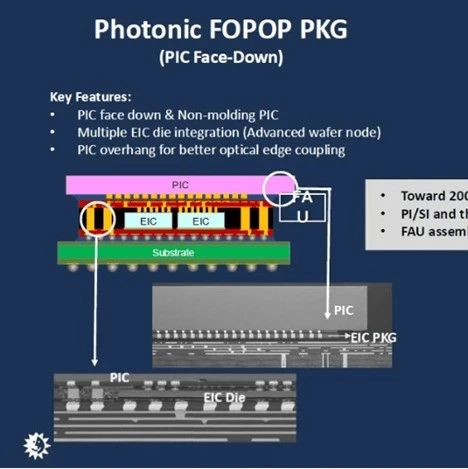
Core Viewpoint - Co-packaged optics (CPO) technology is emerging as a promising solution to enhance bandwidth and energy efficiency in data centers, particularly for applications involving generative AI and large language models. However, manufacturing challenges remain, particularly in fiber-to-photonics integrated circuit (PIC) alignment, thermal management, and optical testing strategies [1][20]. Group 1: CPO Technology and Benefits - CPO enables network switches to route signals at speeds of terabits per second while significantly improving bandwidth and reducing power consumption required for AI model training [1][20]. - The technology achieves a bandwidth density of 1 Tbps/mm, optimizing rack space in increasingly crowded data centers [1][6]. - CPO can reduce power consumption associated with high-speed data transmission from approximately 15 pJ/bit to around 5 pJ/bit, with expectations to drop below 1 pJ/bit [6][7]. Group 2: Manufacturing Challenges - Key challenges in CPO manufacturing include achieving precise alignment between fiber and PIC, which is critical for effective optical signal coupling [8]. - The most common passive alignment method is the V-groove technique, which connects the fiber directly to the PIC to minimize loss [8][9]. - Efficient coupling between standard single-mode fibers and silicon waveguides is complicated due to significant differences in size and refractive index, leading to potential light loss [8][9]. Group 3: Thermal Management - CPO systems are sensitive to temperature fluctuations caused by high-power devices like GPUs and ASICs, which can affect the performance of photonic devices [11][12]. - A temperature change of just 1°C can lead to approximately 0.1nm wavelength shift in most photonic systems, necessitating careful thermal management strategies [11][12]. - Advanced thermal interface materials and monitoring circuits are deployed to maintain PIC temperature within predefined ranges [11][13]. Group 4: Reliability Design - Ensuring reliability in CPO systems is crucial, especially with multi-chip integration, requiring known good die (KGD) testing and optical testing solutions [14][16]. - High reliability designs incorporate redundancy, such as backup lasers, to maintain operation in case of component failure [15][16]. - Integrated monitoring and self-correcting features are being developed to detect performance degradation and facilitate quick recovery [15][16]. Group 5: Integration Techniques - Both 2.5D and 3D packaging methods are utilized in CPO, with 2.5D placing electronic ICs and PICs side by side on a silicon interposer [17][18]. - 3D integration allows for optimal manufacturing processes for each chip type, enhancing performance while increasing complexity and cost [18][19]. - The integration of optical features with traditional CMOS processes is becoming more compatible, facilitating advancements in CPO technology [17][18].

台积电(TSM.N)CEO:我们从一开始就与美国商务部就关税问题保持沟通,我们对高关税会增加台积电在美国的生产成本表示担忧。
news flash· 2025-06-03 04:02
台积电(TSM.N)CEO:我们从一开始就与美国商务部就关税问题保持沟通,我们对高关税会增加台积电 在美国的生产成本表示担忧。 ...
异动盘点0603|光大控股此前投资稳定币巨头,狂飙21%;汽车股回暖、医药股走强;BioNTech获91亿天价并购
贝塔投资智库· 2025-06-03 04:00
Group 1: Stock Movements and Market Reactions - JunDa Co., Ltd. (02865) fell by 12.69% due to weak fundamentals, expected shareholder sell-off, and cash flow concerns [1] - Rongchang Biopharmaceutical (09995) rose by 4.61% after ASCO announced positive data for RC108 combined with vorinostat, enhancing its commercialization prospects [1] - Datang Gold (08299) increased by 7.27% as it partnered with Wuxi to develop AI mining applications, benefiting from gold's safe-haven demand [1] - Kanglong Chemical (03759) gained 4.35% by investing in a biopharmaceutical fund, strengthening its investment ecosystem [1] - Automotive stocks surged following a significant increase in May's new energy vehicle sales, with Li Auto (2015) rising nearly 6% and Great Wall Motors (2333) up over 3% [1] - Gold stocks led the market as COMEX gold prices returned to $3,400, with Goldman Sachs predicting $4,200, driven by geopolitical tensions [1] Group 2: Company-Specific Developments - Changfei Optical Fiber (06869) rose by 8.34% as its Wuhan base began mass production of 6-inch silicon carbide wafers, achieving a 97% yield rate [2] - China Shipbuilding Defense (00317) increased by 7.58% after securing the highest global new orders from January to April, with Q1 net profit up 1,099% [2] - Hengrui Medicine (00013) rose by 5.09% as SACHI III phase data met expectations, opening up market space for MET amplification lung cancer treatment [2] - Lepu Medical Technology (02157) gained 5.76% following positive ASCO data for its ADC drug MRG003, boosting approval expectations for nasopharyngeal carcinoma [2] - Aidi Kang Holdings (09860) increased by 5.2% after acquiring Suzhou Yuande Youqin to enhance blood disease diagnostics [2] - NetDragon (00777) rose by 5.82% due to its collaboration with Thailand on an AI education platform, attracting investor interest [2] Group 3: Notable Market Trends - China Everbright Holdings (00165) surged over 21% following the enactment of Hong Kong's stablecoin regulations, with Circle's IPO expectations boosting related equity valuations [3] - iFlytek Medical (02506) rose by 6.62% as its medical AI model demonstrated superior accuracy, supported by favorable policies [3] - MicroPort NeuroTech (02172) increased by 9.59% as it initiated clinical research on brain-machine interfaces, benefiting from policy incentives [3] - Longpan Technology (02465) rose by 14.9% after its subsidiary signed a $7.1 billion contract with Yiwei Lithium Energy for lithium iron phosphate [4] - Hansoh Pharmaceutical (03692) gained 3.85% after reaching a global licensing agreement with Regeneron, receiving an $80 million upfront payment [4] Group 4: U.S. Market Highlights - Steel and aluminum stocks surged over 10%-28% as Trump proposed increasing steel tariffs to 50%, benefiting domestic companies [5] - Blueprint Medicines (BPMC.US) rose by 26% following Sanofi's $9.1 billion acquisition, enhancing its rare disease pipeline [5] - BioNTech (BNTX.US) increased by 18% due to a collaboration with Bristol-Myers Squibb, securing a $1.5 billion upfront payment [5] - Applied Digital (APLD.US) surged by 48.46% after signing a $7 billion AI data center lease, validating its business model [5] - Tempus AI (TEM.US) rose by 15% as it launched an AI medical innovation plan, attracting investor interest [7]

台积电(TSM.N)CEO:我们完全支持可再生绿色能源,尽管这可能会略微增加我们的成本。
news flash· 2025-06-03 01:40
台积电(TSM.N)CEO:我们完全支持可再生绿色能源,尽管这可能会略微增加我们的成本。 ...
Xilinx,四十岁了
半导体行业观察· 2025-06-03 01:26
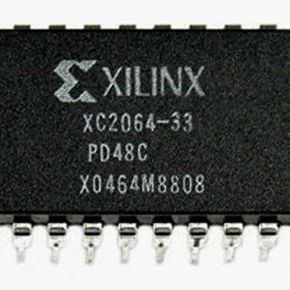
Core Viewpoint - The article discusses the evolution and significance of Field Programmable Gate Arrays (FPGAs) developed by Xilinx, highlighting their impact on the semiconductor industry and their integration into various applications, especially in AI and edge computing [2][6]. Group 1: Historical Development - Xilinx introduced the first FPGA chip, XC2064, in June 1985, featuring 600 gates and a frequency of 70MHz, marking a significant advancement in semiconductor technology [2]. - The company was founded in 1984 by Ross Freeman, Bernard Vonderschmitt, and James Barnett, aiming to create programmable logic devices using transistor arrays instead of traditional methods [4]. - Xilinx pioneered a foundry-less model, collaborating with companies like UMC and IBM for chip manufacturing [4]. Group 2: Leadership and Growth - The leadership of Xilinx has seen several transitions, with notable CEOs including Willem Roelandts and Moshe Gavrielov, who emphasized the company's continuous innovation and market expansion [5][6]. - The acquisition by AMD in February 2022 positioned Xilinx within AMD's Adaptive and Embedded Computing Group, enhancing its capabilities in embedded x86 processors [6]. Group 3: Technological Advancements - FPGAs allow for real-time reconfiguration, enabling changes in device functionality even during operation, which is particularly beneficial for applications in AI and edge computing [6][8]. - The technology has found early adoption in the fintech sector, leveraging real-time processing capabilities [8]. - Xilinx's FPGAs are also gaining traction in the automotive industry, particularly in areas like embedded AI and advanced driver-assistance systems (ADAS) [8]. Group 4: Future Prospects - The company is advancing its technology with plans for 20nm components by 2040 and continuing production of older components, indicating a long-term commitment to supporting legacy devices [12]. - Xilinx is focusing on integrating advanced process technologies, including 6nm and 2nm nodes, to enhance its FPGA offerings [11][12].

两大巨头退出碳化硅市场 环球晶、汉磊、嘉晶迎转单
Jing Ji Ri Bao· 2025-06-02 22:28
Core Viewpoint - The exit of major players like Wolfspeed and Renesas from the silicon carbide (SiC) market may create new opportunities for Taiwanese manufacturers such as GlobalWafers, Hanlei, and Jiajing to capture market share and benefit from order transfers [1][2]. Group 1: Market Dynamics - Wolfspeed, a global leader in SiC, is reportedly seeking bankruptcy protection, while Renesas, a key player in automotive semiconductors, plans to abandon SiC production due to market conditions [1]. - The slowdown in the electric vehicle market and increased production from Chinese SiC manufacturers have led to oversupply and price declines, prompting Renesas to dissolve its SiC team and adjust its production plans [1]. - The potential bankruptcy of Wolfspeed and Renesas's exit could accelerate structural adjustments in the SiC industry, leading to a healthier market order [1]. Group 2: Opportunities for Taiwanese Manufacturers - GlobalWafers aims to position itself as a reliable SiC supplier outside of mainland China, with plans to launch 12-inch SiC wafers this year at competitive costs [2]. - Hanlei and Jiajing are also expected to benefit from the order transfer wave, with Hanlei focusing on power semiconductor wafer foundry services and producing SiC and GaN semiconductors [2]. - Hanlei has partnered with World Advanced to enter the 8-inch SiC semiconductor wafer manufacturing market, further expanding its capabilities [3].
斯达半导体股份有限公司关于2024年度利润分配方案调整每股分配金额的公告
Shang Hai Zheng Quan Bao· 2025-06-02 21:36
● 本次调整原因:由于公司2021年股票期权激励计划第三期自主行权,公司总股本发生变化。公司按照 现金分配总额不变的原则,相应调整每股分配金额。 斯达半导体股份有限公司(以下简称"公司")分别于2025年04月25日召开第五届董事会第八次会议、第 五届监事会第八次会议和2025年05月28日召开2024年年度股东大会,会议审议通过了《关于公司2024年 度利润分配的议案》,同意公司拟以实施权益分派的股权登记日总股本为基数,每10股派发现金红利 6.36元(含税),截至2024年12月31日,公司总股本为239,469,014股,预计派发现金红利152,302,292.90 元(含税)。如在实施权益分派股权登记日前,因可转债转股/回购股份/股权激励授予股份回购注销/重 大资产重组股份回购注销等致使公司总股本发生变动的,公司拟维持分配总额不变,相应调整每股分配 金额。具体内容详见公司分别于2025年04月26日、05月29日披露的《关于2024年度利润分配预案的公 告》(公告编号:2025-007)、《2024年年度股东大会决议公告》(公告编号:2025-017)。 自2025年01月01日至本公告披露日,由于公 ...

TSV,可以做多小?
半导体行业观察· 2025-06-01 00:46
Core Viewpoint - The article discusses the advancements in semiconductor technology, particularly focusing on the challenges and innovations related to Through-Silicon Vias (TSV) in 3D chip stacking, emphasizing the importance of managing thermal and mechanical stresses to enhance chip performance [1][2][7]. Group 1: TSV Technology and Challenges - TSVs are ultra-thin copper wires, typically 5 micrometers in diameter, used for vertical connections between stacked silicon chips, enabling high-speed communication and increased bandwidth [1]. - One of the main challenges of advanced 3D packaging is heat dissipation, as densely packed materials generate more heat than traditional 2D chips, leading to potential deformation and reliability issues [1][2]. - Simply reducing the size of TSVs and increasing their quantity does not necessarily improve chip speed due to the physical interactions and thermal issues that arise as the wires shrink [1]. Group 2: Research Findings - Research conducted by Purdue University focused on the thermal-mechanical performance of TSVs, with prototypes created featuring TSV diameters of 4 micrometers, 2 micrometers, and 1 micrometer [2][6]. - The study revealed that as TSV size decreases, the microstructure of copper changes significantly, affecting its elastic response and potentially increasing strength [2][7]. - The research indicates a non-monotonic relationship between equivalent stress and TSV diameter, suggesting that smaller TSVs may exhibit higher elasticity compared to larger counterparts due to reduced average grain size in copper [7]. Group 3: Future Implications - Understanding the thermal-mechanical response of TSVs is crucial for the development of high-density 3D integrated circuits in future logic and memory computing architectures [7]. - The findings aim to assist chip manufacturers in improving their designs and materials, ultimately leading to faster and more reliable semiconductor devices [6][7].
普冉股份: 普冉半导体(上海)股份有限公司关于2024年限制性股票激励计划首次授予第一个归属期符合归属条件的公告
Zheng Quan Zhi Xing· 2025-05-30 12:25
Core Points - The company has announced the first vesting period of its 2024 restricted stock incentive plan, with a total of 139,584 shares eligible for vesting [1][12][19] - The incentive plan includes performance-based criteria tied to revenue growth, with specific targets set for each vesting period [1][12][14] - The initial grant of restricted stock was adjusted from 483,727 shares to 677,218 shares, with the grant price revised from 46.32 CNY to 23.19 CNY per share [11][19][20] Group 1: Incentive Plan Details - The incentive plan involves granting 34.5519 million shares, representing 0.46% of the company's total share capital [1][9] - The vesting schedule is divided into four periods, each with a 25% vesting rate, contingent on meeting specific performance targets [1][12] - The performance targets for the first vesting period require a revenue growth rate of at least 45% compared to 2023 [1][12][14] Group 2: Approval and Implementation - The plan was approved during the company's board meetings held on March 29, 2024, and subsequent meetings confirmed the eligibility of the incentive recipients [6][7][12] - The company conducted a self-inspection regarding insider trading prior to the announcement and found no violations [7][19] - The board and supervisory committee have verified the qualifications of the incentive recipients and the fulfillment of vesting conditions [12][16][19] Group 3: Financial Implications - The company will account for the fair value of the restricted stock on the grant date and will not reassess it until the vesting date [17][18] - The vesting of restricted stock is not expected to have a significant impact on the company's financial status or operational results [18][19] - The adjustments made to the incentive plan comply with relevant regulations and are not expected to harm the interests of the company or its shareholders [19][20]
