数据中心

Search documents
280亿,张一鸣供应商卖了
3 6 Ke· 2025-09-11 09:14
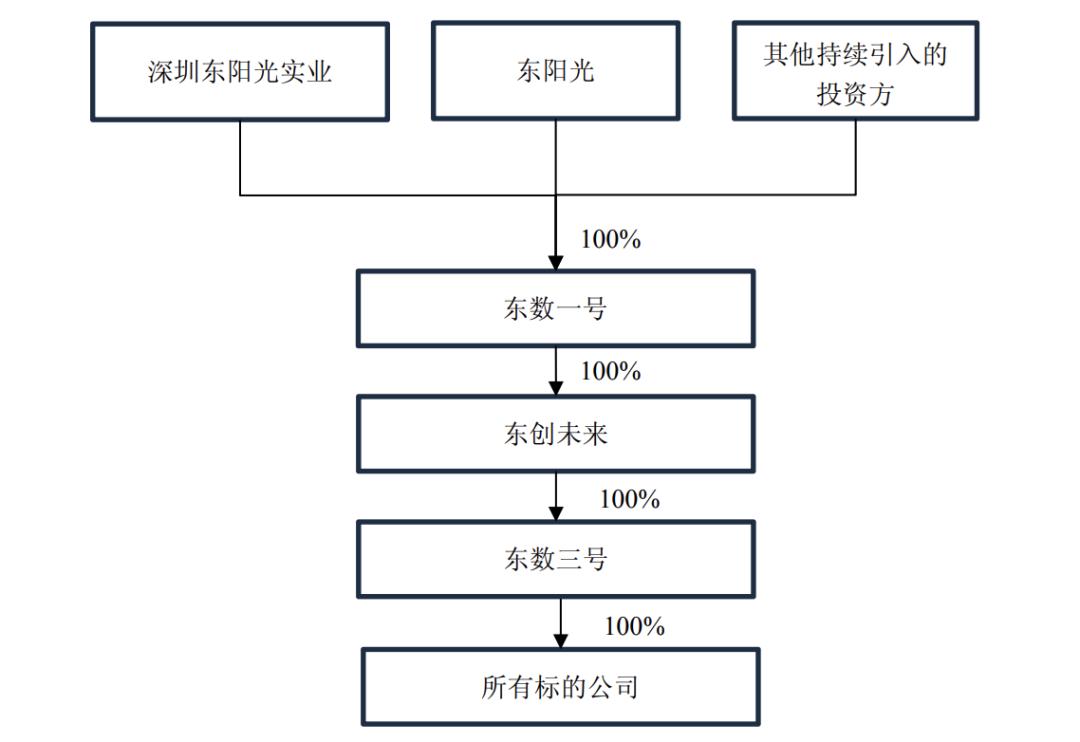
投资界消息,9月10日晚,贝恩资本宣布旗下数据中心投资组合公司WinTriX DC Group,已与深圳市东阳光实业发展有限公司(简称"东阳光集团")牵头 的银团达成协议,出售其中国业务(即"秦淮数据")的全部股权。 40亿美元,约280亿人民币,一举成为中国数据中心迄今规模最大的并购交易。 复盘下来,贝恩资本的一系列运作令人印象深刻:六年前以约10亿元收购秦淮数据股份,随后再度注资5.7亿美元,后来秦淮数据顺利在美IPO,贝恩收回 了大部分投资。2023年8月,贝恩宣布对秦淮数据私有化,以228亿收购其全部在外发行股份。 两年过去,贝恩资本又以280亿卖掉手中股权,落袋为安。 280亿并购诞生 PE漂亮退出 根据公告,这笔交易分为三部分——首先,上市公司东阳光及其控股股东深圳东阳光实业分别与东数一号签署《增资协议》,拟对其增资35亿元、40亿 元;增资完成后,分别持有东数一号46.67%、53.33%的股权。 第二步,东数一号将上述资金注入全资子公司上海东创未来数据有限责任公司(下称"东创未来")。与此同时,东创未来已与银团签署并购贷款合同。 最后,东创未来拟将出资款及相关贷款出资至其全资子公司东数三号,由 ...

科士达(002518):数据中心和户储都已进入向上的经营趋势
CMS· 2025-09-11 08:56
Investment Rating - The report maintains a "Strong Buy" rating for the company with a target price corresponding to a PE of 34.7X and 26.6X for 2025 and 2026 respectively [2][4]. Core Views - The company has entered an operational turning point, driven by the dual engines of data centers and household energy storage, with an upward trend expected. As a leading player in the domestic data center market, the company is set to benefit directly from the global expansion of intelligent computing capital expenditures. Although the solar storage business faces revenue pressure due to reliance on major clients and an industry downturn in 2024, a gradual recovery is anticipated as the market rebounds [1][6]. Financial Data and Valuation - Total revenue for 2023 is projected at 5,440 million, with a year-on-year growth of 24%. However, a decline of 24% is expected in 2024, followed by a recovery with growth rates of 16%, 21%, and 20% in 2025, 2026, and 2027 respectively [3][21]. - Operating profit is expected to be 1,018 million in 2023, with a significant drop to 469 million in 2024, before recovering to 690 million in 2025 and reaching 1,035 million by 2027 [3][21]. - The net profit attributable to the parent company is forecasted to be 845 million in 2023, declining to 394 million in 2024, and then recovering to 579 million in 2025, with further growth to 869 million by 2027 [3][21]. - The company’s earnings per share (EPS) is projected to be 1.45 in 2023, dropping to 0.68 in 2024, and then increasing to 0.99 in 2025 [3][22]. Business Performance - In the first half of 2025, the company reported revenue of 2,163 million, a year-on-year increase of 14.35%, with a net profit of 255 million, up 16.49% year-on-year. The gross profit margin was 28.99%, reflecting a decrease of 3.01 percentage points [6][9]. - The data center business generated revenue of 1,329 million in the first half of 2025, with a year-on-year growth of 7.89%. The gross margin for this segment was 33.26% [6][9]. - The renewable energy business achieved revenue of 813 million in the first half of 2025, marking a year-on-year increase of 26.38%, although it faced short-term fluctuations due to inventory issues with European clients [6][9]. Market Position and Strategy - The company has established itself as a key supplier for major internet clients such as ByteDance, Alibaba, and JD.com, indicating strong market positioning [6][9]. - The introduction of integrated cooling solutions for high-density scenarios, such as the AquaCube series, highlights the company's innovation in addressing market needs [6][9]. - The company is accelerating its overseas expansion, particularly in the UPS market, which is expected to enhance its prospects in the HVDC segment [6][9].

280亿,张一鸣供应商卖了
投资界· 2025-09-11 08:44
Core Viewpoint - Bain Capital has successfully exited its investment in Qinhuai Data through a significant transaction valued at approximately 40 billion USD, marking it as the largest data center acquisition in China to date [4][10]. Group 1: Transaction Details - Bain Capital's Qinhuai Data was sold for 28 billion RMB, following a series of strategic investments and a successful IPO in the US [4][10]. - The transaction involves three main steps: capital injection into Dongshu No. 1, funding allocation to its subsidiary Dongchuang Future Data, and the final acquisition of 100% equity in Qinhuai Data by Dongshu No. 1 [6][8]. - The deal structure allows for future capital operations while ensuring control remains with the acquirer, Dongyangguang Group [9]. Group 2: Company Background - Qinhuai Data, founded in 2015, has developed a robust infrastructure network across key regions in China, focusing on data center construction [12][13]. - The company has heavily relied on ByteDance as its primary customer, with revenue contribution from ByteDance increasing from 33% in 2018 to 82% by 2020 [13][14]. - The exit of founder Ju Jing in late 2022 marked a significant transition for Qinhuai Data, which was then fully controlled by foreign capital until its recent acquisition by a domestic entity [14]. Group 3: Industry Insights - The data center market is poised for explosive growth, driven by the increasing demand for AI capabilities, with projections indicating a market size increase of 2,740 billion USD (approximately 19 trillion RMB) from 2025 to 2029 [18]. - Major investment firms, including Prologis and Blackstone, are actively investing in data center assets, reflecting a strong belief in the future demand for computational power [17][18]. - The competition in AI is fundamentally a competition for computational power, making data centers critical infrastructure for the industry [16].



明阳智能:探索绿电与算力深度融合 深化AI+能源技术布局
Zheng Quan Shi Bao Wang· 2025-09-11 05:50
Core Insights - Mingyang Smart Energy has launched a 200MW integrated source-network-load-storage project in Zhangjiakou in collaboration with Alibaba, which aims to provide stable green electricity for data centers [1][2] - The project is expected to generate an annual electricity output of 797 million kilowatt-hours and is part of China's broader push for green energy in data centers, targeting an 80% green electricity usage by 2025 [2][3] - The rapid growth of artificial intelligence is driving the demand for computing power, necessitating a shift towards greener energy solutions [1][3] Group 1 - The Zhangjiakou project represents the first green electricity and computing power integration initiative in the region, with a total investment of 1.4 billion yuan and covering an area of 52.5 acres [2] - The project is positioned as a key component of China's "East Data West Computing" initiative, enhancing local economic development while optimizing energy supply mechanisms [2] - Mingyang Smart Energy is also advancing its AI technology initiatives, launching a smart wind farm management platform that integrates digital and intelligent solutions for operational efficiency [3][4] Group 2 - The "Mingzhi Consultant" intelligent system utilizes domestic large models to create a specialized cognitive framework for wind turbine operations, significantly reducing operational costs and improving efficiency [4] - By mid-2025, the platform has been deployed in over ten wind farms, achieving notable improvements in electricity generation and operational reliability [4] - The company aims to further integrate AI technology in the energy sector, focusing on innovative strategies for offshore, desert, and integrated energy solutions [5]

东阳光拟与母公司共同增资合资公司用于收购秦淮数据中国100%股权
Zheng Quan Ri Bao Wang· 2025-09-11 03:48
Core Viewpoint - Dongyangguang Technology Holdings Co., Ltd. plans to acquire 100% equity of Qinhuai Data's China operations for 28 billion yuan, reflecting strong market recognition of Qinhuai Data's asset value and the national computing power strategy [1][2]. Group 1: Acquisition Details - The acquisition involves Dongyangguang and its parent company, Dongyangguang Group, along with other investors, forming a buyer consortium to pay 28 billion yuan in cash to Bain Capital for Qinhuai Data [1]. - Qinhuai Data is recognized as a leading operator of large-scale data centers in China, ranking first in three sub-indices: intensive development, international layout, and green low-carbon initiatives, and second overall in scale index nationally [1]. Group 2: Competitive Landscape - The bidding for Qinhuai Data attracted multiple strong contenders, including various industrial capital, internet companies, and local state-owned platforms, indicating high market interest [1]. - Dongyangguang Group stood out in the competition due to its comprehensive advantages in industrial synergy, technological accumulation, and long-term value creation [2]. Group 3: Strategic Advantages - Dongyangguang Group's technological reserves in liquid cooling materials and supercapacitors provide core solutions for high-density AI computing scenarios, creating a business loop that competitors find hard to replicate [2]. - The integration of Dongyangguang's clean energy resources from its production bases in Inner Mongolia and Hubei with Qinhuai Data's facilities is expected to enhance strategic advantages and significantly reduce core costs [2]. Group 4: Future Outlook - The acquisition aligns with the national "East Data West Calculation" strategy and aims to build a unified national computing power network [3]. - Post-acquisition, the focus will be on ensuring business continuity and stability while creating a digital infrastructure ecosystem that integrates green electricity, hardware technology, computing power, AI, and operations [3]. - The strategic acquisition marks a significant leap for Dongyangguang from traditional manufacturing to intelligent manufacturing and digital economy, laying a foundation for future industrial ecosystems [3].
280亿元,国内数据中心行业最大规模并购诞生
中国基金报· 2025-09-11 02:24
Core Viewpoint - The acquisition of Qinhuai Data China by Dongyangguang and its controlling shareholder marks the largest merger and acquisition transaction in China's data center industry to date, valued at 28 billion yuan [2][6]. Group 1: Acquisition Details - Dongyangguang and Shenzhen Dongyangguang Industrial Development Co., Ltd. plan to jointly increase capital in Yichang Dongshu No.1 Investment Co., Ltd. with amounts of 3.5 billion yuan and 4 billion yuan respectively [5]. - The acquisition will be executed through Dongshu No.3, a wholly-owned subsidiary of Dongshu No.1, which will acquire 100% of Qinhuai Data China's business operations [5][6]. Group 2: Strategic Importance - The chairman of Shenzhen Dongyangguang Industrial Development stated that this acquisition is a key step in integrating into the national "East Data West Computing" strategy, aiming to build a nationwide integrated computing power network [7]. - Post-acquisition, the focus will be on ensuring business continuity and stability while leveraging resources in liquid cooling materials, AIDC, and clean energy to create a collaborative digital infrastructure ecosystem [7]. Group 3: Financial Performance of Qinhuai Data - Qinhuai Data China reported a revenue of 6.048 billion yuan and a net profit of 1.309 billion yuan for 2024, with revenue of 2.608 billion yuan and net profit of 745 million yuan for the first five months of 2025 [8]. Group 4: Synergy and Collaboration - The collaboration will focus on four dimensions: regional layout, technology, product, and demand [8]. - In regional layout, Dongyangguang will provide low-cost green electricity and expansion bases leveraging its clean energy reserves in various locations [8]. - In technology integration, Dongyangguang's expertise in liquid cooling materials will combine with Qinhuai Data's business to create a comprehensive solution for the industry [8]. - In product and R&D collaboration, Dongyangguang's electronic components technology will complement Qinhuai Data's high-density AI server technology [9]. - In demand collaboration, Qinhuai Data will support Dongyangguang's rapidly growing intelligent robotics business by providing customized data center design and operation services [9].

速递丨字节核心算力供应商秦淮数据300亿卖身东阳光,贝恩投资两年净赚70亿
Sou Hu Cai Jing· 2025-09-11 02:14
Core Viewpoint - The sale of Bain Capital's data center assets in China to Shenzhen Dongyangguang Industrial Co., Ltd. for approximately $4 billion reflects the growing interest in data center assets as "certain growth" targets driven by the AI wave [1] Group 1: Transaction Details - Shenzhen Dongyangguang, as the parent company of Guangdong Dongyangguang Technology Holdings, leads a consortium to acquire the Chinese assets of WinTrix DC Group, which was formerly known as Qinhuai Data Group [1] - The consortium includes various institutional investors such as insurance companies and local government funds [1] - Dongyangguang will invest 3.5 billion yuan and 4 billion yuan into the joint venture to complete the acquisition, holding approximately 46.7% of the joint company [2] Group 2: Market Dynamics - The competition for Qinhuai Data's assets is intense, with local buyers attracted to its strategic locations in Beijing, the Yangtze River Delta, and the Guangdong-Hong Kong-Macau Greater Bay Area, as well as the market potential driven by the AI boom [1][2] - The demand for computing power due to AI training and applications has transformed data centers from a niche infrastructure into highly attractive "computing infrastructure" [1] Group 3: Financial Performance - Qinhuai Data's revenue from ByteDance accounted for 81.7%, 83.2%, and 86.3% from 2020 to 2022, indicating a strong customer base [1] - Dongyangguang's stock price has increased by 113% this year, with a market capitalization of approximately $10.2 billion [2] Group 4: Geopolitical Context - Bain Capital's decision to sell at a high point follows its privatization of Qinhuai Data for $3.2 billion in March 2023, reflecting a strategy to mitigate risks associated with US-China tech decoupling [2] - The investment trends of global tech giants like Meta, Amazon, Microsoft, and Google highlight the strategic importance of data centers as critical resources in the AI era [3]
东数西算+双碳战略共振,东阳光参股秦淮数据中国
Xin Lang Cai Jing· 2025-09-11 02:12
Group 1 - Oracle's stock price surged over 40%, reaching a market value of $950 billion, marking its largest single-day increase since 1992, driven by a 359% year-on-year increase in remaining performance obligations and significant AI cloud orders [1] - Oracle's cloud revenue is projected to exceed $144 billion by 2030, solidifying its position as a leader in the AI computing market [1] - Multiple institutions have raised Oracle's target price, with the highest reaching $400 [1] Group 2 - Dongyangguang announced a plan to invest 7.5 billion yuan and acquire Qinhuai Data's China operations for 28 billion yuan, marking a record in China's data center industry mergers and acquisitions [1][2] - This acquisition signifies Dongyangguang's transition from high-end manufacturing to digital infrastructure and enhances its AI industry chain layout [1][3] - The transaction structure involves precise capital coordination, with Dongyangguang and its controlling shareholder contributing funds to achieve collaborative control [1][2] Group 3 - Qinhuai Data's China operations are highly sought after due to its contracts with ByteDance, and Dongyangguang's competitive edge lies in its clean energy reserves and technological advantages in liquid cooling materials [3] - Dongyangguang reported a net profit of 613 million yuan in the first half of 2025, a 170.57% year-on-year increase, indicating strong profitability [3] - Qinhuai Data's assets totaled 21.87 billion yuan, with a net profit of 745 million yuan in the first five months of 2025, showcasing its quality and growth potential [3] Group 4 - The merger reflects Dongyangguang's strategic upgrade from "selling products" to "controlling ecosystems," focusing on four areas of synergy: energy efficiency, technology integration, product collaboration, and demand alignment [4] - This strategic move aligns with national policies promoting AI and digital economy development, enhancing local computing infrastructure and ensuring digital sovereignty [4] - The integration of Dongyangguang's advantages with Qinhuai Data's resources positions the company to capitalize on the increasing demand for computing power and liquid cooling technology [4] Group 5 - The merger between Dongyangguang and Qinhuai Data achieves a rare vertical integration of "green electricity-liquid cooling-computing power," which is expected to drive high-quality growth for Dongyangguang [5]
280亿元,国内数据中心行业最大规模并购诞生
Zhong Guo Ji Jin Bao· 2025-09-11 01:52
Core Viewpoint - The acquisition of Qinhuai Data China by Dongyangguang and its controlling shareholder marks the largest merger and acquisition transaction in China's data center industry to date, valued at 28 billion yuan [1][2]. Group 1: Acquisition Details - Dongyangguang and Shenzhen Dongyangguang Industrial Development Co., Ltd. plan to jointly increase capital in Yichang Dongshu No.1 Investment Co., Ltd. with amounts of 3.5 billion yuan and 4 billion yuan respectively [2]. - The acquisition will be executed through Dongshu No.3, a wholly-owned subsidiary of Dongshu No.1, which will acquire 100% of Qinhuai Data China's business operations [2]. - Following the transaction, Dongyangguang will become a shareholder of Dongshu No.1 and indirectly hold shares in Qinhuai Data China [2]. Group 2: Strategic Importance - The chairman of Shenzhen Dongyangguang emphasized that this acquisition is a key step for the group to integrate into the national "East Data West Computing" strategy and to support the construction of a unified national computing network [3]. - The acquisition aims to ensure business continuity and stability while leveraging both companies' resources in liquid cooling materials, AIDC, and clean energy [3]. Group 3: Financial Projections - Qinhuai Data China is projected to generate revenues of 6.048 billion yuan and a net profit of 1.309 billion yuan in 2024, with revenues of 2.608 billion yuan and a net profit of 745 million yuan in the first five months of 2025 [3][4]. Group 4: Synergy and Collaboration - The collaboration will focus on four dimensions: regional layout, technology, product, and demand [3]. - Dongyangguang will provide low-cost green electricity and expansion bases for Qinhuai Data China, leveraging clean energy reserves in various regions [3]. - The integration of Dongyangguang's liquid cooling technology with Qinhuai Data China's operations aims to create an efficient full-stack solution for the industry [4]. - The demand for computing power from Dongyangguang's intelligent robotics business is expected to grow exponentially, with Qinhuai Data China providing customized data center services to meet these needs [4].

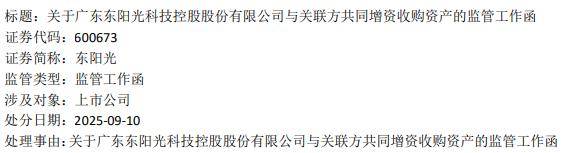
多层嵌套!东阳光参与收购秦淮数据中国100%股权,上交所火速发出监管工作函
Sou Hu Cai Jing· 2025-09-11 01:51
Core Viewpoint - Dongyangguang plans to jointly increase capital in a joint venture to acquire 100% equity of Qinhuai Data China for a total transaction price of 28 billion RMB [1][2][5]. Group 1: Transaction Details - Dongyangguang and Shenzhen Dongyangguang Industrial signed a capital increase agreement with Dongshu No. 1, intending to increase capital by 3.5 billion RMB and 4 billion RMB, respectively, resulting in shareholdings of 46.6654% and 53.3332% in Dongshu No. 1 after completion [2]. - The capital raised will be invested in Dongchuang Future Data Co., Ltd., which will then use the funds to acquire 100% equity of Qinhuai Data China through its subsidiary Dongshu No. 3 [2][3]. - The acquisition price for Qinhuai Data China is set at 28 billion RMB, with the transaction involving multiple entities including Dongyangguang, its affiliates, and subsidiaries [2][3][6]. Group 2: Company Background and Market Position - Qinhuai Data is a leading independent data center operator in China, previously listed in the US, and was privatized by Bain Capital at a price of 8.60 USD per ADS, totaling approximately 22.8 billion RMB [5]. - The company specializes in large-scale computing infrastructure solutions and has established a significant presence in key regions such as the Beijing-Tianjin-Hebei area, Yangtze River Delta, and Guangdong-Hong Kong-Macao [5]. - The market value of Qinhuai Data's business in China was assessed at approximately 29.09 billion RMB as of May 31, 2025 [6]. Group 3: Strategic Value of the Transaction - The acquisition allows Dongyangguang to quickly enter the high-growth data center sector and optimize its asset and resource allocation [7]. - The collaboration with Qinhuai Data is expected to enhance Dongyangguang's capabilities in liquid cooling technology, electronic components, and intelligent robotics, strengthening its competitive position in the digital economy infrastructure supply chain [7].