稀土

Search documents
美国稀土股跌幅一度达16%,创6月17日以来最大跌幅
Mei Ri Jing Ji Xin Wen· 2025-10-15 14:25
每经AI快讯,10月15日,美国稀土股跌幅一度达16%,创6月17日以来最大跌幅。 ...
美股稀土概念股回调
Ge Long Hui A P P· 2025-10-15 14:12
Core Insights - AREC shares fell over 20% [1] - Critical Metals shares declined more than 15% [1] - USAR shares dropped over 13% [1] Company Performance - AREC experienced a significant decline in stock price, indicating potential issues or market reactions affecting investor confidence [1] - Critical Metals also faced a notable drop, suggesting challenges within the company or sector that may impact future performance [1] - USAR's stock performance reflects a downward trend, which could signal underlying problems or market sentiment affecting the company [1]

巴西稀土矿不跟美国合作,而签长期合同给中国,原因很实在
Sou Hu Cai Jing· 2025-10-15 13:48
Core Viewpoint - The recent fluctuations in the S&P 500 index have brought China's upgraded rare earth control measures back into the global spotlight, highlighting the strategic importance of rare earths in international trade and geopolitical dynamics [2] Control Upgrade - The most notable breakthrough in rare earth control is the implementation of the "extraterritorial jurisdiction" mechanism, requiring any product containing 0.1% or more of Chinese-origin rare earths to obtain Chinese export permission, regardless of the company's location [4] - This regulation is based on China's dominant position in the rare earth industry, controlling 70% of global extraction, 90% of separation processing, and 93% of magnet manufacturing, making it difficult for other countries to operate independently of Chinese technology [4][6] - The newly enacted "Rare Earth Management Regulations" categorize rare earths as strategic resources, implementing an export approval system that requires detailed reporting of end-users and purposes [4] Precision Strategy - The control measures have led to a "protect civilian use, block military use" strategy, allowing short-term licenses for civilian needs while rejecting all military-related applications [6] - Reports indicate that the U.S. military supply chain is already feeling the pressure from shortages of rare earth magnets, which are critical for defense technologies like the F-35 fighter jet [8] Strategic Value - Rare earths are essential for modern industries, including electronics and defense, serving as a critical component in various technologies [10][11] - The demand for rare earths is surging due to the acceleration of the energy transition and advancements in industries such as robotics and wind power [13] U.S. Dilemma - Following China's control measures, the U.S. has threatened to impose high tariffs, revealing its reliance on Chinese processing technology despite having its own rare earth resources [15] - The U.S. is attempting to build alternative supply chains by partnering with third-party resource countries, but challenges remain, particularly with Brazil's Serra Verde mine, which has long-term contracts with Chinese companies [17] Supply Chain Challenges - The U.S. Department of Energy estimates that achieving rare earth self-sufficiency could take at least 10 years and would be 3-5 times more expensive than sourcing from China [19] - China's control measures are seen as a legitimate defense against unilateral protectionism, redefining the rules of engagement in the global supply chain [19] Dialogue Opportunities - Despite the tensions, both China and the U.S. have left room for dialogue, with provisions in the control measures allowing for emergency medical and disaster relief needs [21] - The rare earth competition reflects a broader adjustment in global supply chain rules, with China leveraging its industrial advantages to establish a more equitable framework [21][23]


稀土巨头,前三季度盈利预增7倍
2 1 Shi Ji Jing Ji Bao Dao· 2025-10-15 13:15
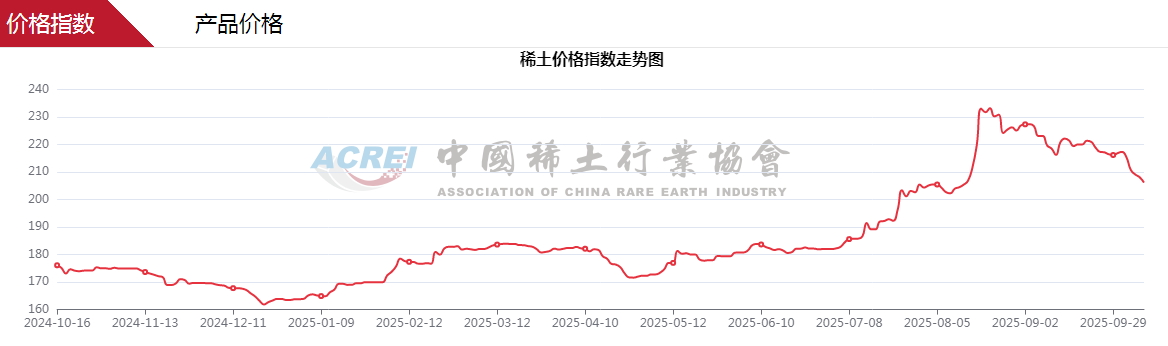
Core Viewpoint - The significant increase in rare earth prices has led to a substantial rise in Shenghe Resources' profits for the third quarter, with net profit expected to reach between 740 million to 820 million yuan, marking an increase of 696.82% to 782.96% year-on-year [1][5]. Group 1: Profit Forecast and Market Dynamics - Shenghe Resources anticipates a net profit of 740 million to 820 million yuan for the first three quarters, exceeding most institutional expectations [1][5]. - The rise in rare earth prices is attributed to changes in market supply and demand, with the rare earth price index reaching a peak of 233 points in mid-August, a 43% increase compared to the end of 2024 [1][3]. - The third quarter is projected to be the most profitable for Shenghe Resources, with a net profit of approximately 400 million yuan, a 100% increase from the previous quarter [5][7]. Group 2: Business Structure and Revenue Contribution - Shenghe Resources operates in both rare earth and zirconium-titanium sectors, covering a complete industrial chain from mining to deep processing, with rare earth products accounting for 83% of total revenue [5][12]. - The company's profit trend is closely linked to rare earth price movements, with net profits of 168 million yuan and 209 million yuan in the first two quarters of the year [5][12]. Group 3: Market Valuation and Future Expectations - As of October 15, the stock price of Shenghe Resources was 26.26 yuan per share, with a projected annualized valuation of around 65 times based on a profit expectation of 700 million yuan for 2025 [9][10]. - If profits exceed 1 billion yuan, the annualized valuation could decrease to approximately 45 times [9][10]. - The company has seen a significant stock price increase of 157.32% this year, although it faces valuation pressures similar to its peers in the rare earth sector [10][11]. Group 4: Acquisition and Future Projects - Shenghe Resources completed the acquisition of Peak Rare Earths Limited for approximately 920 million yuan, reflecting the rising market prices for rare earth products [11][12]. - The core asset of Peak is the Ngualla rare earth project in Tanzania, which is expected to start production in the first quarter of 2027, potentially generating a net profit of 390 million yuan [12].


MP Materials Stock Could Snap a 4-Day Winning Streak. What's Driving Shares.
Barrons· 2025-10-15 13:07
Core Viewpoint - A sector rally was intensified following Trump's announcement regarding the U.S. response to China's new export restrictions on rare-earth minerals [1] Group 1 - The U.S. plans to retaliate against China's export restrictions, which has led to increased optimism in the sector [1] - The announcement from Trump has triggered a rally in the sector, indicating potential investment opportunities [1]

稀土巨头,前三季度盈利预增7倍
21世纪经济报道· 2025-10-15 12:08
Core Viewpoint - The article highlights the significant profit increase of Shenghe Resources in the third quarter, driven by the rise in rare earth prices, with net profit expected to reach between 740 million to 820 million yuan, marking a year-on-year increase of 696.82% to 782.96% [1][6]. Group 1: Profit Performance - Shenghe Resources anticipates a net profit of 740 million to 820 million yuan for the first three quarters, significantly exceeding most institutional expectations [1]. - The company's net profit for the third quarter is projected to be around 400 million yuan, a 100% increase compared to the previous quarter [6]. - The overall profit trend of Shenghe Resources is closely linked to the fluctuations in rare earth prices, which have shown a notable upward trend since July [5][8]. Group 2: Market Dynamics - The rare earth price index, tracked by the China Rare Earth Industry Association, rose sharply from 160-180 points in the first half of the year to a peak of 233 points in mid-August [3][5]. - The demand for rare earth products has improved due to changes in market supply and demand dynamics, contributing to the price increase [1][5]. Group 3: Business Structure and Future Outlook - Shenghe Resources operates a comprehensive industrial chain in rare earths, covering mining, smelting, separation, and deep processing, with rare earth metals and oxides accounting for 83% of its revenue in 2024 [5]. - The company recently completed the acquisition of Peak Rare Earths Limited, which includes a significant asset in Tanzania, expected to enhance future earnings [12][13]. - The project is projected to yield a net profit of approximately 390 million yuan, contingent on successful production timelines and resource recovery rates [13].
一边收监管“黄牌”,一边夺A股成交额冠军,北方稀土股价新高背后,关联交易存隐忧
3 6 Ke· 2025-10-15 10:43
Core Viewpoint - Northern Rare Earth is facing regulatory scrutiny due to non-operational fund occupation and information disclosure violations, while simultaneously experiencing a surge in stock prices, reaching a four-year high [1][10]. Regulatory Issues - On October 13, Northern Rare Earth received a warning letter from the Inner Mongolia Securities Regulatory Bureau, highlighting issues of "non-operational fund occupation" and "information disclosure violations" that have persisted for over five years [2][3]. - From February 2019 to December 2024, a subsidiary of Northern Rare Earth, Baogang Group Energy Conservation and Environmental Protection Technology Co., Ltd., issued a total of 8.9485 million yuan to an affiliated company, Baolan Environmental Protection Co., Ltd., for non-operational expenses [2][3]. - The warning letter has been recorded in the securities and futures market integrity file, and the Shanghai Stock Exchange has also issued regulatory warnings to the company and its affiliates [2][3]. Business Model and Transactions - Northern Rare Earth relies heavily on Baogang Group for its raw materials, with 100% of its rare earth ore sourced from Baogang Group's listed company [5]. - In the first half of 2025, transactions with Baogang Group accounted for 24.9% of Northern Rare Earth's total operating costs, amounting to 4.335 billion yuan [5][6]. - The pricing mechanism for rare earth ore transactions between Northern Rare Earth and Baogang Group has raised concerns regarding market fairness and potential internal bias [8]. Financial Performance - In the first half of this year, Northern Rare Earth reported a revenue of 18.866 billion yuan, a year-on-year increase of 45.24%, and a net profit of 931 million yuan, up 1951.52% [11]. - The company anticipates a net profit of 1.51 billion to 1.57 billion yuan for the first three quarters of 2025, representing a year-on-year increase of 272.54% to 287.34% [11]. - Despite regulatory challenges, the stock price reached a high of 61.69 yuan per share on October 14, marking the highest level since September 14, 2021 [12]. Market Context - The Chinese government has implemented export controls on rare earth materials, which could significantly impact global supply and demand dynamics [13]. - Analysts are optimistic about the sector's valuation due to these export controls and the anticipated performance of industry companies [13].


稀土价格指数年内大涨43%,盛和资源预计前三季度盈利暴增7倍
2 1 Shi Ji Jing Ji Bao Dao· 2025-10-15 10:34
Core Viewpoint - Shenghe Resources (600392) has reported a significant increase in profits for the third quarter, driven by rising rare earth prices, with net profit expected to be between 740 million to 820 million yuan, representing a year-on-year increase of 696.82% to 782.96% [1][2]. Group 1: Financial Performance - The company anticipates that the third quarter will be its most profitable, with a total net profit of 800 million yuan for the first three quarters, exceeding most institutional expectations [2][4]. - The rare earth price index, tracked by the China Rare Earth Industry Association, saw a notable increase, reaching a peak of 233 points in mid-August, up nearly 43% from the end of 2024 [2][7]. - Shenghe Resources' net profit for the third quarter is projected to be around 400 million yuan, a 100% increase from the previous quarter [11]. Group 2: Market Dynamics - The demand for rare earth products has improved due to changes in market supply and demand dynamics, leading to higher product prices compared to the previous year [1][5]. - The company's business structure, which includes both light and heavy rare earth operations, allows it to benefit significantly from the price trends of rare earth products [9]. Group 3: Future Outlook - Analysts expect that as the company has already met its profit expectations, there may be upward adjustments to its annual profit forecasts by institutions [4][14]. - The company has completed a significant acquisition of Peak Rare Earths Limited, which is expected to enhance its future earnings, with the Ngualla rare earth project projected to contribute significantly to profits starting in 2027 [19][20]. - If the project achieves higher resource recovery rates, there is potential for further improvements in production and cost [21].
股市面面观 | 124家公司已发三季报预告 46家公司预计净利同比翻番
Zhong Guo Jin Rong Xin Xi Wang· 2025-10-15 10:33
Core Viewpoint - The A-share market experienced a collective rise on October 15, with the Shanghai Composite Index closing above the 3900-point mark, driven by positive earnings reports from the first batch of listed companies for Q3 2025, where 11 out of 12 companies reported year-on-year profit growth [2] Group 1: Earnings Reports - Among the 12 companies that released Q3 earnings, 11 reported a year-on-year increase in net profit, while 8 saw revenue growth [2] - Dao's Technology led with an expected net profit growth of 182.45%, followed by Iole Home with a 70.92% increase [2] - As of October 15, 124 A-share companies had released Q3 earnings forecasts, with 99 expecting profit growth and 9 anticipating declines [2][7] Group 2: Major Companies - The top five companies by net profit size include New China Life Insurance, Luxshare Precision, Salt Lake Industry, Shandong Gold, and Yuexiu Capital, with New China Life expected to report a net profit of between 29.986 billion and 34.122 billion yuan [3] - Shandong Gold is projected to have a net profit growth of 83.9% to 98.5%, attributed to rising gold prices [3] - Yuexiu Capital anticipates a net profit increase of 70% to 80%, benefiting from a stable capital market and growth in its renewable energy business [3] Group 3: Loss Forecasts - Chongqing Steel and Andar Technology are expected to report net losses exceeding 200 million yuan, but both companies are projected to achieve significant year-on-year reductions in losses [4] - Chongqing Steel forecasts a net profit growth of 82.96% to 84.44%, while Andar Technology expects a growth of 49.89% to 61.46% [4] Group 4: High Growth Companies - Among the 124 companies that released earnings forecasts, 46 are expected to have net profit growth exceeding 100%, representing 37% of the total and 46% of those predicting profit increases [7] - Notably, companies like Xianda Co., Chuangjiang New Materials, and Yinglian Co. are projected to have extraordinary growth rates, with Xianda Co. expecting a net profit increase of 2807% to 3211% [5][6]

稀土暗战之下,包头、赣州“闷声发大财”?
Sou Hu Cai Jing· 2025-10-15 08:56
Core Viewpoint - The recent announcement by China's Ministry of Commerce and Customs to impose export controls on rare earth materials and technologies signifies an escalation in the US-China trade conflict, with potential implications for the rare earth industry and related cities in China [1][12]. Group 1: Rare Earth Industry Overview - China holds a dominant position in the global rare earth market, with 49% of the world's rare earth reserves and 69% of annual production, controlling over 90% of global separation capacity [4][12]. - Rare earth elements, comprising 17 metals, are essential for various high-tech applications, including military, aerospace, and consumer electronics, often referred to as "industrial gold" due to their critical role in modern technology [3][4]. Group 2: Economic Impact on Key Cities - Baotou, known for its significant rare earth reserves, has seen its GDP grow from 329.3 billion in 2021 to 457.5 billion in 2024, ranking 71st nationally, with a GDP growth rate of 10.2% in 2023 [9][11]. - Ganzhou, a major producer of medium and heavy rare earths, has attracted the establishment of the China Rare Earth Group, marking it as the first central enterprise headquarters in Jiangxi province, contributing to its economic growth [11][12]. Group 3: Market Reactions and Future Prospects - Following the export control announcement, rare earth stocks surged, with companies like Northern Rare Earth and China Rare Earth reaching their upper trading limits, indicating strong market confidence [11][12]. - The export control measures are seen as both an opportunity and a challenge for the industry, potentially enhancing China's pricing power while necessitating advancements in domestic rare earth application technologies [12].