跨境电商

Search documents
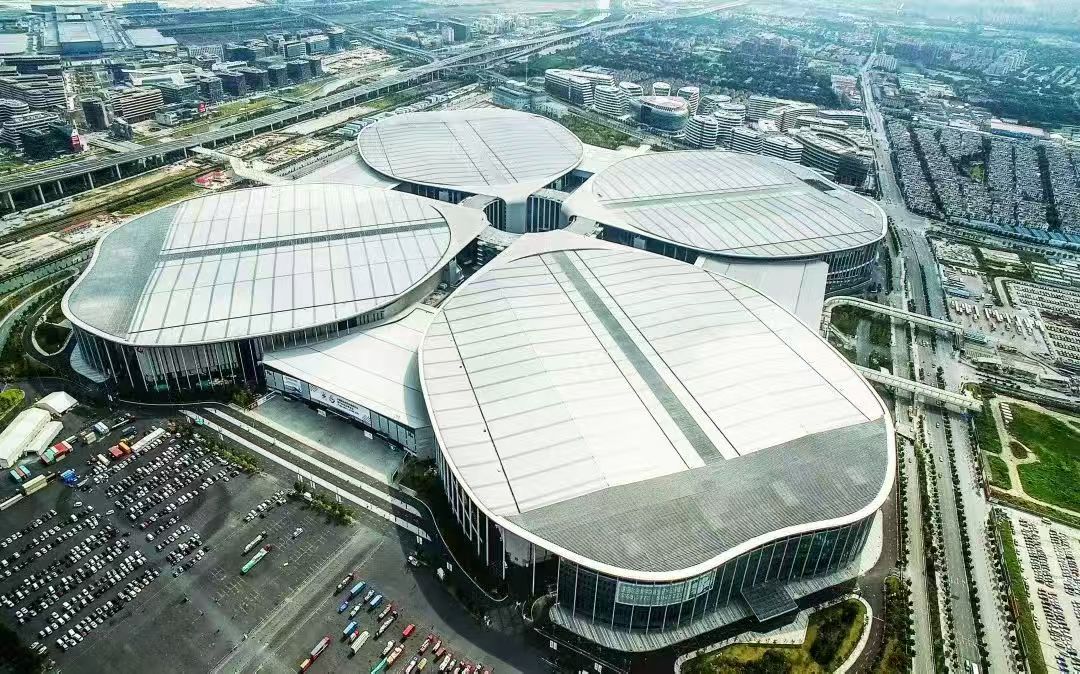
虹桥全域纳入!上海自贸区联动创新区添新“成员”
Guo Ji Jin Rong Bao· 2025-10-15 13:42
Core Viewpoint - The establishment of the Hongqiao International Central Business District as a key area in the second batch of Shanghai Free Trade Zone innovation zones is expected to enhance its role in international trade and cross-border e-commerce, aligning with national strategies and promoting high-quality development [1][3]. Group 1: Strategic Importance - The Hongqiao International Central Business District is located at the economic center of the Yangtze River Delta, serving multiple national strategies including the Belt and Road Initiative and the China International Import Expo [3]. - It is the only area among the eight key regions to be included in its entirety, covering a total area of 151.4 square kilometers [3]. Group 2: Development Focus - The district will focus on enhancing investment and trade facilitation, optimizing financial and data cross-border services, deepening technological innovation reforms, and ensuring talent and land resource support [5]. - Specific initiatives include pilot programs for digital regulation of cross-border e-commerce, establishment of pre-positioned warehouses for exports, and the setup of customs technical service points [5]. Group 3: Future Directions - The district aims to leverage its advantages in transportation, exhibitions, business, and technological innovation to become a core hub for international trade and a service area for enterprises going global [6]. - It will also seek to align with international high-standard economic and trade rules, promoting the replication of free trade zone reform experiences and fostering high-quality development [6].

税务风暴来袭!2025新规下的跨境电商卖家生存指南
Sou Hu Cai Jing· 2025-10-15 11:35
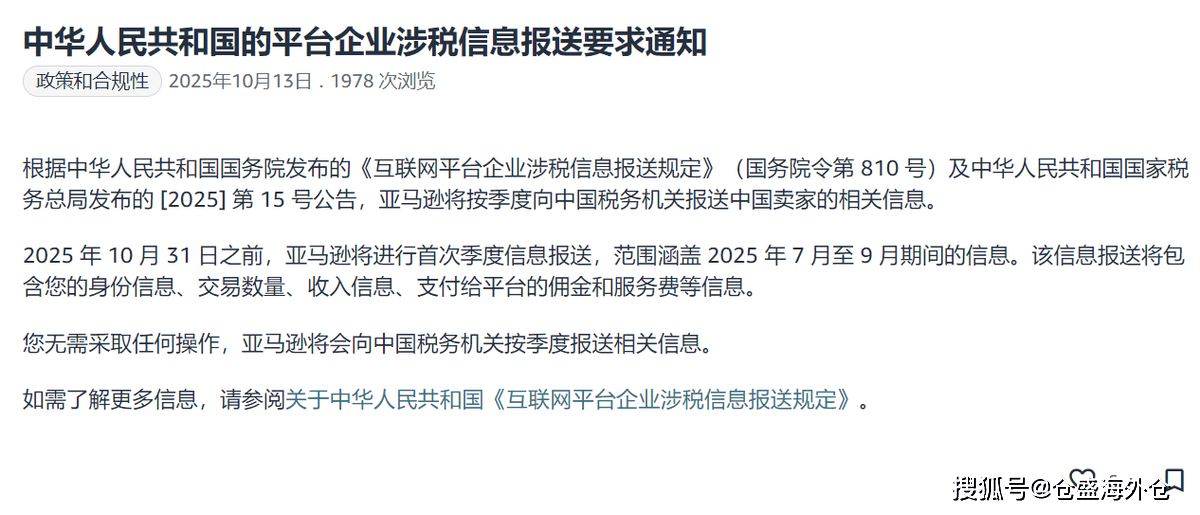
Core Insights - The cross-border e-commerce industry is entering a new era of strict regulation as major platforms like Amazon implement tax reporting mechanisms for sellers, marking a shift from a gray area of "no tax ID, no declaration" to a compliance-focused environment [1][3]. Group 1: Regulatory Changes - Amazon announced it will begin quarterly reporting of seller identity and transaction data to Chinese tax authorities by October 31, covering the period from July to September 2025 [6]. - The State Council issued regulations on tax information reporting by internet platform enterprises, establishing legal obligations for platforms to report tax-related information [3][6]. - Multiple platforms, including Walmart, Shopify, and TikTok, have completed their tax registrations, indicating widespread compliance across the industry [8][5]. Group 2: Reporting Requirements - The information to be reported includes seller identity details, transaction volumes, revenue, and fees paid to the platform [6][8]. - Specific identity information required includes seller names, social credit codes, personal identification numbers, addresses, and bank account details [9]. - Revenue information must encompass total income, refund amounts, net income, transaction order counts, and platform fees [10]. Group 3: Compliance and Penalties - Platforms that fail to comply with reporting requirements may face tiered penalties, including business suspension and restrictions on issuing invoices [18][21]. - Sellers who do not report accurately may be subject to tax recovery, late fees, and potential upgrades to their tax status if their sales exceed certain thresholds [23][24]. - The new regulations necessitate that sellers maintain accurate and up-to-date records, ensuring compliance with tax obligations [26][27]. Group 4: Industry Impact - The shift towards tax transparency is expected to significantly affect millions of Chinese cross-border e-commerce sellers, making compliance a critical aspect of their business operations [29]. - Companies are encouraged to optimize their tax structures and consider registration in regions with favorable tax policies to mitigate tax burdens [28][29].

红筹上市梦碎只因少做一步ODI备案?
Sou Hu Cai Jing· 2025-10-15 11:06
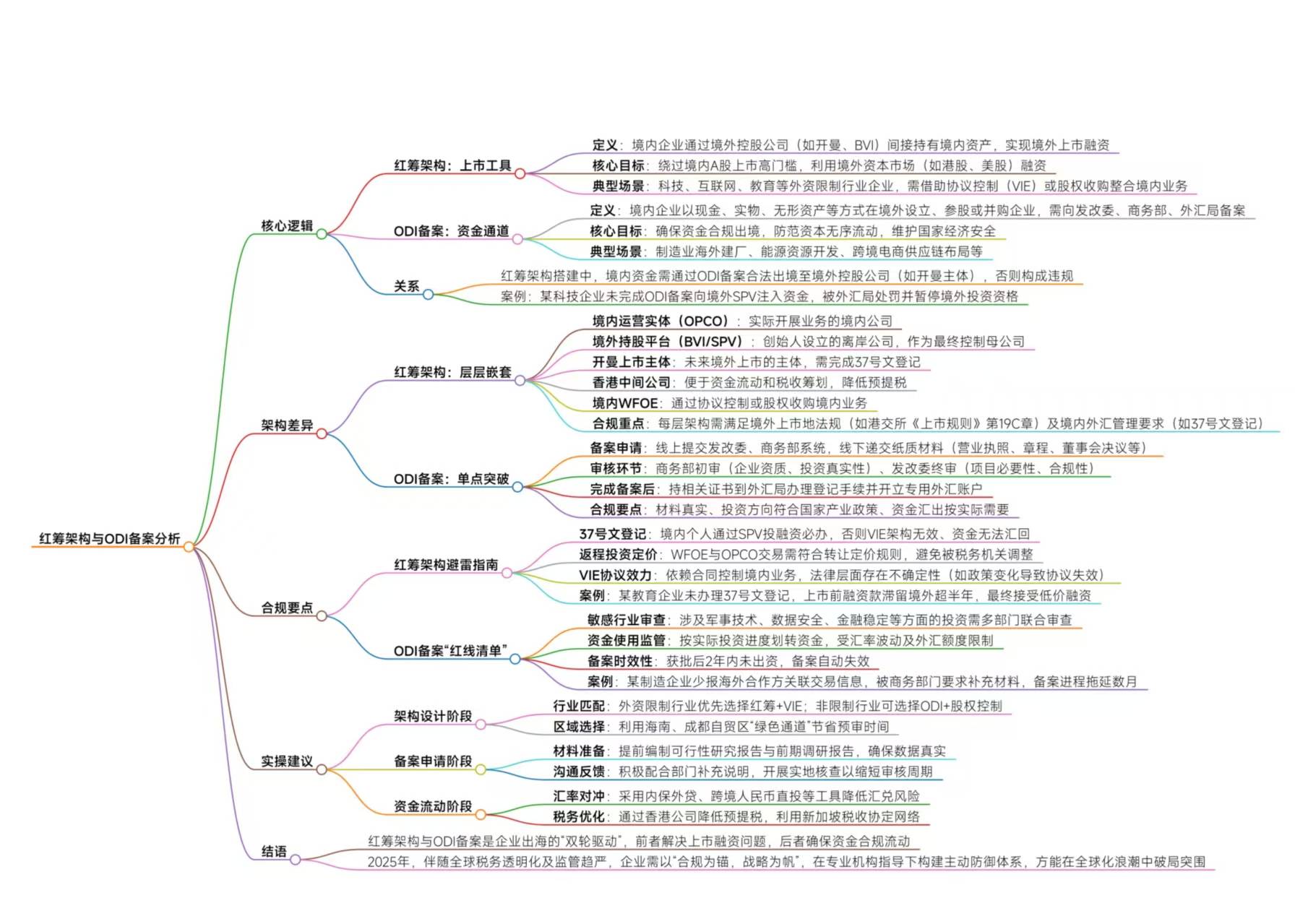
Core Viewpoint - The red-chip structure and ODI (Overseas Direct Investment) filing are independent yet closely related processes essential for companies seeking to go public and ensure compliant capital outflow [1][16]. Red-chip Structure - Definition: Domestic enterprises utilize offshore holding companies (e.g., Cayman Islands, BVI) to indirectly hold domestic assets for overseas listing and financing [3]. - Core Objective: To bypass the high barriers of domestic A-share listings and leverage overseas capital markets (e.g., Hong Kong, US) for financing [3]. - Typical Scenarios: Companies in restricted sectors such as technology, internet, and education use variable interest entity (VIE) agreements or equity acquisitions for domestic business integration [3]. ODI Filing - Definition: Domestic enterprises establish, invest in, or acquire foreign companies using cash, physical assets, or intangible assets, requiring filing with the National Development and Reform Commission (NDRC), Ministry of Commerce, and State Administration of Foreign Exchange [4]. - Core Objective: To ensure that funds can exit the country legally, prevent capital disorder, and maintain national economic security [5]. - Typical Scenarios: Overseas factory establishment in manufacturing, resource development in energy, and cross-border e-commerce supply chain layout [5]. Relationship Between Red-chip Structure and ODI Filing - Relationship: In establishing a red-chip structure, domestic funds must go through ODI filing to legally exit to the offshore holding company; failure to do so results in violations [6]. - Example: A technology company that failed to complete ODI filing before injecting funds into an offshore SPV faced penalties from the foreign exchange bureau, leading to a suspension of its overseas investment qualifications [6]. ODI Filing Process Design - Filing Application: Online submission to NDRC and Ministry of Commerce systems, followed by offline submission of physical documents (e.g., business license, articles of association, board resolutions) [9]. - Review Stages: Initial review by the Ministry of Commerce (enterprise qualifications, investment authenticity) and final review by NDRC (project necessity, compliance) [9]. - Post-filing: After completing the filing, companies must register with the foreign exchange bureau and open a dedicated foreign exchange account [9]. Compliance Risks in Red-chip Structure - Compliance Focus: Each layer of the structure must meet the regulations of the overseas listing location (e.g., Hong Kong Stock Exchange Listing Rules) and domestic foreign exchange management requirements [11]. - 37 Document Registration: Required for domestic individuals investing through SPVs; failure to register invalidates the VIE structure and prevents fund repatriation [12]. - Case Study: An education company that did not complete the 37 document registration faced delays in financing due to funds being stuck overseas for over six months [12]. Compliance Risks in ODI Filing - Risk Areas: Risks exist in the architecture design phase, filing application phase, and fund flow phase [14]. - Sensitive Industry Review: Investments in military technology, data security, and financial stability require joint reviews by multiple departments [15]. - Timeliness of Filing: If funds are not contributed within two years of approval, the filing automatically loses its validity [15]. Strategic Recommendations - Companies should adopt a compliance-centric approach while leveraging strategic frameworks to navigate the complexities of red-chip structures and ODI filings [16]. - Emphasis on proactive defense mechanisms and professional guidance is crucial for success in the global market [16].
星徽股份跌11.26%,成交额4.64亿元,近3日主力净流入1123.34万
Xin Lang Cai Jing· 2025-10-15 07:43
Core Viewpoint - The stock of Xinghui Co., Ltd. experienced a significant drop of 11.26% on October 15, with a trading volume of 464 million yuan and a market capitalization of 3.534 billion yuan [1] Company Overview - Xinghui Co., Ltd. is primarily engaged in the research, production, and sales of precision metal connectors, as well as its own brand of smart home appliances and consumer electronics [4][8] - The company's main products include slides, hinges, pull baskets, sinks, faucets, and various consumer electronics [4][8] - As of June 30, the number of shareholders increased by 8% to 27,100, while the average circulating shares per person decreased by 7.4% to 13,104 shares [8] Financial Performance - For the first half of 2025, the company reported a revenue of 726 million yuan, a year-on-year decrease of 9.38%, and a net profit attributable to shareholders of -10.137 million yuan, a decline of 208.43% [8] - The company has cumulatively distributed 71.16 million yuan in dividends since its A-share listing, with no dividends distributed in the last three years [9] Business Segments - In 2024, overseas revenue accounted for 67.99% of the company's total revenue, benefiting from the depreciation of the RMB [3] - The smart home appliance segment generated sales revenue of 240 million yuan, representing 37.14% of the company's e-commerce business revenue [4] Market Activity - The stock's average trading cost is 7.45 yuan, with the current price near a support level of 7.48 yuan, indicating potential for a rebound if this support holds [7] - The main capital inflow for the day was -24.50 million yuan, with a net inflow of 1.22 billion yuan in the industry, indicating a lack of clear trends in capital movement [5][6]

华凯易佰涨2.28%,成交额6756.34万元,近5日主力净流入-1976.44万
Xin Lang Cai Jing· 2025-10-15 07:43
Core Viewpoint - The company, Huakai Yibai, is experiencing growth in its cross-border e-commerce business, benefiting from the depreciation of the RMB and leveraging technologies such as AIGC and VR to enhance operational efficiency and service offerings [2][3]. Group 1: Company Overview - Huakai Yibai Technology Co., Ltd. was established on February 23, 2009, and listed on January 20, 2017. The company focuses on spatial environment art design and provides comprehensive exhibition services for large exhibition halls, with a primary revenue source from cross-border e-commerce [7]. - As of June 30, 2025, the company reported a revenue of 4.538 billion yuan, representing a year-on-year growth of 28.97%, while the net profit attributable to shareholders decreased by 72.69% to 36.74 million yuan [7]. Group 2: Business Segments - The company's revenue composition includes 92.16% from cross-border e-commerce, 7.71% from comprehensive cross-border e-commerce services, and 0.18% from other business activities [7]. - The company is actively involved in multiple platforms and regions for its cross-border e-commerce exports, primarily targeting Europe and North America [2]. Group 3: Technological Integration - The company utilizes self-developed systems incorporating AIGC technology to automate product copy generation, significantly reducing labor costs and improving operational efficiency [2]. - Huakai Yibai's VR technology is applied in exhibition setups, focusing on environmentally friendly design and exploring VR content creation and interactive platforms [2]. Group 4: Market Performance - On October 15, the stock price of Huakai Yibai increased by 2.28%, with a trading volume of 67.5634 million yuan and a market capitalization of 4.359 billion yuan [1]. - The average trading cost of the stock is 11.41 yuan, with the current price near a support level of 10.63 yuan, indicating potential for a rebound if this support holds [6].

上海构建自贸区制度创新复制推广常态化机制
Di Yi Cai Jing Zi Xun· 2025-10-15 06:29
Core Viewpoint - The Shanghai Free Trade Zone (FTZ) is expanding its innovative institutional framework by establishing additional "8+1" linked innovation zones, aiming to enhance the effectiveness of institutional innovation and promote economic development across various sectors [1][2]. Group 1: Expansion of Innovation Zones - The Shanghai Municipal Development and Reform Commission announced the establishment of eight key areas and five national economic and technological development zones as part of the second batch of linked innovation zones [1]. - The total area covered by the first batch of "6+1" linked innovation zones is approximately 193 square kilometers, including six administrative districts and six comprehensive bonded zones [2]. Group 2: Reform Initiatives - The linked innovation zones will implement two lists of reform tasks: a replication and promotion list with 57 items and a self-reform list with 29 items tailored to specific zones [1][4]. - The focus is on accelerating the promotion of institutional innovation results and supporting the development of distinctive industries in each zone [3]. Group 3: Areas of Focus for Reforms - The replication and promotion list covers six major areas: investment, trade, finance, cross-border data, scientific innovation, and talent [5]. - Specific initiatives include allowing foreign investment institutions to apply for domestic financial licenses and supporting the establishment of wholly foreign-owned hospitals [5]. - In the scientific innovation sector, the promotion of a "package system" for fiscal research project funding is highlighted, allowing greater autonomy in the distribution of technology transfer revenue [6]. Group 4: Targeted Reforms in Specific Zones - Each linked innovation zone will have targeted reforms; for example, the Hongqiao International Central Business District will focus on cross-border e-commerce, while the Shanghai International Tourism Resort will aim to create new tourism consumption scenarios [7]. - The Longjing innovation zone will emphasize the development of platform economies and the transformation of breakthrough technological achievements in electronic materials [7]. Group 5: Mechanisms for Implementation and Evaluation - A mechanism for regular replication and promotion will be established, with differentiated annual assessments for the first and second batches of linked innovation zones [8]. - The aim is to ensure that reform policies are effectively implemented and to promote successful experiences and typical cases across the city [8].
“数字化、国际化、现代化、低碳化”义乌全球数贸中心打造全球数贸新标杆
Zhong Guo Fa Zhan Wang· 2025-10-15 05:53
Core Insights - Yiwu market has completed a new round of iteration and upgrade, transitioning from traditional trade models to a digital trade ecosystem, aiming to become a global trade benchmark characterized by digitization, internationalization, modernization, and low carbon [1][2] Group 1: Project Overview - The Yiwu Global Digital Trade Center officially opened on October 14, 2023, with a construction area of 1.25 million square meters, focusing on new trade, new markets, and new landmarks [1] - The market section of the project covers 410,000 square meters and has attracted merchants from eight new industries, with 52% of merchants being from the "second generation" and 57% operating their own brands or IP products [1] Group 2: Historical Context and Government Support - Yiwu market has evolved over 40 years, adapting to changes in trade practices, from street markets to a "world supermarket" and from offline to online transactions [2] - The local government emphasizes the importance of the Global Digital Trade Center as a key platform for building a strong digital trade province, with significant political commitment to its development [2] Group 3: Development Strategy - The center aims to create a "1+3+N" development system, focusing on optimizing digital trade services, minimizing costs, and maximizing efficiency [3] - Major tech companies like Alibaba, NetEase, Tencent, and Qunhe Technology have established a presence in the new market, enhancing the center's capabilities to connect smart products with global markets [3] Group 4: Platform Construction - Three key digital trade platforms are being strengthened: Chinagoods for comprehensive trade services, a digital supply chain platform for efficient logistics, and a payment platform for global transactions [4] - The integration of these platforms aims to provide comprehensive support for the development of digital trade [4] Group 5: Technological Integration - The center is accelerating the integration of digital technology with market trade, implementing AI applications for design, store setup, navigation, and data transactions [5][6] - The use of AI technology has improved operational efficiency, with significant reductions in time and cost for merchants [7] Group 6: Market Activities - The opening of the Global Digital Trade Center will feature a series of events, including international trade summits and competitions, to stimulate market activity and engagement [5]
SHEIN:肇庆、江门等多地物流园区开仓
Xin Lang Ke Ji· 2025-10-15 05:51
Core Insights - SHEIN is significantly enhancing its domestic supply chain infrastructure by opening new logistics centers in Zhaoqing and Jiangmen, which are crucial parts of its warehousing system [1] - The Zhaoqing Xiyin Bay Area Smart Industrial Park, completed earlier this year, is a key supply chain project that supports SHEIN's cross-border e-commerce operations and stimulates local economic growth [1] - The Zhaoqing Xiyin Bay Area West Smart Industrial Park, with a total investment of 3.5 billion yuan, is under construction and aims to integrate smart sorting centers, order distribution centers, and smart manufacturing facilities [1] Investment and Economic Impact - The Zhaoqing Xiyin Bay Area West Smart Industrial Park is expected to generate an annual service trade export value of 3.5 billion yuan and create 20,000 to 30,000 jobs upon reaching full capacity [1] - The project is also designed to have an installed capacity exceeding 24 MW, which is projected to reduce carbon emissions by over 10,000 tons annually [1] Sustainability Initiatives - SHEIN is advancing green logistics by launching a large-scale operation of new energy vehicles at the Zhaoqing Xiyin Bay Area Smart Industrial Park [1]
新视窗丨内陆腹地成为开放前沿
Ren Min Ri Bao· 2025-10-15 05:35
Core Points - Xinjiang is leveraging its position as a core area of the Silk Road Economic Belt to enhance its role in international trade and connectivity, aiming to create a new development pattern through high-level openness [1] - The region's foreign trade has seen rapid growth, with a reported average annual increase of 40% in total import and export value during the 14th Five-Year Plan period [1] - In the first eight months of this year, Xinjiang's foreign trade reached 356.3 billion yuan, marking a 25.4% increase, which is significantly higher than the national growth rate of 21.9% [1] Trade and Logistics Development - The Horgos port has become a significant hub for the export of various goods, including electric vehicles, with 25.8 million vehicles exported in the first eight months of this year, reflecting an 8.5% year-on-year increase [2][4] - The introduction of a "self-driving export vehicle rapid customs clearance model" has reduced overall customs clearance time from over 30 hours to under 5 hours, improving efficiency by 80% [3][4] - The establishment of a "green channel" for agricultural products has led to a 28.6% increase in agricultural exports from Xinjiang in the first eight months of this year [4] Cross-Border E-commerce Growth - The cross-border e-commerce sector in Urumqi has seen significant growth, with exports reaching 8.87 billion yuan in the first eight months of this year, a remarkable increase of 185.6% [7] - The introduction of bonded aviation fuel at Urumqi Airport has reduced logistics costs, allowing for a monthly cargo volume increase from 500-1000 tons to over 5000 tons [6] Infrastructure and Connectivity - Urumqi International Airport has expanded its international cargo routes to 285, with a 446% increase in international cargo throughput this year [5] - The region has established 119 international road transport routes to Europe, accounting for over one-third of the national total, enhancing its role as a logistics hub [5] Customs and Regulatory Improvements - The optimization of customs procedures has led to a reduction in the number of required clearance steps from 12 to 4, cutting clearance time to 30-40 minutes, a reduction of 66.7% [9][10] - The implementation of advanced scanning technology at the Alashankou railway port has decreased container inspection time by over 90% [10]
海南外贸连续5年增长 海关:封关促开放扩空间
Zhong Guo Xin Wen Wang· 2025-10-15 03:55
Core Insights - Hainan's foreign trade has experienced continuous growth for five years, with import and export values increasing from 93.63 billion in 2020 to 277.89 billion in 2024, representing an average annual growth rate of 31.3% [1] - The implementation of zero-tariff policies and other favorable trade measures is expected to further stimulate market vitality and promote foreign trade growth [1][4] Trade Growth - Since the release of the Hainan Free Trade Port construction plan in 2020, a series of open policies have been implemented, leading to a foreign trade dependency rate increase to 35% [1] - By the end of September this year, 565 enterprises benefited from the zero-tariff policy, with cumulative imported goods valued at 27.06 billion and tax reductions amounting to 5.09 billion [1] Duty-Free Market - Hainan has become the ninth largest consumer goods importer and the third largest for cosmetics in China, with duty-free shopping exceeding 200 billion since the new policy implementation in July 2020 [3] - The medical special zone in Boao Lecheng has supported zero-tariff imports of medical devices and drugs valued at 270 million [3] Customs and Trade Facilitation - Customs has introduced a series of facilitation measures to support Hainan's outward-oriented economy, with six innovative measures approved by the General Administration of Customs [3] - The number of registered enterprises has reached 84,000, a 10.5-fold increase since 2020, and the AEO enterprise ratio is higher than the national average [3] Future Prospects - The upcoming full island closure on December 18 is expected to enhance Hainan's external trade, with a significant expansion of the zero-tariff product range [4] - The closure will also facilitate the development of a modern industrial system and open up new emerging markets, particularly in Southeast Asia, contributing nearly 70% to the province's foreign trade growth [4]