
农业科技

Search documents
巴山蜀水共潮生
Ren Min Wang· 2026-01-09 22:28
Core Viewpoint - The Chengdu-Chongqing economic circle is becoming a significant growth pole for high-quality development in China, with population and GDP shares increasing from 96 million to over 98 million and from 6.3% to 6.5% of the national total, respectively [1]. Group 1: Strategic Positioning and Collaboration - The Chengdu Supercomputing Center collaborates with Chongqing University to advance research and application scenarios, establishing connections with over 1,700 users [2]. - The integration of Chengdu and Chongqing aims to leverage their respective strengths, with Sichuan excelling in research and talent, while Chongqing has a robust manufacturing base [5]. - A comprehensive development plan has been established to create a nationally influential economic center and innovation hub [5][6]. Group 2: Infrastructure and Energy Projects - The 1000 kV ultra-high voltage AC project aims to enhance energy transmission, capable of delivering up to 35 billion kilowatt-hours annually, equivalent to the annual electricity consumption of nearly 10 million households [9]. - Major infrastructure projects, including the Chengdu-Chongqing high-speed rail and gas pipelines, are accelerating regional connectivity [9]. Group 3: Agricultural and Technological Innovation - The establishment of an agricultural technology innovation alliance has led to the successful introduction of over 20 bean varieties in Sichuan, significantly increasing yields [11]. - Chengdu's innovation ecosystem supports the development of advanced technologies, with 800 specialized small and medium enterprises and 27,000 high-tech companies established [16]. Group 4: Reforms and Open Market Initiatives - The Chengdu High Bamboo New Area is pioneering cross-provincial tax management services, enhancing administrative efficiency [21]. - The establishment of the Chengdu Financial Court and a joint river management office exemplifies innovative governance and environmental cooperation [24][25]. Group 5: Quality of Life and Public Services - The integration of public services has improved efficiency, with 355 high-frequency administrative tasks now manageable across provincial borders [30]. - The development of urban green spaces and cultural tourism initiatives has enhanced the living environment, attracting a significant influx of young talent to the region [32][33].
中国之声一线调研丨科技小院让科研成果种得出、卖得好 全链条助力农民增产增收
Yang Guang Wang· 2026-01-09 03:38
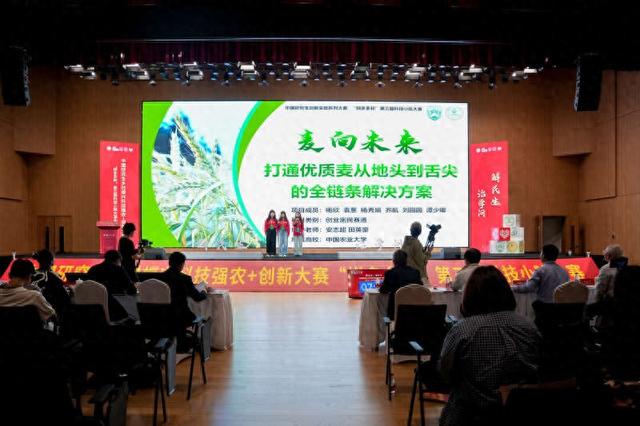
Core Insights - The article highlights the innovative approach of the Liu Zhuang Technology Courtyard in promoting agricultural development and rural revitalization through the integration of technology and entrepreneurship [1][8] - The students from China Agricultural University successfully created a value chain by transforming high-quality wheat into bread, addressing the issue of low prices for quality wheat [1][7] Group 1: Technology and Innovation - The Liu Zhuang Technology Courtyard focuses on extending the agricultural industry chain rather than just teaching farmers how to grow crops [1][3] - The team identified that simply increasing wheat production does not guarantee higher farmer income, emphasizing the importance of value addition through product development [3][4] - The initiative has led to the creation of a brand and a final product, which is essential for enhancing the value of agricultural outputs [4][8] Group 2: Market Strategy and Sales - The students transitioned from traditional farming practices to actively engaging in business, successfully launching "Technology Courtyard Bread" on e-commerce platforms [6][7] - They sold over 3,000 bags of high-quality flour and more than 20,000 pieces of bread, achieving significant sales success on platforms like Pinduoduo [7] - The project has created multiple part-time job opportunities for local villagers, contributing to community employment [7] Group 3: Future Plans and Sustainability - The team plans to continue developing new products and improve packaging to enhance market appeal, aiming for a product launch before the upcoming Chinese New Year [7][8] - The long-term goal is to better organize farmers to produce compliant grain products, ensuring a sustainable and profitable agricultural ecosystem [8][10] - The initiative is seen as a model for modernizing agriculture in China, with a focus on connecting production to consumer needs through innovative marketing strategies [10]

专访禾芯动力创始人兼CEO赵锋:中国农业机器人技术、标准、产业全面“出海”
Zheng Quan Ri Bao Wang· 2026-01-07 13:47
Core Insights - The global agriculture sector is rapidly transitioning towards smart and unmanned operations, with agricultural robots becoming a key driver for industry upgrades [1] Group 1: Company Strategy - He Xin Power has been focusing on agricultural technology since 2022, aiming to integrate its advantages in smart robotics with the agricultural sector, while establishing a global strategy [2][3] - The company emphasizes not only product export but also the export of technology, standards, and industry practices, with experimental bases and joint projects established in countries like Nigeria, Egypt, and the Netherlands [2][3] Group 2: Market and Technology Development - He Xin Power aims to become a global leader in agricultural intelligent systems and solutions within the next three to five years, focusing on large-scale agricultural regions and creating benchmark cases [3] - The company is committed to deepening collaboration between academia and industry to enhance crop growth models and smart decision-making algorithms, thereby building a self-evolving core technology platform [3][4] Group 3: R&D and Product Design - The company adopts a "bottom-up leading + top-down differentiation" strategy in R&D, ensuring world-class foundational technology while customizing solutions for different agricultural scenarios [4][5] - He Xin Power breaks away from traditional "general-purpose robots" by focusing on specialized designs based on crop growth patterns, collaborating with top research institutions to convert agricultural parameters into computable models [4][5] Group 4: Implementation and Support - To ensure the accuracy and practicality of its solutions, He Xin Power has established a three-dimensional support system based on data-driven approaches, closed-loop validation, and comprehensive service [5] - The company utilizes extensive field experiment data to create an iterative agricultural AI decision-making system, ensuring scientific reliability and local adaptation through continuous validation with local partners [5]

全面诊断 靶向治疗 长效巩固 辽宁沈阳大东区以知识产权“三阶疗法”赋能企业创新发展
Xin Lang Cai Jing· 2026-01-07 07:56
Core Viewpoint - The article discusses the implementation of a "three-stage therapy" approach by the Dadong District Market Supervision Administration in Shenyang, Liaoning Province, aimed at enhancing enterprises' innovation capabilities through targeted knowledge property empowerment initiatives [1][7]. Group 1: Diagnosis Phase - In the first half of 2025, the Dadong District Market Supervision Administration organized a special meeting to deploy the "Double Hundred Double Promotion" action plan, covering 74 industrial cluster innovation entities [2]. - The administration established a joint service team to provide a menu of 20 knowledge property services tailored to enterprises' needs, facilitating direct communication and support [2]. - By the end of June 2025, the administration had conducted visits to 45 innovative entities across various industries, collecting 86 requests related to knowledge property [2]. Group 2: Treatment Phase - From July to September 2025, the administration enhanced collaboration with knowledge property rights protection stations to address common issues through "order-based" training and personalized expert guidance [3][4]. - Specific training sessions were organized for different entities, such as a university focused on patent cultivation and a technology park addressing patent rights protection [3]. - The administration facilitated connections between enterprises and academic institutions to resolve technical bottlenecks, leading to successful patent licensing agreements [4][5]. Group 3: Consolidation Phase - The administration emphasized the importance of a comprehensive knowledge property development roadmap and a "three-in-one" protection system, assisting enterprises in planning their innovation strategies [6]. - A food company received a tailored knowledge property development roadmap, which helped them successfully launch a new product line and enhance their brand image [6]. - The administration also supported a leading automotive group in establishing a robust knowledge property framework, ensuring the protection of core technologies and brand advancement [6]. Group 4: Future Outlook - The Dadong District Market Supervision Administration plans to continuously optimize the "three-stage therapy" mechanism using big data analysis and third-party evaluations to provide comprehensive knowledge property assessments for enterprises [7].
40余国盖起中国棚,一家寿光农企的全球答卷
Qi Lu Wan Bao· 2026-01-07 05:33
2015年,王守波在新闻上看到亚洲基础设施投资银行成立,他敏锐地意识到,"'一带一路'大有可为"。 于是,企业通过阿里巴巴海外站、谷歌等开始尝试拓展海外业务,王守波坦言:"做了将近一年的时 间,只有询单,没有成交。" 直到一位乌兹别克斯坦的客户通过网站找到他,带着图纸来到了企业。"第一个订单不大,但通过这个 订单,我们找到了之前一直没成交的原因。"提起那份图纸,王守波感慨颇深,"当时光看图纸,其实不 理解为什么要这么设计,但后来去实地考察之后,就明白了人家是有道理的。中亚比较热,他们采用顶 部整体通风,空气循环更好。而中国的通风方式主要在顶部的两侧,顶部空间的空气流动性要弱一 些。" 这笔"送上门"的订单,让利森特第一次在海外盖起了温室大棚,也开启了他们"因地制宜"的探索之路。 齐鲁晚报·齐鲁壹点 马小杰 王佳潼 2025年12月29日上午,山东潍坊寿光,山东利森特农业科技有限公司的生产车间外,一车车温室大棚的 钢结构骨架正装车启运,即将搭乘中欧班列驶向中亚。从一座县级市起步,这家企业用16年时间,将源 自"中国蔬菜之乡"的农业智慧播撒到全球40多个国家,在沙漠、冻土、热带雨林等迥异环境中建起一座 座现代化温 ...
为四足放牧机器人装上“慧眼”
Xin Lang Cai Jing· 2026-01-07 00:40
Core Insights - The article discusses the successful development of a lightweight behavior recognition model, MASM-YOLO, by the Agricultural Information Research Institute of the Chinese Academy of Agricultural Sciences, which enhances cattle management efficiency through rapid and accurate identification of six typical behaviors in cattle [1] Group 1: Technology Development - The MASM-YOLO model utilizes advanced information technology to address challenges such as drastic lighting changes, complex backgrounds, cattle occlusion, and motion blur in natural grazing environments [1] - The model incorporates multi-scale feature extraction, adaptive detection, and a lightweight backbone network, achieving optimal synergy between recognition accuracy and computational efficiency [1] Group 2: Practical Applications - The model enables quick identification of typical cattle behaviors including standing, lying down, grazing, drinking, licking, and sucking, which significantly improves disease diagnosis, estrus monitoring, calving warning, and health assessment in cattle management [1] - This technological breakthrough not only equips four-legged robots with enhanced capabilities but also provides critical technical support for the comprehensive creation of grazing robots [1]
专访兰州大学教授朱永彪:中国-中亚合作走向“软联通”
Nan Fang Du Shi Bao· 2026-01-05 11:27
Core Insights - The cooperation between China and Central Asian countries is evolving from "hard connectivity" in infrastructure to "soft connectivity" in standards, technology, and culture, creating a new pattern of deep integration across all fields and chains [2][4]. Group 1: Areas of Cooperation - There is significant potential for cooperation in trade facilitation, industrial investment, connectivity, green minerals, and agricultural modernization, with China possessing mature technology and products that can be adapted to local needs [5]. - China has been actively improving transportation infrastructure in Central Asia, such as helping Kyrgyzstan and Uzbekistan with tunnel and road projects, which enhances regional connectivity [5]. - The cooperation between China and Kazakhstan is particularly notable, with extensive collaboration in transportation infrastructure and various vehicle types, aligning Kazakhstan's "Bright Road" plan with the Belt and Road Initiative [6]. Group 2: Agricultural Collaboration - The establishment of the "China-Kazakhstan Smart Agriculture Research Center" exemplifies successful collaboration, addressing Kazakhstan's urgent agricultural development needs while leveraging China's strengths in dryland agriculture and technology [8]. - The center aims to build laboratories for sustainable development and introduce Chinese enterprises to promote technology and products, with Guangdong's drone companies already involved [8]. Group 3: Guangdong's Role - Guangdong has been actively participating in cooperation with Central Asia, with many products from Guangdong already present in the region, and notable companies like BYD and Huawei establishing a presence [9]. - Cultural cooperation is also growing, with Guangdong's cultural enterprises engaging with Central Asia, potentially enhancing Guangdong's influence in this area [11][12]. Group 4: Challenges and Opportunities - Challenges for Guangdong include geographical disadvantages, limited awareness of Central Asia among local enterprises, and the need for better alignment of advanced technologies with local demands [13]. - The transition from "hard connectivity" to "soft connectivity" requires mutual promotion, with a focus on technology, standards, and educational cooperation [16]. Group 5: Evolution of Cooperation - Cooperation has shifted from low-end commodity trade to comprehensive industrial chain collaboration, with a growing interest in advanced technologies like electric vehicles and drones [19]. - Central Asia's resource potential is crucial for China's energy security and trade diversification, making the region a valuable market for Chinese goods and technology [20].
写在大地上的论文,请查收!
新华网财经· 2026-01-05 09:39
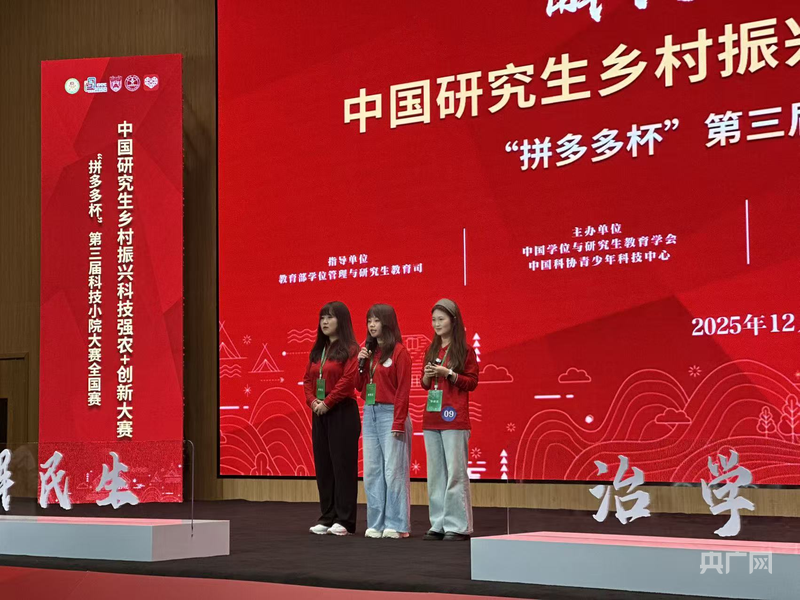
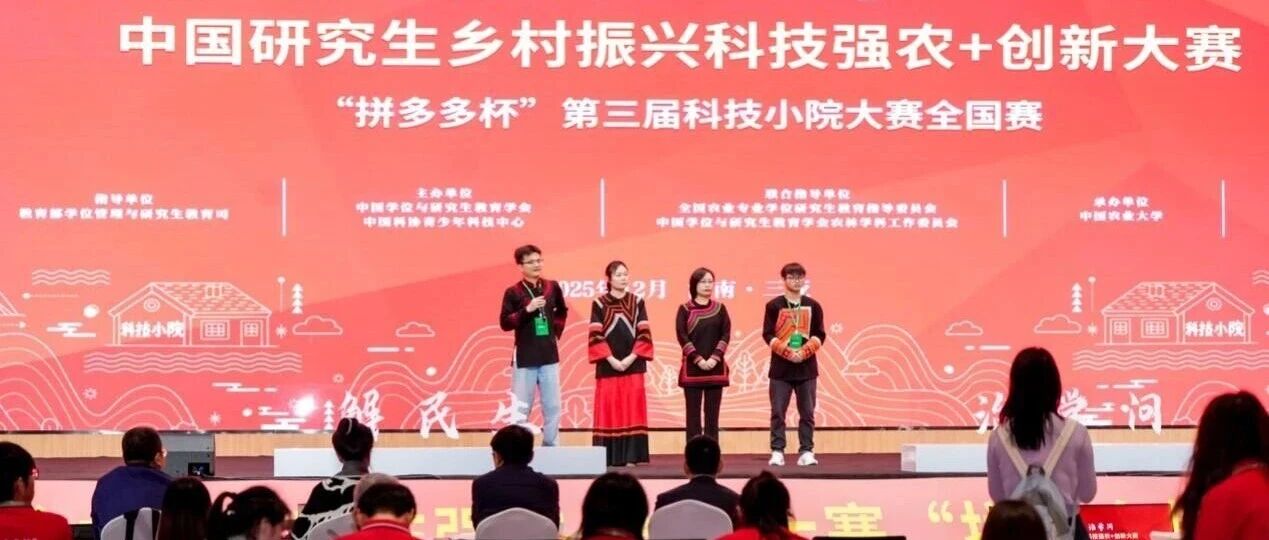
Core Viewpoint - The "Pinduoduo Cup" Third Technology Academy Competition highlights the integration of agricultural technology and rural revitalization, showcasing innovative solutions from top teams across China, emphasizing the importance of practical applications in agriculture [1][4][12]. Group 1: Competition Overview - The competition saw a significant increase in participation, with 247 teams competing, up from 89 in the first edition, indicating a growing interest in agricultural innovation [4]. - The event featured five distinct competition tracks: "Technology for Agriculture," "Youth Supporting Agriculture," "Digital Agriculture," "Entrepreneurship for Prosperity," and "Multidimensional Integration," allowing for targeted solutions across the agricultural value chain [4][5]. - The competition structure included a four-tier selection process, enhancing the professionalism and rigor of the evaluation, culminating in a final round where six teams were awarded top honors [5][11]. Group 2: Evaluation Methodology - The introduction of the "Academician Flying Team" for on-site evaluations marked a significant innovation, allowing experts to assess projects in real agricultural settings rather than through traditional documentation [6][8]. - This hands-on approach involved direct questioning of teams and local farmers, ensuring that the evaluation focused on practical outcomes and real-world impact [8]. Group 3: Industry Collaboration - Pinduoduo's involvement in the competition extended beyond financial support, facilitating connections between research outcomes and market needs, exemplified by successful product launches through live streaming [10][12]. - The platform's initiatives, such as the "Digital Agriculture Academy," aim to equip students with e-commerce skills, further bridging the gap between agricultural innovation and market application [12]. Group 4: Impact on Participants - The competition serves as a vital platform for student development, fostering empathy and a deeper understanding of agricultural challenges among participants, which aligns with the broader goal of rural revitalization [12]. - The collaborative spirit among teams post-competition indicates a commitment to ongoing technical cooperation and innovation in the agricultural sector [12].

科技小院大赛:躬身“解民生、治学问”的青春实践
Xin Lang Cai Jing· 2026-01-05 06:23
Core Insights - The article highlights the significance of the "Technology Small Courtyard" initiative in promoting agricultural innovation and rural revitalization through practical engagement and research by graduate students [2][4][11]. Group 1: Competition Overview - The "Pinduoduo Cup" third Technology Small Courtyard competition attracted 247 teams nationwide, with 22 teams advancing to the finals held in Sanya, Hainan [2]. - The competition introduced an "Academician Flight Team" for on-site evaluations, enhancing the event's depth and significance [2][12]. - Winning teams included those from Henan, Hebei, Liaoning, Sichuan, Shaanxi, and Yunnan, showcasing diverse agricultural innovations [2]. Group 2: Practical Applications and Innovations - The Dali Rice Technology Small Courtyard team successfully integrated over 10 technologies to create a green ecological model, achieving a yield of 808 kg per mu [5]. - The Liaoning Grape Technology Small Courtyard addressed local agricultural challenges, implementing a six-part technical promotion model that saved farmers about 25% in costs [7][9]. - The Sichuan Bamboo Technology Small Courtyard improved bamboo shoot yields from 100 kg to 500 kg per mu and trained over 500 bamboo farmers [9]. Group 3: Educational Impact - The initiative fosters a hands-on learning environment for graduate students, enhancing their confidence and practical skills through direct engagement with local farmers [14]. - The program has established over 1,800 Technology Small Courtyards across the country, involving thousands of graduate students in rural areas [14][16]. - The focus on real-world applications allows students to bridge the gap between theoretical knowledge and practical agricultural needs [11][16].
硬核成果频出,湖北新年“第一会”聚焦科技创新
Zheng Quan Shi Bao Wang· 2026-01-04 13:55
Group 1 - The 2026 Hubei "New Year First Meeting" focused on technological innovation, awarding 312 scientific and technological achievements, with notable contributions recognized by Wuhan University and Huazhong University of Science and Technology [1] - The conference showcased 36 technological innovation achievements from 2025, including 6 major fundamental research projects, 10 key core technologies, and 20 landmark innovative products [1] - Significant breakthroughs in fundamental research were highlighted, such as the discovery of the key gene QT12 for rice's heat resistance, which increased yield by up to 78% during high-temperature trials [1] Group 2 - Major core technology breakthroughs included the development of the first 100nm silicon-based gallium nitride RF PDK in China and the creation of low-loss hollow-core anti-resonant fiber with attenuation as low as 0.05 dB/km [2] - Landmark products entering the market include the "Wuhan No. 1" satellite, designed for urban optical remote sensing with a positioning accuracy better than 5 meters, and a new food ingredient derived from yeast with over 80% protein content [2] - Hubei has consistently ranked in the top five nationally for the number of national science and technology awards, with a robust infrastructure of laboratories and innovation platforms, leading to a significant increase in high-tech enterprises and improved technology transfer rates [3]