
农产品种植与加工

Search documents
重点聚焦!新质新造·兵团丨图木舒克高质量发展步履坚实
Yang Guang Wang· 2025-11-04 09:17
Core Viewpoint - The oil safflower bean industry in Xinjiang's Tumushuke City is transforming desert land into arable land, creating a green miracle and contributing to local economic development through a comprehensive industrial chain [1][10]. Group 1: Agricultural Development - The oil safflower bean has been recognized as the "king of desert crops," with its entire plant being utilized for various products such as oil, flour, and high-quality animal feed [3]. - The introduction of advanced agricultural techniques has significantly increased the yield of oil safflower beans from 100 kg per mu in 2017 to over 600 kg per mu in 2024, with a record yield of 886 kg [3][8]. Group 2: Economic Impact - The automation in processing has improved efficiency, with a production line capable of processing oil safflower beans from raw material to finished product in just 7 minutes [5]. - The local processing company has shifted from selling raw materials to producing finished products, achieving a monthly sales revenue of 1.5 million yuan [6]. Group 3: Environmental Benefits - The cultivation of oil safflower beans has led to a significant increase in annual rainfall from less than 30 mm to 130 mm, and the number of days with winds above level 7 has decreased by one-third [8]. - Soil organic matter content has improved from 0 to between 1.3 and 1.4, and the greening coverage rate has risen to 50% [8]. Group 4: Infrastructure and Investment - The establishment of an e-commerce incubation park aims to promote the scale, branding, and industrialization of the local e-commerce sector, facilitating the distribution of agricultural products [7]. - A complete industrial chain has been developed, including an oil safflower research institute, initial processing plants, deep processing facilities, and a brewery [9].


新质新造·兵团丨图木舒克高质量发展步履坚实
Yang Guang Wang· 2025-11-04 08:44
Core Viewpoint - The oil sand bean industry in Xinjiang's Tumushuke City is transforming the desert into arable land, creating a sustainable green circular economy that benefits local farmers and contributes to ecological restoration [2][8]. Group 1: Agricultural Development - The oil sand bean, known as the "king of desert crops," is being cultivated on 54,000 acres in Xinjiang, with advanced harvesting technology leading to increased efficiency and productivity [1][2]. - The yield of oil sand beans has significantly improved from 100 kg per acre in 2017 to over 600 kg per acre in 2024, with a record yield of 886 kg [2]. Group 2: Economic Impact - The oil sand bean industry has created a comprehensive value chain that includes planting, processing, and ecological restoration, providing a stable income for local farmers [2][8]. - The processing company in Tumushuke has upgraded its equipment, allowing for a production capacity of 10 tons per day and monthly sales reaching 1.5 million yuan [5]. Group 3: Environmental Benefits - The introduction of oil sand beans has led to an increase in annual rainfall from less than 30 mm to 130 mm, a reduction in strong wind days by one-third, and an increase in soil organic matter content from 0 to 1.3-1.4 [8]. - Continuous cultivation of oil sand beans has transformed sandy land into fertile fields, with wheat yields exceeding 400 kg per acre [10]. Group 4: Industry Infrastructure - The establishment of an e-commerce incubation park aims to scale and brand the local agricultural products, facilitating the last mile of e-commerce for local farmers [8]. - A series of projects related to the oil sand bean industry, including research institutes and processing facilities, have been developed, enhancing the overall industry ecosystem [10].
伊拉克举办椰枣节
人民网-国际频道 原创稿· 2025-11-03 08:40
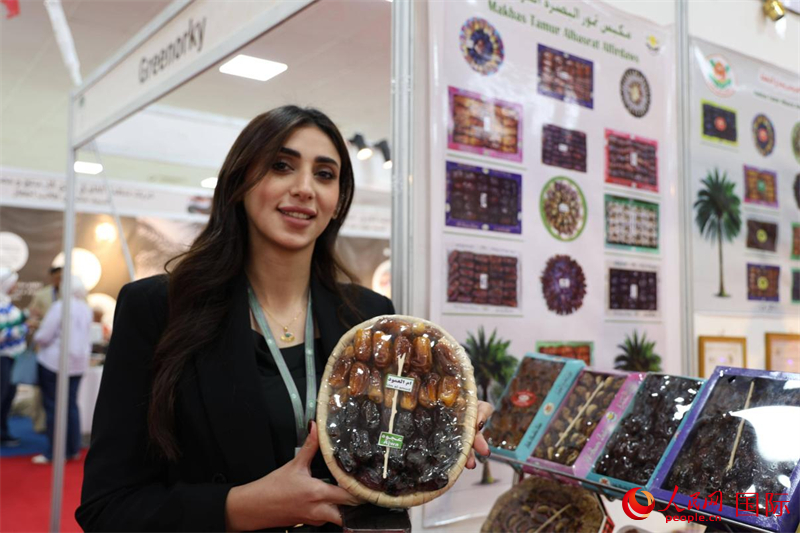
Core Points - Iraq recently held a Date Festival at the Baghdad International Exhibition Center to showcase its date products and agricultural culture [1] - Dates are a significant economic crop for Iraq, ranking as the second-largest export product after oil [1] - Iraq has 22 million date palms and hundreds of date varieties, with an expected export of 700,000 tons of dates in 2024, primarily to China, India, Turkey, and Gulf countries [1] Group 1 - The Iraqi Ministry of Agriculture emphasizes that dates are a national treasure and encourages more Chinese companies to collaborate in storage, packaging, and processing [1] - A female entrepreneur highlighted that dates provide an effective means for Iraqi women to participate in economic and social development [1] - An agricultural expert stated that incorporating date product cooperation into the China-Iraq Belt and Road Initiative framework will enhance the quality and competitiveness of Iraqi date products [1]
“土疙瘩”变成“金蛋蛋”、“以果为媒”促发展 特色产业让乡村振兴焕新颜
Yang Shi Wang· 2025-11-02 08:37
Group 1: Potato Industry in Gansu Pingliang - The potato industry in Gansu Pingliang has transitioned from "scattered planting" to a "full industry chain" development, significantly increasing its economic value [1][4] - The planting area for potatoes in Gansu Pingliang remains stable at 840,000 acres, with an annual production of 1.06 million tons, generating an annual output value of 1.611 billion yuan [4] - The deep processing of potatoes includes cleaning, peeling, crushing, and dehydrating, resulting in high-quality starch and starch products, which enhance the added value of the industry [3] Group 2: Apple Industry in Beijing and Shandong - The apple harvest season has begun, with significant integration of the apple industry with leisure agriculture and rural tourism, contributing to rural revitalization [5][9] - In Beijing's Changping District, standardized orchards exceed 6,000 acres, producing over 4,500 tons of high-quality apples annually, benefiting from favorable climatic conditions [8] - In Shandong's Mengyin County, over 60,000 acres of apple orchards are also experiencing a fruitful harvest, with improved yield and pricing due to favorable weather and scientific management [9][11]

进入二红柑采摘季,新会多重举措筑牢农产品安全防线
Nan Fang Nong Cun Bao· 2025-11-01 01:31
Core Viewpoint - The article highlights the importance of agricultural product safety in the upcoming harvesting season of the "Erhong" citrus in Xinhui, Jiangmen, emphasizing measures taken to ensure quality and safety for consumers [5][6][19]. Group 1: Industry Overview - Xinhui is known as the "hometown of Chenpi" (dried tangerine peel), with a total planting area of 143,000 acres and an overall industry output value reaching 26.1 billion yuan [3][4]. - The Xinhui citrus and Chenpi industry plays a significant role in rural revitalization and local cultural heritage [3][4]. Group 2: Safety Measures - The Xinhui district is implementing a "source management + precise testing" strategy to enhance agricultural product safety [7][19]. - A professional team has been formed to conduct on-site guidance and promote safe agricultural practices among farmers and businesses [9][10]. - Random sampling of 15 fresh Xinhui citrus samples was conducted for pesticide residue testing, with all results meeting safety standards [13][14]. Group 3: Quality Control - Local Chenpi processing enterprises are required to conduct random quality checks on Xinhui citrus before signing procurement contracts, rejecting any non-compliant products [17][18]. - Quality control measures will be further upgraded, expanding testing coverage to all citrus planting areas, focusing on varieties like "Erhong" and "Dahong" [20][21].


油脂油料早报-20251031
Yong An Qi Huo· 2025-10-31 00:48
Report Summary 1. Report Industry Investment Rating No investment rating information is provided in the report. 2. Core Viewpoints - Brazil's Paraná state is expected to produce 2.196 billion tons of soybeans in the 2025/26 season, almost the same as the previous month's forecast of 2.194 billion tons, and the local soybean crop is in the sowing period [1]. - In September 2025, Canada's rapeseed crushing volume was 1,007,389 tons, a 16.07% increase from the previous month and a 7.97% increase from the same period last year. Rapeseed oil production was 425,330 tons, a 15.8% increase from the previous month and a 7.72% increase from the same period last year. Rapeseed meal production was 589,724 tons, a 14.52% increase from the previous month and an 8.32% increase from the same period last year. The cumulative rapeseed crushing volume in the 2025/26 season was 1.875333 billion tons, rapeseed oil production was 792,629 tons, and rapeseed meal production was 1.104666 billion tons [1]. 3. Summary by Relevant Catalogs Overnight Market Information - Paraná state's 2025/26 soybean production forecast is 2.196 billion tons, nearly unchanged from the previous month's estimate [1]. - Canada's September 2025 rapeseed crushing volume, rapeseed oil production, and rapeseed meal production all increased compared to the previous month and the same period last year, with specific data as mentioned above [1]. Spot Prices - The spot prices of soybean meal in Jiangsu, rapeseed meal in Guangdong, soybean oil in Jiangsu, palm oil in Guangzhou, and rapeseed oil in Jiangsu from October 24 - 30, 2025 are presented in a table, showing price fluctuations during this period [1].
【华阴】为乡村振兴育好“领头雁”
Shan Xi Ri Bao· 2025-10-31 00:19
Core Viewpoint - The transformation of Yongning Village's agricultural practices has led to significant economic improvement for its residents, showcasing a successful model of rural revitalization through innovative crop selection and community collaboration [2][4]. Group 1: Agricultural Development - Yongning Village has shifted from a single-crop economy to a diversified agricultural model, focusing on 'Wan Guo 8' yellow corn and 'Jin Guo 20' black corn as primary crops [2]. - The village has established over 800 acres of land for cultivation, divided into seedling, planting, and experimental zones, along with three standardized planting bases [2]. - The introduction of a "spring early + autumn late" staggered planting technique has increased the profitability of sweet corn, with a gross profit margin of 45% for processed products, which is 20 percentage points higher than selling fresh corn [4]. Group 2: Community and Economic Impact - The establishment of a cooperative for grape cultivation in Huaxi Town has led to an annual output value of nearly 1.46 million yuan for 2024, benefiting over 30 households [5]. - The local government has facilitated training and skill development for farmers, enabling them to adopt modern agricultural techniques and improve their economic outcomes [6]. - The return of 612 talents to rural areas has injected new vitality into local development, with 347 individuals being trained as reserve forces for village-level leadership [6].
墨西哥玉米价格因供应过剩而走低 早籼稻期货仍保持不变
Jin Tou Wang· 2025-10-30 03:04
Core Insights - The domestic grain market showed a downward trend this week, with early indica rice futures remaining stable at 2500.00 yuan/ton as of the report time [1] Market Information - According to foreign media forecasts, U.S. corn export net sales for the 2025/26 marketing year are expected to be between 1.1 million to 2.1 million tons by the week ending October 23, 2025 [1] - The Mexican Agriculture Minister reported that corn prices in Mexico are declining due to oversupply, impacting local farmers [1] - Rabobank predicts that Brazil's corn export volume for the 2025/26 season will be approximately 37 million tons, a decrease of 5% year-on-year [1] - Data indicates that the total corn processing volume nationwide for the week of October 23-29, 2025, was 597,300 tons, an increase of 23,300 tons from the previous week [1]
践行社会责任 同舟集团踏入花生市场
Qi Huo Ri Bao Wang· 2025-10-30 01:03
Core Insights - The company, Henan Tongzhou International Trade Group, is diversifying into the peanut market, which is a significant shift from its traditional focus on cotton business, driven by the increasing importance of peanuts in national food security and agricultural policy [1][5] - The company aims to leverage its existing infrastructure and expertise in cotton to enhance peanut production and processing, addressing the current inefficiencies in the peanut industry in Henan [2][4] Company Strategy - The company recognizes the strategic advantages of entering the peanut industry, given that Henan is a leading peanut production area, and it can utilize its cotton farming experience in Xinjiang to develop peanut cultivation [2][3] - The company plans to implement a model that integrates enterprises, cooperatives, and farmers to improve production efficiency and quality in the peanut sector [4][5] Industry Challenges - The peanut industry in Henan faces significant challenges, including a fragmented market dominated by smallholder farmers, low processing capabilities, and a lack of strong leading enterprises [3][4] - The current production model is inefficient, with small farmers lacking bargaining power and facing price pressures from intermediaries, leading to low profitability [3] Future Outlook - The emergence of leading enterprises like Tongzhou Group is expected to drive high-quality development in the Henan peanut market, transforming it from a raw material output model to a value-added product model [4][5] - The company’s cross-industry exploration is seen as a response to national strategies for food security and rural revitalization, potentially leading to a more robust and competitive peanut industry in Henan [5]
银河期货花生日报-20251029
Yin He Qi Huo· 2025-10-29 12:12
Report Summary 1. Report Industry Investment Rating No information provided. 2. Core Viewpoints - The price of peanuts in Henan continued to decline, while that in the Northeast remained stable. The price of imported peanuts was stable. It is expected that the peanut spot will be relatively weak in the short term [4]. - The price of peanut oil was stable, and the peanut meal was also stable recently. The theoretical profit of oil - mill crushing was acceptable [8]. - The 01 and 05 peanut futures are in a low - level oscillation, and the far - month peanuts may be stronger. The new - season peanut output is expected to be higher than last year, and the 01 peanut will still oscillate weakly [8]. 3. Summary by Directory First Part: Data - **Futures Disk** - PK604 closed at 7932, up 16 (0.20%), with a trading volume of 229 (down 24.17%) and an open interest of 1,809 (down 1.26%) [2]. - PK510 closed at 8152, up 16 (0.20%), with a trading volume of 19 (up 58.33%) and an open interest of 431 (up 1.41%) [2]. - PK601 closed at 7822, up 16 (0.20%), with a trading volume of 68,448 (up 29.61%) and an open interest of 175,747 (down 1.98%) [2]. - **Spot and Basis** - Spot prices in Henan Nanyang, Shandong Jining, and Shandong Linyi were 7200, 8400, and 8400 respectively. The price of Rizhao peanut meal was 3250, and that of Rizhao soybean meal was 2970. The price of peanut oil was 14580, and that of Rizhao first - grade soybean oil was 8270 [2]. - The price of Henan Nanyang peanuts dropped by 1400, and the price of Rizhao soybean meal dropped by 20, and the price of Rizhao first - grade soybean oil dropped by 100 [2]. - The basis of Henan Nanyang peanuts was - 622, and that of Shandong Jining and Linyi was 578. The difference between soybean meal and peanut meal was - 1, and the difference between peanut oil and soybean oil was 6310 [2]. - **Import Price** - The price of Sudan peanuts was 8500, and the price of Senegalese peanuts remained unchanged [2]. - **Spread** - The spread of PK01 - PK04 was - 110 (unchanged), PK04 - PK10 was - 220 (unchanged), and PK10 - PK01 was 330 (unchanged) [2]. Second Part: Market Analysis - In the Northeast, the price of 308 common peanuts in Fuyu, Jilin was 4.1 yuan/jin, and that in Changtu, Liaoning was 4.1 yuan/jin, both remaining stable. In the Henan production area, the price of Baisha common peanuts was 3.35 - 3.5 yuan/jin, down 0.1 yuan/jin. The price of peanuts in Junan, Shandong was 4.0 yuan/jin, remaining stable. The price of imported Brazilian new peanuts was 9200 yuan/ton, and that of Indian specification peanuts 50/60 was 8000 yuan/ton, both remaining stable [4]. - Some peanut oil mills started to purchase, with the mainstream transaction price at 7800 - 7900 yuan/ton, and the theoretical break - even price of oil mills was 7920 yuan/ton. The price of soybean oil and peanut oil remained stable, with domestic first - grade ordinary peanut oil at 14500 yuan/ton and small - pressed fragrant peanut oil at 16500 yuan/ton [4]. - The spot price of Rizhao soybean meal was relatively strong at 2970 yuan/ton. The unit - protein spread between peanut meal and soybean meal was relatively high, and peanut meal was relatively weak in the short term, with the 48 - protein peanut meal quoted at 3200 yuan/ton [6]. Third Part: Trading Strategies - **Unilateral** - Peanuts 01 and 05 are in a low - level oscillation. It is advisable to wait and see [9]. - **Monthly Spread** - Wait and see [10]. - **Options** - Hold the sold pk601 - P - 7600 [11]. Fourth Part: Relevant Attachments - The report includes six figures, namely the spot price of Shandong peanuts, the profit of peanut oil mills, the price of peanut oil, the basis between peanut spot and continuous contracts, the spread between peanut 10 - 1 contracts, and the spread between peanut 1 - 4 contracts [13][20][23]