
工业软件

Search documents
对话德国经济文化促进会主席:中德可在三大方向上加强合作
2 1 Shi Ji Jing Ji Bao Dao· 2025-12-09 04:08
Group 1 - Wang Yi, China's Foreign Minister, met with German Foreign Minister Baerbock, marking the first visit by a German official since the new government took office, indicating a potential warming of Sino-German economic relations [1] - The visit comes amid concerns from German industrial firms, with a survey revealing that 36.6% of respondents feel at a competitive disadvantage against non-EU companies, reflecting anxiety within Germany regarding external competition [1] - The German IFO Institute reported that the self-assessed competitiveness of German industrial enterprises has reached its lowest point in 31 years [1] Group 2 - Erhard Rau, CEO of Sino-German Hezheng Technology Development Co., stated that the competition between China and Germany is not a zero-sum game, but rather a normal phenomenon in the restructuring of global industrial chains [2] - Future cooperation between China and Germany is expected to focus on three strategic areas: green industries, high-end manufacturing, and third-party markets, leveraging China's industrial chain advantages and Germany's engineering standards [2] - The potential for collaboration in green industries, such as renewable energy and hydrogen, is highlighted as both countries can lead a global green industrial revolution together [2] Group 3 - Rau envisions a new strategic intersection for Sino-European cooperation, particularly in cultural co-creation, green innovation, digital technology, and artificial intelligence, aiming for a cooperative ecosystem driven by cultural exchange and innovation [3] - The collaboration between China and Germany is seen as a pathway to transition from competition to mutual benefit, contributing to global stability and creativity [3] - The partnership is expected to create new growth points and provide hope in a turbulent world, emphasizing the importance of cooperation in the industrial and innovation sectors [3]
中望软件:公司将聚焦于行业领军人才的持续引进
Zheng Quan Ri Bao Zhi Sheng· 2025-12-08 12:44
Core Viewpoint - The company has made significant progress in technology research and development, narrowing the performance gap of its 3D CAD products with leading overseas industrial software giants [1] Group 1: R&D Investment and Progress - The company has relied on a leading R&D investment scale compared to industry averages, achieving substantial advancements in technology [1] - The performance of the company's 3D CAD products is continuously improving, which is helping to increase market share in mid-range sectors such as general machinery, high-tech electronics, mold design, and home appliances [1] Group 2: Market Penetration and Challenges - The company is beginning to penetrate high-end fields such as industrial robotics, automotive, and shipbuilding, starting from components and specific design scenarios [1] - Despite progress, the company acknowledges that its products still have a long way to go to meet the comprehensive design needs of high-end clients and achieve large-scale replacement usage [1] Group 3: Future Focus - The company plans to focus on attracting industry-leading talent to strengthen its R&D team and will continue to invest in R&D to achieve comprehensive coverage in high-end fields [1]

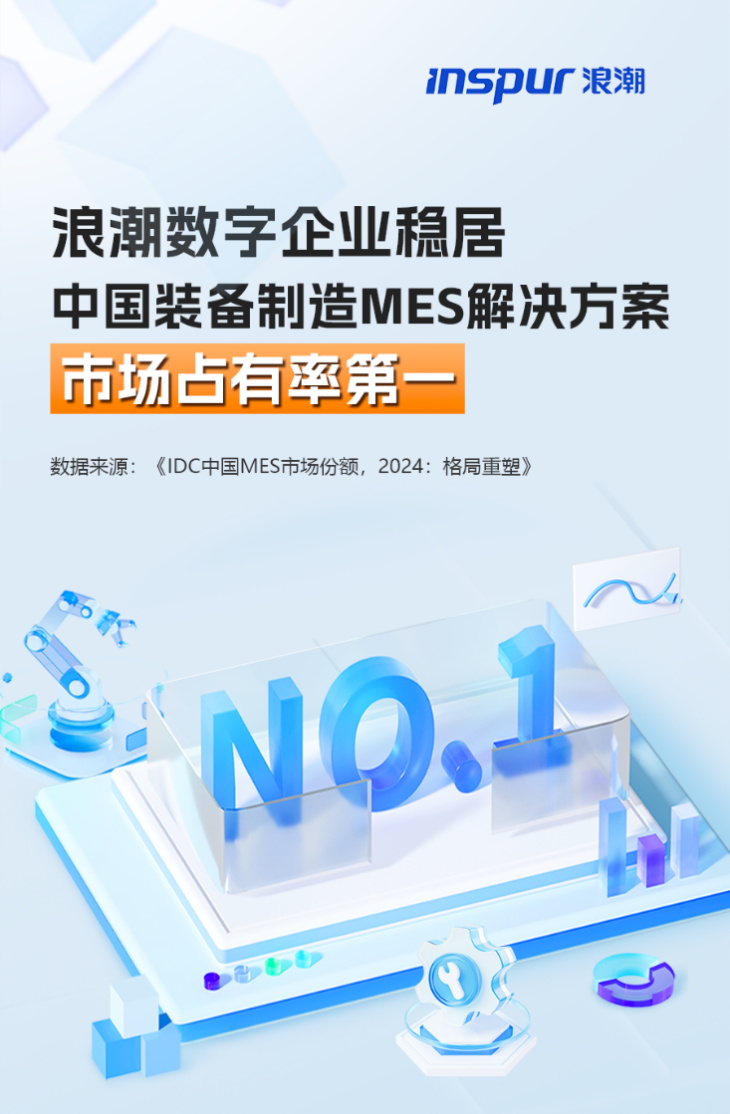
IDC数据显示:浪潮数字企业稳居中国装备制造MES市场第一位
Da Zhong Ri Bao· 2025-12-08 03:06
Core Insights - The IDC report highlights that the growth rate of the equipment manufacturing MES market in China for 2024 is significantly higher than the overall market, with Inspur Digital Enterprise maintaining the top market share in MES solutions for equipment manufacturing due to its technological advantages and industry experience [1][4]. Group 1: Market Overview - MES is identified as the most focused, largest market segment in China's manufacturing digital transformation, characterized by a high concentration of vendors and intense competition, serving as a key indicator of digital maturity in the manufacturing sector [4]. Group 2: Company Profile - Inspur Digital Enterprise is a leading provider of industrial software products and comprehensive digital industrial solutions, having developed the Inspur Haiyue Manufacturing Operation Management (MOM) platform, which integrates various advanced technologies such as IoT, big data, machine vision, and digital twins [4][5]. - The MOM platform covers all levels of enterprise, factory, edge, and equipment, enabling comprehensive management of resources including personnel, equipment, materials, and energy, thus facilitating intelligent control across the entire production process [4]. Group 3: Applications and Achievements - The Inspur Haiyue MOM has been widely adopted in key manufacturing sectors such as shipbuilding, infrastructure equipment, and power transmission, collaborating with major companies to create exemplary smart manufacturing models [5]. - For instance, Shanxi Coal Machine integrated multiple systems through the MOM platform, achieving data visualization and real-time monitoring, which earned it the IDC 2025 China Future Digital Industry Leader Award [5]. - In TBEA, the MOM platform enhanced production efficiency by 25% and reduced unit product costs by 16% through deep integration of IT and OT, leading to its recognition as a smart manufacturing demonstration factory by the Ministry of Industry and Information Technology [5]. Group 4: Future Outlook - Inspur Digital Enterprise plans to continue investing in R&D to develop next-generation intelligent native MOM software while focusing on deep industry development to support the high-end, intelligent, and green transformation of industrial processes [5].

Unity中国CEO张俊波:用中国引擎讲好中国故事
2 1 Shi Ji Jing Ji Bao Dao· 2025-12-06 02:25
Group 1 - The core theme of the forum was "Innovation Without Boundaries, Smart Vision for the Future," focusing on the development of the new economy in the Guangdong-Hong Kong-Macao Greater Bay Area [1] - Unity China's CEO, Zhang Junbo, emphasized that the company will not develop its own foundational AI models but will integrate leading AI capabilities into its development tools to support Chinese developers [1][2] - Unity China aims to enhance creative efficiency through the launch of the Unity Graph intelligent creation platform, which connects with top AI models for 3D generation and skeletal animation [1] Group 2 - Unity China has adapted to the domestic market since its independent operation in 2022, recognizing the significant mini-game ecosystem in China, which is expected to generate over 100 billion yuan in market size within the next 12 months from platforms like WeChat and Douyin [1] - The localized "Unity Engine" was launched to meet the demands of domestic developers and the mini-game ecosystem, achieving nearly 550,000 downloads and significant penetration in leading mini-games [2] - Over 85% of new energy vehicles in China utilize Unity technology for their 3D interactive interfaces, with more than 1.2 million mass-produced models, highlighting the importance of real-time 3D technology in defining smart vehicle experiences [3] Group 3 - The rise of embodied intelligence has revitalized the concept of "digital twins," transitioning from mere visualization to operational-level digital twins, which are essential for monitoring, planning, and training robot clusters in industrial settings [3]
中信建投证券:工业AI助力制造业智能化转型升级
Xin Hua Cai Jing· 2025-12-04 03:10
Core Viewpoint - Industrial software is a cornerstone of intelligent manufacturing, experiencing steady market growth driven by policy support and technological advancements, while integrating with new technologies like AI to promote the intelligent transformation and upgrading of the manufacturing sector [1] Policy Perspective - Intelligent manufacturing has been elevated to a national strategy, transitioning from pilot demonstrations during the "13th Five-Year Plan" to systematic planning in the "14th Five-Year Plan" [1] Market Perspective - The market size of China's industrial software is projected to reach 354.14 billion yuan in 2024, representing a year-on-year growth of 11.2%, although high-end sectors remain dominated by foreign companies, indicating a vast potential for domestic manufacturers to capture the replacement market [1] Technological Perspective - The deep integration of AI with industrial software is leading to intelligent generation and optimization in CAD/CAE applications, with industrial large models and intelligent agents being implemented in scenarios such as quality inspection and energy consumption management, while physical AI further enhances multi-industry simulation and decision-making upgrades [1] Future Trends - The future of industrial software will focus on key technology autonomy, the implementation of large models and intelligent agents in vertical fields, and the factorization of industrial data, supporting the achievement of China's manufacturing goals for 2035 [1]

奋楫“十五五”,资本与国策共创
Sou Hu Cai Jing· 2025-12-03 01:52
Core Insights - The focus of national development is shifting from "quantitative recovery" post-pandemic to "qualitative leap" in the "15th Five-Year Plan" [1] - The "15th Five-Year Plan" emphasizes "high-level technological self-reliance" and aims for a dual goal of "effective qualitative improvement and reasonable quantitative growth" [5][11] Group 1: Economic and Industrial Strategy - The national strategy is entering a new cycle centered on innovation efficiency, industrial structure, and regional collaboration, marking a shift from "policy following" to "system co-creation" [4] - The plan aims to build a modern industrial system with advanced manufacturing as the backbone, focusing on future industries like quantum technology, biomanufacturing, and hydrogen energy [11] - The transition from "incremental manufacturing" to "efficiency manufacturing" indicates a shift in focus from merely increasing production to optimizing resource allocation [12] Group 2: Investment Opportunities - Hard technology investment, including semiconductors and advanced materials, is positioned as a foundational logic for "systematic breakthroughs" [10] - Investment institutions are encouraged to engage in pre-financing and result transformation for national technology tasks, fostering capital co-creation [10] - The emphasis on "entrepreneurial investment + risk-sharing mechanisms" presents opportunities for investment firms to participate in national innovation initiatives [10] Group 3: Green Development - The "15th Five-Year Plan" elevates green development from a secondary goal to a structural institution, influencing all industrial allocations [17] - The integration of green issues into financial and market mechanisms signifies a shift in perspective, making green development a capital issue [17] - Sustainable investment opportunities in green infrastructure and carbon asset management are expected to grow [20] Group 4: Consumer and Market Dynamics - The plan positions consumption upgrade as a core driver of economic structural transformation, moving from recovery to quality enhancement [22] - The "silver economy" is recognized as a significant industrial opportunity, transforming aging issues into growth engines [22][25] - Investment opportunities in healthcare, elder care, and technology-assisted living are anticipated to rise due to demographic shifts [25] Group 5: Regional Development - The focus of regional policy is shifting from "development gradient" to "structural coordination," promoting a unified market and efficient resource allocation [27] - Investment institutions are encouraged to collaborate with local guiding funds to strengthen project foundations and facilitate new industry development in less developed regions [30] Group 6: Financial Market Reforms - The "15th Five-Year Plan" emphasizes structural improvements in capital markets, transitioning from a focus on financing to a comprehensive investment-funding-exit cycle [32] - Direct investment institutions are identified as key players in building a strong financial nation, with multiple exit pathways being developed [35] - The plan aims to enhance the inclusivity and adaptability of capital market systems, promoting direct financing methods [31] Strategic Summary - The "15th Five-Year Plan" outlines new engines for China's economic growth, including technological innovation and green transformation, while establishing a more inclusive capital market system [36] - Investment institutions are encouraged to align their strategies with national planning, leveraging professional judgment to identify promising sectors and companies for investment [36]

数字仿真技术赋能传统制造高效升级
Mei Ri Shang Bao· 2025-12-02 23:35
Core Insights - The launch of the "CAE+AI Digital-Physical Integration Verification Platform" by Zhejiang Yuansuan Technology Co., Ltd. and Hangzhou Steel Group aims to transform the R&D process in the manufacturing industry from offline to online, significantly improving efficiency and reducing costs [1][2] - The platform allows companies to conduct multiple product simulation experiments in a single day, addressing the inefficiencies of traditional R&D methods [1] - The technology has been localized, reducing the high costs and technical barriers previously associated with industrial simulation technology [1] Group 1: Platform Features and Benefits - The platform increases the first-pass yield of physical testing to over 85%, reduces R&D costs by more than 60%, and shortens the product launch cycle by 40% [2] - It enables small and medium-sized manufacturing enterprises to access R&D testing capabilities comparable to those of large companies without significant investment in specialized equipment and high-end talent [2] - The platform allows engineers to upload 3D models and perform simulations that meet EU standards, generating detailed reports that highlight product weaknesses for targeted optimization [1][2] Group 2: Company Background and Future Plans - Founded in 2017, Yuansuan Technology focuses on serving industries such as automotive parts and hardware tools, and has expanded into emerging sectors like water conservancy and environmental protection [2] - The launch of the platform is seen as a critical step in promoting digital and intelligent upgrades in the manufacturing sector [2] - The company aims to continue acting as a bridge between technology and industry, injecting continuous digital momentum into the high-quality development of manufacturing [2]
东土科技:鸿道操作系统既可以应用于工业机器人,也可以应用于人形机器人
Zheng Quan Ri Bao Zhi Sheng· 2025-12-02 08:36
Core Viewpoint - Dongtu Technology's Hongdao operating system is versatile, applicable to both industrial and humanoid robots, showcasing the company's strategic focus on humanoid robotics through advanced technologies [1] Group 1: Technology and Applications - The Hongdao operating system is designed to support humanoid robots, leveraging virtualization and elastic microkernel features to create a foundational operating system [1] - The AUTBUS bus technology provides high real-time performance and security, ensuring reliable internal communication and control for robots [1] - The company aims to establish a domestically produced electronic architecture tailored for humanoid robots [1]


中信建投:工业AI助力制造业智能化转型升级 国产替代与智能化升级共拓市场新空间
Zhi Tong Cai Jing· 2025-12-02 07:20
Core Insights - Industrial software is a cornerstone of intelligent manufacturing, experiencing steady growth driven by policy support and technological advancements, particularly in AI integration [1][2] - The Chinese manufacturing industry's path towards intelligent transformation is clear, with ongoing strong policy support and specific targets set for digital penetration by 2025 [2] - The Chinese industrial software market is showing robust growth and structural differentiation, with a projected market size of 765 billion yuan by 2029, reflecting a compound annual growth rate of 19.1% [3] Policy Support - The "14th Five-Year Plan" for intelligent manufacturing outlines specific goals, including a digital penetration rate exceeding 70% for large-scale manufacturing enterprises by 2025 [2] - Recent policies emphasize the importance of industrial software and operating systems as key technologies for achieving high-quality and secure intelligent upgrades [2] Market Growth - The industrial software market reached 354.14 billion yuan in 2024, with expectations to grow to 765 billion yuan by 2029, indicating a strong demand driven by both policy and market needs [3] - Domestic manufacturers are gaining market share in production control and management sectors due to customized services and cost advantages, particularly in high-end ERP markets [3] Technological Integration - AI is deeply integrated with industrial software, enhancing capabilities in design, production control, and quality management, thus driving intelligent transitions across various manufacturing stages [4] - The application of physical AI is enabling high-fidelity simulations and predictions in advanced equipment and low-altitude economies, contributing to the realization of the "China Manufacturing 2035" strategy [4]
《城市蓝皮书:中国城市发展报告No.18》:粤港澳大湾区科创领跑
Zhong Guo Jing Ji Wang· 2025-12-01 14:24
Core Insights - The report highlights the continuous investment in basic research and cutting-edge technology in bay area cities, aiming to build multi-level innovation platforms [1] - The Guangdong-Hong Kong-Macao Greater Bay Area leads the national innovation landscape with strong construction of advanced platforms and high R&D investment intensity [1] - The region's R&D investment is characterized by a "corporate-led" model, with total R&D investment from listed companies expected to reach 485.7 billion yuan in 2024, representing a year-on-year increase of 12.3% [1] Group 1 - The report indicates that the Greater Bay Area cities are focusing on the establishment of innovation platforms, with the "Guangzhou International Bio-Island Pilot Park" set to launch in July 2025, marking a shift from isolated breakthroughs to systematic upgrades in the biopharmaceutical industry [1] - The Dongguan Songshan Lake Industrial Software Innovation Center has developed CAE simulation software in collaboration with local enterprises, breaking the foreign monopoly and providing foundational support for the autonomy of high-end equipment [1] - The collaboration between Guangdong University of Technology and domestic industrial software leader Zhongwang Software aims to create a talent ecosystem for domestic industrial software in the Greater Bay Area [1]
