
Electronics

Search documents
电子行业点评:春节期间AI“百模大战”,继续推荐算力主线
Guolian Minsheng Securities· 2026-02-24 09:44
Investment Rating - The report maintains a "Recommended" investment rating for the electronic industry [4][9]. Core Insights - The report highlights the ongoing competition in AI model development, with significant advancements from both international and domestic companies, particularly in computational power [6]. - It emphasizes the importance of computational power as a key investment theme, focusing on overseas computational power, domestic computational power, and storage as three main lines of investment [6][9]. - The report notes that domestic AI models are reaching a dual inflection point in technology and commercialization, with a shift from parameter competition to efficiency and agent-based innovations [6]. Summary by Sections Overseas Computational Power - Google launched its Gemini 3.1 Pro model, achieving a significant increase in reasoning and coding capabilities, with test scores surpassing previous models [6]. - Companies like Lumentum and Coherent saw stock increases of 19.90% and 14.57% respectively, driven by better-than-expected orders [6]. - Nvidia's stock rose by 4.78% as it prepares to unveil a revolutionary AI chip at the upcoming GTC 2026 conference [6]. Domestic Computational Power - Domestic AI model companies performed well during the holiday period, with notable stock increases for companies like Zhizhu and MiniMax [6]. - The report mentions the successful launch of several new AI models by domestic companies, indicating a shift towards efficiency and commercialization [6]. - Key domestic chips have been adapted for new models, with significant support from various domestic computational platforms [6]. Storage Chips - The report notes stock increases for companies like SanDisk and Micron, driven by growing AI demand [6]. - Micron is investing $50 billion to expand its production capacity in response to increasing AI infrastructure needs [6]. - The report highlights the significant price increase for HBM4 chips, reflecting the inflationary effects of AI demand [6].




华为公司董事长梁华:鸿蒙终端设备数突破4000万
Nan Fang Du Shi Bao· 2026-02-24 08:04
Group 1 - Huawei emphasizes the importance of a solid digital infrastructure for the high-quality development of artificial intelligence (AI), highlighting the need for collaboration between AI technology, infrastructure, and application scenarios [1] - The company advocates for the construction of AI data centers with advanced planning for resources like liquid cooling and power to meet the demands of large-scale AI deployment [1] - Huawei suggests creating an open-source AI ecosystem to accelerate the release of AI's industrial value, which involves deep changes in industry logic, service models, and value chains [1] Group 2 - Huawei is building an AI open ecosystem centered around its Ascend platform, enhancing usability for developers to foster innovation and application in various industries [2] - The company reports that 43 mainstream industry models are based on the Ascend pre-training, with over 200 open-source models adapted to the ecosystem, leading to the implementation of more than 6,000 solutions [2] - Huawei aims to co-build the HarmonyOS ecosystem to enhance user experience through seamless connectivity among devices, with over 40 million devices running HarmonyOS5 and HarmonyOS6 [2] Group 3 - Southern Power Grid is leading the creation of an open-source community for electric power systems, enabling interoperability among various types and brands of power equipment [3] - Huawei calls for more developers and users to join the construction of the Ascend and Harmony ecosystems, promoting deep collaboration between technological and industrial innovation [3] - The company highlights that building a technological ecosystem requires open collaboration and innovation, which can create and share value across the industry [3]


释放AI产业价值!华为昇腾已推动6000多个解决方案落地应用
Sou Hu Cai Jing· 2026-02-24 07:48
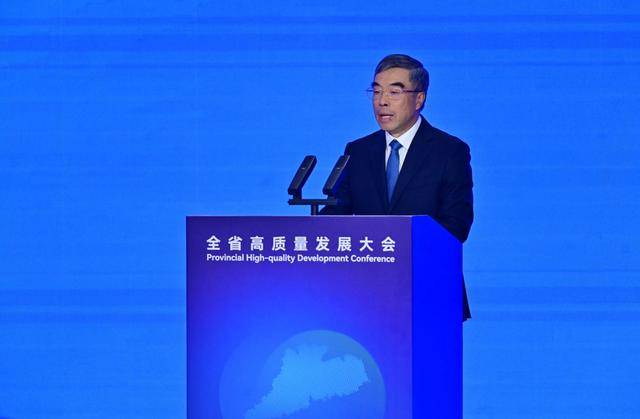
"人工智能带来的价值不是简单的效率提升和生活便利,而是涉及到行业底层逻辑、服务模式与价值链 的深层变化,需要构建开放合作和可持续发展的生态体系,从而有效应对挑战,真正释放人工智能的价 值。"梁华说,华为打造以昇腾为核心的AI开放生态,深化开源开放,持续提升易用性,让开发者可以 更快速地创新迭代,激发高校和研究机构更多的技术创新以及产业更多的应用创新,赋能合作伙伴打造 场景化解决方案,推动传统产业优化升级和未来产业加快培育。目前已有43个业界主流大模型基于昇腾 预训练,200多个开源模型适配昇腾生态,推动6000多个解决方案落地应用。 在2月24日举行的全省高质量发展大会上,华为公司董事长梁华建议,打造开源、开放的AI生态,加速 释放人工智能的产业价值。 他举例说,美的聚焦"智慧家居、智慧企业、智慧工厂"三大业务的产品服务智能化,基于昇腾算力平台 实现模型训练和智能问答、质量问题打标、卖点分析等场景推理,解决实际应用问题,工作流程更加高 效,生产流程更加智能。 华为公司董事长 梁华 (作者:深圳特区报&读特记者 方慕冰/文 赖犁/图) ...
AI 营收占比 32% 甬兴证券:维持联想集团买入评级
Ge Long Hui· 2026-02-24 07:18
Core Insights - Lenovo Group reported a record high revenue for the third quarter of the fiscal year 2025/26, achieving $22.2 billion, a year-on-year increase of 18% [1] - Adjusted net profit surged by 36% to $589 million, with profit growth outpacing revenue growth, indicating a significant improvement in profitability [1] - AI-related revenue became a key growth driver, soaring by 72% and accounting for 32% of total revenue, showcasing the successful implementation of the AI strategy [1] Business Segment Performance - The Intelligent Devices Group (IDG) generated approximately $15.755 billion in revenue, a year-on-year increase of 14.3%, with global PC market share rising to 25.3% [2] - The Infrastructure Solutions Group (ISG) reported revenue of about $5.176 billion, a substantial increase of 31.42%, with cloud infrastructure revenue reaching new highs and operational losses significantly improving [2] - The Solutions and Services Group (SSG) achieved revenue of approximately $2.652 billion, up 17.52%, with operating profit margin nearing historical highs at 22.5% [2] Future Outlook - Forecasts for adjusted net profit for fiscal years 2026-2028 are $1.731 billion, $2.023 billion, and $2.268 billion, with respective growth rates of 15%, 17%, and 12% [3] - The company is expected to maintain steady revenue and profit growth, with improving financial metrics such as decreasing debt-to-asset ratios and increasing liquidity ratios [3] - Lenovo's mixed AI strategy across AI terminals, infrastructure, and services is anticipated to continue benefiting from the global AI industry development [3][4]

华为公司董事长梁华:打造开源、开放的AI生态
Sou Hu Cai Jing· 2026-02-24 06:55
Group 1 - The core viewpoint emphasizes the importance of a robust digital infrastructure for the sustainable development of artificial intelligence (AI), highlighting the interdependence of AI technology, infrastructure, and application scenarios [2] - Huawei's chairman Liang Hua advocates for the establishment of a strong digital infrastructure as the foundation for AI innovation and application, stressing the need for advanced planning in AI data center construction to meet large-scale deployment requirements [2] - The company aims to create an open-source AI ecosystem to accelerate the release of industrial value from AI, which involves deep changes in industry logic, service models, and value chains [2] Group 2 - Huawei is focusing on building an AI open ecosystem centered around its Ascend platform, enhancing usability for developers to foster rapid innovation and application in various industries [3] - Currently, 43 mainstream industry models are based on the Ascend pre-training, with over 200 open-source models adapted to the Ascend ecosystem, leading to the implementation of more than 6,000 solutions [3] - The HarmonyOS ecosystem is expanding, with over 40 million devices equipped with HarmonyOS 5 and HarmonyOS 6, and more than 75,000 native applications and cloud services available across various sectors [3] Group 3 - The Southern Power Grid is leading the creation of an open-source community for the Atom Electric Harmony, aiming for interoperability among different types and brands of power equipment [4] - Liang Hua calls for more developers and users to participate in building the Harmony ecosystem, emphasizing collaborative innovation to drive technological and industrial advancements [4] - The construction of a technological ecosystem is viewed as a collective effort rather than a competition among individual technologies or companies, highlighting the value of open collaboration [4]

小米旗下瀚星创投等入股钥熠电子
Xin Lang Cai Jing· 2026-02-24 06:50
Group 1 - The core point of the article is the recent changes in the shareholder structure and registered capital of Shanghai Yaoyi Electronic Technology Co., Ltd, indicating potential growth and investment interest from major players like Xiaomi [1] - The company has increased its registered capital from approximately 5.452 million RMB to about 5.707 million RMB, reflecting a commitment to expand its operations [1] - Shanghai Yaoyi, established in November 2017, focuses on the research, production, and sales of OLED materials, positioning itself as an innovative high-tech enterprise in the electronics sector [1] Group 2 - New shareholders include Xiaomi's Hanxing Venture Capital and Tianjin Haihe Shunke Equity Investment Partnership, suggesting strategic partnerships that could enhance the company's market position [1] - The company's legal representative is Xiang Chuanyi, and it is co-held by Xiang Chuanyi, Shanghai Daoer Enterprise Management Center (Limited Partnership), and the newly added shareholders [1] - The business scope of Shanghai Yaoyi includes the development and manufacturing of electronic special materials, which aligns with the growing demand for advanced electronic components in various industries [1]

算力产业链大涨!光纤、MLCC两大涨价主题强势 机构看好行业确定性
Zhong Guo Zheng Quan Bao· 2026-02-24 05:27
Group 1 - The optical fiber industry is experiencing strong performance, with Changfei Optical Fiber (601869) hitting a historical high and a market value of 194.33 billion yuan [1] - According to Huatai Securities, the price of G.652.D single-mode optical fiber in China reached a near seven-year high of over 35 yuan per core kilometer in January 2026, driven by changes in supply and demand dynamics [1] - The demand surge is attributed to the global AI data center's increasing need for optical fibers, while supply constraints are due to the long expansion cycle of upstream materials like optical fiber preform [1] Group 2 - The MLCC (Multi-layer Ceramic Capacitor) sector is also witnessing price increases, with leading stock Fenghua Hi-Tech (000636) hitting a price limit [1] - Recent reports indicate that the spot price of MLCC in South Korea has risen nearly 20%, with expectations for continued short-term increases due to explosive growth in AI server demand [1] - MLCC is essential for stabilizing power supply and filtering interference signals in electronic devices, and the demand for MLCC in AI servers is three times higher than in regular servers, exacerbating supply tightness [1] Group 3 - Other sectors such as CPO, PCB, and copper cable high-speed connections are also rising, with companies like New Yisheng (300502) and Tianfu Communication (300394) seeing significant stock increases [2] - Huagong Technology (000988) has reached a price limit, with reports indicating that multiple production lines are operating at full capacity during the Spring Festival, ensuring the production of high-speed optical modules [2] - According to Xingye Securities, the combined capital expenditure guidance for major cloud service providers like Amazon, Google, Meta, and Microsoft is approximately 598.7 billion dollars for 2026, indicating a strong and certain demand for global AI computing power [2]




未知机构:DW电子领导好开工大吉汇报一下我们电子开年组合1盛科-20260224
未知机构· 2026-02-24 03:50
Summary of Conference Call Records Industry and Companies Involved - **Industry**: Electronic and AI-related technologies - **Companies**: - 盛科通信 (Shengke Communication) - 芯碁微装 (Chipbond Technology) - 英诺赛科 (InnoScience) - 菲利华 (Fihua) - 佰维存储 (Baiwei Storage) Key Points and Arguments Shengke Communication - The company is positioned as a significant player in the domestic computing power sector for 2026, with a focus on the rollout of domestic super nodes this year - The 51.2T product is progressing smoothly and is expected to significantly contribute to the volume of domestic super nodes - The 25.6T product has already secured orders from domestic CSP clients, with a target market capitalization exceeding 1500 million, indicating potential for doubling in value [1][1][1] Chipbond Technology - The company is projected to achieve a market capitalization above 450 million, with expectations of delivering 2 million worth of equipment in a single month during Q1 - Anticipated high growth in performance due to the doubling of advanced packaging equipment shipments each year [1][1][1] InnoScience - Identified as a potential dark horse for 2026, with a focus on the progress of the RubinUltra solution - GaN technology is highlighted as the optimal solution for AI cabinets, addressing the core contradictions of "ultra-high power + extreme efficiency + high density" in AI data centers - If the NVL576 cabinet fully adopts GaN, the value per cabinet could reach 200,000 USD, indicating substantial incremental value [2][2][2] Fihua - The demand for Q fabric is expected to surge due to cutting-edge AI chip products from Nvidia and Google, leading to a global supply shortage - Fihua, leveraging decades of aerospace quartz fiber technology, is positioned to become a global leader in Q fabric, with a target market capitalization of 100 billion [2][2][2] Baiwei Storage - The company is projected to experience significant growth in 2026, with Q1 performance expected to double compared to previous periods - Continuous expansion in advanced packaging is underway, with samples being sent for testing to GPU clients [2][2][2] Additional Important Information - The Hong Kong listing for Chipbond Technology has received approval, with expectations for the listing to occur in early April - The sector is also anticipating the imminent listing of 盛合晶微 (Shenghe Jingwei), which is expected to act as a strong catalyst for the market [1][1][1]
未知机构:招商电新AIDC观点更新20260223近两天复盘了一些春节-20260224
未知机构· 2026-02-24 03:20
Summary of Conference Call Notes Industry Overview - The focus remains heavily on AI, indicating its central role in current market dynamics [1] - Significant events during the Spring Festival period highlight the evolving landscape of AI and related technologies [2] Key Points and Arguments 1. **AI Model Developments**: New AI models have emerged, leading to a surge in token usage, reinforcing the cycle of AI capital expenditure [2][3] 2. **Material Demand Surge**: The explosion in AI demand has resulted in depleted upstream raw material inventories, causing price increases across various products, including storage, MLCC, and optical fibers [3] 3. **Advancements in Autonomous Driving**: The mass production of cybercab technology brings the era of autonomous driving closer [3] 4. **Robotics Performance**: The performance of robots during the Spring Festival was impressive, although their AI capabilities still require validation [3] 5. **Strong Financial Reports**: Companies like GEV and VRT reported strong financial results, reinforcing the logic behind electric liquid cooling solutions [3] 6. **U.S. Energy Storage Legislation**: The refinement of the OBBB Act in the U.S. is noteworthy for the energy storage sector [3] Investment Insights 1. **Domestic Supply Chain Focus**: Attention should shift from the ability of domestic AIDC equipment to go overseas to the potential for tokens to expand internationally, with domestic AIDC demand likely to exceed expectations [3] - Key areas to monitor include UPS or HVDC (e.g., Kstar, Kehua Data, Invt), cold plates (e.g., Jiebang Technology), and liquid cooling solutions (e.g., InvoTech, Tongfei) [3] 2. **Upcoming GTC Conference**: The GTC conference in mid-March is anticipated to showcase new chips from NV, with the mass production of Rubin chips potentially arriving sooner than expected [3] - Suggested areas for early attention include HVDC (e.g., Magpow, Ruiming Technology), Rubin PSU (e.g., Magpow), Rubin cold plates (e.g., InvoTech, Jiebang Technology), and possible VPD power supply (e.g., Newray) [3] 3. **Electricity Shortage Chain**: Continuous monitoring of companies related to gas turbines (e.g., Changbao Co.), electrical equipment, and undervalued AIDC energy storage (e.g., Sungrow Power) is recommended [4] 4. **Upstream Raw Material Focus**: The strong performance of Samsung Electro-Mechanics during the holiday indicates that demand for MLCC nickel powder may exceed expectations [4] Additional Important Notes - The Spring Festival period has catalyzed significant changes in the AI landscape, emphasizing the importance of staying updated on technological advancements and market shifts [2][3]
催化转型:金融部门的韧性和创新驱动的增长(英)2026
Shi Jie Yin Hang· 2026-02-24 03:05
Investment Rating - The report does not explicitly provide an investment rating for the industry but emphasizes the positive impacts of the SCFI Trust Fund on financial sector resilience and innovation-led growth in the East Asia and Pacific region [26][28]. Core Insights - The SCFI Trust Fund Phase 3, operational from July 2020 to December 2023, allocated US$10.9 million to support financial and private sector development in seven countries, leveraging US$4.6 billion in World Bank lending [34][35]. - The report highlights the implementation of 51 reforms across various sectors, focusing on financial stability, inclusion, resilience, and innovation [45]. - Key achievements include significant reforms in Cambodia, Indonesia, and the Philippines, contributing to enhanced financial sector stability and private sector growth [36][40][42]. Summary by Sections Section 1: Overview - The East Asia and Pacific region faced multiple crises, including the COVID-19 pandemic, which led to economic slowdowns and increased poverty levels [56][62]. - Despite these challenges, the region has shown resilience, with a recovery in economic activity driven by exports and private consumption [57][60]. Section 2: SCFI Trust Fund - The SCFI Trust Fund, established in partnership with the Ministry of Economy and Finance of Korea, aims to enhance financial sector stability and promote private sector-led growth [72][74]. - The fund has supported various initiatives, including technical assistance and capacity building, to foster innovation and sustainable development [80]. Section 3: Impacts - The SCFI Trust Fund has facilitated 51 reforms, focusing on financial stability, financial inclusion, and private sector development across seven countries [45]. - Notable outcomes include Cambodia's first local currency government bond issuance and Indonesia's Financial Sector Omnibus Law [40][41]. Section 4: Spotlight Countries - The report provides in-depth insights into Cambodia, Indonesia, and the Philippines, showcasing their significant achievements and reforms supported by the SCFI Trust Fund [36][42]. - Other countries like Lao PDR, Mongolia, and the Pacific Islands also benefited from SCFI initiatives, enhancing their financial systems and regulatory frameworks [43]. Section 5: Lessons Learned and Recommendations - Key lessons include the importance of leveraging Korean development experience and enhancing coordination among client countries [30][44]. - Recommendations for future phases emphasize the need for long-term engagement and stakeholder dialogue to ensure the sustainability of reforms [44][55].