
Funds

Search documents
“投研负责人”朱永明任副总!民生加银基金“体内循环”如何长大
Sou Hu Cai Jing· 2025-05-28 06:53
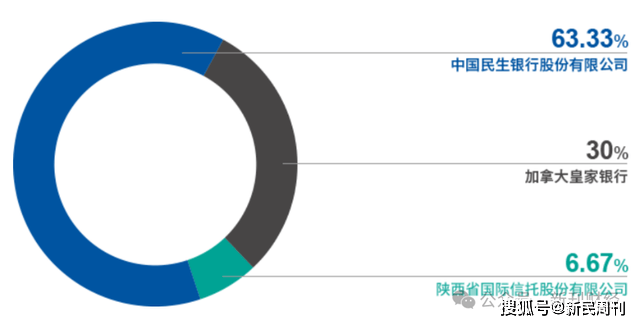
Management Changes - Zhu Yongming has been appointed as the new Deputy General Manager of Minsheng Jianyin Fund, while Ding Hui has taken over as the Secretary of the Board, effective May 26, 2025 [1][2] - Zhu Yongming's background is primarily in corporate banking and strategic management, raising concerns about his fit for the role of head of investment research [1][5] - Ding Hui has a background in accounting and risk management, having previously worked at KPMG and China Minsheng Bank [2] Company Overview - Minsheng Jianyin Fund was established on November 3, 2008, with a registered capital of 300 million yuan, and is co-owned by China Minsheng Bank (63.33%), Royal Bank of Canada (30%), and Shaanxi International Trust Co., Ltd. (6.67%) [3][5] - The fund has struggled with marketization, leading to stagnation in its asset management scale, which has remained below 160 billion yuan since 2022 [9][15] Fund Performance - As of the first quarter of this year, the management scale of equity and mixed funds was 4.937 billion yuan and 11.034 billion yuan, respectively, reflecting declines of 18.23% and 23.19% compared to the end of 2022 [9] - Despite the growth of bond funds, which have surpassed 100 billion yuan, this growth is largely supported by the major shareholder, China Minsheng Bank, with institutional investors holding over 95% of the top 15 funds [15][19] Investment Structure - The top-performing funds are predominantly fixed-income products, with significant ownership by institutional investors, indicating a lack of retail investor engagement [15][19] - Reports indicate that major shareholders, including China Minsheng Bank, hold over 40% of the fund shares in several products, further emphasizing the reliance on institutional investment [19][20]

夹缝里的基金播客,“破圈”仍是路漫漫?
Sou Hu Cai Jing· 2025-05-28 06:13
Core Insights - The podcast industry, particularly in the fund sector, is experiencing a mixed performance, with some firms finding their niche and gaining traction, while others are stagnating or losing engagement [1][3]. Group 1: Performance of Fund Podcasts - Some fund podcasts are thriving, establishing a positive feedback loop between their unique advantages and market demand [1]. - Leading firms such as Huaxia Fund and China Europe Fund are part of the top tier in this space [2]. - Conversely, certain podcasts have entered a plateau phase, with some ceasing updates or losing their audience [3]. Group 2: Advantages and Challenges - Podcasts offer distinct advantages over other media forms, such as higher authenticity and completion rates compared to articles and short videos [4]. - However, the podcast ecosystem faces challenges in terms of audience reach and long-term user engagement, which are identified as pain points for fund podcasts [4]. Group 3: Future Directions for Fund Podcasts - To expand their audience, fund podcasts need to "break the circle" by creating better content that appeals to audiences accustomed to algorithms and short videos [6]. - The current economic environment, including interest rate cuts and shifts in asset allocation, presents an opportunity for fund podcasts to reach a broader audience as public funds attract new clients [6]. - There is a need for more fund managers, researchers, and analysts to engage with the public through podcasts, which requires overcoming initial discomfort and building patience [6].
【财经分析】年内债券型ETF大幅“吸金” 信用债ETF展露强势吸引力
Xin Hua Cai Jing· 2025-05-28 04:14
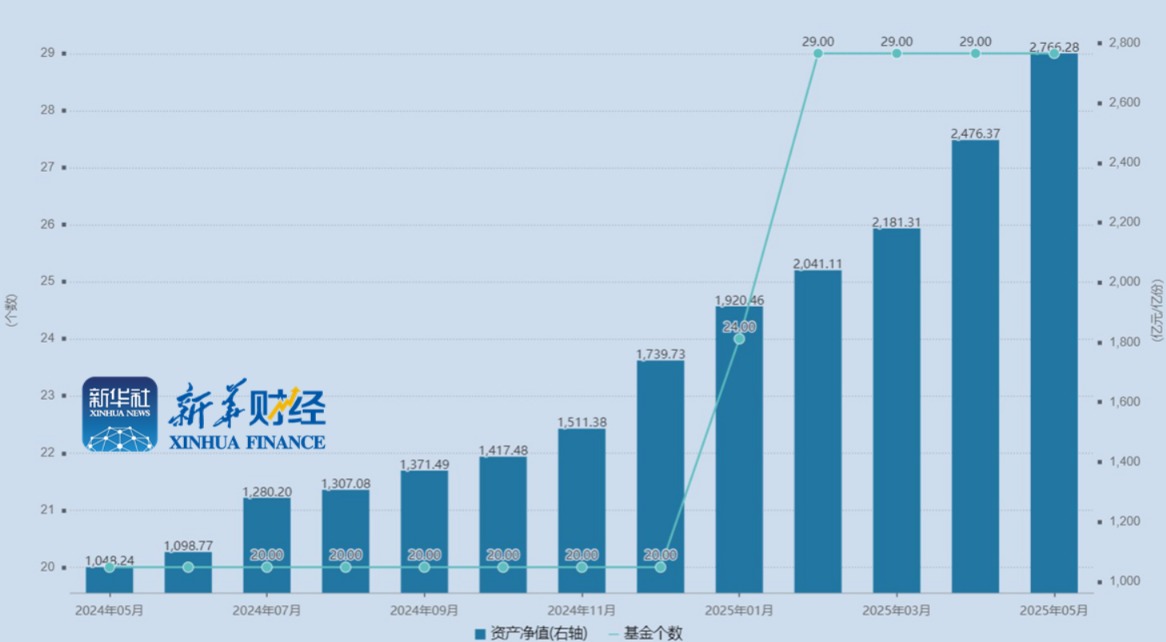
Core Insights - The bond ETF market in China has seen significant growth since 2025, with total assets exceeding 270 billion yuan, marking an increase of over 100 billion yuan and a growth rate of nearly 60% compared to the end of the previous year [1][2] - Bond ETFs are becoming an efficient tool for diversified asset allocation, particularly in a low-interest-rate environment, enhancing returns and avoiding homogenized investments [1] Market Overview - As of May 27, 2025, there are 29 bond ETFs in the market, including 16 interest rate bond ETFs, 11 credit bond ETFs, and 2 convertible bond ETFs, with a total scale of 276.63 billion yuan, reflecting a net inflow of 10.27 billion yuan and a growth rate of 59% compared to the end of 2024 [2] - The bond ETF scale has increased by approximately 163.89% compared to May 2024 [2] Credit Bond ETF Growth - Credit bond ETFs have rapidly become the main growth driver in the bond ETF sector, with their total scale reaching 134.36 billion yuan as of May 27, 2025, a growth of 80.28 billion yuan and an increase of about 148.46% since the end of the previous year [4] - The introduction of benchmark market-making credit bond ETFs has improved market liquidity and provided differentiated investment tools for investors [4] Investment Environment - The macroeconomic stability and moderately loose monetary policy suggest that interest rates may remain stable, with medium-term high-rated credit bonds offering attractive yields and lower risks [4] - The demand for high-rated credit bonds is increasing due to the ongoing "asset shortage" in high-yield bonds, particularly in the context of local government debt management [4] Investor Participation - Various types of investors, including pension funds, bank wealth management, insurance asset management, and trust products, are actively participating in the investment of benchmark market-making corporate bond ETFs [6] - Bond ETFs are seen as a bridge connecting traditional savings with capital markets, offering transparent holdings, flexible trading, and controllable risks [6] Future Outlook - The future innovation direction for bond ETFs will focus on product diversification and strategy refinement, including the segmentation of bond types and durations to meet investors' varying risk-return profiles [7] - The development of credit bond ETFs in China has significant growth potential, with the largest global credit bond ETF reaching approximately 50 billion USD [6]
公募基金4月规模增长9000亿至33.12万亿,货基规模单月飙升超6000亿
Ge Long Hui· 2025-05-28 02:59
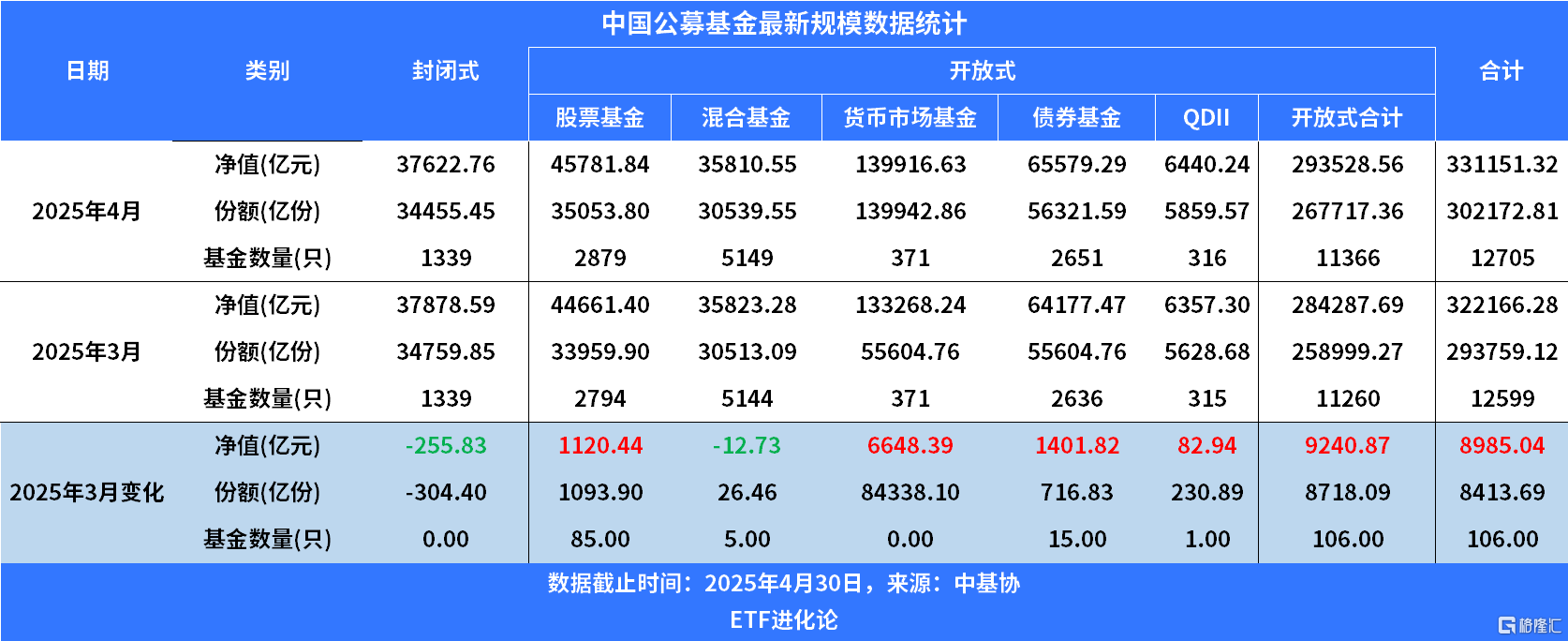
Core Insights - As of April 2025, the net asset value of China's public funds reached 33.12 trillion yuan, an increase of 898.5 billion yuan from March 2025, indicating a positive growth trend in the fund market [1][2] Fund Types Summary - **Equity Funds**: The scale reached 4.58 trillion yuan in April, up by 112.04 billion yuan, reflecting a month-on-month growth of 2.51% [1][2] - **Mixed Funds**: The scale slightly decreased to 3.58 trillion yuan, with a minor decline of 1.27 billion yuan, showing a negligible drop of 0.04% [1][2] - **Bond Funds**: The scale increased to 6.56 trillion yuan, with a growth of 140.18 billion yuan, representing a month-on-month increase of 2.18% [1][2] - **Money Market Funds**: The scale surged to 13.99 trillion yuan, with an increase of 664.84 billion yuan, marking a significant month-on-month growth of 5.00%, which was the main driver of overall growth [1][2] - **QDII Funds**: The scale rose to 644.02 billion yuan, with an increase of 8.29 billion yuan, reflecting a month-on-month growth of 1.31% [1][2] Market Trends - The increase in money market funds accounted for 74% of the total growth, indicating a preference for low-risk, high-liquidity assets among investors, likely influenced by monetary policy easing and a decline in market risk appetite [3] - The banking wealth management market saw a reduction of 0.81 trillion yuan in the first quarter, with a total scale of 29.14 trillion yuan at the end of the quarter, showing a year-on-year growth of 9.41% [3] - The Central Political Bureau's meeting emphasized the need for proactive macroeconomic policies, setting the tone for potential monetary easing measures [3] Financial Landscape Changes - The financial landscape in China is being reshaped by monetary easing, with wealth management scales reaching new highs, surpassing 31 trillion yuan by May 2025 [4] - Despite the recovery in wealth management scales, money market funds continue to attract significant inflows due to their higher liquidity and stability [4] - Bond funds also reversed a previous trend of net outflows, with a growth of 140.18 billion yuan in April, indicating renewed investor interest [4] Equity Market Dynamics - In the equity market, stock funds saw a net subscription of 109.3 billion units, leading to a significant increase of 112.04 billion yuan in scale, driven by substantial inflows into stock ETFs [5] - Mixed funds experienced a slight decline in scale despite an increase in units, as net asset value fell due to market fluctuations [5] - The growth in QDII funds was primarily due to the appreciation of existing products rather than new fund issuances [5] Interest Rate Environment - In a declining interest rate environment, mid-to-long-term pure bond and "fixed income +" products are still considered valuable for allocation [7] - The market is witnessing a shift towards "fixed income +" strategies that incorporate a small amount of equity assets, reflecting changing investor preferences [7]
方正富邦基金首席投资官汤戈:中长期资金入市重塑市场生态
Cai Jing Wang· 2025-05-28 02:54
Group 1 - The core viewpoint of the articles emphasizes the importance of encouraging long-term capital to enter the capital market, which is seen as a strategy to stabilize market expectations and optimize investment structures [1][2][3] - The introduction of policies aimed at promoting long-term funds, such as insurance and pension funds, is expected to create a more rational and stable market environment, reducing volatility and enhancing value-driven investment strategies [2][3] - The shift towards long-term capital is anticipated to change the A-share market dynamics, as these funds focus on long-term profitability and industry trends, leading to a decrease in speculative trading [3] Group 2 - The asset management industry is urged to enhance its service capabilities by strengthening research efforts and closely monitoring company performance to avoid herd behavior and unnecessary losses [4] - The company aims to provide professional and diversified wealth management solutions, with a target of surpassing 80 billion in managed assets by the end of 2024, indicating a growth rate higher than the industry average [4] - The fixed income fund business of the company has shown significant improvement, with a three-year absolute return of 12.49%, ranking 13th among 144 public fund companies, reflecting a robust investment performance [5]
再创新高!境内公募基金规模突破33万亿元
Sou Hu Cai Jing· 2025-05-28 02:41
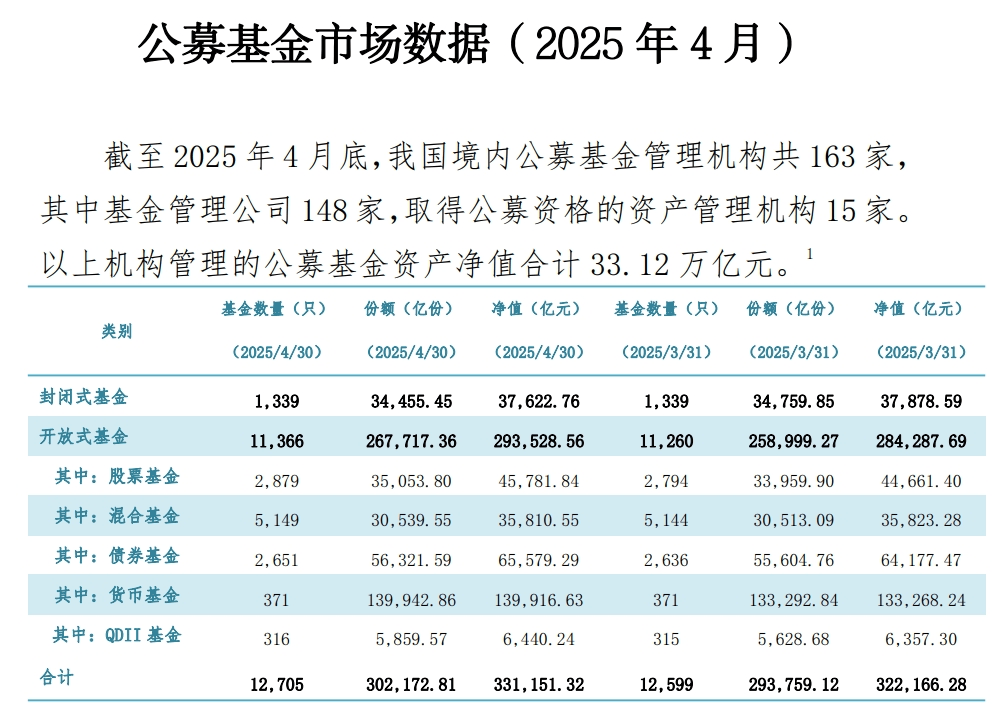
表中"封闭式基金"包含申报为封闭运作和定期开放的基金。由于四舍五入原因,可能存在分项之和不等于合计的情形。基金数量统计不含已向 证监会报送清盘的基金。数据来源于中国证监会。 数据显示,截至2025年4月底,境内公募基金份额和净值均高于3月末同期,实现"双增长",分别达到302172.81亿份和331551.32亿元。 2025年4月,尽管A股一度受国际局势影响下挫,但随着"国家队"积极护盘、机构投资者纷纷唱多和上市公司密集回购,大盘迅速企稳回升并 收复失地;同时,境外市场有所回暖,债券市场调整后出现反弹;此外,存款利率不断走低,间接导致了"存款搬家"。 | 类别 | 基金数量(只) | 份额(亿份) | 净值(亿元) | 基金数量(只) | 份额(亿份) | 净值(亿元) | | --- | --- | --- | --- | --- | --- | --- | | | (2025/4/30) | (2025/4/30) | (2025/4/30) | (2025/3/31) | (2025/3/31) | (2025/3/31) | | 封闭式基金 | 1,339 | 34,455.45 | 37,622. ...
华安基金管理有限公司关于华安沣信债券型证券投资基金增设E类基金份额并修改基金合同等法律文件的公告
Shang Hai Zheng Quan Bao· 2025-05-27 18:54
登录新浪财经APP 搜索【信披】查看更多考评等级 为更好地满足投资者的投资需求,提供更灵活的理财服务,经与基金托管人中信银行股份有限公司协商 一致,华安基金管理有限公司(以下简称"本公司")决定自2025年5月29日起,对华安沣信债券型证券 投资基金(以下简称"本基金")在现有基金份额的基础上增设E类基金份额,并根据基金管理人信息更 新等对《华安沣信债券型证券投资基金基金合同》(以下简称"基金合同")等法律文件的相关内容进行 修订。具体情况如下: 一、增设E类基金份额的情况 1、本基金根据申购费、销售服务费收取方式等的不同,将基金份额分为不同的类别。在投资者申购时 收取申购费用,并不再从本类别基金资产中计提销售服务费的,称为A类基金份额;在投资者申购时不 收取申购费用,而是从本类别基金资产中计提销售服务费的,称为C类、E类基金份额。投资者可自行 选择申购的基金份额类别。 2、本基金的A类基金份额、C类基金份额和E类基金份额分别设置代码,由于基金费用的不同,本基金 各类基金份额将分别计算并公告基金份额净值。本基金增设E类基金份额初始基金份额净值与当日A类 基金份额的基金份额净值一致。 ■ 3、本次增设的本基金E ...
万家基金管理有限公司关于增加广发证券为旗下部分基金销售机构并开通定投及参与费率优惠活动的公告
Shang Hai Zheng Quan Bao· 2025-05-27 18:54
Group 1 - The company has signed sales agreements with multiple securities firms, including GF Securities and Guolian Minsheng Securities, to offer fund subscription, redemption, and investment activities starting from May 28, 2025 [1][17][31] - The company will also launch a systematic investment plan (SIP) for its funds, allowing investors to set up automatic investments through the securities firms [2][19][33] - The minimum investment amount for the SIP is set at 10 yuan per period, and investors can choose their investment frequency and amount [5][22][36] Group 2 - Fund conversion services will be available starting May 28, 2025, allowing investors to convert between different funds under the same registration institution [17][31] - The minimum number of shares for conversion is 500, and conversion fees will be based on the redemption fees of the outgoing fund and the subscription fees of the incoming fund [18][32] - The company will offer promotional fee rates for fund subscriptions through these securities firms, with specific discounts to be announced by the firms [13][28][43]



首批新型浮动费率基金发行:管理人更重持营,销售节奏“细水长流”
2 1 Shi Ji Jing Ji Bao Dao· 2025-05-27 12:46
继过去10日内快速经历了申报、受理和获批后,5月27日,首批新型浮动费率基金(下称"浮费基金") 正式开售。 公开信息显示,已获批的26只基金中,5月27日启动发行的共有16只,包括易方达、汇添富、广发、富 国、嘉实、天弘、华夏、平安、南方、宏利、银华、博时、中欧、交银施罗德、华安、东方红旗下产 品。多数产品将于6月中下旬结束认购,在募集目标的设置上,最高有基金设置了80亿元。 作为公募行业开启改革新篇的关键一着,新型浮费产品"千帆竞发"背后,机构在营销上仍然火热。从各 家的营销材料来看,主要的宣传点一在浮动费率的设置科普,二在强调拟任基金经理的主动管理能力, 如选股策略、历史胜率、价值投资等。 平均认购期不到1个月 5月7日,证监会发布《推动公募基金高质量发展行动方案》明确提出,对新设立的主动管理权益类基金 大力推行基于业绩比较基准的浮动管理费收取模式。此后,首批新型浮动费率基金应声落地,标志着基 金业在产品供给侧的又一次深度优化。 渠道方面,一批托管行也正整装待发。在26只获批产品中,建设银行托管了最多的浮费基金,共达7 只,其中包括在5月27日首批发行的华夏、博时、富国、华安、银华旗下的5只。 中国银行 ...
3只纳斯达克100指数ETF成交放量,成交额环比均增加超亿元
Zheng Quan Shi Bao Wang· 2025-05-27 11:32
Core Insights - The total trading volume of Nasdaq 100 index ETFs reached 2.945 billion yuan today, an increase of 643 million yuan from the previous trading day, representing a growth rate of 27.92% [1] Trading Volume Summary - The trading volume of GF Nasdaq 100 ETF (159941) was 1.009 billion yuan, up 350 million yuan from the previous day, with a growth rate of 53.12% [1] - The trading volume of Guotai Nasdaq 100 (QDII-ETF) (513100) was 562 million yuan, an increase of 197 million yuan, with a growth rate of 53.87% [1] - The trading volume of Huaxia Nasdaq 100 ETF (QDII) (513300) was 420 million yuan, up 155 million yuan, with a growth rate of 58.34% [1] Market Performance Summary - As of market close, the average increase of ETFs tracking the Nasdaq 100 index was 0.46%, with notable performers including GF Nasdaq 100 ETF (159941) and Huaxia Nasdaq 100 ETF (QDII) (513300), which rose by 0.78% and 0.63% respectively [1]