保险

Search documents
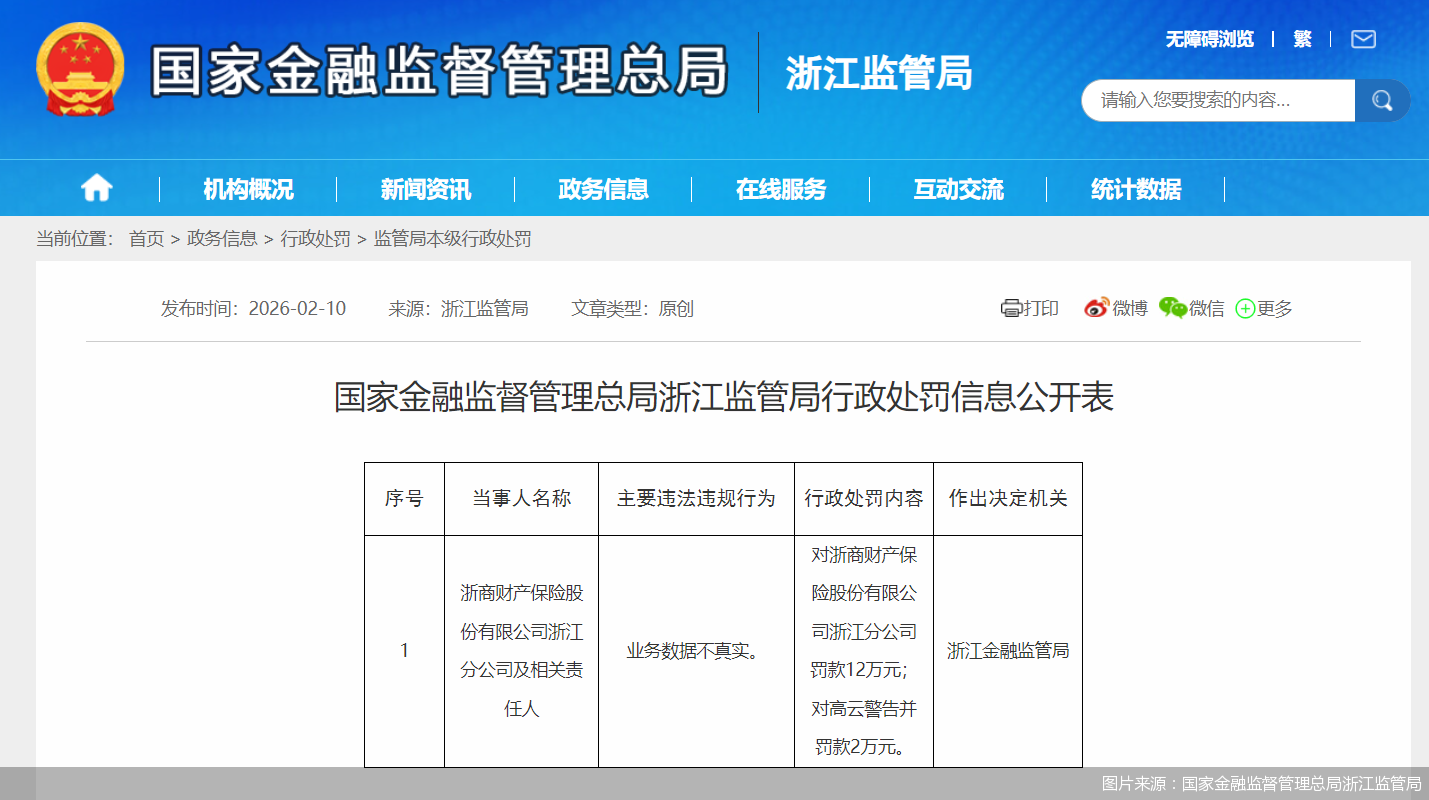
业务数据不真实,浙商保险浙江分公司合计被罚款14万元
Bei Jing Shang Bao· 2026-02-10 10:32
| 序号 | 当事人名称 | 主要违法违规行为 | 行政处罚内容 | 作出决定机关 | | --- | --- | --- | --- | --- | | | 浙商财产保险股 | | 对浙商财产保 险股份有限公 | | | | 份有限公司浙江 | | 司浙江分公司 | | | 1 | 分公司及相关责 | 业务数据不真实。 | 罚款12万元; | 浙工金融监管局 | | | 任人 | | 对高云警告并 | | | | | | 罚款2万元。 | | 北京商报讯(记者 李秀梅)2月10日,国家金融监督管理总局浙江监管局发布行政处罚信息显示,浙商财产保险股份有限公司浙江分公司及相关责任人,存 在业务数据不真实的违法违规行为,国家金融监督管理总局浙江监管局对浙商财产保险股份有限公司浙江分公司罚款12万元;对高云警告并罚款2万元。 ...

建议提案办理见成效丨优化金融供给 回应民生期盼——金融监管总局认真办理代表委员建议提案
Xin Hua Wang· 2026-02-10 10:17
Core Viewpoint - The Financial Regulatory Administration is actively addressing the challenges in the new energy vehicle insurance sector, aiming to enhance consumer protection and support the high-quality development of the new energy vehicle industry [1][2]. Group 1: New Energy Vehicle Insurance - The proposal by Zhang Xinghai, Chairman of Seres Group, emphasizes the need to improve the risk-sharing mechanism to resolve the difficulties in insuring new energy vehicles [1]. - As of now, over 1.35 million new energy vehicles have successfully obtained insurance through the "Easy to Insure" platform, providing risk coverage exceeding 1.36 trillion yuan, which alleviates the high compensation risk in this sector [1]. - The Financial Regulatory Administration has launched the first guiding opinions on new energy vehicle insurance, implementing a comprehensive set of policy measures to facilitate the industry's development [2]. Group 2: Support for Private Economy - Huang Daifang, Chairman of Taihao Group, proposed optimizing the loan renewal management mechanism to enhance bank credit support for the private economy [3]. - The Financial Regulatory Administration has issued a notice to ensure stable growth in credit for small and micro enterprises, with new credit issuance amounting to 30.4 trillion yuan, of which 32.2% is in the form of credit loans [3]. - The administration is committed to monitoring key indicators related to private enterprise loans and credit loan balances to ensure continued support for the private sector [3]. Group 3: Regulatory Measures and Industry Engagement - The Financial Regulatory Administration emphasizes the importance of research and industry feedback in processing proposals, ensuring that the concerns of representatives are addressed [4]. - In response to a proposal regarding the regulation of illegal loan intermediaries, the administration has taken measures to standardize financial institution behavior and enhance consumer education [5]. - The administration has successfully completed all proposals ahead of the stipulated time, receiving positive feedback from representatives and affirming its commitment to a people-centered financial approach [5].
75家财险公司净利总和暴增178% 国寿39.76亿夺魁
2 1 Shi Ji Jing Ji Bao Dao· 2026-02-10 10:07
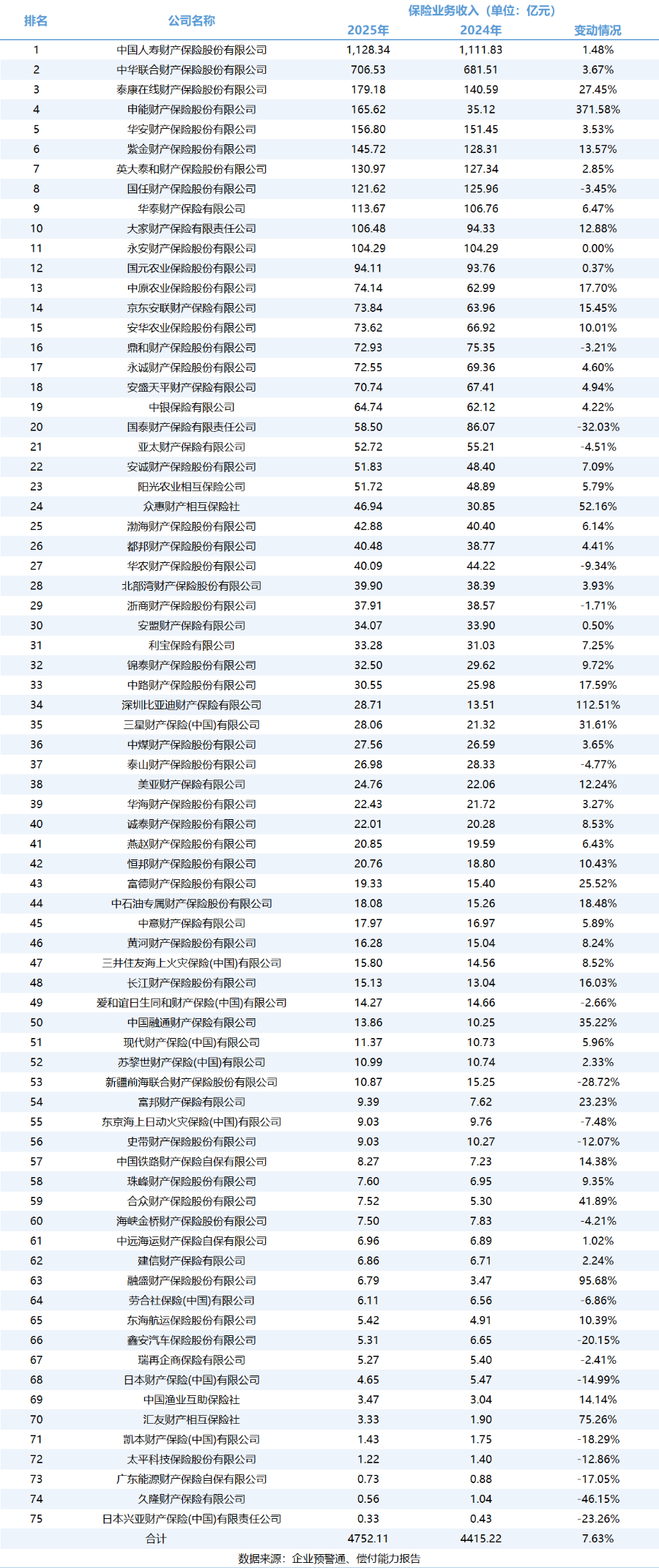
Core Insights - The property insurance market in 2025 shows a clear trend of "the strong getting stronger," with leading companies maintaining significant advantages in both scale and profitability [1][6] - The overall insurance business revenue for 75 non-listed property insurance companies reached approximately 475.21 billion yuan, marking a year-on-year growth of 7.63% [1] - The net profit for these companies totaled around 14.65 billion yuan, reflecting a substantial increase of 178.18% compared to the previous year [7] Group 1: Revenue and Growth - The cumulative original insurance premium income for the property insurance industry in 2025 was about 1.76 trillion yuan, with a year-on-year growth of 3.92%, indicating a slight decline in growth rate compared to the previous year [2] - China Life Property Insurance Company led the market with a revenue of 112.83 billion yuan, a growth of 1.48%, capturing nearly a quarter of the market share [3][4] - Smaller companies like Sheneng Property Insurance and BYD Property Insurance achieved remarkable growth rates of 371.58% and 112.51%, respectively, by leveraging unique business models and synergies with parent companies [5][6] Group 2: Profitability - The property insurance industry saw a significant rebound in profitability, with a total net profit of approximately 14.65 billion yuan, a year-on-year increase of 178.18% [7][11] - China Life Property Insurance reported a net profit of 3.98 billion yuan, up 109% from the previous year, while other companies like Yingda Taihe and Zhonghua United also showed substantial profit increases [8][11] - Notably, companies such as Sheneng Property Insurance turned around from a loss of 2.46 billion yuan in 2024 to a profit of 435 million yuan in 2025 [11] Group 3: Solvency and Financial Health - The solvency ratios of many property insurance companies remained stable, with most exceeding regulatory requirements, although over 60% of companies experienced a decline in their comprehensive solvency ratios compared to 2024 [12][15] - Companies like Shenzhen BYD Property Insurance saw a significant drop in solvency ratio from 1173.83% to 589.95%, attributed to rapid business expansion [15] - Some companies, such as Xinjiang Qianhai United Property Insurance, faced solvency pressures, with their comprehensive solvency ratio nearing the regulatory threshold of 100% [16]
ETF 及指数产品网格策略周报(2026/2/10)
华宝财富魔方· 2026-02-10 09:27
Core Viewpoint - The article discusses the performance and potential of ETF grid strategies, particularly focusing on the securities and insurance sectors, as well as the gaming industry, highlighting favorable market conditions and regulatory support for growth [3][4][8]. Group 1: Securities and Insurance ETF - In January 2026, A-shares experienced 20 trading days, with the trading volume exceeding 30 trillion yuan on 8 days, indicating a strong "spring rally" market, benefiting brokerage and margin financing businesses [3]. - Multiple insurance companies reported strong sales during the "opening red" period, particularly in dividend insurance, which serves as a short-term catalyst for the industry [3]. - The article references a significant article by Xi Jinping emphasizing the construction of a "financial power" strategy, which aligns with ongoing capital market reforms, creating a favorable policy environment for the securities and insurance sectors [4]. - Comprehensive reforms, including the full registration system and the development of the "insurance + pension" third pillar, are expected to guide the long-term high-quality development of the securities and insurance industries [4]. Group 2: Gaming ETF - In January 2026, 177 domestic online games and 5 imported games were approved, with a total of 1,771 game licenses issued in 2025, marking a 20% increase from 2024 and the highest number in nearly 7 years [8]. - The domestic market for self-developed games generated actual sales revenue of 291.095 billion yuan in 2025, reflecting an 11.64% year-on-year increase, while overseas sales reached 20.455 billion USD, up 10.23% year-on-year [8]. - The gaming industry is undergoing an AI-driven transformation, with AI applications in game development and operations, which are expected to lower costs and enhance efficiency, thus sharing the benefits of industry innovation [8].

胜负手 | 谈股论金
水皮More· 2026-02-10 09:26
Market Overview - A-shares experienced a slight fluctuation today, with the Shanghai Composite Index rising by 0.13% to close at 4128.37 points, and the Shenzhen Component Index increasing by 0.02% to 14210.63 points. However, the ChiNext Index fell by 0.37% to 3320.54 points. The total trading volume in the Shanghai and Shenzhen markets was 21,249 billion, a decrease of 1,455 billion compared to the previous day [3][4]. Key Market Trends - The core focus of the market today was on the film and television sector, driven by two main factors: the optimistic expectations for the Spring Festival box office and the launch of ByteDance's Seedance 2.0 software, which has made significant advancements in video production technology. The market anticipates that strong box office performance could lead to further gains in the sector post-holiday, while underperformance could result in substantial corrections [4][5]. - The cultural media, gaming, education, internet services, and software development sectors saw significant gains, aligning with market expectations for a surge in AI applications around the holiday period [5]. Sector Performance - The precious metals and new energy sectors experienced notable adjustments. The precious metals sector's decline is attributed to profit-taking following recent price rebounds in gold and silver. The new energy sector, including solar, energy metals, batteries, and wind power, also saw weakness after previous gains, particularly following a short-term surge in the solar sector [6]. - The financial sector showed mixed performance, with the banking sector rising by 0.20%, the securities sector increasing by 0.38%, and the insurance sector declining by 0.43%. This indicates that the financial sector remains a potential stabilizing force in the market [6]. Technology Sector Insights - There was a significant divergence within the technology sector, with some stocks like Tianfu Communication reaching new highs, while others like New Yi Sheng showed downward trends. This divergence is largely due to changes in order dynamics within the chip industry, leading to increased caution among investors [7]. - The Hong Kong market also reflected a similar trend, with the Hang Seng Index and Hang Seng Technology Index experiencing gains followed by declines, primarily influenced by the performance of major stocks like Tencent Holdings, which fell by nearly 1.88% [7]. Competitive Landscape - The ongoing "red envelope war" among major internet companies is intensifying, with platforms competing for AI traffic. Stock performance among these companies has shown clear differentiation, with Alibaba rising by 1.45% and Baidu by approximately 0.9%. This competition is not just a short-term marketing strategy but is expected to significantly impact the future market positioning and industry landscape of these platforms [8].

英大财险“新少帅”呼之欲出 “大股东依赖症”仍待解
Nan Fang Du Shi Bao· 2026-02-10 09:16
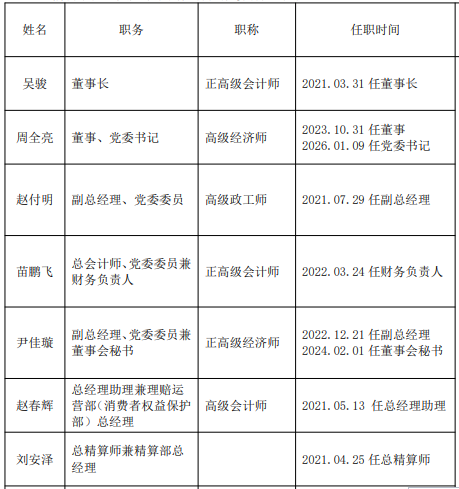
Core Viewpoint - The appointment of Zhou Quanliang as the new general manager of Yingda Property Insurance is expected to bring a fresh leadership perspective to the company, which is currently facing challenges in growth and profitability [1][5]. Group 1: Leadership Changes - Zhou Quanliang will no longer serve as the general manager starting January 28, 2026, after being appointed as the party secretary on January 9, 2026 [1]. - Zhou, born in June 1973, has a strong background in the financial sector, having held various positions within the Yingda Group and its subsidiaries [2]. - The current chairman, Wu Jun, has reached retirement age and will continue to serve only as chairman, indicating a potential leadership transition within the company [1][2]. Group 2: Financial Performance - In the first three quarters of 2025, Yingda Property Insurance reported insurance business revenue of 11.584 billion yuan, reflecting a year-on-year growth of only 2.7%, which is below the industry average [3]. - The company achieved a net profit of 1.231 billion yuan in the same period, surpassing the total net profit for 2024, positioning it among the top non-listed insurance companies in terms of profitability [3]. Group 3: Dependency on Related Transactions - A significant portion of Yingda's revenue comes from related party transactions, with income from these transactions amounting to 8.062 billion yuan in 2024, accounting for 63.31% of total insurance business revenue [4]. - In the first three quarters of the previous year, related party transaction income reached 8.147 billion yuan, making up 70.33% of the total insurance business revenue, indicating a heavy reliance on the parent company [4]. Group 4: Strategic Goals and Challenges - At the 2026 work conference, Yingda Property Insurance outlined its goals for the "14th Five-Year Plan," aiming to build a first-class property insurance company and enhance operational performance [5]. - Zhou's leadership will be tested as he is expected to leverage the advantages of being part of the State Grid while also addressing the need for new growth strategies amid a backdrop of slowing business performance [5].
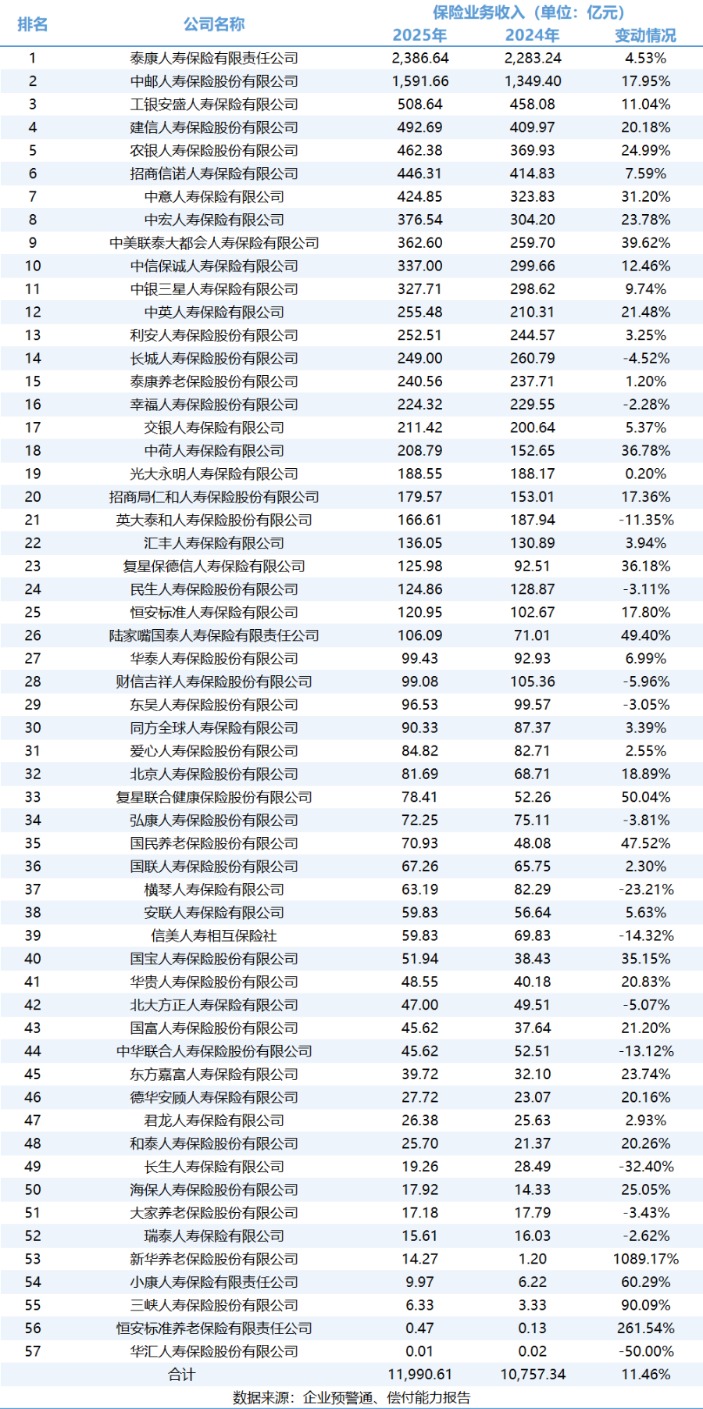
非上市寿险2025年净利翻倍 泰康中邮领跑、中信保诚扭亏
2 1 Shi Ji Jing Ji Bao Dao· 2026-02-10 09:13
Core Viewpoint - The insurance industry is experiencing growth in revenue and profits, but there are concerns regarding declining solvency ratios among many companies, indicating increased capital consumption and regulatory risks [1][12]. Group 1: Revenue and Profit Growth - In 2025, 57 non-listed life insurance companies reported a total insurance business revenue of 1,199.06 billion yuan, a year-on-year increase of 11.46% from 1,075.73 billion yuan in 2024 [2][3]. - The total net profit for these companies reached 66.62 billion yuan, marking a significant year-on-year increase of 165.72% from 25.07 billion yuan in 2024 [7][10]. - Major players like Taikang Life and China Post Life accounted for over 30% of the total revenue, with Taikang Life generating 238.66 billion yuan (up 4.53%) and China Post Life 159.17 billion yuan (up 17.95%) [5][10]. Group 2: Company Performance - Taikang Life led the revenue rankings with 238.66 billion yuan, followed by China Post Life at 159.17 billion yuan, and ICBC-AXA Life at 50.86 billion yuan [3][5]. - Notable growth was observed in smaller companies, with Xinhua Pension achieving a staggering 1,089% increase in revenue, and Sanxia Life and Xiaokang Life also showing significant growth rates of over 90% and 60%, respectively [5][10]. - However, 15 companies reported negative revenue growth, with Changsheng Life experiencing the largest decline of 32.4% [6][10]. Group 3: Solvency Ratios - The overall solvency ratio for the industry has declined, with many companies showing a decrease in their solvency adequacy ratios compared to 2024 [12][15]. - Despite the decline, most companies still maintain solvency ratios above regulatory thresholds, but some, like Changsheng Life, have fallen below the 100% regulatory line, indicating potential risks [12][15]. - Companies like Zhongxin Baocheng and China Post Life cited capital consumption and asset allocation changes as reasons for their declining solvency ratios [15][16].
英大财险“新少帅”呼之欲出,“大股东依赖症”仍待解
Nan Fang Du Shi Bao· 2026-02-10 09:04
Core Viewpoint - The appointment of Zhou Quanliang as the new general manager of Yingda Property Insurance is expected to bring a fresh leadership perspective to the company, which has been facing challenges in growth and profitability [2][8]. Group 1: Leadership Changes - Zhou Quanliang will no longer serve as the general manager starting January 28, 2026, following his recent appointment as the party secretary of the company [2]. - Zhou, born in June 1973, has a strong background in the financial sector, having held various positions within the State Grid financial system [4]. - The current chairman, Wu Jun, has reached the legal retirement age and will continue to serve only as chairman, indicating a potential leadership transition [2][4]. Group 2: Company Performance - In the first three quarters of 2025, Yingda Property Insurance reported insurance business revenue of 11.584 billion yuan, a year-on-year growth of only 2.7%, which lags behind the industry average [6]. - The company achieved a net profit of 1.231 billion yuan in the same period, surpassing the total net profit for 2024, positioning it among the top non-listed insurance companies [6]. - A significant portion of the company's revenue is derived from related party transactions, with 70.33% of the insurance business income in the first three quarters of 2025 coming from such transactions, raising concerns about dependency on the major shareholder [6]. Group 3: Strategic Challenges - The company has been criticized for its reliance on a closed-loop management structure within the State Grid financial system, which may hinder innovation and adaptability in a transforming insurance market [7]. - Yingda Property Insurance aims to establish itself as a leading property insurance company and is focusing on expanding its services to the energy sector as part of its growth strategy [7][8]. - Zhou's leadership will be crucial in navigating the company out of its comfort zone and fostering new growth dynamics amid a competitive market landscape [8].

瑞众保险笪莹、王聪:新《公司法》背景下保险公司董事履职评价机制研究 |保险家论道专栏
清华金融评论· 2026-02-10 09:03
Core Viewpoint - The article discusses the evolution and optimization of the board performance evaluation system for insurance companies in China, emphasizing the need for alignment with the new Company Law and the importance of enhancing governance and accountability in the insurance sector [4][28]. Summary by Sections Development History of Board Performance Evaluation - The evolution of the board performance evaluation system reflects the modernization of corporate governance in financial institutions, transitioning from principle-based norms to a systematic mechanism tailored to the insurance industry's characteristics [5]. Exploration and Initial Stage (Before 2010) - The initial framework for board duties was established, with the 2005 Company Law defining the fiduciary and diligence obligations of directors, although specific evaluation standards were not detailed [6]. - The 2009 Insurance Law reinforced director accountability, establishing legal support for performance evaluation [6]. - Regulatory guidance began to emerge, with the 2006 guidelines requiring annual reporting of directors' performance to shareholders [6][7]. System Formation Stage (2010-2023) - This period saw the establishment of comprehensive regulatory requirements for board performance evaluation, with key milestones in 2010 and 2021 [8]. - The 2010 notification introduced evaluation indicators for directors, marking a significant step in formalizing the evaluation process [8]. - The 2021 implementation of the evaluation method expanded the scope to include insurance institutions, creating a systematic evaluation framework with specific criteria for performance assessment [9]. Deepening Transformation Stage (2024-Present) - The new Company Law, effective in 2024, introduces enhanced fiduciary duties and a "reasonable care" standard for directors, necessitating a shift in evaluation mechanisms to align with these legal requirements [10]. - The evaluation process must evolve to balance accountability and support for directors, focusing on professional, precise, and efficient performance assessments [11]. Challenges in Current Evaluation Mechanism - The current evaluation system often prioritizes regulatory compliance over substantive performance, leading to a lack of clarity in responsibility and accountability [12]. - There is insufficient differentiation in evaluation criteria for various types of directors, which may not accurately reflect their distinct roles and contributions [13]. - The evaluation process is often formalistic, lacking standardized procedures and clear operational guidelines, which can lead to subjective biases [14]. Recommendations for Optimization - The article suggests several pathways for enhancing the evaluation mechanism, including: - Clarifying the responsibility of evaluation bodies based on company type and structure [18]. - Developing a multi-dimensional evaluation indicator system that incorporates strategic, risk, performance, and compliance aspects [18]. - Balancing short-term performance metrics with long-term strategic goals to ensure sustainable governance [20]. - Introducing incentives for proactive contributions beyond basic compliance, fostering an entrepreneurial spirit among directors [22]. - Establishing a connection between evaluation results and liability insurance to mitigate risks associated with compliance [25]. Conclusion - A scientifically sound board performance evaluation mechanism is essential for implementing the new Company Law and enhancing corporate governance in the insurance sector, ultimately supporting the industry's long-term stability and growth [28].

瑞银:料友邦保险上周股价下滑因获利回吐所致 仍属内地存款迁移受益者
Zhi Tong Cai Jing· 2026-02-10 08:39
Core Viewpoint - UBS reported that AIA Group (01299) shares fell by 8% over two trading days (February 5 and 6), likely due to profit-taking after outperforming the Hang Seng Index by 13 percentage points in the past two months, with some investors viewing the dip as a buying opportunity due to stable performance last year and optimistic long-term outlook, setting a target price of HKD 106 and a "Buy" rating [1] Group 1 - UBS noted that concerns regarding new business value growth pressure stem from temporary factors, such as regulatory changes in Thailand and Hong Kong last year, which created a high base [1] - Despite these concerns, UBS emphasized growth opportunities from the migration of deposits from mainland China, suggesting that while bancassurance is not AIA's focus, it can leverage its elite agency team targeting middle-class and affluent clients [1] - AIA is expected to benefit significantly from providing a wider range of investment options and higher expected returns through Hong Kong insurance products for mainland tourists [1] Group 2 - The company's strong distribution capabilities and focus on protection-oriented products position it well to capitalize on emerging opportunities in the market [1]