
农产品加工

Search documents
一江连两广,携手奔康庄——粤桂协作撬动区域融合发展新动能
Xin Hua Wang· 2025-09-08 02:05
Core Viewpoint - The collaboration between Guangdong and Guangxi (粤桂协作) is enhancing regional economic development through industrial cooperation, talent exchange, and consumer support, ultimately promoting common prosperity and sustainable growth in the region [1][3][4]. Industrial Development - The establishment of the Shenzhen-based deep manufacturing industrial park in Baise, Guangxi, is expected to achieve an annual output value of over 1 billion yuan, with a total projected output of 1.5 billion yuan for the park [2][4]. - Guangxi is set to build 50 projects focused on extending and strengthening industrial chains, with 49 unique industrial categories being developed [3]. - The collaboration has led to the creation of 787 new enterprises and 125 industrial parks, generating an industrial agglomeration effect with an estimated output value of 600 billion yuan [4][5]. Employment and Labor Services - The collaboration has facilitated the creation of 3,500 job opportunities in the Shenzhen Longgang-Baise Jingxi cooperation industrial park, with significant employment support for local residents [6][7]. - Over 42,000 rural laborers have been stabilized in employment through various initiatives, including the establishment of 126 labor markets and 59 employment bases [9]. - The "Sunshine Quick Hire" labor market has successfully connected over 20,000 individuals with job opportunities, enhancing employment services in the region [8][9]. Talent Exchange and Support - The "group-style" assistance model has brought in 219 retired experts to support local healthcare and education sectors in Baise, enhancing the quality of services [10][11]. - Since 2024, over 1,300 professional technical talents have been dispatched from Guangdong to Guangxi, contributing to local capacity building [12]. Consumer Support and Agricultural Development - The collaboration has facilitated the sale of over 36 billion yuan worth of agricultural products and handicrafts from Guangxi to Guangdong, enhancing market access for local farmers [15]. - The introduction of new agricultural products, such as mango ice cream, has significantly increased the processing capabilities in Guangxi, contributing to an estimated total industrial output of 210 billion yuan [14][15]. - The promotion of local brands and products through events has helped raise awareness and demand for Guangxi's agricultural offerings in larger markets [13][14]. Tourism and Cultural Integration - The integration of tourism with local cultural elements has led to a 23.38% increase in domestic tourist visits to Daxin County, generating significant revenue [16]. - The collaboration has fostered the development of cross-border tourism products, enhancing the region's attractiveness to visitors [16].
享受农林牧渔业项目所得企业所得税优惠政策,有哪些问题要注意?
蓝色柳林财税室· 2025-09-08 00:46
Core Viewpoint - The article discusses the corporate income tax reduction and exemption policies for agricultural, forestry, animal husbandry, and fishery projects in China, highlighting the eligibility criteria and specific projects that qualify for these tax benefits. Group 1: Tax Exemption Eligibility - Not all agricultural, forestry, animal husbandry, and fishery project incomes are eligible for corporate income tax exemptions. Specific projects that are exempt include the cultivation of vegetables, grains, tubers, oilseeds, legumes, cotton, hemp, sugar crops, fruits, nuts, new crop variety breeding, medicinal herb cultivation, forestry, livestock and poultry breeding, collection of forest products, and offshore fishing [3][4]. - Income from certain projects, such as the cultivation of flowers, tea, and other beverage and spice crops, as well as marine and inland aquaculture, is subject to a 50% reduction in corporate income tax [3]. Group 2: Company and Farmer Operating Model - Companies operating under a "company + farmer" model can enjoy corporate income tax benefits. In this model, companies contract with farmers for livestock and poultry breeding, providing necessary resources while retaining ownership rights [6][7]. Group 3: Specific Project Definitions - The income from breeding new crop varieties includes profits from breeding materials and the production, initial processing, and sale of seeds and seedlings [7]. - Income from forestry activities encompasses profits from tree and bamboo breeding, nurturing, management, and large-scale afforestation [7]. - Income generated from livestock and poultry waste can also qualify for tax benefits under the livestock and poultry breeding category [8]. Group 4: Initial Processing of Agricultural Products - The scope of initial processing of agricultural products is defined by specific regulations, and companies that purchase agricultural products for replanting or breeding can qualify for tax benefits if they do not significantly increase the product's value through processing [8][9]. - Direct sales of purchased agricultural products do not qualify for tax benefits [8]. Group 5: Accounting and Reporting Requirements - Companies engaged in different projects subject to various corporate income tax policies must maintain separate accounting records for each project to calculate tax bases and benefits accurately [9]. - Companies can apply for tax benefits through self-assessment and must retain relevant documentation for review [9].


“柬中拓展农产品贸易空间巨大”(第一现场)
Ren Min Ri Bao· 2025-09-07 22:16
Core Insights - The agricultural trade cooperation between Cambodia and China is thriving, with an expanding list of Cambodian fruits exported to China, including the recent addition of fresh durians [3][4] - The Cambodian coconut industry is experiencing a revival, with farmers returning to cultivate their orchards in anticipation of a coconut export agreement with China [4][6] - The Cambodian government is implementing measures to enhance the quality and transparency of agricultural products, including a QR code system for origin identification [6][7] Group 1: Agricultural Trade Expansion - In August 2023, the first batch of 2 tons of fresh durians was airlifted from Cambodia to China, marking the official opening of a fresh fruit air transport route [3] - The Cambodian Ministry of Agriculture emphasizes that the Chinese market provides significant opportunities for the export of high-quality Cambodian agricultural products [3][4] - The total agricultural export value from Cambodia exceeded $2.4 billion from January to July 2025, with a year-on-year increase of 7.5% [6] Group 2: Coconut Industry Revival - Cambodia's coconut production surpassed 250,000 tons in 2023, reflecting a year-on-year growth of 2.4% [4] - The introduction of a coconut export agreement with China has led to increased interest and investment in local coconut farms, revitalizing previously neglected orchards [4][5] - Local farmers are returning to their farms, motivated by better market prospects and higher prices offered by companies [5][6] Group 3: Quality Improvement Initiatives - The Cambodian government plans to establish a QR code system to enhance product transparency and safety, covering planting locations, processing methods, and quality standards [6][7] - The Cambodian Silk Wren Association reports that over 5,000 nests have been built nationwide, producing approximately 100 tons of edible bird's nest annually, with China being a key market for this industry [7] - The Cambodian mango processing industry has seen rapid growth, with over 200 new mango processing factories established since the approval of mango exports to China in 2021 [7]

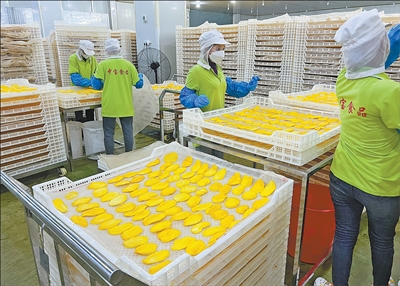
柬埔寨输华农产品清单拉长,带动当地产业加快升级 “柬中拓展农产品贸易空间巨大”(第一现场)
Ren Min Ri Bao· 2025-09-07 22:10
Group 1: Agricultural Trade Development - Cambodia's agricultural trade with China is thriving, with an expanding list of fruits exported to China, including fresh durians, which marked the opening of a direct air transport channel for fresh fruits [1] - The Cambodian Ministry of Agriculture emphasizes that the Chinese market provides significant opportunities for the export of high-quality Cambodian agricultural products, enhancing agricultural cooperation [1][4] - In the first quarter of this year, China's imports of agricultural products from Cambodia reached 980 million RMB, a year-on-year increase of 12.2%, accounting for over a quarter of the total bilateral trade [4] Group 2: Coconut Industry Revitalization - The coconut industry in Cambodia, particularly in Sihanoukville, is experiencing a revival due to the approval of coconut exports to China, leading local farmers to reinvest in their farms [2][3] - In 2023, Cambodia's coconut production exceeded 250,000 tons, reflecting a year-on-year growth of 2.4% [1] - The introduction of modern processing facilities and equipment is enhancing the efficiency and quality of coconut processing, with local companies preparing for larger orders [3] Group 3: Quality Improvement and Standardization - The Cambodian government plans to establish a QR code origin identification system to enhance product transparency and safety, covering planting locations, processing methods, and quality standards [4] - The approval for the export of edible bird's nests from Cambodia to China is expected to drive the standardization and branding of the Cambodian bird's nest industry [5] - The Cambodian government encourages enterprises with primary processing capabilities to apply for export qualifications, indicating a push towards industry quality enhancement [4][5]
2019-2025年8月中旬豆粕(粗蛋白含量≥43%)市场价格变动统计分析
Chan Ye Xin Xi Wang· 2025-09-07 00:26
Core Insights - The report by Zhiyan Consulting highlights the market trends and strategic outlook for the soybean meal industry in China from 2025 to 2031 [1] Price Trends - As of mid-August 2025, the market price for soybean meal (with crude protein content ≥ 43%) is reported at 3049.3 yuan per ton, reflecting a year-on-year increase of 5.09% and a month-on-month increase of 2.59% [1] - The price of soybean meal reached its peak in mid-August 2023 at 4706.9 yuan per ton, marking the highest value in the past five years for the same period [1]

2019-2025年8月中旬棉花(皮棉,白棉三级)市场价格变动统计分析
Chan Ye Xin Xi Wang· 2025-09-07 00:20
Core Insights - The report by Zhiyan Consulting outlines the competitive landscape and future prospects of the cotton industry in China from 2025 to 2031 [1] Price Trends - As of mid-August 2025, the market price for cotton (lint cotton, grade three) is 14,614.4 yuan per ton, reflecting a year-on-year increase of 1.76% and a month-on-month increase of 1.57% [1] - The highest recorded price in the last five years for the same period was in mid-August 2021, reaching 18,402.5 yuan per ton [1] - A statistical chart detailing the price fluctuations of cotton from 2019 to mid-August 2025 is provided, sourced from the National Bureau of Statistics [1]

2019-2025年8月中旬玉米(黄玉米二等)市场价格变动统计分析
Chan Ye Xin Xi Wang· 2025-09-07 00:20
Core Insights - The report by Zhiyan Consulting highlights the competitive landscape and investment strategies in the Chinese corn industry from 2025 to 2031 [1] Price Trends - As of mid-August 2025, the market price for corn (Yellow Corn Grade II) is reported at 2317.7 yuan per ton, reflecting a year-on-year increase of 1.88% but a month-on-month decrease of 0.44% [1] - The price of corn reached its peak in mid-August 2023 at 2864.8 yuan per ton, marking the highest value in the past five years for the same period [1]

从云南雪山茶饮到新疆沙棘,高品会成帮扶产品“出海”窗口
2 1 Shi Ji Jing Ji Bao Dao· 2025-09-06 12:25
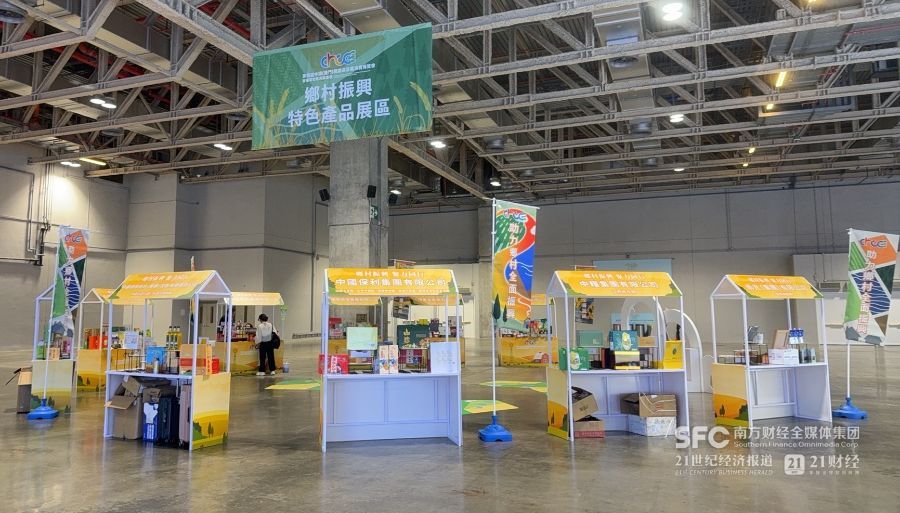
Core Points - The Fourth China (Macau) International High-Quality Consumption Expo and Hengqin World Bay Area Forum was held from September 3 to 7, showcasing products from various counties to support rural revitalization [1] - The event highlighted unique assistance products from nearly ten counties, including high-quality agricultural and cultural products, aiming to attract investment and promote local specialties [2][4] Group 1 - The expo featured a special exhibition area for rural revitalization products, showcasing items like yak meat and milk powder from Gansu, snow mountain tea from Yunnan, and high-quality tea from Dabie Mountain [1][3] - Luchuan County presented over 60 varieties of quality products, including agricultural goods and cultural tourism products, aiming to enhance its visibility and attract more investors [2][4] - The event served as a platform for local products to enter the Macau market, establishing a foundation for upgrading Luchuan's industries and promoting high-end market access [4] Group 2 - The expo included a focus on the development of the seabuckthorn industry in Aheqi County, with significant investments in cultivation and infrastructure, transforming barren land into productive orchards [5][6] - Huaneng Group's model of "enterprise + base + farmers" has successfully engaged local farmers in the seabuckthorn cultivation, achieving a production capacity of 1,700 tons and generating 7 million yuan in revenue [5][6] - The integration of sports event resources with rural revitalization strategies was explored by Nanyue Group, creating a new path for enhancing local agricultural products through cultural and tourism synergies [7][8]
从“公益牌”到“品质选”:沪喀消费协作以“上海标准”助力喀什优品升级
Sou Hu Cai Jing· 2025-09-06 06:21
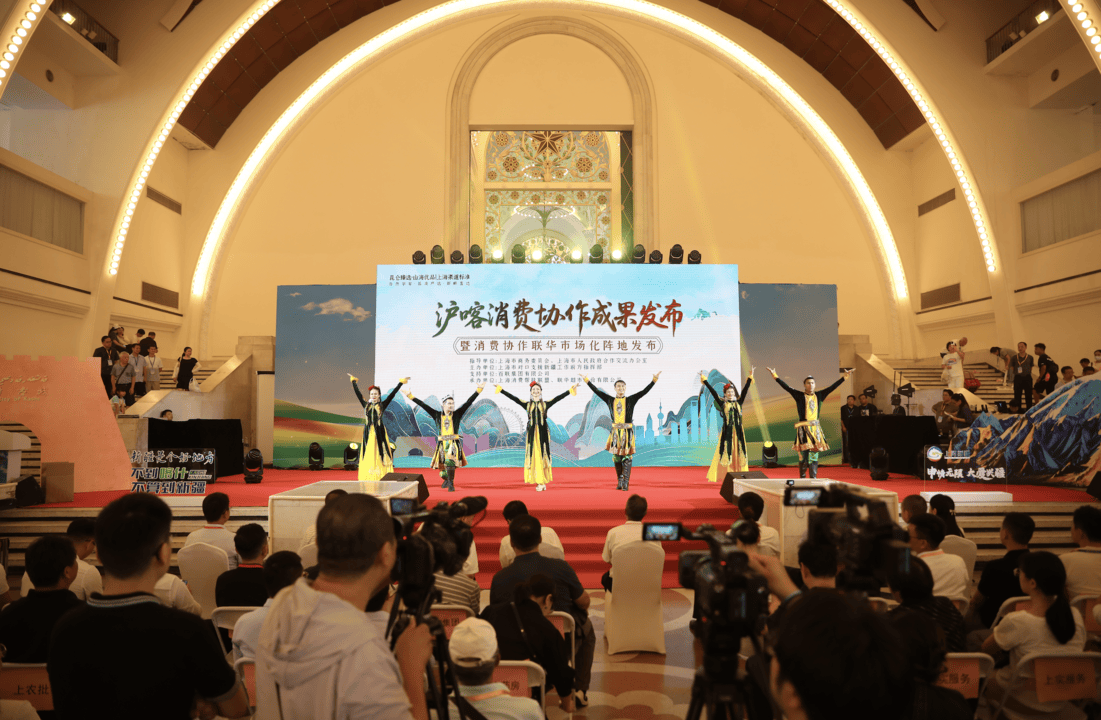
Group 1 - The core viewpoint of the article highlights the shift in Shanghai's support for Xinjiang from traditional "blood transfusion" methods to a more sustainable "blood production" approach, emphasizing quality and market recognition of local products [1][2][3] - The launch of the "Shanghai Guidelines for Mountain-Sea Ecological Food Access" aims to establish a high standard for agricultural products from Xinjiang, surpassing national standards, and promoting them as "quality selections" in the market [2][5] - The establishment of the "Kunlun Zhenxuan" market area in Lianhua Supermarket represents a new model of consumption collaboration, focusing on quality rather than mere charity, enhancing the perception of Xinjiang products among consumers [5][11] Group 2 - The exhibition showcased star products from four counties in Kashgar, including high-quality almonds, grapes, and apples, demonstrating the integration of deep processing and cultural innovation [7][9] - Significant business agreements were made during the event, including a 6 million yuan clothing cooperation and a 15 million yuan agreement to promote specific agricultural products, indicating a strong market response [11] - The event's "precise matching" mechanism for product distribution and sales channels aims to enhance the efficiency of the supply chain, facilitating deeper collaboration between Shanghai and Kashgar [11]
油脂月报:回落企稳后买入思路-20250905
Wu Kuang Qi Huo· 2025-09-05 13:25
Report Industry Investment Rating - Not provided in the given content Core Viewpoints - The U.S. biodiesel policy draft exceeding expectations, the limited production increase potential of Southeast Asian palm oil, the low inventories of vegetable oils in India and Southeast Asian producing areas, and the expectation of Indonesia's B50 policy support the central price of oils and fats [11]. - Oils and fats are currently in a state of balanced or slightly loose actual supply - demand, with a tight expectation. They are expected to fluctuate strongly in the medium - term before the inventories in consuming and producing areas are fully accumulated and the negative feedback of demand in consuming areas appears [11]. - Given the current high valuation, it is advisable to observe high - frequency data and mainly adopt the strategy of buying after a decline and stabilization [11]. Summary by Directory 1. Monthly Assessment and Strategy Recommendation - **Market Review**: In August, the three major oils and fats first rose and then fell. The market pre - traded the expectation of tight supply - demand in Indonesia, boosted by events such as Indonesia's confiscation of plantations and China's anti - dumping ruling on Canadian rapeseed. Subsequently, due to factors like commodity price corrections, high profits of major oils, and sufficient actual supply, the overall price of oils and fats declined. The net long positions of foreign capital seats that were long in August also decreased significantly [11]. - **International Oils and Fats**: The USDA August monthly report maintained that the U.S. will increase industrial demand for soybean oil by about 1.5 million tons in the 2025/2026 season. India imported about 1.6 million tons of vegetable oils in August, and its inventory is expected to continue to accumulate. New rapeseed crops show a pattern of increased production [11]. - **Domestic Oils and Fats**: In August, the trading volume of soybean oil was good, while that of palm oil was weak, and the spot basis declined. The total domestic inventory of oils and fats is about 400,000 tons higher than last year. In the next two months, the soybean crushing volume will decline slightly from a high level, the palm oil inventory will remain stable, and the total domestic inventory of oils and fats will remain high in the short - term and decline in the medium - term [11]. - **Trading Strategy**: Unilateral trading should consider the market as bullish. For now, it is advisable to observe high - frequency data and mainly adopt the strategy of buying after a decline and stabilization [13]. 2. Futures and Spot Markets - The report presents the basis and basis seasonality charts of palm oil, soybean oil, and rapeseed oil's 01 contracts, including the basis between FCPOV25.MDE and FOB palm oil (Malaysia), and the basis between domestic spot prices and futures prices [18][20][22]. 3. Supply Side - **Production and Export**: Charts show the monthly production and export of Malaysian palm oil, the monthly production and export of Indonesian palm oil and palm kernel oil, the weekly arrival and port inventory of soybeans, and the monthly import of rapeseed and rapeseed oil [27][28][29][30]. - **Weather**: Charts display the weighted precipitation in Indonesian and Malaysian palm - producing areas, the NINO 3.4 index, and the impact of La Nina on global climate [32][33]. 4. Profit and Inventory - **Inventory Charts**: There are charts showing the total inventory of three major domestic oils and fats, the inventory of imported vegetable oils in India, the inventory of palm oil, soybean oil, and rapeseed oil, and the inventory of palm oil in Malaysia and Indonesia [39][42][44][47]. - **Profit Charts**: Charts show the import profit of palm oil, the spot crushing profit of imported soybeans in Guangdong, the average crushing profit of coastal rapeseed, and the POGO and BOHO spreads related to bio - diesel profits [42][44][58]. 5. Cost Side - **Malaysian Palm Oil**: Charts show the reference price of Malaysian palm fresh fruit bunches and the import cost price of Malaysian palm oil [49][50]. - **Rapeseed and Rapeseed Oil**: Charts show the CNF import price of rapeseed oil and the import cost price of imported rapeseed in China [53]. 6. Demand Side - **Oils and Fats Trading Volume**: Charts show the cumulative trading volume of palm oil and soybean oil in the crop year [56]. - **Bio - diesel Profit**: Charts show the POGO spread (Malaysian palm oil - Singapore low - sulfur diesel) and the BOHO spread (soybean oil - heating oil) [58].