
汽车制造业

Search documents
汉马科技: 汉马科技第九届董事会第十六次会议决议公告
Zheng Quan Zhi Xing· 2025-09-05 16:13
Core Viewpoint - The company has signed a land and property storage intention agreement with the Wuhu Economic and Technological Development Zone Management Committee to optimize regional industrial layout and improve land utilization efficiency [1][2]. Group 1: Agreement Details - The agreement involves the storage and requisition of land and buildings from the subsidiary Wuhu Fuma Automotive Parts Co., Ltd., covering an area of 51,133.672 square meters of land and 25,338.36 square meters of buildings [2]. - The total compensation for the requisition is set at RMB 79.300651 million, which includes an asset valuation of RMB 66.115091 million for Wuhu Fuma, along with relocation rewards, business interruption losses, and relocation costs [2]. Group 2: Impact and Compliance - This transaction is expected to effectively activate the company's existing assets and supplement its liquidity, positively impacting its operational and financial metrics [3]. - The transaction does not constitute a related party transaction or a major asset restructuring, and there are no significant legal obstacles [3].

上市乘用车企半年报:六成实现盈利 部分企业支付账期缩短
Jing Ji Guan Cha Wang· 2025-09-05 15:28
Core Insights - Despite intense competition and ongoing price wars, the overall automotive industry in China shows resilience, with 12 out of 17 listed passenger car companies reporting revenue growth in the first half of the year [1] - Among these companies, only BYD and Leap Motor achieved both revenue and profit growth, while many traditional automakers faced the challenge of increasing revenue without corresponding profit growth [1][2] - The report highlights a trend of "increased revenue but decreased profit" among traditional automakers, with seven companies reporting losses [1][3] Revenue and Profit Performance - BYD led the industry with a revenue of 371.28 billion yuan, a year-on-year increase of 23.3%, and a net profit of 15.51 billion yuan, up 13.79% [2] - SAIC Motor, Geely, and Great Wall Motors ranked second to fourth in revenue but experienced profit declines, with SAIC's revenue at 299.59 billion yuan (up 5.2%) and net profit down 9.21% to 6.018 billion yuan [3][4] - Geely reported a revenue of 150.3 billion yuan (up 27%) but a net profit decrease of 14% to 9.29 billion yuan, primarily due to non-recurring gains in the previous year [4] - Great Wall Motors achieved a revenue of 92.335 billion yuan (up 0.99%) but saw a net profit decline of 10.21% to 6.337 billion yuan [4] New Energy Vehicle Companies - New energy vehicle companies showed improved profitability, with Leap Motor achieving revenue of 24.25 billion yuan (up 174%) and a net profit of 30 million yuan, marking its first half-year profit [7] - Li Auto reported a revenue of 56.2 billion yuan (down 2%) but a net profit increase of 3% to 1.744 billion yuan, maintaining a high gross margin of 20.3% [7][8] - Seres, despite a slight revenue decline to 62.402 billion yuan (down 4.06%), saw its net profit nearly double to 2.941 billion yuan, with a gross margin of 28.93% [8] Market Trends and Future Outlook - Traditional automakers are facing challenges in maintaining profitability amid rising costs and increased competition, leading to a focus on improving operational efficiency and cost management [5][6] - The report indicates that several companies are investing in new models and marketing strategies to enhance brand visibility and sales performance [5] - The automotive industry is also witnessing a trend of shortening payment cycles, with some companies committing to reduce supplier payment terms to no more than 60 days, which is expected to alleviate cash flow pressures for component suppliers [10][11]



长安汽车发布“天枢智能”,朱华荣:安全是智能化的目标和底线
Bei Ke Cai Jing· 2025-09-05 13:53
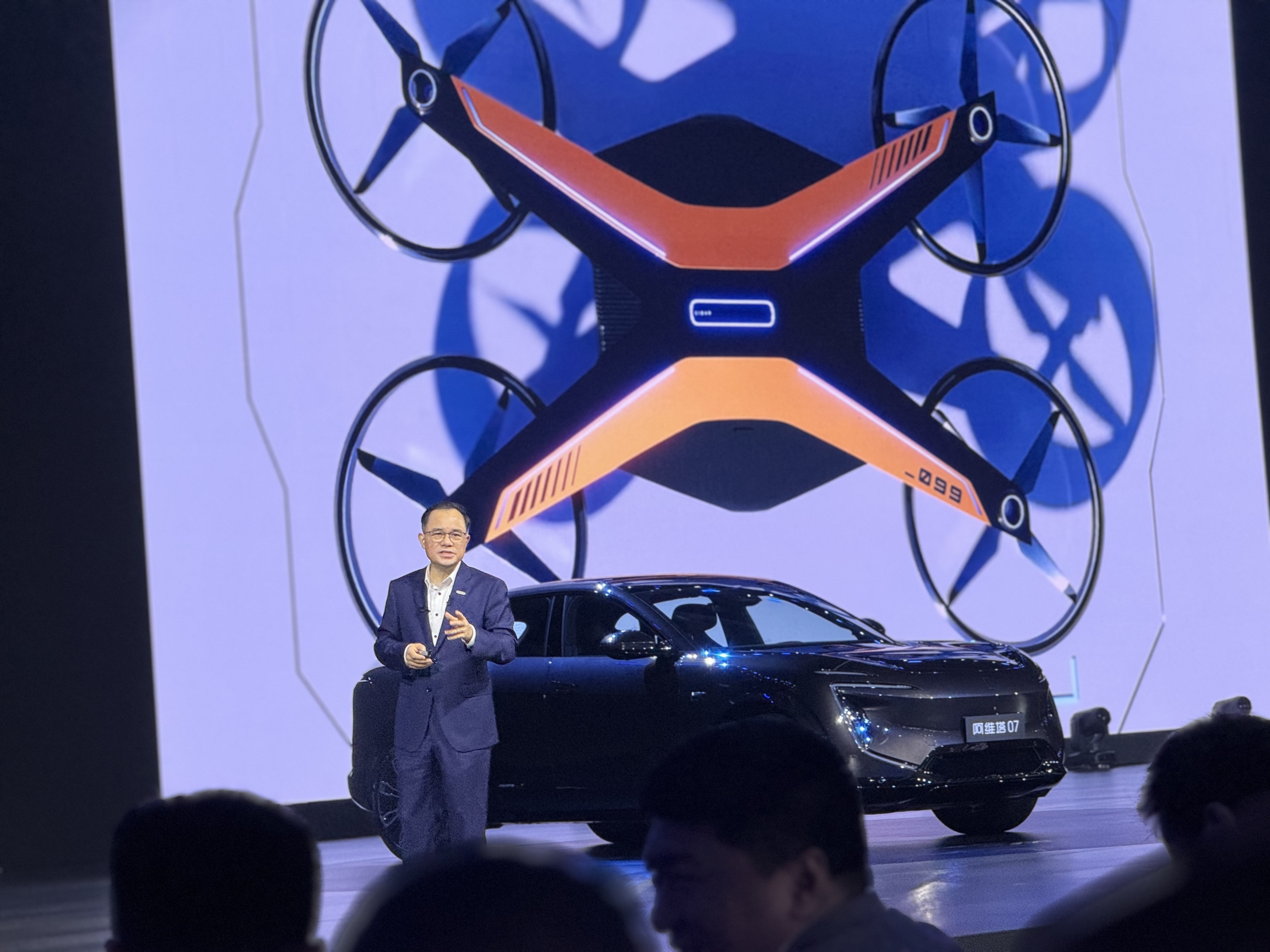
Core Viewpoint - Changan Automobile has launched the "Tianshu Intelligent" brand, emphasizing the integration of AI and large models into the automotive industry, with a focus on safety as the primary goal of intelligent technology [1][4]. Group 1: Brand Launch and Focus - The "Tianshu Intelligent" brand was introduced at the Fifth Changan Automobile Technology Ecological Conference [1]. - The company aims to address the shift from traditional hardware risks to complex software system risks, evolving the safety paradigm from passive to proactive measures [4]. Group 2: Key Technologies and Innovations - Tianshu Intelligent focuses on three main areas: driving assistance, cabin, and chassis, utilizing key technologies such as end-to-end interactive navigation assistance, multimodal AI large models, distributed electric drive, and steer-by-wire chassis [5]. - Changan plans to mass-produce self-developed satellite architecture laser radar by Q3 next year and will launch the end-to-end interactive navigation assistance this year [6]. Group 3: Future Plans and Production Goals - Changan aims to produce humanoid automotive robots by 2028 and expand into household service robots post-2030, with plans for the first manned flying car product release in 2026 and mass production by 2028 [6]. - The company has set ambitious production and sales targets, aiming for 4 million vehicles by 2030, with over 60% being new energy vehicles and over 30% in overseas markets [7].


汉马科技:9月5日召开董事会会议
Mei Ri Jing Ji Xin Wen· 2025-09-05 12:31
Group 1 - Hanma Technology (SH 600375) announced on September 5, 2025, that its 16th board meeting of the 9th session was held, where it reviewed the proposal to sign a land and property storage intention agreement with the Wuhu Economic and Technological Development Zone Management Committee [1] - For the first half of 2025, Hanma Technology's revenue composition was as follows: automotive manufacturing accounted for 95.1%, other businesses 4.59%, and financial leasing 0.31% [1] - As of the report date, Hanma Technology's market capitalization was 11 billion yuan [1] Group 2 - Haidilao has been diversifying its business with initiatives such as opening a hair washing service in barbecue restaurants, a bakery by West Lake, and entering the high-end hotel sector [1] - The survival rate of sub-brands under Haidilao is less than 50% [1]
北汽蓝谷: 对外担保管理办法
Zheng Quan Zhi Xing· 2025-09-05 12:20
Core Viewpoint - The company has established a comprehensive framework for external guarantees to protect investors' rights and mitigate risks associated with such guarantees, in compliance with relevant laws and regulations [1][2][3]. Group 1: General Provisions - The company aims to safeguard investors' rights and regulate external guarantee behaviors to prevent and reduce risks [1]. - The external guarantees include guarantees, asset pledges, and other forms provided by the company and its subsidiaries [2]. - The total amount of external guarantees includes those provided to controlling subsidiaries and is subject to board or shareholder approval [2][3]. Group 2: Review of Guarantee Objects - The company can provide guarantees to entities with independent legal status that meet specific criteria, such as mutual guarantee needs or significant business relationships [3]. - Necessary measures must be taken to verify the credit status of the guaranteed party before providing guarantees [3][4]. Group 3: Approval Procedures and Authority - External guarantees must be approved by the board of directors, with certain guarantees requiring shareholder approval if they exceed specified thresholds [4][5]. - The board of directors has the authority to approve guarantees within the limits set by the company's articles of association [5][6]. Group 4: Risk Management - The financial management department is responsible for the management of guarantee contracts, including approval, registration, and cancellation [10][11]. - Continuous monitoring of the guaranteed party's financial status is required, and any significant changes must be reported to the board [11][12]. Group 5: Information Disclosure - The company must fulfill its information disclosure obligations regarding external guarantees in accordance with relevant regulations [13][14]. - All departments involved in guarantee matters are responsible for timely reporting to the board secretary [14]. Group 6: Accountability and Penalties - The company must take corrective actions for any violations related to guarantees and hold responsible parties accountable [15][16]. - Directors and senior management are required to exercise caution and control over the risks associated with external guarantees [15][16].

北汽蓝谷: 对外投资管理办法
Zheng Quan Zhi Xing· 2025-09-05 12:20
Core Viewpoint - The company has established a comprehensive framework for external investment activities to enhance internal control, mitigate risks, and improve investment efficiency [1][2]. Investment Principles - All external investments must comply with national laws and regulations, align with the company's long-term development strategy, and aim for sustainable growth with expected returns [2][5]. - External investments are primarily managed by the company's headquarters, with subsidiaries requiring prior approval for their investment activities [2][5]. Decision-Making Structure - The company's investment decision-making bodies include the shareholders' meeting, board of directors, and the manager's office, each operating within their respective authority [8][9]. - The manager is responsible for organizing, implementing, and monitoring investment projects, reporting to the board of directors [9][10]. Approval Process - Investment decisions must be approved by the manager's office for projects not exceeding specific thresholds, while larger investments require board and shareholder approval [11][12]. - The company must disclose financial reports and evaluations for significant investments, ensuring transparency and compliance with regulatory standards [13][14]. Risk Management - The company emphasizes risk management and the safety of fund operations in its investment activities [6][7]. - Investment management departments are tasked with daily oversight of projects, ensuring timely reporting of any irregularities [20][21]. Information Disclosure - The company is obligated to disclose investment activities in accordance with relevant laws and regulations, ensuring transparency to stakeholders [27][28]. Implementation and Amendments - The investment guidelines will take effect upon approval by the shareholders' meeting and will be subject to future amendments as necessary [30][31].
北汽蓝谷: 关联交易管理办法
Zheng Quan Zhi Xing· 2025-09-05 12:20
Core Points - The article outlines the management of related party transactions for Beijing Automotive Blue Valley New Energy Technology Co., Ltd, emphasizing the need for fairness, transparency, and compliance with relevant laws and regulations [1][2][3] Group 1: General Principles - The company aims to standardize the management of related party transactions to protect the interests of all shareholders and ensure compliance with laws such as the Company Law and Securities Law of the People's Republic of China [1][2] - Related party transactions must adhere to principles of honesty, benefit to company development, fairness, voluntary nature, and avoidance of conflicts of interest in voting [4][5] Group 2: Definition and Types of Related Party Transactions - Related party transactions are defined as the transfer of resources or obligations between the company, its subsidiaries, and related parties, including both daily and non-daily transactions [3][5] - Daily related party transactions include purchasing raw materials, selling products, providing or receiving services, and other transactions related to daily operations [5] - Non-daily related party transactions encompass asset purchases or sales, external investments, financial assistance, guarantees, and other significant transactions outside of daily operations [5][8] Group 3: Reporting and Approval Procedures - Company directors, senior management, and shareholders holding more than 5% of shares must report related party relationships and transactions to the board of directors [6][13] - Daily related party transactions exceeding certain thresholds must be submitted for board or shareholder approval and disclosed accordingly [9][10] - Non-daily related party transactions that meet specified financial thresholds require approval from independent directors and must be disclosed to shareholders [13][14] Group 4: Management Responsibilities - The financial management department is responsible for managing daily related party transactions, while the capital operation department oversees non-daily transactions [20][21] - The legal compliance department reviews related party contracts to mitigate legal risks [21] - The board of directors must ensure that related directors abstain from voting on transactions to maintain objectivity [30][31] Group 5: Pricing and Fairness - Related party transactions must be conducted at fair market prices, and any significant changes in transaction terms require re-approval [26][27] - Independent directors can seek external financial advice to assess the fairness of transaction pricing [28]
双林股份: 内部控制管理制度(2025年9月)
Zheng Quan Zhi Xing· 2025-09-05 12:19
Core Viewpoint - The internal control management system of Shuanglin Co., Ltd. aims to enhance the company's operational standards and protect investors' rights by adhering to relevant laws and regulations [1][2]. Summary by Sections General Principles - The internal control system is established to ensure compliance with laws, improve operational efficiency, safeguard assets, and ensure accurate information disclosure [1]. - The board of directors is responsible for the formulation and effective execution of the internal control system [1]. Framework and Execution of Internal Control - The internal control encompasses environmental control, business control, accounting system control, electronic information system control, information transmission control, and internal audit control [1][2]. - The internal control system includes elements such as internal environment, goal setting, risk identification, risk assessment, risk response, control activities, and information communication [2][3]. Key Control Activities - The internal control system covers all business processes, including sales, procurement, production, research and development, fixed asset management, fund management, financing, investment, related party transactions, financial reporting, information disclosure, and human resource management [4][5][6]. - The company emphasizes the importance of internal audit and continuous monitoring to ensure the effectiveness of the internal control system [19][20]. Management Control of Subsidiaries - The company establishes control policies for its subsidiaries, ensuring they adhere to the internal control system and report significant business and financial matters to the board [17][18]. - The management control includes oversight of major financial and operational matters, requiring subsidiaries to report significant decisions and transactions [17][18]. Internal Control of Related Transactions - The company follows principles of honesty, equality, and fairness in related party transactions, ensuring that such transactions do not harm the interests of the company and its shareholders [22][23]. - Approval processes for related transactions are clearly defined, requiring independent directors' prior consent [22][23]. External Guarantee Control - The company implements strict controls over external guarantees, ensuring compliance with legal and regulatory requirements [31][32]. - The board must carefully evaluate the financial and operational status of the guaranteed parties before approving guarantees [32][33]. Use of Raised Funds Control - The company mandates strict management of raised funds, including storage, approval, usage, and supervision [41][42]. - Regular tracking of project progress and fund usage is required to ensure compliance with the intended purposes outlined in the prospectus [44][45]. Major Investment Control - The company adheres to principles of legality, prudence, and effectiveness in major investments, requiring thorough evaluation and monitoring of investment projects [50][51]. - A dedicated team is responsible for assessing the feasibility and risks associated with major investments [51][52]. Information Disclosure Control - The company ensures compliance with disclosure regulations, maintaining transparency in reporting significant information that may impact stock prices [57][58]. - A strict internal confidentiality policy is enforced to protect sensitive information before public disclosure [59][60]. Internal Audit and Evaluation - An internal audit department is established to oversee the implementation of the internal control system and ensure the accuracy of financial information [63][64]. - Regular audits are conducted to evaluate the effectiveness of internal controls, with findings reported to the audit committee [66][67].

北汽蓝谷: 公司章程
Zheng Quan Zhi Xing· 2025-09-05 12:19
General Provisions - The company aims to protect the legal rights of shareholders, employees, and creditors while regulating its organization and behavior according to relevant laws and regulations [2] - The company was established as a joint-stock company in Chengdu, Sichuan Province, approved by the local government [2] - The company was registered on October 6, 1992, with a unified social credit code [2] Company Structure - The registered capital of the company is RMB 5,573,503,169 [3] - The company is a permanent joint-stock company, with the chairman acting as the legal representative [3][4] - Shareholders are liable for the company's debts only to the extent of their subscribed shares, while the company is liable for its debts with all its assets [4] Business Objectives and Scope - The company's business objective is to be market and customer-oriented, focusing on innovation, technology, and environmental protection [5] - The business scope includes research, design, sales of automobiles and parts, technical services, advertising, and import/export activities [5] Shares - The company's shares are issued in the form of stocks, with equal rights for each share of the same category [6] - The total number of shares is 5,573,503,169, all of which are ordinary shares [6][7] - The company can increase capital through various methods, including issuing shares to unspecified or specific objects and distributing bonus shares [7] Shareholder Rights and Responsibilities - Shareholders have rights to dividends, attend meetings, supervise management, and transfer their shares [12] - Shareholders must comply with laws and the company's articles of association, and they cannot withdraw their capital except as legally permitted [41] Shareholder Meetings - The company holds annual and temporary shareholder meetings, with specific procedures for calling and conducting these meetings [20][21] - Shareholder meetings require a quorum and must follow legal and procedural requirements for decision-making [81][82] Board of Directors - The board of directors is responsible for managing the company and must report to the shareholders [47] - Directors are elected by shareholders and are accountable for their actions [47][48] Auditing and Compliance - The company must maintain transparency and comply with auditing requirements, ensuring that financial activities are reported accurately [19] - Shareholders can request legal action against directors or management for violations of laws or the company's articles of association [14][15]
美国拟重启美墨加贸易协定谈判
Guo Ji Jin Rong Bao· 2025-09-05 09:56
Group 1 - The U.S. Trade Representative (USTR) will initiate public consultation for the USMCA in the coming weeks, marking the first formal step towards renegotiation [1] - The consultation process must be completed by October 4, 2023, as mandated by the law governing the agreement [1] - The USMCA includes a mandatory six-year review clause, with the first trilateral review meeting scheduled for no later than July 1, 2026 [1] Group 2 - The USMCA is considered a significant trade achievement of the Trump administration, replacing NAFTA, which was criticized for causing job losses in the U.S. [2] - Tariffs imposed by the Trump administration on Canada and Mexico have undermined the effectiveness of the USMCA, particularly affecting the automotive, steel, aluminum, and lumber industries [2] Group 3 - The tariffs serve to increase leverage for the U.S. in the renegotiation process, disrupting North America's complex supply chains, especially in the automotive sector [3] - Recent discussions between U.S. Secretary of State Rubio and Mexican President Claudia Sheinbaum focused on cross-border security, which is seen as a prerequisite for USMCA renegotiation [3] - Mexico is highly sensitive to the negotiation outcomes, as 80% of its exports go to the U.S., and the U.S. has extended tariffs on Mexican goods for an additional 90 days [3] Group 4 - The U.S. has criticized Mexico's policies in energy, telecommunications, agriculture, and intellectual property, highlighting issues such as state-owned enterprise bias and lack of fair competition [4] - Mexico's Economy Minister Marcelo Ebrard acknowledged that the upcoming reviews and negotiations will be challenging but emphasized the need for cooperation among the three countries to maintain North America's competitiveness [4]