
石油和天然气

Search documents
俄罗斯市场深度解析:制裁下的重构机遇与风险应对指南
Sou Hu Cai Jing· 2025-09-29 08:33
Core Insights - The article highlights the structural changes in the Russian market post the Ukraine conflict, presenting new opportunities for Chinese enterprises to expand into Russia [1][12]. Economic Growth and Structural Changes - Russia's nominal GDP is projected to grow by 4.1% in 2024, marking one of the highest growth rates in the past five years, with an unemployment rate at a historical low of 2.3% [1]. - The growth is characterized by a significant shift towards defense-driven economic growth, with over 35% of industrial output growth in 2024 stemming from military and strategic security orders, while civilian manufacturing output has decreased by 1.2% [3]. - Defense and security spending in the federal budget is expected to rise to 36% in 2024, the highest since the dissolution of the Soviet Union [3]. - Russia's trade dynamics have shifted dramatically, with exports to the EU plummeting by 72%, while trade with China surged, increasing from 17% in 2021 to 35% in 2024 [3]. - Energy export revenues have risen from 39% of the federal budget in 2021 to 52% in 2024, indicating a growing dependency on energy [3]. Investment Opportunities by Sector - **Energy and Resources**: Russia, as a major oil and gas exporter, has seen a 46.6% increase in natural gas supplies to China in 2023, presenting collaboration opportunities for Chinese companies in energy extraction, transportation, and processing [4]. - **High-Tech and IT**: The local software industry is expected to grow at an annual rate of over 25% from 2023 to 2024, supported by tax incentives and the "Digital Sovereignty Law," particularly in areas like basic software and cybersecurity [4]. - **Agriculture and Food Processing**: Russia's wheat exports are projected to reach a record 55.3 million tons in the 2023-2024 agricultural season, accounting for 26% of global wheat exports, making agriculture a resilient sector amid sanctions [4]. - **Consumer and Retail**: The demand for home appliances, furniture, and daily consumer goods is increasing, with a notable rise in electronic products among younger consumers [4]. Government Support and Policy Initiatives - The Russian government is focusing on production-linked incentive programs to boost local industries, particularly in import substitution, with a 40% increase in domestic automotive and machinery manufacturing capacity from 2023 to 2024 [5]. - Infrastructure development remains a priority, with opportunities for Chinese companies to leverage their expertise in transportation, energy, and urban infrastructure [6]. Market Entry and Legal Structure - Foreign investors must navigate the Russian legal framework, which includes options like Limited Liability Companies (OOO) and Joint Stock Companies (AO), with a registration process typically taking 30-45 days [8]. - Companies are advised to establish a local presence through market research, pilot projects, and building local networks to facilitate entry into the Russian market [10][13].


DNO Updates Status of Tawke License Oil Exports
Globenewswire· 2025-09-26 05:06
Core Viewpoint - DNO ASA has been instructed to prepare for oil exports through the Iraq-Türkiye Pipeline starting on 27 September 2025, following agreements among the Federal Government of Iraq, the Kurdistan Regional Government, and international oil companies [1]. Group 1: Export Operations - DNO will deliver the Kurdistan Regional Government's share of sales from the Tawke license, averaging 38,000 barrels per day, for export [2]. - The foreign contractor group, including DNO and Genel Energy International Limited, will continue selling an average of 30,000 barrels per day to local buyers under existing contracts [2]. - DNO has opted not to engage directly in exports at this time, continuing to sell oil on a cash-and-carry basis at prices in the low USD 30s per barrel [3]. Group 2: Buyer Arrangements - Buyers have established their own arrangements to place oil purchased from DNO into the export pipeline, which supports the larger export project [4]. Group 3: Agreements and Financials - The agreements between the Federal Government of Iraq, the Kurdistan Regional Government, and participating international oil companies will end at year-end, with the first payment expected to be USD 14 per barrel after transportation costs, anticipated in mid-December [5]. - This payment figure will be adjusted in 2026 based on evaluations by a Baghdad-designated consultant [5]. Group 4: Production Expansion - DNO has launched a major production expansion program at the Tawke and Peshkabir fields to replace equipment damaged during July drone attacks, with plans to drill eight wells in 2026 targeting production of 100,000 barrels per day [6]. - The company emphasizes the need for immediate, predictable, and continuous flow of funds to support this ambitious program [6].
美能源替代雄心遭内患沪金下跌
Jin Tou Wang· 2025-09-25 03:06
Group 1 - Gold futures are currently trading around 853.22 yuan per gram, with a decline of 0.63%, and have fluctuated between a high of 861.22 yuan and a low of 852.40 yuan [1] - The short-term outlook for gold futures appears bearish [1] Group 2 - The Trump administration has officially announced the implementation of a trade agreement with the EU, which includes a 15% tariff on various goods imported from the EU starting August 1 [3] - The EU Commission President Ursula von der Leyen stated that the 15% tariff rate is the best outcome achievable under the current circumstances [3] - The U.S. Energy Secretary Dan Brouillette emphasized that the U.S. is fully prepared to replace all Russian natural gas and oil products entering the European market [3] Group 3 - There is growing discontent within the U.S. oil and gas industry regarding Trump's energy policies, with warnings that current policy missteps are causing significant harm [4] - A recent Dallas Federal Reserve energy survey revealed critical feedback from industry participants, highlighting concerns over political hostility and short-sighted economic decisions affecting the U.S. shale industry [4] - The survey included a stark comment from an anonymous respondent, indicating that the U.S. shale business has been severely undermined [4] Group 4 - Key resistance levels for gold futures are identified between 860 yuan per gram, while important support levels are noted between 824 yuan and 850 yuan [4]
伍德赛德能源:未来10年全球LNG需求将增长50%
Zhong Guo Hua Gong Bao· 2025-09-22 02:56
Group 1 - Woodside Energy's CEO predicts a 50% increase in global LNG demand over the next decade [1] - The Louisiana LNG export facility is the largest foreign investment in Louisiana to date and the first LNG project approved since the Trump administration took office [1] - The CEO downplayed concerns from TotalEnergies' CEO regarding potential oversupply in the market due to rapid expansion of US LNG capacity, expressing a reserved stance on the matter [1]


Colombia’s Oil Output Keeps Falling as U.S. Relations Sour
Yahoo Finance· 2025-09-17 23:00
Core Insights - Colombia's oil and gas reserves may see an upward revision this year compared to 2024, but oil production is declining due to a challenging environment for the sector, social and security issues, and the withdrawal of international oil majors from Colombia [1] Group 1: U.S.-Colombia Relations - The investment climate in Colombia is expected to worsen following the U.S. stripping Colombia of its Drug Certification, indicating a lack of full cooperation in counter-narcotics efforts [2] - Relations between the U.S. and Colombia have deteriorated under President Trump, reaching a new low with the decertification due to Colombia's failure to combat drug trafficking effectively [3] - President Trump attributed the blame for the deteriorating situation to Colombia's leftist President Gustavo Petro, citing his inability to control narcotics groups and reduce coca cultivation [3] Group 2: Drug Production and Security - Under President Petro, coca cultivation and cocaine production have surged to record levels, with the government failing to meet its own coca eradication targets [4][5] - President Trump criticized Colombia's political leadership for not fulfilling drug control obligations, which has undermined years of cooperation against narco-terrorism [5] - Despite the political issues, U.S. officials praised Colombia's security institutions and local authorities for their efforts against criminal groups [6] Group 3: Implications for Oil Production - The loss of U.S. Drug Certification adds further challenges to Colombia's already declining oil production [6] - Colombia's Interior Minister indicated a shift in policy, stating that the country would no longer purchase weapons from the U.S. following the decertification [6]
“2025中国企业500强” 榜单公布
Sou Hu Cai Jing· 2025-09-15 14:24
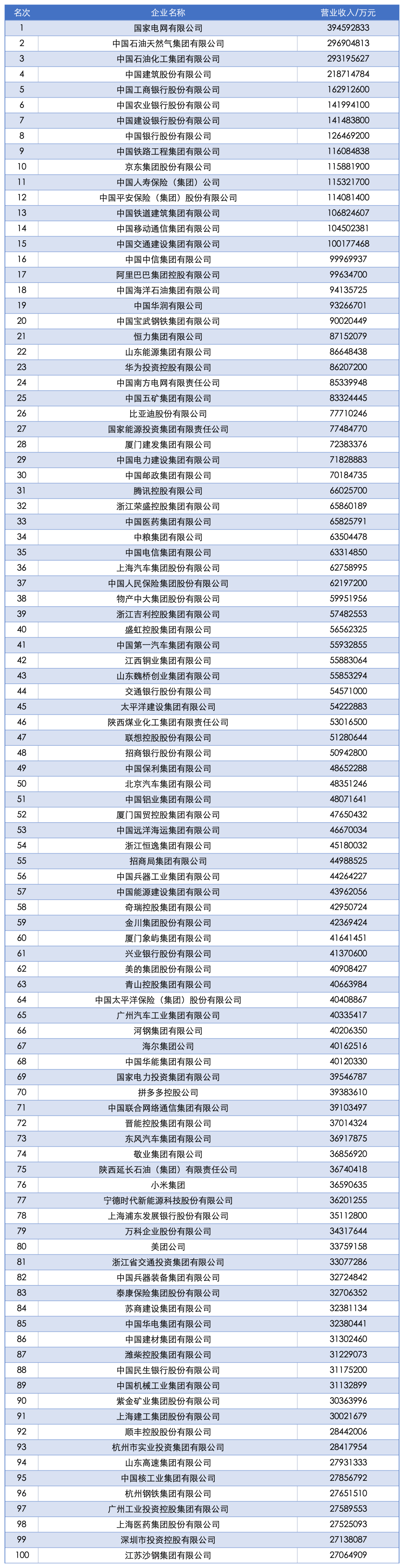
Core Insights - The "2025 China Top 500 Enterprises" list was released by the China Enterprise Confederation, marking its 24th consecutive year of publication [1] - The total operating revenue of the top 500 enterprises reached 110.15 trillion yuan, with the entry threshold rising for the 23rd consecutive year to 47.96 billion yuan, an increase of 579 million yuan [1] - The number of enterprises with operating revenue exceeding 100 billion yuan has significantly increased, with 267 companies in the 2025 list, up by 14 from the previous year, representing 53.4% of the total [1] Summary by Categories Revenue and Rankings - The total operating revenue of the top 500 enterprises is 110.15 trillion yuan [1] - The entry threshold for the list is 47.96 billion yuan, an increase of 579 million yuan from the previous year [1] - The top three companies by revenue are: 1. State Grid Corporation: 394.59 billion yuan 2. China National Petroleum Corporation: 296.90 billion yuan 3. China Petroleum and Chemical Corporation: 293.20 billion yuan [3] Growth in Large Enterprises - The number of enterprises with revenue exceeding 100 billion yuan has increased to 267, up by 14 from the previous year [1] - These large enterprises now account for 53.4% of the total list [1]



MI能源:2025年中期亏损1.48亿元
Sou Hu Cai Jing· 2025-09-15 10:20
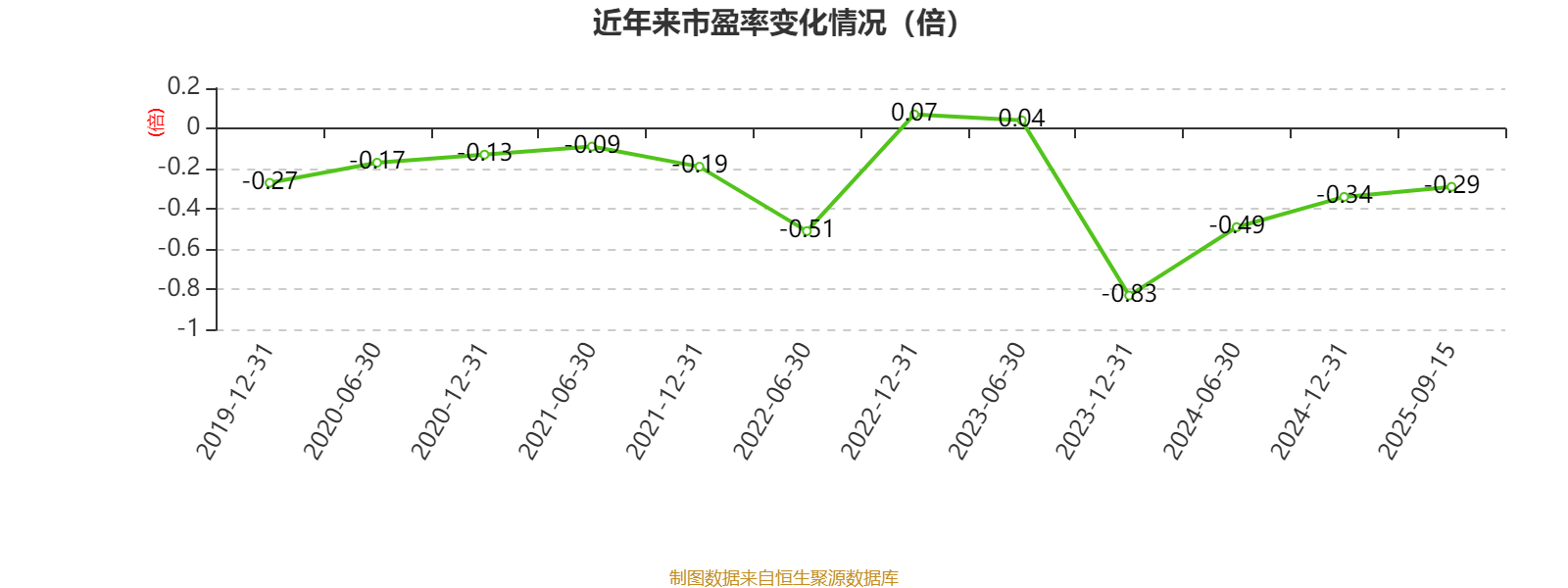
Core Viewpoint - The company primarily engages in the exploration, development, production, and sales of oil and natural gas in China, with significant operations in the Daan oilfield in Northeast China [6] Revenue and Profit Growth - Historical revenue and net profit growth rates show fluctuations, with a notable increase in 2023, where revenue growth rate was 24.29% and net profit growth rate was 40.62% [8] - The company's revenue for the first half of 2025 is projected to be 83 billion, with a significant increase compared to previous years [8][10] Financial Performance - The company reported a net profit of 3.657 billion from oil sales [9] - The average revenue per employee has shown a decline, with figures of -147.12 thousand in 2023 [14] - Historical gross margin has decreased from 82.08% in 2020 to 74.18% in 2023 [15] Asset and Liability Changes - As of the first half of 2025, the company's fixed assets decreased by 13.53%, while cash and cash equivalents decreased by 27.1% [20] - Long-term borrowings increased by 2.28%, while short-term borrowings rose by 14.09% [24] - The company's current ratio is 0.48 and quick ratio is 0.4 as of the first half of 2025 [28] Turnover Ratios - The company's total asset turnover ratio has shown a decline, with figures of 0.49 in 2023 [16] - The accounts receivable turnover ratio was reported at 10.41 in 2023 [17] - Inventory turnover ratio has also decreased, with a figure of 7.28 in 2023 [17]
中国企业500强,名单公布!
Sou Hu Cai Jing· 2025-09-15 10:15
Core Insights - The "China Top 500 Enterprises" list for 2024 was released, showing a total revenue of 110.15 trillion yuan, an increase from the previous year, with the entry threshold rising for the 23rd consecutive year to 47.96 billion yuan [1] - The total assets of the top 500 enterprises reached 460.85 trillion yuan, reflecting a growth of 7.46% [1] - The number of enterprises with revenues exceeding 100 billion yuan increased to 267, with 15 companies surpassing 1 trillion yuan in revenue [1] - The net profit attributable to the parent company for the top 500 enterprises totaled 4.71 trillion yuan, marking a growth of 4.39% [1] Revenue and Profitability - The revenue of the top 500 enterprises reached 110.15 trillion yuan, an increase from the previous year [1] - The net profit margin improved to 4.27%, up by 0.17 percentage points [1] Innovation and R&D - The top 500 enterprises invested 1.73 trillion yuan in R&D, achieving a record R&D intensity of 1.95%, marking eight consecutive years of growth [2] - The total number of valid patents held by these enterprises reached 2.2437 million, an increase of 10.54% from the previous year [2] - The number of invention patents rose to 1.0396 million, reflecting a growth of 16.86% [2] Industry Structure - The number of enterprises in advanced manufacturing and modern service industries increased, with 39 new or re-entering companies in the top 500 [2] - Manufacturing, service, and other industries contributed 40.48%, 40.29%, and 19.23% respectively to the total revenue growth of the top 500 enterprises [2] Additional Rankings - Alongside the "China Top 500 Enterprises," other rankings such as "2025 China Top 100 Multinational Corporations" and "2025 China Top 100 Innovative Enterprises" were also released [3]


韧性共筑,水岸共新|2025兰香湖论坛成功举办
Sou Hu Wang· 2025-09-15 09:21
2025年9月4日至5日,以"韧性共筑,水岸共新"为主题的"2025兰香湖论坛"在上海紫竹万怡酒店成功举 办。本届论坛由紫竹国家高新技术产业开发区与上海紫江公益基金会联合主办,紫竹可持续发展联盟承 办,并得到艾社康亚洲、上海交通大学上海高级金融学院等多家机构协办。 在9月4日举行的三场闭门分论坛中,与会嘉宾围绕"AI+绿色金融"、"公共卫生与社区治理"及"跨学科教 育与未来人才"等议题展开深入研讨,从技术应用、公共服务与教育创新等多维度为主论坛奠定了扎实 的实践与理论基础。 9月5日的主论坛汇聚了诺贝尔奖得主、联合国官员、中国工程院院士、以及来自企业界和学界的专家领 袖。论坛以线上线下相结合的形式,聚焦气候变化与高质量发展双重背景,探讨如何通过科技、人文与 生态的深度融合,共同构建全面的城市韧性体系。截至论坛结束,线上观看总人次突破23.1万。 2025兰香湖论坛主论坛现场 开幕致辞 紫竹国家高新区党委书记、副总经理骆山鹰在开幕致辞中回顾了高新区二十余年来在可持续发展领域的 探索与实践,强调紫竹始终秉持"生态、人文、科技"发展理念,持续推动园区高质量、包容性增长。骆 山鹰在开幕致辞中强调,兰香湖是紫竹园区整体 ...

被特朗普“背刺”?美国多行业掀起裁员潮
Jin Shi Shu Ju· 2025-09-15 08:28
Group 1 - The U.S. labor market is experiencing stagnation due to significant layoffs in manufacturing, wholesale retail, and energy sectors, primarily attributed to tariffs imposed by President Trump, which have increased costs and hindered expansion plans [1][2] - The August non-farm payroll report indicated that the "goods-producing industries" were the main contributors to job declines, with only 22,000 jobs added in the month, and manufacturing alone losing 12,000 jobs [2] - Companies like John Deere reported substantial financial losses due to tariffs, with an estimated $300 million loss by 2025, leading to layoffs and a 26% year-over-year decline in net profit [2] Group 2 - There is a divide between the government and businesses regarding tariffs, with some companies claiming tariffs have prompted increased capital spending and future hiring, while others express uncertainty and a hiring freeze due to unpredictable policy changes [3] - The oil industry is facing dual pressures from tariffs and low oil prices, with significant layoffs occurring, including Chevron and ConocoPhillips planning to cut thousands of jobs [4][5] - Despite challenges, some executives remain optimistic that tariffs will ultimately benefit domestic industries, although they are also implementing layoffs and automation to maintain competitiveness [6]


