Semiconductors

Search documents
Micron outlines >$25B FY26 CapEx plan while expanding NAND and DRAM capacity amid persistent supply constraints (NASDAQ:MU)
Seeking Alpha· 2026-03-19 02:12
Comments(3)Earnings Call Insights: Micron Technology (MU) Q2 2026 Management View CEO and senior leadership focused heavily on addressing persistent supply constraints, particularly in NAND and DRAM, while highlighting robust demand from AI-driven data center growth. Sumit Sadana, Executive VP & Chief Business Officer, stated that "our portfolio isNewsletters for Every InvestorGet daily, sector-specific newsletters packed with expert insights, fresh ideas, and new opportunities. Subscribe to NewslettersSeek ...



GTC 巅峰对话 Jeff Dean x Bill Dally:预训练范式已死、延迟瓶颈不在计算、谈透 AI 五年未来 | GTC 2026
AI科技大本营· 2026-03-19 02:08
Core Insights - The dialogue between NVIDIA's Bill Dally and Google's Jeff Dean at GTC 2026 highlighted significant advancements in AI and machine learning, particularly in model capabilities and agent-based workflows [2][4][5]. Group 1: Model Advancements - The past year has seen rapid improvements in model capabilities, particularly in areas requiring verifiable rewards, such as mathematics and programming [7][8]. - Models like Gemini have achieved remarkable success in complex tasks, winning gold medals in competitions like IMO and ICPC, showcasing their enhanced abilities [8][9]. - There is a notable shift towards agent-based workflows that can autonomously handle longer tasks without constant human supervision, indicating a significant evolution in AI capabilities [9][11]. Group 2: Inference and Latency - A critical focus is on achieving ultra-low-latency inference to enhance the efficiency of autonomous systems, as inference latency directly impacts problem-solving efficiency [12][14]. - Dally emphasized the need to redesign architectures to minimize communication delays, which are a major source of latency in large language models (LLMs) [18][19]. - Innovations in on-chip communication and physical interfaces are being pursued to reduce latency from hundreds of nanoseconds to approximately 30 nanoseconds [20][21]. Group 3: Future of AI and Hardware - The discussion touched on the potential for AI to autonomously design future models, with Dean noting that while the complete closed-loop system is not yet realized, early forms are emerging [27][29]. - The hardware landscape is expected to evolve, with a clear distinction between training and inference hardware, as inference becomes increasingly critical in data centers [78][80]. - Dally highlighted the importance of future-proofing hardware to adapt to rapidly changing model requirements, emphasizing the need for efficient resource allocation [43][46]. Group 4: Data Utilization and Scaling - There is a belief that there is still a vast amount of untapped data available for training models, particularly in video and real-world scenarios [57][58]. - The conversation also explored the challenges of scaling models when data availability becomes constrained, with Dean suggesting that synthetic data generation could fill this gap [60][61]. - Techniques like data augmentation and regularization are seen as valuable methods to enhance model training without overfitting [67]. Group 5: AI in Chip Design - AI is increasingly being integrated into the chip design process, with systems like NVCell significantly reducing the time and effort required for tasks that previously took months [104][106]. - The use of AI in design verification and bug reporting is also improving productivity, allowing junior designers to access information without constantly consulting senior staff [112][116]. - The potential for AI to automate various stages of chip design is recognized, with aspirations for a future where design can be initiated with simple commands [122]. Group 6: Societal Impact of AI - The dialogue concluded with reflections on the positive societal impacts of AI, particularly in education and healthcare, where personalized learning and health coaching could revolutionize these fields [160][161]. - Both Dally and Dean expressed excitement about the potential for AI to provide personalized tutoring and health advice, enhancing individual learning and health outcomes [162][178].



全球大公司要闻 | 腾讯今年AI投资至少翻倍,三星面临史上最大规模罢工
Wind万得· 2026-03-19 01:40
Group 1 - Tencent Holdings expects a 13% year-on-year revenue growth to 194.4 billion yuan in Q4 2025, with adjusted net profit increasing by 17% to 64.7 billion yuan. All three major business segments—value-added services, marketing services, and financial technology—are projected to grow, with cloud services achieving profitability [2] - Microsoft is considering legal action regarding a $50 billion collaboration between Amazon and OpenAI, claiming it may infringe on Microsoft's exclusive rights to OpenAI API access. Negotiations for an out-of-court settlement are ongoing, but Microsoft has stated it will pursue litigation if there is a breach [3] - Samsung Electronics' union voted overwhelmingly (93.1%) in favor of a strike, which could exacerbate the global semiconductor supply tightness, particularly affecting industries like automotive and computing [3] Group 2 - Baidu announced a price increase of up to 30% for its AI computing and storage products, citing technological upgrades and rising operational costs [5] - Alibaba Cloud raised prices by up to 34% for its AI computing and storage products due to surging global AI demand and supply chain cost increases [5] - JD Cloud has committed to keeping its core product prices stable while offering discounts of over 16% on various products, despite the rising costs faced by other cloud service providers [5] Group 3 - ByteDance's security team issued internal guidelines prohibiting the use of certain tools in core production environments to prevent resource allocation issues and security incidents [6] - Micron Technology reported Q2 revenue of $23.86 billion, with data center business revenue of $5.69 billion and an adjusted gross margin of 74.9%, exceeding market expectations [9] - Boeing's 777-9 aircraft has received FAA approval to enter the fourth phase of certification testing, which is expected to expedite delivery processes and alleviate previous order delays [9] Group 4 - Toyota has fully met union salary demands for six consecutive years and is participating in a rare earth exploration project in Namibia to secure upstream resource supply [11] - Mitsubishi Electric is collaborating with a robotics company to develop industry solutions, and its stock saw significant increases following news of rare earth development agreements [11] - Aarti Industries signed a $150 million multi-year supply contract for pesticide intermediates, reinforcing its strategic position in the global specialty chemicals supply chain [11] Group 5 - BHP appointed Craig Coburn as CEO, focusing on organic growth and potential acquisitions, particularly in the copper and potash sectors [13] - HSBC announced the issuance of $2.5 billion in convertible bonds to bolster capital and invest in fintech [13] - BASF will increase prices by up to 30% for various products in Europe due to rising raw material and logistics costs [13]




黄仁勋确认中国订单回归 富国银行预估英伟达(NVDA.US)年营收有望获得250亿美元增量
智通财经网· 2026-03-19 01:40
Group 1 - Nvidia's CEO Jensen Huang revealed that the company has received purchase orders from Chinese customers, which could significantly boost the company's performance [1] - Wells Fargo analysts estimate that China could contribute over $25 billion in incremental revenue annually and more than $0.60 in non-GAAP EPS [1] - Nvidia reported that the H200 export restrictions impacted revenue by approximately $4.6 billion (about 12%) in Q1 FY2026 and around $4 billion (about 10%) in Q2 FY2026 [1] Group 2 - Nvidia's data center revenue from the Chinese market accounts for 20% to 25% of its total revenue [1] - The company is expected to start shipping products to China from the current quarter [1] - In addition to the H200 GPU shipments, Nvidia is developing a Groq Language Processing Unit (LPU) that may be shipped to Chinese customers as early as next month [1] - Nvidia acquired Groq's technology in a $20 billion deal and hired its founder [2]
黄金白银暴跌!
中国能源报· 2026-03-19 01:33
Market Overview - The three major U.S. stock indices closed lower, ending a two-day rally. The Dow Jones fell by 1.63% to 46,225.15 points, a drop of nearly 800 points; the S&P 500 decreased by 1.36% to 6,624.70 points, both reaching new lows since November of the previous year; the Nasdaq dropped by 1.46% [2][3]. U.S. Federal Reserve - The Federal Reserve concluded a two-day monetary policy meeting on the 18th, announcing that the target range for the federal funds rate would remain unchanged at 3.5% to 3.75%. The policy statement indicated that the impact of the Middle East conflict on the U.S. economy remains uncertain [2]. Precious Metals - Precious metals experienced significant declines, with spot gold hitting a one-month low. On the 18th, spot gold fell by 3.86% to $1,813.53 per ounce, while COMEX gold futures dropped by 3.68% to $1,823.90 per ounce. Spot silver decreased by 5.04% to $75.36 per ounce, and COMEX silver futures fell by 5.63% to $75.42 per ounce [4]. Technology Sector - Major technology stocks collectively declined, with the U.S. Technology Seven Index falling by 1.47%. Individual stocks such as Amazon dropped over 2%, Microsoft nearly 2%, and other tech giants like Tesla, Apple, Facebook, and Google fell over 1%. Nvidia saw a smaller decline of 0.84% [6]. Semiconductor Stocks - Semiconductor stocks mostly fell, with the Philadelphia Semiconductor Index down by 0.53%. Notable declines included Marvell Technology dropping over 3% and ASML falling more than 2%. However, Intel rose over 2%, and AMD increased by more than 1% [6]. Chinese Stocks - The Nasdaq China Golden Dragon Index decreased by 2.05%. Individual stocks such as Weibo fell over 10%, Tencent Music dropped over 9%, and BOSS Zhipin declined nearly 6%. Conversely, stocks like Kingsoft Cloud rose over 12%, ZTO Express increased by more than 7%, and New Oriental gained over 3% [7]. Energy Prices - International oil prices continued to rise, with NYMEX crude oil increasing by 2.54% to $97.88 per barrel, and Brent crude oil rising over 2% to $105.06 per barrel [8][9].

芯片行业狂飙,今年有望突破万亿美元
半导体行业观察· 2026-03-19 01:32
Core Insights - The semiconductor market is projected to exceed $830 billion by 2025, marking the first time in history that the industry will achieve two consecutive years of over 20% annual revenue growth since Omdia began tracking the market in 2001 [2] - Demand for artificial intelligence-related technologies continues to drive market expansion, with all major semiconductor application areas expected to see revenue growth in 2025, unlike the declines observed in 2024 for automotive, consumer goods, and industrial sectors [2][7] Market Trends - AI-driven demand initially raised prices for high bandwidth memory (HBM) in 2024, but its impact has now extended to the broader DRAM market, with AI servers requiring more HBM and system memory, particularly DDR5 [5] - DRAM revenue is expected to grow from just over $50 billion in 2023 to over $150 billion in 2025, nearly tripling and making it the fastest-growing semiconductor component with an annual growth rate exceeding 50% [6] - The semiconductor market's total revenue is projected to grow by approximately 53% from 2023 to 2025, with the top ten semiconductor companies experiencing a 90% revenue increase, while other companies only see an 8% growth [6] Company Performance - The top four companies, including memory suppliers and NVIDIA, have increased their share of total semiconductor revenue from 24% in 2023 to 42% in 2025, highlighting the significant impact of AI demand on the semiconductor market [6] - The revenue of the top ten semiconductor companies is expected to rise from $431 billion in 2024 to $562 billion in 2025, reflecting a 30.4% increase, while revenues from all other companies are projected to grow by only 10.7% [8] Future Outlook - If AI demand continues into 2026 and the market achieves over 20% growth for a second consecutive year, total semiconductor revenue could surpass $1 trillion for the first time [7]


这类光芯片,全球首款
半导体行业观察· 2026-03-19 01:32
Core Viewpoint - The introduction of the first single-chip DWDM optical engine for AI infrastructure marks a significant advancement in meeting the growing bandwidth and power demands of AI data centers, transitioning from electrical to optical signal transmission [2][3]. Group 1: DWDM Technology and AI Data Centers - DWDM technology has not been deployed in AI-specific data centers due to cost and scalability challenges, as the data volume is comparable to scaling a supercomputer [3]. - The focus is shifting towards vertical scaling networks, which require seamless bandwidth and low latency to connect multiple GPUs and memory as a cohesive unit [3][8]. - The integration of optical components into the same package as processors is essential for achieving the desired performance in vertical scaling networks [3][6]. Group 2: Scintil's SHIP Technology - Scintil's SHIP technology integrates lasers, photodiodes, modulators, and other components onto silicon wafers for mass production, overcoming challenges associated with binding optical gain materials to silicon [5][6]. - The process involves using standard 300mm silicon photonic wafers and accurately bonding semiconductor chips to minimize material usage, resulting in advanced optical circuits [6]. Group 3: LEAF Light Photonic Integrated Circuit - The LEAF Light photonic integrated circuit features two sets of eight distributed feedback lasers, capable of providing multiple wavelengths per fiber port, enhancing data capacity and energy efficiency [6][8]. - This design allows for data transmission rates of up to 1.6 Tbps per fiber, with future DWDM interconnect technology aiming for power consumption below 1 picojoule per bit [8]. Group 4: Future Plans and Market Impact - Scintil and Tower Semiconductor plan to deliver tens of thousands of devices by the end of 2026, with production expected to increase significantly next year [9]. - By 2028, the supply chain will be ready for large-scale deployment of DWDM in networks, indicating strong market potential and excitement about the technology's possibilities [9].


马斯克的巨型晶圆厂,靠谱吗?
半导体行业观察· 2026-03-19 01:32
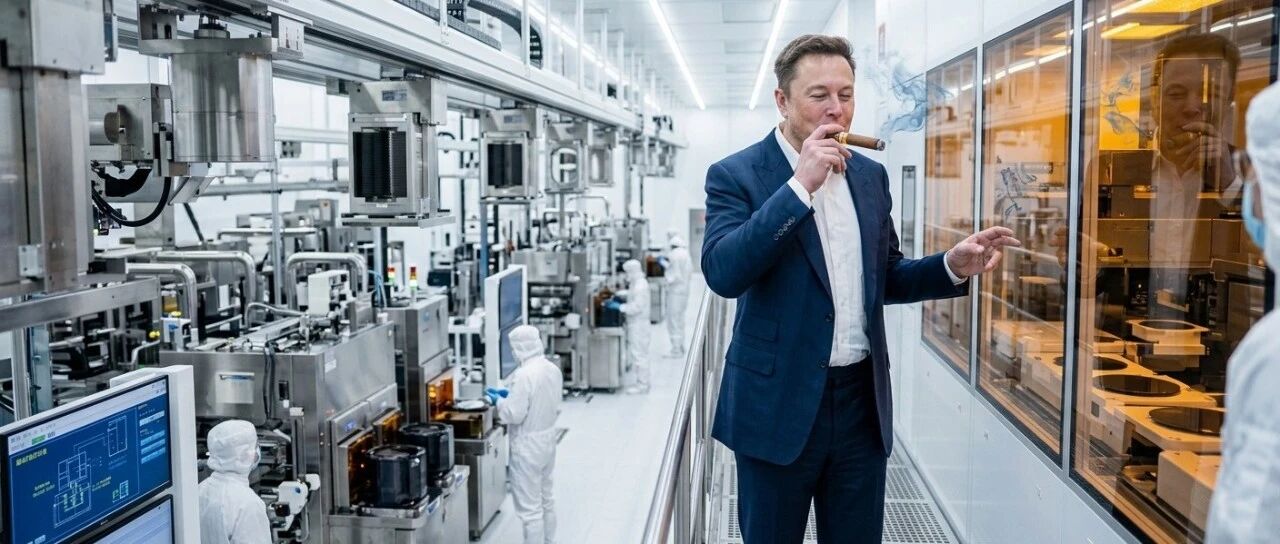
Core Viewpoint - The article discusses Elon Musk's ambitious Terafab project, which aims to build a massive semiconductor manufacturing facility capable of producing hundreds of billions of chips annually. The feasibility and challenges of this project are examined from the perspective of semiconductor engineering [2][5][6]. Group 1: Project Overview - Terafab is designed to be larger than traditional gigafactories, integrating logic circuits, memory, and packaging under one roof, with a production target of 100 billion to 200 billion chips per year [2][6]. - Musk's vision includes a 2nm process node, with an estimated cost of $25 billion, although Tesla has not disclosed detailed cost data [6][19]. - The project aims to address Tesla's chip supply needs, which Musk has indicated will become critical in the next three to four years [5][6]. Group 2: Challenges in Semiconductor Manufacturing - Building a semiconductor fab is a complex task requiring significant resources, including 30-40 million man-hours, 83,000 tons of steel, and 60,000 cubic meters of concrete [15]. - The construction timeline in the U.S. is approximately twice as long as in Taiwan due to regulatory and labor challenges [15][16]. - The transition to a 2nm process involves significant technological changes, including the shift from FinFET to Gate-All-Around (GAA) transistor architecture, which requires new materials and processes [19][22]. Group 3: Yield and Equipment Issues - Achieving high yield rates in semiconductor manufacturing is critical, with any defect in the process potentially leading to significant yield loss [22]. - The global supply of advanced lithography equipment is limited, with ASML being the sole supplier of extreme ultraviolet (EUV) lithography machines, which have long lead times for delivery [24]. - The lack of a robust design ecosystem and process design kits (PDK) poses additional challenges for Tesla, as developing a new PDK can take one to two years [26]. Group 4: Strategic Partnerships and Future Directions - Tesla's collaboration with Samsung in Taylor, Texas, is seen as a foundational step for Terafab, allowing Tesla to gain insights into manufacturing processes and efficiency improvements [40]. - The establishment of a packaging line for AI chips at SpaceX's facility is viewed as a critical move to alleviate bottlenecks in the AI chip market [42]. - Potential partnerships with Intel for wafer fabrication and packaging services could provide Tesla with the necessary infrastructure to support its semiconductor ambitions [44]. Group 5: Elon Musk's Problem-Solving Framework - Musk's five-step problem-solving framework, which includes questioning existing norms, eliminating unnecessary steps, simplifying processes, accelerating timelines, and gradually automating, may be applied to the construction and operation of Terafab [31][34]. - While skepticism exists regarding the applicability of this framework to semiconductor manufacturing, it may help identify inefficiencies in the fab construction process [35].
Musk says SpaceX AI, Tesla will keep ordering Nvidia chips at scale
Reuters· 2026-03-19 01:32
Group 1: Company Insights - Elon Musk announced that SpaceX AI and Tesla will continue to order Nvidia chips at scale, indicating strong ongoing demand for Nvidia's products from these companies [1]. Group 2: Market Reactions - Following the escalation of the U.S. and Israel's conflict with Iran, stock prices declined while oil prices increased, reflecting investor concerns [2].
Think It's Too Late to Buy Taiwan Semiconductor Manufacturing Company Stock? Here's the 1 Reason Why There's Still Time.
The Motley Fool· 2026-03-19 01:30
Core Viewpoint - TSMC's stock has increased over 93% in the past three years, making it a strong investment opportunity due to its competitive advantages in manufacturing capabilities [1][3]. Group 1: Competitive Moat - TSMC's competitive moat lies in its advanced manufacturing capabilities, allowing it to produce smaller and more powerful semiconductors efficiently [3]. - The company has higher yields and can operate at a larger scale compared to its competitors, making it the preferred chip manufacturer for major tech firms like Nvidia, Apple, Amazon, and AMD [4]. Group 2: Financial Performance - TSMC's current market capitalization stands at $1.8 trillion, with a current stock price of $339.56 [5]. - The company's gross margin is reported at 58.73%, and it offers a dividend yield of 1.17% [6]. - TSMC's pricing power enables it to maintain high margins, as companies recognize that opting for cheaper manufacturers would compromise speed and scale [6]. Group 3: Long-term Outlook - TSMC's dominant position in the semiconductor industry suggests a strong likelihood of sustained success, with a positive long-term trajectory for its stock price [7].