天然气

Search documents
泰山燃气:以精准核查筑牢能源基石 以主动服务赋能市场发展
Qi Lu Wan Bao Wang· 2025-09-25 13:53
2025年8月中旬,盛夏的热浪尚未褪去,一场关乎天然气市场规范运行与能源政策落地的重要任务已在 泰山燃气集团调度营销部悄然启动。中石油天然气销售山东公司下发的年度用气结构核查通知,不仅是 对下游供气单位合规运营的"体检",更是对区域能源消费结构的一次深度校准。调度营销部营销科迅速 响应、周密部署,历时十余天,圆满完成集团本部及十家接气企业核查任务,以严谨的数据支撑政策落 实,用专业的担当守护能源供应。 面对8月底正式启动的核查工作,营销科深刻认识到用气结构核查绝非简单的资料梳理,而是打通"政 策-企业-市场"传导链路的核心节点。为此,科室第一时间构建"双向联动"工作机制,向上精准对接监管 要求,向下高效触达市场主体——一方面将核查通知及资料清单细化为"一企一档"的定制化指引,通过 专题会议、定向推送等方式确保下游十家企业"应知尽知、应备尽备";另一方面组建专业团队深挖历史 数据"富矿",对上年度用气合同、月度报表、客服记录等文件进行交叉核验,形成涵盖"基础信息-用量 趋势-结构占比"的分析报告,为核查工作提供"数据底座"。 核查的终点,恰是服务的起点。营销科以此次核查为契机,同步启动"市场需求深度调研"行动: ...
英国石油(BP.US)放弃今年石油需求见顶预测,预计需求持续增长至2030年
智通财经网· 2025-09-25 13:19
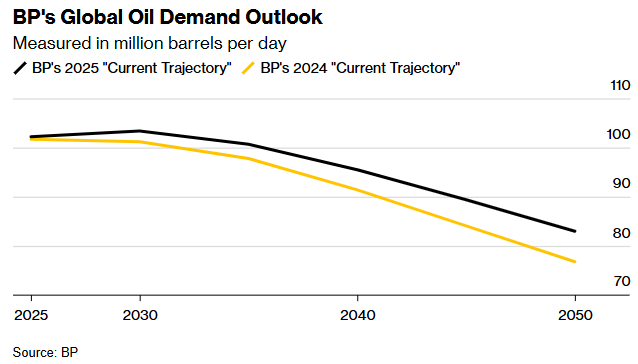
Group 1 - The core viewpoint of the article is that BP has revised its oil demand forecast, indicating that peak oil demand may not occur until 2030, contrary to previous predictions [1][3] - BP's annual Energy Outlook report highlights that factors such as consumption growth in emerging markets, slow energy efficiency improvements, geopolitical tensions, and continued use of petrochemical products will contribute to sustained oil demand [1][3] - The company anticipates that daily oil consumption will reach 103.4 million barrels in five years, up from 102.2 million barrels this year [1] Group 2 - BP's chief economist Spencer Dale and his team project that if current trends continue, daily oil demand could increase by 6 million barrels by 2035 [3] - The company expects oil demand to start declining around 2035, returning to current levels [4] - BP's outlook aligns with a broader industry trend, as the International Energy Agency is also preparing a report indicating that oil and gas demand will continue to grow beyond this decade [5] Group 3 - BP estimates that under the current development path, oil demand will remain significant after 2035, with daily consumption projected to be around 83 million barrels by 2050, an increase from last year's estimate of 75 million barrels [5] - The company believes that natural gas demand will grow during this period, primarily driven by LNG imports in Asia, with the U.S. and the Middle East as major suppliers [5] - A new uncertainty factor is the demand from data centers, which BP estimates will account for about 10% of global electricity demand growth and 40% of U.S. electricity demand growth by 2035 [5] Group 4 - Despite BP's significant investments in renewable energy in recent years, these projects have resulted in losses, prompting a strategic shift back to oil and gas [6] - The report emphasizes that the application of biofuels, hydrogen, and carbon capture technologies depends on government policies, with BP and Shell recently canceling plans for biofuel plants in Europe [6]


麦肯锡料到2030年天然气和电力的EBIT总额将超400亿美元
Ge Long Hui A P P· 2025-09-25 10:40
Core Insights - McKinsey projects that by 2030, the total EBIT for natural gas and electricity is expected to exceed $40 billion, an increase from $30 billion in 2023 and $19 billion in 2024 [1] Summary by Category - **Financial Projections** - The total EBIT for natural gas and electricity is anticipated to surpass $40 billion by 2030 [1] - This represents a growth from $30 billion in 2023 and $19 billion in 2024 [1]
长城人寿举牌新天绿能
Bei Jing Shang Bao· 2025-09-25 10:09
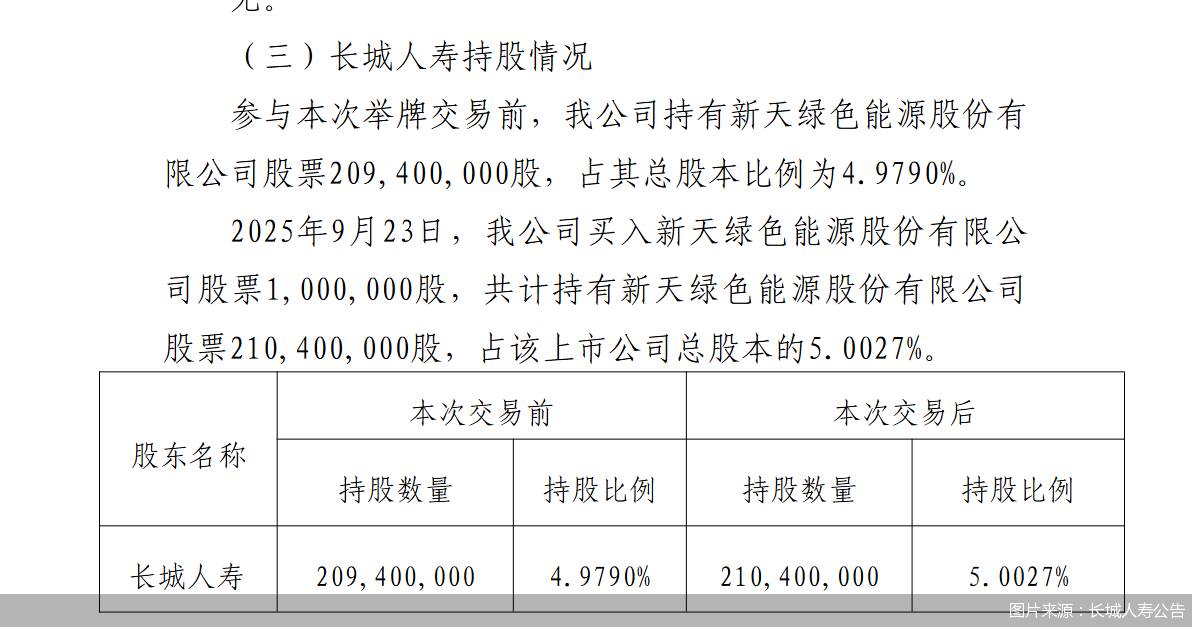
Group 1 - The core point of the news is that Great Wall Life Insurance Co., Ltd. has increased its stake in Xintian Green Energy, triggering a shareholding notification due to surpassing the 5% threshold [1][2] - Before the transaction, Great Wall Life held 209.4 million shares of Xintian Green Energy, representing 4.9790% of the total share capital [1][2] - After purchasing an additional 1 million shares on September 23, Great Wall Life's total holdings increased to 210.4 million shares, which is 5.0027% of the total share capital of Xintian Green Energy [1][2]

陕天然气:公司持续加大终端燃气市场整合
Zheng Quan Ri Bao Wang· 2025-09-25 08:46
Core Viewpoint - The company is focusing on enhancing its gas transmission capabilities and expanding its market presence through strategic integration and infrastructure development [1] Group 1: Strategic Focus - The company aims to "specialize in long-distance transmission, expand urban gas distribution, and optimize the listed company" as part of its strategic direction [1] - Key priorities include eliminating transmission bottlenecks, strengthening interconnectivity, and expanding market coverage [1] Group 2: Infrastructure Development - The company is accelerating the construction of interconnecting pipelines between provincial gas transmission lines and resource points, as well as the national pipeline network [1] - This development is intended to enhance the gas supply security and resource flexibility of the pipeline network [1] Group 3: Market Integration - The company is actively increasing its efforts in integrating the terminal gas market [1] - It is promoting the consolidation of other sizable natural gas operators within the province to continuously improve market share and profitability [1]

BNEF重磅活动·大湾区专场:驾驭能源转型“四驾马车”
彭博Bloomberg· 2025-09-25 06:14
Core Insights - The global energy landscape is undergoing profound changes, driven by multiple factors, with battery storage, photovoltaics, electric mobility, and natural gas as the four key drivers of this transformation [2] - The BNEF event aims to discuss these critical issues with industry experts, focusing on the opportunities and challenges presented by the energy transition [2] Group 1: Global Energy Market Trends - The global energy storage market is rapidly expanding, with an expected annual growth rate of 14.7% by the end of 2035, and China is anticipated to maintain its leading position [4] - China is transitioning towards a market-oriented approach as mandatory storage requirements are phased out, raising questions about the future of large-scale and commercial storage [4] - The photovoltaic market is experiencing a policy-driven recovery in spot prices, yet the fundamental issue of oversupply remains unresolved, affecting pricing dynamics [4] Group 2: Electric Vehicles and Charging Infrastructure - New energy vehicle sales are reaching new highs, but regional markets are developing differently due to technological advancements, policy changes, and geopolitical factors [4] - The differentiated development of the new energy vehicle market will impact the demand and layout of charging infrastructure, highlighting the need for innovative technologies and business models [4] Group 3: Natural Gas Market Outlook - In the context of geopolitical instability and energy transition, energy planners are tasked with developing innovative procurement and utilization strategies to balance energy security and economic efficiency [4] - The evolution of the natural gas market in China and globally is anticipated during the 14th Five-Year Plan, with significant implications for LNG markets [4] Group 4: Event Agenda - The event features a series of presentations from BNEF analysts covering topics such as global energy storage, photovoltaic market outlook, charging infrastructure, and the natural gas market [5][6]
俄放狠话:动我3000亿资产?欧洲企业或将血本无归!
Sou Hu Cai Jing· 2025-09-25 05:53
2025年9月,一场围绕巨额资产的国际争端正在欧盟与俄罗斯之间激烈上演。这场风暴的核心,是欧盟冻结的俄罗斯高达3000亿欧元海外资产。随着各方立 场的公开表态,这场金融博弈正演变成一场涉及国际法、金融稳定与地缘政治的复杂较量。 这笔巨额资产的来龙去脉值得关注。自俄乌冲突升级以来,欧盟与七国集团联手冻结了俄罗斯近半数外汇储备,其中超过2000亿欧元存放在总部位于比利时 的欧洲清算银行。这笔相当于某些国家全年GDP的巨额资金,在欧盟内部引发激烈争论:以波兰、立陶宛为代表的东欧国家主张将资金直接转用于乌克兰重 建,而以法国为代表的西欧国家则顾虑重重。 马克龙的担忧不无道理。在国际法框架下,主权国家资产享有豁免权,未经联合国安理会授权擅自处置他国资产缺乏法律依据。更关键的是,欧洲清算银行 作为处理全球半数跨境证券交易的核心机构,一旦开启没收先例,可能引发国际资本对欧元区的信任危机。这种担忧已初现端倪——2025年9月欧元对美元 汇率应声下跌1.2%,正是市场担忧情绪的直接反映。 俄罗斯方面显然早有准备。早在资产冻结初期,俄方就将西方此举定性为国家层面的盗窃行为,并建立特殊的C账户制度,对来自不友好国家的资金流动实 施 ...
俄罗斯预计萨哈林3号新天然气项目将于2028年投入运营。
Xin Lang Cai Jing· 2025-09-25 05:51
Core Viewpoint - Russia anticipates that the Sakhalin-3 natural gas project will commence operations in 2028 [1] Group 1 - The Sakhalin-3 project is a significant development in Russia's natural gas sector [1] - The project is expected to enhance Russia's natural gas production capacity [1] - The timeline for the project's operational start is set for 2028, indicating a long-term investment strategy [1]

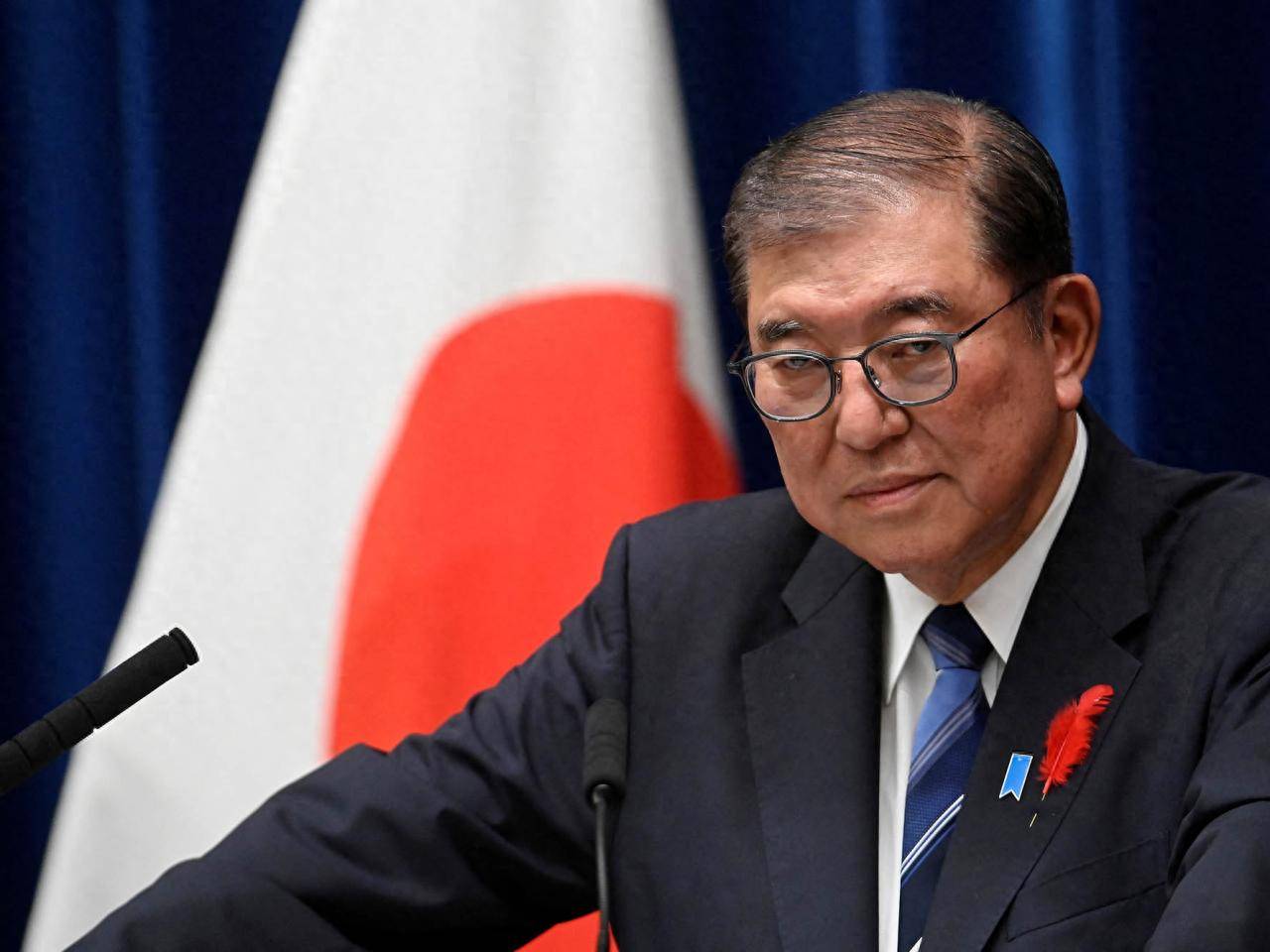
日本拒绝美国要求,不对中国加征100%关税
Sou Hu Cai Jing· 2025-09-25 05:25
Group 1 - The core viewpoint of the article highlights Japan's unexpected refusal to support the U.S. proposal for imposing higher tariffs on China and India for importing Russian oil, indicating a shift in Japan's foreign policy stance [1][3]. - Japan's Finance Minister, Kato Katsunobu, stated that raising tariffs solely based on oil imports from Russia is unacceptable for Japan, emphasizing the country's commitment to World Trade Organization (WTO) obligations [3][5]. - Japan's oil imports from Russia accounted for approximately 1% of its total imports in June, underscoring the importance of supply diversity for the resource-scarce nation [5]. Group 2 - Japan's emphasis on fair trade principles reflects a critique of U.S. unilateralism and supports the multilateral trade system, indicating a potential shift in international trade dynamics [7][9]. - The article notes that Japan's refusal to align with U.S. demands may signify a broader trend of countries prioritizing their national interests over U.S. influence, suggesting a changing landscape in international relations [9].
拜登政府操盘北溪爆炸?揭秘西摩·赫什“报告”,欧洲格局巨变
Sou Hu Cai Jing· 2025-09-25 05:25
Core Insights - The Nord Stream pipeline explosion in September 2022 has become a focal point of global attention, revealing complex geopolitical tensions, particularly involving the U.S. and Norway as potential orchestrators of the incident [1][3][10] Group 1: Geopolitical Context - The Nord Stream 2 pipeline, crucial for Russian-European energy cooperation, has been viewed as a strategic threat by the U.S., leading to significant political maneuvers in Germany following the change in leadership from Angela Merkel to Olaf Scholz [3] - The U.S. Congress has been divided over the Nord Stream 2 project, with some members questioning whether the U.S. is infringing on Europe's energy autonomy, while European nations face a dilemma of relying on Russian energy amidst the Ukraine conflict [3][10] Group 2: Execution of the Operation - The explosion was executed with high-tech precision, involving U.S. Navy divers, CIA operatives, and Norwegian military forces, who chose a location in the Baltic Sea that was deep and away from surveillance [4][6] - During NATO's "Baltic Sea Operation" in June 2022, U.S. divers installed explosives on the pipeline under the guise of military exercises, employing advanced triggering mechanisms to ensure control over the detonation [4][6] Group 3: Immediate Impact - The explosion resulted in a significant drop in pressure in the Nord Stream 2 pipeline, with seismic monitoring stations recording a 2.3 magnitude tremor, followed by multiple leaks in the Nord Stream 1 pipeline [6][8] - The incident has forced European countries to accelerate their efforts to reduce dependence on Russian energy, although official investigations have not publicly implicated the U.S., reflecting a complex geopolitical stance [8][10] Group 4: Long-term Implications - The explosion has severely undermined European energy security and may reshape the trust dynamics between Europe and the U.S., potentially leading to a reconfiguration of international alliances [8][10] - Seymour Hersh's investigation serves as a reminder that while powerful entities may obscure the truth temporarily, historical narratives will eventually reveal the underlying realities of such geopolitical conflicts [10]