
高等教育

Search documents
“四链聚合·三融共育” 培育工商管理跨界卓越人才
Jing Ji Ri Bao· 2025-06-04 22:31
Core Insights - The article emphasizes the urgent need to break down disciplinary barriers in the training of business management talents, advocating for the integration of education, industry, talent, and innovation chains to cultivate cross-disciplinary management professionals with strong adaptability and international competitiveness [1][9]. Group 1: Talent Development Strategies - The management school at Wuhan University of Technology is implementing a "Management + X" approach and a "Three-Teacher Linkage" mechanism to create a closed-loop talent cultivation system [1][9]. - The focus is on developing five-dimensional capabilities: composite knowledge, practical innovation, technological decision-making, global vision, and lifelong learning, through advanced courses like smart manufacturing and green supply chains [2][9]. - A comprehensive support system for student growth is established, including academic mentoring, psychological health services, and diverse internship opportunities [2][9]. Group 2: Curriculum and Research Integration - A chain-based curriculum system is being developed to align educational content with industry advancements, incorporating modular courses on smart manufacturing and carbon neutrality [3][4]. - The integration of research into teaching is encouraged, with initiatives like joint laboratories and interdisciplinary projects to enhance students' innovative capabilities [3][4]. - International collaboration is prioritized to improve students' cross-cultural communication skills and global management competencies [3][4]. Group 3: Industry and Community Engagement - The school is fostering collaboration with research institutions and enterprises to create a spiral enhancement mechanism that translates research outcomes into practical applications [4][5]. - Partnerships with leading companies are being established to create integrated platforms for project-based training and innovation incubation [4][5]. - The initiative aims to align educational resources with regional economic development, promoting a "city as a classroom" model [5]. Group 4: Teaching and Learning Environment - A smart classroom environment is being created to enhance interactive and collaborative learning experiences [8]. - The curriculum is being digitized to incorporate the latest research findings and industry trends, supporting personalized learning paths for students [8]. - The integration of industry experts into the classroom is aimed at enriching the learning experience and bridging the gap between theory and practice [8]. Group 5: Achievements and Future Directions - Since implementing the "Four Chains Integration and Three Education Integration" model, the school has seen significant improvements in students' innovative practical abilities, with numerous national and provincial awards [9]. - The management school plans to continue exploring new paths for "Management + X" and chain collaboration to contribute to national innovation strategies and regional industrial upgrades [9].
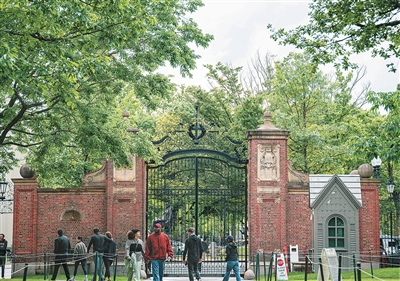
哈佛大学“国际禁招令”或加剧人才出走
Ren Min Ri Bao Hai Wai Ban· 2025-06-04 21:56
Core Viewpoint - The U.S. government's recent ban on Harvard University from enrolling international students has sparked significant controversy, with implications for the university's reputation and the broader academic landscape in the U.S. [1][2] Group 1: Government Actions and Legal Responses - The U.S. Department of Homeland Security revoked Harvard's SEVP certification, prohibiting the university from enrolling international students, effective from the 2025-2026 academic year [1] - Harvard University has filed a lawsuit against the federal government, claiming the decision infringes on constitutional rights and federal laws [2] - A federal judge has temporarily extended a ban on the government's policy, allowing Harvard to continue accepting international students with valid visas [2] Group 2: Impact on International Students - International students make up over 27% of Harvard's total student body, with approximately 20% of them being from China [3] - Harvard currently hosts nearly 6,800 international students from over 140 countries, primarily in graduate programs [3] Group 3: Broader Implications for U.S. Higher Education - The U.S. government's actions are part of a broader trend of threatening funding to universities that do not comply with certain policies, leading to significant cuts in federal funding for institutions like Columbia University [3] - The Trump administration's policies have reportedly diminished the attractiveness of U.S. higher education, with a 40% year-over-year decline in searches for U.S. doctoral programs from European students [5] - Other global universities are actively reaching out to Harvard students affected by the ban, with around 100 French universities considering measures to assist them [6] Group 4: Academic Freedom and Research Funding - The government's intervention in university admissions is seen as politicizing education and undermining academic freedom, which could damage the U.S.'s reputation as a global academic center [6] - Proposed budget cuts for the 2026 fiscal year threaten significant reductions in research funding, including a 37% cut to the National Institutes of Health and over 50% to the National Science Foundation [6]

市场消息:耶鲁大学接近达成出售至多25亿美元私募股权投资份额的交易。
news flash· 2025-06-04 18:21
市场消息:耶鲁大学接近达成出售至多25亿美元私募股权投资份额的交易。 ...
预算1.14亿元!安徽医科大学采购大批仪器
仪器信息网· 2025-06-04 09:01
Core Viewpoint - Anhui Medical University has announced multiple government procurement intentions for laboratory instruments, with a total budget of 114 million yuan, indicating significant investment in research and educational infrastructure [1][2]. Summary by Sections Procurement Overview - The procurement includes seven types of laboratory instruments such as UV-visible spectrophotometers, fluorescence spectrometers, high-performance liquid chromatographs, ion chromatographs, flame atomic absorption spectrophotometers, and fluorescence quantitative PCR instruments [2][4]. - The expected procurement period is from January to June 2025 [2]. Specific Projects and Budgets - The total budget for the procurement is 114 million yuan, allocated for various projects aimed at enhancing the educational and research capabilities of the university [2][4]. - Specific projects include: - Public Health College's basic experimental teaching support project with a budget of 3.76 million yuan [4]. - Health Toxicology and Quarantine Experimental Teaching Support project with a budget of 4.76 million yuan [4]. - Research instrument procurement for the Basic Medical College with a budget of 4 million yuan [5]. - Construction of a population health data platform with a budget of 15 million yuan [5]. - Modern pharmacy laboratory infrastructure with a budget of 20 million yuan [5]. - Basic facility equipment procurement for the Public Health College with a budget of 20 million yuan [5]. - Biological sample library platform construction with a budget of 10 million yuan [5]. Supplier Responsibilities - Suppliers are required to ensure that all equipment meets industry standards, provide a warranty of no less than one year, and complete installation and acceptance within specified timeframes [4][5]. - Responsibilities include procurement, packaging, transportation, installation, and after-sales service [5].

不拘一格选人才
Ke Ji Ri Bao· 2025-06-04 05:39
Group 1 - Harbin Institute of Technology (HIT) has made significant progress in basic research through a dual approach of "mechanism reform + evaluation orientation," exemplified by Professor Duanmu Haosui's recent publication in a leading economics journal within two years [1] - HIT has published 13 academic papers in prestigious journals like Nature and Science, and has introduced a new batch of high-level innovative talents in basic research over the past five years, demonstrating the effectiveness of its reform in building an innovation ecosystem [1] Group 2 - HIT is reforming its talent evaluation system to better suit the long-term and high-risk nature of basic research, moving away from traditional metrics that may not apply to foundational studies [2] - The university has seen a rise in exceptional young researchers, such as Professor Lv Haibao, who achieved a rapid promotion and made groundbreaking contributions in condensed matter physics [2] - HIT's supportive environment has encouraged young researchers to focus on their work, leading to a more vibrant research atmosphere [2] Group 3 - HIT aims to leverage its basic research capabilities to create knowledge and cultivate talent, as stated by the university's Party Secretary Chen Jie, with a focus on building a high-level faculty and nurturing innovative talents [3] - The establishment of the Life Sciences Center has become a model for talent cultivation, successfully addressing several world-class challenges in virus structure and immunity within a decade [3] - HIT has launched various talent support initiatives, including the "Youth Top Talent Recruitment Program" and "Spring Goose Talent Program," resulting in the establishment of 178 youth scientist studios to foster academic communities [3] Group 4 - Zhao Weisong, a young faculty member at HIT, has achieved significant breakthroughs in biomedical imaging technology, supported by the university's funding and resources for young scientists [4] - The increasing number of talented young researchers joining HIT reflects the institution's growing reputation and supportive research environment [4] - HIT plans to initiate the "Foundation Building Strategy" to provide targeted policy support for cutting-edge basic research [4] Group 5 - HIT is navigating the complexities of basic research with a robust support system and mechanism reforms, positioning itself as a leader in the field [5]
教育部“点名”这所海外高校!正规海外学历学位如何认证
Yang Shi Xin Wen· 2025-06-04 02:25
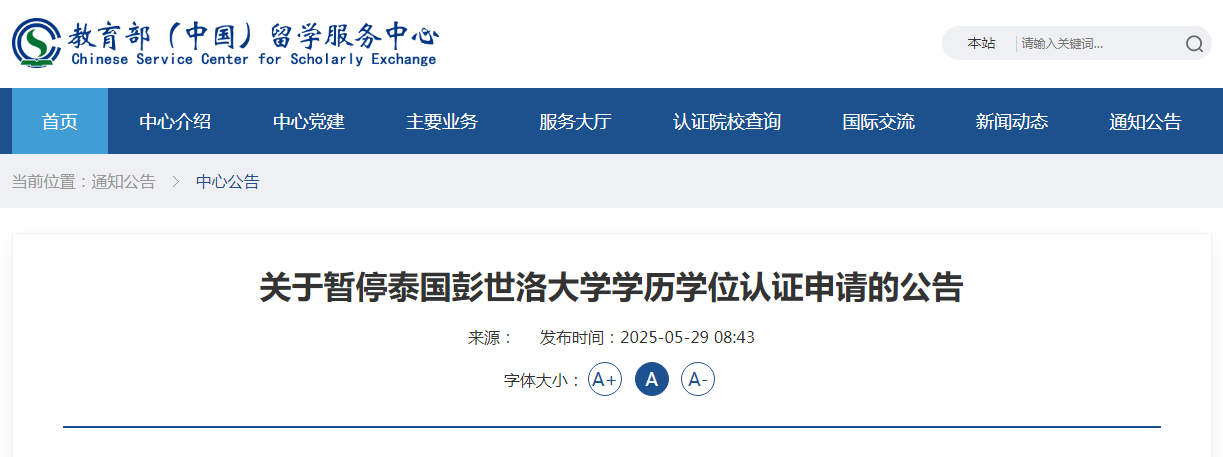
又一家海外大学被"点名"!教育部留学服务中心日前发布公告,暂停泰国彭世洛大学学历学位认证申请。 加强审查的原因包括虚报博士招生规模、恢复或变相恢复因违规发放而被撤销的学位等。 教育部留学服务中心建议广大留学人员密切关注加强审查系列公告,审慎选择公告涉及院校(项目)。 公告提到,泰国彭世洛大学(Phitsanulok University)在核查工作中,提供相互冲突、不真实、不准确信息,导致相关认证工作无法继续开展。根据《国 (境)外学历学位认证办法》第三十九条,决定暂停受理泰国彭世洛大学学历学位认证申请,并对相关认证申请开展复查。 此前,该中心已发布多条关于海外高校学历学位认证再次加强认证审查的公告。其中涉及菲律宾亚当森大学、菲律宾永恒大学拉古纳分校、法国克莱蒙高等 商学院、法国IPAG高等商学院、法国欧洲互联网应用学院等多所高校。 正规海外学历学位如何认证? 近年来,海外注水文凭成为社会热议话题。学生出国留学,如何选择正规高等学校?海外学历学位如何判定正规性?认证流程是什么? 出国留学 如何选择正规高等学校 学生出国留学前,需要综合考虑各国教育主管部门、质量保障机构以及院校官网发布的信息,谨慎选择国(境)外 ...
哈佛大学和毕业生代表,都不知道自己错在哪里
虎嗅APP· 2025-06-03 09:58
Core Viewpoint - The article discusses the contrasting perceptions of a Chinese graduate, Jiang, who delivered a speech at Harvard University, highlighting the divide between elite institutions and the general public's sentiments regarding fairness and opportunity in society [2][10][13]. Group 1: Jiang's Speech and Public Reaction - Jiang's speech at Harvard was met with both applause and criticism, reflecting a shift in public sentiment towards elite achievements and the perceived unfairness of opportunities [2][3][4]. - The public's skepticism towards Jiang's success stems from her background, as her father holds a prominent position in a biodiversity organization, leading to questions about the role of privilege in her achievements [3][5][10]. - Despite Jiang's efforts to clarify her independence from her father's influence, the public remains unconvinced, indicating a broader distrust of elite narratives [5][6][10]. Group 2: Harvard's Globalization Stance - Harvard's choice to feature Jiang in its graduation ceremony symbolizes the institution's commitment to globalization, which contrasts with the sentiments of many Americans who prioritize national interests [9][10]. - The article argues that while Harvard's ideals may be noble, they fail to address the real concerns of the public, who are more focused on immediate economic and social issues rather than abstract global principles [10][11][14]. - The disconnect between elite institutions like Harvard and the general populace is highlighted, suggesting that the elite are out of touch with the struggles faced by ordinary people [11][13][14]. Group 3: Comparison with Other Institutions - The article contrasts Jiang's speech with that of Andrew Yang, a graduate from Columbia University, who focused on relatable themes of struggle and community, making his message more accessible to the public [16][17]. - Yang's approach is presented as a more genuine representation of the collective human experience, in contrast to Jiang's perceived elitism and detachment [16][17].

预算1.56亿元!武汉理工大学近期大批仪器采购意向
仪器信息网· 2025-06-03 06:22
Core Viewpoint - Wuhan University of Technology has announced procurement intentions for 39 items of laboratory equipment, with a total budget of 156 million yuan, scheduled for procurement between December 2024 and June 2025 [1][2]. Procurement Summary - The procurement includes advanced systems such as intelligent all-weather testing and comparison systems, electromagnetic field-assisted multifunctional material preparation systems, and plasma high-energy ball milling systems for building materials, among others [2][4]. - The total budget for the procurement is 156 million yuan, with specific allocations for various equipment types, including: - Intelligent all-weather testing and comparison system: 7.9 million yuan [4]. - Electromagnetic field-assisted multifunctional material preparation system: 4.6 million yuan [4]. - Plasma high-energy ball milling system for building materials: 4 million yuan [4]. - Intelligent high-altitude climate testing system: 8.7 million yuan [5]. - Key performance testing system for materials: 7.45 million yuan [5]. - Thermodynamic performance evaluation system for glass/microcrystalline glass: 5.5 million yuan [5]. - Full electric and laser manufacturing system for microcrystalline glass: 8.9 million yuan [5]. Equipment Specifications - The intelligent all-weather testing and comparison system is designed to simulate extreme environmental conditions and perform high-precision comparisons and analyses of material properties [4][5]. - The electromagnetic field-assisted multifunctional material preparation system aims to develop low-carbon manufacturing techniques for advanced building materials [4][5]. - The plasma high-energy ball milling system will enable the preparation of new types of high-activity clinker and microcrystalline glass under mild conditions, significantly reducing carbon emissions during the manufacturing process [5]. - The intelligent high-altitude climate testing system will assess the durability of materials under extreme conditions typical of high-altitude environments [5]. - The key performance testing system for materials will evaluate the physical and mechanical properties of materials in marine climate conditions [5]. Additional Equipment and Features - Other notable equipment includes a functional near-infrared spectrometer for non-invasive measurement of brain activity in drivers, and a lithium-ion battery material intelligent experimental teaching platform [6][7]. - The procurement also includes advanced optical platforms for electronic materials and components, as well as various systems for automated testing and simulation in educational settings [6][7][8].

哈佛事件还没完!特朗普政府打压美国名校的真正目的曝光?
Sou Hu Cai Jing· 2025-06-02 16:08
Group 1 - The core issue involves the freezing of over $3 billion in federal education funds for Harvard University since April 2025, alongside the revocation of its eligibility to enroll foreign students, although this order was quickly halted by a U.S. court [2] - Other prestigious institutions like Princeton University and the University of Pennsylvania have also seen millions of dollars in federal education funds frozen [2] - The U.S. Department of Education is investigating 10 universities for alleged anti-Semitism and 52 universities for cases related to racism [2] Group 2 - Right-wing individuals in the U.S. perceive universities as breeding grounds for liberal ideologies, claiming that campuses have become leftist institutions pursuing "absolute freedom" [6] - The Trump administration believes that protests against Israel during the Israel-Palestine conflict have morphed into support for racism, anti-Semitism, and terrorism under leftist influence [6] - A survey conducted by Harvard's anti-Semitism and anti-Muslim bias investigation group revealed that many Jewish and Muslim students face bias, exclusion, and alienation in academic settings [6] Group 3 - The Trump administration aims to replace the previous administration's notion of "political correctness" with a stricter version, leading to concerns about freedom of speech on campuses [8] - International students express worries that their viewpoints may affect their studies and employment opportunities in the U.S., including visa revocation [8] - The ideological divide in the U.S. is impacting the normal academic and social lives of international students, particularly Chinese students, who face more complex challenges compared to their peers from other countries [8] - The U.S. may impose restrictions on Chinese students' applications in various fields under the guise of national security, leading to the most challenging application environment in 20 years for Chinese students studying in the U.S. [8]
美国软实力面临削弱与解构风险
Di Yi Cai Jing· 2025-06-02 11:32
Core Viewpoint - The article discusses how Trump's understanding of power is limited to coercion and transactional relationships, which is undermining the United States' global influence, particularly its soft power, due to rising unilateralism, trade protectionism, and cultural conservatism [1][10]. Group 1: Impact on Scientific Research - Trump's administration has significantly reduced funding for scientific research, with the National Science Foundation's new project funding dropping nearly 50% compared to the previous year, particularly affecting engineering, education, and computer science [2][4]. - Major research institutions like the National Institutes of Health and the National Science Foundation have had to implement large-scale layoffs due to funding cuts, with NIH terminating support for over 700 research projects in just one month [4][9]. - The Trump administration's focus on "useful research" has led to a decline in support for basic research, which is crucial for long-term scientific advancement, indicating a shift towards a more utilitarian view of science [3][5]. Group 2: Higher Education and Cultural Tensions - The Trump administration has pressured universities to reform their diversity initiatives and has threatened funding cuts, leading to significant financial repercussions for institutions like Harvard and Princeton [7][8]. - A survey indicated that approximately 75% of American researchers are considering leaving the U.S. due to the uncertain policy environment and funding cuts, highlighting a potential brain drain [4][5]. - The conflict between Trump's administration and universities reflects a broader cultural clash between conservative and progressive values, with implications for academic freedom and the future of higher education in the U.S. [6][8]. Group 3: International Relations and Soft Power - Trump's "America First" policy has led to a departure from multilateralism, with the U.S. becoming the least supportive country of multilateralism among 193 UN member states [10][12]. - The administration's aggressive trade policies and withdrawal from international agreements have strained relationships with allies and reduced the U.S.'s global standing [11][13]. - Trump's approach has resulted in a significant decline in the U.S.'s soft power, as countries reassess their relationships with the U.S. and become more cautious in their engagements [12][13].