
资产管理

Search documents
犹太人在美国:为何黑人都可以当美国总统,但犹太人就是不行?
Sou Hu Cai Jing· 2025-09-21 07:02
Group 1 - The article discusses the absence of Jewish presidents in the United States despite their significant influence in finance and media [1][3][5] - It highlights that Jewish individuals control major American corporations and media outlets, yet none have ascended to the presidency [3][5][21] - The article suggests that the low population of Jews in the U.S., estimated between 5.7 million to 7.6 million, limits their voting power in a democratic system [9][11] Group 2 - Historical discrimination against Jews in America has contributed to their delayed rise in political power, as they faced significant challenges upon immigration [11][13][15] - The article notes that Jews have become a powerful group in America, influencing elections and holding significant positions, but prefer to remain behind the scenes rather than seek the presidency [17][19] - Cultural and religious factors, such as the presidential oath involving the Bible, may also deter Jewish individuals from pursuing the presidency [19][21]


“买美国资产但对冲美元”!万亿美元对冲施压美元
美股IPO· 2025-09-21 05:52
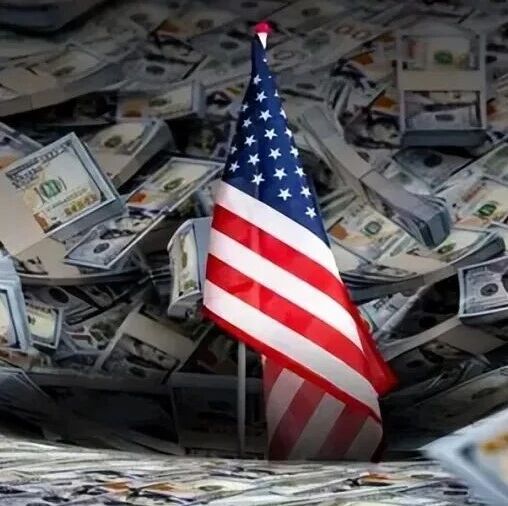
Core Viewpoint - A significant shift in investment strategies is occurring, with a surge in funds flowing into "dollar-hedged" U.S. asset ETFs, surpassing "non-dollar-hedged" funds for the first time in a decade, indicating a potential $1 trillion wave of dollar hedging that could restore the hedging ratio of global investors' $30 trillion in U.S. equities and bonds to the average level of the past decade [1][3][6][7]. Group 1: Market Dynamics - International capital is continuously flowing into the U.S., pushing the holdings of U.S. Treasuries to a historical high while also pursuing rebounds in U.S. equities [2]. - Major Wall Street banks, including State Street, Deutsche Bank, and BNP Paribas, predict that the ongoing hedging activities will significantly pressure the dollar's performance in the coming year [3][9]. - The current hedging trend is characterized as a precise and subtle strategy termed "hedging America," which is becoming mainstream in global capital markets [5]. Group 2: Investor Behavior - As of April, foreign investors' hedging ratio for U.S. assets has stabilized around 56%, down from approximately 70% in mid-2023, indicating a shift in risk management strategies [11]. - A survey by Bank of America revealed that 38% of global fund managers are seeking to increase currency hedging to mitigate the risks associated with a weakening dollar, marking the highest level since June [12]. - Some large investors, including pension funds from Canada, Europe, and Australia, have signaled intentions to increase their holdings, reflecting a broader trend towards enhanced hedging [12]. Group 3: Strategic Insights - The analysis from Ninety One's Sahil Mahtani suggests that a slight adjustment in the current hedging practices could lead to approximately $1 trillion in dollar-selling foreign exchange transactions [6][11]. - Eleva Capital's Stephane Deo has already established hedging positions early in the year, anticipating a weaker dollar due to government policies, which aligns with the expectation of rising U.S. equities [13].
达利欧:我给普通人的家庭财富建议,也是我一直在做的
Sou Hu Cai Jing· 2025-09-20 14:25
Group 1 - The core idea of the podcast is to share investment strategies and insights from Ray Dalio, particularly in a low-interest-rate environment, emphasizing the importance of diversification and risk management [2][4][5] - Dalio highlights the performance of Bridgewater's China All Weather Fund, which has achieved an average return of around 16% over the past six years, demonstrating the effectiveness of a balanced asset allocation strategy [4][5] - The discussion includes the significance of maintaining a diversified portfolio to mitigate risks associated with market volatility and economic fluctuations [5][6][10] Group 2 - Dalio warns about the risks of relying solely on price appreciation for bond investments in a low-yield environment, suggesting that investors should be cautious when yields are low and focus on rebalancing their portfolios [7][8] - The importance of geographical diversification is emphasized, with Dalio advising investors to avoid market timing and instead maintain a balanced portfolio across different regions [9][10][11] - Dalio provides insights on the allocation of gold within an investment portfolio, suggesting that it should typically represent around 10-15% to effectively hedge against currency devaluation [16][17] Group 3 - The podcast discusses the structural decline of the US dollar due to excessive debt, emphasizing the relationship between debt and currency value [18][19] - Dalio compares Bitcoin to gold, viewing it as a complementary asset for diversification, while highlighting the unique advantages of gold as a stable store of value [20][21] - The limitations of stablecoins are addressed, with Dalio suggesting that they are not suitable for wealth storage compared to inflation-linked bonds, which provide better protection against inflation [22][23] Group 4 - Dalio shares personal insights on family wealth management, advocating for the importance of savings and teaching future generations about the value of money through tangible assets like gold coins [25][26] - The necessity of rebalancing investment portfolios is discussed, with Dalio stressing the importance of having a disciplined approach to maintain strategic asset allocation [28][30] - The use of automated investment systems to avoid emotional decision-making is recommended, highlighting the need for a well-defined investment plan [32]
星油藤新品发布,安立邦三大品牌联合助推健康产业新浪潮
Nan Fang Nong Cun Bao· 2025-09-20 13:32
Core Viewpoint - Shenzhen Anlibang Industrial Group is launching new products under three brands to promote the health industry, focusing on the integration of agriculture and health through the introduction of "Star Oil Vine" products [2][4][5]. Group 1: Company Overview - Shenzhen Anlibang Industrial Group was established in 1999 and focuses on three main areas: asset management, urban development, and the health industry [8][9]. - The company aims to create an ecological closed loop integrating industry, capital, technology, and health [10]. Group 2: Product Launch and Strategy - The company held a brand招商大会 and product launch event, showcasing its latest achievements in the health beverage sector [3][4]. - New products introduced include "Star Oil Vine Tea," "Star Oil Vine Red Tea," and "Chenpi Star Oil Vine," which enhance the value chain of Star Oil Vine and increase the added value of agricultural products [11][15]. - The integration of "Star Oil Vine," known for its high economic value, with local agricultural products like "Xinhui Chenpi" is expected to leverage regional brand advantages [18][19]. Group 3: Industry Impact - The cultivation and deep processing of Star Oil Vine serve as a crucial link between agricultural sources and consumer markets, promoting the deep integration of primary, secondary, and tertiary industries [5][6]. - The company is building a full industry chain that includes planting, research and development, production, and sales, enhancing local farmers' self-development capabilities through various empowerment methods [22][24].

历史高点被“踩在脚下”,所有资产都在涨
凤凰网财经· 2025-09-20 12:37
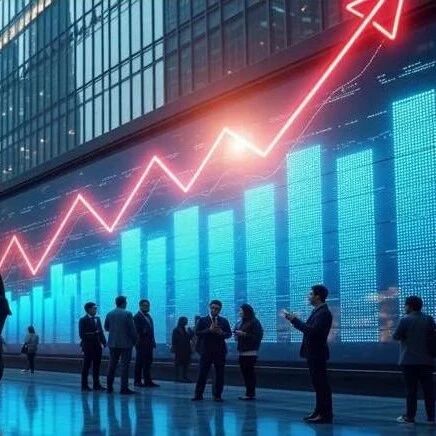
Group 1 - The global financial market is experiencing a broad cross-asset surge, driven by the Federal Reserve's interest rate cuts and the AI boom, marking the most significant rise since the speculative frenzy of 2021 [1] - In the U.S. market, major indices like the S&P 500 and Nasdaq have reached historical highs, with year-to-date gains of 14% and 17% respectively, while the Russell 2000 index has also surpassed its previous peak [2] - The MSCI All Country World Index has hit a record high, indicating a global trend, with emerging market stocks outperforming global indices, signaling a sharp increase in investor risk appetite [4] Group 2 - The credit market is witnessing a similar optimistic trend, with the credit spread for high-rated U.S. companies narrowing to below 0.8 percentage points, the lowest since 1998 [4] - The narrative around this market surge is built on the "Great Resilience Trade," emphasizing resilient consumers, the ongoing AI revolution, and easing trade tensions from the White House [8] - The enthusiasm for AI investments is seen as a core driver, with some firms warning that investors are making one-sided bets while overlooking high valuations and slowing revenue growth [9] Group 3 - The recent interest rate cuts are interpreted as the beginning of a new easing cycle, leading to significant capital inflows into global stock markets, the largest since 2025 [13] - Some investors are cautious, highlighting high geopolitical risks, a slowing U.S. labor market, and extreme market concentration, suggesting current valuations leave little room for error [14][16] - Despite the prevailing optimism, a minority of teams are adopting defensive strategies, with increased short positions in the Russell 2000 index ETF and a rise in funds flowing into safe-haven assets like gold and cash [16]
历史高点被“踩在脚下”,所有资产都在涨
Hua Er Jie Jian Wen· 2025-09-20 04:14
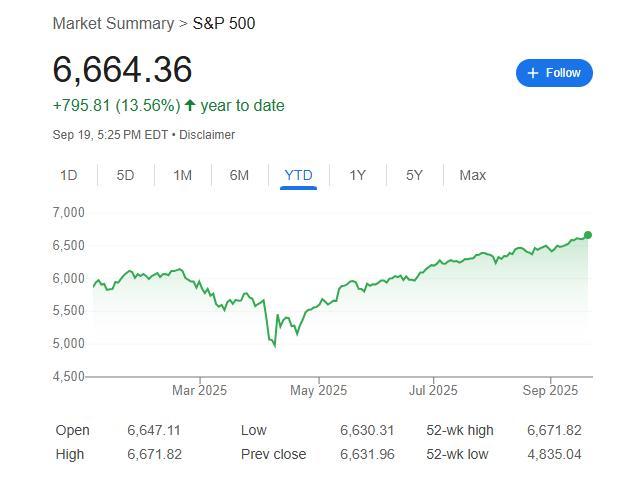
Core Viewpoint - The global financial markets are experiencing a significant rise in risk assets, driven by the Federal Reserve's interest rate cuts and the AI boom, marking the most extensive cross-asset surge since the speculative frenzy of 2021 [1][3][9] Group 1: Market Performance - The S&P 500 and Nasdaq Composite indices in the U.S. have reached new historical highs, with year-to-date increases of 14% and 17% respectively [1] - The MSCI All Country World Index has also hit a historical peak, with emerging market stocks outperforming global indices, indicating a sharp increase in investor risk appetite [3] - The credit market is witnessing a bullish trend, with the credit spread for high-rated U.S. companies narrowing to below 0.8 percentage points, the lowest level since 1998 [3] Group 2: Investor Sentiment and Narratives - The prevailing narrative on Wall Street is termed "The Great Resilience Trade," which is supported by resilient consumer behavior, the ongoing AI revolution, and a more lenient stance from the White House on tariffs [8][9] - The enthusiasm for AI investments is seen as a core driver of this market trend, with some investors likening it to a steroid-fueled internet bubble [9] - Despite the optimism, some analysts express concerns about high valuations, slowing revenue growth, and the significant investment needs of AI giants [9] Group 3: Economic Context and Federal Reserve Policy - The recent interest rate cuts by the Federal Reserve are interpreted as the beginning of a new easing cycle, leading to a substantial influx of capital into global stock markets [9][10] - The market is currently experiencing its largest weekly capital inflow since 2025 following the rate cut announcement, with expectations of at least four more rate cuts next year [9] Group 4: Caution Among Investors - Some investors are beginning to adopt defensive strategies, citing high geopolitical risks, a slowing U.S. labor market, and uncontrolled inflation as concerns [10][11] - The short positions in the iShares Russell 2000 ETF have reached a two-year high, indicating a cautious sentiment among some market participants [11] - Despite the prevailing bullish sentiment, there are indications of skepticism, with some analysts suggesting that the lingering doubts in the market could serve as fuel for the next upward phase [12][13]
全球步入“裂变时代”:如何捕捉结构变迁中的投资新机遇?
Sou Hu Cai Jing· 2025-09-20 03:13
Group 1: Global Economic Environment - The global economy is entering a new phase characterized by high volatility and low growth, with significant uncertainties impacting traditional pricing logic [2][4] - Key structural contradictions include population aging, national debt issues, and geopolitical tensions, which are constraining economic growth [2][4] - The rise of artificial intelligence and technological innovations is expected to take decades to fully impact economic vitality, despite their potential to drive growth [2][4] Group 2: Asset Pricing and Investment Strategies - Asset prices are experiencing significant fluctuations, necessitating heightened risk awareness among investors [3][4] - Gold and silver are highlighted as crucial components of the global monetary system, with gold prices having increased approximately sevenfold since 2005 [5][11] - The current geopolitical landscape is reshaping the G2 dynamics between the US and China, influencing capital flows and asset allocation strategies [5][6] Group 3: US Policy Impact - The Trump administration's tariff policies have evolved from targeted measures to a broader global trade conflict, impacting market dynamics and investor sentiment [7][8] - The combination of tax reforms and tariff policies is expected to generate significant government revenue, but the long-term economic implications remain uncertain [9][10] Group 4: Currency and Commodity Trends - The weakening of the US dollar is anticipated, driven by structural issues and a decline in trust among global investors [11][12] - Central banks are increasingly diversifying their reserves by accumulating gold, reflecting a shift in confidence away from the dollar [11][12] - The price of gold is projected to continue rising, with significant increases expected from 2024 onwards, driven by geopolitical tensions and inflation concerns [11][12] Group 5: Technological Revolution and Asset Valuation - The advent of artificial intelligence is expected to fundamentally reshape economic theories and asset valuation models [15][16] - The emergence of Web3 and tokenization technologies is poised to transform financial infrastructures and redefine value creation mechanisms [16][17] - Traditional asset pricing frameworks are under pressure, with significant disparities expected between sectors and asset classes [17] Group 6: Investment Outlook - Chinese assets are seen as undervalued, with potential for systemic revaluation supported by policy changes and economic fundamentals [18][19] - Growth sectors such as technology and innovative pharmaceuticals are highlighted as areas of opportunity, while traditional markets face challenges [19][20] - Gold is recommended as a hedge against inflation and economic uncertainty, with its role as a safe-haven asset becoming increasingly relevant [19][21]
历史高点被“踩在脚下”,所有资产都在涨!
Hua Er Jie Jian Wen· 2025-09-20 02:17
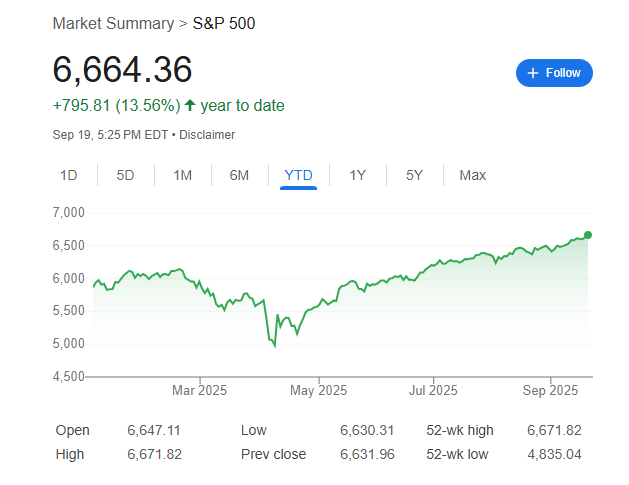
Core Viewpoint - The global financial markets are experiencing a significant rise in risk asset prices, driven by the Federal Reserve's interest rate cuts and the AI boom, marking the most extensive cross-asset surge since the speculative frenzy of 2021 [1][3]. Group 1: Market Performance - The S&P 500 and Nasdaq Composite indices in the U.S. have reached new historical highs, with year-to-date increases of 14% and 17%, respectively [1]. - The MSCI All Country World Index has also hit a historical peak, with emerging market stocks outperforming global indices, indicating a sharp increase in investor risk appetite [3]. - The credit market is witnessing a bullish trend, with the credit spread for high-rated U.S. companies narrowing to below 0.8 percentage points, the lowest level since 1998 [3]. Group 2: Investor Sentiment and Trends - The current market rally is characterized by a "Great Resilience Trade" narrative, supported by resilient consumers, the AI revolution, and easing tariff stances from the White House [6][7]. - The enthusiasm for AI investments is seen as a core driver of this trend, with some analysts comparing it to a "steroid-fueled internet bubble" [7]. - Despite the optimism, there are concerns about high valuations, slowing revenue growth, and significant investment needs from AI giants [7]. Group 3: Economic Indicators and Federal Reserve Policy - The recent interest rate cuts by the Federal Reserve are interpreted as the beginning of a new easing cycle, leading to the largest weekly inflow of funds into global stock markets since 2025 [8]. - The expectation of further rate cuts next year is prevalent in the futures market, with at least four cuts anticipated [8]. Group 4: Caution Among Investors - Some investors are wary of the current market conditions, citing high geopolitical risks, a slowing U.S. labor market, and extreme market concentration as potential threats [9]. - Defensive positioning is increasing, with some investment teams expressing skepticism about the overly optimistic expectations regarding the Federal Reserve's rate cuts [9]. - The rise in short positions on the Russell 2000 index ETF and the inflow into safe-haven assets like gold and cash indicate a cautious sentiment among certain investors [9].
保德信资管揭牌,为首家由境外金融机构直接发起设立的独资保险资管公司
Xin Lang Cai Jing· 2025-09-19 15:09
据保德信资管消息,9月19日,金融街合作发展理事会资产管理专委会2025年度会议举办。会上,保德 信资管公司正式揭牌。作为中国首家由境外金融机构直接发起设立的独资保险资管公司,保德信资管于 2024金融街论坛年会期间获批筹建,于2025年9月初获得开业批复。 ...
保德信资管公司揭牌 正式迈入运营阶段
Xin Lang Cai Jing· 2025-09-19 14:40
9月19日,金融街合作发展理事会资产管理专委会2025年度会议举办。作为此次会议的重要成果之一, 保德信资管公司揭牌,标志着该公司正式迈入运营阶段。 ...