
先进制造业

Search documents
《鼓励外商投资产业目录(2025年版)》明年2月1日起施行 更大力度吸引和利用外资
Jing Ji Ri Bao· 2025-12-25 23:27
Core Viewpoint - The release of the "Encouragement Directory for Foreign Investment Industries (2025 Edition)" aims to attract and utilize foreign investment more effectively, focusing on advanced manufacturing, modern services, high-tech, and energy-saving sectors, particularly in the central and western regions and Northeast China [1][2]. Group 1: Changes in the Encouragement Directory - The 2025 edition of the Encouragement Directory includes a total of 1,679 entries, an increase of 205 entries and modifications to 303 entries compared to the 2022 edition [1]. - The national directory consists of 619 entries, with 100 new additions and 131 modifications, while the regional directory for central and western areas includes 1,060 entries, with 105 new additions and 172 modifications [1]. Group 2: Focus Areas for Foreign Investment - The new directory emphasizes three main areas for foreign investment: advanced manufacturing, modern services, and investment in the central and western regions, Northeast China, and Hainan Province [2]. - New entries in the manufacturing sector include cutting-edge fields such as nucleic acid drug development, zero-magnetic medical equipment, intelligent detection equipment, underwater robotics, and key components for robots [2]. Group 3: Service Sector Development - The directory highlights the development of productive service industries, adding new categories such as new materials technology platforms, modern high-end shipping services, and virtual power plant operations, while also supporting service consumption in areas like pet services, sports tourism, and internet-based healthcare [2][3]. Group 4: Regional Coordination and Development - The directory aims to promote regional coordinated development by expanding the encouragement scope based on local resources and industry characteristics, with new entries for various provinces, including cruise tourism in Liaoning and ice and snow equipment in Heilongjiang [3]. - Measures to attract foreign investment in the central and western regions include prioritizing land supply for industrial projects and offering tax incentives, which are expected to enhance local economic growth and strengthen the resilience of China's industrial supply chain [3]. Group 5: Implementation and Environment - The National Development and Reform Commission will work with relevant departments to ensure the effective implementation of the policy measures and create a market-oriented, law-based, and international business environment for foreign investors [4].
更大力度吸引和利用外资
Xin Lang Cai Jing· 2025-12-25 22:30
Core Viewpoint - The release of the "Encouragement Directory for Foreign Investment Industries (2025 Edition)" aims to attract and utilize foreign investment more effectively, focusing on advanced manufacturing, modern services, high-tech, and environmental protection sectors, particularly in the central and western regions and Northeast China [1][2]. Group 1: Changes in the Encouragement Directory - The 2025 edition of the Encouragement Directory includes a total of 1,679 entries, an increase of 205 entries and 303 modifications compared to the 2022 edition [1]. - The national directory consists of 619 entries, with 100 new entries and 131 modifications, while the regional directory for central and western areas has 1,060 entries, with 105 new entries and 172 modifications [1]. Group 2: Focus Areas for Foreign Investment - The new directory emphasizes encouraging foreign investment in advanced manufacturing, modern services, and specific regions such as the central and western areas, Northeast China, and Hainan Province [2]. - New entries in the manufacturing sector include cutting-edge fields such as nucleic acid drug development, zero-magnetic medical equipment, intelligent detection equipment, underwater robots, and key components for robots [2]. Group 3: Service Sector Development - The directory highlights the development of productive service industries, adding new categories such as new materials technology platforms, modern high-end shipping services, and virtual power plant operations [2]. - It also supports the enhancement of service consumption by including categories like pet services, sports tourism, property services, and internet-based healthcare services [2]. Group 4: Regional Coordination and Development - The directory aims to promote regional coordinated development by expanding the encouragement scope based on local resources and industry characteristics [3]. - New entries for specific provinces include cruise tourism in Liaoning, ice and snow equipment in Heilongjiang, high-end intelligent lifting machinery in Henan, marine environmental governance in Hainan, computing power hardware in Guizhou, and wind power operations in Qinghai [3]. Group 5: Future Implementation - The National Development and Reform Commission will coordinate with relevant departments to ensure the implementation of policy measures and create a market-oriented, law-based, and international business environment for foreign investors [4].
新闻1+1丨新版鼓励外商投资目录,吸引力在哪?
Yang Shi Wang· 2025-12-25 22:08
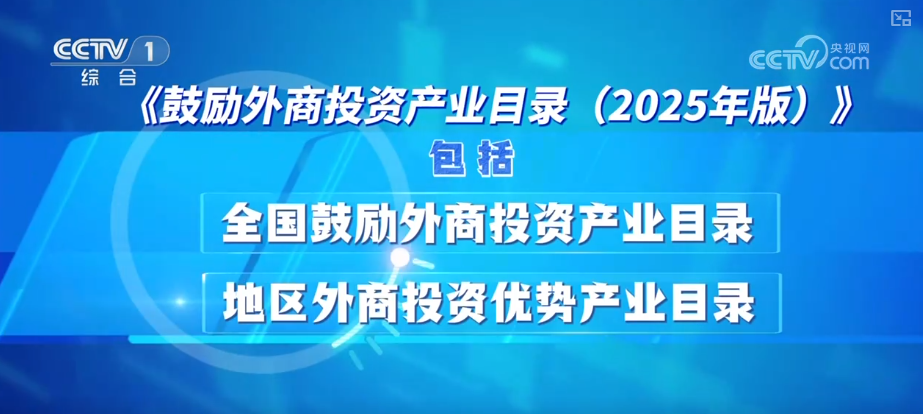
Core Insights - The newly released "Encouragement Directory for Foreign Investment Industries (2025 Edition)" includes a total of 1,679 entries, reflecting a net increase of 205 entries and 303 modifications compared to the 2022 version [1] Group 1: Changes in the Encouragement Directory - The new directory emphasizes guiding foreign investment towards advanced manufacturing and modern service industries, as well as focusing on the central and western regions, Northeast China, and Hainan Province [4] - The changes reflect a shift in focus from the quantity of foreign investment to the quality and structure, aiming to attract capital into key industries and regions that are crucial for national economic development [4][14] Group 2: Key Areas for Investment - The directory highlights sectors such as pharmaceuticals, medical devices, and instrumentation, which are currently underdeveloped in China but have significant market demand [7] - In modern service industries, there is a pressing need for investment in productive services that support enterprises, particularly in areas like high-end shipping services and virtual power plant operations [10][11] Group 3: Rationale for Frequent Revisions - The frequent updates to the encouragement directory are necessary due to changing global investment dynamics, particularly in light of the COVID-19 pandemic and rising competition for foreign capital [14] - The revisions aim to create a more favorable environment for foreign enterprises to enter and operate in the Chinese market, aligning with the country's industrial and economic development needs [14] Group 4: External Factors Affecting Foreign Investment - The external environment for foreign investment has become more challenging due to trade protectionism and geopolitical tensions, which have negatively impacted the expansion of foreign capital utilization [17] - Despite these challenges, China's complete manufacturing supply chain and growing service sector demand continue to attract foreign investment [17][18] Group 5: Effectiveness of National Policies - The Chinese government has implemented various policies to stabilize and attract foreign investment, which have shown significant effectiveness despite a global decline in foreign capital flow [21] - The focus of foreign investment is shifting towards quality rather than quantity, with many high-end projects in advanced manufacturing and modern services being established in China [21]

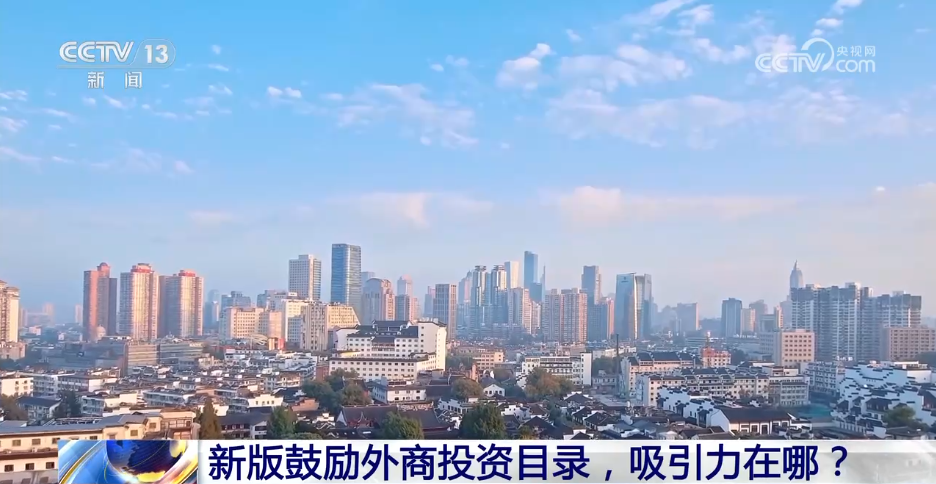
《鼓励外商投资产业目录(2025年版)》明年2月1日起施行—— 更大力度吸引和利用外资
Jing Ji Ri Bao· 2025-12-25 22:03
Core Viewpoint - The release of the "Encouragement Directory for Foreign Investment Industries (2025 Edition)" aims to attract and utilize foreign investment more effectively, focusing on advanced manufacturing, modern services, high-tech, and environmental protection sectors, particularly in the central and western regions and Northeast China [1][2]. Group 1: Changes in the Encouragement Directory - The 2025 edition of the Encouragement Directory includes a total of 1,679 entries, an increase of 205 entries and 303 modifications compared to the 2022 edition [1]. - The national directory consists of 619 entries, with 100 new additions and 131 modifications, while the regional directory for central and western areas has 1,060 entries, with 105 new additions and 172 modifications [1]. Group 2: Focus Areas for Foreign Investment - The new directory emphasizes three main areas for foreign investment: advanced manufacturing, modern services, and investment in central and western regions, Northeast China, and Hainan Province [2]. - New entries in the manufacturing sector include cutting-edge fields such as nucleic acid drug development, zero-magnetic medical equipment, intelligent detection equipment, underwater robots, and key components for robots [2]. Group 3: Service Sector Development - The directory highlights the development of productive service industries, adding new categories such as common technology platforms for new materials, modern high-end shipping services, and virtual power plant operations [2]. - It also supports the enhancement of service consumption by including categories like pet services, sports tourism, property services, and internet-based healthcare services [2]. Group 4: Regional Coordination and Development - The directory aims to promote regional coordinated development by expanding the encouragement scope based on local resources and industrial characteristics [3]. - New entries for specific provinces include cruise tourism in Liaoning, ice and snow equipment in Heilongjiang, high-end intelligent lifting machinery in Henan, marine environmental governance in Hainan, computing power hardware in Guizhou, and wind power operations in Qinghai [3]. Group 5: Future Implementation - The National Development and Reform Commission will coordinate with relevant departments to ensure the effective implementation of the policy measures [4]. - Efforts will be made to create a market-oriented, law-based, and international business environment to attract more multinational companies to invest in China [4].
【甘快看】甘肃着力构建体现甘肃特色和优势的现代化产业体系
Xin Lang Cai Jing· 2025-12-25 15:18
Core Viewpoint - The Gansu Provincial Committee of the Communist Party of China has approved the recommendations for the 15th Five-Year Plan, focusing on building a modern industrial system and enhancing the province's economic development over the next five years [1][2]. Group 1: Industrial Development - Gansu aims to establish a national regional modern manufacturing base, enhancing its industrial strength through traditional industry upgrades and the promotion of new technologies and products [1][2]. - The province plans to develop several national and provincial advanced manufacturing clusters, focusing on a modern industrial system centered around advanced manufacturing [1]. Group 2: Energy Sector - Gansu will leverage its abundant energy resources to build large-scale wind and solar power bases, improve energy transmission channels, and implement integrated renewable energy development projects [2]. - The province aims to transition from being an energy-rich province to an energy-strong province by expanding its wind, solar, thermal, hydrogen, and energy storage industries [2]. Group 3: Service Industry - Gansu will enhance its service sector by improving the integration of modern services with advanced manufacturing and modern agriculture, aiming for higher quality and diversified service offerings [2]. - The province will implement a plan to double the number of service enterprises, supporting their growth and development [2]. Group 4: Infrastructure Development - Gansu will address infrastructure shortcomings by advancing both traditional and new infrastructure projects, including optimizing the Lanzhou railway hub and developing major highway corridors [3]. - The province aims to establish a modern infrastructure system that is efficient, safe, and environmentally friendly [3].
浙江省委书记王浩在杭州调研
Xin Lang Cai Jing· 2025-12-25 15:17
Core Viewpoint - The article emphasizes the need for comprehensive implementation of the spirit of the 20th National Congress of the Communist Party and subsequent plenary sessions, focusing on enhancing the comprehensive strength, international competitiveness, and global influence of Hangzhou as a leading city in building a world-class socialist modern international metropolis [1] Group 1: Government Initiatives - The provincial secretary Wang Hao highlighted the importance of adhering to the "Eight-Eight Strategy" and pushing for innovation and practical advancements in urban development [1] - Wang Hao's visit included inspections of various enterprises and platforms, such as Changchuan Technology and Tianjing Biotechnology, to understand their development and the integration of education and industry [1] Group 2: Economic Development Focus - There is a strong emphasis on advancing the construction of advanced manufacturing clusters and expanding the "Artificial Intelligence +" initiative to empower various industries [1] - The article discusses the need to cultivate a new generation of Zhejiang merchants, reinforcing the role of enterprises as innovation leaders and supporting the demonstration of new technologies and products [1]
投资中国前景广阔、未来可期 促进外商投资利好再加码彰显我国扩大国际合作积极态度
Yang Shi Wang· 2025-12-25 07:07
Core Points - The National Development and Reform Commission and the Ministry of Commerce released the "Encouraged Foreign Investment Industry Catalog (2025 Edition)" which will take effect on February 1, 2026, with a total of 1,679 entries, an increase of 205 entries compared to the 2022 version [1][3][12] Group 1: Changes in the Catalog - The new catalog includes both a national encouraged foreign investment industry catalog and regional encouraged foreign investment advantage industry catalogs, with a total of 1,679 entries, reflecting a net increase of 205 entries and 303 modifications compared to the previous version [3][5] - The catalog encourages foreign investment in advanced manufacturing, expanding or adding entries related to end products, components, and raw materials to enhance the development level of the industrial and supply chains [5] - It also promotes foreign investment in modern services, adding or expanding entries in business services, technical services, scientific research, and service consumption to foster high-quality development in the service sector [5] Group 2: Strategic Focus and Investor Confidence - The catalog aims to continuously improve the quality of foreign investment and enhance the regional layout of foreign investment in China, demonstrating the country's positive attitude towards expanding international cooperation [8] - It provides clear, stable, and transparent investment expectations for investors, which is crucial for attracting foreign capital [9] - The revised catalog is expected to attract global innovative elements by incorporating new technologies, new business formats, and new models, thereby achieving complementary advantages between Chinese and foreign enterprises [14] - Many foreign enterprise leaders expressed that the new catalog has strengthened their confidence and expectations for investing in China, indicating a promising future for investments in the country [14][16]
切实把思想和行动统一到党中央决策部署上来 推动经济实现质的有效提升和量的合理增长
Xin Lang Cai Jing· 2025-12-24 23:56
陈刚指出,今年以来,在以习近平同志为核心的党中央坚强领导下,自治区党委坚持把方向、谋全局、 抓大事,建立全区经济运行调度机制,进一步加强党对经济工作的全面领导,高质量发展迈出坚实步 伐,以人工智能为引领的新质生产力加快发展,现代化产业体系加快构建,深层次改革和高水平开放取 得新突破,重点领域风险有效化解,民生保障和乡村全面振兴取得新进展,延续一二三季度均高于预期 目标、高于上年同期、高于全国的"三个高于"良好态势,呈现经济运行回升"向好"、产业结构提质"向 优"、市场预期改善"向上"、民生保障力度"向强"的态势,交出了一份多年未有的优秀成绩单,全区各 方面工作气象一新、格局一新。 陈刚表示,习近平总书记在中央经济工作会议上发表重要讲话,全面总结2025年经济工作,深入分析当 前国内经济形势和外部环境,系统部署2026年经济工作,为做好当前和今后一个时期的经济工作提供了 根本遵循。全区各级各部门要切实把思想和行动统一到党中央决策部署上来,把中央经济工作会议提出 的"五个必须"规律性认识作为重要指引,坚持"站在天安门城楼"上思考谋划广西发展,持续唱响加快高 质量发展主旋律,坚定不移推进深层次改革、扩大高水平开放, ...
更大力度引外资 2025年版鼓励外商投资产业目录出炉 更多服务消费领域纳入全国鼓励范围 增加地区特色鼓励条目
Zheng Quan Shi Bao· 2025-12-24 18:53
Core Points - The National Development and Reform Commission and the Ministry of Commerce jointly released the "Encouraged Foreign Investment Industry Catalog (2025 Edition)" which will take effect on February 1, 2026, replacing the 2022 version, reflecting China's commitment to high-level opening-up [1][2] Group 1: Focus on Advanced Manufacturing - The new catalog emphasizes advanced manufacturing, guiding foreign investment towards high-end and intelligent manufacturing sectors, including the development and production of nucleic acid drugs, zero-magnetic medical equipment, intelligent detection equipment, and key components for robots [1][2] Group 2: Modern Service Industry Development - The catalog aims to enhance the high-quality development of the productive service industry, adding items such as new materials common technology platform operations, modern high-end shipping services, and virtual power plant operations, while also addressing consumer upgrade demands by including pet hospitals, sports tourism services, and "Internet + healthcare services" [1][2] Group 3: Regional Investment Expansion - The catalog expands the encouraged investment scope based on regional endowments, adding unique items for specific provinces, such as cruise tourism services in Liaoning, ice and snow equipment R&D in Heilongjiang, and marine environment governance in Hainan, promoting balanced regional development [2][3] Group 4: Policy Incentives for Foreign Investment - Industries included in the encouraged catalog will benefit from various policy incentives, such as exemption from import duties on self-used equipment, a reduced corporate income tax rate of 15% for investments in western regions and Hainan, and tax credit benefits for foreign investors reinvesting profits in eligible sectors [3][4] Group 5: Future Initiatives for Foreign Investment - The National Development and Reform Commission plans to enhance coordination and implementation of foreign investment initiatives, focusing on expediting major foreign investment projects, addressing bottlenecks in land use, environmental assessments, and energy consumption, and providing support for foreign enterprises [4]
更大力度引外资 2025年版鼓励外商投资产业目录出炉 更多服务消费领域纳入全国鼓励范围,增加地区特色鼓励条目
Zheng Quan Shi Bao· 2025-12-24 18:32
Core Viewpoint - The new "Encouraging Foreign Investment Industry Catalog (2025 Edition)" aims to optimize foreign investment direction and improve regional layout, reflecting China's commitment to high-level opening-up [1][2]. Group 1: Focus on Advanced Manufacturing - The catalog emphasizes advanced manufacturing, guiding foreign investment towards high-end and intelligent manufacturing sectors, including new areas like nucleic acid drug development and robotics component manufacturing [1]. - The inclusion of cutting-edge fields aims to support the transformation and upgrading of the manufacturing industry [1]. Group 2: Development of Modern Service Industry - The catalog promotes high-quality development of productive services, adding new entries such as modern high-end shipping services and virtual power plant operations [2]. - It also addresses consumer upgrade demands by including sectors like pet healthcare and sports tourism services, balancing industrial upgrades with improvements in people's livelihoods [1][2]. Group 3: Regional Investment Expansion - The catalog expands the encouragement scope based on regional endowments, adding specific entries for provinces like Liaoning and Hainan to promote balanced regional development [2]. - This approach aligns with local development realities and provides foreign investors with diverse investment options [2]. Group 4: Policy Incentives for Foreign Investment - Industries included in the catalog will benefit from substantial policy incentives, such as tax exemptions on imported equipment and reduced corporate income tax rates in specific regions [3]. - Foreign investors can also enjoy tax credits if they reinvest profits in qualifying sectors listed in the catalog [3]. Group 5: Future Initiatives for Foreign Investment - The National Development and Reform Commission plans to enhance coordination and guidance for foreign investment, focusing on expediting major projects and addressing bottlenecks in land use and environmental assessments [4]. - There will be initiatives to listen to foreign enterprises' needs and facilitate investment and operational challenges [4].