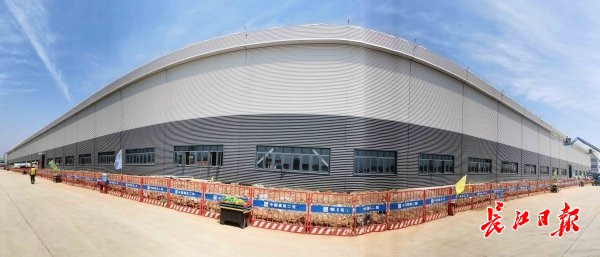
光电子信息

Search documents
“武汉造”攀高逐新活力足(奋勇争先,决战决胜“十四五”)
Ren Min Ri Bao· 2025-08-15 22:11
Core Viewpoint - Wuhan's biotechnology company He Yuan has received approval for its recombinant human albumin injection, which will benefit patients with liver cirrhosis and low albumin levels, reflecting the city's vibrant innovation in manufacturing [1] Traditional Industry Transformation and Upgrading - Dongfeng Motor Corporation, based in Wuhan, has developed a new energy vehicle equipped with the DF30 chip, which has passed cold climate testing and is set for mass production next year [1] - The high-tech manufacturing sector in Wuhan saw a 15.7% year-on-year increase in added value in the first half of the year, accounting for 24.6% of the total industrial added value [1] New Industry Development - Wuhan's optical electronics industry is thriving, with the East Lake High-tech Development Zone expanding its advantages in this sector, achieving a scale exceeding 600 billion yuan [2] - Changfei Optical Fiber and Cable Co., Ltd. has launched air-core optical fibers, significantly enhancing signal transmission speed [2] - Huazhong University of Science and Technology has developed intelligent equipment for laser etching, capable of creating precise textures on various materials [2] Future Industry Layout - Wuhan is making strides in the field of brain-computer interfaces, having launched medical service pricing for this technology and completed the first implantation surgery in Central China [4] - The city is focusing on 13 sub-sectors, including brain-computer interfaces and humanoid robots, to establish a competitive future industry development hub [4] Government Support and Strategic Vision - The establishment of a collaborative innovation consortium for automotive-grade chips in Hubei province highlights the government's support for technological advancements in the automotive sector [2] - Wuhan aims for an annual growth rate of over 20% in emerging industries, reflecting a commitment to enhancing quality and efficiency [3] - The local government emphasizes the importance of technological innovation in building a modern industrial system and improving development quality [5]

华工科技股价微跌0.23% 上半年净利润增长44.87%
Jin Rong Jie· 2025-08-15 17:11
Group 1 - The stock price of Huagong Technology is reported at 51.52 yuan, down 0.12 yuan or 0.23% from the previous trading day, with a trading volume of 381,655 shares and a transaction amount of 1.969 billion yuan [1] - The company’s main business includes intelligent manufacturing equipment, optical and wireless connections, and sensors, with applications in laser processing, information communication, and electronic sensing industries [1] - For the first half of 2025, the company achieved operating revenue of 7.629 billion yuan, a year-on-year increase of 44.66%, and a net profit attributable to shareholders of 911 million yuan, up 44.87% year-on-year [1] Group 2 - Revenue from the connection business reached 3.744 billion yuan, representing a year-on-year growth of 124%, with large-scale deliveries of 400G and 800G optical modules [1] - The intelligent manufacturing business generated revenue of 1.676 billion yuan, with orders in the new energy vehicle sector increasing by 43% year-on-year [1] - On August 14, the company signed a strategic cooperation agreement with China National Machinery Group Corporation, further deepening strategic collaboration [1] Group 3 - The company is accelerating the research and production of the next generation of ultra-high-speed optical modules, with the first phase of the optoelectronic information industry innovation park expected to be completed and put into production in the third quarter [1]

湖北实验室发布30项亮点科技成果
Huan Qiu Wang Zi Xun· 2025-08-15 09:21
Core Insights - The Hubei Provincial Laboratory recently showcased 30 highlight technological achievements, signing contracts worth 10.527 billion yuan with various financial institutions to promote technology transfer and local innovation development [1][2]. Group 1: Technological Achievements - The showcased technologies span various fields including optoelectronic information, biomedicine, new energy, and smart connected vehicles [1]. - Notable technologies include: - Low-cost, long-lifetime glass multidimensional storage technology - "Oriental Eye" integrated intelligent remote sensing satellite system - A new bispecific antibody drug for treating hemophilia A - Biodegradable film made from straw [1][3][4]. Group 2: Laboratory Contributions - Hubei Provincial Laboratory has gathered 66 academicians and a high-level talent team of 3,547 people, incubating 45 enterprises and generating nearly 1.4 billion yuan in self-generated revenue [1]. - The laboratory's efforts have accelerated the development of industrial clusters in compound semiconductors, advanced packaging, new energy ships, modern chemicals, and new materials [1]. Group 3: Specific Projects and Future Plans - The "Oriental Eye" satellite system, developed by Hubei Luojia Laboratory, is the world's first integrated intelligent remote sensing satellite system, capable of sub-meter optical imaging and radar imaging with a response time of minutes [2]. - Hubei Longzhong Laboratory has established two pilot production lines with an investment exceeding 10 billion yuan, focusing on the local automotive industry and expanding into aerospace high-end equipment [2].
谢斌,被查!
Zhong Guo Ji Jin Bao· 2025-08-11 12:42
Core Points - The article reports that Xie Bin, a member of the Party Committee of Changjiang Industrial Investment Group, is under investigation for serious violations of discipline and law [1][3] - Xie Bin has been involved in various public activities representing the company and emphasized the need for reform and innovation within state-owned enterprises [1][3] Company Overview - Changjiang Industrial Investment Group was established in January 2022 with a registered capital of 33.6 billion yuan and total assets of 250.9 billion yuan [3][4] - The group manages over 700 billion yuan in subscribed funds and has 25 controlled secondary subsidiaries, including five listed companies [3][4] - The company focuses on eight major industrial sectors, including optoelectronic information, high-end manufacturing, and new energy [4] Recent Activities - Xie Bin participated in a meeting to promote the implementation of the Central Eight Regulations and emphasized the importance of problem-oriented approaches and long-term mechanisms to prevent risks [3] - He also led a "Summer Cooling" activity to gather feedback and address concerns from employees [3]
中新网:武汉举办主题报告会 向全球投资者发出邀约
Zhong Guo Xin Wen Wang· 2025-08-04 04:09
中新网湖北新闻7月30日电(向智 胡一洲 张婷 覃墨添)7月29日,武汉市举办"建设支 点 当好龙头"系列形势政策宣传教育活动"投资武汉共赢未来——以一流营商环境推动招商 引资高质量发展"主题报告会。该市投资促进局(市政务服务局)局长张智以《招商引资转 型赋能城市跃升共绘支点建设》为题作主旨报告,讲述了武汉正以招商引资的深度转型撬动 城市发展能级的历史性跃升,并向全球投资者发出盛情邀约,与武汉一起迈向3万亿元。中 共武汉市委常委、宣传部部长吴朝安出席。 "回溯武汉招商引资的历程,是一部与时代同频、与改革共振的发展史。"张智介绍,上 世纪80年代,面对GDP排名跌至全国第18位的挑战,武汉以"两通起飞"战略破局,东湖高新 区、武汉经开区等高能级平台应运而生,神龙汽车、可口可乐等项目的落地,让"武汉制 造"重新焕发生机。1991年至2000年,武汉实际利用外资从1亿美元跃升13亿美元,GDP增长 10倍,奠定了工业城市的坚实根基。 步入21世纪,武汉抢抓加入WTO和中部崛起战略机遇,以"项目兴市"激活发展动能。 东风总部迁汉、中韩石化80万吨乙烯、富士康科技等重大项目落地,推动武汉GDP实现年均 17%的高速增长 ...
湖北省加快推进中小企业数字化转型支持
Zhong Guo Chan Ye Jing Ji Xin Xi Wang· 2025-07-30 22:08
Core Viewpoint - The Hubei Provincial Government has issued an action plan to accelerate the digital transformation of small and medium-sized enterprises (SMEs), aiming for comprehensive completion of pilot projects and upgrades of various types of factories by 2027 [1][2] Group 1: Digital Transformation Goals - The action plan targets the completion of national, provincial, and county-level pilot projects by 2027, covering small, regulated industrial, and specialized enterprises [1] - The plan aims to upgrade digital workshops, smart factories, and future factories, establishing Hubei as a leading province in SME digital transformation [1] Group 2: Artificial Intelligence and Infrastructure - The action plan emphasizes expanding AI application scenarios and supporting SMEs in various stages of production and service through intelligent solutions [1] - It includes enhancing new infrastructure such as industrial internet, AI, 5G, and big data, with a goal to establish 10 "dual-cross" industrial internet platforms [1] Group 3: Transformation Strategies - The plan proposes a tiered approach to transformation, selecting 200 benchmark enterprises for digital transformation to serve as models for other SMEs [2] - It promotes a "chain-based" transformation mechanism, encouraging collaboration among SMEs in key industries like optoelectronics and new energy vehicles [2] - The action plan supports the development of industrial internet platforms within advanced manufacturing clusters and specialized industry clusters to create a comprehensive digital foundation [2]
湖北“51020”先进制造业集群建设提速 五大支柱产业规模“双过半”迈向万亿级
Chang Jiang Shang Bao· 2025-07-27 23:46
Group 1 - Hubei's industrial economy showed a steady growth with a 7.9% year-on-year increase in industrial added value from January to June, surpassing the national average by 1.5 percentage points, ranking 4th among major industrial provinces [1] - The five pillar industries of Hubei, including optoelectronic information, automotive manufacturing and services, modern chemicals, health care, and modern agricultural product processing, all achieved significant growth [1][2] - Hubei aims to establish a modern industrial system with five trillion-level pillar industries, ten five-hundred-billion-level advantageous industries, and twenty one-hundred-billion-level characteristic industrial clusters by 2025 [2][3] Group 2 - Hubei's strategy includes upgrading traditional industries, expanding emerging industries, and nurturing future industries, with a focus on achieving trillion-level scales for key sectors by 2025 [3][4] - The automotive industry has set ambitious targets, including producing 1 million new energy vehicles by 2025, with Dongfeng Motor leading the charge in technological innovation [4][5] - The high-tech manufacturing sector reported a 14.4% increase in added value, contributing 27.5% to the overall industrial growth in Hubei [5] Group 3 - Hubei is prioritizing the health industry as a key pillar, aiming to develop high-end medical equipment and biopharmaceuticals, with plans to introduce ten innovative medical devices and ten new national class I drugs by 2025 [5][6] - The province is also focusing on modern agricultural processing, with initiatives to strengthen key agricultural industry chains and promote regional public brands [6][7] - Hubei's government emphasizes the importance of monitoring industrial operations and fostering innovation to ensure steady economic growth [7]
上半年GDP10强城市基本确定:上海第1,杭州甩开武汉,青岛无缘
Sou Hu Cai Jing· 2025-07-27 19:16
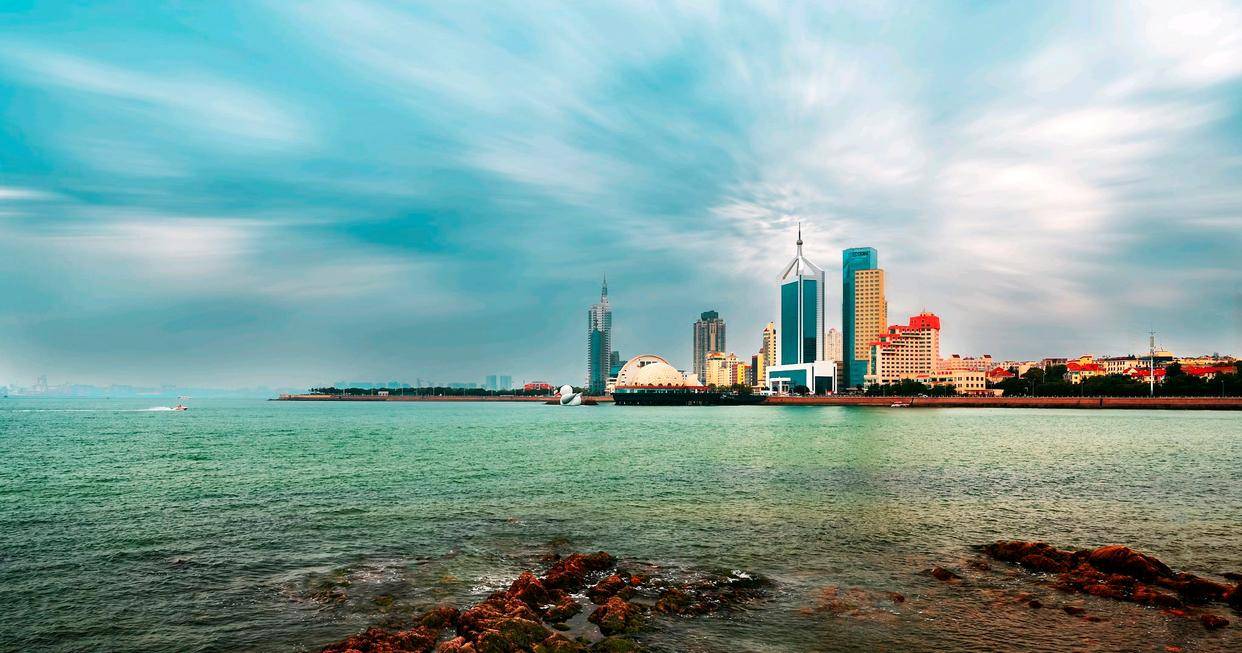
Group 1: Economic Performance - Shanghai leads the GDP rankings with 26,222.15 billion yuan, followed by Beijing and Shenzhen [1] - Chongqing enters the top four for the first time with a GDP of 15,929.58 billion yuan, indicating strong economic growth [1] - Hangzhou shows remarkable growth with an 11.5% nominal increase, surpassing Wuhan by over 700 million yuan [1][4] Group 2: Structural Changes - Shanghai's 4.61% growth rate masks significant structural adjustments, with traditional manufacturing declining by 3.2% while strategic emerging industries like integrated circuits and AI grow by 14.5% [2] - The rise of the Lingang New Area is notable, with offshore trade settlement exceeding 800 billion yuan, accounting for 28% of the national total [2] Group 3: Industry Dynamics - Hangzhou's digital economy core industry value reaches 4,380 billion yuan, making up 38.7% of its GDP [4] - In contrast, Wuhan's growth in traditional industries is only 4.8%, highlighting a disparity in industrial evolution [6] - Qingdao's economic transformation faces challenges, with a decline in the contribution rate of the marine economy and lagging digital transformation compared to Ningbo-Zhoushan Port [7] Group 4: Future Trends - The competition among cities reflects a generational shift in China's economic development model, emphasizing innovation as a core driver [8] - The narrowing GDP gap among cities indicates a transition from factor-driven to efficiency-driven growth, which will shape urban development in the next decade [8]

创新驱动中部地区加快崛起
Jing Ji Ri Bao· 2025-07-24 22:27
Group 1 - The core message emphasizes the importance of technological innovation and the transformation of traditional industries to revitalize the economy in Shanxi and other central regions of China [1][2] - The restructuring of industrial foundations is identified as a key engine for the rapid rise of central regions, with a focus on upgrading traditional industries like steel and machinery to high-end, intelligent, and green production [1][2] - The article highlights the need for a comprehensive innovation support system to overcome challenges such as talent outflow and financial shortcomings, which are critical for achieving breakthrough growth in the central region [2] Group 2 - The development of a robust innovation ecosystem is crucial for the rise of the central region, facilitating the integration of industry, academia, and research to accelerate the transformation of scientific achievements into practical applications [2] - The article calls for a balanced approach that leverages both effective market mechanisms and proactive government involvement to create a conducive environment for enterprises to innovate and compete fairly [2] - The central region's development is framed as a grand systemic project that requires addressing deep-seated institutional issues and focusing on key areas to foster high-quality growth [2]
武汉这十年,万物生长
Chang Jiang Ri Bao· 2025-07-16 00:48
Economic Development - Wuhan's GDP has reached 2 trillion yuan in 2023, marking a significant milestone since it first surpassed 1 trillion yuan in 2014, demonstrating strong economic resilience despite challenges like the pandemic [1] - The city has maintained its position among the top ten cities in China in terms of economic output, showcasing its robust industrial foundation and growing advantageous industries [1] Technological Innovation - Wuhan's optical electronics industry has showcased its commitment to innovation with the launch of nine new technology products in various fields, including AI and industrial manufacturing [2] - The city has attracted numerous global enterprises, with 310 Fortune 500 companies investing in Wuhan, reflecting confidence in its technological and talent resources [3] Urban Planning and Infrastructure - The State Council approved Wuhan's land spatial planning, positioning it as a central city in the midwest, emphasizing its role as a hub for economic, technological, and trade activities [3] - Over the past decade, Wuhan has developed a comprehensive metro network of 12 lines spanning 518 kilometers, facilitating daily commutes for over 4 million passengers [20] Smart City Initiatives - Wuhan is advancing towards a "smart city" model, integrating AI technologies in healthcare and community management, enhancing service efficiency and public safety [6][7] - The city has implemented smart traffic systems that improve traffic flow and safety through real-time data integration [6] Community and Social Development - The emergence of a new citizen demographic in Wuhan has transformed them into active participants in urban development, contributing to the city's vibrancy and cultural diversity [11] - The city has seen an increase in community-driven initiatives, such as smart community management and AI-assisted elder care, enhancing the quality of life for residents [7] Environmental Sustainability - Wuhan has focused on integrating natural beauty into urban development, creating ecological parks and green spaces that promote harmony between urban life and nature [17][18] - The East Lake Greenway has expanded to 105 kilometers, enhancing recreational opportunities and improving local water quality [18] Cultural and Recreational Growth - The city has developed new cultural and recreational spaces, such as outdoor movie venues and community cafes, enriching the urban lifestyle and fostering social interactions [13][14] - The revitalization of historical sites and the introduction of innovative leisure activities have contributed to a vibrant urban atmosphere [14]