
货币金融服务

Search documents
正式批准!欧元区第21个成员国来了
Jin Rong Shi Bao· 2025-06-04 13:32
Group 1 - The European Central Bank has officially approved Bulgaria's application to adopt the euro, making it the 21st member of the Eurozone [1] - Bulgaria is set to start using the euro on January 1, 2026, marking a significant milestone for the Eurozone [1] - Bulgaria has met all the necessary economic convergence criteria, including price stability, public finance, exchange rate, and long-term interest rate standards [1] Group 2 - The European Commission's spring economic forecast predicts a 0.9% growth for the Eurozone in 2025 and a 1.4% growth in 2026, with recent forecasts being downgraded due to global trade uncertainties [2] - The international status of the Eurozone is expected to improve, with the euro potentially becoming a viable alternative to the US dollar amid increasing uncertainty in the dollar-based international monetary system [2] - The European Central Bank's president indicated that changes in the international order could provide opportunities for the euro to play a larger role on the global stage, provided that appropriate policies are implemented [2]
美国内部“去美元化”,黄金“王者归来”!
Sou Hu Cai Jing· 2025-06-03 08:41
Core Viewpoint - Florida has taken a significant step towards de-dollarization by recognizing gold and silver coins with purity over 99.5% and 99.9% as legal tender, exempting them from sales tax, marking a shift in the financial landscape within the U.S. [1][4] Group 1: Legislative Actions - Florida's legislation aims to combat the risks associated with the depreciation of the U.S. dollar, with state representative Doug Bankson highlighting that the dollar's purchasing power has decreased by over 90% since the U.S. abandoned the gold standard in 1971 [3][4] - Other states, including Utah, Texas, Tennessee, and Arkansas, have also enacted similar laws recognizing gold and silver as legal tender, indicating a growing trend across the U.S. [4] Group 2: Economic Context - The U.S. dollar has faced significant depreciation, with the dollar index dropping over 10% this year, contributing to Florida's move towards de-dollarization [6] - The U.S. national debt has reached approximately $37 trillion, raising concerns about the sustainability of the dollar as a global currency and the potential for a loss of confidence in its value [6][9] Group 3: Global Trends - There is a global shift towards de-dollarization, with BRICS nations promoting local currency settlements and a decline in reliance on the dollar for oil transactions in the Middle East [9] - The rise of stablecoins and the exploration of a digital dollar by the Federal Reserve reflect the U.S.'s attempts to adapt to changing financial dynamics and maintain its currency's relevance [9]


日本5月基础货币同比 -3.4%,前值 -4.8%。
news flash· 2025-06-02 23:56
Core Viewpoint - Japan's base money in May decreased by 3.4% year-on-year, an improvement from the previous value of -4.8% [1] Summary by Category - **Monetary Policy** - The year-on-year change in Japan's base money indicates a contraction, but the rate of decline has slowed compared to the previous month [1]
每经热评︱中企扎堆上市外资疯狂“扫货” 港股募资额登顶重塑全球资本图谱
Mei Ri Jing Ji Xin Wen· 2025-05-22 13:37
Group 1 - The core event is the successful IPO of CATL on the Hong Kong Stock Exchange, raising a net amount of HKD 35.3 billion, marking the largest IPO globally in 2023 [1] - The Hong Kong IPO market has shown a strong performance, with a total fundraising amount exceeding HKD 65 billion as of May 20, 2023, making it the leading market globally [1] - There are currently 151 companies waiting to go public in Hong Kong, with expectations that the total fundraising for the year will surpass HKD 150 billion [1] Group 2 - The IPO boom is characterized by a structural shift, with leading A-share companies driving the trend, including companies like Hengrui Medicine and Haitian Flavoring [1] - The strong performance of the Hong Kong market is reflected in the Hang Seng Index, which has seen a year-to-date increase of 17.37% [2] - The discount rate for H-shares compared to A-shares has significantly decreased, with CATL's H-share price only 6.5% lower than its A-share price, the lowest in the past decade [2] Group 3 - The current IPO activity is a result of both domestic companies seeking international expansion and the growing demand for diversified asset allocation by international capital [3] - The changing international trade landscape is influencing capital flows, indicating a shift of Chinese assets from being perceived as "price low" to "value high" [3]

佳能科技投资农村商业银行遭问询,实控人妻子、总经理妻女位列股东
Sou Hu Cai Jing· 2025-05-20 02:02
Core Viewpoint - Canon Technology Co., Ltd. is applying for public stock issuance and listing on the Beijing Stock Exchange, focusing on energy-saving and environmental protection technologies in various industries [2]. Financial Performance - Canon Technology's revenue from 2021 to the first half of 2024 is as follows: 242 million, 247 million, 286 million, and 183 million yuan, respectively. Net profits for the same period are 7.06 million, 23.09 million, 57.25 million, and 24.46 million yuan [2]. Shareholding and Investments - Canon Technology holds a 0.1001% stake in Zibo Zichuan Rural Commercial Bank, with actual controller Yang Liyong serving as a supervisor at the bank. CEO Yang Desheng holds a 0.05% stake [2]. - The company has a loan agreement with Zibo Zichuan Rural Commercial Bank amounting to 10.6 million yuan, with guarantees provided by various individuals associated with Canon Technology [3]. Regulatory Inquiry - The Beijing Stock Exchange has requested clarification on the background, reasons, investment purposes, and funding sources related to Canon Technology and its executives' investments in Zibo Zichuan Rural Commercial Bank, as well as any potential legal violations [4]. Compliance and Approval - Canon Technology states that its investment in Zibo Zichuan Rural Commercial Bank was based on long-term commercial considerations, with funds sourced from operational accumulations. The investment by Yang Desheng was made in 2004, with personal family assets as the funding source [6]. - The establishment of Zibo Zichuan Rural Commercial Bank was approved by regulatory authorities, confirming that the investment actions of Canon Technology and its executives were compliant with regulations [7][8].

浙江威星智能仪表股份有限公司关于使用闲置自有资金进行委托理财到期赎回的公告
Shang Hai Zheng Quan Bao· 2025-05-12 20:03
Core Viewpoint - Zhejiang Weixing Intelligent Instrument Co., Ltd. has successfully redeemed its structured deposit investment with Bank of Communications, achieving a total return on investment [1][2]. Group 1: Financial Management - The company approved the use of idle self-owned funds for entrusted wealth management, with a single investment limit of up to RMB 100 million [1]. - The company purchased a structured deposit product worth RMB 50 million from Bank of Communications, with an annual yield ranging from 1.20% to 2.30% [1]. - The principal amount of RMB 50 million and a total return of RMB 280,410.96 were successfully redeemed and returned to the company's account [1]. Group 2: Investment Status - All principal and returns from previously matured wealth management products have been recovered as scheduled [2]. - The company has one outstanding investment of RMB 50 million using raised funds for cash management, which is still within the authorized limits set by the shareholders' meeting [2].

大动作,将在沙特建立交割金库,布雷斯顿森林体系2.0来了!
Sou Hu Cai Jing· 2025-05-10 08:04
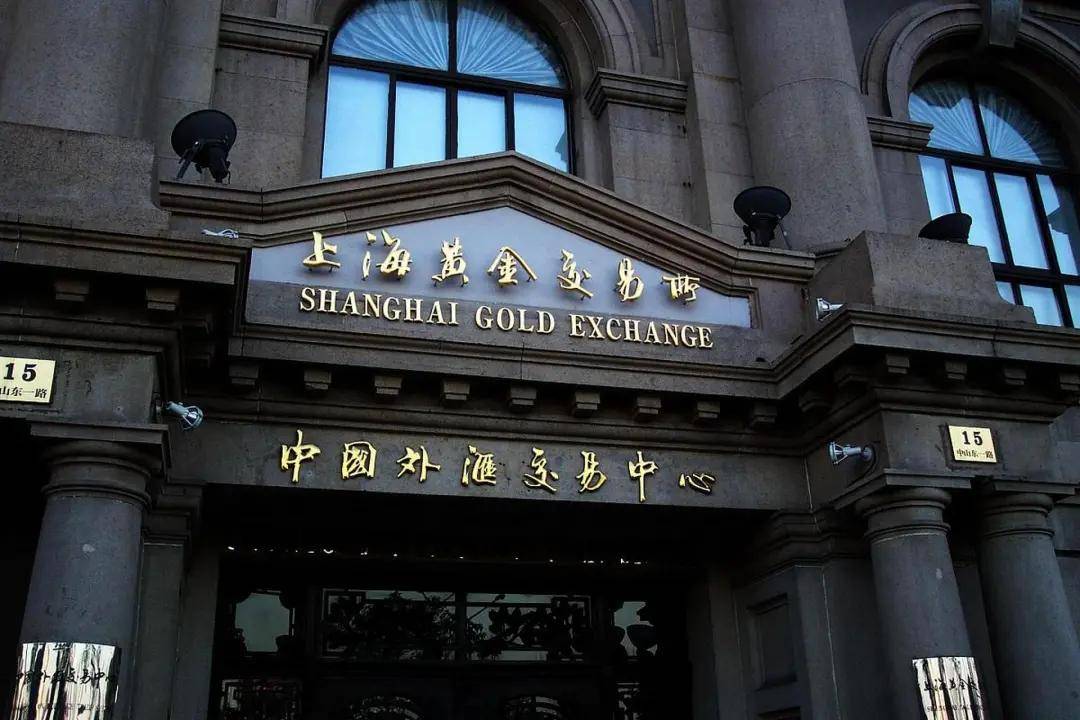
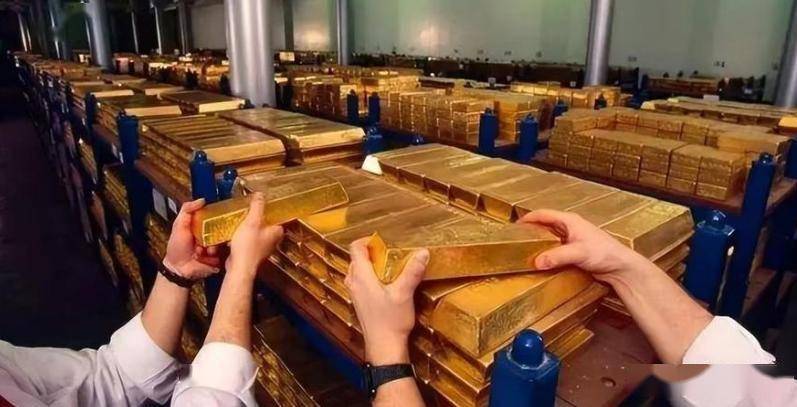
Group 1 - The Shanghai Gold Exchange will establish a delivery vault in Saudi Arabia, with plans for additional vaults in Hong Kong, Singapore, and Switzerland, allowing global citizens to exchange their RMB for gold [1] - The internationalization of the RMB is accelerating, with the first version of the Bretton Woods system introduced in 2018, allowing oil-exporting countries to exchange RMB for gold at the Shanghai Gold Exchange [3] - The transition from "petrodollar" to "petro-RMB" is underway, with Saudi Arabia beginning to accept RMB for oil purchases, marking a significant shift in currency dynamics [5] Group 2 - The establishment of a delivery vault in Saudi Arabia addresses concerns about the accessibility of gold, enabling immediate exchange of RMB for physical gold without leaving Saudi borders [5] - The internationalization of the RMB is entering a fast track, potentially positioning it as a major global payment currency, especially as the U.S. faces significant debt pressures [7] - The decoupling of Chinese assets from the U.S. dollar is expected to enhance China's pricing power in global markets, reducing reliance on the dollar [7]
美元霸权裂痕,人民币国际化闪电战,27国转向中国
Sou Hu Cai Jing· 2025-04-20 11:57
Group 1 - The dominance of the US dollar is a significant asset for the US, allowing it to easily create wealth through unchecked money printing and benefiting from the "seigniorage" effect [1] - However, this privilege has become a double-edged sword, leading to neglect of industrial development, a decline in overall national strength, increasing wealth disparity, and escalating social tensions [2][3] - The transition from a commodity-based currency system to a pure fiat currency system raises challenges in restraining the issuing country's tendency to abuse its power [2][3] Group 2 - Historical examples show that countries with poor performance inevitably face a loss of currency credibility, while even well-performing nations struggle with long-term currency depreciation [3] - The current global trade still necessitates an international monetary system, but the US's actions reveal a mismatch between its moral standing and actual power, potentially undermining its currency dominance [5] - The historical context of Spain's financial situation during the colonial era parallels the current US scenario, where excessive money supply led to inflation and economic decline despite initial wealth accumulation [7][9][10] Group 3 - The detachment of the US dollar from gold in 1971 marked a shift to a system reliant on national self-restraint, yet many countries now face significant fiscal deficits, with the Eurozone averaging a deficit of 3.6% in 2023 [12] - The US's financial situation reflects a growing debt crisis, exacerbated by inflation, with government debt expected to continue rising, highlighting the urgency for a new monetary system [13] - In contrast, China's gradual internationalization of the renminbi is gaining momentum, with significant cross-border financing initiatives and increasing global acceptance [15][16]

中美贸易越打越凶,我国存在美国的黄金六百余吨,还能要回来吗?
Sou Hu Cai Jing· 2025-04-17 16:35
Core Viewpoint - The discussion around China's gold reserves, particularly the over 600 tons held in the U.S., raises questions about the feasibility of reclaiming these assets, which have transformed into a form of leverage for the U.S. in global finance [1][3][5] Group 1: U.S. Gold Reserves and Global Dynamics - The gold held by the U.S. is viewed as a "deposit" from countries that wish to engage in international trade using the U.S. dollar, which has become the dominant currency for transactions [3][5] - The U.S. is unlikely to easily relinquish control over these gold reserves, as they are integral to maintaining its financial dominance [5][7] - The ongoing geopolitical struggle involves countries like Russia, India, Brazil, and Argentina moving towards the internationalization of the Chinese yuan, challenging the U.S. dollar's supremacy [5][7] Group 2: China's Economic Strategy - China is actively working to enhance the influence of the yuan through initiatives like the Belt and Road Initiative and cooperation with BRICS nations, aiming to reduce reliance on the U.S. dollar [7][9] - The potential reclamation of gold reserves hinges on the U.S. losing its dominant position in global finance, which is increasingly being challenged by China's growing economic power [7][9] - The narrative suggests that while immediate recovery of the gold may seem impossible, the long-term strategy involves building economic strength and waiting for the right moment to reclaim these assets [9]
周报:2025年2月官方PMI数据总体表现中性
AVIC Securities· 2025-03-03 07:36
Manufacturing PMI Insights - The official manufacturing PMI for February 2025 is recorded at 50.2%, an increase of 1.1 percentage points from the previous month, indicating a return above the growth threshold[1] - The average manufacturing PMI for the first two months of 2025 is 49.7%, lower than the average of 50.2% in the last quarter of 2024, suggesting a weaker manufacturing sentiment compared to seasonal norms[1] - The production index and new orders index for February are 52.5% and 51.1%, respectively, indicating that production is expanding faster than demand[2] Economic Trends and Risks - The new export orders index stands at 48.6%, reflecting a slight recovery but still indicating potential risks in external demand due to uncertainties in trade policies[2] - There is a notable divergence in sentiment among manufacturing enterprises, with large enterprises showing a PMI of 52.5%, while medium and small enterprises are at 49.2% and 46.3%, respectively, highlighting a reliance on large firms for recovery[2] - The manufacturing price indices indicate a potential narrowing of PPI declines, with the output price index at 48.5% and the main raw material purchase price index at 50.8%[2] Overall Economic Outlook - The comprehensive PMI average for the first two months of 2025 is 50.6%, down from 51.3% in the last quarter of 2024, suggesting a slower economic recovery trajectory[6] - The construction PMI for February is 52.7%, showing a strong recovery post-holiday, while the service sector PMI is at 50.0%, indicating a decline[5] - The overall economic sentiment remains cautious, with the need for further policy support for small and medium enterprises highlighted as crucial for sustained recovery[2]