脑机接口

Search documents
脑机接口获政策持续支持,产业进入加速成长阶段
ZHONGTAI SECURITIES· 2025-08-08 05:49
Investment Rating - The industry investment rating is "Increase Holdings" [2][6] Core Insights - The brain-computer interface (BCI) industry is entering a phase of accelerated growth due to strong policy support, with key technological breakthroughs expected by 2027 and a robust industrial ecosystem anticipated by 2030 [5][6] - The report emphasizes the development of both hardware and software components, with non-invasive devices likely to achieve commercialization first, while invasive devices will provide high precision for medical applications [5][6] Summary by Sections Industry Overview - The industry comprises 494 listed companies with a total market value of 73,522.83 billion and a circulating market value of 66,271.42 billion [2] Policy Support - The Ministry of Industry and Information Technology and other departments have issued implementation opinions to promote innovation in the BCI industry, aiming to establish advanced technology, industrial, and standard systems by 2027 [5] Technological Development - Hardware advancements include the development of various electrode types and integrated signal processing systems, while software improvements focus on enhancing signal decoding and device control accuracy [5] - The report highlights the importance of developing auxiliary devices and surgical robots to improve precision in BCI applications [5] Investment Opportunities - The report suggests focusing on companies with rapid advancements in non-invasive product development, such as Chengyitong, Xiangyu Medical, and Weisi Medical, among others [5]
一则大消息,20%涨停
Zhong Guo Ji Jin Bao· 2025-08-08 05:30
Market Overview - The Hong Kong stock market indices experienced declines, with the Hang Seng Index down by 98.39 points or 0.39%, closing at 24,983.24 [3] - Notable declines were observed in companies such as SMIC and Kingdee International, both dropping over 4% [4] Sector Performance - The commercial aerospace sector continued its strong performance, with significant gains in stocks like Aerospace Intelligent Equipment, which hit a 20% limit up, and other companies such as Shanghai Huguang and Aerospace Science and Technology also reaching their daily limits [5][6] - The brain-computer interface sector showed volatility but trended upwards, with stocks like Sainuo Medical achieving a 20% limit up, alongside gains in Innovative Medical and Optical Electric [8][10] - Other sectors such as power generation equipment, gas, and precious metals saw positive performance, while AI application sectors, including intelligent agents and software, faced declines [2] Notable Stocks - SMIC's current price is 50.50, down 4.72%, with a market capitalization of 494.6 billion [4] - Kingdee International is priced at 17.86, down 4.54%, with a market cap of 63.4 billion [4] - Sainuo Medical reached a price of 20.44, up 20.02%, with a market cap of 85.17 billion [10] - Aerospace Intelligent Equipment is priced at 21.42, up 20%, with a market cap of 15.4 billion [6] Policy and Industry Development - The Ministry of Industry and Information Technology and six other departments issued guidelines to promote the brain-computer interface industry, setting development goals for 2027 and 2030, and outlining five key tasks and 17 specific measures to foster high-quality development in this sector [10][11]


6分钟,垂直涨停!军工股,突发异动
Zheng Quan Shi Bao· 2025-08-08 04:45
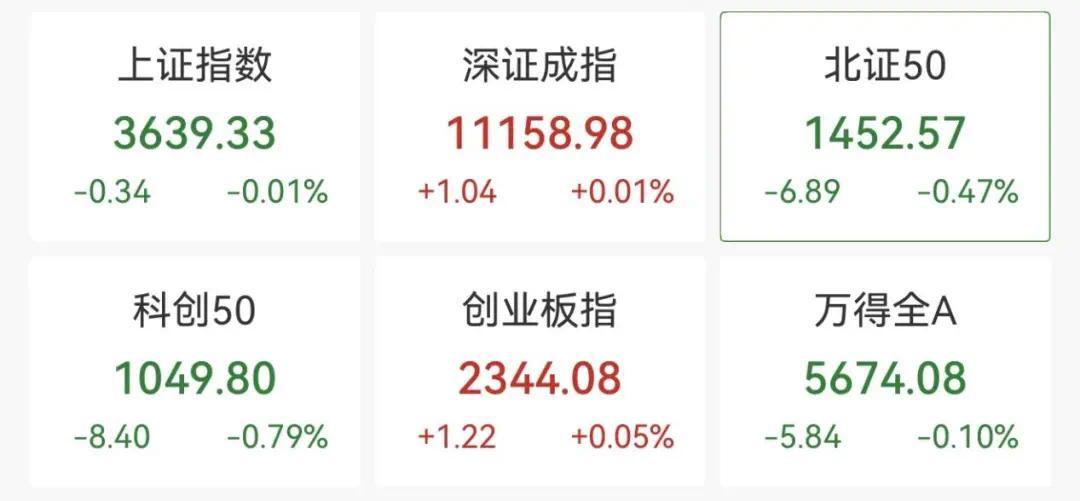
Group 1: Market Overview - A-shares experienced slight fluctuations with major indices showing mixed results, including minor gains in the Shanghai Composite Index and Shenzhen Component Index, while the North Star 50 and Sci-Tech 50 indices showed slight declines [1] - The number of declining stocks outnumbered advancing stocks, indicating a shrinking trading volume [1] Group 2: Brain-Computer Interface (BCI) Sector - The BCI sector continued its strong performance, with the index rising nearly 4% and reaching a five-year high, driven by favorable policies [2][4] - The Ministry of Industry and Information Technology and other government bodies released an implementation opinion aimed at promoting BCI industry innovation, targeting breakthroughs in key technologies by 2027 [4] - The opinion emphasizes the development of new brain signal sensors and chips, as well as the enhancement of decoding software using AI technology [4] Group 3: Defense and Aerospace Sector - The defense and aerospace sector saw a resurgence, with commercial space initiatives leading the charge, and the index reaching a historical high [5] - Notable companies like Feiwo Technology and De'en Precision Engineering experienced significant stock price increases, with some stocks hitting the daily limit [5] - Successful tests of the lunar landing vehicle mark a significant advancement in China's manned lunar exploration program [7]
脑机接口利好来袭,概念股20%涨停
Zheng Quan Shi Bao· 2025-08-08 04:45
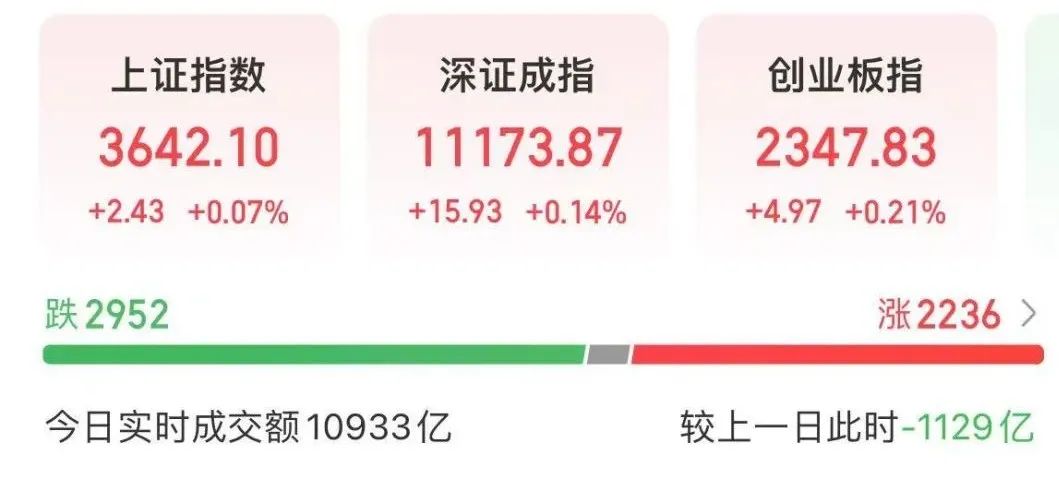
Group 1: A-share Market Performance - The A-share market experienced narrow fluctuations, with the Shanghai Composite Index slightly increasing by 0.07% and the Shenzhen Component Index rising by 0.14% [2] - The brain-computer interface (BCI) concept sector saw significant gains, with the Wind BCI Index rising over 3% during trading [5][6] - Notable stocks in the BCI sector included Sino Medical, which hit a 20% limit up, and other companies like Optoelectronics and Lepu Medical also saw substantial increases [5][6] Group 2: Brain-Computer Interface Industry Insights - The Ministry of Industry and Information Technology and other governmental bodies released an implementation opinion to promote the high-quality development of the BCI industry [6][7] - The implementation opinion emphasizes the integration of biological intelligence and machine intelligence, aiming for breakthroughs in key technologies by 2027 [7] - The BCI sector is positioned as a critical area for technological and industrial innovation, with expectations for a robust production and standards system [7] Group 3: New Stock Listings - Two new stocks were listed on the A-share market, both experiencing significant price increases, with Youli Intelligent rising over 300% and Tianfulong increasing by over 240% during trading [8][10] - Youli Intelligent specializes in photovoltaic support structures, while Tianfulong focuses on differentiated polyester short fibers and new materials for solar panel protection [9][12] Group 4: Hong Kong Market Performance - The Hong Kong market showed a lackluster performance, with the Hang Seng Index falling below the 25,000-point mark [13] - Among the constituents, stocks like Kowloon Warehouse and SMIC saw notable declines, while companies such as CSPC Pharmaceutical and China Hongqiao led the gains [14] - Dongfeng Group's shares surged by over 14% despite a profit warning indicating a significant expected decline in net profit for the first half of the year [15]


政策助力脑机接口概念股走强,沪指半日微涨0.07%
Mei Ri Jing Ji Xin Wen· 2025-08-08 04:44
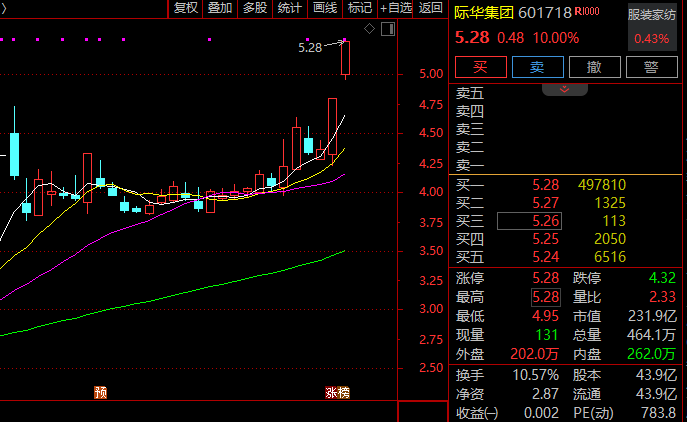
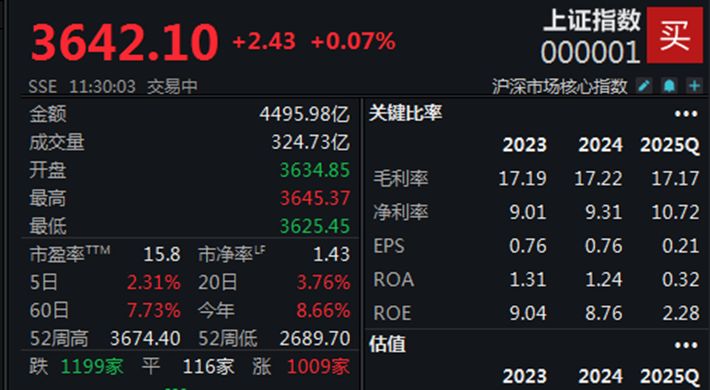
Market Overview - On August 8, A-shares showed narrow consolidation, with the Shanghai Composite Index rising by 0.07% to 3642.1 points, the Shenzhen Component Index up by 0.14%, and the ChiNext Index increasing by 0.21% [1][2] - The total trading volume for A-shares reached 1.09 trillion yuan [1] Monetary Policy - The People's Bank of China conducted a 122 billion yuan 7-day reverse repurchase operation at a fixed rate of 1.40%, with a total bid amount of 122 billion yuan and a successful bid amount of 122 billion yuan [2] - A total of 126 billion yuan in reverse repos matured on the same day, resulting in a net withdrawal of 40 billion yuan [2] Industry Trends - At the 2025 World Robot Conference, ten major trends in embodied intelligent robots were announced, focusing on enhancing generalization, practicality, and safety in social applications [3] - The Ministry of Industry and Information Technology and other departments issued a notice to promote the standardized construction and high-quality development of chemical parks, emphasizing innovation, green low-carbon, and sustainable development [3] Sector Performance - The engineering machinery sector showed strength, particularly in the super hydropower station direction, with companies like Iron Tuo Machinery and Wei Wan Sealing rising over 10% [3] - Brain-computer interface concept stocks also performed well, with companies like Innovation Medical and Jihua Group hitting the daily limit [3] Brain-Computer Interface Industry - The Ministry of Industry and Information Technology and seven other departments issued a document to promote the brain-computer interface industry, indicating a period of technological acceleration and potential for commercial applications [5] - The market for brain-computer interfaces is expected to expand rapidly due to advancements in technology and applications [5] Company Insights - **Botao Bio**: Focuses on brain-computer interface technology with a solid foundation in scientific research [7] - **Beilu Pharmaceutical**: A leading domestic contrast agent company pursuing growth through acquisitions and R&D [7] - **Xiangyu Medical**: Engages in the development and application of brain-computer interfaces and rehabilitation robots [7] - **Dinaike**: Aims to stabilize demand for intercom products while exploring growth in smart hospital solutions and brainwave interaction [7]
002097,涨停!15天9板
Zhong Guo Zheng Quan Bao· 2025-08-08 04:31
Market Overview - A-shares experienced narrow fluctuations with slight increases in the three major indices, with the Shanghai Composite Index up by 0.07%, Shenzhen Component Index up by 0.14%, and ChiNext Index up by 0.21% [1] - The total market turnover for the half-day was approximately 1.09 trillion yuan, a decrease of 112.9 billion yuan compared to the previous day [1] Sector Performance - Sectors such as hydropower, brain-computer interface, medical devices, and commercial aerospace saw significant gains [2] - The engineering machinery sector experienced a surge, with Wanmi Sealing (301161) rising over 12%, reaching a historical high [2] - Liquid cooling server concept stocks were active, with Invec (002837) hitting the daily limit and also reaching a historical high [2] Company Highlights - Shanhe Intelligent (002097) achieved a daily limit increase, marking its 9th increase in 15 days, with a morning trading volume of 4.466 billion yuan [4] - According to the China Construction Machinery Industry Association, excavator sales reached 17,138 units in July 2025, representing a year-on-year increase of 25.2% [6] - Shanhe Intelligent's revenue breakdown shows 38.02% from the domestic market and 61.98% from the international market, with applications in tunnel construction through partnerships [6] Brain-Computer Interface Sector - The brain-computer interface sector showed strength, with Jihua Group (601718) hitting the daily limit [7] - The Ministry of Industry and Information Technology and other departments issued opinions to promote the brain-computer interface industry, aiming for breakthroughs in key technologies by 2027 [9] - The global brain-computer interface market is projected to reach approximately $7 billion by 2030, with a compound annual growth rate of 16.4% from 2025 to 2030 [10] Commercial Aerospace Sector - The commercial aerospace sector continued its strong performance, with companies like Feiwo Technology (301232) hitting the daily limit [11] - Recent data indicates a significant increase in satellite launch frequency, with a record short cycle for networked satellite launches [14] - The commercial aerospace industry is expected to enter a rapid development phase, with new commercial rocket models set to launch by 2025 [14]
七部门出台重磅利好政策,脑机接口商业转化持续加速
第一财经· 2025-08-08 04:27
Core Viewpoint - The brain-computer interface (BCI) sector is experiencing significant growth driven by favorable government policies and technological advancements, with expectations for substantial market expansion in the coming years [1][4]. Group 1: Market Performance - On August 8, stocks related to the brain-computer interface concept surged, with notable gains including Beiyikang at 13% limit up and Sanbo Brain Science at over 11% [1]. - Other companies such as Innovation Medical and Jihua Group also reached their limit up, indicating strong market interest [1]. Group 2: Government Policies - The Ministry of Industry and Information Technology, along with six other departments, issued implementation opinions aimed at promoting innovation in the BCI industry, targeting breakthroughs in key technologies by 2027 [2]. - By 2030, the goal is to establish a reliable industrial system and cultivate globally influential leading enterprises within the BCI sector [2]. Group 3: Industry Insights - The National Medical Insurance Administration has introduced a pricing mechanism for newly launched drugs and medical devices, facilitating the commercialization of new technologies [3]. - Recent reports indicate that the BCI sector is accelerating its commercial transformation, with non-invasive applications in medical rehabilitation and emotional management gaining traction [4]. - The domestic BCI market is expected to expand rapidly, supported by favorable policies and advancements in technology [4].




港股午评:恒指跌0.66%再守25000点,科技股、半导体股走低,黄金股逆势上扬
Jin Rong Jie· 2025-08-08 04:19
Market Overview - Hong Kong stock market opened lower and experienced fluctuations, with the Hang Seng Index down 0.66% to 24,916.15 points, the Hang Seng Tech Index down 0.99% to 5,491.66 points, and the National Enterprises Index down 0.61% to 8,926.67 points [1] - Major tech stocks showed weak performance, with Alibaba down 1.7%, Baidu and Tencent down over 1%, while Xiaomi, JD.com, and Meituan had declines within 0.7% [1] - Semiconductor stocks fell, with SMIC down over 5%, and other semiconductor companies also declining [1] - Gaming stocks led by MGM China and Wynn Macau fell after earnings reports, while paper stocks corrected after a recent rally [1] - Gold stocks rose as gold prices hit a record high, with companies like Zhaojin Mining and Zijin Mining increasing over 2% [1] - Heavy machinery stocks rose, with excavator sales in July up over 25% year-on-year, and China Zhongche rising over 6% [1] Company News - China Mobile reported revenue of 543.8 billion yuan, with communication service revenue at 467 billion yuan, a year-on-year increase of 0.7%, and net profit of 84.2 billion yuan, up 5% [2] - SMIC's sales revenue for the first half was $4.46 billion, a 22% year-on-year increase, but a 1.7% quarter-on-quarter decline in Q2 [2] - Hua Hong Semiconductor reported Q2 sales revenue of $566 million, an 18.3% year-on-year increase, with net profit of $8 million, up 19.2% [2] - MGM China reported revenue of approximately 16.66 billion HKD, a 2.73% year-on-year increase, but net profit decreased by 11.25% to 2.38 billion HKD [2] - Innovent Biologics reported total product revenue exceeding 5.2 billion yuan, a year-on-year increase of over 35%, with Q2 product revenue exceeding 2.7 billion yuan, up over 30% [2] - Pacific Basin Shipping reported revenue of approximately $1.02 billion, a year-on-year decrease of 21%, with net profit down 56% to $25.6 million [2] Additional Company Insights - Asia Cement reported revenue of 2.496 billion yuan, a year-on-year decrease of 7.2%, but net profit turned positive at 114 million yuan [3] - Zai Lab reported total revenue of approximately $216 million, a 15.35% year-on-year increase, with net loss narrowing by 33.33% to $89.165 million [3] - Huadian International Power reported a cumulative power generation of approximately 120 million MWh, a year-on-year decrease of about 6.41% [4] - Longyuan Power reported cumulative power generation of 45.9812 million MWh in the first seven months, a year-on-year decrease of 0.6% [5] - Dongfeng Group issued a profit warning, expecting a 90% to 95% decline in net profit for the interim period [7] Industry Insights - CITIC Securities noted an increase in confidence in certain sub-sectors, with earnings expectations being revised upward ahead of earnings reports, particularly in new energy vehicles, semiconductors, and consumer electronics [8] - Haitong International highlighted that Hong Kong tech and consumer assets align well with current industry trends, potentially attracting continued inflows from the mainland [9] - Zhongtai International observed a marginal slowdown in manufacturing and non-manufacturing sectors, indicating ongoing economic recovery but with fluctuations [9]


脑机接口利好来袭!概念股20%涨停!
Zheng Quan Shi Bao· 2025-08-08 03:59
Market Performance - A-shares experienced narrow fluctuations with the brain-computer interface concept sector seeing significant gains, becoming a highlight of the market [3] - The Shanghai Composite Index rose by 0.07%, the Shenzhen Component Index increased by 0.14%, and the ChiNext Index went up by 0.21% [3] - The Hong Kong market showed a lackluster performance, with the Hang Seng Index falling below the 25,000-point mark [2][9] Brain-Computer Interface Sector - The brain-computer interface concept index surged, with an intraday increase of over 3%, driven by stocks like Sino Medical, which hit a 20% limit up, and other companies such as Optoelectronics and Lepu Medical also seeing significant gains [3] - The Ministry of Industry and Information Technology and other governmental bodies released an implementation opinion aimed at promoting the high-quality development of the brain-computer interface industry [4] New IPOs - Two new stocks listed on the A-share market saw substantial increases, with Youli Intelligent reaching an intraday rise of over 300% and Tianfulong achieving a rise of over 240% [5][6][7] - Youli Intelligent specializes in core components for photovoltaic brackets, which are essential for solar power plants [6] - Tianfulong focuses on differentiated polyester short fibers and has expanded its product range to include new materials for solar panel protection [7][8] Company Announcements - Dongfeng Group announced a profit warning, expecting a significant decline in net profit for the first half of the year, projecting a range of RMB 30 million to RMB 70 million, a decrease of approximately 90% to 95% compared to the same period in 2024 [9]
脑机接口利好来袭!概念股20%涨停!
证券时报· 2025-08-08 03:55
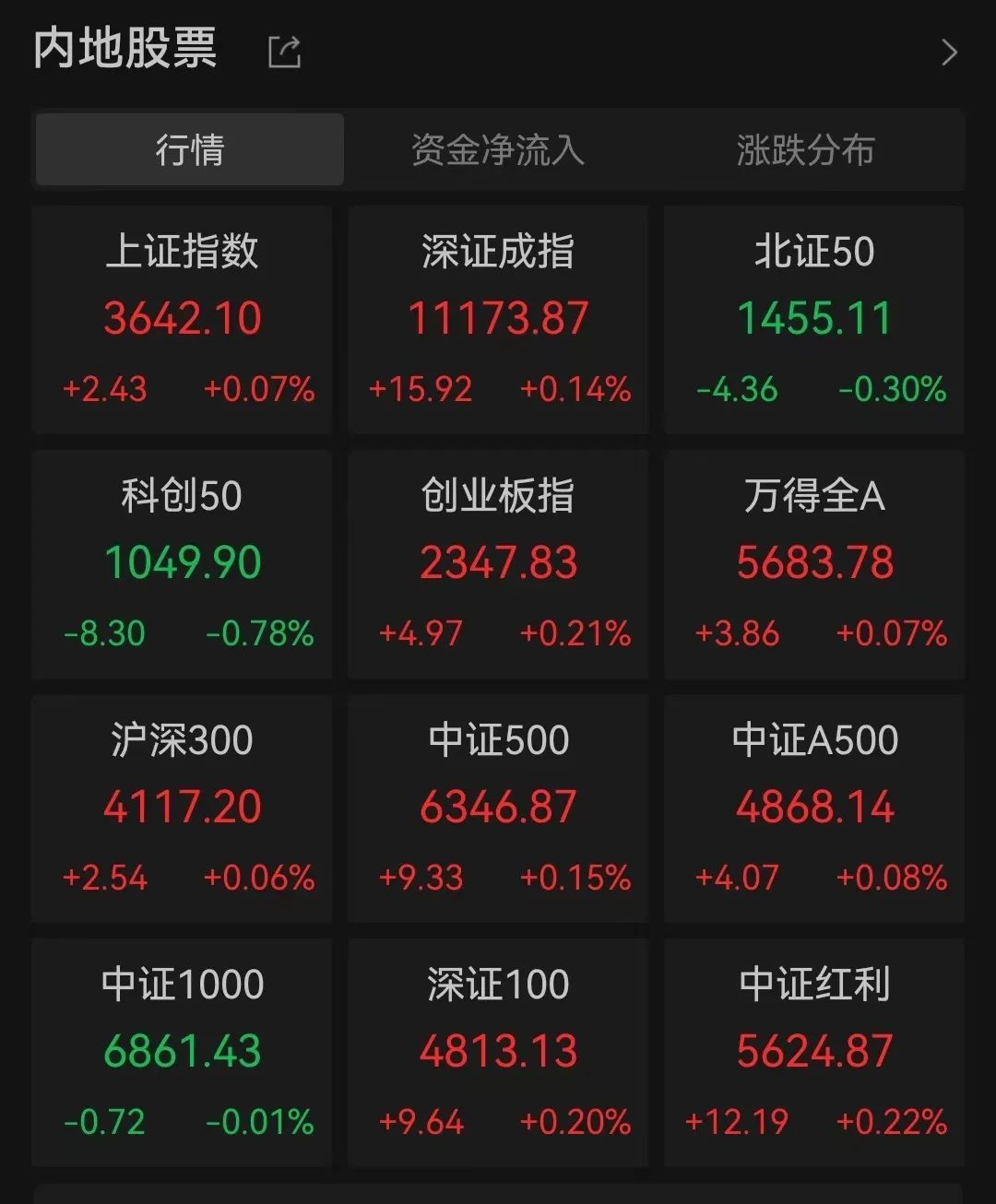
Core Viewpoint - The A-share market experienced a slight fluctuation with the brain-computer interface (BCI) concept rising significantly, becoming one of the main highlights of the market on August 8 [1][3]. A-share Market Performance - The A-share market showed narrow fluctuations, with the Shanghai Composite Index initially declining but later recovering slightly. By noon, the Shanghai Composite Index rose by 0.07%, the Shenzhen Component increased by 0.14%, and the ChiNext Index gained 0.21% [4]. - The net capital inflow and performance of major indices were as follows: - Shanghai Composite Index: 3642.10 (+0.07%) - Shenzhen Component: 11173.87 (+0.14%) - ChiNext Index: 2347.83 (+0.21%) [5]. Brain-Computer Interface Sector - The brain-computer interface concept sector saw a significant increase, with the Wind BCI Index rising over 3% during trading. Notable stocks included: - Sainuo Medical: +20% (limit up) - Optoelectronics: +10.02% (limit up) - Lepu Medical: +8.48% - Meihua Medical: +7.54% - Innovation Medical: +6.93% [6][7]. - The Ministry of Industry and Information Technology, along with other governmental bodies, released an implementation opinion aimed at promoting the innovative development of the brain-computer interface industry, highlighting its potential for high-quality growth and technological breakthroughs by 2027 [8]. New Stock Listings - Two new stocks were listed on the A-share market, both experiencing significant gains. Yuli Intelligent saw a peak increase of over 300% during trading [9]. - Yuli Intelligent specializes in photovoltaic support structures, which are essential components for solar power plants [10][11]. - Tianfulong, another new listing, focuses on differentiated polyester short fibers and has a strong emphasis on R&D, holding over 100 patents [12][13]. Hong Kong Market Performance - The Hong Kong market showed a lackluster performance, with the Hang Seng Index falling below the 25,000-point mark. Notable declines were seen in stocks like Wharf Real Estate and SMIC, while stocks such as CSPC Pharmaceutical and China Hongqiao led the gains [14][15][16]. - Dongfeng Group's shares surged over 14% despite a profit warning indicating a potential 90% to 95% decline in net profit for the first half of the year compared to the previous year [17].