
自动驾驶

Search documents
全球Robotaxi第一股文远知行通过港交所聆讯:计划通过18C完成在港双重上市
机器人圈· 2025-10-20 09:16
Core Viewpoint - WeRide Inc. (文远知行) is the only technology company globally with autonomous driving licenses in seven countries, and it is planning a dual listing in the US and Hong Kong through Chapter 18C [5][10]. Group 1: Company Overview - Founded in 2017, WeRide has expanded its autonomous driving operations in over 30 cities across 11 countries [10]. - The company has recently accelerated its global business layout, including a partnership with Grab to launch autonomous ride-hailing services in Singapore [10]. Group 2: Financial Performance - In Q2 2025, WeRide reported revenue of 127 million yuan, a year-on-year increase of 60.8%, with Robotaxi business revenue reaching 45.9 million yuan, a significant increase of 836.7% [10]. Group 3: Investment and Market Position - WeRide has secured additional investments from major international ride-hailing platforms, including a $100 million equity investment from Uber and several million dollars from Grab [12]. - Citigroup raised WeRide's target price to $18.2 and initiated a 30-day upward catalyst observation period, citing positive developments in Robotaxi operations and fleet expansion in the Middle East [12].



小马智行盘前涨超4.7%,与Stellantis就自动驾驶车辆解决方案达成合作
Ge Long Hui· 2025-10-20 08:50
Core Viewpoint - Pony.ai (小马智行) shares rose over 4.7% to $20.2 following the announcement of a non-binding memorandum of understanding with Stellantis to accelerate the development and deployment of autonomous vehicle solutions in Europe [1] Group 1: Partnership Details - Stellantis and Pony.ai will collaborate to develop and test SAE Level 4 autonomous vehicles by integrating Stellantis's AV-Ready platform with Pony.ai's autonomous driving technology [1] - The partnership plans to begin deploying test vehicles based on the Peugeot e-Traveller model in Luxembourg within the next few months [1] Group 2: Future Plans - From 2026 onwards, the companies aim to gradually promote the autonomous vehicle solutions in urban areas across Europe [1]
市值蒸发千亿后,要如何绝地反击?
Hu Xiu· 2025-10-20 08:47
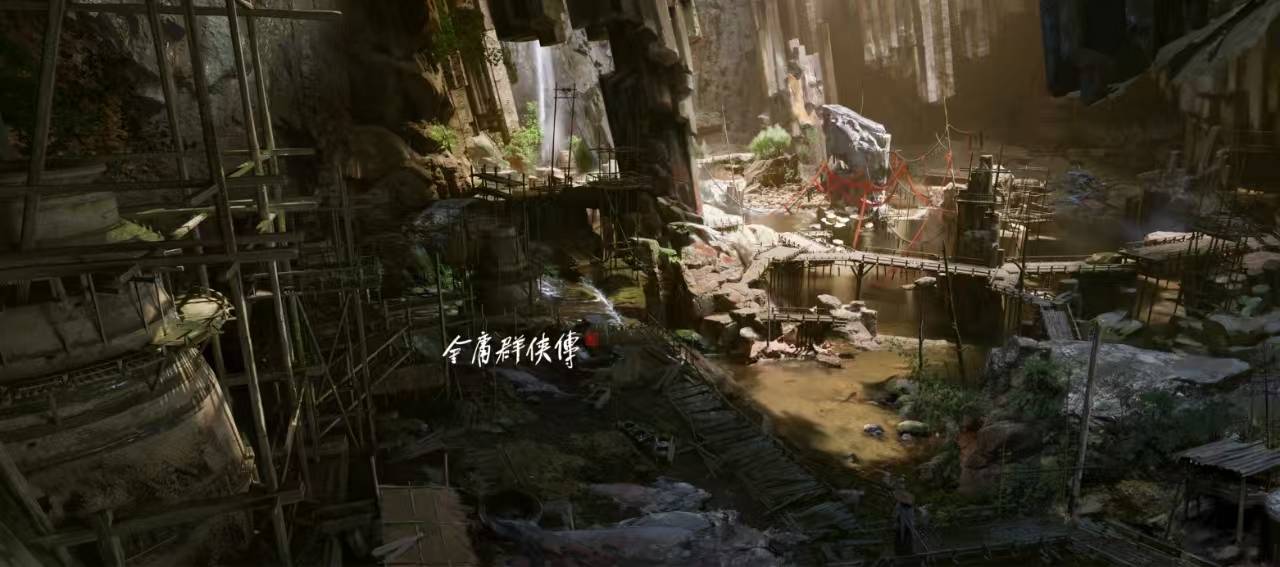
Core Viewpoint - CreateAI, formerly known as TuSimple, has pivoted from autonomous driving to the gaming and generative AI industry after a significant decline in market value, aiming to leverage its existing technology and IP resources for a successful transformation [2][5][7]. Group 1: Company Transformation - CreateAI launched in August 2023, featuring Asia's largest motion capture studio in Beijing, equipped with 130 Vicon optical motion capture devices [1]. - The company transitioned from TuSimple, which was once valued at over $16 billion, to focus on gaming and generative AI after facing regulatory challenges and a drastic drop in market value [3][5][7]. - The decision to pivot was influenced by the management's realization of the long and complex supply chain in autonomous driving, prompting a search for a clearer business path [20][22]. Group 2: New Business Ventures - CreateAI has developed a video generation platform called Animon, which allows users to create anime videos from a single image or idea, and has seen success in Japan [1][19]. - The company secured IP rights for 15 works from the renowned "Jin Yong" martial arts series, planning to develop a AAA game titled "Jin Yong Heroes" [12][13]. - The game is expected to enter closed beta testing by late 2025 and be fully released by early 2028 [15]. Group 3: Competitive Advantages - CreateAI possesses a rich accumulation of AI technology and sufficient funding, which is advantageous compared to typical startups in the gaming industry [23]. - The company holds exclusive global rights to adapt "Jin Yong Heroes" and "The Three-Body Problem," which are significant IPs in the market [24]. - The strategy includes a combination of high-return projects like AAA games and a UGC platform centered around Animon, aiming to create a sustainable revenue model [28][30]. Group 4: Market Insights - The global market for gaming and anime content is approximately $25 billion annually, indicating a substantial opportunity for growth [28]. - The use of generative AI in content creation is expected to reduce production costs significantly, making it more feasible to produce anime content [19]. - CreateAI aims to build a community around Animon, addressing the current lack of accessible platforms for anime enthusiasts to create and share content [31].
美股异动|文远知行盘前涨超2% 通过聆讯冲刺“港股Robotaxi第一股”
Ge Long Hui· 2025-10-20 08:44
Core Viewpoint - The company WeRide (WRD.US) has successfully passed the Hong Kong Stock Exchange hearing, positioning itself to become the first "Robotaxi" stock in Hong Kong, filling a gap in the market for this sector [1] Company Summary - WeRide's stock rose by 2.5% in pre-market trading, indicating positive market sentiment following the news of its successful hearing [1] - The company plans to deploy its autonomous driving products and solutions across over 30 cities in 11 countries, including China, UAE, Saudi Arabia, Switzerland, France, Singapore, and Japan by October 9, 2025 [1] - WeRide's autonomous taxi service is among the first globally to achieve large-scale commercial operations in both China and the Middle East [1] Industry Summary - According to Zhaoshang Consulting, WeRide ranks second globally in revenue generated from Level 4 and above autonomous driving on urban roads, capturing a market share of 21.8% in 2024 [1]
自动驾驶“黑话”使用手册:新势力造车又“造词”
3 6 Ke· 2025-10-20 08:33
Core Insights - The automatic driving industry is experiencing a battle for narrative control over next-generation technologies, with companies like Li Auto and XPeng betting on VLA (Visual Language Action) as the future architecture, while Huawei criticizes it as a shortcut and promotes its own WA (World Behavior Architecture) [1][2][3] - The rapid emergence of jargon in the industry reflects the struggle for technological branding, as hardware becomes increasingly homogeneous and intelligent driving capabilities become the key differentiator [1][2][3] Group 1: Evolution of Terminology - Before 2022, the automatic driving industry's technical evolution was primarily defined by Tesla and Waymo, with terms being objective descriptions of specific functions [3] - Tesla's AI Day events in 2021 and 2022 significantly influenced the industry, introducing the BEV+Transformer architecture, which improved perception capabilities by integrating multiple camera inputs into a unified 3D view [3][4] - The transition to an "end-to-end" paradigm began in 2022, breaking down the barriers between perception and planning, with Tesla's FSD Beta V12 showcasing a large neural network that processes both simultaneously [5][6] Group 2: Technological Developments - Chinese automakers quickly adopted Tesla's advancements, with companies like XPeng and NIO implementing their own versions of the BEV+Transformer architecture for mass production [4][6] - The industry is moving towards a more integrated approach, with XPeng and Huawei adopting multi-stage end-to-end systems, while NIO is restructuring to focus on end-to-end development [7][8] - The introduction of VLA and world models into the automatic driving sector reflects a shift towards more sophisticated AI models that can understand and respond to complex driving scenarios [9][10][13] Group 3: Competitive Landscape - The competition in computing power is intensifying, with XPeng and Li Auto investing heavily in both vehicle and cloud computing capabilities, aiming to develop larger parameter models for their systems [11][12][36] - The VLA model, initially developed for robotics, is being adapted for automatic driving, with companies like Yuanrong Qixing leading the charge in applying this technology [10][31] - NIO and Huawei are taking a more aggressive approach by deploying world models directly in vehicles for real-time control, although the technology is still in the experimental stage [14][15] Group 4: Future Directions - The evolution of automatic driving terminology indicates a broader exploration of technology, with each new term representing a step in the industry's journey [16] - The ultimate success in the automatic driving sector may hinge on the ability to translate technological promises into tangible user experiences, rather than merely introducing new concepts [16]


美股异动丨小马智行盘前涨超4.7%,与Stellantis就自动驾驶车辆解决方案达成合作
Ge Long Hui· 2025-10-20 08:23
Core Viewpoint - Pony.ai (PONY.US) shares rose over 4.7% to $20.2 following the announcement of a non-binding memorandum of understanding between Stellantis and Pony.ai aimed at accelerating the development and deployment of autonomous vehicle solutions in Europe [1] Group 1: Partnership Details - Stellantis and Pony.ai will collaborate to develop and test SAE Level 4 autonomous vehicles by integrating Stellantis's AV-Ready platform with Pony.ai's autonomous driving technology [1] - The partnership plans to begin deploying test vehicles based on the Peugeot e-Traveller model in Luxembourg within the coming months [1] Group 2: Future Plans - From 2026 onwards, the companies aim to gradually roll out autonomous vehicles in urban areas across Europe [1]
从新能源汽车到自动驾驶,首都科技人才在北理工讲述与技术死磕
Xin Jing Bao· 2025-10-20 08:07
Core Insights - The event highlighted the importance of continuous technological innovation and research in the field of new energy vehicles and related technologies [1][2] Group 1: New Energy Vehicles - Over the past decade, China's annual production and sales of new energy vehicles have surged from tens of thousands to millions, with exports to over 70 countries, accounting for more than 60% of the global market share [2] - The National New Energy Vehicle Technology Innovation Center emphasizes the mission of promoting key core technologies that are self-controllable and enhancing the integration of innovation and industry chains [2][3] - The research team is focused on developing high-performance electric drive systems based on third-generation semiconductors, addressing significant challenges in the industry [2] Group 2: Autonomous Driving Technology - The team at Beijing Xiaoma Zhixing Technology Co., Ltd. is dedicated to overcoming major challenges in China's autonomous driving technology, utilizing innovations like "world models" and "automotive-grade computing platforms" [2] - The development of effective algorithms for detecting the intentions of electric bicycle riders has been a significant breakthrough in addressing challenges in autonomous driving [3] Group 3: Entrepreneurship and Innovation - The founder of Multi-Temperature Technology (Beijing) Co., Ltd. shared insights on how a young entrepreneurial team transitioned from university labs to successful product development, focusing on providing nano-level motion solutions in extreme environments [3] - The emphasis on practical experience and continuous improvement through hands-on work is highlighted as a key to success in technological innovation [3] Group 4: Student Engagement and Inspiration - The presentations by the three technology professionals resonated deeply with students, emphasizing the importance of perseverance and self-driven efforts in mastering core technologies [4][5] - Students expressed a clearer understanding of how technology can be rooted in industrial applications and the importance of integrating professional knowledge with real-world problem-solving [5]
新势力卖车,为何满嘴“黑话”?
Hu Xiu· 2025-10-20 07:22
Core Insights - The automatic driving industry is experiencing a battle for narrative control over next-generation technologies, with companies like Li Auto and XPeng betting on VLA (Visual Language Action) as the future architecture, while Huawei promotes its self-developed WA (World Behavior Architecture) [1][2][20] - The rapid emergence of jargon in the industry reflects the struggle for technological branding and user perception, as hardware and configurations become increasingly homogeneous [1][2][27] Group 1: Evolution of Technology - Before 2022, the evolution of automatic driving technology was primarily defined by Tesla and Waymo, with terminology focused on objective descriptions of specific functions [3] - Tesla's introduction of the BEV+Transformer architecture in 2021 marked a significant shift from rule-based systems to AI-driven approaches, enhancing perception capabilities [4][5][6] - The transition to an end-to-end paradigm was catalyzed by Tesla's AI DAY in 2022, which integrated perception and planning into a single neural network, significantly improving obstacle recognition [9][10] Group 2: Adoption of New Models - Chinese automakers quickly adopted Tesla's technology, with companies like XPeng and NIO implementing their own versions of the BEV+Transformer model for mass production [8][10] - The industry is moving towards end-to-end systems, with XPeng and Huawei initially adopting a multi-stage approach for safety reasons, before transitioning to fully integrated models [10][12] - The introduction of VLA and world models into automatic driving systems represents a new frontier, with companies like Yuanrong Qixing and NIO leading the charge in applying these concepts [17][20] Group 3: Competitive Landscape - The competition among companies is not only about technology but also about computational power, with XPeng and Li Auto investing heavily in cloud computing capabilities, boasting figures of 10 EFlops and over 13 EFlops respectively [18][19][55] - The race for computational resources extends to both vehicle and cloud platforms, with Tesla's Dojo and other companies ramping up their AI training capabilities [18][57] - The rapid evolution of VLA and world models is indicative of a broader trend where companies are leveraging advanced AI techniques to enhance their automatic driving systems [20][46] Group 4: Future Directions - The world model concept, initially used for simulation, is now being applied in real-time vehicle control by companies like NIO and Huawei, aiming for more predictive and human-like driving experiences [20][24][25] - The emergence of terms like VLA and world models highlights the industry's shift towards integrating language understanding and real-time decision-making into automatic driving systems [46][59] - The ultimate success in this competitive landscape may hinge on a company's ability to translate technological promises into tangible user experiences, rather than merely marketing jargon [30][29]
“全球Robotaxi第一股”小马智行双平台上市野望
Sou Hu Cai Jing· 2025-10-20 07:18
Core Viewpoint - The company Xiaoma Zhixing, known as the "first global Robotaxi stock," is making significant progress in its securitization journey, having recently passed the Hong Kong Stock Exchange hearing, paving the way for a dual listing on both NASDAQ and the Hong Kong Stock Exchange [1][3]. Financial Performance - Xiaoma Zhixing's revenue for 2022, 2023, and 2024 was reported at $68.39 million, $71.90 million, and $75.03 million respectively, indicating a steady growth trajectory [3]. - In Q2 2025, the company's revenue reached $21.50 million, marking a year-on-year increase of 75.9% [4]. - The overall revenue for the first half of 2025 was $35.43 million, showing a growth of over 40% year-on-year, with the Robotaxi segment generating $3.26 million, a staggering increase of 178.8% [12]. Market Position and Strategy - Xiaoma Zhixing is the first Chinese company to offer autonomous driving services, focusing on L4 autonomous driving technology, which has gained regulatory approval [3][12]. - The company is strategically positioned to mitigate risks associated with U.S. market uncertainties by establishing a dual listing, allowing for stock conversion between markets to enhance liquidity [5][6]. - The dual listing also facilitates closer ties with mainland investors, potentially increasing capital inflow and improving shareholder structure [6]. Technological Advancements - The company is advancing its Robotaxi business, which is expected to be a key driver of future performance, with significant cost reductions and safety improvements compared to traditional taxi services [12]. - The seventh-generation Robotaxi model has seen a 70% reduction in hardware costs, with specific components like onboard computing units and LiDAR seeing reductions of 80% and 68% respectively [17]. - The company has received operational licenses for L4 autonomous driving in major cities, enhancing its competitive edge in the market [12][17]. Future Outlook - The Robotaxi service is projected to achieve commercial viability around 2026, with China expected to dominate the market, potentially reaching $39 billion by 2030 [19]. - The successful listing on the Hong Kong Stock Exchange is seen as a pivotal moment for the company and the broader Robotaxi industry, marking a transition from technology validation to large-scale commercialization [21].
蚂蚁集团出手,领投L4无人驾驶企业数亿美元融资;新锐AIGC视频生成大模型创企获复星等投资 | 每周十大股权投资
Sou Hu Cai Jing· 2025-10-20 06:30
Financing Transactions - Boson Quantum completed a Series A+ financing round, raising hundreds of millions of RMB, with investments from Qif Capital and GF Xinde, focusing on the development and industrialization of domestic optical quantum computers [1] - Tongchuang Purun, a leading manufacturer of high-purity metal materials, secured 1 billion RMB in Pre-IPO financing, with investors including SAIC Group's Shangqi Capital, addressing critical material needs in the semiconductor and display panel industries [1] - Aishi Technology, an AIGC video platform, raised 100 million RMB in Series B+ financing, backed by Fosun Ruijing Capital and Shunxi Fund, focusing on AI video generation technology [2] - Zero Gravity Aircraft Industry, specializing in eVTOL aircraft, completed a Series A+ financing round of 300 million RMB, with investments from Fangguang Capital and Sichuan Industrial Revitalization Fund, aligning with the national "low-altitude economy" strategy [2] - Jiushi Intelligent, a global L4 autonomous driving company, raised hundreds of millions of USD in Series C financing led by Ant Group, focusing on B2B urban freight solutions [3] - Tupu Medical, a leader in high-end ophthalmic medical equipment, completed a strategic financing round with investors including Beijing Guoguan, aiming to break the monopoly of imported brands in the high-end ophthalmic equipment market [3] - Wolant Aviation, engaged in eVTOL development, completed hundreds of millions of RMB in Series B financing, attracting top-tier investment institutions [4] - Revolut, a leading fintech platform, secured a strategic financing round of up to 3 billion USD (approximately 19.5 billion RMB), enhancing its position as Europe's most valuable fintech unicorn [4] - Lila Sciences, an innovative tech company, completed 115 million USD in Series A financing, with investments from General Catalyst and Nvidia, highlighting the potential of AI for science [5] - Trogenix, a UK-based biotech company focused on innovative cancer gene therapies, raised 95 million USD in Series A financing, receiving investments from Eli Lilly and several specialized medical venture funds [5]