
创新药

Search documents
节后行情有大误区,资本刷了小心机
Sou Hu Cai Jing· 2026-02-23 04:10
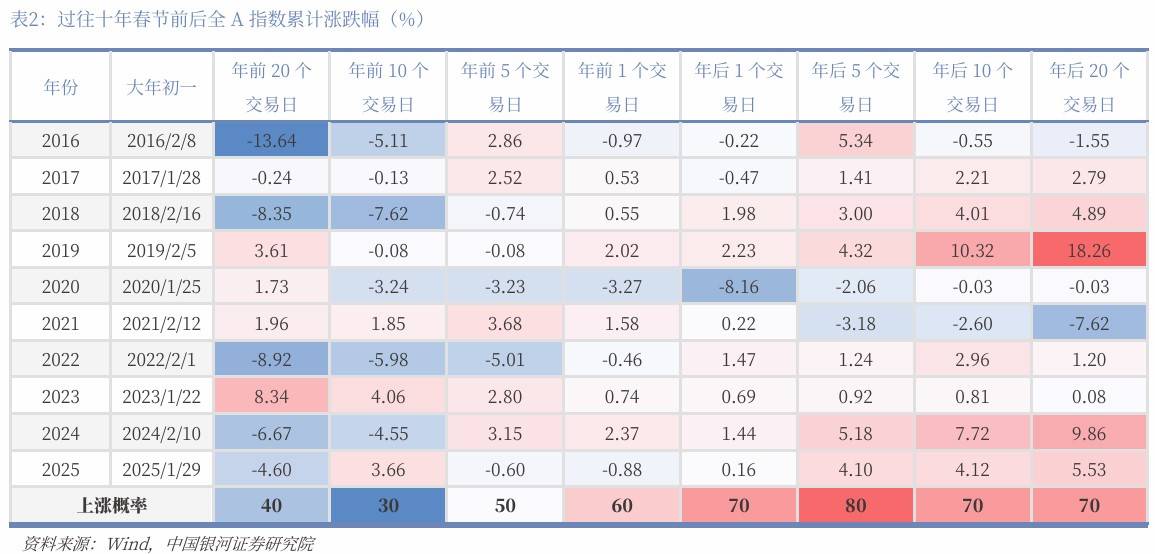
Core Viewpoint - The article emphasizes the importance of using quantitative data to make investment decisions rather than relying on intuition or emotional responses, especially during the A-share market's post-Spring Festival period [1][3]. Group 1: Market Behavior and Investment Decisions - Many investors tend to make decisions based on intuition, such as chasing popular stocks or following bullish predictions from brokers, which often leads to unfavorable outcomes [1][2]. - Historical data shows that the probability of market increases varies significantly, with a 40% to 80% chance of rising depending on the timing relative to the holiday [2]. - The article highlights that relying solely on past performance or market trends can mislead investors, as seen in the 2025 second quarter when only 66 out of 248 stocks in a booming sector rose, despite some experiencing significant gains [2][3]. Group 2: The Role of Quantitative Data - Quantitative data can reveal the true intentions of institutional investors, which are often obscured from casual observation [8][10]. - The concept of "institutional inventory" is crucial, as it indicates whether institutional funds are actively participating in a stock, suggesting a higher probability of future price increases [8][10]. - The article argues that understanding these data points can help investors avoid being misled by superficial market movements and instead focus on stocks with sustained institutional interest [10][15]. Group 3: Recognizing Silent Signals - Investors often overlook stocks that appear stagnant but have active institutional inventory, which can signal potential future gains [11][13]. - The article provides examples of stocks that, despite lackluster performance, showed consistent institutional trading activity, leading to significant price increases later [11][15]. - It stresses the need for patience and attention to less obvious signals in the market, which can lead to better investment opportunities [13][15]. Group 4: Establishing Probability Thinking - The article advocates for a shift from subjective decision-making to a probability-based approach, utilizing quantitative data to identify higher probability investment opportunities [15]. - By focusing on stocks with active institutional inventory, investors can improve their chances of success compared to those relying on sporadic data [15]. - The ultimate goal is to develop a systematic investment logic that minimizes reliance on gut feelings and enhances decision-making stability [15].

华创医药周观点:血制品2025年行业总结及2026年展望 2026/02/23
华创医药组公众平台· 2026-02-23 02:31
Core Viewpoint - The blood products industry is expected to experience a recovery in performance in 2026 after a period of supply-demand imbalance in 2025, driven by a reduction in supply growth and stable demand for key products like albumin and immunoglobulin [14][36][31]. Market Review - The CITIC Pharmaceutical Index fell by 0.85%, underperforming the CSI 300 Index by 1.22 percentage points, ranking 21st among 30 primary industries [8]. - The top ten stocks by growth this week included Aidi Te, Zhend Medical, and Olin Bio, while the worst performers included Beixin Life and Huayuan Bio [8]. Overall View and Investment Themes - The innovative drug sector is transitioning from quantity to quality, emphasizing differentiated products and internationalization [10]. - In the medical device sector, there is a notable recovery in bidding volumes for imaging equipment, and home medical devices are benefiting from subsidy policies [10]. - The innovation chain (CXO + life science services) is expected to see a rebound in overseas financing and a bottoming out in domestic financing, indicating a potential upturn in the industry [10]. - The pharmaceutical industry is anticipated to enter a new growth cycle, particularly in the specialty raw materials sector, with a focus on patent expirations and vertical expansion [10]. Blood Products Industry Insights - The blood products sector has faced a supply-demand mismatch leading to short-term performance pressure, with a significant decline in net profit growth rates in 2025 [14][17]. - The industry is characterized by a long-term growth trajectory due to regulatory support for plasma collection stations and an expanding product range [11][17]. - The average price of albumin and immunoglobulin has been affected by supply-demand dynamics, with prices reflecting inventory trends [22][31]. - The domestic plasma collection volume has seen rapid growth, but the supply may face adjustments in 2026 due to a slowdown in growth rates [23][30]. Supply and Demand Dynamics - The supply side is experiencing a tightening due to reduced growth in plasma collection and a decrease in the number of import approvals for albumin [30][24]. - The demand for albumin remains robust, with sales showing resilience despite pricing pressures, while immunoglobulin sales are expected to stabilize [31][27]. - The market structure for blood products in China differs significantly from global trends, with albumin dominating the market share [37]. Future Outlook - The blood products industry is projected to improve in 2026 as supply constraints and stable demand lead to a more balanced market [36][32]. - Companies in the sector are expected to benefit from improved performance metrics as the supply-demand relationship normalizes [36][32]. - The ongoing consolidation within the industry, particularly among state-owned enterprises, is likely to enhance market stability and growth potential [43][38].






一上市就亮眼,“新登恒生”被期待调进成分股,有公募已提早布局
Feng Huang Wang· 2026-02-22 13:25
Core Viewpoint - The AI concept stocks in Hong Kong have shown significant gains despite the overall decline in major indices, indicating a shift in investor interest towards new entrants in the market [1][2]. Group 1: AI Concept Stocks - AI stocks such as Zhiyu and MiniMax have seen substantial increases, with Zhiyu rising by 42.72% to 725 HKD and MiniMax increasing by 14.52% to 970 HKD, both achieving market capitalizations exceeding 300 billion HKD [2]. - The market capitalization of these two AI leaders has increased four to five times compared to their initial public offerings, positioning them close to the valuations of established companies like Baidu and JD.com [2]. - There is a growing debate among investors regarding the composition of the Hang Seng Index, with suggestions to replace older constituents like Alibaba and Tencent with newer AI stocks [2][3]. Group 2: Fund Management and Investment Trends - Institutional investors have actively participated in the initial public offerings of AI stocks, with notable funds like GF Fund and E Fund among the cornerstone investors [3]. - In contrast, many existing constituents of the Hang Seng Technology Index, including Alibaba and Tencent, have experienced significant reductions in holdings by active equity funds in the last quarter [3]. - The number of funds holding Alibaba has decreased by 20% to 908, indicating a shift in investment focus away from traditional tech giants [3]. Group 3: Oil and Innovative Drug Sectors - The oil sector has strengthened due to rising international oil prices, with companies like PetroChina and CNOOC seeing increases of over 3% [4]. - Active equity funds have increased their positions in oil stocks, with significant additions to holdings in PetroChina and CNOOC during the last quarter [4][5]. - The innovative drug sector has also shown resilience, with companies like BeiGene and CanSino Biologics receiving increased attention from fund managers despite an overall trend of reduced holdings in the sector [5][6].
券商马年投资展望:这些板块不能错过
Zhong Guo Zheng Quan Bao· 2026-02-21 04:37
Market Outlook - The A-share market is expected to experience a low-volatility trend with a long-term decline in market volatility [2] - The upward trend in the stock market is not yet over, indicating further potential for growth [2] - A-shares are anticipated to maintain a fluctuating upward trend, with the importance of fundamentals increasing after a valuation adjustment [2][3] Capital Flow - The demand for asset allocation among domestic residents has been activated by profit effects, with various medium- to long-term funds entering the market, suggesting an active capital flow in 2026 [2][3] - Incremental capital is expected to cover a broader range, driven by increasing motivation among individual investors to enter the market [3] - Public funds and insurance capital are likely to continue increasing their allocation to equity assets, reshaping global capital flow logic [4] Key Investment Sectors - Key sectors to focus on include: - Non-ferrous metals, chemicals, and new energy [2] - Technology growth, manufacturing expansion, cyclical consumption transformation, and U.S. stocks [2] - New energy, non-ferrous metals, basic chemicals, oil and petrochemicals, non-bank financials, military industry, and machinery [3] - AI, new energy, military industry, innovative pharmaceuticals, price increase chains, and overseas expansion chains [4] - Technology innovation themes and consumption sectors [4] - TMT and advanced manufacturing sectors, with potential shifts towards cyclical and financial sectors [4]

私募投资风向:从“估值修复”奔向“盈利驱动”,捕捉“核心资产2.0”
Zhong Guo Zheng Quan Bao· 2026-02-20 13:43
Core Viewpoint - The A-share market is entering a new phase with optimistic expectations and cautious layouts from leading private equity institutions for 2026 [1] Market Dynamics - The market is shifting from a broad recovery to a focus on performance, with private equity firms indicating that the true test for 2026 will be the differentiation of industry and company performance [2] - Dushuquan Investment anticipates a transition from valuation recovery to profit support, emphasizing the need for detailed analysis of industry conditions and growth quality [2] - The first half of 2026, particularly before the end of April, is seen as a critical window for investment, with the release of annual and quarterly reports providing insights into industry performance [2] - The market is expected to stabilize and clarify as it aligns with profit growth, moving away from a generalized recovery phase [2] Structural Opportunities - The investment landscape is expected to feature diverse opportunities across growth, cyclical, and high-dividend assets, with a focus on the alignment of "prosperity + valuation + fundamentals" [2] - Core assets are anticipated to undergo systematic re-evaluation, driven by performance, with key investment areas including AI, innovative pharmaceuticals, machinery, and military industries [4] - The second half of 2026 will require a cautious approach, with an emphasis on low-valuation stocks and the potential for systematic repricing [4] Emerging Trends - The narrative around "Core Assets 2.0" is evolving, focusing on technology innovation and globalization of Chinese enterprises, contrasting with the previous phase driven by urbanization and domestic demand [5] - AI investments are expected to shift from total investment logic to structural logic, highlighting opportunities in supply-constrained areas, particularly in domestic computing infrastructure [5] - Key sectors of interest include manufacturing overseas, resource assets with supply constraints, consumer recovery opportunities, and technology innovation represented by AI [5]
马年投资锦囊|融通基金李进:三大驱动因素持续发力,科技创新、刺激内需两大方向有望受到青睐
Sou Hu Cai Jing· 2026-02-19 08:40
Core Viewpoint - The Chinese economy is entering a new development stage in 2026, with A-shares showing signs of a "spring rally" driven by three main factors: policy direction, liquidity environment, and industry trends [1][2]. Group 1: Market Dynamics - The current market is characterized by a neutral to slightly hot sentiment, with growth sectors still having low valuations [2]. - The upward trend in the stock market is expected to continue, supported by favorable policies, a loose liquidity environment, and ongoing industry trends [2]. - Key macroeconomic observations include the importance of policy guidance and liquidity trends, which are crucial for stock market valuations [2]. Group 2: Policy and Liquidity - Both domestic and international policies are supportive of the stock market, which is seen as a vital tool for boosting consumption and restoring consumer confidence [2]. - The Federal Reserve is expected to lower interest rates to around 3% in 2026, while domestic liquidity remains ample with potential for rate cuts and reserve requirement reductions [2]. Group 3: Industry Trends - Two main industry directions benefiting from policy support are technological innovation and stimulating domestic demand [3]. - The AI sector is highlighted as a core area of competition, with significant investments expected to drive demand across the computing power supply chain, including GPUs and storage [3][4]. - The development rhythm in the industry shows a clear pattern of "hardware leading, applications following," with AI applications entering a rapid growth phase [4]. Group 4: Investment Opportunities - Investment opportunities in the AI sector are primarily focused on computing power, with a need to monitor downstream demand growth and capital expenditure trends [5]. - Specific segments within the computing power direction, such as raw materials and chips, are expected to have significant performance potential [5]. - The second key area for stimulating domestic demand includes opportunities in consumer sectors, particularly in the real estate market, where signs of recovery are emerging [6]. Group 5: Pharmaceutical Sector - The outlook for the consumer and innovative pharmaceutical sectors is cautiously optimistic, with valuations having adjusted and entering a more favorable investment zone [6]. - Investors are encouraged to seek innovative pharmaceutical companies with global competitiveness, especially those with strong product offerings and positive sales trends [6].
兴业证券:2026年值得关注的十大产业趋势
智通财经网· 2026-02-18 03:45
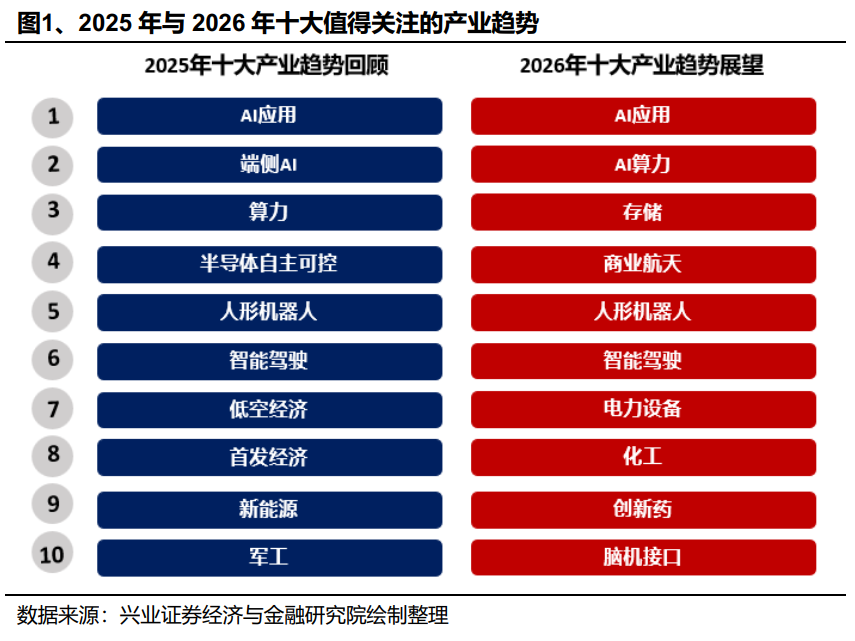
Group 1: AI Applications - The global AI competition is intensifying, with model iterations driving deeper application scenarios, and the focus is on whether significant capital expenditures by tech giants can lead to commercial applications [2][3] - The competitive landscape for AI applications is shifting from dominance by OpenAI to a more multipolar environment, with major players like Google and Meta integrating AI into their ecosystems [3] - In China, AI applications are experiencing a breakthrough, with major tech companies accelerating model iterations and application deployments, leading to a transformation from model landing to scenario monetization [5] Group 2: AI Computing Power - Overseas, major cloud service providers are maintaining high capital expenditures, with a projected increase of 67% in 2026, reflecting a strong demand for AI computing power [7][8] - In China, leading tech companies are increasing capital expenditures and accelerating the iteration of domestic large models, promoting the performance of domestic chips amid tightening supply from foreign sources [9] Group 3: Storage - The demand for storage is entering a new super cycle driven by AI training and inference needs, with AI servers consuming significantly more memory than traditional servers [11][16] - Supply constraints are expected to persist, leading to continued high prices for storage components, as major manufacturers shift production focus to advanced memory types [16] Group 4: Commercial Aerospace - Commercial aerospace is becoming a key battleground in US-China competition, with significant policy support and funding initiatives in both countries to accelerate industry development [19][21] - Domestic companies are achieving breakthroughs in satellite mass production and reusable rocket technologies, transitioning from technical validation to commercialization [22] Group 5: Humanoid Robots - Major overseas companies are ramping up production plans for humanoid robots, benefiting domestic component suppliers, with Tesla aiming for a production capacity of 500,000 units by 2026 [27][30] - Chinese manufacturers are leading in humanoid robot shipments, with significant contracts and production milestones achieved in 2025 [30] Group 6: Intelligent Driving - Domestic policies are expected to facilitate the commercialization of L3 autonomous driving in 2026, with several manufacturers preparing to launch L3 models [32][33] - Tesla's Full Self-Driving (FSD) technology is setting the direction for autonomous driving, with significant advancements in AI capabilities [35] Group 7: Energy Storage - The expansion of AI computing power in North America is driving electricity demand, with domestic power equipment expected to accelerate exports [37][40] - China's "14th Five-Year Plan" includes significant investments in the power grid and energy storage, creating a favorable environment for industry growth [40][43] Group 8: Chemicals - The chemical industry is undergoing a transformation driven by policies aimed at supply-side reform, with a focus on optimizing supply structures and reducing excess capacity [44][47] - New economic sectors are boosting demand for chemical materials, particularly in AI, renewable energy, and robotics, leading to a favorable outlook for new materials [47][48]


【兴证策略】2026年值得关注的十大产业趋势
Xin Lang Cai Jing· 2026-02-18 02:55
Group 1: AI Applications - The global AI competition is intensifying, with significant capital expenditures from tech giants expected to lead to deeper application scenarios in 2026 [1][2] - The competitive landscape for AI applications is shifting from a dominance of OpenAI to a more multipolar environment, with companies like Google and Meta making significant advancements [2] - Domestic AI applications are reaching a tipping point, with major tech companies accelerating their investments and model iterations, leading to a resonance between model development and application penetration [5] Group 2: AI Computing Power - Major cloud service providers in North America are projected to increase their capital expenditures significantly, with a combined guidance of approximately $598.7 billion for 2026, reflecting a 67% year-on-year growth [7][8] - Domestic companies are also ramping up capital expenditures and accelerating the iteration of local models, driven by the need for domestic chip performance improvements [7][8] Group 3: Storage - The demand for storage is entering a new super cycle driven by AI training and inference needs, with AI servers consuming 8-10 times more DRAM and NAND than traditional servers [12][13] - The supply-demand imbalance in the storage sector is expected to persist, with global storage prices rising over 40% in Q4 2025 [13][17] Group 4: Commercial Aerospace - Commercial aerospace is becoming a key battleground in US-China competition, with significant policy support and funding initiatives in place to accelerate the industry [20][21] - Domestic companies are achieving breakthroughs in satellite mass production and reusable rocket technologies, transitioning from technology validation to commercial scale [23] Group 5: Humanoid Robots - Major overseas companies like Tesla and FigureAI are ramping up production plans for humanoid robots, which is expected to benefit domestic component suppliers [25][28] - Chinese manufacturers are leading in humanoid robot shipments, with significant orders and production milestones achieved in 2025 [29] Group 6: Intelligent Driving - The rollout of policies in China is expected to facilitate the commercialization of L3 autonomous driving in 2026, with several manufacturers already launching L3 models [32][33] - Tesla's Full Self-Driving (FSD) technology continues to lead the market, with ongoing enhancements expected to drive the commercialization of Robotaxi services [32] Group 7: Energy Storage - The aging power grid in North America is creating opportunities for domestic power equipment exports, particularly in gas turbines and high-voltage equipment [36][37] - China's "14th Five-Year Plan" includes significant investments in the power grid and energy storage, with a focus on high-value areas [37] Group 8: Chemicals - The chemical industry is undergoing a transformation driven by supply-side reforms, with a focus on optimizing supply structures and reducing excess capacity [41][43] - New economic sectors are driving demand for chemical materials, particularly in AI, renewable energy, and robotics, which are expected to sustain high demand in 2026 [43][46]
2025港股IPO年度全景复盘
Sou Hu Cai Jing· 2026-02-16 10:09
Core Insights - The strong resurgence of Hong Kong IPOs in 2025 is a central theme for the global capital markets, with nearly HKD 300 billion raised, reclaiming the top position in global IPO fundraising [2][7] - The Hong Kong IPO market has experienced a significant increase in both quantity and quality, with new listings up nearly 70% year-on-year and fundraising doubling compared to the previous year [2][3] Market Dynamics - The traditional dominance of internet and financial real estate sectors has been disrupted, with hard technology, advanced manufacturing, and biomedicine emerging as the three main pillars supporting the market [3][4] - Key sectors such as new energy, semiconductors, smart vehicles, and high-end equipment are now prominently represented in the Hong Kong market, enhancing its manufacturing base [3][4] Notable IPOs - Significant companies that went public in 2025 include: - CATL (宁德时代), raising approximately HKD 41 billion with a market cap of about HKD 920 billion and a PE ratio of around 18x [3] - Hengrui Medicine (恒瑞医药), a leader in innovative drugs, with a market cap of approximately HKD 320 billion and a PE of about 32x [3] - Sanhua Intelligent Control (三花智控), with a market cap of around HKD 180 billion and a PE of about 24x [3] - Haitian Flavoring and Food (海天味业), with a market cap of approximately HKD 420 billion and a PE of about 30x [3] - Chery Automobile (奇瑞汽车), with a market cap of around HKD 190 billion and a PE of about 12x [4] A+H Listing Trend - 2025 marked a significant year for A+H dual listings, with leading companies opting for this model to enhance global liquidity and valuation recovery [5][6] - The A+H model has become a standard for industry giants, reinforcing Hong Kong's position as the preferred overseas listing location for Chinese enterprises [6] Future Outlook - The recovery of the Hong Kong IPO market is seen as a result of multiple cyclical factors, including improved global liquidity, long-term valuation recovery, and the increasing demand for high-quality assets from mainland China [6][7] - Moving forward, the focus of the Hong Kong IPO market is expected to shift from quantity expansion to quality prioritization, with a stronger emphasis on industry logic over speculative trading [6][7]
投资经理王攀峰新春寄语 | 智行致远,共见“十五五”新价值
Xin Lang Cai Jing· 2026-02-16 00:51
Core Viewpoint - The article emphasizes the transition of China's economy into a new phase starting in 2026, focusing on total factor productivity and the capital market's role as a resource allocation engine rather than just a financing tool [3][12]. Investment Opportunities - Future investment opportunities are rooted in two main aspects: the resilience of industrial upgrades and the benefits of capital market reforms, particularly in shareholder returns [3][12]. - The article identifies three key sectors for investment in 2026: pharmaceuticals, technology, and advanced manufacturing [4][13]. Pharmaceuticals - The pharmaceutical industry is expected to see clearer innovation-driven and global competition trends, with a focus on Chinese innovative drug companies that have established strong technology platforms and successful international cases in areas like ADC and dual antibodies [4][13]. Technology - In the technology sector, AI models are evolving from mere tools to ecosystem builders, with increasing monetization capabilities. The focus in the Chinese market is on the progress of AI hardware localization, with expectations for more mature AI edge products by 2026 [4][13]. Advanced Manufacturing - The advanced manufacturing sector, particularly in humanoid robotics, is transitioning from thematic investment to performance verification, with a focus on companies that have established competitive advantages in products, technology, and customer relationships [5][14]. - In the smart vehicle sector, the emphasis is on leading companies with high barriers to entry and strong global competitiveness, especially in batteries and glass, while closely monitoring developments in smart driving technology [5][14]. Market Trends - The Chinese capital market is experiencing structural differentiation as it recovers from the bottom, with a shift from valuation recovery to profit growth driving market trends in 2026 [15]. - The article advocates for a disciplined approach to value investing, suggesting that the best opportunities often arise from contrarian views in volatile markets [15].
