奢侈品

Search documents
欧股深夜集体大跌,美股期货下挫,美元走低,加密货币近26万人爆仓
2 1 Shi Ji Jing Ji Bao Dao· 2026-01-19 23:34
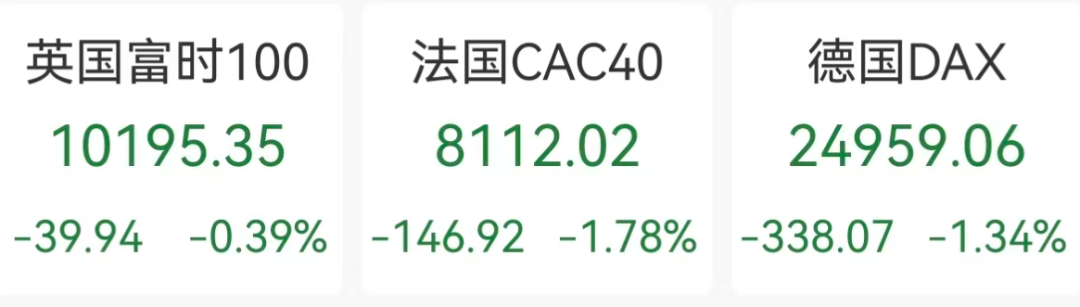
由于马丁·路德·金纪念日,美国股市周一休市,但昨天深夜资本市场不平静! 美欧关税战冲击风险资产,昨夜下跌的美国股指期货目前跌幅还在扩大。截至北京时间7:00左右,纳指期货跌超1%,标普500指数期货、道指期货跌约 0.8%。 周一欧洲主要股指收盘集体下跌,欧洲斯托克50指数跌1.72%,英国富时100指数跌0.39%,法国CAC40指数跌1.78%,德国DAX30指数跌1.34%,富时意 大利MIB指数跌1.32%。 | 英国富时100 法国CAC40 德国DAX | | --- | | 10195.35 8112.02 2 24959.06 | | -39.94 -0.39% -146.92 -1.78% -338.07 -1.34% | 其中欧洲奢侈品股跌幅居前,路威酩轩(LVMH)、卡地亚母公司历峰集团、开云集团股价均跌超4%。汽车股也有所下跌,德股宝马和大众分别下跌约4% 和3%。 美元下跌。纽约尾盘美元指数跌0.32%,截至发稿继续下跌0.02%,非美货币多数上涨。人民币方面,截至北京时间05:59,离岸人民币兑美元报6.9567, 较上周五纽约尾盘涨111点,逼近2023年5月12日顶部6.950 ...

欧股深夜集体大跌,美股期货下挫,美元走低,加密货币近26万人爆仓
21世纪经济报道· 2026-01-19 23:29
贵金属狂飙。 现货黄金一度突破每盎司4670美元,现货白银依然在94美元/盎司上方。 | 名称 | 现价 | 涨跌 | 涨跌幅 ▼ | 年初至今 | | --- | --- | --- | --- | --- | | 伦敦银现 | 94.407 | 0.009 | 0.01% | 31.90% | | 伦敦银(人民币/千克) | 21137.3918 | 1.9031 | 0.01% | 31.44% | | 伦敦金现 | 4669.700 | 0.516 | 0.01% | 8.14% | | COMEX黄金 | | 0.0 | 0.00% | 7.95% | | COMITVALA | | በ በጠበ | 0 000/ | 000000 | 美元下跌。 纽约尾盘美元指数跌0.32%,截至发稿继续下跌0.02%,非美货币多数上涨。人民币方面, 截至北京时间05:59,离岸人民币兑美元报6.9567,较上周五纽约尾盘涨111点,逼近2023年5月12日顶部 6.9504。 记者丨刘雪莹 吴斌 编辑丨曾静娇 由于马丁·路德·金纪念日,美国股市周一休市,但昨天深夜资本市场不平静! 美欧关税战冲击风险资产, 昨夜下 ...

黑天鹅突袭 全线暴跌!
Zhong Guo Ji Jin Bao· 2026-01-19 14:31
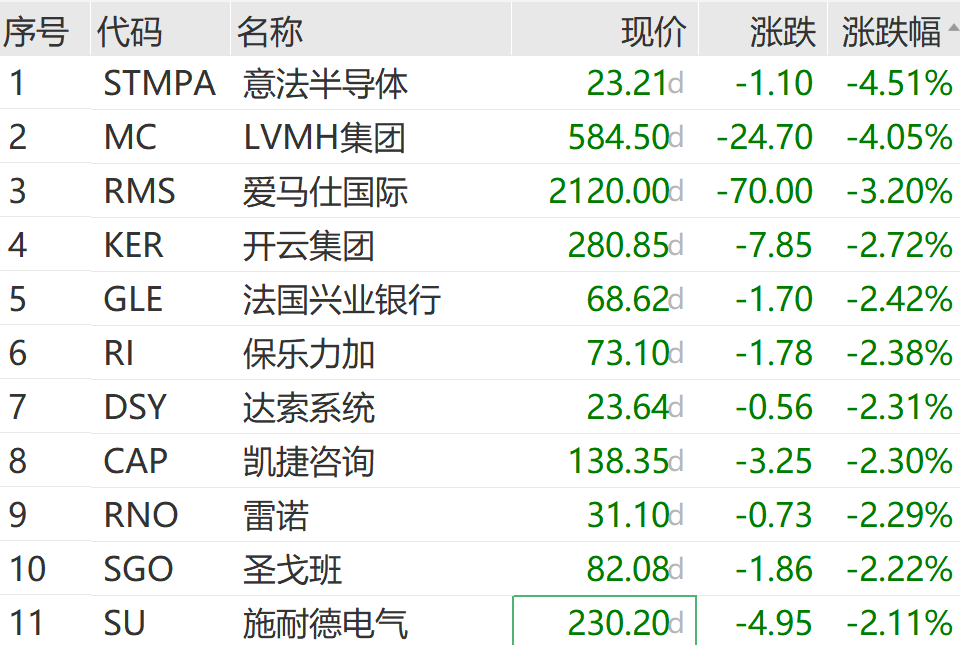
Group 1 - European stock markets opened lower, with significant declines in major indices: France's CAC40 down over 1.7%, UK's FTSE 100 down 0.6%, Germany's DAX down 1.5%, and Italy's FTSE MIB down over 1.8% [1] - Notable declines in individual stocks include STMicroelectronics down 4.51%, LVMH down 4.05%, Hermès down 3.20%, and Kering down 2.72% [2] - The cryptocurrency market also faced significant losses, with a total liquidation amount of $874 million in the last 24 hours, affecting 247,900 traders [2][3] Group 2 - Goldman Sachs economists predict that the proposed 10% tariffs by Trump could shrink the Eurozone's GDP by approximately 0.1% to 0.2%, with Germany potentially facing a 0.2% decline under progressive tariffs [4] - The European Union held an emergency meeting to discuss potential countermeasures against the U.S. tariffs, agreeing on a list of tariffs worth €93 billion as a response [5] - The meeting highlighted divisions among EU members regarding the implementation of a "counter-coercion mechanism," which would allow for retaliatory tariffs and investment restrictions [5] Group 3 - Trump's comments regarding Greenland and the imposition of tariffs were framed as a geopolitical strategy, with U.S. Treasury Secretary arguing that the U.S. must assert control over Greenland due to perceived European weakness [6][7] - The Kremlin is closely monitoring the situation, expressing concern over the implications of Trump's statements regarding NATO and Greenland [8]
黑天鹅突袭,全线暴跌!
中国基金报· 2026-01-19 13:21
Core Viewpoint - The article discusses the escalating tensions between the U.S. and Europe due to President Trump's announcement of tariffs on eight European countries, which are linked to the controversial issue of Greenland's ownership. This has led to significant declines in European stock markets and a downturn in the cryptocurrency market [3][8][9]. Group 1: U.S. Tariff Announcement - President Trump announced a 10% tariff on eight European countries starting February 1, which will increase to 25% from June 1, contingent upon negotiations regarding the purchase of Greenland [3][8]. - The tariffs are expected to shrink the Eurozone's GDP by approximately 0.1% to 0.2%, with Germany facing the most significant impact, potentially seeing a GDP decline of up to 0.3% [8]. Group 2: European Market Reaction - European stock markets opened lower, with the French CAC40 index dropping over 1.7%, the UK FTSE 100 down 0.6%, and the German DAX index falling 1.5% [3]. - Notable declines in major French stocks included STMicroelectronics and LVMH, both dropping over 4% [5][6]. Group 3: Cryptocurrency Market Impact - The cryptocurrency market experienced significant losses, with major cryptocurrencies like SOL and DOGE showing notable declines. In the last 24 hours, over 247,900 traders were liquidated, totaling approximately $874 million [6][7]. Group 4: EU Response - The EU held an emergency meeting to discuss potential countermeasures against the U.S. tariffs, agreeing on a list of tariffs worth €93 billion as a response, which had been prepared previously [9]. - The meeting highlighted divisions among EU members regarding the implementation of a "counter-coercion mechanism" proposed by France, which would allow for retaliatory tariffs and investment restrictions [9].

黑天鹅突袭,全线暴跌!
Zhong Guo Ji Jin Bao· 2026-01-19 12:47
【导读】欧洲股市盘初走低,加密货币市场遭重挫;特朗普最新表态 加密货币市场全线走低,SOL、DOGE、SUI等均有明显跌幅。CoinGlass数据显示,最近24小时,全球共有24.79万人被爆仓,爆仓总金 额为8.74亿美元。 | | 排名 | 而种 | | 价格 | 价格(1h%) | 价格(24h%) | | --- | --- | --- | --- | --- | --- | --- | | ರ್ | 1 | BTC | | $92998.79 | +0.03% | -2.25% | | ರ್ | 2 | ETH | | $3212.2 | +0.16% | -3.34% | | ದ | 3 | SOL | | $133.75 | +0.08% | -6.07% | | ರ್ | 4 | XRP | | $1.978 | +0.09% | -3.76% | | ರ್ | 5 | DOGE | | $0.1277 | +0.07% | -6.92% | | ಗ | 6 | SUI | | $1.5605 | -0.59% | -11.99% | | 1小时爆仓 | | | $211.36万 | 4小时爆 ...
“黑天鹅”来袭!刚刚,欧洲股市全线杀跌!
券商中国· 2026-01-19 10:01
Group 1 - The article discusses the imminent "tariff war" between the US and Europe, leading to significant declines in European stock markets, with major indices like the Euro Stoxx 50 and DAX 30 dropping over 1% [1][2] - European luxury goods companies and automotive stocks experienced sharp declines, with BMW falling over 7% and Volkswagen dropping over 4% [2] - The EU is considering imposing tariffs on US goods worth €93 billion, which could take effect if no agreement is reached with the US by February 6 [2][4] Group 2 - EU representatives are preparing countermeasures against US tariffs, with a meeting scheduled to discuss potential retaliatory actions [3] - The EU has a list of approved but suspended tariffs targeting US industrial products, including Boeing aircraft and American-made cars [4] - French Prime Minister Macron described Trump's threats as "unacceptable" and indicated that the EU might activate its strongest trade retaliation tool [5] Group 3 - Economic estimates suggest that a 25% tariff could reduce exports from targeted countries to the US by up to 50%, with Germany, Sweden, and Denmark being the most affected [7] - The potential tariffs could negatively impact European stock market momentum, which had previously outperformed US markets [7] - The legal basis for such tariffs is unclear, and previous threats by Trump have not materialized, indicating potential limited economic impact but significant political consequences [7] Group 4 - UK and Swedish leaders have publicly condemned the US tariff threats, emphasizing that decisions regarding Denmark and Greenland should be made by those nations [8] - US senators have urged the Trump administration to pursue diplomatic solutions rather than threats, warning that continued aggression could harm US interests and allies [9]


2026年海外消费策略:聚焦高端消费
Guohai Securities· 2026-01-19 08:35
Group 1: Manufacturing Sector - The report highlights a positive outlook for the textile manufacturing sector as tariff impacts are easing, leading to improved export conditions. The demand side shows a mixed performance in global apparel retail, with domestic recovery being weak while overseas apparel demand remains stable. The export decline has narrowed following progress in US-China trade negotiations, and manufacturing orders are expected to improve in 2026 due to a healthy inventory level among downstream brand clients [3][6][13]. - Key companies to watch include Shenzhou International, which has a lower exposure to the US market and is expected to see marginal improvements from major clients, and Huayi Group, which is experiencing strong growth from new clients and is ramping up production capacity [3][21][29]. Group 2: Sportswear Sector - The domestic sportswear market is showing signs of weak recovery, with high-end brands like Li Ning and Tebu International demonstrating resilience. The report anticipates a recovery in 2026 driven by macroeconomic improvements and policy catalysts, particularly with the upcoming Olympic events [3][6][19]. - Internationally, high-end sports brands are experiencing differentiated growth dynamics. ON is maintaining a strong brand image and expanding in the Asia-Pacific market, while Amer Sports is benefiting from its multi-brand strategy. However, brands like Lululemon and Deckers are facing short-term pressures in the North American market [3][6][19]. Group 3: Luxury Goods Sector - The luxury goods market in China is showing signs of gradual recovery, driven by wealth effects from the capital market and stabilization in the real estate market. Sales from luxury groups like LVMH and Richemont have improved significantly in Q3 2025, indicating a positive trend in the luxury sector [3][7]. - The report notes a shift in consumer behavior, with a loss of "aspirational consumers" and an increase in the importance of top-tier customers. This shift is leading to a focus on value, experience, and cost-effectiveness in luxury consumption, which is benefiting local high-end brands [4][7].


法国奢侈品集团爱马仕、路威酩轩(LVMH)和开云集团开盘下跌2.5%至4%
Mei Ri Jing Ji Xin Wen· 2026-01-19 08:16
每经AI快讯,1月19日,法国奢侈品集团爱马仕、路威酩轩(LVMH)和开云集团开盘下跌2.5%至4%。 (文章来源:每日经济新闻) ...
大家发现了吗?2026刚开年,但却出现了四个反常现象!
Sou Hu Cai Jing· 2026-01-19 03:10
Group 1: Alcohol Industry - The white liquor industry is facing significant challenges, with some companies in Moutai Town reducing or halting production due to declining consumption among younger consumers who prefer beer and soft drinks [1] - Major liquor brands are reporting a decline in revenue and net profit, with some distributors losing money on sales, indicating a shift in consumer preferences away from traditional liquor [1] Group 2: Gold Market - Despite rising gold prices reaching 900 yuan per gram, consumer interest has waned, with many potential buyers opting to wait for prices to drop instead of purchasing [3] - The trend among younger consumers is shifting away from buying gold for weddings, with some choosing to rent instead, reflecting a cautious approach to investment in gold [3] Group 3: Luxury Goods Market - The luxury goods market in China is projected to decline by 2%-5% in 2025, with physical stores experiencing low foot traffic [5] - However, there is still strong demand for luxury items through discount channels, indicating a bifurcation in consumer behavior where younger consumers are seeking value and quality over brand prestige [5] Group 4: Domestic Goods Consumption - There is a notable rise in the consumption of domestic products, with consumers prioritizing suitability and price over the prestige of imported goods [7] - Domestic brands are gaining popularity, particularly in apparel, as consumers increasingly value quality and affordability, leading to a significant presence of domestic products in major sales events [7] Summary - Overall, these trends indicate a shift in consumer behavior towards more thoughtful spending, with an emphasis on value and quality, reflecting a growing confidence among consumers in their purchasing decisions [7]