
母婴

Search documents
母婴政策利好叠加,Babycare等商家在母婴“淡季”开启补贴热潮
Sou Hu Cai Jing· 2025-08-14 01:24
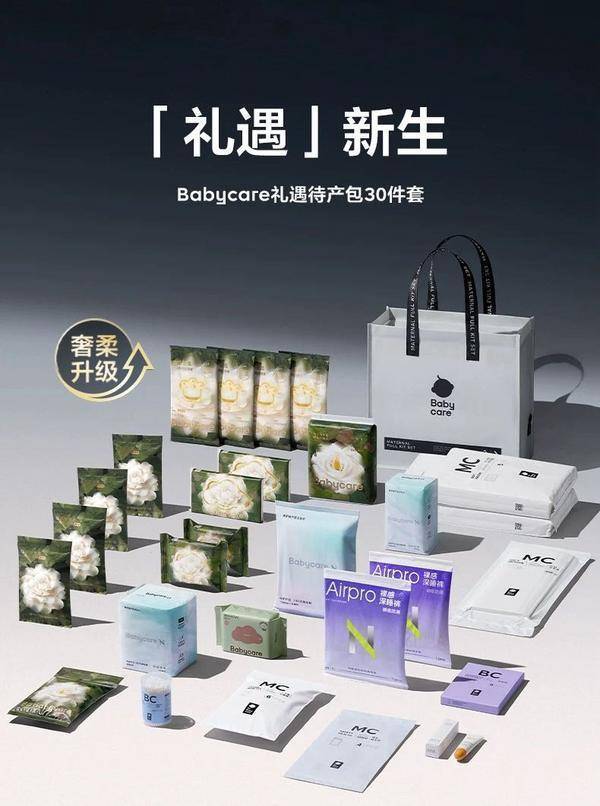
Group 1 - The implementation of the "Childcare Subsidy System" will provide annual subsidies of 3,600 yuan per child for families with children under three years old starting from January 1, 2025, benefiting over 20 million families annually [1] - The State Council has issued an opinion to gradually promote free preschool education, eliminating fees for public kindergarten for the final year starting from the fall semester of 2025 [1] - These financial investments are part of a long-term institutional arrangement aimed at creating a family-friendly society and promoting high-quality population development [1] Group 2 - In August, typically a slow season for maternal and infant sales, many businesses initiated significant price subsidies in response to the childcare subsidy policy, particularly for essential items like diapers, maternity packages, and milk powder [1] - Companies like Babycare launched a maternity package subsidy campaign, offering a comprehensive package at a heavily discounted price, effectively reducing childcare costs for families [1] - JD.com has also launched various promotional events, including "Dad's Festival" and "Maternal and Infant Trial Festival," featuring a national subsidy section for maternal and infant products [3] Group 3 - The official rollout of the childcare subsidy system marks the beginning of a nationwide "reduction of childcare costs" initiative, driven by government guidance and social collaboration [5] - The dual effect of policy and market subsidies is expected to significantly lower family childcare burdens and signal a commitment to building a family-friendly society, thereby promoting long-term balanced population development [5]

毕马威中国经济研究院院长蔡伟:消费市场的积极变化将利好消费板块的估值修复
Zheng Quan Ri Bao Wang· 2025-08-13 11:05
Group 1 - The positive changes in the consumption market will benefit the valuation recovery of the consumption sector, enhancing performance growth expectations for companies supported by policy and market demand [1] - The investment attractiveness of the consumption sector is expected to increase further, boosting investor confidence and attracting more capital inflow [1] Group 2 - In July, the PPI decline in industries such as coal, steel, cement, photovoltaic, and lithium batteries has narrowed, while CPI for fuel and new energy vehicles has stabilized after several months of decline [2] - To consolidate the foundation for moderate price recovery, it is necessary to strengthen policy coordination on both supply and demand sides, promoting industrial upgrades and demand creation [2] - On the supply side, improving standards for technology, energy consumption, and emissions is essential to phase out outdated capacity and replace it with high-quality capacity [2] Group 3 - The new consumption sector is expected to further contribute to domestic demand, particularly through the acceleration of service consumption potential, innovation in consumption scenarios and channels, and the emergence of the emotional economy [3] - The "self-care economy" trend is driving growth in new sectors such as light luxury, trendy toys, pet care, and fitness, becoming new engines for industrial upgrades and economic growth [3] Group 4 - The implementation of policies like "old for new" has led to positive changes in the consumption market, with suggestions to expand subsidy coverage to essential goods and services [4] - The focus should also be on balancing the pace of subsidy distribution to ensure policy continuity and optimize financial support and tax incentives [4] - The emotional economy-related sectors in the A-share market have shown active performance, indicating high market recognition of their growth potential [4] Group 5 - The younger consumer group increasingly values "emotional value" and "cultural identity," making "emotional price ratio" a significant factor in their purchasing decisions [5] - The rise of national brands and cultural exports is driving high growth in sectors like trendy toys and IP derivatives, with companies that possess brand advantages and innovation capabilities standing out [5]
育儿补贴利好母婴商品,警惕行业默契提价消弭政策善意 | 封面评论
Sou Hu Cai Jing· 2025-08-13 05:56
Group 1 - Recent policies such as childcare subsidies and free preschool education have alleviated the financial burden on families, but some retailers have taken advantage of this situation to raise product prices under the guise of promotional activities [3] - Many parents have reported on social media that the prices of baby products like milk powder, diapers, and complementary foods have increased by several to dozens of yuan, effectively offsetting some of the subsidy amounts [3] - The pricing of baby products is subject to market dynamics, and while minor price fluctuations are not unusual, the recent reports of price increases on social media have raised concerns about potential industry-wide trends [3] Group 2 - The childcare subsidy of 3,600 yuan per child per year is still an expected income and has not yet translated into actual purchasing power for families, which limits its ability to support rapid price increases in the sales market [4] - The e-commerce sector employs a complex pricing system influenced by various factors such as promotions, coupons, and membership benefits, meaning that observed price increases may be a result of reduced promotional offers rather than actual price hikes [4] - The baby products market is highly competitive, with brands not being irreplaceable, leading to a mix of price increases for profit and price reductions for volume sales, highlighting the importance of monitoring for any collusion among companies to control prices [4]

喜报 | 爱婴室荣膺上海市首发经济引领性本土品牌
Quan Jing Wang· 2025-08-13 05:51
Core Insights - The article highlights the recognition of Aiyingshi as a leading local brand in Shanghai's emerging economy for 2024, showcasing its brand influence and innovation capabilities [1][3]. Group 1: Brand Recognition - Aiyingshi is one of only four companies in the life services sector to be included in the list of "2024 Shanghai Leading Local Brands," reflecting strong market leadership and consumer engagement [3]. - The selection process was guided by the Shanghai Municipal Commission of Commerce and organized by the Shanghai Commercial Association, aimed at honoring local enterprises with outstanding achievements in brand innovation and market leadership [1][3]. Group 2: Market Impact - The list includes a diverse range of categories, with 13 brands in apparel, 7 in cosmetics, 7 in jewelry, 9 in home goods, 33 in food, 4 in dining, 4 in medical supplies, 4 in life services, and 1 in musical instruments, with 26 brands being recognized as time-honored Chinese brands [3]. - The recognition of these brands is expected to inject strong momentum into the development of Shanghai's consumer market, contributing to the ongoing upgrade of China's consumption landscape [3]. Group 3: Innovation and Growth - Aiyingshi leverages advanced digital technology to enhance its omnichannel service experience and continuously launches exclusive new products that meet modern parenting needs, such as the first assembly model store in China in collaboration with the internationally renowned IP Bandai [3][4]. - The company emphasizes its commitment to safety, health, and high quality, aiming to create greater value for consumers in Shanghai and across the nation [4].


莫将惠民政策用作涨价借口
Jing Ji Ri Bao· 2025-08-12 22:16
Core Insights - Recent policies aimed at providing childcare subsidies and promoting free preschool education have alleviated the financial burden on families, but some businesses have taken advantage of this situation by raising product prices [1] - Parents have reported that the prices of essential maternal and infant products, such as milk powder, diapers, and complementary foods, have increased by tens of yuan, effectively offsetting the benefits of subsidies [1] - There is a need for closer monitoring of maternal and infant product prices, establishing a robust price monitoring mechanism to investigate and intervene in abnormal price hikes [1] - The industry requires further regulation of the pricing system for maternal and infant products, enhancing management of both online and offline sales channels to promote price transparency and reduce pricing irregularities [1]
20个工作日已过,英氏控股延期回复问询函
Guan Cha Zhe Wang· 2025-08-12 12:58
Group 1 - The core issue revolves around the delay in response from Ying's Holdings to the Beijing Stock Exchange's inquiry regarding its public offering application, with a request for an extension of 20 trading days to submit the response by September 4, 2025 [1] - The inquiry includes 13 questions focusing on the clarity of shareholding, stability of actual control, progress and impact of the "Ying's" trademark dispute, effectiveness of internal controls in the distribution model, and authenticity of terminal sales [1][3] Group 2 - Ying's Holdings, established in 2014, operates in the infant food and hygiene products sectors, with its "Ying's" brand leading in baby food sales for three consecutive years [2] - The company faces trademark disputes with another entity, YeeHoO, which specializes in high-end children's clothing and has been part of the Haian Group since 2017, leading to legal proceedings over shared brand names [2][3] Group 3 - Ying's Holdings has been criticized for its heavy marketing expenditures, which have significantly increased alongside its revenue growth, raising concerns about its focus on marketing over research and development [4][5] - From 2022 to 2024, Ying's Holdings reported revenues of 1.296 billion, 1.758 billion, and 1.974 billion yuan, with net profits of 117 million, 220 million, and 211 million yuan, reflecting a decline in profit growth in the latest year [4][5] Group 4 - The company’s sales expenses have also risen sharply, with figures of 454 million, 602 million, and 721 million yuan over the same period, indicating a sales expense ratio consistently above industry averages [5] - In contrast, research and development expenditures were significantly lower, with R&D personnel numbers and costs lagging behind sales expenses, prompting inquiries from the Beijing Stock Exchange regarding the rationale behind these financial allocations [5] Group 5 - The actual control of Ying's Holdings is held by three individuals, with a combined ownership of 52.02%, and they have signed a joint action agreement effective until December 2027 [6] - The Beijing Stock Exchange has requested further clarification on the relationships and agreements among various shareholders, including the rationale behind stock grants and transfers, to ensure transparency and compliance with regulations [7][8]

该给中国新手父母减负了
虎嗅APP· 2025-08-12 10:31
Core Viewpoint - The article discusses the financial pressures faced by new parents, particularly in light of rising costs associated with child-rearing, and highlights initiatives by companies like JD.com to alleviate these burdens through various subsidy programs and innovative marketing strategies [3][4][30]. Summary by Sections Consumer Behavior and Spending - New parents, like Xiao Lin, are adjusting their spending habits significantly in anticipation of child-rearing costs, prioritizing essential baby products over luxury items [2][4]. - The introduction of a government subsidy of 3,600 yuan per child per year starting from 2025 aims to ease some of the financial strain on families with children under three [3][4]. Company Initiatives - JD.com has launched a program to distribute one million free baby bottles to new parents, allowing them to focus on quality rather than price when selecting products for their children [10][13]. - The initiative has already seen significant engagement, with 50,000 bottles distributed by August 1, and a high repurchase rate of 80% among consumers who participated in the program [13]. Market Trends and Consumer Insights - There is a growing demand for high-quality baby products, with parents increasingly seeking safe and effective options that mimic natural feeding experiences [9][10]. - JD.com has observed that 60% of surveyed parents are unaware of the need to change baby bottles according to the child's age, indicating a gap in consumer education that the company aims to address [12]. Competitive Landscape - The competition among baby product brands is intensifying, with companies like Pigeon and Hegen collaborating with JD.com to offer exclusive products at lower prices, enhancing consumer access to quality items [9][10]. - JD.com is also focusing on maintaining competitive pricing and ensuring that consumers do not overpay for products, which is becoming a standard expectation among consumers [15][19]. Innovations in Product Offerings - JD.com has implemented a "28-day fresh delivery" standard for baby formula, aiming to restore consumer trust in domestic products following past food safety scandals [20]. - The company has also introduced a "90-day size exchange" policy for diapers, allowing parents to exchange unused products that no longer fit their growing children, thus reducing waste and financial loss [22]. Conclusion - The article emphasizes the importance of creating a supportive environment for new parents through collaborative efforts between society, businesses, and caregivers, ultimately leading to a more family-friendly society [30][31].

英氏控股IPO:业绩增长疲态尽显用近4成收入营销、研发费用率<1% 除米粉外辅食全靠代工、频因品控问题遭控诉
Xin Lang Zheng Quan· 2025-08-12 08:32
Core Viewpoint - Ying's Holdings Group Co., Ltd. has submitted an IPO application to the Beijing Stock Exchange, aiming to raise 334 million yuan for various projects, despite showing signs of declining performance in recent years [1][3]. Financial Performance - Ying's Holdings reported revenue of 1.296 billion yuan in 2022, 1.758 billion yuan in 2023, and 1.974 billion yuan in 2024, with year-on-year growth rates of 37.35%, 35.67%, and 12.29% respectively [3]. - The company's net profit attributable to shareholders was 117 million yuan in 2022, 220 million yuan in 2023, and 211 million yuan in 2024, with growth rates of 64.91%, 87.67%, and a decline of 4.36% [3]. - In the first quarter of 2025, the company achieved a revenue of 540 million yuan, a year-on-year increase of 12.29%, and a net profit of 79 million yuan, up 4.73% [3]. Business Segmentation - In 2024, the revenue from infant complementary food reached 1.524 billion yuan, growing by 5.48% and accounting for 77% of total revenue [5]. - Revenue from infant hygiene products was 340 million yuan, up 31.28%, making up 17% of total revenue [5]. - Revenue from children's food was 95 million yuan, showing a significant increase of 159.7%, representing 5% of total revenue [5]. Production and Quality Control - Ying's Holdings relies heavily on contract manufacturing for its products, with only rice flour produced in-house, leading to potential quality control issues [2][10]. - The company has faced consumer complaints regarding product quality, with issues reported on platforms like Black Cat Complaints and Xiaohongshu [2][10]. - The production capacity utilization rates for rice flour, diapers, and other products were 72.53%, 85.06%, and 85.73% respectively, indicating a reliance on external manufacturers for most products [11]. Marketing and R&D Expenditure - The company allocated nearly 40% of its revenue to marketing, with sales expenses increasing significantly from 454 million yuan in 2022 to 721 million yuan in 2024 [8]. - In contrast, R&D expenses were relatively low, at 6 million yuan, 9 million yuan, and 17 million yuan for the years 2022 to 2024, with R&D expense ratios of 0.43%, 0.52%, and 0.87% respectively [8].

品牌商家在淘宝闪购扩大生意半径,66个品牌月成交破千万
Guan Cha Zhe Wang· 2025-08-12 03:00
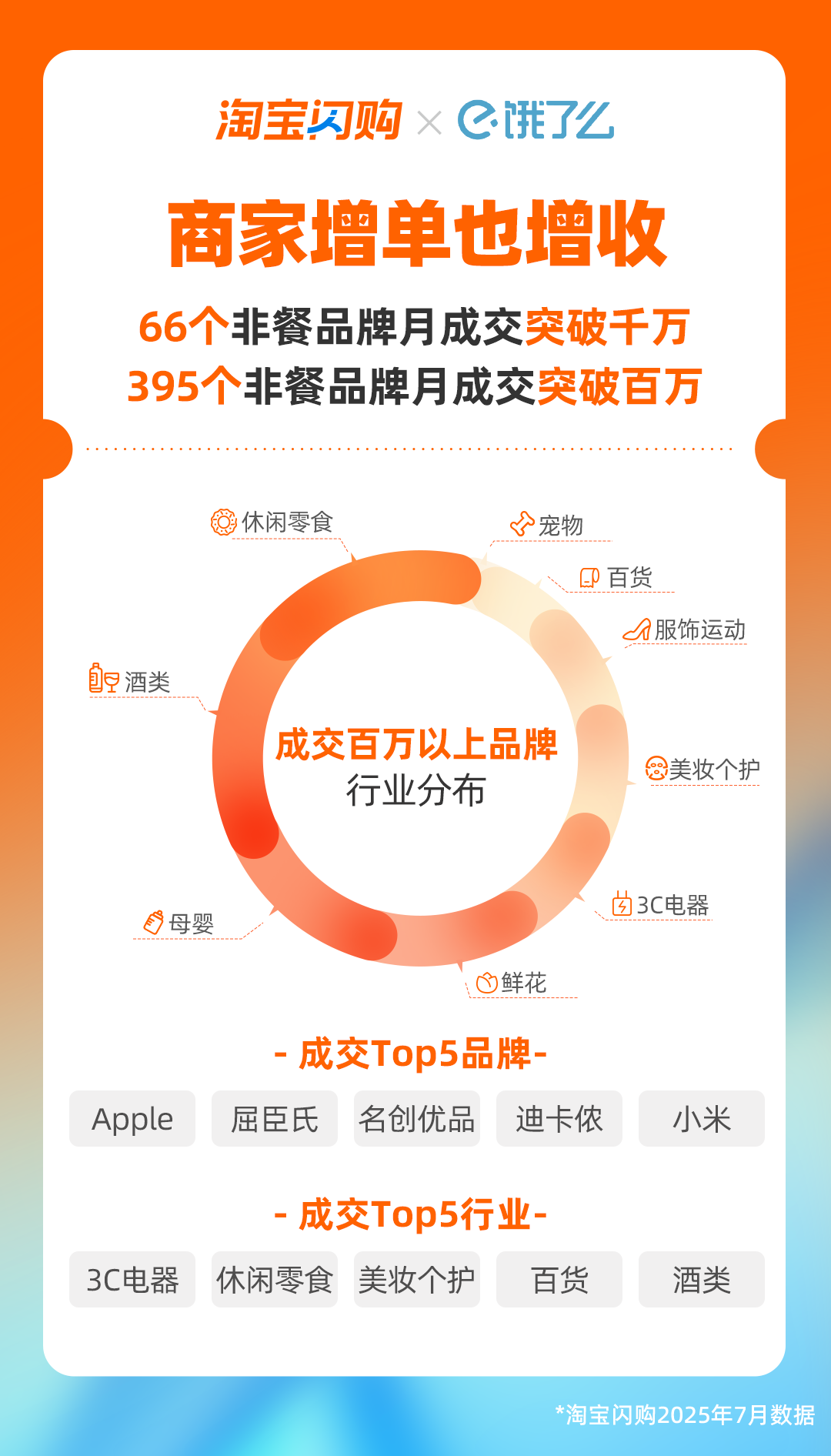
Core Insights - The latest data shows significant growth in non-food brands on Taobao Flash Sale, with 395 brands surpassing one million in monthly transactions and 66 brands exceeding ten million, covering various categories such as 3C digital, beauty, sports, apparel, and more [1] - Major brands like Apple, Xiaomi, Watsons, Decathlon, MO&Co, and Miniso have achieved increased orders and revenue through Taobao Flash Sale [1] Group 1: Brand Performance - Xiaomi's daily orders on Taobao Flash Sale have increased fourfold since May, with popular categories like smartwatches and home appliances seeing substantial growth [4] - Over half of Miniso's stores connected to Taobao Flash Sale saw transaction volumes double in July, with new customers accounting for over 78% of sales [4] - Watsons achieved nearly 50,000 daily orders during the 618 shopping festival, marking a significant increase in near-field orders and leading the beauty and personal care sector on Taobao Flash Sale in July [5] Group 2: Market Expansion - The number of new brands joining Taobao Flash Sale increased by 110% in July, with over 12,000 new non-food brand stores launched [5] - Brands such as Unilever, Naturals, and YeeHoO have opened stores on Taobao Flash Sale, indicating a trend of fast-moving consumer goods and beauty brands entering the platform [5] Group 3: Strategic Insights - Brands are leveraging Taobao Flash Sale to reach high-potential customers within a 0-30 km radius of their stores, creating a complementary model between online flagship stores and near-field flash stores [7] - The integration of online and offline retail through Taobao Flash Sale is seen as a strategic move for brands to enhance their market presence and operational efficiency [7] - Taobao Flash Sale is building a comprehensive retail ecosystem that covers all categories and scenarios, driving stable growth for brand merchants [7]


【大行报告】中泰国际:中报业绩期将集中验证基本面,市场有理由高位整固
Jin Rong Jie· 2025-08-12 02:37
Core Viewpoint - The Hong Kong stock market is currently in a high-level consolidation phase, with trading volume decreasing to HKD 200.9 billion, indicating a rise in cautious sentiment among investors as the mid-year reporting season approaches [1] Group 1: Market Conditions - The valuation of the Hong Kong stock market has significantly recovered in the short term, with the Hang Seng Index's forecast PE returning to the mid-point of 2018-2019 [1] - The risk premium is at historical lows, and the AH premium has reached a nearly six-year low, suggesting a more stable market environment [1] - August marks the seasonal off-peak period for Hong Kong stocks, leading to a concentrated verification of fundamentals during the mid-year reporting period [1] Group 2: Sector Analysis - The upstream resource sector is expected to see continued profit elasticity due to supply contraction driven by anti-involution policies [1] - In the technology and consumer sectors, attention should be paid to self-controllable areas such as semiconductors and AI computing power, as well as beneficiaries of fertility subsidies, including maternal and infant care and local living services [1]