石化

Search documents
全国第三个、北方首个 山东跻身“十万亿俱乐部”
Shang Hai Zheng Quan Bao· 2026-01-23 18:13
Group 1: Economic Milestone - Shandong Province officially announced that its GDP will exceed 10 trillion yuan by 2025, reaching 10.3197 trillion yuan, making it the third province in China and the first in the north to join the "trillion-yuan club" [1] - The province achieved this milestone in just five years, showcasing its commitment to high-quality economic development [1] Group 2: Industrial Transformation - The achievement is attributed to systematic changes in the industrial sector, focusing on the real economy and innovation-driven transformation [2] - Traditional industries have seen significant transformation, with Shandong optimizing the layout of heavy industries like petrochemicals and steel, resulting in a capacity transfer of 23.56 million tons of crude steel and 26.96 million tons of refining capacity [2] - By mid-2025, the output value of new technology industries is expected to account for 55.2% of the industrial output above designated size, with over 35,000 high-tech enterprises and more than 50,000 technology-based SMEs [2] Group 3: Technological Advancements - Key technological breakthroughs include the commissioning of the world's first fourth-generation nuclear power plant and the global debut of 12-inch silicon carbide substrates, which are transitioning from concepts to industrial advantages [3] - The digital economy is becoming a core link between traditional industry transformation and the cultivation of new productive forces, with Shandong establishing itself as a national leader in industrial internet platforms [3] Group 4: Green and Low-Carbon Development - As the first national pilot zone for green and low-carbon high-quality development, Shandong's non-fossil energy power generation capacity reached 134 million kilowatts by Q3 2025, surpassing coal power for the first time [4] - The province has achieved a significant reduction in energy consumption per unit of GDP, creating a virtuous cycle of ecological protection, industrial upgrading, and economic growth [4] Group 5: Market and Government Synergy - The economic leap is a result of the synergy between an effective market and a proactive government, breaking down institutional barriers and aligning with market demands [5] - Shandong has optimized its business environment, with over 90% of government services available online, enhancing efficiency and reducing costs for enterprises [5] Group 6: Capital Market Performance - By the end of 2025, Shandong is expected to have 310 listed companies, a 33% increase from 2020, with 52 companies making it to the "China Top 500 Enterprises" list [6] - The province's import and export scale is projected to reach 3.53 trillion yuan, with exports growing over 60% since 2020, highlighting the importance of foreign trade in economic growth [6] Group 7: Future Industry Focus - Shandong's "14th Five-Year Plan" aims to build a modern industrial system, focusing on high-end transformation of traditional industries and emerging sectors like deep-sea aerospace and quantum technology [7][8] - The province is also committed to deepening market-oriented reforms and enhancing its position in the national value chain [8] Group 8: Challenges Ahead - Despite the achievements, Shandong faces challenges in further stimulating internal innovation and maintaining competitiveness in a dynamic regional landscape [9][10]
这下美国焦虑又加剧了!中国企业抛售万亿美国资产转投本土科技,人民币升值已成定局
Sou Hu Cai Jing· 2026-01-23 17:21
Group 1: Currency Exchange and Economic Predictions - The offshore RMB/USD exchange rate is expected to rise above 7.0 by the end of 2025, marking a 14-month high, influenced by the onset of the Federal Reserve's interest rate cuts and global capital flow shifts [1] - Economist Huang Qifan predicts that the RMB will appreciate to around 6.0 against the USD over the next decade, supported by China's industrial value added accounting for 32% of the global economy [1] Group 2: Federal Reserve Policy and Capital Flows - The Federal Reserve is projected to cut interest rates by a total of 200 basis points by the end of 2025, bringing the federal funds rate to a range of 4.00-4.25% [3] - The USD index is expected to decline from 105 to below 95, prompting investors to reassess global asset allocations [3] - By the second half of 2025, Chinese companies are anticipated to sell off $800 billion in USD assets, primarily investing in technology sectors such as semiconductors and renewable energy [3] Group 3: Impact on Import and Export Sectors - The appreciation of the RMB is expected to benefit import enterprises, with China's oil import costs projected to decrease by approximately 5% due to exchange rate factors, saving over $1 billion for petrochemical companies [4] - Conversely, the export sector faces challenges, with a projected 5% decline in exports to the US, leading to reduced orders for textile companies [6] Group 4: Cross-Border Capital Flows and Payment Systems - By 2025, northbound capital inflows are expected to exceed 150 billion RMB, doubling from 2024, with significant investments in high-dividend assets [6] - The CIPS cross-border payment system is projected to handle 12% of SWIFT's transaction volume, with RMB payments accounting for 30%, facilitating capital repatriation [6] Group 5: Global Currency Dynamics - The RMB's weight in the IMF's SDR basket is expected to rise to 12.28% by 2025, with countries like Iran and Saudi Arabia beginning to use RMB for oil trade settlements [6] - Criticism of the US for misusing dollar hegemony is growing, particularly as its budget deficit reaches 6% of GDP while continuing to lower interest rates [6] Group 6: Economic Structure and Trade Dynamics - China's export of new energy vehicles is projected to reach $120 billion by 2025, a sevenfold increase since 2019, while integrated circuit exports are expected to rise from $100 billion to $150 billion [10] - The US's attempts to reverse trade deficits through tariffs have resulted in an overall widening of its trade deficit [10]


城市24小时 | 北方首个,“10万亿俱乐部”再扩容
Mei Ri Jing Ji Xin Wen· 2026-01-23 16:27
Economic Growth in Shandong - Shandong Province is projected to achieve a GDP of 10.3197 trillion yuan in 2025, marking a 5.5% increase from the previous year, making it the third province in China and the first in the north to surpass the 10 trillion yuan GDP milestone [1][2] - By 2025, the primary industry in Shandong is expected to contribute 677.5 billion yuan, growing by 4.0%; the secondary industry is projected to reach 4.0541 trillion yuan, with a growth of 5.0%; and the tertiary industry is anticipated to generate 5.5881 trillion yuan, increasing by 6.1% [1] Industrial and Economic Transformation - Shandong's industrial output value is expected to grow by 7.6%, retail sales of consumer goods by 5.1%, and total foreign trade by 4.5%, all exceeding the national average [3] - The province has been undergoing a transformation since 2018, focusing on upgrading traditional industries and fostering emerging sectors, with industrial output value rising from 2.3 trillion yuan to 3.3 trillion yuan during the 14th Five-Year Plan period [3] - By 2025, advanced production capacity in key industries like steel and petrochemicals is expected to exceed 40%, while high-tech industries will account for 55.3% of the total industrial output [3] Future Economic Goals - Shandong aims to become a significant economic growth pole in northern China, with plans to elevate Qingdao to a 2 trillion yuan economy and support cities like Weifang, Linyi, and Jining in reaching the trillion yuan GDP mark [3] - Following Shandong's achievement, Zhejiang Province is close to joining the "10 trillion yuan club," with a projected GDP of 9.4545 trillion yuan in 2025, also growing by 5.5% [4][5]
大连跻身东北首个万亿之城,为东北振兴注入动能
Zhong Guo Xin Wen Wang· 2026-01-23 15:10
Core Insights - Dalian has become the first city in Northeast China to achieve a GDP exceeding 1 trillion yuan, reaching 10,002.1 billion yuan in 2025, with a year-on-year growth of 5.7% at constant prices [1][3]. Economic Contributions - The industrial economy and port economy are significant contributors to Dalian's growth, with the industrial sector accounting for 60% of GDP growth in 2023 [4]. - Dalian's petrochemical industry is a key player, projected to reach a production value of 425.6 billion yuan in 2024, ranking first in Northeast China and fourth nationally [4]. - The port economy is vital, with Dalian Port ranking fourth globally in the Container Port Performance Index for 2020-2024 [5][7]. Emerging Industries - Dalian is fostering new economic drivers, with a new generation information technology industry forming a 200 billion yuan cluster and advancements in the new energy sector [8]. - Strategic emerging industries now account for 15% of GDP, indicating a shift towards innovation and modernization [8]. Regional Impact - Dalian's success is seen as a potential catalyst for the revitalization of Northeast China, with expectations to attract more investment and talent [9]. - The city aims to serve as a model for other cities in the region, demonstrating a pathway from traditional industry to emerging sectors [9]. Future Goals - Dalian's government has set a target for GDP growth of over 5% in the upcoming years, indicating a commitment to sustained economic development [10].
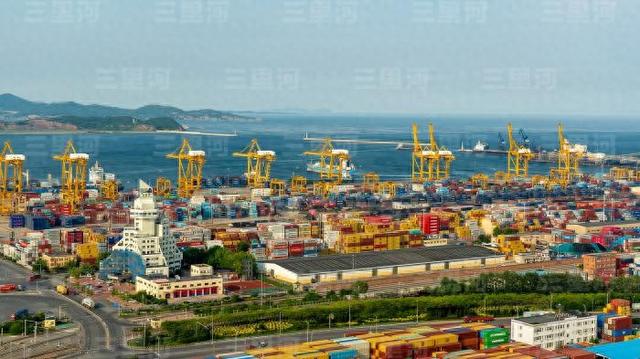
财经聚焦丨再上新台阶!大连缘何成为东北首个“万亿之城”
Xin Hua Wang· 2026-01-23 14:17
Core Viewpoint - Dalian has achieved a significant milestone by becoming the first city in Northeast China to surpass a GDP of 1 trillion yuan, reaching 10,002.1 billion yuan in 2025, with a growth rate of 5.7% compared to the previous year, reflecting its role as a leader in the region's economic revitalization [1][8]. Economic Growth and Industrial Development - Dalian's industrial output value increased by 11.7% year-on-year in 2025, with equipment manufacturing growing by 15.4%, indicating a robust industrial sector [3]. - The city has established a stable green petrochemical industry cluster valued at 400 billion yuan, with significant contributions from shipbuilding, high-end bearings, and advanced rail transit equipment [1][3]. - The added value of strategic emerging industries accounted for 15% of Dalian's GDP, showcasing a shift towards high-quality development [1]. Technological Innovation and Transformation - Dalian is focusing on technological innovation to drive industrial upgrades, with over 10,000 technology-based enterprises and a 75% increase in high-value invention patents over five years [3]. - The city is transitioning from traditional industries to intelligent, green, and digital transformations, with significant investments in technological renovations, which rose by 14.5% year-on-year [3] . Business Environment and Investment - Dalian has made substantial improvements to its business environment, reducing the time for business establishment from four days to under two hours and implementing 41 policies that allow for immediate benefits to enterprises [5]. - The city has attracted over 100 Fortune 500 companies and accounted for approximately 40% of the import and export scale in Northeast China, highlighting its strategic importance in international trade [5][7]. Open Economy and Regional Integration - Dalian has launched 540 institutional innovations in the past five years within the Liaoning Free Trade Zone, achieving full coverage of container shipping routes to core ports of RCEP member countries [7]. - The establishment of 286 new foreign-invested enterprises and a 16% increase in cross-border e-commerce trade in 2025 demonstrate Dalian's growing role in regional economic integration [7]. Future Development Goals - Dalian aims to build a modern industrial system and a high-level open hub, focusing on five leading industries, including green petrochemicals and high-end consumer goods, while also developing three trillion-yuan-level industrial clusters in software, electronics, and new energy [7][8].

中国第三、北方首个 山东省GDP破10万亿
Zhong Guo Xin Wen Wang· 2026-01-23 12:45
Core Viewpoint - Shandong Province has achieved a GDP of 10 trillion yuan, becoming the third province in China and the first in Northern China to reach this milestone, with a year-on-year growth of 5.5% in 2025 [1][3] Economic Structure and Growth - The service sector in Shandong has seen a value-added growth of 6.1%, accounting for 54.1% of the GDP, contributing 59.1% to economic growth, indicating a shift from a heavy industrial focus to a more diversified economy [3][4] - Industrial output remains strong, with a 7.6% increase in industrial value-added, and a notable 11.4% growth in equipment manufacturing [3][4] - Shandong's agricultural sector also supports economic growth, with a total output value of 1,317.93 billion yuan, reflecting a 4.4% year-on-year increase [4] Foreign Trade and Market Diversification - Shandong's foreign trade has reached a historic high, with import and export values exceeding 3.5 trillion yuan, engaging in trade with over 250 countries and regions [5] - The province has successfully diversified its market, with nine foreign trade markets exceeding 100 billion yuan in scale [5] Industrial Transformation and Innovation - Shandong has undergone significant industrial transformation since 2018, focusing on reducing outdated production capacity while fostering new industries, leading to a more balanced economic structure [6][7] - The province has established a project library with over 3,100 projects and total investments exceeding 8.4 trillion yuan, emphasizing green and high-quality development [7] Future Development Plans - Looking ahead, Shandong aims to become a major economic growth pole in Northern China, with plans to enhance traditional industries and expand emerging sectors such as integrated circuits and renewable energy [8][9] - The province is also targeting the development of six trillion-yuan cities, which would further stabilize economic growth [9]
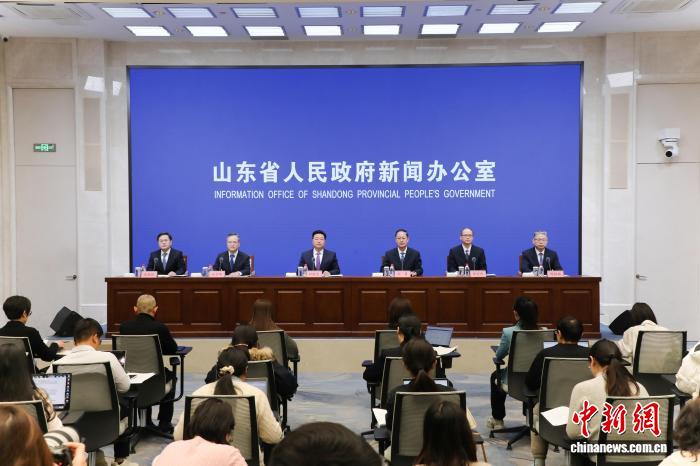
新培育8个省级战略性新兴产业集群,山东省级以上集群总数达到50个、总规模超3.6万亿元
Qi Lu Wan Bao· 2026-01-23 10:49
Group 1 - The core mission of Shandong Province is to build a leading area for green, low-carbon, and high-quality development by 2025, as emphasized by the central government [1] - Shandong is focusing on industrial structure adjustment as a key driver for transformation, promoting intelligent, green, and integrated industrial upgrades [3] - The province aims to increase the proportion of advanced capacity in key industries to over 40% while fostering new pillar industries, particularly in artificial intelligence, high-end equipment, and new energy materials [3] Group 2 - Shandong is prioritizing the construction of a new energy system as a critical breakthrough for low-carbon transformation, promoting large-scale and diversified development of clean energy [4] - The total installed capacity of non-fossil energy has reached over 139 million kilowatts, which is 2.9 times that of 2020, accounting for 54.2% of the total power installed capacity, an increase of 23.4 percentage points [4] - By 2025, Shandong plans to add 23.993 million kilowatts of non-fossil energy generation capacity and achieve a power generation volume of 224.54 billion kilowatt-hours, with investments in key energy projects exceeding 215 billion yuan [4]
今年山东将遴选推广100个左右典型技改场景,带动实施500万元以上技改项目1万个
Qi Lu Wan Bao· 2026-01-23 10:49
Core Viewpoint - Shandong Province is focusing on industrial economic development through significant equipment upgrades and technological transformations, aiming for sustainable growth and enhanced industrial quality by 2026 [1][3]. Group 1: Investment Growth - In 2025, Shandong's industrial technological transformation investment is projected to grow by 5.3% year-on-year, surpassing the national average by 6.7 percentage points, contributing to a 1.1 percentage point increase in overall fixed asset investment [3]. - Technological transformation investments account for over 50% of industrial investments and 23.9% of total fixed asset investments, indicating a strengthening contribution to the economy [3]. Group 2: Structural Changes - The policy promoting large-scale equipment updates has led to a 22.6% increase in investment for equipment and tools, which is higher than the previous year's growth rate of 22.3%, significantly driving technological transformation investments [3]. - Advanced production capacity in traditional industries like steel and petrochemicals now exceeds 40%, while high-tech industries contribute 55.3% to total industrial output [3]. Group 3: Future Plans - Shandong plans to implement a high-standard technological transformation guide for 2026, managing projects over 20 million yuan and promoting around 10,000 projects with investments exceeding 500,000 yuan [4]. - The province aims to enhance policies supporting new technologies, product development, and innovative models, while also providing differentiated support for "micro-technological transformations" and emerging industries [4]. - Collaboration with various departments will focus on integrating financial, land, energy consumption, and environmental capacity indicators to support key technological transformation projects, ensuring rapid project initiation and effectiveness [4].
华商新能源汽车混合A:2025年第四季度利润2838.7万元 净值增长率6.86%
Sou Hu Cai Jing· 2026-01-23 10:32
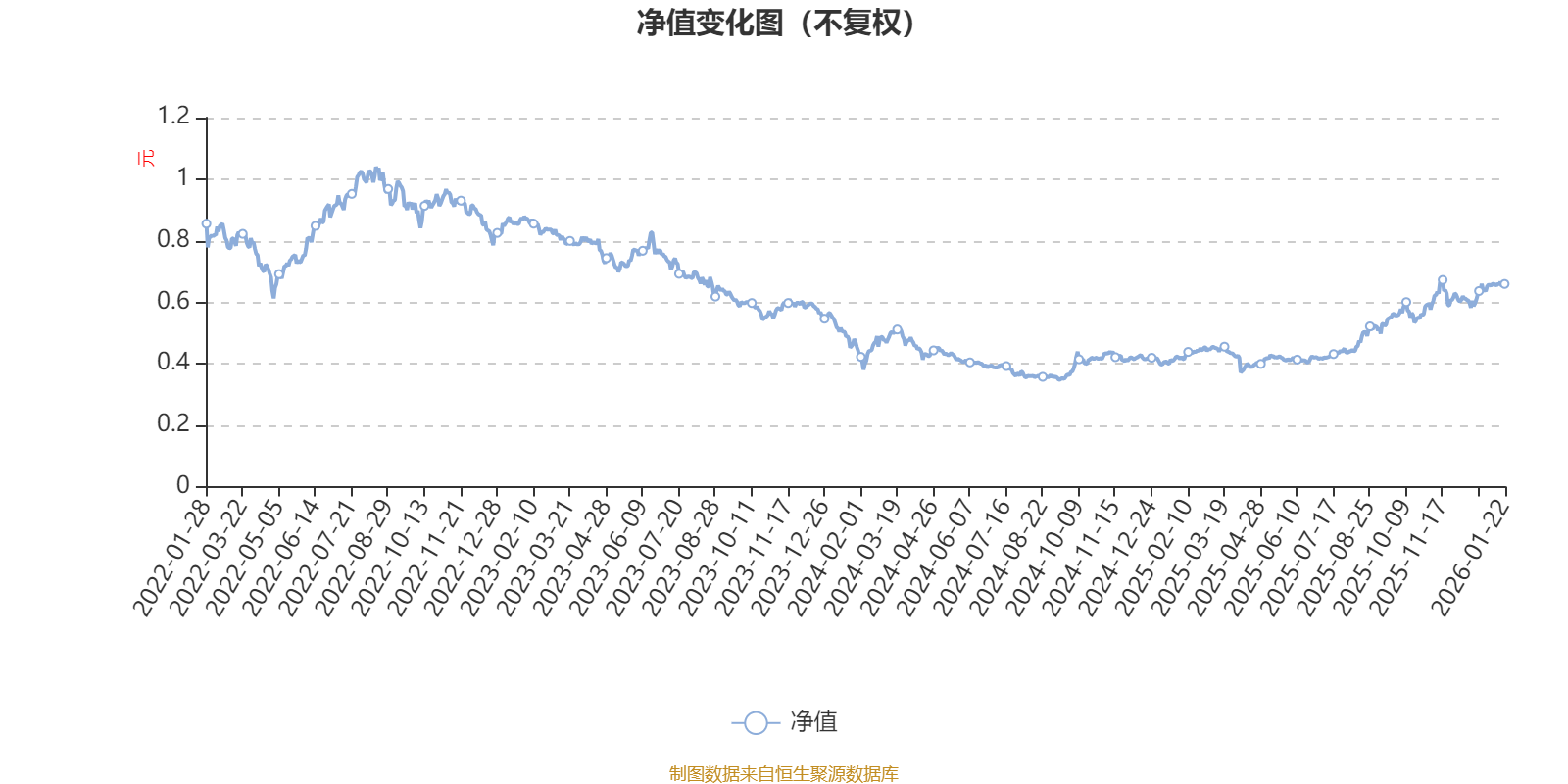
Core Viewpoint - The AI Fund Huashang New Energy Vehicle Mixed A (013886) reported a profit of 28.387 million yuan for Q4 2025, with a weighted average profit per fund share of 0.0407 yuan. The fund's net value growth rate was 6.86%, and its total size reached 448 million yuan by the end of Q4 2025 [2][15]. Fund Performance - As of January 22, the unit net value of the fund was 0.659 yuan. The fund manager, Chen Xiaoqiong, oversees three funds, all of which have shown positive returns over the past year. The highest growth rate among these funds was 105.95% for Huashang High-end Equipment Manufacturing Stock A, while the lowest was 56.95% for Huashang New Energy Vehicle Mixed A [2][3]. Market Overview - In Q4 2025, the A-share market experienced fluctuations, with the Shanghai Composite Index oscillating between 3,800 and 4,030 points, briefly surpassing the 4,000-point mark in October. The Shanghai Composite Index, CSI 300, ChiNext Index, and STAR Market Index saw respective changes of 2.22%, -0.23%, -1.08%, and 10.1% [3]. Investment Strategy - The fund's investment strategy focuses on two main themes: growth and quality. Growth investments are centered around sectors such as lithium batteries, energy storage, solid-state batteries, and AIDC power equipment, with an emphasis on tracking industry developments and selective stock picking. The quality investments are directed towards assets with strong competitive advantages and sustainable profitability [3]. Fund Rankings - As of January 22, the fund's performance over various time frames ranked as follows among comparable funds: 20.14% growth over the last three months (40/621), 51.01% over the last six months (54/621), 56.95% over the last year (141/613), and -24.00% over the last three years (524/535) [3]. Risk Metrics - The fund's Sharpe ratio over the last three years was 0.0231, ranking 495 out of 526 comparable funds. The maximum drawdown during this period was 60.46%, with the largest single-quarter drawdown occurring in Q1 2024 at 32.7% [9][11]. Portfolio Composition - The average stock position of the fund over the last three years was 87.3%, slightly above the comparable average of 85.83%. The fund reached its highest stock position of 92.85% at the end of Q3 2025 and its lowest of 74.26% at the end of H1 2024 [14]. Top Holdings - As of the end of Q4 2025, the fund's top ten holdings included Ningde Times, Sunshine Power, Tianci Materials, Duofluor, Huasheng Lithium, Huayou Cobalt, Guocheng Mining, Xian Dao Intelligent, Penghui Energy, and Nord Shares [18].





29座城市GDP超万亿
Di Yi Cai Jing Zi Xun· 2026-01-23 05:45
2026.01.23 本文字数:1515,阅读时长大约2分钟 作者 |第一财经 林靖 浙江省城市科学研究会副理事长汤海孺分析,温州本身就颇具特点,有很好的外部资源,温州人不仅仅 遍布全国各地,还走到了世界各地,资金、信息等资源丰富。近年来,温州通过做大平台等方式,也在 努力运用好这些资源优势。 汤海孺对第一财经表示,近年来温州在传统产业焕新、新兴产业培育等方面下了大力气,创造了良好的 条件。而重视科技发展与高校建设,把科技力量、高校做大做强之后,也能更加有效地支撑当地产业的 发展。同时,这些年浙江高铁等交通基础设施也持续完善,使得杭州的科教资源能够更有效地为温州产 业提升服务,助力当地经济的发展。 继温州和大连跻身GDP万亿城市行列后,当前GDP万亿城市已经增至29个,包括4个直辖市(北京、上 海、天津、重庆),11个省会城市(广州、成都、武汉、杭州、南京、长沙、郑州、合肥、福州、济 南、西安),4个计划单列市(深圳、宁波、青岛、大连),以及10个普通地级市(苏州、无锡、南 通、常州、佛山、东莞、泉州、烟台、唐山、温州)。 从经济总量看,上海、北京超过5万亿,深渝穗三市在3万亿以上,苏州、成都、杭州、武汉超过 ...