
科技创新

Search documents
广西深化国际科技项目合作
Zhong Guo Jing Ji Wang· 2025-12-16 14:50
近日,经广西壮族自治区科技厅提名推荐,由广西东盟技术转移中心、中国地质科学院岩溶地质研究 所、广西林科院、广西植物研究所、广西师范大学、桂林理工大学、桂林航天工业学院7家单位申报的9 个国际科技合作项目通过联合国南南合作办公室(UNOSSC)评审,成功入选南南合作与三方合作助力可 持续发展优秀实践案例。 7家单位申报的合作案例,包含岩溶资源可持续利用、药用资源化学、植物多样性保护、油茶病虫害智 能识别、水环境技术创新、创新创业及智能检测系统等领域,合作国别涵盖文莱、柬埔寨、印度尼西 亚、老挝、马来西亚、缅甸、菲律宾、新加坡、泰国、越南及巴基斯坦、伊朗等"一带一路"共建国家。 这些单位通过与合作伙伴开展联合研究、建立联合实验室、发表高水平论文、制定标准、开展技术培训 等方式共同应对发展挑战,形成了"科研合作+人才共育+示范应用"的国际科技项目合作模式,在落实 联合国可持续发展目标(SDGs)中取得了积极成效。(经济日报记者童政) 依托中国—东盟技术转移中心平台资源和"赛事+孵化+产业"联动机制,中国—东盟创新创业大赛参赛 项目不断从"赛场"走向"市场"。例如,马来西亚Entomal Biotech公司通过赛事与 ...
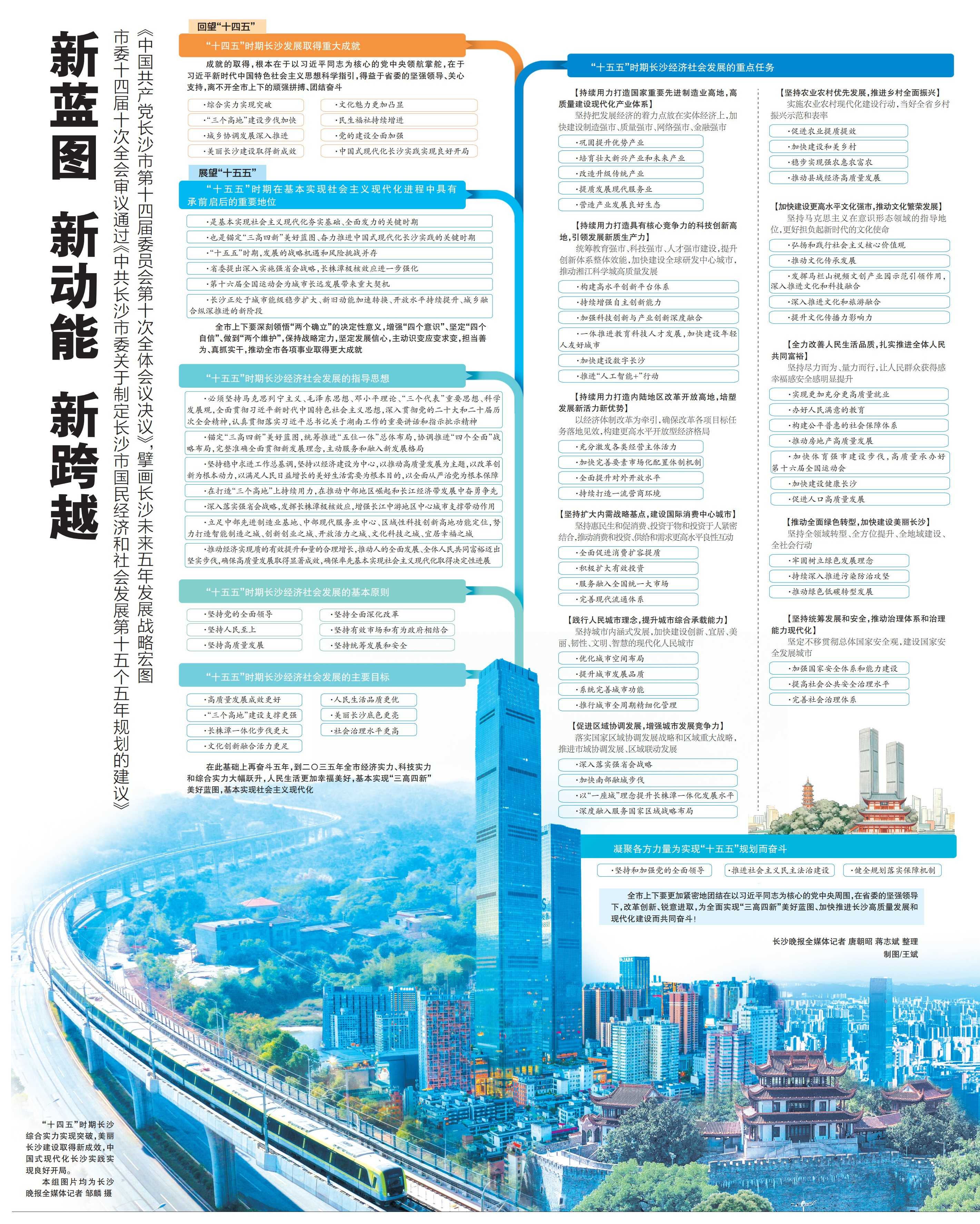
新蓝图 新动能 新跨越 市委十四届十次全会擘画长沙未来五年发展战略宏图
Chang Sha Wan Bao· 2025-12-16 03:24
Core Viewpoint - The development of Changsha during the "14th Five-Year Plan" has achieved significant accomplishments, guided by Xi Jinping's leadership and the implementation of Xi Jinping's Thought on Socialism with Chinese Characteristics for a New Era [1][7] Summary by Relevant Sections Achievements during the "14th Five-Year Plan" - Comprehensive strength has made breakthroughs [1][10] - The construction of the "three high grounds" has accelerated [1][7] - Urban-rural coordinated development has been advanced [1][7] - Progress in building a beautiful Changsha has been achieved [1][7] - Cultural charm has been enhanced [1][7] - Continuous improvement in people's well-being [1][7] - Strengthening of the Party's construction [1][7] - Successful initiation of the Chinese-style modernization practice in Changsha [1][7] Outlook for the "15th Five-Year Plan" - The "15th Five-Year Plan" is a critical period for solidifying the foundation for socialist modernization and advancing the beautiful blueprint of "three high grounds and four new" [2][8] - The period presents both strategic opportunities and challenges [2][8] - Changsha is in a new phase of steadily expanding urban capacity and accelerating the transformation of old and new driving forces [2][8] Guiding Principles for Economic and Social Development - Adherence to the comprehensive leadership of the Party [3][13] - Emphasis on people-centered development [3][13] - Commitment to high-quality development [3][13] - Focus on comprehensive deepening of reforms [3][13] - Combination of effective market and proactive government [3][13] - Coordination of development and security [3][13] Main Goals for the "15th Five-Year Plan" - Enhanced effectiveness in high-quality development [4][13] - Stronger support for the construction of the "three high grounds" [4][13] - Greater progress in the integration of Changsha-Zhuzhou-Xiangtan [4][13] - Increased vitality in cultural innovation and integration [4][13] - Improved quality of life for the people [4][13] - Brighter foundation for a beautiful Changsha [4][13] - Higher levels of social governance [4][13] Key Tasks for the "15th Five-Year Plan" - Continuous efforts to build a national advanced manufacturing high ground and a modern industrial system [14] - Development of a competitive technology innovation high ground [14] - Promotion of reform and opening up in inland areas [14] - Enhancement of urban comprehensive carrying capacity [15] - Promotion of regional coordinated development [15] - Prioritization of agricultural and rural development [15] - Acceleration of cultural prosperity and development [16] - Improvement of people's quality of life and promotion of common prosperity [16] - Advancement of green transformation and construction of a beautiful Changsha [16] - Modernization of governance systems and capabilities [17]

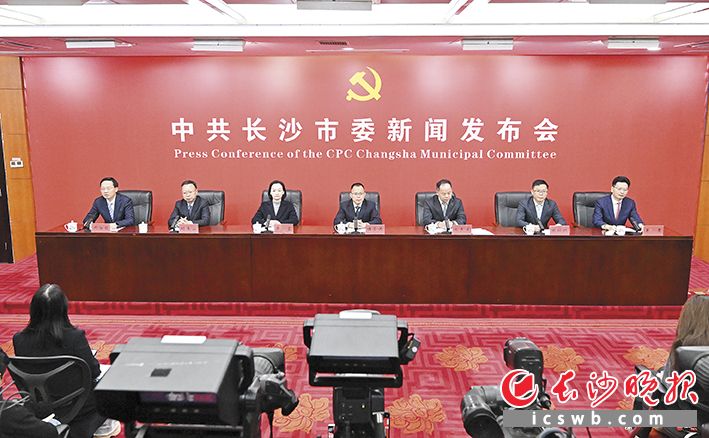
为加快推进高质量发展和现代化建设提供有力指引——市委举行新闻发布会介绍和解读市委十四届十次全会精神
Chang Sha Wan Bao· 2025-12-16 02:52
Core Viewpoint - The 14th Committee of the Communist Party of China in Changsha held its 10th plenary session, approving the "Suggestions for Formulating the 15th Five-Year Plan for National Economic and Social Development in Changsha," which aims to accelerate high-quality development and modernization in the city [1][2]. Group 1: Development Blueprint and Planning Process - The city has established a leadership group for the planning process and formed specialized teams for drafting the document, which underwent five stages: preliminary research, initial draft, soliciting opinions, benchmarking, and revisions [3][4]. - The drafting process incorporated nearly 1,000 valuable suggestions from various stakeholders, including city leaders and experts, ensuring a comprehensive approach to the planning [4][5]. Group 2: Key Principles and Objectives - The plan emphasizes five principles: high positioning, goal-oriented planning, problem-solving focus, reform-driven development, and systematic prioritization of key tasks [5]. - The overall goal is to achieve a "three highs and four new" vision by 2035, addressing challenges and opportunities in the next five years [5]. Group 3: Major Sections of the Suggestions - The document consists of three main sections: achievements during the 14th Five-Year Plan, key tasks for the 15th Five-Year Plan across various sectors, and mechanisms to ensure the implementation of the plan [6]. Group 4: Focus on "Three High Grounds" - The plan aims to build three high grounds: an advanced manufacturing hub, a technology innovation center, and a reform and opening-up high ground, with specific strategies for each area [7][9]. - Emphasis is placed on developing a modern industrial system, enhancing innovation capabilities, and improving the business environment to attract investment [8][9]. Group 5: Cultural and Tourism Development - The plan highlights the importance of cultural and tourism integration, aiming to enhance the city's cultural identity and promote tourism as a key economic driver [10][11]. - Initiatives include showcasing historical and revolutionary culture, developing immersive tourism experiences, and fostering modern cultural industries [10][11]. Group 6: Regional Integration and Collaboration - The plan prioritizes the integration of Changsha, Zhuzhou, and Xiangtan, focusing on collaborative development in planning, industry, and public services [12][13]. - Specific mechanisms for cooperation and resource sharing among the three cities are outlined to enhance regional competitiveness [12][13]. Group 7: Enhancing Public Welfare - The plan aims to improve public welfare through employment initiatives, social security enhancements, and educational reforms, ensuring a higher quality of life for residents [15][16]. - Key actions include promoting job creation, expanding social insurance coverage, and improving healthcare services [15][16]. Group 8: Innovation and Technology Development - The plan outlines a vision for Changsha to become a global research and development center by 2030, focusing on high-quality innovation spaces and advanced research institutions [17][18]. - Strategies include fostering collaboration between industry and academia, enhancing technology transfer, and supporting the development of cutting-edge technologies [17][18]. Group 9: Artificial Intelligence and Industrial Integration - The plan emphasizes the dual empowerment of artificial intelligence and manufacturing, aiming to create a national demonstration zone for new industrialization [19][20]. - Specific initiatives include promoting AI applications across various industries and enhancing the capabilities of local enterprises in AI technology [19][20].
今日视点:三大路径提升金融服务科技创新质效
Zheng Quan Ri Bao· 2025-12-15 23:32
■ 李 文 科技企业具有轻资产、高成长、高风险的鲜明特征,传统依赖实物抵押的金融产品往往难以满足其融资 需求。创新适配性金融工具,成为破解科技企业融资困境的关键突破口。 在债权融资方面,金融机构积极创新,以知识产权和数据信用替代传统抵押,推出了知识产权质押贷 款、研发贷、技术交易信用贷款等一系列产品,这些创新产品更加注重企业的创新能力、技术优势和市 场前景。例如,全国首单知识产权科技创新资产支持证券于今年9月份落地,该项目通过知识产权证券 化模式,为多家民营科创企业提供了融资支持。 在股权融资领域,股权投资工具侧重于支持原始创新的"第一公里",为初创科技企业提供关键的启动资 金。对于进入成长期的企业,多层次资本市场与"耐心资本"便开始发挥关键效能。而金融机构在其中发 挥了重要作用,助力科技企业获得稳定的资金支持。 中央经济工作会议于12月10日至11日在北京召开。会议提出,"创新科技金融服务""引导金融机构加力 支持扩大内需、科技创新、中小微企业等重点领域"。 相关部署传递出清晰信号:提升服务科技创新的能力与质效,已然成为2026年金融工作的核心之一。笔 者认为,金融赋能是科技创新的重要支撑。为了提升金融服务 ...
金融调研 | 从河套到全国:“科汇通”破解科研资金入境“最初一公里”难题
Di Yi Cai Jing· 2025-12-15 10:09
全国首创的"科汇通"试点业务,打通了深港科创关键脉络。 在工作日的清晨,从香港科学园出发,乘坐跨境直通巴士越过深圳河,35分钟即可抵达香港科学园深圳 分园。这一"点对点"的高效通勤,已成为河套深港科技创新合作区"过河者"的日常。 人员跨境往来效率大幅提升的同时,资金跨境流动的创新突破同样亮眼。全国首创的"科汇通"试点业 务,成功破解境外非企业主体资金入境的制度梗阻,以"几天办结"的高效流程、灵活的币种选择和优惠 的手续费率,为科研资金跨境调拨打通了便捷通道。 作为粤港澳大湾区唯一以科技创新为主题的重大合作平台,自2023年8月国务院印发《河套深港科技创 新合作区深圳园区发展规划》(下称《河套发展规划》)以来,短短两年多时间,河套深港科技创新合 作区凭借"一区两园"的跨境优势,率先实现多项金融创新突破,让资金跨境流动愈发通畅,也让科技与 金融融合更加深入。 "科汇通"从试点走向全国 科技创新,资金先行。 河套深港科技创新合作区作为深港跨境合作的前沿阵地,曾面临非企业科研机构境外汇入科研资金无据 可依、调拨不便的难题。为打通科研资金跨境流动"堵点",落实《河套发展规划》中关于"创新科研相 关资金跨境流动监管"的专 ...
总投资超1100亿元 北京2025年第二批面向民间资本公开推介120个项目
Bei Jing Shang Bao· 2025-12-15 08:14
Group 1 - The core viewpoint of the article highlights the Beijing Municipal Development and Reform Commission's initiative to promote 120 projects aimed at attracting private capital, with a total investment of approximately 1,106 billion yuan and an expected private capital investment of about 331 billion yuan [1][2] Group 2 - The distribution of projects by industry includes 14 in technology innovation, 6 in advanced manufacturing, 25 in commercial services, 18 in infrastructure, 10 in public services, 17 in cultural tourism and sports, 13 in urban renewal, 9 in agriculture and rural areas, and 8 in housing construction [1] - The top six districts with the highest number of projects are Fangshan District (37 projects), Shijingshan District (11 projects), Changping District (9 projects), Pinggu District (9 projects), Fengtai District (8 projects), and Yanqing District (8 projects) [1] - The districts with the largest total investment include Fengtai District (approximately 181 billion yuan), Tongzhou District (approximately 168 billion yuan), Daxing District (approximately 148 billion yuan), Miyun District (122 billion yuan), Xicheng District (approximately 98 billion yuan), and Fangshan District (approximately 91 billion yuan) [1] Group 3 - The types of private capital participation include 66 equity investment projects with a total investment of approximately 349 billion yuan and expected private investment of about 161 billion yuan; 10 debt investment projects with a total investment of approximately 85 billion yuan and expected private investment of about 10 billion yuan; 26 cooperative operation projects with a total investment of approximately 632 billion yuan and expected private investment of about 128 billion yuan; and 18 franchise projects with a total investment of approximately 40 billion yuan and expected private investment of about 32 billion yuan [1] Group 4 - In the first half of the year, the first batch of publicized projects included 119 projects with a total investment of approximately 1,244 billion yuan, while the second batch consists of 120 projects with a total investment of approximately 1,106 billion yuan, bringing the total projected investment for the year to over 2,300 billion yuan [2]
中央经济工作会议解读:稳预期、育新能、化风险
Lian He Zi Xin· 2025-12-15 08:09
Economic Outlook - The meeting emphasized the need to address the "strong supply and weak demand" issue, indicating a shift in focus from "demand insufficiency" to a more precise diagnosis of economic challenges[4] - The long-term positive trend of the Chinese economy remains unchanged, providing a foundation for market confidence during the transition period[4] Policy Framework - The policy framework aims for a balance between short-term growth stabilization and long-term structural reforms, utilizing a "cross-cycle" systemic approach[4] - Fiscal policy will maintain a deficit rate of around 4.0% in 2026 to counteract downward pressures in real estate and local government finances[7] - Monetary policy will focus on stabilizing nominal GDP growth and improving corporate credit fundamentals, with a flexible approach to tools like interest rate cuts and reserve requirement ratio adjustments[9] Key Tasks - The meeting outlined eight key tasks, focusing on nurturing new growth drivers and resolving existing risks[11] - A "rural and urban resident income increase plan" will be implemented to boost consumption and stabilize the income of a large flexible employment group[12] - Investment strategies will include increasing central budget investments and optimizing special bond usage to counteract declining fixed asset investment growth, which recorded a -0.5% year-on-year decline in the first three quarters[13] Innovation and Reform - The establishment of international technology innovation centers in major urban areas aims to enhance regional development and innovation ecosystems[14] - The meeting stressed the need to reduce institutional transaction costs and credit costs, addressing "involution" competition and promoting a unified market[15] Risk Management - The meeting proposed a dual approach to real estate risk management, focusing on "de-stocking" and controlling new supply while encouraging the acquisition of existing properties for affordable housing[16] - Local government debt management will adopt a comprehensive and categorized approach to mitigate operational debt risks, indicating a shift towards more refined debt management strategies[16] Conclusion - The 2026 Chinese credit market is expected to enter a new phase characterized by marginal improvements, structural differentiation, and orderly risk clearance under a supportive macro policy environment[17]
三次调整筑牢“进化力”,解锁收益新空间
Xin Lang Cai Jing· 2025-12-15 06:53
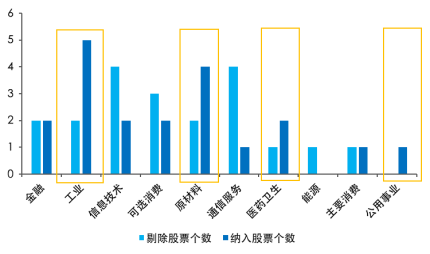
而在本次将生效的调整中,拟调出的股票主要集中于通信服务、可选消费、信息技术行业,拟调入的股 票则主要来自工业、原材料、公用事业和医药卫生领域,单边涉及20只样本股,调整后新兴行业样本权 重上升至51.2%。 中证A500指数2025年12月被调整成份股行业分布情况 2025/12/9 l 收益表现优化:经过数据验证的"优胜劣汰" 成份股调整对指数收益表现的优化效果在历史数据中得到了验证,主要体现在绝对收益提升与风险收益 特征改善这两个方面。 近日,中证指数有限公司宣布中证A500指数样本定期调整将于12月12日收市后正式生效。作为反映A股 不同行业龙头公司整体表现的核心指数,中证A500指数的定期调整并非简单的成份股"换血",而是一 套紧跟经济趋势、优化行业结构的动态升级机制,既筑牢了指数的代表性,也为收益表现注入了新动 能。 l 定期调整:指数"保鲜"的核心密码 中证A500指数坚持行业均衡选样逻辑,每半年一次的样本调整,核心围绕"择优汰劣"和"与时俱进"两大 原则,既依据市值、流动性、财务状况等量化标准,剔除不再符合要求的成份股;又主动纳入契合宏观 经济趋势、代表产业升级方向的优质企业,确保指数始终精准映 ...
党建引领科技创新实施“四项工程” 市科技局加速培育发展新质生产力
Zhen Jiang Ri Bao· 2025-12-14 16:34
聚焦创新策源,实施创新平台载体布局工程。深化区域协同创新,我市与上海普陀区共建沿沪宁协 同创新线上集市,积极承接南京产业创新资源和科教资源,开展联合攻关项目50余项。落实"双高协 同"部署,推动省级试点和市级培育齐头并进。搭建高水平研发平台,新增省级概念验证中心1家、重组 认定省重点实验室3家,新建市重点实验室7家,新增市级以上研发机构超100家,创新策源能力持续提 升。 聚焦要素护航,实施科创生态优化工程。在市基础研究等类别项目中试行科研经费"包干制",在高 企奖励和创新券政策兑现中试点"直达快享",共下达资金2600余万元。发挥先锋服务岗作用,推动市属 高校和以财政性资金设立的科研院所开展职务科技成果所有权、长期使用权改革。持续深化校地企合作 对接,举办60余场产学研对接活动,促成合作500余项,全方位为科技创新保驾护航。 着力打造优质服务品牌,市科技部门相关人士表示,下一步将持续发挥基层党支部战斗堡垒和党员 先锋模范作用,将党建优势转化为创新优势、发展优势,以实打实的举措推动科技创新与产业创新深度 融合,为培育发展新质生产力、着力推进创新引领产业强市提供科技硬核支撑。(通讯员 王涛 应东昊 记者 陈志奎 ...
新华全媒头条|新起点、新动能、新机遇——国际人士瞩目中央经济工作会议为世界注入确定性
Xin Hua She· 2025-12-14 14:38
Core Insights - The Central Economic Work Conference in Beijing has set a clear direction for China's economy, aiming to provide stability and growth opportunities for both domestic and global markets [1][2][3] Group 1: Economic Outlook - The conference highlighted that China's economic goals for 2025 are on track, with a successful conclusion to the "14th Five-Year Plan" and a promising start to the "15th Five-Year Plan" [2] - International organizations have raised China's economic growth forecasts for 2025 by 0.4, 0.2, 0.1, and 0.1 percentage points, reflecting growing confidence in China's economic resilience [3] - The emphasis on expanding domestic demand is seen as a key strategy to stabilize the economy amid external uncertainties [3][7] Group 2: Innovation and New Growth Drivers - The conference underscored the importance of innovation and talent development, with specific plans to establish international technology innovation centers in major regions [5] - New growth drivers are expected to emerge from high-tech and green industries, with a focus on sustainable development and enhanced international competitiveness [5][6] - The commitment to a green transition is evident, with initiatives aimed at energy efficiency and carbon reduction, positioning China as a leader in global climate action [6] Group 3: Global Cooperation and Market Expansion - The upcoming launch of the Hainan Free Trade Port is a significant step in China's commitment to high-level opening up and global economic cooperation [8] - The conference outlined eight key tasks for the coming year, with a strong focus on expanding foreign cooperation and optimizing trade agreements [9] - China's growing domestic market and digital infrastructure are creating new opportunities for international businesses, enhancing access to Chinese consumers [10]