
光伏

Search documents
快可电子:公司建有光伏半导体封装生产线,生产光伏接线盒旁路保护二极管模块
Ge Long Hui· 2026-01-28 03:59
Group 1 - The company has established a photovoltaic semiconductor packaging production line [1] - The production line manufactures bypass protection diode modules for photovoltaic junction boxes [1] - Currently, the production primarily meets the company's self-supply needs for bypass protection diode modules in its photovoltaic junction box products [1]
午评:沪指涨0.49%,创业板指跌0.37%,贵金属、油气方向领涨, 光伏股集体下跌
Jin Rong Jie· 2026-01-28 03:54
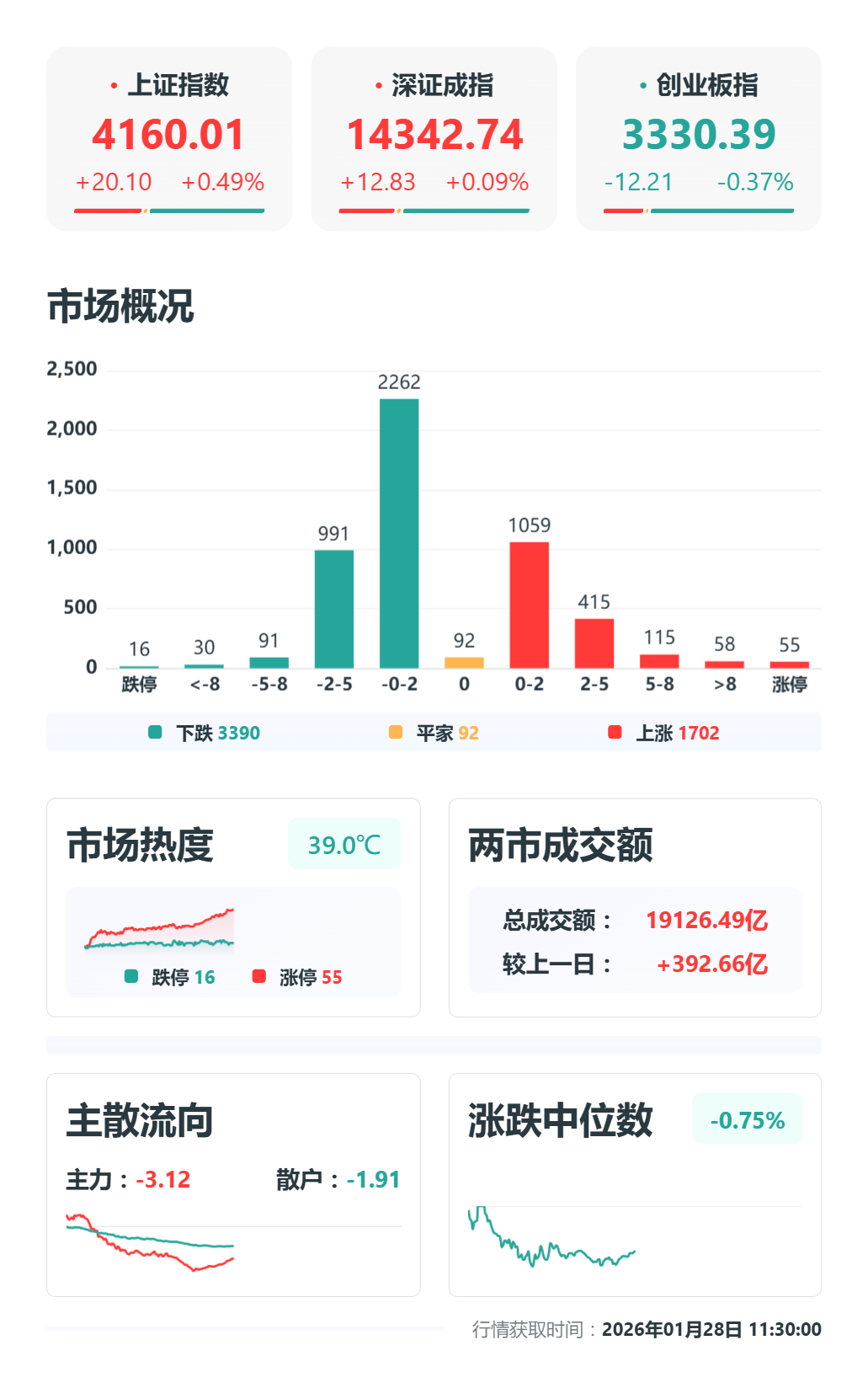
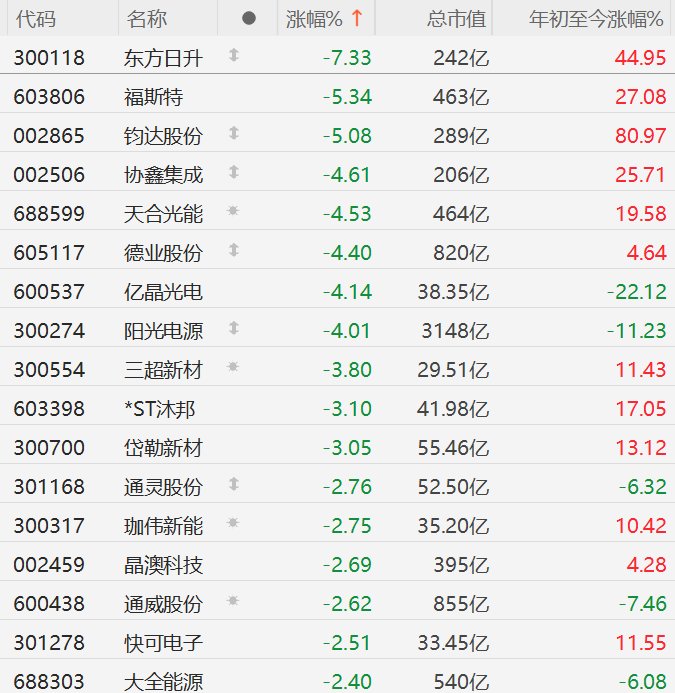
截至午间收盘,沪指涨0.49%,报4160.01点,深成指涨0.09%,报14342.74点,创业板指跌0.37%,报3330.39点,科创50指数跌0.73%,报1544.62 点。沪深两市合计成交额19126.49亿元,全市场超3300只个股下跌。 责任编辑:栎树 资源股集体爆发,贵金属、油气方向领涨,中国黄金4连板,湖南黄金3连板,四川黄金10天6板,招金黄金8天5板,中国海油涨超7%续创历史新 高,石化油服、准油股份涨停。 分散染料概念集体走高,浙江龙盛、闰土股份、亚邦股份涨停。存储芯片概念表现活跃,普冉股份涨超15%续创历史新高,气派科技20CM涨停。 下跌方面,病毒防治概念集体下挫,之江生物跌超9%。 光伏股集体下跌,东方日升跌超7%,福斯特、钧达股份跌超5%,协鑫集成、天合光能、德业股份、亿晶光电、阳光电源跌超4%。 国内商品期货多数上涨,集运欧线涨超5%,沪铝、沥青、铝合金涨超4%,氧化铝涨超3%,沪金涨近3%,沪银、原油、燃料油、沪锌、沪锡涨超 2%,纯苯、尿素、甲醇、豆油涨超1%。跌幅方面,碳酸锂跌超2%,不锈钢、沪镍、多晶硅跌超1%。 股票频道更多独家策划、专家专栏,免费查阅>> ...


珈伟新能:光储一体化布局和技术暂未涉及太空光伏领域
Zheng Quan Ri Bao Wang· 2026-01-28 03:50
证券日报网讯1月27日,珈伟新能(300317)在互动平台回答投资者提问时表示,公司目前的光储一体 化布局和技术暂未涉及太空光伏领域。 ...

A股光伏股集体下跌,阳光电源跌超4%
Ge Long Hui A P P· 2026-01-28 03:50
| 代码 | 名称 | | 涨幅% ↑ | 总市值 | 年初至今涨幅%。 | | --- | --- | --- | --- | --- | --- | | 300118 | 东方日升 | 1 | -7.33 | 242亿 | 44.95 | | 603806 | 福斯特 | | -5.34 | 463亿 | 27.08 | | 002865 | 钧达股份 | 1 | -5.08 | 289亿 | 80.97 | | 002506 | 协鑫集成 | 1 | -4.61 | 206亿 | 25.71 | | 688599 | 天合光能 | 长 | -4.53 | 464亿 | 19.58 | | 605117 | 德业股份 | 1 | -4.40 | 820亿 | 4.64 | | 600537 | 亿闘米甲 | | -4.14 | 38.35亿 | -22.12 | | 300274 | 阳光电源 | 1 | -4.01 | 3148亿 | -11.23 | | 300554 | 三超新材 | 报 | -3.80 | 29.51亿 | 11.43 | | 603398 | *ST沐邦 | | -3.10 | ...




快可电子(301278.SZ):公司建有光伏半导体封装生产线,生产光伏接线盒旁路保护二极管模块
Ge Long Hui· 2026-01-28 03:47
Group 1 - The company has established a photovoltaic semiconductor packaging production line [1] - The production line manufactures bypass protection diode modules for photovoltaic junction boxes [1] - Currently, the production primarily meets the company's self-supply needs for bypass protection diode modules in its photovoltaic junction box products [1]
太空光伏有望站上风口,光伏ETF博时(560313)火热发售中!
Sou Hu Cai Jing· 2026-01-28 03:15
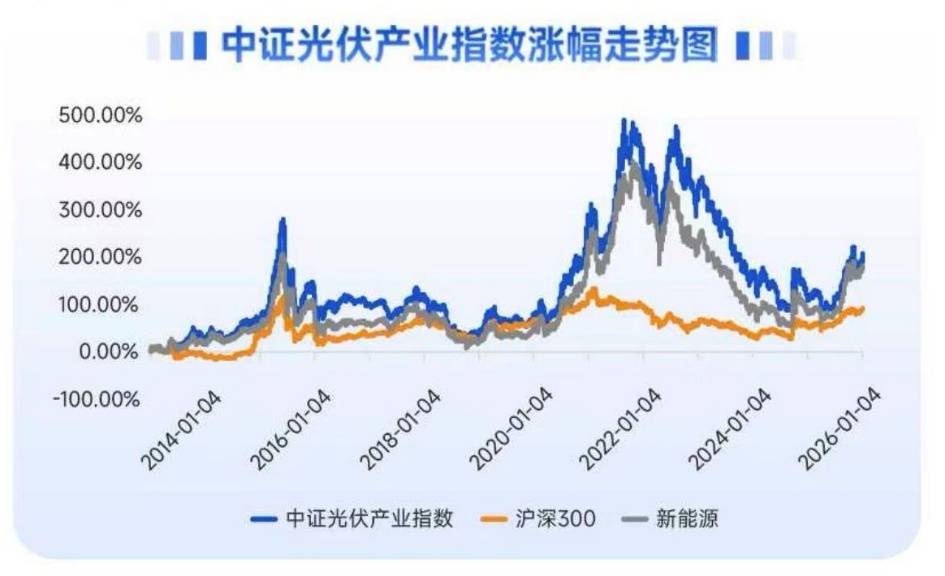
国泰海通证券也认为,随着低轨卫星进入密集发射期+太空算力商业化趋势明显,有效驱动了光伏扩产需求,核心设备厂商有望率先受 益。 近期,受太空太阳能及商业航天发展的乐观情绪带动,A股光伏行业指数表现大幅跑赢大市。光伏ETF博时(认购代码:560313)于2026 年1月26日正式发售,认购期至2月6日,助力投资者一键布局光伏产业链优质龙头。 消息面上,2025年12月中国向国际电信联盟(ITU)提交了共计20.3万颗卫星的频率与轨道资源申请,旨在抢占宝贵的轨道资源。作为 地外飞行器重要的能源供应方式,太空光伏有望受益于全球商业航天热潮。马斯克表示SpaceX和特斯拉正在提升太阳能产能,目标是 每年达到100GW。 数据显示,2026年我国已注册1.55万家光伏相关企业。企业存量方面,我国光伏相关企业存量已于2024年突破百万家,截至1月27日, 我国现存126.3万家光伏相关企业。 开源证券认为,伴随百GW级太空算力市场释放,叠加太空光伏电池高单位价值量,将为光伏行业开辟全新增长空间。 光伏ETF博时(认购代码:560313)紧密跟踪光伏产业指数,中证光伏产业指数从主营业务涉及光伏产业链上、中、下游的上市公司证券 ...
德业股份股价跌5.03%,国泰基金旗下1只基金重仓,持有17.4万股浮亏损失82.66万元
Xin Lang Cai Jing· 2026-01-28 03:02
Group 1 - The core point of the news is that Deye Technology Co., Ltd. experienced a stock decline of 5.03% on January 28, with a share price of 89.60 yuan and a total market capitalization of 81.436 billion yuan [1] - Deye's main business includes the research, production, and sales of evaporators, condensers, variable frequency control chips, dehumidifiers, and air source heat pump hot air machines, with revenue composition as follows: inverters 47.77%, energy storage battery packs 25.69%, heat exchangers 15.68%, dehumidifiers 7.36%, and others 3.16% [1] - The company is located in Ningbo, Zhejiang Province, and was established on August 4, 2000, with its listing date on April 20, 2021 [1] Group 2 - From the perspective of fund holdings, only one fund from Guotai Fund has a significant position in Deye, specifically the Guotai CSI Photovoltaic Industry ETF, which reduced its holdings by 25,200 shares in the fourth quarter, holding a total of 174,000 shares, accounting for 2.72% of the fund's net value [2] - The Guotai CSI Photovoltaic Industry ETF was established on July 28, 2021, with a current scale of 551 million yuan, and has achieved a return of 17.31% this year, ranking 343 out of 5,549 in its category [2] - The fund manager of the Guotai CSI Photovoltaic Industry ETF is Huang Yue, who has been in the position for nearly 5 years, with the fund's total asset scale at 49.496 billion yuan and a best return of 47.87% during his tenure [3]

怡合达20260127
2026-01-28 03:01
Summary of the Conference Call for Yihada Industry Overview - The lithium battery industry is projected to account for 24% of the market share in 2025, showing a year-on-year growth of 57%, making it the largest segment. The 3C sector is expected to hold 20% with a 10% increase, while the automotive sector is anticipated to reach 12% with a 15% growth. The semiconductor segment is expected to account for 6% with a 29% increase, and the photovoltaic sector is projected to be at 3% with a negative growth of 46% [2][4][10]. Core Insights and Arguments - The lithium battery market is expected to maintain some continuity in 2026, although growth rates may not match the 57% seen in 2025. Downstream customer expansion is stable, leading to optimistic demand for the lithium segment [2][7]. - Yihada's 3C business grew approximately 10% in 2025, with expectations for significant revenue contributions in 2026 due to new Apple foldable phone models. The focus will remain on the 3C, lithium, and semiconductor strategic segments [2][8]. - The automotive business is experiencing positive growth, but the rate of increase is expected to slow in the second half of the year. Yihada will not prioritize investments in this sector in the short term but aims for modest growth through online channels [2][10]. - The semiconductor industry could significantly contribute to revenue if its penetration rate increases to 50%, although current growth is slow due to long supply chain integration cycles [2][11]. Additional Important Points - Yihada's strategic focus for 2026 is based on market space and product capability, with a strong emphasis on lithium, 3C, and semiconductors due to their high demand and growth potential [11]. - The company is cautious about the photovoltaic sector, as there are no significant signs of demand growth, and it does not expect substantial increases in this area [13][14]. - The semiconductor sector's current penetration is around 20%, and if it can accelerate to 50%, it could surpass the automotive sector in revenue contribution [14]. - Yihada's products in the semiconductor industry are expected to have a gross margin higher than the industry average by about 4-5 percentage points, with a focus on long-term gross margin improvement [15][20]. - The company is preparing for the impact of new products in the 3C industry by maintaining a light asset operation model and a flexible supply chain to quickly respond to market demands [25]. This summary encapsulates the key points discussed in the conference call, highlighting the company's strategic focus, market expectations, and operational strategies across various sectors.

福斯特20260127
2026-01-28 03:01
Summary of Foster's Conference Call Industry and Company Overview - **Company**: Foster - **Industry**: Space Photovoltaic Components Key Points and Arguments - Foster has developed modified POE, silicone, and butyl rubber encapsulation materials to meet the unique demands of space photovoltaic components, addressing issues such as radiation and extreme temperature variations [2][3] - Modified POE remains stable under ultra-high temperatures, while silicone, despite its high cost, is widely used in space applications, and butyl rubber enhances sealing and reliability [5] - The technology for space photovoltaic components is shifting towards flexibility, necessitating encapsulation materials with stronger radiation resistance and adaptability to extreme temperature changes [2][8] - The primary cost of biochemistry frames is the polymer layer, with other encapsulation materials accounting for about 20% of costs, significantly higher than the 5% for ground photovoltaic components [10] - Using modified silicone or POE to replace existing expensive silicone solutions could significantly reduce costs, but their suitability in space environments needs validation [9] Additional Important Content - Foster has a technological advantage in the space solar wing encapsulation materials sector, supported by established North American clients [12] - The company is developing new technology platforms for outer base films and has four divisions: photovoltaic materials, electronic materials, functional films, and coating materials, which will be integrated for space photovoltaic applications [13] - The global photovoltaic market is expected to remain strong, particularly in emerging markets like India, the Middle East, and Africa, with Foster planning to expand its operations in these regions [16] - The company anticipates an increase in overseas sales proportion to 20%-30% by 2026, with a focus on enhancing overall gross margins through new technology development and differentiated product promotion [4][16] - The electronic materials business has maintained a growth rate of over 30%, with expectations for a phase of simultaneous volume and profit growth starting in 2026 [18] Market Dynamics - The photovoltaic industry has seen a continuous decline in prices due to falling raw material costs, with Foster responding by enhancing new technology development and promoting differentiated products [15] - The company expects the profit margins for encapsulation films to recover in 2026, driven by new technologies and differentiated products leading to higher prices and profitability [17] - The demand for photovoltaic installations is projected to remain stable or slightly increase, influenced by high-efficiency projects and the electrification trend in new energy vehicles [16]
人民币升值下的行业机会
2026-01-28 03:01
Summary of Key Points from Conference Call Records Industry or Company Involved - The discussion primarily revolves around the impact of the appreciation of the Renminbi (RMB) on various industries, including aviation, real estate, consumer goods, and technology sectors such as lithium batteries and semiconductors [1][2][11]. Core Insights and Arguments - **Cost Benefits**: The appreciation of the RMB is beneficial for industries with costs denominated in USD, such as aviation (fuel costs) and real estate (reduction in USD debt costs), enhancing profitability [1][2]. - **Consumer Purchasing Power**: The RMB appreciation increases domestic purchasing power, positively impacting consumer-oriented sectors like retail, light manufacturing, beauty care, and textiles [1][2]. - **Foreign Capital Inflow**: Historical data indicates that during periods of significant RMB appreciation, foreign capital tends to flow into the Chinese market, favoring industries like lithium batteries, semiconductors, and industrial metals [1][2][11]. - **Stock Market Correlation**: Since 2015, there has been a notable negative correlation between RMB appreciation and A-share index performance, with the stock market generally performing well during RMB appreciation periods [3][4]. - **Growth vs. Value Styles**: Growth-style sectors tend to outperform value-style sectors during RMB appreciation, with a market preference for high-growth and resilient sectors such as technology and renewable energy [5]. - **Sensitivity to Exchange Rates**: Industries such as utilities, real estate, transportation, and non-bank financials are sensitive to exchange rate changes and directly benefit from RMB appreciation [6]. - **Impact on Corporate Exchange Rate Gains**: RMB appreciation leads to lower costs for USD-denominated liabilities, particularly benefiting industries with high USD debt ratios, such as electronics [7][8]. - **Specific Beneficiary Sectors**: Sectors directly benefiting from RMB appreciation include IT services, agriculture (seeds), education (transportation), and utilities (electricity and gas) due to their significant USD-linked liabilities [9]. - **Consumer Goods Performance**: RMB appreciation may enhance the purchasing power in certain consumer goods sectors, with historical data showing positive stock performance in home goods, paper products, and small appliances during previous appreciation periods [10]. - **Foreign Investment Trends**: Recent foreign capital inflows have favored sectors such as non-ferrous metals, renewable energy, power equipment, and electronics, as well as specific sub-sectors like lithium batteries and semiconductors [11]. - **Overall Market Impact**: Long-term, RMB appreciation aligns with A-share market performance, typically indicating a bullish market trend. However, this trend's end may disrupt the index, with certain sectors benefiting more from exchange rate gains, domestic demand recovery, and foreign investment preferences [12]. Other Important but Potentially Overlooked Content - The relationship between RMB appreciation and stock market performance suggests that maintaining a strong RMB could lead to continued positive market conditions, while stabilization in the 6.9-7.0 range may limit index drivers [4]. - The analysis indicates that while large-cap and small-cap companies do not show a clear advantage during RMB appreciation, growth-oriented sectors consistently outperform value-oriented sectors [5].