零售

Search documents
小规模纳税人1%增值税优惠延续至2027年年底
Zhong Guo Jing Ying Bao· 2026-01-14 06:02
Core Viewpoint - The extension of the VAT exemption policy for small-scale taxpayers until December 31, 2027, aims to support over 80% of small and micro enterprises, providing a stable tax environment and enhancing economic vitality [1][3]. Group 1: Policy Details - The VAT exemption policy allows small-scale taxpayers with monthly sales below 100,000 yuan or quarterly sales below 300,000 yuan to be exempt from VAT, saving approximately 0.87 million yuan for a fruit shop owner [1]. - The policy includes a reduction in the VAT rate from 3% to 1% for applicable sales, effectively lowering operational costs for businesses in sectors like goods sales, logistics, and consulting services [2]. - The "申报即享受" (declaration to enjoy) model simplifies the process for taxpayers, allowing them to claim exemptions without additional registration [2]. Group 2: Economic Impact - The policy is part of a broader "combination punch" strategy, which includes halving six taxes and fees and reducing personal income tax for individual businesses with annual taxable income below 200,000 yuan [2]. - The extension of the VAT exemption and other financial incentives is expected to alleviate operational pressures on small and micro enterprises, thereby stimulating market vitality and creativity [3].
午评:沪指涨超1%逼近4200点,半导体、券商等板块强势
Zheng Quan Shi Bao Wang· 2026-01-14 04:32
Market Performance - The A-share market experienced a strong surge, with the Shanghai Composite Index rising over 1% and approaching 4200 points, while the ChiNext Index increased by over 2% [1] - By midday, the Shanghai Composite Index was up 1.2% at 4188.24 points, the Shenzhen Component Index rose by 1.98%, the ChiNext Index increased by 2.24%, and the STAR 50 Index surged by 3.71% [1] - The total trading volume across the Shanghai and Shenzhen markets reached approximately 2.25 trillion yuan [1] Sector Performance - Key sectors that saw significant gains included semiconductors, healthcare, brokerage, non-ferrous metals, and retail [1] - Active themes in the market included AI applications, industrial software, and data elements [1] Investment Outlook - Huaxi Securities indicated that the A-share market's upward breakout from its oscillation center suggests a favorable spring trading window, supported by better-than-expected PMI and inflation data for December 2025 [1] - There is a notable increase in the willingness of external funds to enter the market, with accelerated inflows of financing and foreign capital since the beginning of the year [1] - Anticipation of technology industry events around the Spring Festival is expected to maintain market risk appetite [1] Sector Focus - The focus for industry allocation includes the expansion of themes related to the technology sector, such as AI applications, commercial aerospace, robotics, domestic substitution, and nuclear fusion [1] - Sectors benefiting from "anti-involution" and price increases, such as chemicals and non-ferrous metals, are also highlighted [1]

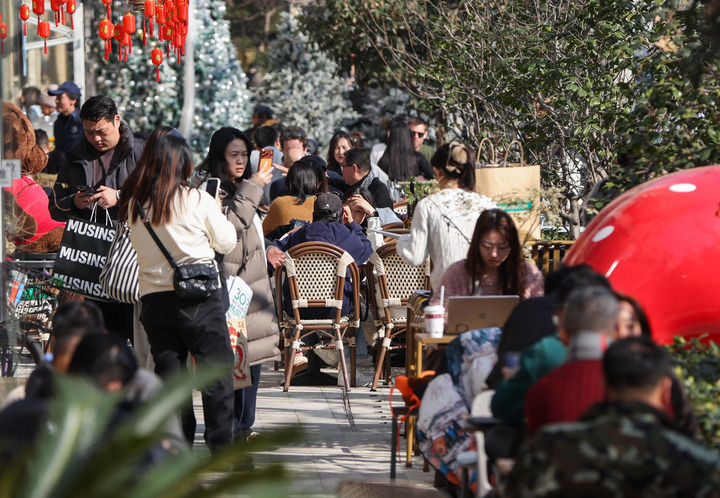
“外摆”点亮日常,烟火焕活消费——上海街头正“升温”
Xin Hua Wang· 2026-01-14 02:18
Core Viewpoint - The rise of outdoor seating ("外摆位") in Shanghai is transforming urban spaces, enhancing business revenue, and creating vibrant social environments, while also necessitating effective management to balance commercial activity with public order and safety [2][8][10]. Group 1: Economic Impact - Outdoor seating has significantly increased business revenue and customer traffic, with one barbecue restaurant reporting an additional revenue of nearly 430,000 yuan and an increase of about 8,000 customers after implementing outdoor seating [2]. - In Yangpu District, over half of the street shops have set up outdoor seating, contributing to a sales increase of over 40% for some establishments [4]. - The overall sales in a specific street area exceeded 265 million yuan within two years, showcasing the economic benefits of outdoor seating [4]. Group 2: Urban Integration - Shanghai has standardized the setup of outdoor seating, with 997 designated spots and over 4,000 businesses participating, primarily in light food and coffee sectors, creating a diverse urban commercial ecosystem [4]. - The design of outdoor seating areas is being integrated with the urban landscape, enhancing the aesthetic and functional aspects of public spaces [12][14]. Group 3: Regulatory Framework - A clear regulatory framework has been established for outdoor seating, with businesses required to follow compliance procedures, ensuring safety and order [5][10]. - The approval process for outdoor seating has been streamlined, allowing businesses to complete necessary approvals within 10 days, which enhances operational efficiency [5]. Group 4: Community Engagement - Local governance involves collaboration between businesses, residents, and authorities to create effective management strategies for outdoor seating, promoting a cooperative approach to urban planning [10][11]. - The establishment of specific management norms for outdoor seating in areas like University Road reflects a tailored approach to local needs and conditions [10]. Group 5: Cultural Significance - Outdoor seating is not just a commercial initiative but also a cultural phenomenon, reflecting the city's vibrancy and lifestyle, as seen in the integration of art and public life [12][14]. - The design of outdoor spaces aims to create inviting environments that encourage people to linger, thus enhancing the overall urban experience [12][14]. Group 6: Future Development - Shanghai's action plans for enhancing commercial vitality emphasize the importance of outdoor seating in developing a "24-hour vibrant business district" and improving the overall urban environment [15]. - The ongoing evolution of outdoor seating reflects a broader trend towards mixed-use urban spaces, balancing commercial interests with community needs [11][15].

发票藏“红包” 你抽到了吗?
Ren Min Ri Bao Hai Wai Ban· 2026-01-14 01:56
Core Viewpoint - The Chinese government is launching a pilot program for prize-linked invoices in approximately 50 cities to stimulate consumer spending and enhance economic activity, with a focus on increasing the issuance of value-added tax (VAT) invoices [2][5][9]. Group 1: Policy Implementation - The pilot program will allow cities to set a minimum invoice amount for eligibility (not less than 100 yuan) and determine the prize amounts, with individual prizes capped at 800 yuan, for a duration of six months [2][5]. - Previous local initiatives have shown success in promoting consumer engagement through prize-linked invoices, with notable examples from Guangdong and Jiangsu provinces [3][4]. Group 2: Economic Impact - The initiative aims to boost consumer confidence and spending by creating excitement around the possibility of winning prizes through everyday purchases, thereby converting potential demand into actual purchasing power [5][9]. - The program is expected to have a broader impact on various sectors, including retail, dining, and tourism, aligning with the government's goal of enhancing domestic consumption [9][10]. Group 3: Tax Compliance and Invoice Issuance - The prize-linked invoice system is designed to increase the issuance of VAT invoices, which are essential for tax compliance and can help reduce tax evasion practices among businesses [6][8]. - Data from previous local programs indicate a significant increase in invoice issuance, with Guangdong reporting a 70% rise in invoice volume and a 90% increase in invoice value during promotional periods [7][8]. Group 4: Funding and Support - The central government will provide financial support to pilot cities, with funding limits based on city size, ensuring that resources are allocated effectively to maximize consumer engagement [10][11]. - The program encourages local governments to tailor their strategies based on local consumption patterns and to ensure that prize distribution is both equitable and impactful [11].
家门口的“年货体检”:北京移动快检车开进五道口,半小时出结果
Xin Jing Bao· 2026-01-14 01:50
除了现场快检,海淀区市场监管局同步开展全覆盖食品安全专项检查,实施从源头到销售的全链条监 管,保障节日期间"菜篮子""米袋子"安全。 "快检车就像移动实验室,开进商圈、景区,现在又来到家门口,太方便了。"一位市民在拿到检测报告 后称赞道。通过"移动检测+市民参与"模式,快检车将食品安全监管延伸到基层一线,推动检测从"实验 室"走向"菜篮子",也让市民从"旁观者"变为"参与者"。 新京报讯(记者陈琳)随着春节年货采购高峰到来,1月13日,北京市市场监管部门将"食品安全移动快 检车"开进五道口集贸市场,开展"你点我检"年货专场活动。市民现场送检蔬菜、鲜肉、水果等食材, 30分钟内即可获取检测结果,让食品安全"一目了然"。 "刚买的青菜和猪肉,正好赶上检测,心里踏实多了!"市民王先生边说边递上食材。市场内,前来检测 的市民络绎不绝,工作人员有序进行取样、检测,并现场解答"如何辨别肉类新鲜度""怎样清洗减少农 残"等常见问题。 此次活动也标志着2026年北京食品安全"你点我检"惠民生活动全面启动。市民可通过扫码投票选择最关 心的食品种类与检测项目,市场监管部门将据此开展针对性抽检。海淀区市场监管局相关负责人表示, 近 ...
双融日报-20260114
Huaxin Securities· 2026-01-14 01:38
Core Insights - The report indicates a "relatively hot" market sentiment with a composite score of 64, suggesting a positive outlook for the market in the near term [6][9] - Key investment themes identified include robotics, banking, and retail, each with specific growth drivers and related stocks [6] Robotics Sector - The Hangzhou government has launched a "Strong Chain and Supplement Chain" action plan for the robotics industry from 2026 to 2027, aimed at enhancing the core competitiveness of local robotics companies, particularly in embodied intelligence [6] - Related stocks include Sanhua Intelligent Control (002050) and Wolong Electric Drive (600580) [6] Banking Sector - Banking stocks are highlighted for their high dividend characteristics, with the CSI Bank Index yielding 6.02%, significantly above the 10-year government bond yield [6] - In a slowing economy with increased market volatility, banking stocks are seen as important investment targets for long-term funds such as insurance and social security [6] - Relevant stocks include Agricultural Bank of China (601288) and Ningbo Bank (002142) [6] Retail Sector - The National Business Work Conference held on January 10-11 set the tone for consumer stimulation and market development in 2026, emphasizing actions to boost consumption and innovate in the retail sector [6] - The focus includes initiatives like trade-in programs and the development of digital and lower-tier markets to inject long-term growth momentum into the industry [6] - Related stocks include Yonghui Superstores (601933) and Wangfujing (600859) [6]
青岛|2026“购在中国·乐购青岛” 迎新消费季启动
Da Zhong Ri Bao· 2026-01-14 01:20
Group 1 - The "New Consumption Season" event in Qingdao aims to stimulate market vitality and respond to public demand for a better life by distributing over 1.1 billion yuan in consumer vouchers throughout the first quarter [1] - Qingdao has been selected as a pilot city for "new consumption formats, new models, and new scenarios," as well as for "international consumption environment construction," which will drive the city's consumption promotion efforts [1][2] - The event will feature over 300 diverse promotional activities, including street festivals and New Year goods fairs, to enhance consumer engagement [1] Group 2 - In 2026, Qingdao will focus on building an international consumption center city by implementing actions to boost consumption, including expanding goods and service consumption, fostering new consumption types, and enhancing specialty consumption areas [2] - The city will leverage the "double pilot" initiative and a combination of policies and activities to create a consumer destination that appeals to both locals and visitors [2] - Qingdao has recognized 79 local time-honored brands, forming a three-tiered system with 23 national and 21 provincial time-honored brands to promote heritage and innovation [2] Group 3 - The event features an "Old Brands New Trends" exhibition area, showcasing local time-honored brands and their innovative products, such as a collaboration between Qingdao Beverage Group and a local tea brand to create a unique beverage [3] - The introduction of limited-edition food items, like the black pepper pork chop burger from a time-honored brand, has garnered significant attention from citizens and tourists [3]

新华百货(600785.SH)控股股东拟分别向杭州景祺、厦门联芯美协议转让5%股份
智通财经网· 2026-01-13 23:18
智通财经APP讯,新华百货(600785.SH)公告,公司控股股东物美科技集团有限公司("物美科技")于2026 年1月13日与杭州景祺电子信息合伙企业(有限合伙)("杭州景祺")、厦门联芯美企业管理合伙企业(有限 合伙)("厦门联芯美")分别签署了《股份转让协议》。物美科技将其持有的无限售股份1128.16万股(占公 司总股本的5%)协议转让给杭州景祺,将其持有的无限售股份1128.16万股(占公司总股本的5%)协议转让 给厦门联芯美。 ...

发票藏“红包”,你抽到了吗?
Ren Min Ri Bao Hai Wai Ban· 2026-01-13 22:49
Core Viewpoint - The Chinese government is launching a pilot program to promote consumer spending through a lottery system based on invoices, aiming to stimulate demand and enhance consumption across approximately 50 cities [4][11]. Group 1: Policy Implementation - The Ministry of Finance, Ministry of Commerce, and State Taxation Administration have confirmed the support for around 50 cities to conduct a pilot program for prize invoices, with a minimum invoice amount of 100 yuan and a maximum prize of 800 yuan per invoice [4][11]. - The pilot program will last for six months, allowing cities to determine the specifics of the lottery, including the prize structure and winning invoice amounts [4][11]. Group 2: Historical Context - The concept of prize invoices is not new in China, having been implemented in various forms since 2016, aimed at enhancing tax compliance and consumer engagement [5][6]. - Previous initiatives in provinces like Guangdong and Jiangsu have shown positive results, with significant increases in invoice issuance and consumer participation [6][8]. Group 3: Economic Impact - The introduction of prize invoices is expected to boost consumer spending by creating excitement around shopping experiences, thereby converting potential demand into actual purchases [7][11]. - The program is designed to cover essential consumer activities such as shopping, dining, and entertainment, directly impacting daily life and consumption patterns [11][12]. Group 4: Tax Compliance and Benefits - The initiative is anticipated to improve the issuance of value-added tax (VAT) invoices, which are crucial for tax deductions and compliance [8][9]. - By encouraging consumers to request invoices, the program aims to enhance tax compliance among businesses and reduce tax evasion, ultimately benefiting the national economy [9][10]. Group 5: Funding and Support - Central government funding will support the pilot cities, with allocations based on city size, ensuring that financial resources are effectively utilized to maximize consumer engagement [12][13]. - The funding structure includes up to 3 billion yuan for super-large cities, 2 billion yuan for large cities, and 1 billion yuan for smaller cities, promoting targeted spending in sectors with high consumer potential [12][13].