
集成电路

Search documents
A股异动丨燕东微跌逾5% 大基金及京国瑞拟减持合计不超2.5%公司股份
Ge Long Hui A P P· 2025-11-20 07:15
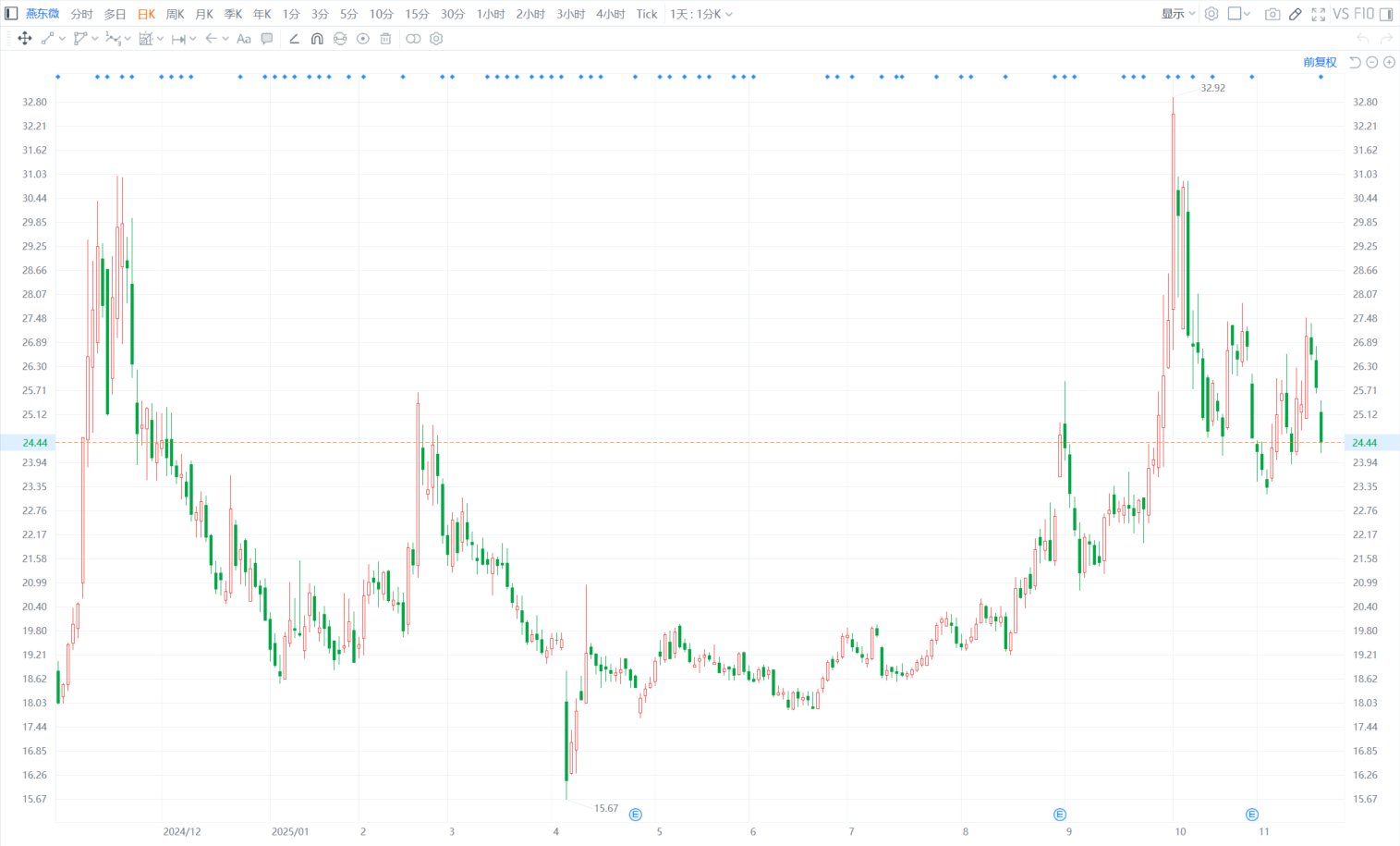
燕东微(688172.SH)现跌5.2%报24.44元,暂成交2.6亿元,最新市值348.9亿元。燕东微公告称,持股5%以上股东国家集成电路基金因自身经营管理需要,计 划通过大宗交易或集中竞价方式减持公司股份不超过2141.43万股,占公司总股本比例不超过1.5%;股东京国瑞因自身经营需要,计划通过大宗交易或集中 竞价方式减持公司股份不超过1427.62万股,占公司总股本比例不超过1%。减持期间均为2025年12月11日至2026年3月11日。(格隆汇) ...


展望“十五五” | 专访黄群慧:既要重视AI赋能千行百业,也要考量其对就业的替代效应和带来的收入极化
Mei Ri Jing Ji Xin Wen· 2025-11-20 07:04
Core Viewpoint - The "15th Five-Year Plan" emphasizes the construction of a modern industrial system, reflecting a strategic shift in China's economic development focus, particularly in response to current domestic and international challenges [2][3][4]. Group 1: Modern Industrial System - The prioritization of "building a modern industrial system" signifies a shift towards strengthening the real economy, which is essential for sustainable growth and resilience against external shocks [4][7]. - The plan aims to transform traditional industries, which currently account for about 80% of the economy, into new growth drivers, potentially creating a market worth trillions [4][8]. - The integration of technological innovation with industrial development is crucial, as it ensures that breakthroughs in technology can be effectively applied within the industrial framework [3][8]. Group 2: Future Industries - The plan outlines six key future industries: quantum technology, biomanufacturing, hydrogen energy, nuclear fusion, brain-computer interfaces, and sixth-generation mobile communications, chosen for their potential to drive economic growth and strategic importance [11][19]. - These industries are expected to contribute significantly to China's high-tech sector, with the goal of achieving a "doubling" of high-tech industries over the next decade [18][19]. - The selection of these industries considers their original innovation potential, market prospects, and alignment with national security needs [11][19]. Group 3: Policy and Investment Strategies - The government is advised to adopt a differentiated approach to funding and policy support for traditional, strategic emerging, and future industries, ensuring that resources are allocated effectively without neglecting any sector [9][10]. - The establishment of a guiding fund for future industries is recommended to attract private investment while managing risks associated with high uncertainty in these sectors [22][23]. - The focus on nurturing "unicorn" and "gazelle" companies is essential for fostering innovation and ensuring a dynamic ecosystem that supports both large enterprises and startups [24][23]. Group 4: Technological Innovation and Social Impact - The plan highlights the importance of integrating social considerations into technological innovation, particularly regarding the impact of artificial intelligence on employment and income distribution [31][37]. - A balanced approach is necessary to ensure that technological advancements do not exacerbate social inequalities, aligning with the broader goals of shared prosperity and sustainable development [37][38]. - The governance of artificial intelligence must evolve through interdisciplinary collaboration to address its societal implications effectively [38].

北京君正:V2、V3是公司自研的CPU核,应用在公司产品中,目前V3在研发中
Mei Ri Jing Ji Xin Wen· 2025-11-20 03:42
Core Viewpoint - The company has successfully mass-produced its V2 CPU core and is currently developing the V3 CPU core, which is expected to be sampled next year [1] Group 1 - The V2 CPU core is now in mass production [1] - The V3 CPU core is under development and is anticipated to be sampled in the following year [1]

北京燕东微电子股份有限公司持股5%以上股东减持股份计划公告
Shang Hai Zheng Quan Bao· 2025-11-19 17:59
登录新浪财经APP 搜索【信披】查看更多考评等级 证券代码:688172 证券简称:燕东微 公告编号:2025-081 北京燕东微电子股份有限公司 持股5%以上股东减持股份计划公告 本公司董事会、全体董事及相关股东保证本公告内容不存在任何虚假记载、误导性陈述或者重大遗漏, 并对其内容的真实性、准确性和完整性依法承担法律责任。 重要内容提示: ● 大股东持有股份的基本情况 截至本公告日,公司持股5%以上股东国家集成电路产业投资基金股份有限公司(以下简称"国家集成电 路基金")持有北京燕东微电子股份有限公司(以下简称"公司""燕东微")86,747,202股,占公司总股本 的6.08%。上述股份来源为公司首次公开发行股票并上市前取得。 公司5%以上股东北京京国瑞国企改革发展基金(有限合伙)(以下简称"京国瑞")持有燕东微 83,878,055股,占公司总股本的5.88%。上述股份来源为公司首次公开发行股票并上市前取得。 ● 减持计划的主要内容 公司5%以上股东国家集成电路基金因自身经营管理需要,本次拟通过大宗交易或集中竞价的方式减 持,将于本减持计划披露之日起15个交易日之后的三个月内减持公司股份不超过21,41 ...
希荻微电子集团股份有限公司2021年股票期权激励计划第二个行权期第二次行权结果暨股份变动公告
Shang Hai Zheng Quan Bao· 2025-11-19 17:59
Core Viewpoint - The company has completed the second exercise period of its 2021 stock option incentive plan, allowing for the exercise of 822,927 shares, which represents 0.20% of the company's total share capital prior to the exercise [2][17]. Summary by Sections Stock Option Exercise Details - The number of shares exercised in this round is 822,927, which will be tradable three years after the exercise date, expected to be on November 19, 2028 [2][13]. - The decision for this exercise was approved during the second meeting of the second board of directors on January 26, 2024 [2]. Historical Context of Stock Option Plan - The stock option plan was initially approved in October 2020, prior to the company's transformation into a joint-stock company, and involved signing option grant agreements with employees [2][3]. - In 2021, the company granted a total of 35,562,800 stock options to 103 employees, with a validity period of 10 years [3]. Previous Exercise Periods - The first exercise period saw multiple rounds of exercises, with the first round involving 1,480,270 shares, the second round 3,044,935 shares, and the third round 771,809 shares [4][5][6]. - The first exercise period was extended by one year, affecting the start of the second exercise period [7]. Financial Impact of the Current Exercise - Following this exercise, the total share capital will increase from 411,209,841 shares to 412,032,768 shares, with no significant impact on the company's equity structure [17]. - The basic earnings per share and net asset value per share remain largely unchanged, indicating that the exercise does not materially affect the company's financial performance [17].

合肥晶合集成电路股份有限公司关于召开2025年第三季度业绩说明会的公告
Shang Hai Zheng Quan Bao· 2025-11-19 17:59
登录新浪财经APP 搜索【信披】查看更多考评等级 证券代码:688249 证券简称:晶合集成 公告编号:2025-071 本次投资者说明会以网络文字互动形式召开,公司将针对2025年第三季度的经营成果及财务指标的具体 情况与投资者进行互动交流和沟通,在信息披露允许的范围内就投资者普遍关注的问题进行回答。 二、说明会召开的时间、方式 合肥晶合集成电路股份有限公司 关于召开2025年第三季度业绩说明会的公告 本公司董事会及全体董事保证本公告内容不存在任何虚假记载、误导性陈述或者重大遗漏,并对其内容 的真实性、准确性和完整性依法承担法律责任。 重要内容提示: ● 投资者可在2025年11月27日(星期四)16:00前通过邮件、电话等形式将需要了解和关注的问题提前 提供给公司。公司将在业绩说明会文字互动环节对投资者普遍关注的问题进行回答。 合肥晶合集成电路股份有限公司(以下简称"公司")已于2025年10月30日披露公司2025年第三季度报 告,为便于广大投资者更全面深入地了解公司2025年第三季度的经营成果、财务状况,公司计划于2025 年11月28日(星期五)下午15:00-16:00以网络文字互动形式召开202 ...

闻泰科技:对安世半导体控制权仍受限
是说芯语· 2025-11-19 14:25
Core Viewpoint - The announcement by the Dutch Minister of Economic Affairs and Climate Policy, Vincent Karremans, to suspend the ministerial order affecting the subsidiary, Anshi Semiconductor, is a significant development, although the court ruling from October 7, 2025, remains in effect, limiting the company's control over Anshi [1][3][4]. Group 1: Announcement Details - On November 19, 2025, the Dutch Minister announced the suspension of the ministerial order that restricted Anshi Semiconductor and its global entities from making any adjustments to their assets, intellectual property, business, and personnel for one year [1][3]. - The minister's statement indicated that the suspension was a constructive measure in light of recent developments and followed consultations with European and international partners [3]. Group 2: Ongoing Legal Context - Despite the suspension of the ministerial order, the court ruling from October 7, 2025, remains valid and continues to impose restrictions on the company's control over Anshi [4]. - The company is actively communicating with international legal teams to explore legal remedies and is committed to protecting the rights of the company and its shareholders [1][4].

中金公司拟吸收合并两家券商,明起停牌;合富中国明天复牌丨公告精选
2 1 Shi Ji Jing Ji Bao Dao· 2025-11-19 14:20
Key Points - 合富中国's stock will resume trading on November 20 after completing an investigation into unusual trading fluctuations, confirming normal business operations and no undisclosed significant matters [1] - 中金公司 plans to merge with 东兴证券 and 信达证券, leading to a suspension of its A-shares starting November 20 due to uncertainties surrounding the merger [1] - 大为股份 is progressing with the transition from exploration to mining rights for its lithium battery project in Hunan, having received necessary approvals [1] - 燕东微's major shareholders plan to reduce their stakes by up to 2.5% through block trades or centralized bidding from December 11, 2025, to March 11, 2026 [2] - 中水渔业's major shareholder reduced its stake to 5% after selling 258.88 million shares [3] - 韵达股份 reported a slight decline in express service revenue for October 2025, totaling 4.495 billion yuan, a year-on-year decrease of 0.88% [4] - 倍杰特 intends to acquire a 55% stake in 大豪矿业 for 224.8 million yuan [4] - 辰奕智能 plans to acquire a 55% stake in 华泽电子 through cash [4] - 赣粤高速's actual controller will change from the provincial transportation department to the provincial state-owned assets supervision and administration commission [5] - 东软集团 received a notification for a 4.2 billion yuan contract for intelligent cockpit controllers from a major domestic automotive manufacturer [5] - 海正药业's subsidiary plans to invest in a pet prescription food project [5] - 龙利得's controlling shareholder plans to increase its stake by at least 56 million yuan [6] - 新兴装备's shareholders plan to reduce their stakes by up to 3.13% [6] - 普洛药业 plans to repurchase shares worth between 180 million and 360 million yuan [6]



燕东微(688172.SH):京国瑞及国家集成电路基金拟合计减持不超2.5%股份
Ge Long Hui A P P· 2025-11-19 12:46
Core Viewpoint - Yandong Microelectronics (688172.SH) announced that its major shareholders, the National Integrated Circuit Fund and Jingguo Rui, plan to reduce their holdings through block trading or centralized bidding, with a total reduction not exceeding 3,569.05 million shares, representing 2.5% of the company's total share capital [1] Group 1 - The National Integrated Circuit Fund intends to reduce its holdings by up to 21.41 million shares, which is 1.5% of the total share capital, within three months after the disclosure of the reduction plan [1] - Jingguo Rui plans to reduce its holdings by up to 14.28 million shares, which is 1% of the total share capital, also within three months after the disclosure of the reduction plan [1] - The reduction prices will be determined based on the market price at the time of the reduction [1]
燕东微:国家集成电路基金计划减持不超过公司总股本比例1.5%
Mei Ri Jing Ji Xin Wen· 2025-11-19 11:31
2024年1至12月份,燕东微的营业收入构成为:集成电路占比96.87%,其他业务占比3.13%。 截至发稿,燕东微市值为368亿元。 每经头条(nbdtoutiao)——爱泼斯坦案文件解密倒计时,美国会"秒过"法案直通特朗普,引爆两党"极 限撕扯" (记者 胡玲) 每经AI快讯,燕东微(SH 688172,收盘价:25.78元)11月19日晚间发布公告称,截至本公告日,公司 持股5%以上股东国家集成电路产业投资基金股份有限公司持有北京燕东微电子股份有限公司约8675万 股,占公司总股本的6.08%。相关股份来源为公司首次公开发行股票并上市前取得。 公司5%以上股东北京京国瑞国企改革发展基金(有限合伙)持有燕东微约8388万股,占公司总股本的 5.88%。相关股份来源为公司首次公开发行股票并上市前取得。 公司5%以上股东国家集成电路基金因自身经营管理需要,本次拟通过大宗交易或集中竞价的方式减 持,将于本减持计划披露之日起15个交易日之后的三个月内减持公司股份不超过约2141万股,本次拟通 过大宗交易或集中竞价方式减持股份不超过公司总股本比例1.5%。 公司5%以上股东京国瑞因自身经营需要,本次拟通过大宗交易或 ...