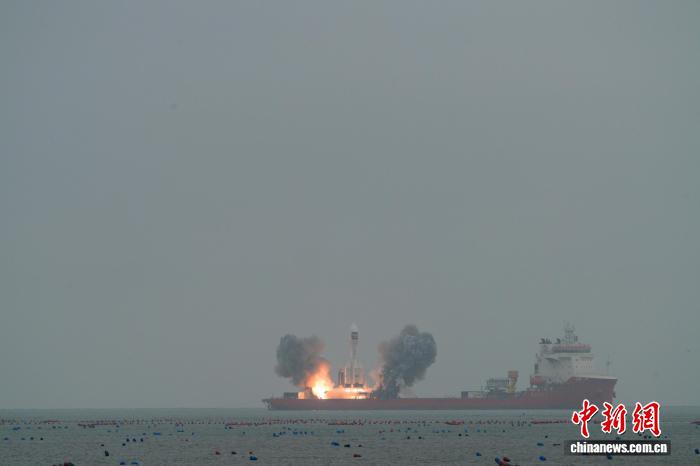
卫星制造与发射

Search documents
追“风”逐“云”,气象卫星家族添了“葫芦娃”!
Xin Lang Cai Jing· 2025-12-27 10:27
Core Viewpoint - The successful launch of the Fengyun-4C satellite enhances China's meteorological satellite capabilities, contributing to a more advanced and comprehensive observation system [2][4]. Group 1: Satellite Capabilities - Fengyun-4C satellite is equipped with four different ground remote sensing instruments and two solar observation instruments, showcasing advanced capabilities in multi-channel imaging, atmospheric three-dimensional detection, and high-frequency lightning detection [2][4]. - The satellite's full-disk imaging time has been reduced from 15 minutes to 5 minutes, allowing it to detect temperature changes of one-fiftieth of a degree Celsius from thousands of kilometers away [2]. - The interferometric infrared detector has improved spatial resolution from 12 kilometers to 8 kilometers, enabling temperature and humidity detection across China within one hour [2][4]. Group 2: Technological Innovations - The multi-band ultraviolet ionospheric imager achieves high-spectral ionospheric detection in the extreme ultraviolet band for the first time in China, filling a significant gap in solar monitoring and forecasting [4][6]. - The lightning imaging device can capture 500 frames per second and identify lightning events from a data stream of 30 Gbps, demonstrating its advanced data processing capabilities [4][6]. Group 3: Collaborative Observation Network - The addition of Fengyun-4C supports inter-satellite collaboration and high-speed data transmission, enhancing the overall efficiency of the observation network [6][7]. - The integration of multiple geostationary and low-orbit meteorological satellites aims to create a "data highway" in space, facilitating real-time observation and service delivery [7].



高盛:看好航天板块“颠覆性”机遇,Rocket Lab(RKLB.US)刷新政府订单纪录,目标价上看 47 美元
智通财经网· 2025-12-24 09:30
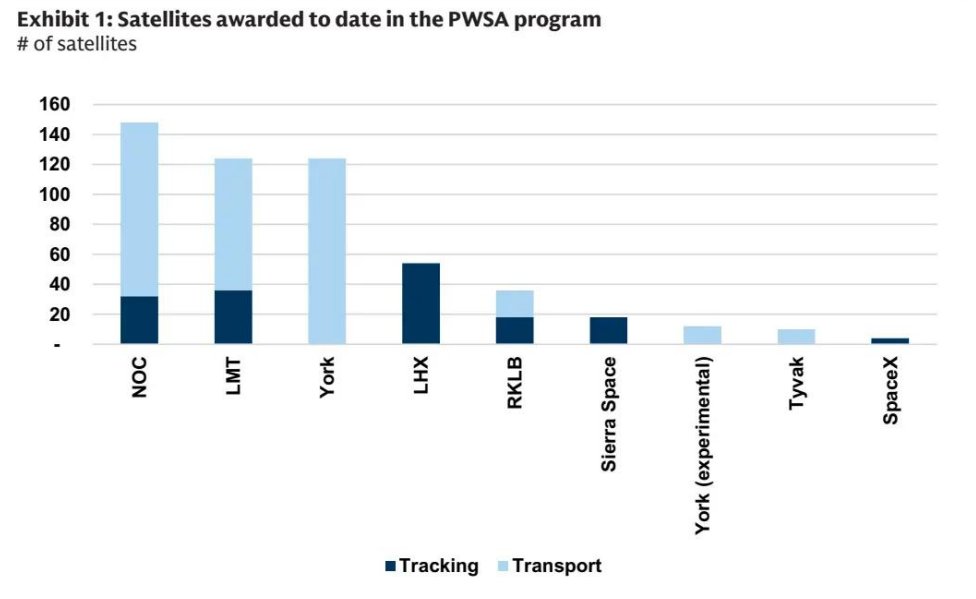
Core Insights - Goldman Sachs released a detailed report focusing on the U.S. Space Development Agency's (SDA) "Proliferated Warfighter Space Architecture" (PWSA) project, particularly analyzing the contract awards for the third batch of tracking layer satellites, valued at $3.5 billion for 72 satellites, expected to be deployed starting in 2029 [1][2] Group 1: Project Overview - The PWSA project aims to create a low Earth orbit (LEO) satellite constellation for missile warning, tracking, and defense services, evolving through phased implementation to address complex space security challenges [1] - Since the project's inception, SDA has awarded contracts totaling $13.6 billion for the construction of 518 tracking and communication satellites, with significant upgrades in missile tracking sensitivity and accuracy in the latest batch [2][4] Group 2: Company Analysis - L3Harris received a buy rating with a 12-month target price of $351, aligning with its contract amounts and growth potential, despite facing risks related to defense spending and project execution [7] - Northrop Grumman was given a neutral rating and a target price of $533, with risks including geopolitical factors and adjustments in defense spending priorities [7] - Rocket Lab also received a neutral rating with a target price of $47, facing challenges in product expansion and capital investment [8] - Lockheed Martin was assigned a sell rating with a target price of $430, facing risks similar to its peers, including geopolitical factors and capital allocation [8] Group 3: Industry Impact - The PWSA project is expected to significantly influence satellite communication and navigation, enabling low-latency global communication access, which supports emerging applications like telemedicine and autonomous driving [8] - The aerospace sector faces challenges such as high launch costs, bandwidth and latency issues, and space debris, which require technological innovation and capital investment for sustainable development [8]


“90后”的他们造了一颗“星”
Xin Hua She· 2025-12-19 13:26
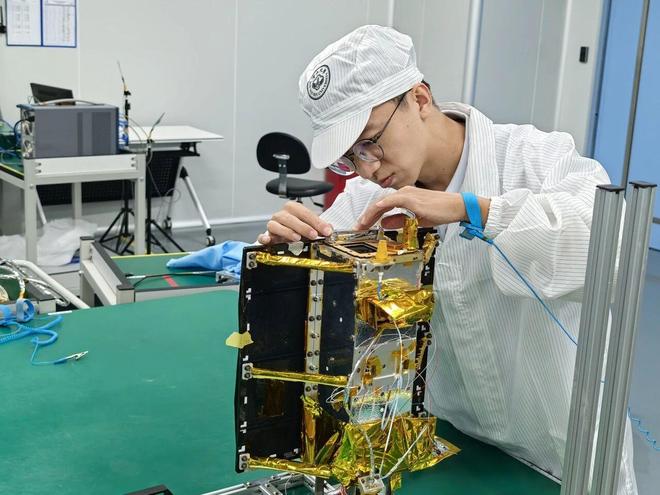
Core Viewpoint - The successful launch of the "Yixian-A Star," the world's first satellite to conduct in-orbit verification of wooden outer panels, marks a significant achievement in space technology and innovation led by a team of young researchers from Sun Yat-sen University [1][5]. Group 1: Development and Innovation - The "Yixian-A Star" was developed by a team primarily composed of nine young members, with postdoctoral researcher Wang Hui as the team leader, who has pursued his dream of space exploration for 22 years [1][2]. - The satellite serves as a platform for scientific experiments, technology validation, and educational training, focusing on innovative materials to address space debris and atmospheric pollution [3]. - The team faced significant challenges due to the extreme conditions of space, including temperature fluctuations, vacuum, and radiation, which posed risks to material stability [3]. Group 2: Research and Collaboration - Wang Hui established the Micro-Nano Satellite Association at Sun Yat-sen University in 2021, which formalized the "satellite-making" initiative [3]. - The team collaborated with various departments, including materials science and advanced manufacturing, to explore different types of wood and processing techniques to enhance the durability of wooden materials for space [3]. Group 3: Launch and Future Plans - The "Yixian-A Star" was successfully launched on December 10, 2023, and is set to operate in space for six months, conducting tasks such as satellite imaging, testing the wooden outer panel, and validating software-defined satellite technologies [5][8]. - Following the success of "Yixian-A Star," the team is already working on the next satellite in the series, "Yixian-B," aiming for breakthroughs in fields like medical engineering [8].
下一片“新大陆”:马斯克用万颗卫星占轨道,中国如何后发制人?
Sou Hu Cai Jing· 2025-12-19 13:13
Core Insights - The competition for low Earth orbit (LEO) resources is intensifying, with the U.S. and China racing to deploy satellites at an unprecedented rate [1][5][10] - SpaceX's Starlink program has established a significant lead in satellite deployment, with over 8,000 satellites launched, while China's satellite count remains significantly lower at approximately 951 [2][4][6] Group 1: Satellite Deployment and Market Dynamics - As of July 2025, there are over 12,000 active satellites in orbit globally, with the U.S. dominating with about 10,490 satellites [2] - SpaceX's industrialized approach has allowed it to reduce satellite manufacturing costs to below $500,000 and launch costs to approximately $62 million per Falcon 9 rocket [5][7] - China's space program is transitioning from custom satellite production to a more industrialized model, with plans to deploy around 13,000 satellites under the National Star Network (GW) initiative and over 15,000 under the Shanghai Yanjin Satellite's "Thousand Sails Constellation" [8][9] Group 2: Strategic Implications and Future Outlook - The competition for satellite resources is not just about quantity but also involves communication sovereignty, digital economy, and national security [10] - The global satellite industry is projected to reach revenues of $293.3 billion by 2024, with significant growth in satellite manufacturing and launch sectors, providing opportunities for latecomers like China [10] - China aims to complete a portion of its satellite launches by 2027-2030 to secure its position in the competitive landscape, driven by regulatory pressures from the International Telecommunication Union [10]

太空数据中心即将到来:如何从中获利
2025-12-17 15:50
Summary of Key Points from the Conference Call on Space Data Centers Industry Overview - The discussion centers around the emerging concept of space data centers, particularly in the context of SpaceX's plans for an IPO and a projected valuation of $1.5 trillion [1][5] - Major financial institutions like Morgan Stanley and Deutsche Bank have released reports analyzing the potential of space data centers [1][5] Core Insights and Arguments - **Technical Challenges**: The feasibility of space data centers faces engineering challenges rather than physical limitations. Companies like Google, OpenAI, and Blue Origin are exploring methods to achieve this goal [5][9] - **Energy Efficiency**: Space data centers can utilize solar energy more efficiently than ground-based data centers, potentially generating 6-8 times more energy due to higher solar intensity in space [8][12] - **Cooling Requirements**: Cooling is a significant challenge, accounting for 40% of energy consumption in data centers. In space, passive radiators must be used to dissipate heat, which requires innovative designs [12][15] - **Latency and Data Processing**: Deploying data centers in space can reduce latency significantly compared to ground-based systems, allowing for faster data processing and analysis [12][15] - **Scalability**: SpaceX currently dominates orbital mass delivery, but increased competition from other launch providers could lower costs and enhance scalability for space infrastructure [12][15] Market Potential - Deutsche Bank predicts that distributed satellite systems (DCS) will create new growth opportunities for launch and satellite manufacturing companies, with initial deployments expected around 2027-2028 [18][19] - Companies like Planet Labs, Rocket Lab, and Intuitive Machines are highlighted as potential beneficiaries of the space data center market [18][22] Notable Companies and Initiatives - **Planet Labs**: Collaborating with Google to develop prototype satellites for testing AI capabilities in space, with plans for a 2027 launch [18][22] - **Rocket Lab**: Aiming to support DCS deployment through satellite manufacturing and launch services [22] - **Intuitive Machines**: Proposed acquisition of Lanteris to enhance capabilities for high-power satellite payloads [22] - **Starcloud**: A startup focused on deploying space data centers using solar energy and passive cooling [22] - **Axiom Space**: Developing orbital data center products for commercial and national security clients, with significant funding raised [22] - **Lonestar Data Holdings**: Working on lunar and space data center infrastructure [22] Additional Considerations - **Geopolitical Concerns**: Ground-based data centers face protests and geopolitical risks, making space data centers an attractive alternative [9] - **Market Dynamics**: The success of space data centers may depend on advancements in energy production and the pace of technological innovation compared to traditional energy systems [18][19] This summary encapsulates the key points discussed in the conference call regarding the potential and challenges of space data centers, highlighting the companies involved and the market implications.
一夜走红的“太空数据中心”
Hua Er Jie Jian Wen· 2025-12-17 03:28
Core Insights - The concept of space data centers is transitioning from science fiction to reality, driven by the surge in demand for artificial intelligence and the structural limitations faced by terrestrial data centers [1] - SpaceX has confirmed its IPO plans for next year, aiming for a valuation of $1.5 trillion, with strong support from Elon Musk for deploying data centers in space [1] - Major investment banks like Morgan Stanley and Deutsche Bank are beginning to assess the feasibility of space data centers, focusing on engineering challenges rather than physical limitations [1][2] Technological Advantages - Space data centers offer significant advantages in energy, cooling, latency, and scalability, with solar panels in optimal orbits capable of generating 6-8 times more energy than terrestrial counterparts [3] - Cooling systems in space can eliminate the need for traditional water-cooling methods, which account for 40% of energy consumption in ground data centers [3] - Laser link transmission speeds in vacuum are over 40% faster than terrestrial fiber optics, enabling real-time processing of data in orbit [3] Cost and Engineering Challenges - Despite theoretical advantages, space data centers face high launch costs, with the reusable Falcon 9 rocket priced at approximately $70 million, leading to a cost of about $1,500 per kilogram [4] - Effective thermal management in space is complex, requiring innovative designs for passive heat dissipation due to the vacuum environment [4] - Radiation threats can accelerate chip aging, necessitating the use of "space-grade" hardware, which increases costs [4] Market Opportunities - Deutsche Bank predicts that if technology validation is successful, the scale of satellite constellations could reach hundreds to thousands by the 2030s, creating new market opportunities for launch and satellite manufacturing companies [2][7] - Companies like Planet Labs, Rocket Lab, and Intuitive Machines are positioned to benefit from the space data center concept, with existing partnerships and capabilities in satellite production and launch services [7][8] Private Sector Developments - Startups like Starcloud have secured over $20 million in seed funding, while Axiom Space plans to launch its first two orbital data center nodes by the end of 2025, having raised over $700 million [8] - Lonestar Data Holdings is developing lunar and space data center infrastructure, with its "Freedom" payload successfully landing on the moon via SpaceX [8]
科学与健康|资源三号卫星“家族”上新 我国立体测绘卫星星座再升级
Xin Hua She· 2025-12-16 09:32
Core Viewpoint - The successful launch of the Resource 3 satellite 04 enhances China's capability in obtaining spatial geographic information independently and improves the level of surveying and mapping services [1] Group 1: Satellite Features - The Resource 3 satellite 04 is equipped with three core payloads: a tri-stereo camera, a multi-spectral camera, and a laser altimeter, which collectively enhance the satellite's surveying capabilities [1] - The tri-stereo camera functions like a "3D photographer," capturing images from three different angles to create three-dimensional representations of observed objects [2] - The multi-spectral camera acts as a "fingerprint collector," identifying and analyzing the spectral characteristics of various elements and compounds on Earth, enabling the differentiation of land types and assessment of agricultural productivity and environmental conditions [3] - The laser altimeter serves as a "space ruler," measuring the relative height of ground points with sub-meter precision over distances of approximately 506 kilometers [4] Group 2: Satellite Constellation and Impact - The Resource 3 series, which includes satellites launched in 2012, 2016, and 2020, has broken foreign monopolies on high-precision 3D mapping data, providing China with independent and controllable high-quality satellite mapping data [5] - By December 2025, the Resource 3 series is expected to have acquired 4.03 million valid image data sets, covering an area of 137 million square kilometers, which is about 91% of the global land area, significantly advancing the geographic information industry and remote sensing technology applications [5] - The newly launched Resource 3 satellite 04 will replace the retired Resource 3 satellite 01 and will work alongside satellites 02 and 03 to form a high-resolution 3D mapping satellite constellation, increasing the capability for obtaining national basic surveying data by 1.5 times [5]
中山大学“90后”学生带队自研立方星发射成功
Di Yi Cai Jing· 2025-12-10 14:46
Core Viewpoint - The successful launch of the "Yixian-A" satellite marks a significant milestone as the world's first satellite to validate wooden outer panels in orbit, with future plans for innovation in medical engineering integration [3][5]. Group 1: Satellite Development - The "Yixian-A" satellite, developed by a student team from Sun Yat-sen University, was launched on December 10 and is designed for scientific experiments, technology validation, and educational purposes, with a planned operational duration of six months [3]. - The satellite will conduct tasks including space imaging, testing of wooden outer panels, and development of software-defined satellite payloads based on Raspberry Pi technology [3]. - The team aims to develop a series of "Yixian" satellites, with a focus on breakthroughs in medical engineering integration [3]. Group 2: Team Leadership and Innovation - The lead of the "Yixian-A" development team, Wang Hui, is a PhD candidate at Sun Yat-sen University and has been instrumental in establishing the university's micro-nano satellite association [5]. - Wang Hui's innovative approach involved a "student-led design and management" model, breaking down the satellite development into manageable sub-projects to expedite the research process [5]. - The team faced technical challenges, particularly with the use of wooden outer panels, which required extensive experimentation to ensure durability in the harsh conditions of space [5][6]. Group 3: Material Innovation - The team collaborated with the College of Materials and the College of Advanced Manufacturing to leverage interdisciplinary innovation, experimenting with various types of wood and surface treatment techniques [6]. - Through numerous experiments, the team successfully identified suitable wood and treatment methods that enhanced the durability of the wooden materials, allowing them to withstand the extreme conditions of space [6]. - This achievement positions the team ahead of researchers from Finland, Japan, and other countries in the practical application of wooden satellite outer panels [6].

宣布12月发射下一代BlueBird 6卫星 AST SpaceMobile(ASTS.US)涨4.77%
Zhi Tong Cai Jing· 2025-11-21 14:34
Core Viewpoint - AST SpaceMobile's stock price increased by 4.77% to $53.12 ahead of the launch of its next-generation BlueBird6 satellite, scheduled for December 15 [1] Group 1: Satellite Launch and Technology - The BlueBird6 satellite will feature the world's largest commercial phased array antenna, measuring approximately 2400 square feet, which is 3.5 times larger than the previous model [1] - The data capacity of the BlueBird6 satellite is expected to be 10 times greater than that of its predecessor, marking significant progress towards the company's vision of "mobile direct satellite" connectivity [1] Group 2: Company Vision and Leadership - CEO Abel Avellan emphasized the achievement of seamless cellular broadband signals for ordinary smartphones from space, showcasing American leadership in space innovation and aiming to create a new era of global connectivity [1] Group 3: Production and Launch Plans - The company is accelerating its production pace, with plans to complete the manufacturing of miniaturized components equivalent to 40 satellites by early 2026 [1] - AST SpaceMobile aims to conduct five orbital launches by the end of the first quarter of 2026 and intends to deploy between 45 to 60 satellites by the end of 2026 to ensure continuous coverage in the U.S. and select markets [1]

“吉林一号”卫星工程组网卫星增至141颗
Zhong Guo Xin Wen Wang· 2025-10-11 08:14
Core Points - The "Jilin-1" satellite project has successfully increased its network of satellites to 141 with the recent launch of the "Jiangsu Geological Satellite" [1][2] - The "Jiangsu Geological Satellite" is a high-resolution optical remote sensing satellite developed in collaboration with the Jiangsu Provincial Geological Bureau, aimed at enhancing satellite imaging coverage and precision monitoring capabilities in Jiangsu [2] - The satellite can provide high-definition satellite imagery products with a width of 150 km and a resolution of 0.5 m, featuring characteristics such as mass production, wide coverage, high resolution, and fast data transmission [2] Company and Industry Summary - The "Jilin-1" satellite project is recognized as the world's largest sub-meter commercial remote sensing satellite constellation, providing extensive remote sensing data and product services for various sectors including land resource surveys, smart city development, and agricultural forestry [2]